luton and dunstable hospital
Luton and Dunstable Hospital at a Glance: Address, Contact, and Key Services
Whether you are a patient, a visitor, or a contractor coordinating works on site, having the correct details for Luton and Dunstable Hospital saves time and reduces stress. I have compiled the essential information below so you can get what you need without bouncing between pages.
Key Takeaways
- This guide gives patients, visitors, and contractors one place to find everything they need.
- Having the right details before you arrive cuts down on confusion and wasted time.
- The information is pulled together so you do not have to search through multiple pages.
- Knowing the correct site details helps everyone from a first-time visitor to a maintenance crew.
- A single source of truth for Luton and Dunstable Hospital saves you from bouncing between different sources.
Hospital address and contact details (Luton site)
Luton and Dunstable University Hospital is located at Lewsey Road, Luton, Bedfordshire, LU4 0DZ. The main switchboard can be reached on 0300 123 4000. For patient enquiries or to raise concerns, the Patient Advice and Liaison Service (PALS) is available on 0300 123 4002 or by emailing [email protected]. The official hospital website is bedfordshirehospitals.nhs.uk, which provides direct access to departments and online services.
| Detail | Information |
|---|---|
| Full address | Lewsey Road, Luton, Bedfordshire, LU4 0DZ |
| Main switchboard | 0300 123 4000 |
| PALS helpline | 0300 123 4002 |
| PALS email | [email protected] |
| Official website | bedfordshirehospitals.nhs.uk |
CQC inspection rating and link to latest report
At the latest inspection, the Care Quality Commission rated the trust as Good overall. Areas such as caring, effective, and responsive were rated Good, while safety required improvement in some specific services. You can read the full report on the CQC website by searching for Bedfordshire Hospitals NHS Foundation Trust. This rating reflects the dedication of clinical staff and the support from estates and facilities teams who maintain a safe environment.
A-Z of major departments and services
Luton and Dunstable Hospital offers a comprehensive range of services. Key departments include the Emergency Department, Maternity and Neonatal Unit, Bariatric Surgery (a specialist obesity service), Cardiology, Orthopaedics, and Paediatrics. The trust also runs a dedicated cancer centre, renal dialysis unit, and a range of outpatient clinics. For a complete A-Z list, visit the hospital website or contact PALS.
- Accident & Emergency (A&E)
- Bariatric surgery
- Cardiology
- Maternity and neonatal intensive care
- Orthopaedics and trauma
- Paediatrics and child health
- Renal dialysis
- Oncology and radiotherapy
Visiting hours and patient guidelines
Visiting hours at Luton and Dunstable Hospital are generally 11:00 to 20:00 daily, but these can vary by ward. Some areas such as maternity and intensive care have restricted hours. It is always best to check with the specific ward before travelling. The hospital recommends limiting visitors to two per patient to avoid overcrowding. For the latest guidelines, including any restrictions due to infection control, refer to the visiting information page on the trust website.
How to book or cancel an appointment
Outpatient appointments can be booked online through the NHS e-Referral service or by calling the appointments line on 0300 123 4001. To cancel or reschedule, contact the clinic directly using the number on your appointment letter. You can also update your details via the hospital website.
The Bedfordshire Hospitals Merger: What It Means for Patients and the Trust
On 1 April 2020, Luton and Dunstable University Hospital NHS Foundation Trust merged with Bedford Hospital NHS Trust to form Bedfordshire Hospitals NHS Foundation Trust. This merger created a single organisation serving more than 350,000 people across Bedfordshire and North Hertfordshire. Understanding what this change means helps patients and contractors alike navigate services more effectively.
Timeline of the trust merger (April 2020)
The merger was finalised on 1 April 2020, combining two previously separate trusts under a single board and management structure. The new trust operates both sites: Luton and Dunstable University Hospital and Bedford Hospital. Since then, the trust has worked to standardise policies, share clinical expertise, and improve patient pathways across the two hospitals.
Comparison of the two hospital sites: Luton & Dunstable University Hospital vs. Bedford Hospital
Luton and Dunstable University Hospital (LU4 0DZ) is the larger of the two sites, offering a full emergency department, specialist surgery including bariatric procedures, and a major trauma centre. Bedford Hospital (MK42 9DJ) provides a range of acute services but does not have the same level of specialist surgical capability. For complex cases, patients may be referred from Bedford to Luton. The trust has worked to ensure that referrals and transfers between sites are seamless.
Key point: The merger does not change where you attend appointments. Your referral letter will specify the site. If you are unsure, call the appointments line or check the trust website.
How the merger affects patient services and referrals
Patients should continue to attend their usual site. Some outpatient clinics may move between sites to improve access, and the trust aims to offer more consistent waiting times. The merger has allowed the trust to recruit more consultants and share specialist staff across both hospitals. For contractors and facility managers, it means dealing with a single trust procurement and estates team.
How Modern Building Services Keep Luton and Dunstable Hospital Running Safely
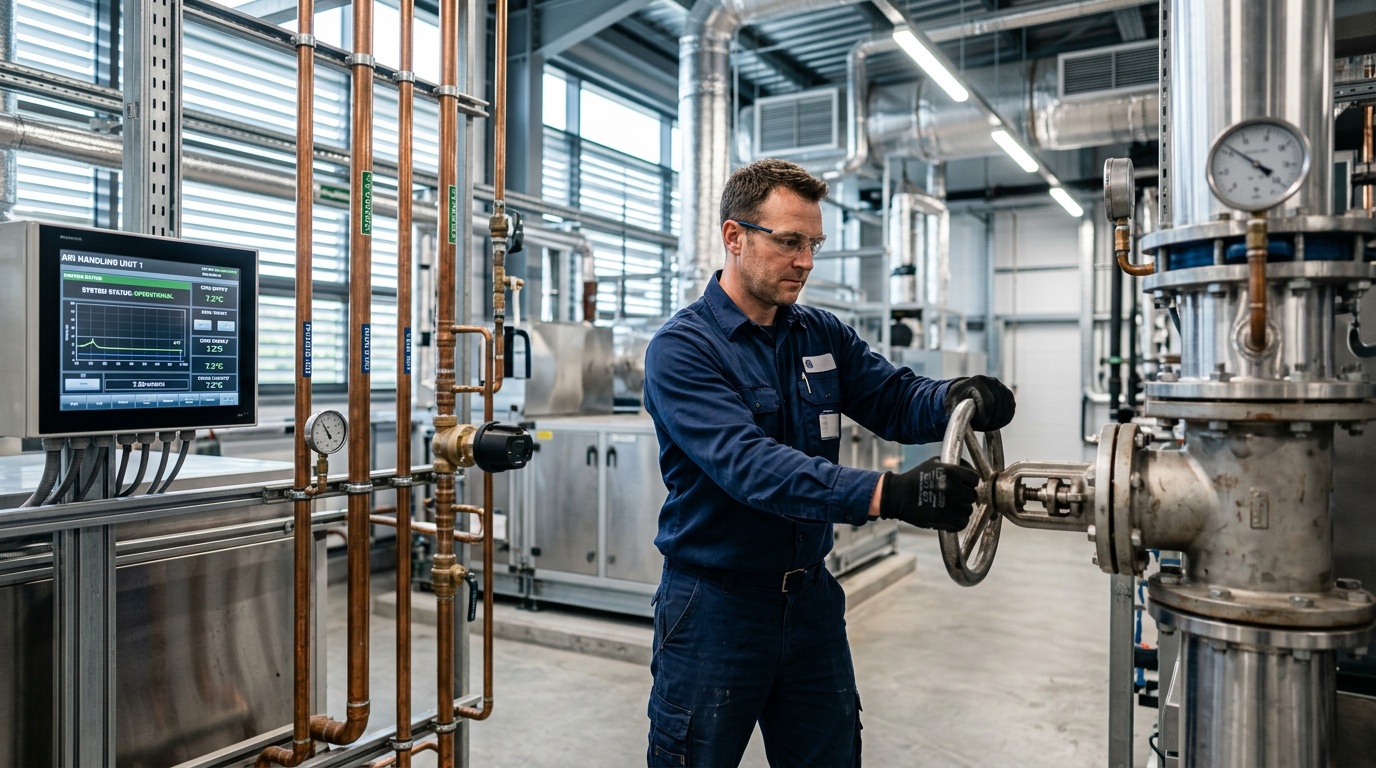
Few visitors to Luton and Dunstable Hospital give a second thought to the plant room, the boiler house, or the ventilation ducts running behind the ceiling tiles. Yet the quality of care delivered on every ward depends directly on infrastructure that operates silently in the background. As a building services provider working with NHS estates teams, we see the reality every day: a failure in the heating system can cancel elective surgeries, a loss of power to an ICU can become a life-threatening emergency, and poor ventilation in a sterile theatre can compromise infection control.
The hidden role of HVAC, electrical, and plumbing systems in patient care
The mechanical and electrical (M&E systems) inside a hospital are not merely comfort provisions. They are clinical tools in their own right. Operating theatres require precise temperature and humidity control to maintain sterile conditions. Maternity and neonatal units demand strict pressure differentials to protect vulnerable patients. The hospital's hot water system must deliver water at 60°C to storage to prevent Legionella, while outlets need to be safe for handwashing. Electrical resilience, including standby generators, ensures critical equipment stays powered during a mains failure. Every one of these systems must function reliably, 24 hours a day, 365 days a year. Downtime in a hospital is not an inconvenience; it is a clinical risk.
Compliance standards (SFG20, Gas Safe, F-Gas) and how they link to CQC ratings
The Care Quality Commission inspects hospitals on five key domains: safe, effective, caring, responsive, and well-led. How a hospital manages its estate directly influences several of these, particularly safety. Compliance with industry standards such as SFG20 for planned maintenance, Gas Safe for gas systems, and F-Gas for refrigeration is the minimum baseline for ensuring that building systems do not fail. When the CQC inspects a hospital, it reviews maintenance logs, service histories, and incident reports. A backlog of overdue checks or a pattern of reactive repairs raises red flags. For Bedfordshire Hospitals NHS Foundation Trust, maintaining a Good CQC rating depends partly on the estates team demonstrating rigorous, auditable maintenance across both the Luton and Bedford sites.
Preventative maintenance: protecting assets and ensuring 24/7 uptime
Reactive maintenance waiting for something to break and then fixing it is the most expensive and dangerous approach in a hospital environment. Planned preventative maintenance (PPM) identifies wear before failure occurs. A quarterly service on an air handling unit costs a fraction of an emergency call-out on a weekend, and it avoids ward closures. At MEMS, we design PPM schedules around the NHS's operational needs, scheduling intrusive works during low-activity periods and tagging critical assets with digital compliance records. For the facility managers overseeing the Luton and Dunstable Hospital estate, a proactive programme protects the trust's capital investment in plant equipment and, more importantly, protects the patients who depend on that equipment functioning without interruption.
How M&E Maintenance Solutions supports hospital infrastructure: We provide 24/7 planned preventative maintenance, emergency call-out cover, and compliance management for commercial and healthcare facilities. Our engineering teams work to SFG20, Gas Safe, and F-Gas standards, delivering digital certifcate trails within 24 hours. If you manage a healthcare estate and want to discuss a maintenance audit or compliance review, CLICK TO CALL US NOW.
Sustainability in Healthcare: Luton and Dunstable Hospital's Green Initiatives
The NHS has committed to reaching net zero carbon emissions by 2040, and the Bedfordshire Hospitals NHS Foundation Trust is actively contributing to that goal. Sustainability in healthcare is not simply about environmental ethics; it directly reduces operational costs, freeing budget for frontline services. For a trust serving over 350,000 people, every percentage point saved on energy spend represents tens of thousands of pounds that can be redirected to patient care.
Air-to-water heat pumps, solar PV, and LED lighting: what's already in place
Luton and Dunstable Hospital has already invested in several low-carbon technologies. Air-to-water heat pumps have been installed to supplement traditional gas-fired boilers, providing efficient heating during milder conditions. Solar photovoltaic panels on available roof space generate a portion of the hospital's daytime electrical demand. Across both the Luton and Bedford sites, the trust is rolling out LED lighting replacements, which use up to 80 per cent less energy than older fluorescent fittings and last significantly longer, reducing maintenance frequency. These measures form part of a broader estates strategy to decarbonise the hospital estate while maintaining resilience.
How energy-efficient plant reduces operational costs and carbon footprint
The financial logic behind these investments is straightforward. A heat pump delivering a coefficient of performance (COP) of 3.5 produces 3.5 units of heat for every unit of electricity consumed, compared to a gas boiler at roughly 0.9 effective efficiency when system losses are included. Over a heating season, the difference translates into thousands of pounds in fuel savings. Reduced electricity consumption from LED lighting cuts the trust's grid demand and lowers its carbon liability under the Carbon Reduction Commitment scheme. For a facility of this size, the cumulative effect of multiple efficiency measures can reduce annual energy costs by 15 to 20 per cent, a material saving that directly supports the trust's financial position.
The role of planned preventative maintenance in sustaining green investments
Installing a heat pump or solar array is only the first step. Without proper maintenance, the performance of these systems degrades. A fouled heat exchanger in a heat pump can drop its COP by 30 per cent. Dirty solar panels can lose 20 per cent of their generation capacity. Planned preventative maintenance schedules, aligned with the original equipment manufacturer's recommendations, preserve the operating efficiency of every green asset. At Luton and Dunstable Hospital, the estates team relies on service partners who understand both conventional plant and renewable technologies. Keeping heat pumps, inverters, and lighting controls properly maintained ensures that the trust's sustainability investments deliver their projected returns year after year.
- Air-to-water heat pumps: Supplement gas boilers for efficient low-carbon heating
- Solar photovoltaic panels: Generate on-site renewable electricity for daytime load
- LED lighting retrofit: Reduces lighting energy use by up to 80 per cent
- HVAC optimisation controls: Zone heating and cooling to avoid unnecessary plant operation
- Legionella risk management: Maintains water safety while minimising energy waste from over-heating
Working at Luton and Dunstable Hospital: Jobs, Apprenticeships, and Career Opportunities
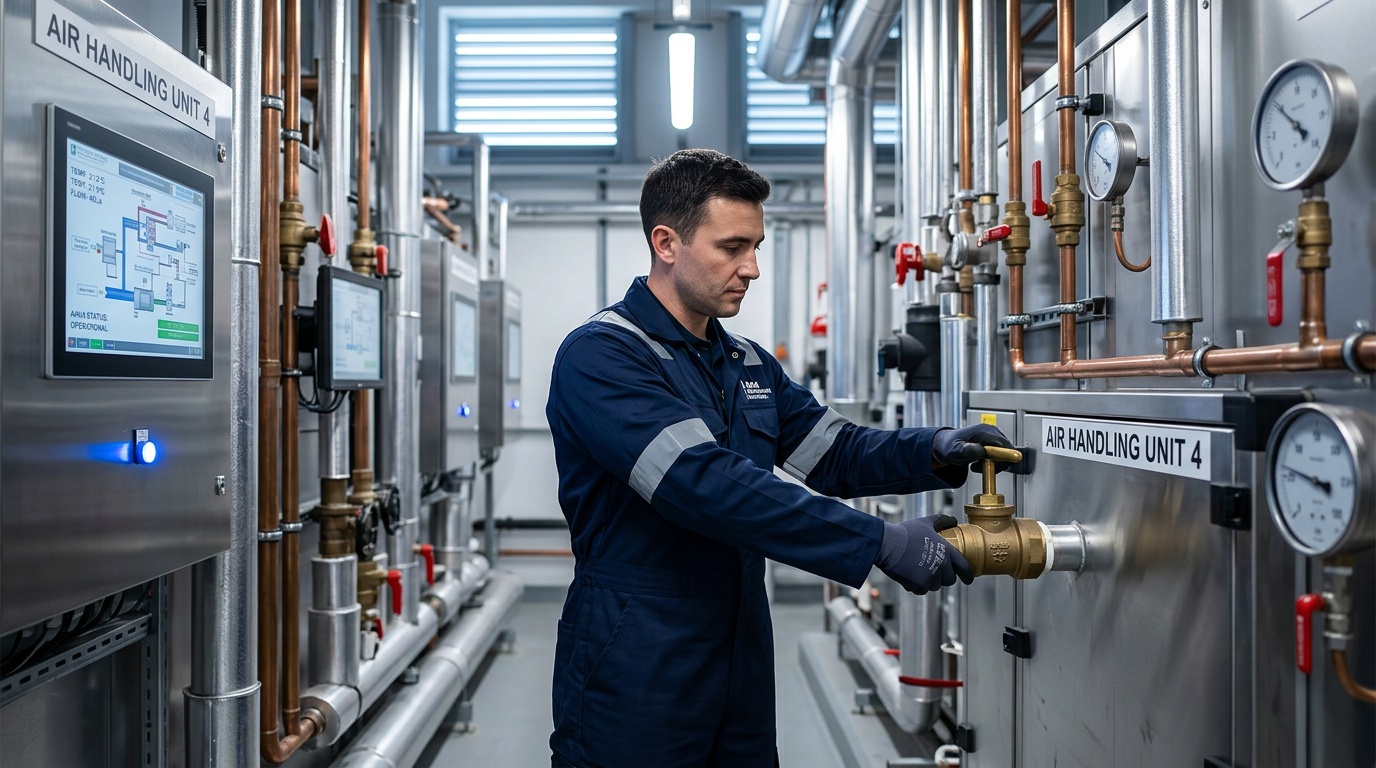
For many people in Bedfordshire and beyond, the question is not just about visiting the hospital but about joining its workforce. Whether you are a qualified clinician, an aspiring apprentice, or someone seeking non-clinical support roles, understanding how to navigate the recruitment process at Luton and Dunstable Hospital can save you time and frustration. The trust employs thousands of staff across two sites, and its commitment to developing local talent through apprenticeships and career pathways is a cornerstone of its workforce strategy.
How to apply for clinical and non-clinical roles
All vacancies for the Bedfordshire Hospitals NHS Foundation Trust are advertised on the NHS Jobs website (jobs.nhs.uk) and on the trust’s own careers portal at bedfordshirehospitals.nhs.uk/join-our-team. You can filter by site, department, or job type, including nursing, allied health professionals, medical roles, administrative posts, and estates and facilities positions. The application process typically requires you to create an NHS Jobs account, complete an online application form with evidence against the person specification, and upload your CV and cover letter. For clinical roles, you will likely need to provide professional registration numbers (e.g., NMC, GMC) and references from previous employers. Shortlisted candidates are invited to an interview, which may include a practical assessment or a presentation. The trust processes applications promptly, but competition for certain roles can be strong, so a well-prepared application that addresses each criterion is essential.
Apprenticeship programmes explained (levels, real stories)
The trust supports over 275 apprentices at any one time, covering levels 2 through 7 across clinical and non-clinical areas. Apprenticeships are available in nursing, healthcare support, business administration, IT, catering, and even engineering and estates management. For example, a level 2 healthcare support worker apprenticeship combines on-the-job training with college study, leading to a nationally recognised qualification without the need for a university degree. At higher levels, degree apprenticeships in nursing or operating department practice allow apprentices to earn while they learn, graduating with a full degree and no student debt. The trust deliberately recruits from local communities, so if you live in Luton, Dunstable, or surrounding areas, you have a genuine advantage. I have seen apprentices progress from entry-level roles into senior positions within five years, a testament to the trust’s investment in its people.
What to expect from the recruitment process
The recruitment process is designed to be fair, transparent, and aligned with NHS values. After you submit your application, the hiring manager reviews it against the essential and desirable criteria. If shortlisted, you will be invited to an interview at the Luton and Dunstable Hospital site or via video call. For clinical posts, you may also complete a numeracy and literacy test or a clinical scenario exercise. The trust aims to inform candidates of the outcome within two weeks of the interview. Successful applicants then undergo pre-employment checks: identity verification, right-to-work checks, occupational health clearance, and Disclosure and Barring Service (DBS) checks where required. Once cleared, you receive a formal offer and a start date. The process from application to start typically takes four to eight weeks, so patience and prompt response to requests are key.
Step-by-step guide to applying for jobs at Luton and Dunstable Hospital:
- Visit the trust careers page: Go to bedfordshirehospitals.nhs.uk/join-our-team or search NHS Jobs for Bedfordshire Hospitals NHS Foundation Trust.
- Create an account: Register on NHS Jobs with your email address and set up your profile, including your qualifications and work history.
- Search for vacancies: Use filters for location (Luton), department, and job type. Save searches to receive alerts for new roles.
- Read the person specification: Carefully review the essential and desirable criteria. Tailor your application to demonstrate how you meet each point using specific examples from your experience.
- Submit your application: Complete the online form, attach your CV and supporting statement, and submit before the closing date. Keep a copy for your records.
- Prepare for interview: If shortlisted, research the trust’s values, review common NHS interview questions, and prepare examples of your teamwork and problem-solving skills. Arrive early at the Lewsey Road site or ensure your video setup works.
- Complete pre-employment checks: Respond promptly to requests for references, DBS clearance, and occupational health forms. Delays can slow your start date.
- Accept the offer: Once all checks are cleared, you will receive a formal contract. Read it carefully, sign it, and begin your induction programme.
Frequently Asked Questions
What is the address of Luton and Dunstable Hospital?
Luton and Dunstable Hospital is located at Lewsey Road, Luton, Bedfordshire, LU4 0DZ. The hospital is known as Luton and Dunstable University Hospital and serves as a major acute site for the Bedfordshire Hospitals NHS Foundation Trust.
Is Luton and Dunstable Hospital a good hospital?
Yes, Luton and Dunstable Hospital received an overall rating of Good from the Care Quality Commission at its latest inspection. The trust was rated Good in caring, effective, and responsive areas, though safety required improvement in some specific services.
What services does Luton and Dunstable Hospital offer?
Luton and Dunstable Hospital provides a comprehensive range of services including an emergency department, maternity and neonatal care, bariatric surgery, cardiology, orthopaedics, paediatrics, oncology, and a renal dialysis unit. The hospital also runs a dedicated cancer centre and numerous outpatient clinics.
What are the visiting hours at Luton and Dunstable Hospital?
Visiting hours at Luton and Dunstable Hospital are generally from 11:00 to 20:00 daily, but hours can vary by ward. Areas such as maternity and intensive care have restricted hours, and the hospital recommends limiting visitors to two per patient to prevent overcrowding.
How do I book or cancel an appointment at Luton and Dunstable Hospital?
Outpatient appointments at Luton and Dunstable Hospital can be booked online through the NHS e-Referral service or by calling the appointments line on 0300 123 4001. To cancel or reschedule, contact the clinic directly using the number on your appointment letter.
What is the history of Luton and Dunstable Hospital?
Luton and Dunstable University Hospital merged with Bedford Hospital NHS Trust on 1 April 2020 to form Bedfordshire Hospitals NHS Foundation Trust. The merger combined two separate trusts under a single board, serving over 350,000 people across Bedfordshire and North Hertfordshire.
Who runs Luton and Dunstable Hospital?
Luton and Dunstable Hospital is run by the Bedfordshire Hospitals NHS Foundation Trust, which also manages Bedford Hospital. The trust was formed in April 2020 and operates both sites with a unified management structure and board.