1 new change
The Commercial Reality of Facing 1 New Change in Building Maintenance
In my 24 years working from the tools to the boardroom, I've watched facility managers scramble when regulations shift. The 1 new change hitting UK commercial buildings in 2026 is the Building Safety Act's expanded compliance requirements for mechanical and electrical systems. This isn't just paperwork. It's a fundamental shift in how we document, maintain, and prove the safety of every HVAC unit, boiler, and electrical panel in your estate.
Why Sudden Changes Hit Facility Managers Hardest
You're managing multiple sites across Birmingham and the West Midlands. Your budget is set. Your contractors are booked. Then a new legal requirement lands, demanding digital compliance trails for every piece of plant equipment. The big FM corporations send a generic email about “updated procedures”. But you're left wondering: are my current maintenance records actually compliant? Will I pass the next inspection?
The reality is stark. Under the new Building Safety Act provisions, incomplete maintenance records can trigger enforcement notices. For commercial landlords, this can mean tenant disputes and insurance complications. For business owners, it can risk operational shutdown during inspections.
A Real-World Scenario from My 24 Years on the Tools
Last month, a retail client in central Birmingham discovered their existing FM provider had been using paper logbooks for gas safety checks. When the building inspector requested digital certification with photographic evidence and timestamped engineer sign-offs, they had nothing. The site faced a compliance hold while we retrospectively surveyed every system and rebuilt the documentation. Three weeks of stress that could have been avoided.
The MEMS Standard: Every job we complete generates a digital compliance certificate within 24 hours, including photographs, engineer credentials, and SFG20 task completion evidence. This isn't an add-on. It's the baseline for 2026 compliance.
The Hidden Costs of Ignoring the Shift
The direct cost of non-compliance is obvious: fines, enforcement notices, potential closure. But the hidden costs hurt more. Insurance premiums rise when you can't prove systematic maintenance. Energy efficiency deteriorates when systems aren't properly documented and tuned. Staff productivity drops in poorly maintained environments.
I've seen businesses spend £15,000 on emergency upgrades that could have cost £3,000 with proper planning. The difference? Six months of proactive preparation versus reactive panic.
What Exactly is the 1 New Change Impacting UK Commercial Buildings?

The Building Safety Act 2022's full enforcement in 2026 mandates digital accountability for building systems, with clearer evidence expectations for maintenance and safety-critical work. Every maintenance task, every inspection, every repair must be traceable with verifiable evidence. This affects Gas Safe compliance, F-Gas regulations, electrical safety certificates, and SFG20 planned preventative maintenance schedules.
Breaking Down the Core Technical Shift
Previously, a competent engineer could complete a boiler service, fill in a paper certificate, and file it away. The new requirements demand:
- Digital photographic evidence of pre-service and post-service conditions
- Timestamped engineer credentials linked to each task
- Complete asset registers with unique identifiers for each piece of equipment
- Traceable maintenance histories accessible within 24 hours of request
- Better alignment between Gas Safe, REFCOM, and building management records where applicable
This isn't bureaucracy for its own sake. It's about proving duty of care. When a system fails, inspectors will ask: can you demonstrate you maintained it properly? Without digital evidence, the answer is legally “no”.
How It Ties into SFG20 and Gas Safe Standards
SFG20 has always been the industry benchmark for maintenance frequencies and task specifications. The 1 new change makes SFG20 adherence more directly auditable. Your maintenance provider must document which SFG20 tasks were completed, by whom, and with what results.
For Gas Safe work, the shift is equally significant. Every gas appliance service should link to the engineer's Gas Safe registration number, with photographic proof of flue tests, combustion analysis, and safety device operation. The days of “trust me, I checked it” are over.
Why Big FM Firms Are Struggling to Adapt
Large facilities management corporations built their business models on volume and standardisation. They deploy different engineers to each site, use centralised call centres, and rely on legacy paper-based systems with delayed digitisation. When regulations demand real-time digital accountability, their infrastructure often can't pivot quickly.
I've spoken to facility managers who receive compliance certificates three weeks after a service visit. By then, the window for producing evidence at short notice may have passed. The big firms aren't malicious; they're often structurally slow to move. MEMS built our systems from the ground up for digital-first compliance, because we knew this shift was coming.
| Compliance Requirement | Traditional FM Approach | MEMS Digital Standard |
|---|---|---|
| Maintenance Records | Paper logbooks, filed on-site | Cloud-based asset register with 24/7 access |
| Engineer Credentials | Annual checks, stored centrally | Live-linked Gas Safe and REFCOM checks per job |
| Photographic Evidence | Optional, if requested | Mandatory pre/post images, timestamped to each task |
| Certificate Delivery | 7–21 days post-service | Within 24 hours, digitally signed |
| SFG20 Task Tracking | Generic service descriptions | Specific SFG20 code completion logged per asset |
Technical Breakdown: How 1 New Change Affects Your HVAC and Plant Systems
Every commercial building relies on interconnected mechanical and electrical systems. The new digital compliance expectation affects each layer differently, but the principle stays the same: you need to be able to evidence what was done, when it was done, and who did it.
Step-by-Step Impact on Heating, Ventilation, and Air Conditioning
Your HVAC systems now require individual asset tags linked to maintenance histories. When we service an air handling unit, the digital record should show filter condition photographs, motor bearing temperatures, belt tension measurements, and control calibration results. This level of documentation protects you during insurance claims and regulatory inspections.
For heating plant, combustion analysis data needs to be digitally stored with each boiler service. Flue gas readings, CO levels, and burner adjustments aren't just technical checks any more. They're evidence of safe operation. If a carbon monoxide incident occurs, investigators will ask for proof of the last competent service with verifiable data.
Energy Efficiency Gains and Compliance Risks Explained
Properly documented maintenance directly affects your energy spend. When we log refrigerant pressures, compressor run times, and heat exchanger cleanliness, we create a performance baseline. Deviations can be spotted early, before efficiency drops and your utility bills spike.
The compliance risk works the other way. Missing documentation doesn't automatically mean your systems are unsafe; it means you can't prove they're safe. That distinction matters legally. An inspector won't accept “we definitely serviced it” without timestamped evidence. The burden of proof sits with you, the building operator.
Real MEMS Testing Data on Air-to-Water Heat Pumps and Solar PV
We've been testing integrated renewable systems across West Midlands commercial sites. Air-source heat pumps paired with solar PV need coordinated maintenance schedules. A digital compliance framework lets us track refrigerant charge levels, electrical generation data, and thermal output in one place. When systems underperform, diagnostic data is available quickly.
One Birmingham office block saw a 22% reduction in heating costs after we implemented proper digital monitoring. Not because we upgraded equipment, but because we could identify and correct inefficiencies within days instead of months.
Pros
- Digital records reduce disputes during inspections
- Timestamped evidence protects against liability claims
- Real-time system monitoring can catch failures before they cause downtime
- Joined-up compliance across Gas Safe, F-Gas, and electrical standards
- Energy tracking helps identify cost-saving opportunities quickly
Cons
- Legacy paper systems often need full digitisation
- Staff training is needed for new documentation protocols
- Initial asset tagging across an entire estate takes time
- Some providers cannot supply compliant evidence at the required speed
Actionable Steps: Audit Your Estate for the 1 New Change Today
Don't wait for an enforcement notice. Start preparing your compliance process now. The move to digital accountability takes planning, but it protects your assets and your people.
Your 5-Point Checklist for PPM Readiness
- Asset Register Audit: List every boiler, HVAC unit, electrical panel, and piece of plant equipment. Assign unique identifiers. If you can't produce this list in under an hour, your documentation is not where it needs to be.
- Maintenance History Review: Pull records for the past 12 months. Can you show when each system was last serviced, by whom, and what was done? Missing records are compliance gaps.
- Digital Certificate Check: Request your last five Gas Safe and electrical certificates. Are they digitally signed, with photographs and timestamped engineer credentials? Paper certificates may not meet 2026 expectations.
- SFG20 Task Mapping: Compare your current maintenance schedule against SFG20 recommended frequencies. Gaps between your schedule and SFG20 standards create avoidable exposure.
- Provider Capability Test: Ask your current FM contractor how they deliver digital compliance evidence. If the answer is vague or involves “we'll email PDFs later”, you may need a different partner.
Questions to Ask Your Current Provider
Be direct. Your building's compliance sits with you, regardless of who you hire. Ask these specific questions:
- How quickly can you provide digital certificates after completing work?
- Do your engineers carry Gas Safe and REFCOM credentials that can be checked at the time of attendance?
- Can you show me photographic evidence from our last three service visits?
- How do you track SFG20 task completion across our asset register?
- What happens if an inspector requests maintenance records during a site visit?
If they hesitate or promise to “look into it”, you're exposed. Compliance is not something providers can figure out later.
Quick Wins to Implement Before the Next Inspection
Start small, but start now. Photograph each major piece of plant equipment with its serial number visible. Create a simple spreadsheet linking each asset to its last service date. Request digital copies of all current compliance certificates and store them in a cloud folder your team can access.
These steps won't deliver full compliance on their own, but they show proactive duty of care. When inspectors see you're taking the 1 new change seriously, it shifts the conversation towards practical next steps.
The Partner Approach: At MEMS, we don't just service your equipment. We help you build a workable compliance process. Our first site visit includes an asset survey, digital tagging, and a compliance gap review. You'll know where you stand before an inspector arrives.
Our team specialises in HVAC maintenance services to ensure your mechanical systems meet all compliance regulations.
Don't forget, obtaining building regulations approval is an essential part of maintaining compliance with UK building safety requirements.
Partner with MEMS: Proven Solutions for the 1 New Change
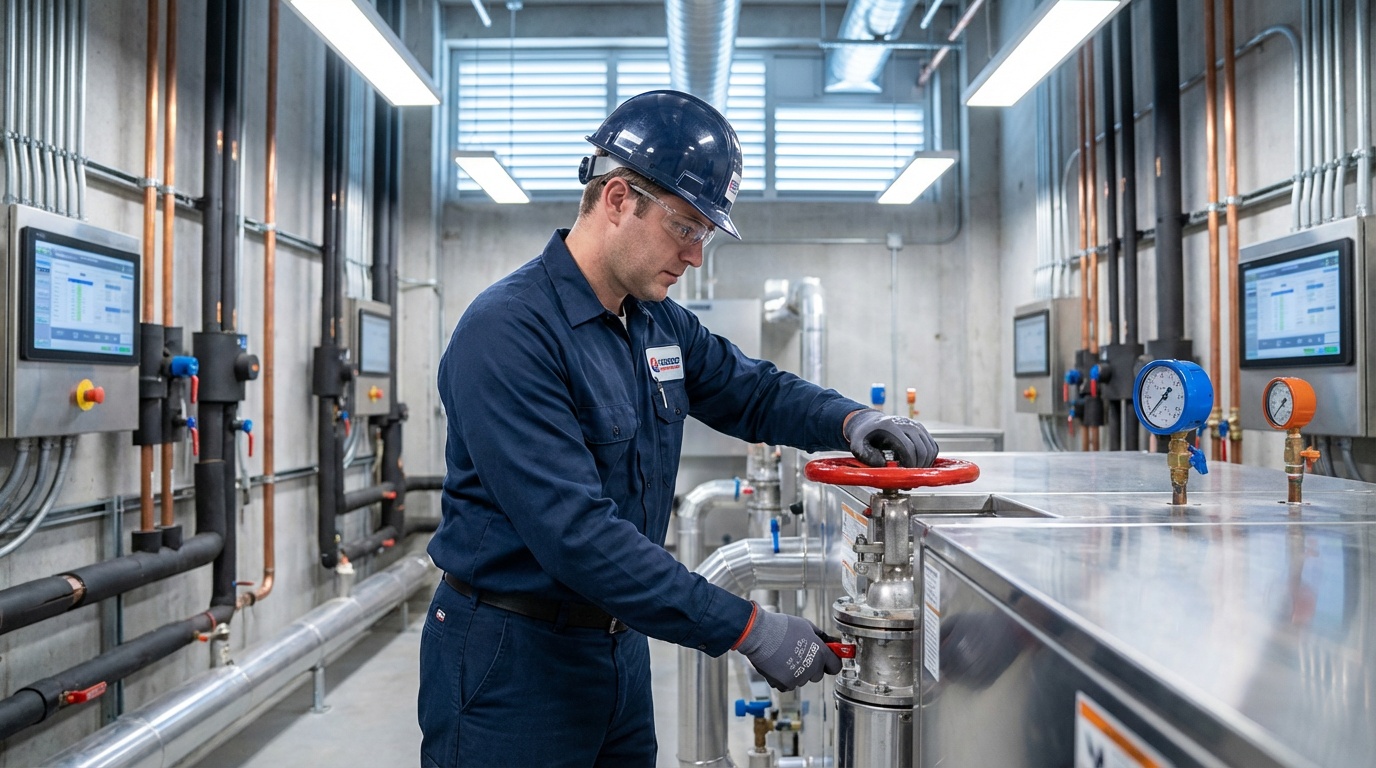
We built our business to be ready for this regulatory shift. While big FM firms scramble to retrofit digital systems onto older processes, MEMS runs digital-first by design. Every engineer carries tablet-based job management. Every task produces photographic evidence. Every certificate is issued within 24 hours.
Our Open-Door Working Process in Action
You're not buying a service package; you're gaining a technical partner who understands your building as well as you do. We assign dedicated engineers to your sites, so the person who services your boilers in January is the same person who returns in April. They know your system's quirks, your building's history, and what your compliance file needs to show.
When regulations change, we update your maintenance schedules early. You won't discover new requirements from an inspector. You'll hear about them from us first, with a plan in place.
Case Studies from Birmingham and West Midlands Sites
A multi-site retail client across the West Midlands faced the 1 new change with 47 buildings and no digital compliance set-up. We completed asset surveys across all sites in six weeks, tagged each piece of equipment, digitised five years of paper records, and implemented ongoing PPM schedules aligned to SFG20 guidance. When their insurance audit arrived, they passed without a single compliance query.
That's the MEMS difference. We don't just react to problems. We prevent them before they cause downtime, because downtime costs you money and compliance failures can cost you more.
Book Your Compliance Health Check Now
Our 24/7/365 helpdesk is staffed by engineers who understand the technical and compliance sides of building maintenance. Call us on 0121 380 5630 for a no-obligation compliance review. We'll assess your current maintenance records, identify gaps against 2026 expectations, and provide a clear action plan.
The 1 new change isn't optional. How you prepare for it determines whether you meet it calmly or in a rush. Choose the partner who's been ready all along.
Discover how our commercial HVAC installation and maintenance can keep your systems compliant and efficient year-round.
To explore further career opportunities, visit our latest news on industrial electrician jobs and industry updates.
For detailed legal requirements, the latest Building Safety Act regulations document is a vital resource to understand what is expected come 2026.
Frequently Asked Questions
What is the "1 new change" impacting UK commercial buildings?
The "1 new change" refers to the Building Safety Act 2022's expanded compliance requirements for mechanical and electrical systems in UK commercial buildings, fully enforced in 2026. It demands digital accountability for maintenance and safety-critical work, affecting areas like Gas Safe and F-Gas regulations. This means every task needs verifiable, traceable evidence.
How does the Building Safety Act change maintenance record requirements?
The Act fundamentally shifts how maintenance records are managed. It now requires digital photographic evidence, timestamped engineer credentials for each task, complete asset registers, and maintenance histories accessible within 24 hours. Paper logbooks are no longer sufficient to prove duty of care.
What are the risks for commercial buildings if they don't comply with the new regulations?
Non-compliance carries significant risks, including fines, enforcement notices, and potential operational shutdowns during inspections. Commercial landlords might face tenant disputes and insurance complications. Beyond direct costs, hidden costs like rising insurance premiums and deteriorating energy efficiency can also impact businesses.
How does this new compliance affect SFG20 and Gas Safe standards?
The new change makes SFG20 adherence directly auditable, requiring maintenance providers to document specific tasks completed, by whom, and with results. For Gas Safe work, every appliance service must link to the engineer's registration number, with photographic proof of tests and safety device operation. It's about verifiable proof, not just trust.
Why are traditional facilities management providers struggling with this shift?
Many large FM corporations rely on legacy paper-based systems and volume-based models, making them slow to adapt to real-time digital accountability. Their infrastructure often can't pivot quickly enough to provide the immediate, detailed digital evidence now required. I've seen compliance certificates delivered weeks after a service, which simply won't cut it anymore.
What kind of evidence is now required for M&E system maintenance?
The new requirements demand digital photographic evidence of pre-service and post-service conditions, along with timestamped engineer credentials linked to each task. You also need complete asset registers with unique identifiers for equipment and traceable maintenance histories accessible quickly. It's about proving you've done the job right, with solid proof.
Can MEMS help commercial buildings meet the 2026 compliance requirements?
Absolutely. At MEMS, we built our systems from the ground up for digital-first compliance. Every job we complete generates a digital compliance certificate within 24 hours, including photographs, engineer credentials, and SFG20 task completion evidence. We ensure your maintenance records are compliant and readily available.