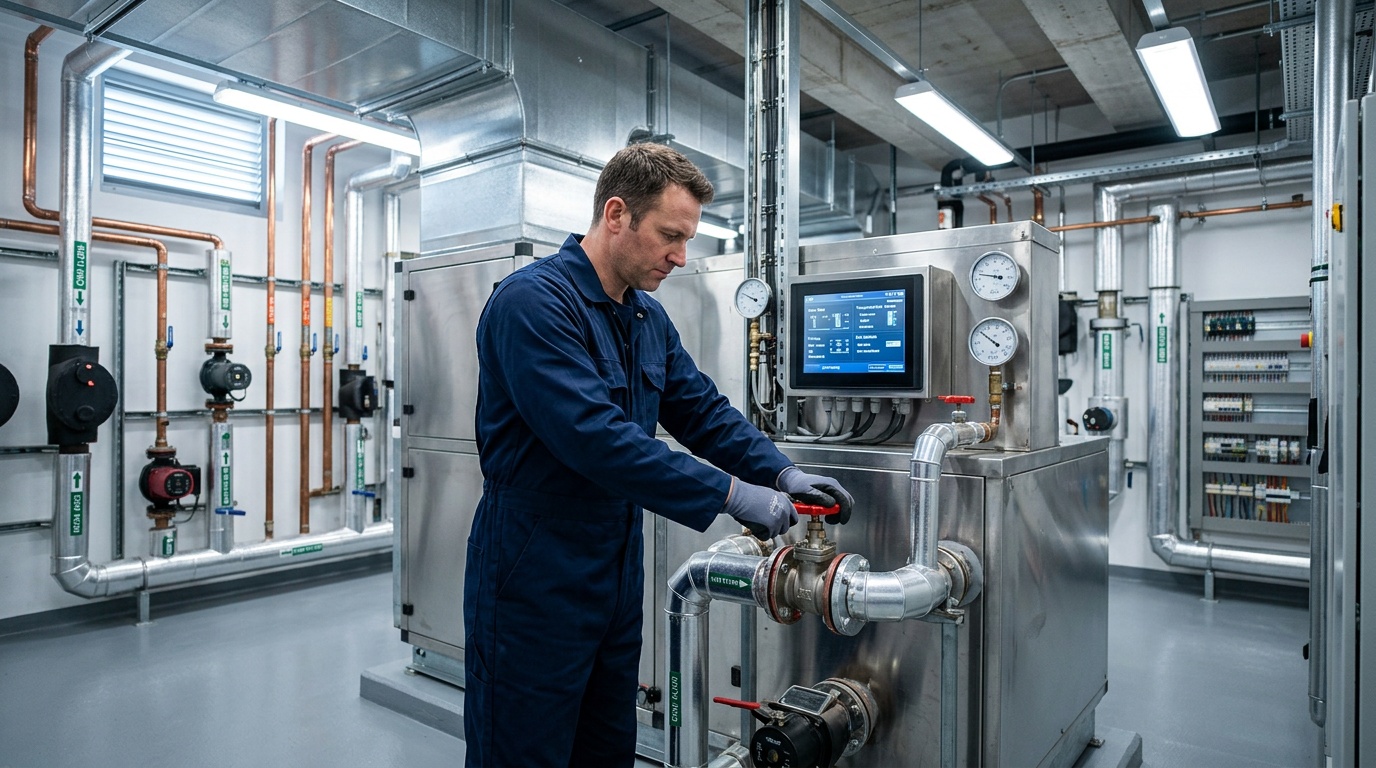
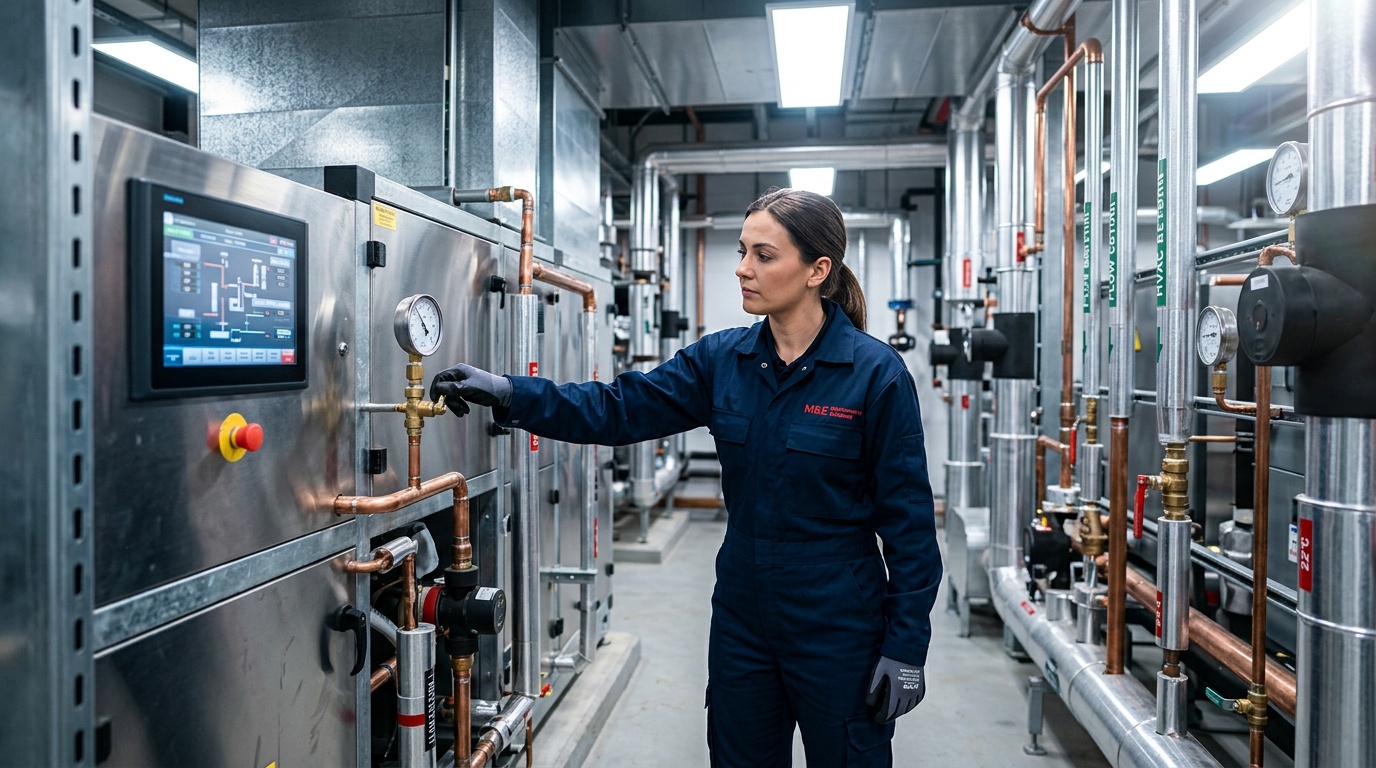
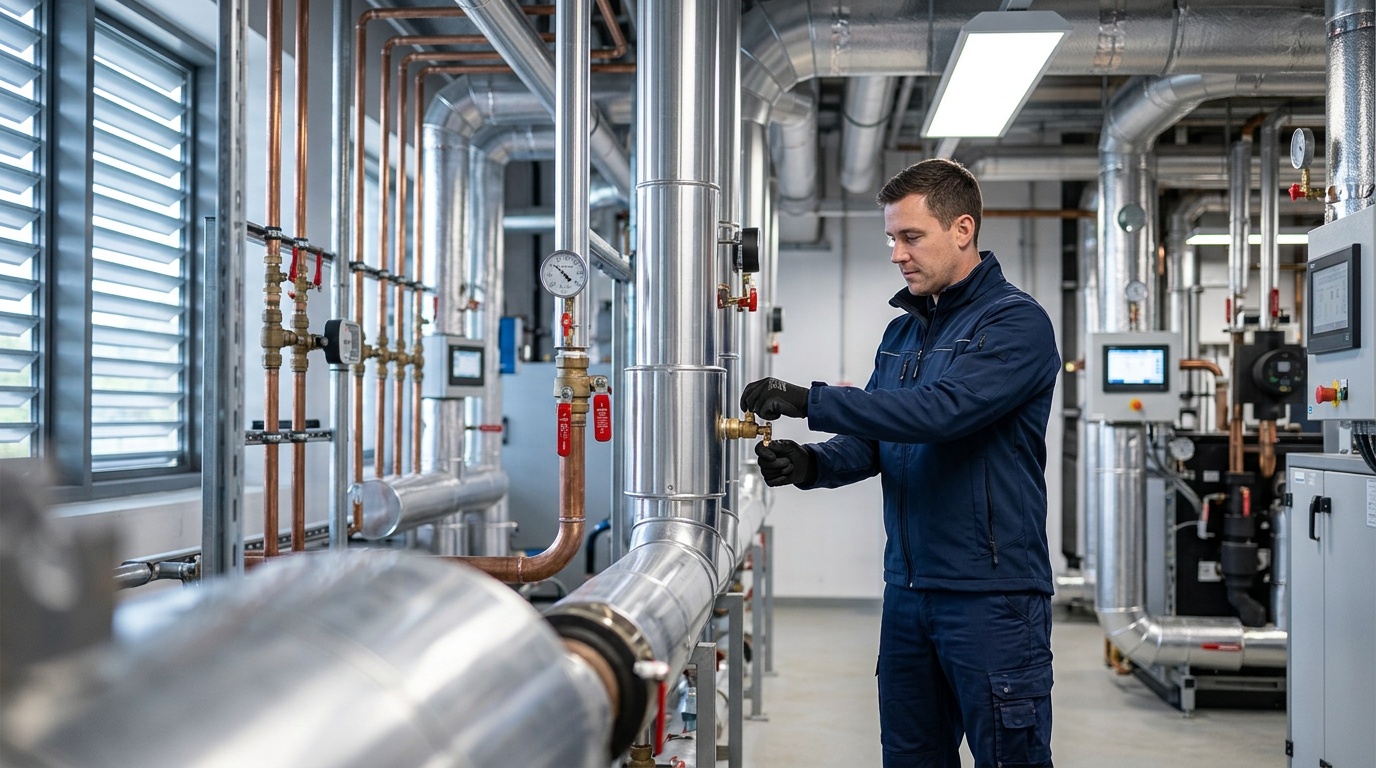
There exists a dangerous misconception in commercial property management that "if it isn't broken, don't fix it." But in my 24 years in this industry. From an apprentice on the tools to managing sites across the Midlands. I can tell you that silence in a plant room is often the loudest warning sign you will ignore. When your commercial air conditioning system grinds to a halt, it is more than just an inconvenience; it is a direct hit to your bottom line, your staff's productivity, and potentially your reputation.
Key Takeaways
Reactive maintenance approaches put your business at risk when critical cooling systems fail without warning.
Commercial air conditioning breakdowns strike directly at your operational continuity, workforce output, and client trust.
Quiet equipment rooms often mask developing faults that demand professional investigation before total failure occurs.
Decades of hands-on engineering experience reveal hidden problems that untrained staff routinely overlook.
At MEMS Facilities Maintenance, we bridge the gap between the boiler room and the boardroom. We understand that a building's mechanical systems are not just pipes and wires; they are essential assets that directly impact business continuity. This article avoids technical jargon; it addresses the commercial reality of keeping your air conditioning systems running smoothly, preventing costly breakdowns, and ensuring your premises remain compliant and productive. We shall cover the signs for which you should look when an issue arises and the fundamental reasons why proactive maintenance is not a cost, but a strategic investment.
The True Cost of an Unplanned AC Breakdown: Beyond the Thermostat
Why Reactive Repairs Are Costly
The 'silence' before an AC breakdown is deceptive. Many facility managers operate under the assumption that systems are fine until they fail. This reactive approach is akin to driving a car without ever checking the oil or tyre pressure. You might get away with it for a while, but the eventual failure will be far more catastrophic and expensive than regular servicing. An unplanned breakdown often means immediate, costly emergency call-outs, premium charges for parts, and potential downtime that directly impacts revenue. It is a cycle that drains budgets and creates unnecessary stress, turning a minor issue into a major crisis.
Impact on Business Operations: Lost Productivity and Revenue
For any commercial space, from offices to retail outlets and manufacturing floors, a functional air conditioning system is paramount. When it fails, especially during warmer months, the impact is immediate and severe. Overheating environments lead to decreased staff concentration, reduced productivity, and increased errors. For customer-facing businesses, uncomfortable temperatures can drive customers away, directly affecting sales and revenue. In sectors with specific temperature requirements, like data centres or food storage, a breakdown can lead to irreversible data loss or spoilage, incurring massive financial penalties and reputational damage. The true cost extends far beyond the repair bill.
The Hidden Costs: Energy Inefficiency and Asset Depreciation
Beyond the immediate cost of repair, a failing AC system silently inflates your utility bills. Components working harder due to blockages, low refrigerant, or electrical issues consume significantly more energy. Industry figures suggest that proper maintenance can improve system efficiency by up to 15-20% according to common industry statistics, meaning a neglected system is a constant drain on resources. Additionally, continuous strain on overworked components accelerates wear and tear, leading to premature asset depreciation. What might have been a standard repair could escalate into a premature system replacement if the underlying inefficiencies are ignored for too long.
Why Facility Managers Can't Afford to Wait: A Commercial Reality Check
As a facility manager, your primary responsibility is to ensure the smooth, safe, and efficient operation of your building. Waiting for an air conditioning unit to fail is a dereliction of that duty. It signals a reactive strategy that prioritises short-term cost-saving over long-term asset protection and operational continuity. The statistics are stark: common industry data indicates that up to 85% of AC failures are attributed to a lack of regular maintenance. This is not just a technical problem; it is a commercial one. Understanding the true financial and operational implications of an AC breakdown is the first step towards adopting a proactive maintenance strategy that safeguards your business.
Diagnosing Common Commercial AC Faults: An Engineer's Practical Guide
Signs Your Commercial AC Needs Immediate Attention (Beyond Warm Air)
A warm air output is the most obvious symptom of a failing air conditioning system, but it is rarely the first. Other critical indicators often appear long before the system stops cooling entirely. Listen for unusual noises like grinding, squealing, or buzzing from the unit. Notice any strange odours, such as a musty smell suggesting mould growth or a burning smell indicating electrical issues. Watch for excessive water leakage around the indoor unit, which points to drainage problems or refrigerant leaks. If you observe ice build-up on refrigerant lines or coils, or if the system cycles on and off erratically, it is a clear sign that professional air conditioning repair is needed promptly.
The Usual Suspects: Refrigerant Leaks, Compressor Issues, and Fan Problems
At the heart of many commercial AC failures are fundamental mechanical and chemical issues. Refrigerant leaks are a common culprit; low refrigerant levels mean the system cannot effectively absorb heat, leading to poor cooling and potential damage to the compressor. Compressors themselves are the 'engine' of your AC, and their failure is often catastrophic and expensive. Signs of compressor trouble include the unit failing to start, humming without running, or frequent cycling. Fan motor issues, whether in the indoor blower or the outdoor condenser unit, also severely impede airflow and heat exchange. A malfunctioning fan means warm air is not being moved efficiently, rendering the entire system ineffective.
Electrical Glitches and Control System Failures: Understanding the Risks
Commercial HVAC systems are complex electrical networks. Issues with wiring, capacitors, contactors, or the thermostat itself can bring everything to a halt. Flickering lights near the unit, tripped breakers, or a complete lack of response from the control panel are all indicators of electrical problems. These can range from simple fixes, like a blown fuse, to more complex issues requiring expert diagnosis. Control system failures, where the thermostat or building management system (BMS) fails to communicate correctly with the AC unit, can lead to erratic behaviour, constant cycling, or the system simply not operating as programmed. These electrical and control faults pose safety risks and require qualified technicians for safe and effective air conditioning repair.
Airflow Blockages: Filters, Coils, and Ductwork Explained
Proper airflow is essential for an efficient AC system. Clogged air filters are perhaps the most common and easily preventable cause of airflow problems. When filters are saturated with dust and debris, they restrict air passing over the evaporator coil, leading to reduced cooling and potential coil freezing. Beyond filters, dirty evaporator and condenser coils act like a blanket, preventing efficient heat transfer. If these coils are not cleaned regularly, the system has to work harder, consuming more energy and reducing performance. Issues within the ductwork itself, such as leaks, collapses, or blockages, can also severely compromise airflow to different zones within your building.
When DIY Stops and Professional Expertise Begins: What You Can Safely Check
While a facility manager should not attempt complex repairs, there are basic checks that can help diagnose issues and prevent minor problems from escalating. Firstly, always check your thermostat settings to ensure it is set to 'Cool' and the temperature is lower than the ambient room temperature. Next, locate and inspect your air filters. If they appear dirty, replacing them is a simple yet effective step. Ensure that the outdoor unit is free from debris like leaves or overgrown vegetation that could obstruct airflow. For electrical issues, the only safe DIY step is to check your building's circuit breaker panel for any tripped switches related to the HVAC system. Anything beyond these basic checks, such as refrigerant levels, internal component diagnostics, or complex electrical troubleshooting, requires the expertise of a qualified HVAC engineer. Attempting these tasks without proper training and tools can be dangerous and lead to further damage. For comprehensive air conditioning repair, always call the professionals.
Navigating Commercial AC Repair Costs and Compliance in the UK
As Stuart Butcher, I have seen firsthand how facility managers often face a difficult balancing act. On one side, there is the pressure to control expenditure, and on the other, the non-negotiable requirement to keep complex building systems like air conditioning operational and compliant. Understanding the true cost of air conditioning repair is not just about the invoice; it is about appreciating the full spectrum of factors involved, from the physical components and labour to the ever-present regulatory framework that governs commercial properties in the UK. My aim is to demystify this process, ensuring you can make informed decisions that protect your assets and your business continuity.
Understanding the Factors That Influence Repair Costs (Parts, Labour, Urgency)
The price tag for commercial air conditioning repair is rarely a fixed figure. Several variables come into play, and recognising them is key to budgeting effectively. Firstly, the complexity and age of your system are significant. A modern, large-scale VRF system will naturally incur different costs than a simpler split unit. The specific component requiring repair also dictates price; a fan motor replacement is generally less costly than a compressor overhaul. Labour rates vary based on the specialist skills required and the geographical location of the service provider. Urgency plays a major role. An emergency call-out, especially outside standard working hours or during peak demand, will invariably carry a premium compared to a scheduled preventative maintenance visit or a planned repair. This is why a proactive approach, focusing on preventative measures, is almost always more economical in the long run.
Typical Repair Cost Ranges for Commercial Systems in the UK
While specific figures depend heavily on the factors mentioned, it is useful to have a general understanding of potential expenses. For common commercial AC issues in the UK, such as a refrigerant leak requiring a recharge and leak detection, you might expect costs to range from £300 to £800, assuming no major component damage. A faulty fan motor or a capacitor replacement could fall within a similar bracket, perhaps £250 to £600. More substantial repairs, like addressing compressor issues or significant electrical control board failures, can easily escalate, potentially costing upwards of £1,000 to £3,000 or more, particularly for larger or more specialised systems. Please note that these are indicative ranges; a thorough diagnosis is always required for an accurate quote. For example, the Angi data shows US residential repairs averaging $150-$1,500, highlighting the variability even without considering commercial scale and UK-specific pricing structures.
The Critical Role of Compliance: SFG20, F-Gas Regulations, and Legal Obligations
In the UK, commercial building maintenance is not merely about keeping systems running; it is about adhering to stringent legal and safety standards. SFG20, the national standard for planned preventative maintenance, provides a framework for ensuring systems are maintained correctly and safely. Failure to comply can result in legal penalties, voided insurance policies, and significant safety risks for occupants. Furthermore, F-Gas Regulations are paramount for any system containing refrigerants. Certified engineers must handle refrigerant gases due to their environmental impact. Uncertified work or improper handling can lead to substantial fines and damage to your organisation's reputation. Ensuring your chosen service provider is fully accredited and knowledgeable about these regulations is as important as the repair itself. We ensure all our work, including our Commercial Ventilation Repair Services, meets these rigorous standards.
Preventative Maintenance vs. Emergency Repair: The Long-Term Financial Blueprint
The starkest financial difference lies between planned preventative maintenance (PPM) and emergency repair. Waiting for a breakdown to occur is invariably the most expensive strategy. A typical PPM visit, costing perhaps a few hundred pounds, can identify and rectify minor issues before they escalate, preventing costly component failures and energy wastage. Consider that up to 85% of AC failures are attributed to a lack of regular maintenance, according to common industry statistics. A PPM schedule can improve system efficiency by up to 15-20%, translating directly into lower energy bills. Conversely, an emergency call-out, especially for a major component failure, can cost thousands, compounded by lost productivity and potential business interruption. Investing in PPM is not a cost; it is a strategic financial decision that safeguards your assets and reduces overall operational expenditure.
How to Get Transparent, Accurate Quotes: Questions to Ask Your Service Provider
When seeking air conditioning repair, transparency in quoting is essential. Do not hesitate to ask specific questions. Start by asking for a detailed breakdown of costs, differentiating between parts, labour, and any call-out fees. Inquire about the warranty offered on both the parts and the labour for the repair. Understand the engineer's qualifications and certifications, particularly concerning F-Gas regulations for refrigerant handling. Ask about their adherence to SFG20 standards for planned maintenance. If the issue is complex, request a clear explanation of the fault and the proposed solution in plain English, not just technical jargon. For a comprehensive understanding of your building's needs, it is advisable to work with a provider that offers a full maintenance plan, not just ad-hoc fixes. This approach ensures you receive accurate, upfront pricing and understand the full scope of work before any commitment is made.
Beyond Repair: Integrating Sustainable Upgrades for Long-Term Efficiency
My philosophy at MEMS Facilities Maintenance is that every repair, and indeed every maintenance task, should be viewed not just as a fix, but as an opportunity. An opportunity to improve efficiency, reduce environmental impact, and future-proof your building's operational capabilities. While immediate air conditioning repair is often necessary to restore functionality, it is shortsighted to stop there. We must consider the broader lifecycle of your building's mechanical assets. This means looking beyond the immediate cost of a repair and evaluating the long-term value derived from strategic upgrades and a commitment to sustainability. It is about ensuring your systems work smarter, not just harder, for the benefit of your business and the planet.
Is It Time to Repair or Replace? A Strategic Decision for Asset Management
Deciding whether to repair an existing air conditioning system or invest in a new one is a common dilemma for facility managers. The 'rule of thumb' often suggests that if the cost of repair exceeds 50% of the cost of a new system, or if the system is more than 10-15 years old, replacement is usually the more sensible long-term option. However, it is not just about age and cost. Consider the system’s energy efficiency; older units are significantly less efficient than modern equivalents, leading to higher running costs that can quickly outweigh the initial repair expense. Additionally, the availability of parts for older systems can become an issue, making future repairs more difficult and expensive. A thorough assessment by a qualified engineer can highlight these factors, guiding you towards a decision that optimises both immediate comfort and long-term asset value.
Repair as a Stepping Stone: Identifying Opportunities for Energy Efficiency
Even when a repair is necessary, it can serve as a catalyst for improving your system's energy efficiency. For example, when addressing airflow issues, we might recommend upgrading to higher-efficiency filters or cleaning and insulating ductwork that may have been compromised. If electrical components are failing, it could be an opportune moment to assess the system's overall power consumption and identify opportunities for upgrades to more energy-efficient models or control systems. Even simple tasks like ensuring proper refrigerant levels and sealing minor leaks contribute to the system running at its optimal efficiency, reducing energy waste and lowering utility bills. Every repair should prompt a question: "How can we make this system perform better, not just function?"
The MEMS 'Open Door' Approach: Vetted Sustainable Technologies (Heat Pumps, Solar PV)
At MEMS, our commitment extends to advising on and integrating proven sustainable technologies. We do not push unproven fads; we champion solutions that deliver tangible benefits. This includes the strategic integration of heat pump technology, which offers efficient heating and cooling using renewable energy sources, significantly reducing reliance on fossil fuels. We also explore how solar photovoltaic (PV) systems can offset the energy consumed by your HVAC systems, providing a direct reduction in electricity bills and your carbon footprint. When considering upgrades or replacements, we work with you to assess the feasibility and return on investment for these technologies, ensuring they align with your building's specific needs and your organisation's sustainability goals. This proactive approach to energy management, alongside essential services like our Commercial Ventilation Repair Services, establishes a foundation for long-term operational savings and environmental responsibility.
How Proactive Maintenance Protects Your Investment and Future-Proofs Your Building
Regular, planned preventative maintenance is the bedrock of protecting your building's mechanical assets and ensuring their longevity. By adhering to a strict maintenance schedule, you not only minimise the risk of costly, disruptive breakdowns but also extend the operational lifespan of your equipment. This proactive approach means components are regularly inspected, cleaned, and serviced, preventing the wear and tear that leads to premature failure. It ensures systems operate at peak efficiency, keeping energy costs predictable and manageable. Future-proofing your building means anticipating technological advancements and regulatory changes. A well-maintained system is more adaptable, and by integrating efficiency upgrades during planned maintenance, you ensure your building remains compliant, cost-effective, and a comfortable environment for years to come.
Choosing a Partner for Long-Term Building Health, Not Just a Repair Service
The relationship between a facility manager and their maintenance provider should be a partnership, not just a transactional service. At MEMS Facilities Maintenance, we believe in building lasting relationships based on trust, transparency, and technical expertise. We are "big enough to cope" with complex commercial requirements across Birmingham, the West Midlands, and the UK, yet "small enough to care" about the individual needs of each client. This means you get corporate-level capability with the personal accountability of a family business. When you choose MEMS, you are not just getting a maintenance service; you are gaining a dedicated partner committed to the long-term health, efficiency, and compliance of your building. We work alongside you to develop strategies that minimise downtime, control costs, and ensure your premises are always operating at their best.
Partnering for Uptime: Ensuring Reliable Commercial AC Maintenance
As a business owner or facility manager, your primary concern is keeping operations running smoothly, efficiently, and without interruption. In the demanding world of commercial property, this means having confidence in your building's essential systems. Regarding climate control, an unexpected air conditioning failure is not just a technical hiccup; it is a direct threat to productivity, comfort, and your bottom line. At MEMS Facilities Maintenance, we understand that reliability is not a luxury; it is a necessity. Our mission is to be more than just a service provider; we aim to be your trusted partner in ensuring consistent uptime, safeguarding your assets, and delivering peace of mind through expert maintenance and rapid, effective air conditioning repair.
The MEMS Standard: Why 'Right First Time' Matters for Your Business
In my 24 years on the tools and managing operations, I have learned that cutting corners in maintenance or repair is a false economy. The MEMS 'Right First Time' standard is built on a foundation of engineering precision and commercial pragmatism. It means our engineers are not only highly skilled and certified but also trained to diagnose issues thoroughly and implement solutions that last. This approach minimises repeat visits, reduces unexpected costs, and prevents the cascading failures that can cripple a business. For you, it means greater certainty, predictable expenditure, and a building system you can rely on, day in and day out. We do not just fix problems; we solve them permanently.
24/7/365 Availability: When Breakdowns Don't Work 9-to-5
Commercial environments operate around the clock, and so do the risks of system failure. An air conditioning breakdown can strike at any moment. A sweltering summer afternoon, a chilly winter evening, or a public holiday. That is why MEMS Facilities Maintenance offers genuine 24/7/365 emergency support. When your systems fail, you need immediate, expert attention, not a voicemail box. Our dedicated team is on standby, ready to respond swiftly across Birmingham, the West Midlands, and throughout the UK. We understand that downtime translates directly into lost revenue and reputational damage, so our priority is always to restore your building's environment as quickly and efficiently as possible, no matter the hour or day.
What Sets MEMS Apart: 'Big Enough to Cope, Small Enough to Care'
We have built MEMS Facilities Maintenance to be the antidote to the faceless, bureaucratic FM corporations. Our ethos is simple: 'Big enough to cope, small enough to care.' This means we possess the technical expertise, resources, and operational capacity to handle complex commercial HVAC systems and large-scale projects. Yet, we retain the agility, personal accountability, and client-focused approach of a family business. You will not be just another contract number to us. You will have direct access to experienced professionals who understand your specific building needs and commercial pressures. This unique balance ensures you receive corporate-level capability with the dedicated attention and genuine care that only a smaller, committed firm can provide.
Building Long-Term Relationships: Our Commitment to Your Building's Health
My vision for MEMS has always been about fostering enduring partnerships. We aim to be your go-to experts for all your mechanical maintenance needs, not just for emergency fixes. This is achieved through consistent, high-quality service, transparent communication, and a proactive approach to asset management. We believe in educating our clients, providing clear insights into their building's performance, and collaborating on strategies that improve efficiency and reduce long-term costs. Whether it is routine servicing, planned preventative maintenance, or essential repairs, we are committed to understanding your operational goals and aligning our services to support them. Our success is measured by your building's sustained performance and your confidence in our support.
Take Control of Your Building's Performance: Book Your AC Health Check Today
Do not wait for an unexpected breakdown to highlight issues with your commercial air conditioning system. Proactive care is the most cost-effective strategy for ensuring reliability and efficiency. A comprehensive AC health check from MEMS Facilities Maintenance can identify potential problems before they escalate, saving you significant expense and disruption down the line. Our expert engineers will assess your system's condition, check for common faults, and provide recommendations for optimal performance and longevity. Investing in a health check is an investment in your business continuity and operational peace of mind. Let us help you maintain a comfortable, compliant, and efficient environment for your staff and customers.
Commercial air conditioning repair costs vary significantly depending on the specific fault and whether the issue is addressed proactively or reactively. Emergency callouts and premium parts for sudden breakdowns typically inflate budgets far beyond planned maintenance expenses. Facility managers should prioritise regular servicing to avoid these unpredictable financial hits.
What is the $5000 AC rule?
The $5000 AC rule is a residential guideline suggesting replacement when repair costs exceed five thousand dollars, but commercial facilities rarely apply fixed monetary thresholds. Business owners instead evaluate total operational impact, energy inefficiency, and asset depreciation when deciding between repair and replacement. Commercial HVAC systems require strategic financial planning rather than simple dollar comparisons.
What is the most common AC repair?
Commercial air conditioning repair frequently involves addressing refrigerant leaks and fan motor replacements. Low refrigerant levels prevent effective heat absorption, while worn fan components severely restrict airflow and heat exchange. Regular professional inspections identify these recurring issues before they escalate into system failures.
Can AC cause sinus issues?
Commercial air conditioning repair resolves respiratory discomfort by removing mould spores and stagnant air that accumulate when drainage blocks or dirty filters go unaddressed. Musty odours often indicate biological growth that directly impacts indoor air quality and staff wellbeing. Proactive maintenance ensures proper filtration and drainage to maintain a healthy working environment.
What is the most expensive repair on an AC unit?
Commercial air conditioning repair identifies compressor replacement as the most expensive intervention due to the component's role as the system's primary engine. Catastrophic compressor failure often requires extensive labour and costly parts, frequently pushing facility managers toward full system upgrades. Investing in preventative maintenance protects this critical asset and extends overall equipment lifespan.
"
About Stuart Butcher
Founder & Managing Director | M&E Maintenance Solutions
Stuart Butcher is the Founder and Managing Director of M&E Maintenance Solutions. A ""boots-on-the-ground"" leader, Stuart began his career as an apprentice combustion engineer, spending over 24 years mastering the trade before building a premier maintenance firm. He operates at the intersection of technical engineering precision and commercial asset management.
Driven by the philosophy that maintenance is cheaper than repair, Stuart works with Facility Managers and Building Owners across Birmingham, the Midlands, and the UK to ensure 24/7/365 compliance and uptime. He established M&E Maintenance Solutions to provide the technical capability of a large corporate provider while maintaining the personal accountability of a family-run business.
Last reviewed: June 29, 2026 by the M&E Maintenance Solutions Limited Team
heartlands birmingham hospital
Running a large healthcare facility like Heartlands Hospital in Birmingham means navigating a complex ecosystem where every cog must turn precisely. From ensuring patient comfort to maintaining critical life-support systems, the Mechanical and Electrical (M&E) infrastructure is the unseen backbone. As Stuart Butcher, founder of MEMS Facilities Maintenance, I’ve spent over two decades understanding that the silence in a plant room can be the loudest indicator of impending trouble. It's not just about keeping the lights on; it's about safeguarding operations, ensuring legal compliance, and managing assets effectively in an environment where failure is not an option.
Key Takeaways
Silence in a hospital plant room often means a hidden issue is building, so we focus on catching those early warning signs before they escalate into critical failures.
Your M&E partner must treat patient safety and operational continuity as the highest priority, not just keeping the lights on.
Strict compliance with healthcare regulations and proactive asset management form the foundation of a reliable hospital environment.
I’ve learned that the best maintenance teams prevent breakdowns from ever reaching the ears of patients or clinical staff.
This facility, part of University Hospitals Birmingham NHS Foundation Trust, presents unique M&E challenges due to its history and the demanding nature of healthcare provision. Understanding these specific hurdles is the first step for any facility manager aiming to maintain the highest standards. My approach, forged in the boiler rooms and refined in boardrooms, is to translate technical requirements into tangible business outcomes. Reliability, cost-efficiency, and absolute compliance. Let's look at what makes Heartlands Hospital’s M&E maintenance a distinct undertaking.
Heartlands Hospital: A Brief Overview of the Site and Its Significance
Location, Trust, and Key Services
Heartlands Hospital, situated in Bordesley Green, Birmingham, stands as a significant healthcare provider within the West Midlands. It operates as a key site for the University Hospitals Birmingham NHS Foundation Trust, one of the largest and most respected NHS trusts in the United Kingdom. This trust employs over 20,000 staff, underscoring the scale and importance of the services delivered across its facilities, including Heartlands Hospital. The hospital offers a broad spectrum of medical services, ranging from emergency care and acute admissions to specialist outpatient services and diagnostics. Its role is essential for serving the local population, making its operational continuity paramount.
The sheer volume of patients, staff, and visitors means that the M&E systems. Encompassing everything from heating, ventilation, and air conditioning (HVAC) to electrical power distribution, water systems, and medical gases. Must operate reliably around the clock. Any disruption, however brief, can have immediate and serious consequences. Therefore, a deep understanding of the hospital's specific location, its affiliation with the University Hospitals Birmingham NHS Foundation Trust, and the diverse range of critical services it provides is fundamental to developing and implementing an effective M&E maintenance strategy for Heartlands Birmingham Hospital.
The Importance of NHS Compliance and CQC Ratings
For any NHS facility, adherence to stringent regulations is not merely good practice; it is a legal and ethical imperative. Heartlands Hospital, like all healthcare premises, must meet the rigorous standards set by the Care Quality Commission (CQC). The CQC inspects healthcare providers to ensure they are safe, effective, caring, responsive, and well-led. Facility maintenance directly impacts the "safe" and "well-led" criteria, particularly concerning the built environment and the M&E systems that support patient care and safety. A facility’s CQC rating can be significantly influenced by the state of its infrastructure.
Compliance within the NHS extends beyond the CQC. Building services must also align with NHS Estates standards and various building regulations. These frameworks dictate requirements for everything from fire safety and infection control to energy efficiency and accessibility. For M&E maintenance, this translates into specific protocols for equipment testing, record-keeping, and preventative servicing. Ensuring that all systems at Heartlands Hospital meet these benchmarks is essential for maintaining its operational license, protecting patient well-being, and upholding the trust's reputation. It's a responsibility that demands specialist knowledge and a commitment to best practices in facilities management.
Key Insight
The CQC requires healthcare premises to be safe, clean, and well-maintained. Facility compliance, especially regarding M&E systems, directly impacts a hospital's CQC rating and, more importantly, patient safety.
The M&E Maintenance Challenges Unique to Heartlands Hospital
Legacy Infrastructure and the Impact of the 1970s Expansion
Heartlands Hospital has a history stretching back to 1893, but its significant expansion in the 1970s means that much of its current infrastructure comprises systems and building fabric from that era. Older M&E systems, while potentially reliable in their time, often present unique maintenance challenges. Components may be obsolete, making spare parts difficult and expensive to source. The original design might not account for modern energy efficiency standards or the increased demands of contemporary medical technology. Furthermore, integrating newer systems with older infrastructure can be complex, requiring careful planning and skilled engineering to ensure compatibility and prevent unforeseen issues.
The 1970s expansion, in particular, would have introduced a substantial amount of equipment and distribution networks. These systems have now reached or exceeded their expected operational lifespans. Managing a mix of original and subsequently updated systems requires a comprehensive understanding of the building's evolution. It means tracing services through older ductwork and pipe runs, identifying potential points of failure in aged electrical switchgear, and assessing the integrity of systems that may not have been designed for the current operational load. This legacy aspect is a primary factor differentiating M&E maintenance at older NHS sites like Heartlands Hospital from newer builds.
Balancing Operational Uptime with Patient Safety and Comfort
In a hospital setting, maintaining operational uptime is not just about business continuity; it is directly linked to patient safety and comfort. Critical areas such as operating theatres, intensive care units, and A&E departments rely on uninterrupted power, precise temperature and humidity control, and reliable ventilation for infection prevention. Any failure in these M&E systems can have immediate and severe consequences, from compromising sterile environments to impacting patient recovery. Planned Preventative Maintenance (PPM) is essential, but the timing and execution of any necessary works must be meticulously planned to avoid disrupting patient care.
Achieving this balance requires a maintenance partner who understands the unique demands of a healthcare environment. Emergency repairs must be swift and efficient, but the focus must always be on preventing such emergencies. This involves rigorous testing, proactive identification of potential issues, and the capacity to respond 24/7. Simultaneously, maintaining a comfortable environment for patients, staff, and visitors. Managing temperature, air quality, and lighting. Is paramount. These elements contribute to healing and overall experience, yet must be achieved within strict energy and operational budgets. It’s a constant juggling act between immediate needs, long-term asset health, and the absolute priority of patient well-being.
Key Insight
For a hospital, M&E system uptime directly translates to patient safety. Proactive maintenance is not an optional cost-saving measure but a fundamental requirement for patient care and operational integrity.
The Compliance Burden: Staying Ahead of CQC and NHS Standards
The regulatory environment for NHS facilities is one of the most demanding in any sector. Staying compliant with CQC standards, NHS Estates guidelines, and a raft of other legislation, such as Gas Safe regulations for gas appliances and F-Gas regulations for refrigeration systems, presents a significant challenge. For facility managers, this means maintaining an extensive and up-to-date library of compliance certificates, service records, and risk assessments. The expectation is not just to meet these standards but to demonstrate continuous adherence through thorough documentation and verifiable maintenance practices.
The sheer volume of M&E equipment within a hospital like Heartlands Hospital. From complex HVAC units and boilers to electrical distribution boards, emergency generators, and medical gas systems. Means that tracking and maintaining compliance for each item is a monumental task. A proactive M&E strategy is key here. It involves embedding compliance into every maintenance task, ensuring that technicians are fully trained on the latest standards, and utilising digital systems to manage documentation and track maintenance schedules. Failing to stay ahead of these requirements can lead to serious repercussions, including regulatory sanctions, damage to reputation, and, most critically, risks to patient safety, making compliance an unavoidable and central component of M&E management for Heartlands Birmingham Hospital.
Essential Compliance Checks for NHS Facilities
Up-to-date Gas Safe certificates for all gas-fired appliances.
Current F-Gas compliance documentation for refrigeration and air conditioning systems.
Legionella risk assessments and control measures for water systems.
Electrical installation condition reports (EICR) and portable appliance testing (PAT).
Fire safety system maintenance records (alarms, sprinklers, emergency lighting).
Ventilation system performance testing and filter replacement logs (essential for infection control).
Medical gas pipeline system (MGPS) safety and performance checks.
Building Management System (BMS) logs demonstrating environmental control.
How a Proactive M&E Strategy Supports Compliance and Reduces Costs at Heartlands
The financial pressures on NHS trusts are immense, and facility managers at sites like Heartlands Hospital face the constant challenge of balancing a demanding operational schedule with stringent budget constraints. In this environment, a reactive approach to Mechanical and Electrical (M&E) maintenance is not just inefficient; it is prohibitively expensive and poses significant risks to compliance and patient care. My experience, spanning over two decades from the shop floor to managing complex facilities, has shown me that true cost savings and unwavering compliance are built on a foundation of proactive, planned preventative maintenance (PPM).
This proactive strategy is about shifting the focus from simply fixing what has broken to systematically preventing failures before they occur. For a facility as critical as Heartlands Hospital, this means understanding that a small investment in regular, scheduled maintenance can avert catastrophic breakdowns, costly emergency repairs, and potential breaches of regulatory standards. It’s about treating M&E systems not as liabilities to be managed only when they fail, but as valuable assets that require ongoing care to ensure their longevity, efficiency, and compliance with standards like SFG20 and CQC requirements. By embracing a PPM model, we can transform maintenance from a cost centre into a strategic driver of operational excellence and financial prudence.
Planned Preventative Maintenance (PPM) vs. Reactive Repairs in a Hospital Setting
In a healthcare setting, the distinction between Planned Preventative Maintenance (PPM) and reactive repairs is stark, with direct implications for patient safety, operational continuity, and financial health. Reactive maintenance, the "fix it when it breaks" approach, is inherently unpredictable and costly. It leads to unplanned downtime, which in a hospital environment can jeopardise patient care, compromise sterile conditions, and disrupt critical services. Emergency call-outs often incur premium charges for labour and parts, and the hurried nature of repairs can sometimes result in suboptimal fixes that lead to repeat issues.
Conversely, Planned Preventative Maintenance (PPM) offers a structured, forward-thinking solution. It involves a schedule of regular inspections, servicing, and minor repairs designed to identify and address potential problems before they escalate. This systematic approach ensures that equipment operates at peak efficiency, extends its operational lifespan, and critically, maintains compliance with all relevant health and safety regulations, including those mandated by the CQC. For Heartlands Hospital, a structured PPM schedule is not merely about maintaining infrastructure; it is an integral part of patient safety protocols and a cornerstone of efficient resource management, preventing the domino effect of failures that plague reactive strategies.
Real-World Implications: Energy Efficiency, Asset Lifecycle, and Patient Satisfaction
The impact of a proactive M&E strategy extends far beyond simply keeping systems operational; it directly influences a hospital's energy consumption, the lifespan of its assets, and the overall comfort and satisfaction of patients and staff. Systems that are regularly maintained, such as HVAC units and boilers, operate more efficiently. This efficiency translates into significant energy savings, a critical consideration given that NHS estates account for a substantial portion of the NHS carbon footprint, with improving M&E efficiency being key to meeting net-zero targets. For Heartlands Hospital, optimising energy use through PPM means lower utility bills and a reduced environmental impact.
Furthermore, well-maintained equipment experiences less wear and tear, leading to an extended asset lifecycle. This means deferring costly capital expenditure on premature replacements. A system that runs smoothly also contributes to a more stable and comfortable internal environment, directly impacting patient satisfaction. Consistent temperature control, adequate air quality, and reliable lighting are not luxuries in a hospital; they are fundamental to patient recovery and well-being. By investing in PPM, facilities managers at Heartlands Birmingham Hospital can ensure their infrastructure supports patient care effectively, manages operational costs responsibly, and upholds the trust’s commitment to sustainability and efficiency.
Pros of Proactive M&E Strategy
Reduced risk of unexpected breakdowns and costly emergency repairs.
Improved energy efficiency, leading to lower utility bills.
Extended lifespan of M&E assets, deferring capital expenditure.
Consistent compliance with CQC, SFG20, and other NHS standards.
Enhanced patient safety and comfort through reliable system performance.
Better budget predictability and control for facility management.
Reduced operational downtime, ensuring continuity of critical services.
Cons of Reactive M&E Strategy
High costs associated with emergency call-outs and premium parts.
Increased risk of critical system failures impacting patient care.
Shorter asset lifespan due to neglected maintenance.
Potential for non-compliance with regulatory standards.
Unpredictable operational disruptions and downtime.
Higher energy consumption due to inefficient equipment.
Difficulty in budgeting due to unforeseen repair expenses.
Sustainable Technologies That Could Transform an Older NHS Hospital: Heat Pumps, Solar PV, and LED Upgrades
Modernising the M&E infrastructure of older NHS facilities like Heartlands Hospital presents a dual opportunity: to improve operational efficiency and significantly reduce environmental impact. As the NHS commits to ambitious net-zero targets, embracing sustainable technologies is no longer an option but a necessity. For a large campus with extensive heating, cooling, and power demands, retrofitting advanced systems can yield substantial long-term benefits. My team at MEMS Facilities Maintenance has been actively researching and trialling these technologies for years, recognising their potential to support organisations like University Hospitals Birmingham NHS Foundation Trust in achieving both cost savings and sustainability goals.
The challenge often lies in integrating new technologies with existing, often legacy, infrastructure. However, with careful planning and expert implementation, systems like air-to-water heat pumps, solar photovoltaic (PV) arrays, and LED lighting upgrades can be effectively deployed. These solutions not only contribute to a greener footprint but also offer tangible financial advantages through reduced energy consumption and lower maintenance requirements. The key is a phased, strategic approach, prioritising technologies that offer proven reliability and a strong return on investment, particularly within the unique operational context of a busy hospital. This section explores how these advancements can make a real difference.
Air-to-Water Heat Pumps: Feasibility and Benefits for a Campus Like Heartlands
Air-to-water heat pumps represent a significant step forward in efficient heating and cooling technology, offering a compelling alternative to traditional gas boilers and electrical resistance heating. These systems work by extracting ambient heat from the outside air. Even in cold weather. And transferring it to water that circulates through the building’s heating and hot water systems. For a large, sprawling campus like Heartlands Hospital, the feasibility of deploying heat pumps is high, particularly with modern, high-capacity units designed for commercial applications. Their ability to provide both heating and cooling can simplify plant room infrastructure.
The benefits are substantial. Heat pumps are considerably more energy-efficient than conventional heating methods, often achieving a Coefficient of Performance (COP) of 3 or more, meaning they deliver at least three units of heat for every unit of electricity consumed. This efficiency directly translates into reduced energy bills and a lower carbon footprint, aligning with NHS sustainability targets. Furthermore, as they typically run on electricity, they can be powered by renewable energy sources, further enhancing their environmental credentials. While the initial installation cost can be an investment, the long-term savings on energy consumption and reduced maintenance compared to complex boiler systems make them an attractive proposition for organisations seeking to modernise their M&E infrastructure.
Solar PV and LED Lighting: Cutting Operational Costs and Carbon Footprint
Beyond heating and cooling, two other fundamental M&E areas offer significant opportunities for cost reduction and carbon emission cuts: lighting and electricity generation. Upgrading to LED (Light Emitting Diode) lighting across a large facility like Heartlands Hospital can slash lighting energy consumption by up to 80% compared to older fluorescent or incandescent systems. LEDs also offer a longer lifespan, reducing maintenance costs and the frequency of bulb replacements, which is particularly beneficial in hard-to-reach areas within a hospital. The consistent, high-quality light they provide can also improve visibility and comfort for staff and patients.
Complementing LED upgrades, the installation of Solar Photovoltaic (PV) panels on available roof space or grounds can generate clean, renewable electricity on-site. This reduces reliance on grid power, lowers electricity bills, and contributes directly to the hospital's carbon reduction goals. While a full campus like Heartlands Hospital might not be able to generate all its power needs from solar alone, even partial generation makes a significant difference. The combination of reduced energy demand through LED lighting and on-site generation via solar PV represents a powerful strategy for cutting operational costs and environmental impact. MEMS Facilities Maintenance has been involved in advising on and implementing such integrated energy-saving solutions for years.
Key Insight
M&E Maintenance Solutions has been trialling air-to-water heat pumps and solar PV internally since 2007, ensuring proven reliability for NHS applications. This commitment to pre-vetting innovation means clients receive solutions that are not just advanced, but thoroughly tested for real-world performance.
The MEMS Vetting Process: Why Pre-Trialed Innovation Matters for NHS Sites
Introducing new technologies into a sensitive environment like a hospital requires a level of assurance that goes beyond manufacturer specifications. At MEMS Facilities Maintenance, our approach is rooted in practical application and rigorous testing. We don't recommend technologies to our clients, especially in critical sectors like healthcare, until they have been thoroughly vetted. This involves internal trials, pilot projects, and continuous monitoring to understand their real-world performance, reliability, and maintenance needs.
Our commitment to this pre-trialed innovation process is particularly important for NHS sites. The stakes are incredibly high; system failures can impact patient safety, and compliance must never be compromised. By investing our own resources in testing technologies such as air-to-water heat pumps and solar PV since 2007, we ensure that when we propose a solution for a facility like Heartlands Hospital, we are confident in its ability to perform reliably, efficiently, and sustainably over the long term. This due diligence protects our clients’ investments and ensures that the technologies we implement truly add value, rather than introducing unforeseen risks or complexities.
Lessons for Facility Managers: What Heartlands Hospital’s M&E Approach Teaches Us
After examining the specific M&E challenges at Heartlands Hospital, the value of proactive maintenance, and the potential of sustainable retrofits, a clear picture emerges. The lessons from this large NHS site apply directly to any facility manager responsible for a complex, high-stakes building. The core truth is that your M&E partner must be more than a contractor; they must be a strategic ally who understands the connection between engineering, compliance, and operational continuity. The following checklist and expert perspective will help you evaluate whether your current approach measures up.
A Checklist for Evaluating Your Current M&E Partner in Healthcare
Use this checklist to assess whether your M&E provider has the depth of experience and commitment needed for a healthcare environment like Heartlands Birmingham Hospital. Each item represents a non-negotiable standard for protecting patients, assets, and budgets.
Do they hold current accreditations for Gas Safe, F-Gas, and other relevant schemes?
Can they demonstrate a clear understanding of CQC standards and how M&E maintenance supports compliance?
Do they provide a documented Planned Preventative Maintenance (PPM) schedule aligned with SFG20?
Are they available 24/7 for emergency call-outs with guaranteed response times?
Do they offer digital compliance reporting and real-time access to service records?
Have they successfully worked on NHS or other critical healthcare facilities?
Do they proactively recommend energy-saving upgrades and sustainable technologies?
Is their approach focused on long-term asset lifecycle management, not just reactive fixes?
Do they provide a single point of contact for all M&E services, ensuring accountability?
Can they reference similar projects where they improved uptime, reduced costs, or enhanced compliance?
Building a Long-Term Partnership That Protects Patients, Assets, and Budgets
Selecting an M&E partner is not a transactional decision; it is the foundation of a relationship that directly impacts patient safety, financial performance, and regulatory standing. The best partnerships are built on transparency, shared goals, and a mutual commitment to excellence. At MEMS Facilities Maintenance, we see ourselves as an extension of the facility management team, not an external vendor. This means we invest time in understanding the unique operational rhythms of each site, from the demands of a busy A&E department to the precise environmental controls needed in a pharmacy.
Stuart Butcher, Founder and Managing Director of MEMS Facilities Maintenance, shares his perspective:
"In my 24 years in this industry, I have seen too many facility managers burned by cheap contracts that promise the world but deliver only reactive chaos. A hospital like Heartlands Birmingham Hospital cannot afford that risk. The right partner will not just fix a boiler; they will help you plan its replacement years in advance, advise on energy-efficient alternatives, and ensure every service visit leaves your compliance stronger than before. Look for a partner who treats your building as if they own it. That is the level of care that protects patients, extends asset life, and keeps budgets predictable. At MEMS, we are big enough to cope with the scale of an NHS trust, but small enough to care about every detail. That is the partnership model that works."
The lessons from Heartlands Hospital are clear: proactive, partnered maintenance is the only sustainable path forward. By applying this checklist and seeking a partner with genuine healthcare expertise, you can transform your M&E strategy from a cost centre into a strategic asset that supports your organisation’s core mission.
Frequently Asked Questions
What was the old name of Heartlands Hospital?
Heartlands Hospital was originally known as Yardley Green Hospital when it first opened in 1893. Over the decades it underwent several name changes and expansions, with the most significant rebuild taking place in the 1970s. Today it operates under University Hospitals Birmingham NHS Foundation Trust.
What does Heartlands Hospital Birmingham specialise in?
Heartlands Hospital Birmingham specialises in a broad range of acute and specialist services including emergency care, acute admissions, outpatient diagnostics, and medical treatments. It serves as a major healthcare hub for the local population in Bordesley Green and across the West Midlands. The hospital's critical care and surgical departments rely heavily on robust mechanical and electrical infrastructure.
How good is Heartlands Hospital?
Heartlands Hospital is rated by the Care Quality Commission (CQC) against strict standards of safety, effectiveness, and leadership. Its performance directly reflects the condition of its buildings and engineering systems, which is why proactive M&E maintenance is essential. A well-maintained facility supports better patient outcomes and helps the trust uphold its reputation.
What is the best hospital in Birmingham?
Birmingham has several excellent hospitals, each serving different needs. Heartlands Hospital is a key site within the University Hospitals Birmingham NHS Foundation Trust, offering vital emergency and specialist services. The 'best' hospital often depends on the specific treatment required, but Heartlands stands out for its comprehensive acute care and dedicated patient services.
What does 2222 mean in hospital?
In hospital terminology, 2222 is the emergency code used to summon the cardiac arrest or resuscitation team. It is a standardised emergency number across NHS hospitals, including Heartlands Hospital, to ensure a rapid response to life-threatening situations. Maintaining reliable communication and alarm systems is a critical part of the hospital's M&E infrastructure.
What makes M&E maintenance at Heartlands Hospital unique?
M&E maintenance at Heartlands Hospital is uniquely challenging because much of the infrastructure dates from the 1970s expansion. Older systems require sourcing obsolete spare parts and careful integration with modern medical equipment. Managing these legacy assets alongside strict NHS compliance and CQC standards demands specialist knowledge to prevent failures that could affect patient care.
"
About Stuart Butcher
Founder & Managing Director | M&E Maintenance Solutions
Stuart Butcher is the Founder and Managing Director of M&E Maintenance Solutions. A ""boots-on-the-ground"" leader, Stuart began his career as an apprentice combustion engineer, spending over 24 years mastering the trade before building a premier maintenance firm. He operates at the intersection of technical engineering precision and commercial asset management.
Driven by the philosophy that maintenance is cheaper than repair, Stuart works with Facility Managers and Building Owners across Birmingham, the Midlands, and the UK to ensure 24/7/365 compliance and uptime. He established M&E Maintenance Solutions to provide the technical capability of a large corporate provider while maintaining the personal accountability of a family-run business.
Last reviewed: June 29, 2026 by the M&E Maintenance Solutions Limited Team
farnham common
If you are considering a move to Farnham Common or already manage a property in this corner of South Buckinghamshire, you will know it offers a rare balance: green belt tranquillity and commuter convenience. This guide pulls together the local knowledge you need, from transport links and school catchments to the practical realities of maintaining a character home in a conservation area. No fluff, just the facts that matter.
Key Takeaways
Farnham Common delivers an appealing mix of peaceful green belt surroundings and straightforward access to London commuting routes.
School catchment areas play a major role in property decisions within this South Buckinghamshire village.
Character homes in conservation zones come with specific upkeep obligations that demand specialist knowledge and careful planning.
Property owners need to balance preserving period features with meeting modern maintenance and efficiency standards.
Farnham Common: Where Is It and What’s the Local Buzz?
Location, Transport and a Piece on Burnham Beeches
Farnham Common sits in the very south of Buckinghamshire, roughly three miles north of Slough and the same distance south of Beaconsfield. The village lies just inside the M25 corridor and is well served by the M40 (Junction 2 is a short drive north) and the M4 (Junction 6 near Slough). For rail commuters, Burnham station (about 2 miles south) offers a direct line to London Paddington in under 30 minutes, while Slough station provides even more frequent services.
The defining natural asset of the area is Burnham Beeches, a 540-acre ancient woodland managed by the City of London since 1880. This Site of Special Scientific Interest is not a manicured park; it is a working environment of pollarded beech trees, heathland, and ponds that dates back to the Bronze Age. For residents, the Beeches provides an immediate escape into nature, with marked trails, horse riding routes, and a café. According to the Farnham Royal Parish Council, over 40% of the working population remains within the parish or a few miles of it, which speaks to the employment opportunities nearby and the quality of life that keeps people local.
Local Spotlight: Burnham Beeches
Size: 540 acres of ancient woodland and heathland.
Managed by: City of London Corporation since 1880.
Key feature: A Site of Special Scientific Interest (SSSI) with some pollarded beeches over 400 years old.
For residents: Free entry, parking charges apply. Ideal for walking, cycling, and horse riding.
Farnham Common vs. Farnham Royal. Sorting Out the Villages
A common confusion for newcomers is the relationship between Farnham Common and Farnham Royal. The two are distinct villages within the same civil parish of Farnham Royal. Farnham Common is the larger settlement, with a population of around 6,000, while Farnham Royal village itself is smaller (approximately 5,000 parish residents in total). Farnham Royal lies about a mile to the west, centred on its historic church and green. The parish council administers both villages, as well as the hamlet of Britwell and parts of Burnham Beeches. So, when you see a property listed as “Farnham Common,” it may fall under the Farnham Royal parish for council tax and planning, but for all daily purposes it remains firmly in Farnham Common. The distinction matters most for school catchment areas and local council services, so always check the exact address.
Life in Farnham Common: Schools, Shops, and Community
Essential Amenities: From Supermarkets to Sunday Roasts
The village centre clusters around the pond and the parade on Beaconsfield Road. Here you will find a well-stocked Co-op for daily groceries, a post office, a chemist, a butcher, and several independent shops. For a bigger supermarket, the Sainsbury’s at Slough and Waitrose in Beaconsfield are each a ten-minute drive. When it comes to eating out, The Royal Standard on the common offers a solid Sunday roast and a beer garden, while The White Horse at nearby Farnham Royal is a popular gastropub. Those seeking a curry or Chinese takeaway will find several options on the parade. Farnham Common is not a restaurant destination, but it has enough to cover a weeknight meal without leaving the village.
Schools: A Parent’s Guide to the Catchment
Primary education is provided by Farnham Common Infant School and Farnham Common Junior School, both rated Good by Ofsted and sited on the same campus. For secondary schooling, the catchment includes Burnham Grammar School and Beaconsfield High School (for girls), both rated Outstanding, as well as the co-educational Burnham Park Academy. The grammar schools in nearby Buckinghamshire maintain selective entry, so parents should plan for the 11-plus if they want a grammar place. The village also has a popular nursery and a thriving pre-school group, making it a practical choice for families from the start.
Clubs, Societies, and That Village Feel
Community life in Farnham Common is anchored by the Farnhams Society, which organises the annual village fête and maintains local heritage records. The Rotary Club of Farnham Common meets weekly and runs fundraising events for local charities. Sports clubs include Farnham Common Cricket Club, Burnham Football Club, and the Burnham Beeches Running Club. St Mary’s Church, a Grade II* listed building, serves as a community hub with regular services and a busy social calendar. The combination of a strong parish council, active societies, and the green space of the Beeches gives the village a genuine community feel that is increasingly rare in the commuter belt. Whether you are a long-term resident or a newcomer, there are plenty of ways to get involved.
The Farnham Common Property Market: Character, Cost, and Green Belt Rules
Property Types and Price Ranges. What You Get for Your Money
Farnham Common’s housing stock is dominated by characterful older homes. 1930s semis, Victorian terraces, and detached bungalows set within generous plots. The village sits within the South Bucks green belt, which constrains new development and pushes prices upward. According to Farnham Royal Parish Council, the average house price in the civil parish is roughly twice the South Bucks average, reflecting the scarcity of properties and the appeal of living beside Burnham Beeches. You will find everything from two-bedroom cottages near the common (often listing above £500,000) to substantial four- or five-bedroom detached homes that can exceed £1.5 million. The M40 and M4 corridors make the area popular with commuters, and the proximity to Slough and Beaconsfield adds to the demand. Buyers should expect to pay a premium for any property within walking distance of the village centre or the Beeches.
Indicative property prices in and around Farnham Common (2026)
Property type
Typical price range
Key features
Two-bedroom cottage (period)
£450,000. £650,000
Often terraced, limited parking, conservation area
Three-bedroom semi-detached (1930s)
£600,000. £850,000
Common style, scope for extension with permission
Four-bedroom detached (modern)
£900,000. £1,500,000
Newer builds, double garage, larger gardens
Detached bungalow
£650,000. £1,200,000
High demand, often on large plots, green belt restrictions
Luxury country house (5+ beds)
£1,500,000. £3,000,000
Period character, outbuildings, Burnham Beeches proximity
Buying in a Conservation Area: What Every Owner (and Estate Manager) Needs to Know
A significant portion of Farnham Common lies within the Burnham Beeches conservation area, and several individual buildings. Notably St Mary’s Church. Are Grade II listed. For anyone considering a purchase, it is essential to understand how these designations affect your freedom to alter and maintain the property. Permitted development rights are restricted: changing windows, adding roof lights, or altering external materials often requires planning permission. Tree preservation orders (TPOs) are common, so any works near protected trees must be approved. For estate managers handling multiple properties, these rules create an extra layer of compliance that cannot be ignored. I have seen too many projects stall because the owner assumed standard building regulations applied. Before you exchange contracts, check the exact conservation area boundary with the South Bucks planning department and instruct a surveyor familiar with building fabric repairs and maintenance.
Checklist for potential residents
Essential pre-purchase checks
Confirm whether the property is in a conservation area or green belt
Check for any existing Tree Preservation Orders on the land
Request a building survey from a specialist in older homes
Review the local authority’s heritage and design guidance documents
Assess energy performance certificate (EPC) rating and upgrade feasibility
Ask about planned maintenance for shared drives or common land
Red flags to watch for
Unauthorised alterations visible from previous works
Recent enforcement notices from the council
Overgrown trees near the property that may be protected
Listed building status that has not been declared in the agent’s particulars
Maintaining an Older Home in Farnham Common. A Practical Guide
Why 1930s Semis and Listed Cottages Need a Different Approach
The charm of a 1930s semi or a Victorian cottage in Farnham Common comes with genuine engineering challenges. Solid brick walls lack cavity insulation, roof timbers were not designed for modern heating systems, and original plumbing is often lead or galvanised iron. In my 24 years of hands-on work across Buckinghamshire, I have found that these properties suffer most from poorly specified maintenance. A standard replacement boiler might function, but it will not address the draughts or the heat loss through solid walls. More critically, using modern sealants on historic fabric can trap moisture and accelerate decay. Estate managers responsible for multiple older units need to adopt a planned preventative maintenance schedule that respects the building’s construction. At M&E Maintenance Solutions, we always begin with a condition survey that identifies the exact build materials and typical failure points before recommending any work.
Energy-Efficient Upgrades That Work in a Green Belt Setting
Green belt rules do not prevent you from making your home more energy efficient, but they do limit external alterations. Fortunately, several upgrades are both permissible and effective. Internal wall insulation (using breathable materials for older walls) can significantly reduce heat loss without changing the external appearance. Renewable energy solutions like air source heat pumps can be installed in gardens or on flat roofs if they are not visible from the highway; planning officers in South Bucks generally support them where the carbon saving is clear. LED lighting and smart heating controls are simple changes that any homeowner can implement without consent. I advise clients to prioritise measures that improve the building fabric first. Draught-proofing and loft insulation. Before investing in generation technology. Always confirm with the local planning authority whether consent is needed, especially for listed properties.
Compliance and Care: Staying on the Right Side of Local Rules
Beyond planning restrictions, maintaining an older home in Farnham Common means adhering to the same statutory compliance that governs commercial premises. Gas safety checks, F-Gas regulations for air conditioning, and the SFG20 standard for building services maintenance apply equally to homes with rental tenants or offices within the curtilage. I have visited properties where a domestic contractor installed a boiler without a Gas Safe certificate because they assumed a private owner would not need one. That is a dangerous assumption. Both legally and in terms of insurance cover. For estate managers, the key is to create a single compliance log that tracks every inspection, service, and certification date. Conservation area status adds an extra layer: any maintenance that affects the external appearance (e.g., repointing in cement rather than lime mortar) could breach planning law. Work with tradespeople who understand the local rules and have recent experience in the area.
Key insight for older buildings: Never replace like-for-like without questioning why the original system failed. A 1930s boiler that stopped working may have been sized incorrectly for the building’s heat loss. Re-commissioning with the same output wastes energy and money. Always conduct a heat-loss calculation first.
How M&E Maintenance Solutions Supports Your Farnham Common Property
Planned Preventative Maintenance for Residential Estates and Commercial Spaces
I have spent 24 years working in the mechanical and electrical trades, much of it across South Buckinghamshire, and I know that the properties in Farnham Common present a distinct set of challenges. Older fabric, conservation area restrictions, and green belt planning rules mean that standard maintenance approaches often fall short. At MEMS, we do not offer a one-size-fits-all contract. For residential estates and commercial spaces in this area, we design a Planned Preventative Maintenance (PPM) schedule that starts with a thorough condition survey of the building’s systems. We identify the age of the boiler, the condition of the electrical distribution, and any compliance gaps in gas, F-Gas, or SFG20 standards. Then we build a visit calendar that prevents failures before they happen, rather than reacting to breakdowns. This is not a theoretical selling point. It is the engineering reality of keeping a 1930s semi or a listed office block running efficiently through a British winter.
The value of proactive maintenance becomes obvious when you consider the alternative. A missed filter change on an air handling unit can increase energy consumption by 15 per cent. A failed flue on a gas boiler in a conservation area property can lead to a dangerous carbon monoxide risk and an expensive emergency call-out. Our 24/7 support team is always on standby, but our aim is to ensure you never need that service. We manage compliance logs centrally and provide digital certificates within 24 hours of every visit, so estate managers and homeowners can demonstrate due diligence without chasing paperwork. For Farnham Common properties, where insurance valuations and local authority oversight are both elevated, that peace of mind is worth the investment.
Trialled and Tested: Why Our ‘Innovation Policy’ Matters Locally
One of the most common questions I hear from clients managing older homes in the green belt is: “Will a heat pump actually work in my building?” Too many installation companies specify technology based on brochure data, not real-world performance in a solid-wall, draughty structure. That is why MEMS operates an internal innovation policy: we trial new equipment on our own building before we recommend it to a client. We test heat pumps, smart controls, and LED lighting upgrades in a period property setting to see how they perform under realistic heat loss conditions. If a unit struggles to maintain temperature in a Victorian cottage during a cold snap, we know not to specify it for a similar home in Farnham Common. This hands-on approach saves our clients money and frustration. It also means that when we propose an energy-efficient upgrade, we can prove it works in the local housing stock, not just in a showroom.
This policy extends to compliance technology, too. We have trialled digital inspection apps that integrate with SFG20 schedules, and we only adopt the ones that speed up reporting without sacrificing accuracy. For estate managers handling multiple properties, that means faster turnarounds on service reports and fewer site visits for the same scope of work. In a village where planning rules can slow down even routine maintenance, efficiency is not a convenience. It is a competitive advantage.
Need a maintenance partner who understands Farnham Common’s built environment?
Call us now for a no-obligation survey of your commercial or residential property. We serve the whole of South Buckinghamshire with 24/7 support and a proactive engineering approach.
Farnham Common is a highly desirable area thanks to its green belt location, proximity to Burnham Beeches, and strong community spirit. The village offers good schools, convenient transport links to London, and a genuine village feel with active societies and local amenities. It attracts families and professionals seeking a balance between countryside living and commuter convenience.
Is Farnham Common in Slough?
No, Farnham Common is not in Slough. It sits in the south of Buckinghamshire, roughly three miles north of Slough. While Slough provides nearby shopping and rail services, Farnham Common is a distinct village within the civil parish of Farnham Royal.
Is Farnham Common in Bucks?
Yes, Farnham Common is in Buckinghamshire, specifically in the south of the county near the M25 corridor. It lies just inside the green belt and is administered by Farnham Royal Parish Council. The village is well served by the M40 and M4 motorways and is close to Burnham and Slough railway stations.
What is Farnham Common famous for?
Farnham Common is best known for its proximity to Burnham Beeches, a 540-acre ancient woodland that is a Site of Special Scientific Interest. The area is also recognised for its character homes, green belt restrictions that preserve the landscape, and its appeal to commuters needing fast trains to London Paddington.
What celebrities live in Farnham Common?
The article does not name specific celebrities living in Farnham Common. However, the area's privacy, green belt setting, and large detached homes often attract high-profile professionals and business owners who value quiet surroundings while staying within reach of London.
How good are the schools in Farnham Common?
Farnham Common has strong primary education with Farnham Common Infant and Junior Schools both rated Good by Ofsted. For secondary education, Burnham Grammar School and Beaconsfield High School are rated Outstanding, though they require selective entry via the 11-plus exam. This makes the village a practical choice for families planning ahead.
What is the commute like from Farnham Common?
The commute from Farnham Common is very convenient. Burnham station, about two miles away, offers direct trains to London Paddington in under 30 minutes, while Slough station provides even more frequent services. The M40 and M4 motorways are also close by, giving good road access for drivers.
"
About Stuart Butcher
Founder & Managing Director | M&E Maintenance Solutions
Stuart Butcher is the Founder and Managing Director of M&E Maintenance Solutions. A ""boots-on-the-ground"" leader, Stuart began his career as an apprentice combustion engineer, spending over 24 years mastering the trade before building a premier maintenance firm. He operates at the intersection of technical engineering precision and commercial asset management.
Driven by the philosophy that maintenance is cheaper than repair, Stuart works with Facility Managers and Building Owners across Birmingham, the Midlands, and the UK to ensure 24/7/365 compliance and uptime. He established M&E Maintenance Solutions to provide the technical capability of a large corporate provider while maintaining the personal accountability of a family-run business.
Last reviewed: June 27, 2026 by the M&E Maintenance Solutions Limited Team
How much for HVAC maintenance in commercial Birmingham properties?
As a business owner or facility manager in Birmingham, you're constantly balancing operational efficiency with the bottom line. Your commercial property’s Heating, Ventilation, and Air Conditioning (HVAC) system is a critical asset, directly impacting productivity, tenant comfort, and your energy expenditure. Yet, many businesses treat HVAC maintenance as an afterthought, a cost to be minimised. My 24 years in this trade, from apprentice engineer to leading M&E Maintenance Solutions, have shown me time and again that this approach is a costly mistake. Understanding how much for HVAC maintenance in commercial Birmingham properties? is the first step towards securing reliable, cost-effective operation.
Key Takeaways
Skipping regular HVAC maintenance to save money now leads to bigger expenses later when breakdowns hit and energy bills climb.
Treating your heating and cooling system as a critical business asset rather than an afterthought directly improves tenant comfort and productivity.
Proactive maintenance keeps your Birmingham commercial property running efficiently and avoids emergency callouts that disrupt operations.
Understanding the real cost of HVAC maintenance helps you budget accurately and choose service agreements that protect your bottom line.
My years on the tools taught me that the cheapest quote often costs the most in lost time, repairs, and energy waste.
This isn't about simply replacing filters or topping up refrigerant. It’s about strategic asset management that prevents expensive failures, ensures legal compliance, and keeps your business running smoothly. Ignoring your HVAC system's health is like ignoring a ticking time bomb; the eventual explosion is far more damaging than consistent, planned attention.
The Birmingham Business Case for HVAC Maintenance: Beyond the Thermostat
The silence in a plant room is often deceptive. For a commercial property in Birmingham, an unexpected HVAC failure isn't just an inconvenience; it’s a direct hit to your revenue and reputation. Imagine a retail unit in the Bullring experiencing a heating failure in January, or an office block in the Jewellery Quarter losing air conditioning during a summer heatwave. Customers leave, employees can't work effectively, and perishable goods might be lost. The cost of lost trade, emergency repairs, and potential damage to your brand can far outweigh the investment in regular maintenance. This is the stark commercial reality we address daily.
The old adage, "if it ain't broke, don't fix it," is a dangerous strategy for any commercial entity. It implies that maintenance is only necessary when a system has already failed. However, commercial HVAC systems are complex pieces of machinery operating under constant demand. Components wear down, efficiency degrades, and minor issues can escalate into major, costly breakdowns. A slightly inefficient compressor or a dirty coil might not be immediately noticeable, but it’s silently increasing your energy consumption and putting strain on other parts of the system. Planned Preventative Maintenance (PPM) is not an optional extra; it's a fundamental part of operational risk management.
Understanding your commercial property’s specific HVAC needs is paramount. Factors such as the size of the building, the type of business operating within it (e.g., data centre, retail, office space), the age and complexity of the installed systems, and the local environmental conditions all influence maintenance requirements. A large industrial unit in the West Midlands will have significantly different needs compared to a small office suite in Harborne. Acknowledging these variables helps in tailoring a maintenance plan that is both effective and economically sensible, moving the conversation from a simple cost to an investment in business continuity.
Key Risks of Neglecting Commercial HVAC Maintenance
Disrupted Operations: Unexpected downtime leads to lost productivity, missed deadlines, and inability to serve customers.
Increased Energy Bills: Inefficient systems work harder, consuming more power and inflating utility costs.
Premature System Failure: Small issues left unaddressed can lead to catastrophic breakdowns, requiring expensive replacements.
Compliance Violations: Failure to maintain systems according to regulations (e.g., Gas Safe, F-Gas) can result in hefty fines and legal liabilities.
Tenant Dissatisfaction: Poor indoor comfort levels can lead to complaints, lease terminations, and difficulty attracting new tenants.
Reduced Asset Value: A poorly maintained HVAC system negatively impacts the overall value and appeal of your commercial property.
Decoding Birmingham's Commercial HVAC Maintenance Costs: What Influences the Price?
When considering how much for HVAC maintenance in commercial Birmingham properties?, it’s important to break down what typically forms the basis of that cost. A comprehensive maintenance service usually includes a suite of checks and services designed to keep your system running optimally and safely. This typically covers routine inspections of key components like compressors, fans, filters, belts, and electrical connections. It also includes cleaning of coils and drainage systems, lubrication, refrigerant level checks, and calibration of thermostats and controls. For many commercial properties, quarterly servicing, aligning with standards like SFG20, is the benchmark to ensure continuous compliance and optimal performance. The price you pay reflects the expertise of qualified engineers, the time spent on-site, and the comprehensive nature of the service delivered.
Several factors significantly influence the final price of commercial HVAC maintenance in Birmingham. The scale and type of your property are primary drivers; a large industrial facility with multiple high-capacity units will naturally incur higher costs than a small retail unit. The age and complexity of the HVAC system also play a role; older systems or those with intricate control mechanisms often require more specialised attention and can be more prone to issues. Birmingham's specific economic conditions, including local labour rates for skilled HVAC engineers (which typically range from £40-£70 per hour for qualified professionals), also factor into the overall cost. Furthermore, the required frequency of visits, dictated by system type and usage, will impact the annual expenditure.
The service model you choose critically affects budgeting and maintenance outcomes. A one-off reactive visit for a breakdown can appear cheaper in the short term, costing between £150-£800 per visit, but it’s a costly gamble. These emergency call-outs are often more expensive due to the urgency, premium part costs, and the potential for business interruption. In contrast, Planned Preventative Maintenance (PPM) contracts, typically ranging from £800-£8,000+ annually depending on system complexity, offer predictable costs and significant long-term savings. Preventive maintenance, as evidenced by industry data, can reduce emergency repair costs by 30-50% and is a far more economical approach. PPM contracts often include regular, scheduled visits, priority response, and sometimes discounted rates on parts and labour, providing peace of mind and budget certainty.
Adherence to the SFG20 standard is a hallmark of professional commercial HVAC maintenance in the UK. SFG20 provides a comprehensive set of planned maintenance schedules, ensuring that all essential tasks are performed consistently and compliantly. For a Birmingham business, working with a provider that champions SFG20 means your system is being maintained to a recognised industry benchmark, maximising its lifespan and operational efficiency. This standard covers routine checks, safety inspections, and preventative measures, all contributing to reduced energy consumption. Often yielding 5-20% annual savings on utility bills. And preventing costly failures. It’s an assurance that your maintenance investment is well-placed and that your property adheres to best practices.
Commercial HVAC Maintenance Service Model Comparison
Feature
One-Off Reactive Visits
Planned Preventative Maintenance (PPM) Contract
Cost Structure
Variable, unpredictable, higher per-visit cost for emergencies
Fixed annual or monthly fee, predictable budgeting
Focus
Repairing breakdowns after they occur
Preventing breakdowns through regular servicing
Cost Efficiency
Low short-term, high long-term due to repairs and downtime
Often reactive, risk of non-compliance between visits
Proactive adherence to standards (e.g., SFG20), regular documentation
Energy Efficiency
Degrades over time, addressed only during failures
Maintained and improved through regular calibration and cleaning
Typical Annual Cost (UK Estimate)
Highly variable; multiple visits can exceed contract cost
£800. £8,000+ (depending on property size and system complexity)
Beyond Routine Checks: Future-Proofing Your Birmingham HVAC Estate
As Stuart Butcher, I’ve seen countless commercial buildings in Birmingham, from bustling retail centres to modern office complexes. The conversation around HVAC maintenance often stops at preventing immediate breakdowns. But the true value lies in looking ahead, integrating systems that not only perform reliably but also align with your business's broader strategic goals, like sustainability and long-term financial health. This means moving beyond the basic checklist and embracing innovation. For facility managers and business owners, understanding how advanced technologies and proactive strategies can safeguard your asset value and operational continuity is key to staying competitive. It’s about ensuring your building works smarter, not just harder.
At M&E Maintenance Solutions, we operate with an 'open door' policy towards evaluating and testing new HVAC technologies. This isn't just about staying current; it's about identifying genuinely beneficial solutions that can be integrated into your existing infrastructure. We rigorously vet technologies such as Air to Air heat pumps, Air to Water heat pumps, Solar PV, LED Lighting, and Solar Thermal. Before we recommend any system, we assess its performance, reliability, and, importantly, its return on investment for our clients. For a commercial property in Birmingham, adopting these sustainable technologies, often supported by government incentives, can significantly reduce operational expenditures and contribute to a more environmentally responsible business profile. This forward-thinking approach ensures your building isn't just functional today, but future-proofed for tomorrow.
Integrating energy efficiency is no longer a niche concern; it's a core business imperative, especially with the UK's drive towards Net-Zero targets. Well-maintained HVAC systems are the backbone of energy efficiency. A system running at peak performance can reduce energy consumption by 5-20% on annual bills, according to industry benchmarks. For commercial properties in Birmingham, this translates directly into lower operating costs. Furthermore, by incorporating renewable energy sources like Solar PV or efficient heat pump technology, you actively reduce your carbon footprint. Regular maintenance ensures these systems operate at their optimal efficiency, maximising the energy savings and compliance benefits. For businesses aiming to meet sustainability goals or simply reduce their environmental impact, a well-managed HVAC system is a powerful tool.
The concept of Total Cost of Ownership (TCO) is fundamental when assessing the financial impact of HVAC maintenance. While the initial purchase price of equipment is a factor, it's the ongoing costs. Energy consumption, repairs, replacements, and maintenance. That accumulate over the system's lifespan. Proactive maintenance, which typically costs around $0.20-$0.50 per square foot annually in the US, can prevent costly emergency repairs and extend equipment life by 25-40%. Systems over 10-15 years old, for instance, see maintenance costs rise significantly, often by 15-30% annually. Investing in Planned Preventative Maintenance (PPM) contracts, rather than sporadic reactive fixes, dramatically reduces these long-term expenditures. This strategic approach ensures a predictable budget and significantly lowers the overall TCO for your commercial property's HVAC estate, making the question of how much for HVAC maintenance in commercial Birmingham properties? a matter of long-term investment strategy rather than short-term expense.
Beyond operational savings and compliance, a well-maintained HVAC system offers substantial, often unseen, benefits for tenant satisfaction and asset value. Comfortable, consistent indoor environments are paramount for employee productivity and tenant retention. In retail or hospitality settings, it directly impacts customer experience. For commercial landlords in Birmingham, a property with reliable climate control and lower energy bills is far more attractive to potential tenants, commanding higher rents and reducing void periods. A proactive maintenance regime, adhering to standards like SFG20, ensures system reliability and longevity, thereby protecting and even enhancing the capital value of your commercial asset. It signals to tenants and investors alike that the property is managed professionally and its long-term viability is a priority.
For businesses looking to quantify these benefits, understanding the potential ROI is important. While a precise figure depends on the specific system and property, a well-structured maintenance plan can yield significant returns. For example, preventing a major component failure, which could cost thousands in emergency repairs and lost revenue, is a clear win. Furthermore, the energy savings alone from optimised systems can often cover a substantial portion of the maintenance contract cost. A 10% reduction in energy bills for a large office block can amount to tens of thousands of pounds annually. This aligns with the core principle that how much for HVAC maintenance in commercial Birmingham properties? is best answered by evaluating the return on investment in reliability, efficiency, and asset longevity.
Client Success Snippet: Reducing Energy Spend
A medium-sized office block in Solihull, managed by one of our clients, was experiencing rising energy bills despite having a relatively modern HVAC system. Following a comprehensive audit and the implementation of our tailored PPM schedule, we identified inefficiencies in airflow and heat exchange due to accumulated dust and minor calibration drifts. Within six months of consistent, SFG20-aligned maintenance, their energy consumption related to HVAC dropped by 12%, directly impacting their OPEX and contributing positively to their corporate sustainability reporting. This illustrates how proactive, expert maintenance translates into tangible financial and environmental benefits.
Your Birmingham HVAC Maintenance Action Plan: Questions to Ask Your Provider
As a facility manager or business owner in Birmingham, choosing the right HVAC maintenance partner is as critical as the maintenance itself. You need a provider who understands your specific needs, offers transparency, and delivers consistent, high-quality service. This isn't about finding the cheapest option, but the one that offers the best value and reliability for your commercial property. To help you cut through the noise and identify a truly competent partner, here are essential questions to pose to any potential HVAC maintenance provider. Asking these will help you gauge their local understanding, technical prowess, and commitment to your business continuity.
Firstly, probe their local presence and understanding. Ask: "Are you truly local to Birmingham, and how does your understanding of the local labour market impact service delivery and cost?" A provider with a strong local team, like M&E Maintenance Solutions, can offer faster response times, better comprehension of regional challenges, and potentially more competitive rates due to lower travel overheads. Birmingham's specific economic conditions mean local labour rates for qualified engineers typically range from £40-£70 per hour. Understanding how a provider navigates this landscape is key to managing your budget effectively.
Next, assess their commitment to quality and continuity. Enquire about their "Right First Time" metric: "How do you ensure your engineers have the necessary expertise, and what processes are in place to ensure continuity of service for my specific systems?" A consistent engineer, familiar with your property's HVAC setup, can identify subtle issues before they become major problems. This expertise is built on experience, akin to my own 24 years mastering the trade, ensuring that fixes are not just temporary but are engineered for longevity. For commercial properties, especially those with complex systems, this continuity is invaluable for maintaining optimal performance.
Compliance is non-negotiable in commercial building management. You must verify: "Do you guarantee adherence to UK standards such as SFG20 for planned maintenance and hold the necessary Refcom F-Gas Certification and Gas Safe Register credentials?" Failure to comply with regulations like F-Gas can result in severe penalties, and SFG20 provides a benchmark for best practice that ensures your system is maintained safely and efficiently. A provider that champions these standards demonstrates a commitment to legal obligations and operational excellence, reassuring you that how much for HVAC maintenance in commercial Birmingham properties? also encompasses regulatory peace of mind.
Finally, consider operational resilience. Ask: "What is your true 24/7/365 availability? How quickly can you respond to an emergency, and what are your protocols for ensuring my business is protected even outside standard office hours?" For commercial operations, an HVAC failure at any hour can be catastrophic. Knowing you have a dedicated, responsive team ready to mobilise, regardless of the day or time, is essential. This level of service ensures that unexpected issues are managed swiftly, minimising downtime and protecting revenue streams, reinforcing the value proposition beyond just the basic service visit.
Your HVAC Provider Checklist
Local Expertise: Do they understand Birmingham's market and labour costs?
Engineer Continuity: Is there a plan for consistent engineer assignment?
Technical Competence: How is engineer skill verified and maintained?
Compliance Assurance: Are SFG20, F-Gas, and Gas Safe certifications guaranteed?
Emergency Response: What is the guaranteed response time for 24/7 call-outs?
Transparency: Are pricing structures clear, with no hidden fees?
Proactive Approach: Do they focus on preventative maintenance (PPM) over reactive repairs?
Reporting: Do they provide clear, digital service reports and compliance documentation?
Securing Your Building's Future: The MEMS Difference for Birmingham Businesses
Transitioning from reactive repairs to a proactive maintenance strategy is not just about minimising breakdowns; it's about achieving genuine peace of mind. For facility managers and business owners in Birmingham, this means entrusting your critical building systems to a partner who prioritises reliability, compliance, and long-term asset protection. The difference lies in the approach: moving from a transactional service provider to a dedicated ally invested in your property's operational health and financial efficiency. This shift ensures your building functions optimally, supports your business objectives, and safeguards your investment for years to come.
At M&E Maintenance Solutions, our reputation is built on this very principle. Delivering expertise with genuine care. We understand that while large FM corporations can "cope," they often lack the personal accountability that comes with a family-business ethos. Our team, comprising seasoned engineers with deep technical knowledge, works diligently to ensure every aspect of your HVAC system is maintained to the highest standards, whether it's routine servicing or complex system upgrades. We believe in fixing things properly the first time, a philosophy that saves our clients considerable expense and downtime in the long run. This commitment is why we are recognised as the Best HVAC Company in the Midlands UK for commercial maintenance and compliance.
For businesses asking how much for HVAC maintenance in commercial Birmingham properties?, the answer is best framed by the value of that investment. Proactive maintenance, guided by standards like SFG20, can slash emergency repair costs by 30-50% and boost system lifespan by up to 40%. Furthermore, the energy savings from well-maintained systems often range from 5-20% annually, directly impacting your operational expenditures. By focusing on sustainable solutions and preventative care, we help you achieve compliance, reduce your carbon footprint, and ensure your commercial property remains a productive, comfortable, and valuable asset. Ready to optimise your commercial property's HVAC? Partner with M&E Maintenance Solutions for maintenance that pays dividends.
Ready to discuss a proactive maintenance plan tailored to your Birmingham commercial property? Contact us today for expert advice and a comprehensive assessment.
How much does commercial HVAC preventive maintenance cost?
The cost varies based on building size, system complexity, and service frequency. Qualified engineers in Birmingham typically charge between £40 and £70 per hour for planned work. A comprehensive quarterly plan usually provides the best value while ensuring SFG20 compliance.
How often should commercial HVAC units be serviced?
Commercial systems generally require quarterly servicing to maintain optimal performance and meet industry standards like SFG20. Regular checks catch minor wear before it causes major breakdowns or spikes in energy bills. This schedule aligns with the high operational demands of Birmingham business environments.
What do commercial HVAC companies charge per hour?
Skilled engineers in the region typically bill between £40 and £70 per hour for commercial maintenance tasks. This rate covers the technical expertise, compliance documentation, and comprehensive inspections required for complex systems. Budgeting for this hourly rate helps facility managers plan accurate annual maintenance forecasts.
What is the $5000 rule for HVAC?
This rule helps businesses decide whether to repair or replace a failing unit by multiplying the repair cost by the system's age. If the resulting figure exceeds £5,000, replacement is usually the more economical choice. Applying this calculation prevents wasted expenditure on aging commercial equipment.
How much for HVAC maintenance in commercial Birmingham properties?
Pricing depends on your property type, system age, and the required visit frequency. A tailored preventative plan typically costs less annually than reactive emergency call-outs, which can range from £150 to £800 per incident. Investing in scheduled upkeep protects your revenue streams and ensures tenant comfort year-round.
What services are typically included in commercial HVAC maintenance packages?
Standard packages cover thorough inspections of compressors, fans, filters, and electrical connections. Technicians also clean coils, check refrigerant levels, lubricate moving parts, and calibrate building controls. These steps ensure your equipment runs efficiently while meeting all Gas Safe and F-Gas regulations.
"
About Stuart Butcher
Founder & Managing Director | M&E Maintenance Solutions
Stuart Butcher is the Founder and Managing Director of M&E Maintenance Solutions. A ""boots-on-the-ground"" leader, Stuart began his career as an apprentice combustion engineer, spending over 24 years mastering the trade before building a premier maintenance firm. He operates at the intersection of technical engineering precision and commercial asset management.
Driven by the philosophy that maintenance is cheaper than repair, Stuart works with Facility Managers and Building Owners across Birmingham, the Midlands, and the UK to ensure 24/7/365 compliance and uptime. He established M&E Maintenance Solutions to provide the technical capability of a large corporate provider while maintaining the personal accountability of a family-run business.
Last reviewed: June 26, 2026 by the M&E Maintenance Solutions Limited Team
doncaster central library
Arriving at Danum Gallery, Library and Museum: Location, Parking, and Access
Doncaster Central Library is located within the Danum Gallery, Library and Museum (DGLAM) building on Chequer Road, Doncaster DN1 2AE. Entry is free, and the library is open six days a week. On-site pay-and-display parking is available, with additional public car parks nearby. The building is fully step-free accessible, with automatic doors, lifts, and accessible toilets.
Key Takeaways
The library sits inside the Danum Gallery, Library and Museum complex, so you get multiple attractions in one visit.
Entry is free and the building stays open six days a week, making it a reliable resource for regular use.
On-site pay-and-display parking and additional public car parks nearby mean you won't struggle to find a spot.
Step-free access with automatic doors, lifts, and accessible toilets ensures everyone can move around the building without barriers.
Its Chequer Road location puts it right in the heart of Doncaster, easy to reach by car or on foot.
If you have not visited since the library moved from its former home on Waterdale, you are not alone. Many readers ask where the new central library is and how to find it. The answer is simple: the library now occupies part of the landmark DGLAM building, which also houses two museums, an art gallery, and the Rail Heritage Centre. The building incorporates the preserved frontage of the historic Doncaster High School for Girls, so it stands out on Chequer Road as a blend of Victorian architecture and modern glass extensions.
Enter through the main doors on Chequer Road. Once inside the atrium, the library entrance is directly ahead, past the reception desk and the Café 1910 seating area. Look for the glass doors marked "Library." The space is open plan, so you can see the book stacks, computer terminals, and children’s area immediately. A security gate controls entry; you can walk straight through during opening hours. Staff at reception are always happy to point new visitors in the right direction.
Parking Options: On-Site and Nearby Car Parks
Parking at a glance
DGLAM on-site car park. Pay-and-display, 26 spaces including two accessible bays. Enter via Chequer Road. Charges apply Monday to Saturday (free after 18:00 and all day Sunday).
Lonsdale Car Park. 5-minute walk, 320 spaces, cheaper for longer stays. Accessed from Lonsdale Avenue.
Waterdale Multi-Storey. 8-minute walk, near the old library site. 24-hour access.
Frenchgate Centre. 10-minute walk; free after 18:00. Shop parking terms apply.
On-street parking. Limited pay-and-display on Chequer Road and neighbouring streets; read signs for time limits.
I recommend the DGLAM car park for a first visit if you are driving. It puts you right at the door. If you are staying longer than two hours, Lonsdale offers better value. All car parks accept contactless payment.
Public Transport Links: Bus and Rail Connections
Doncaster Central Library is well served by public transport. The main bus station (Doncaster Interchange) is a six-minute walk via Cleveland Street. Services from across South Yorkshire and the East Midlands stop here, including buses 55, 57, 87, 88, 218, and X19. If you travel by train, Doncaster station is a ten-minute walk south along Station Road and St Sepulchre Gate. The rail station connects to London King’s Cross (around 90 minutes), Leeds, Sheffield, and the East Coast Main Line. Taxis are available at the station rank.
Step-Free Access and Accessibility Features
Accessibility features at Danum Gallery, Library and Museum
Level entrance from the car park and street. No steps at main doors.
Automatic doors at the main entrance and library entrance.
Lift to the first-floor galleries and meeting rooms.
Accessible toilet facilities on the ground floor near the café.
Hearing loop available at the library counter. Ask staff to activate.
Wheelchairs available to borrow at reception (advance booking advised).
Large-print signage throughout the building.
The DGLAM building was designed with accessibility in mind. The library area itself is on one level, with wide aisles between shelving units. If you need help retrieving books from higher shelves, staff are happy to assist. For visitors with visual impairments, the online catalogue (library.doncaster.gov.uk) offers compatibility with screen readers. The library also provides a home delivery service for residents who cannot visit in person. Ask at the counter for details.
Opening Hours, Membership, and Borrowing Made Simple
Weekly Opening Hours (Including Bank Holidays and Closures)
Doncaster Central Library opening hours (regular pattern)
Day
Library
Café 1910
Monday
09:00. 18:00
09:00. 17:00
Tuesday
09:00. 18:00
09:00. 17:00
Wednesday
09:00. 18:00
09:00. 17:00
Thursday
09:00. 18:00
09:00. 17:00
Friday
09:00. 18:00
09:00. 17:00
Saturday
09:00. 16:00
09:00. 15:30
Sunday
Closed
Closed
Bank holiday hours vary; the library generally closes on public holidays. Always check the official council page (Doncaster Libraries) for the most up-to-date closures. The library is also closed on Christmas Day, Boxing Day, New Year’s Day, and Good Friday. If you are planning a Saturday visit, note the earlier closing time.
How to Join the Library: Online vs In-Person Application
Joining Doncaster Central Library in three steps
Choose your method Apply online via the library catalogue (library.doncaster.gov.uk) or visit the library counter in person. Online applications are processed within one working day.
Provide proof of address and identity You need one document showing your name and Doncaster postcode (driving licence, council tax bill, utility bill from the last three months). In-person applicants show the document at the counter; online applicants upload a photo or scan.
Collect your library card Cards are issued immediately in person. For online joiners, you receive a temporary membership number by email, and your physical card is posted within five working days. You can start borrowing with the temporary number.
Membership is free for anyone who lives, works, or studies in Doncaster borough. Children under 16 need a parent or guardian to sign the application. Non-residents can join for a small annual fee. Ask at the library for current rates.
Borrowing Limits, Loan Periods, and Renewals
Standard library membership allows borrowing of up to 20 items at one time. Loan periods are: 3 weeks for books, audiobooks, and magazines; 1 week for DVDs and Blu-rays; 7 days for reserved items. You can renew items online through your library account, by phone (01302 734318), or in person. Provided no other member has reserved them. Up to three renewals are permitted per item. Overdue fines are charged at 10p per day for adult books and 25p per day for DVDs; children’s items are fine-free.
Self-Service Kiosks and the SmartShelf Returns System
Doncaster Central Library uses self-service kiosks for borrowing and returning. The process is simple: place your items on the kiosk sensor pad, scan your library card, and confirm. For returns, drop items into the SmartShelf slot near the library entrance. The system automatically checks items in and updates your account. No queuing required. If you need a receipt, the kiosk can print one or email it. Staff are on hand to assist if you prefer counter service, but the self-service option is fast and reliable.
Beyond Books: Computers, Printing, and the Children’s Library
A modern library is far more than just a repository for physical books; it is a community hub offering essential digital access, learning resources, and spaces for families. Doncaster Central Library, situated within the impressive Danum Gallery, Library and Museum (DGLAM) building, excels in providing these extended services. For facility managers and business owners, understanding the breadth of a public facility’s offerings can inform partnership opportunities or simply highlight the value of such community assets. Beyond the shelves, you will find a suite of services designed to meet contemporary needs, from digital literacy support to dedicated children’s zones.
Public Access Computers, Laptops, and Tablets
Access to technology is a cornerstone of modern information services, and Doncaster Central Library provides ample resources. The facility offers 10 public access desktop computers, readily available for residents to use for job applications, research, or staying connected. Complementing these are a fleet of laptops and tablets, available for use within the library premises. This provision ensures that users have flexible options depending on their task, whether they need the stability of a desktop or the mobility of a portable device. These resources are managed to ensure availability, with staff on hand to assist with basic operational queries.
For those who might find navigating new software or online platforms challenging, the library staff offer support. This might range from helping someone set up an email account to assisting with online form completion. The availability of these digital tools underscores the library’s commitment to bridging the digital divide and ensuring everyone in the community has the means to access information and opportunities online. This level of digital support is a key differentiator for the doncaster central library.
Printing, Photocopying, and Scanning Services
In an age where digital is dominant, the need for physical document handling persists. Doncaster Central Library provides essential printing, photocopying, and scanning services, making it a convenient stop for students, small businesses, or individuals needing to process paperwork. Colour and black-and-white printing are available from the public computers, with options to print directly from USB drives. Similarly, photocopiers are accessible for immediate document duplication. For digitising physical documents, the scanning service offers a straightforward way to convert paper records into digital files, which can then be saved to USB or emailed.
These services are priced affordably, often at rates comparable to or lower than commercial print shops. This makes them an accessible option for those on a budget, further cementing the library’s role as a practical resource for the community. The integration of these facilities means visitors can often accomplish multiple tasks. Research on a computer, print a document, and then perhaps borrow a book. All within one visit to the doncaster central library.
The Children’s Library: Dedicated Spaces and Digital Resources
The children’s section at Doncaster Central Library is designed to be an engaging and stimulating environment for young learners. It features a dedicated space filled with age-appropriate books, from picture books for toddlers to chapter books for older children. Beyond the physical collection, the library offers digital resources tailored for younger audiences. This includes five Kindles pre-loaded with children’s e-books, providing a modern twist on reading for pleasure. These devices are perfect for introducing children to digital reading in a supervised and curated environment, ensuring they access content suitable for their age group.
The space is often set up with comfortable seating, including floor cushions and small tables, encouraging children to settle in and explore stories. Storytelling sessions and other children’s activities are frequently held here, making it a focal point for family engagement with the library. The goal is to foster a lifelong love of reading and learning from an early age, supported by both traditional and digital tools. This commitment to early literacy is a defining feature of the library’s community outreach.
Café 1910: A Place to Relax and Reflect
Integrated within the DGLAM building, Café 1910 offers visitors a welcome space to pause, relax, and recharge. Named to reflect the heritage of the building and its surroundings, the café serves a range of hot and cold drinks, snacks, and light meals. It is conveniently located near the library entrance, allowing visitors to enjoy a coffee before diving into research, or to reflect on their visit over a light lunch. The café is equipped with six tablets, available for patrons to use while enjoying their refreshments, adding another layer of digital access within the facility.
This amenity transforms the library experience from a functional visit to a more leisurely outing. It provides a comfortable spot for parents to supervise children, for students to take a break from studying, or for individuals to simply enjoy a quiet moment. The presence of a café within the library and museum complex enhances the overall appeal of the DGLAM building as a cultural destination, encouraging longer stays and greater community interaction. It is a testament to the modern approach of making public spaces welcoming and multi-functional.
A Building Transformed: Engineering the Comfort of a Modern Archive
The Danum Gallery, Library and Museum (DGLAM) is more than just a collection of books and artefacts; it is a sophisticated environment engineered to preserve heritage while providing contemporary comfort. As the Founder and Managing Director of MEMS Facilities Maintenance, I see buildings like this as complex systems where technical engineering meets the practical needs of occupants and preservation. The challenge lies in maintaining optimal conditions within a historic structure, a task that demands precision in managing heating, cooling, and air quality. It is about ensuring the building’s services are as resilient and efficient as the stories and objects it houses, a task that requires a deep understanding of both old and new building technologies.
From Victorian School to Cultural Hub: The Building’s History
The DGLAM building itself tells a story of transformation. It notably incorporates the preserved frontage of the historic Doncaster High School for Girls, a structure dating back to Victorian times. This means the building’s fabric has evolved significantly, from its original educational purpose to its current role as a multi-faceted cultural centre. The integration of modern museum and gallery spaces alongside the library required a complete overhaul of the internal structure and services, while respecting the architectural heritage of the original school building. This blend of old and new presents unique engineering challenges, particularly in retrofitting modern systems into a historic shell.
Understanding this history is key to appreciating the engineering solutions employed. A listed building has inherent limitations and characteristics that must be worked with, not against. For instance, the original construction might have different thermal properties or ventilation pathways compared to modern builds. The decision to preserve the historic façade means extensive work was needed to ensure the new structure within meets current standards for insulation, fire safety, and environmental control, all while being sympathetic to the original architecture. This careful balancing act is where true engineering skill becomes apparent, ensuring the building honours its past while serving its future.
Heating, Cooling, and Air Quality in a Listed Structure
Maintaining a stable internal climate within a historic building like the DGLAM complex is a significant engineering feat. The demands of preserving delicate archives, artwork, and ensuring visitor comfort require precise control over temperature and humidity. Unlike a new build where systems can be designed from the ground up, retrofitting HVAC into a listed structure means adapting solutions to fit existing spaces and structural constraints. This often involves carefully routing ductwork, concealing plant equipment, and selecting systems that are both effective and unobtrusive. The goal is to achieve a consistent, comfortable environment year-round, mitigating the effects of external weather fluctuations.
The air quality within the library and museum spaces is equally paramount. Modern HVAC systems incorporate advanced filtration to remove pollutants, dust, and allergens, which is essential for both the preservation of artefacts and the health of staff and visitors. For items requiring long-term storage, such as archives or sensitive artworks, maintaining specific humidity levels is critical to prevent degradation. This requires sophisticated environmental control systems that can monitor and adjust conditions dynamically. At MEMS, we understand that these systems are not just about comfort; they are about safeguarding valuable assets and ensuring a safe, healthy environment for everyone using the facility. For a building like the doncaster central library, this attention to detail is non-negotiable.
Energy Efficiency: LED Lighting, Heat Pumps, and Solar Integration
Modern public buildings are increasingly held to high standards of energy efficiency, and the DGLAM is no exception. The transformation project would have integrated several key technologies to minimise its environmental footprint and operational costs. A prime example is the widespread adoption of LED lighting. LEDs consume significantly less energy than traditional incandescent or fluorescent bulbs and have a much longer lifespan, reducing both energy bills and maintenance requirements. Their controllability also allows for sophisticated lighting schemes that can adapt to different times of day or specific exhibition needs, further optimising energy use.
Furthermore, contemporary building services often incorporate renewable energy solutions like heat pumps and solar integration. While specific details for DGLAM would require an internal systems audit, it is common for such projects to consider systems like air source or ground source heat pumps for efficient heating and cooling. These systems transfer heat rather than generating it, making them far more energy-efficient than conventional boilers or chillers. Solar integration, whether through photovoltaic panels generating electricity or thermal panels for hot water, is another common strategy. Implementing these technologies requires careful planning and integration with the building’s overall mechanical and electrical infrastructure, ensuring they work harmoniously to provide comfort while reducing reliance on fossil fuels. This forward-thinking approach to energy management is a hallmark of well-designed modern public facilities.
Maintaining a Stable Environment for Archives, Art, and People
The ultimate success of a facility like the Danum Gallery, Library and Museum lies in its ability to consistently provide a stable and appropriate environment for its diverse contents and users. For the archives and museum collections, this stability is about preservation. Fluctuations in temperature and humidity can cause irreversible damage to paper, textiles, photographs, and other sensitive materials. Therefore, the building’s HVAC systems must be meticulously maintained to operate within strict parameters, often including redundant systems or alarms to alert staff to any deviations. This ensures the long-term survival of the cultural heritage housed within the building.
For the library and gallery spaces, stability translates to comfort and accessibility. Visitors and staff expect a pleasant temperature regardless of the season. Beyond temperature, good air circulation and filtration contribute to wellbeing, reducing the transmission of airborne illnesses and creating a more agreeable atmosphere for reading, learning, and appreciating art. The engineering systems supporting these functions are complex and require ongoing, expert attention. At MEMS, our approach to facilities maintenance is rooted in this understanding: that the silent, efficient operation of mechanical and electrical systems is fundamental to the success of any commercial or public building, from keeping a factory running to preserving historical records at the doncaster central library.
Plan Your Visit: Events, Online Resources, and Contact Details
Now that you know what the library offers in terms of spaces, technology, and engineering, the next step is putting that knowledge to use. Whether you are a resident wanting to borrow your first e-book, a parent looking for children’s activities, or a business owner needing printing services, this section covers the practical details that make your visit worthwhile. I have structured it to give you clear routes for accessing the library’s digital resources, staying informed about events, and contacting the team when you need help.
Using the Online Catalogue and E-Resources (e-Books, e-Audio)
The online catalogue at library.doncaster.gov.uk is the gateway to everything the library holds. Physical items and digital content. Sign in with your library card number and PIN to search the catalogue, place reservations, and manage renewals. Beyond the physical shelves, you have access to a growing collection of e-books, e-audio titles, and digital magazines through platforms such as BorrowBox and PressReader. These services are free with your library membership and can be accessed on your phone, tablet, or computer from anywhere.
If you are new to digital reading, the library staff can help you get set up. They offer one-to-one sessions to download apps and transfer titles to your device. It is worth noting that e-books and e-audio have no overdue fines. They simply expire at the end of the loan period. For busy professionals or families, this is a convenient way to access reading material without worrying about return dates.
Regular Events: Storytime, Workshops, and Adult Learning
The library runs a full programme of events throughout the year, many of them free. For families, weekly storytime sessions and craft activities are held in the children’s library. These are suitable for toddlers and primary school children and often tie in with national events such as World Book Day. For adults, you will find workshops covering digital skills, job applications, and creative writing. The library also hosts author talks, book clubs, and local history lectures.
To see what is coming up, visit the library events page on the Doncaster Council website or pick up a printed events leaflet at the counter. Many sessions require booking in advance because spaces fill quickly. If you run a small business or community group, the library also offers meeting room hire at reasonable rates. Enquire at the desk.
How to Contact the Library Team (Phone, Email, Social Media)
Library contact information
Phone: 01302 734318 (available during opening hours)
In person: Visit the library counter at Danum Gallery, Library and Museum, Chequer Road, Doncaster DN1 2AE
The team is friendly and responsive. If you have a specific query about a reservation or need to report a lost card, a phone call is usually the quickest route. For less urgent matters, the online form works well and you will receive a reply within two working days.
FAQs: Common Questions Answered at a Glance
Can I return books when the library is closed?
The SmartShelf returns system is located inside the library entrance and is accessible only during opening hours. Plan your returns before closing time. There is no external drop box.
Do I need a library card to use the public computers?
You can use the computers with a guest pass. Ask at the counter. However, you will need a library card to print or access the internet for more than 30 minutes per session.
How do I reserve a book that is currently out on loan?
Log in to your online catalogue account, search for the title, and click "Reserve." You can also ask a staff member. When the item is ready, you will receive an email or phone call, and it will be held at the counter for seven days.
Is there a charge for printing and photocopying?
Yes, but rates are low. Black and white A4 printing costs 10p per page, colour 30p per page. Photocopying is the same price. Scanning is free and can be sent to email or USB.
Can I bring my own laptop and use the Wi-Fi?
Yes. Free Wi-Fi is available throughout the library. No password is required. Simply connect to the "Doncaster Libraries" network and accept the terms of use.
Doncaster Central Library is located within the Danum Gallery, Library and Museum (DGLAM) building on Chequer Road, Doncaster DN1 2AE. The building incorporates the preserved frontage of the historic Doncaster High School for Girls, making it easy to spot. Entry is free and the library is open six days a week.
Is there parking available at Doncaster Central Library?
Yes, there is an on-site pay-and-display car park at the DGLAM building with 26 spaces including two accessible bays. Charges apply Monday to Saturday but parking is free after 18:00 and all day Sunday. Nearby options include Lonsdale Car Park and Waterdale Multi-Storey for longer stays.
What are the opening hours for Doncaster Central Library?
Doncaster Central Library is open Monday to Friday from 09:00 to 18:00 and Saturday from 09:00 to 16:00. The library is closed on Sundays and bank holidays. The café has slightly different hours, closing at 17:00 on weekdays and 15:30 on Saturdays.
How do I join Doncaster Central Library?
You can join Doncaster Central Library online via the library catalogue or in person at the counter. You need to provide proof of address and identity showing a Doncaster postcode. Membership is free for residents, workers, and students in the borough. Children under 16 need a parent or guardian to sign the application.
Is Doncaster Central Library accessible for people with disabilities?
Yes, the DGLAM building is fully step-free accessible with automatic doors, lifts, and accessible toilets. The library has wide aisles, a hearing loop at the counter, and wheelchairs available to borrow. Staff can assist with retrieving books from higher shelves if needed.
What public transport options serve Doncaster Central Library?
Doncaster Central Library is well served by public transport. Doncaster Interchange bus station is a six-minute walk away with services from across South Yorkshire. Doncaster railway station is a ten-minute walk, connecting to London King's Cross, Leeds, and Sheffield via the East Coast Main Line.
"
About Stuart Butcher
Founder & Managing Director | M&E Maintenance Solutions
Stuart Butcher is the Founder and Managing Director of M&E Maintenance Solutions. A ""boots-on-the-ground"" leader, Stuart began his career as an apprentice combustion engineer, spending over 24 years mastering the trade before building a premier maintenance firm. He operates at the intersection of technical engineering precision and commercial asset management.
Driven by the philosophy that maintenance is cheaper than repair, Stuart works with Facility Managers and Building Owners across Birmingham, the Midlands, and the UK to ensure 24/7/365 compliance and uptime. He established M&E Maintenance Solutions to provide the technical capability of a large corporate provider while maintaining the personal accountability of a family-run business.
Last reviewed: June 26, 2026 by the M&E Maintenance Solutions Limited Team
Cheapest electrical installation quotes for homes Birmingham.
What is Cheapest electrical installation quotes for homes Birmingham.?
When you search for the cheapest electrical installation quotes for homes Birmingham has to offer, you are looking for competitive pricing on residential electrical work from qualified professionals. This covers jobs such as installing new sockets, light switches, consumer units, rewires, and adding circuits for appliances. The key is finding a balance between low cost and proper certification.
Quick Answer
Cheapest electrical installation quotes for homes Birmingham means obtaining the best value pricing from Part P registered electricians who meet building regulations. Prices vary by job: a new socket costs around £19.50 to £80, a consumer unit replacement runs £300-£600, and a full three-bedroom rewire ranges from £3,000 to £5,000. Getting at least three written quotes and checking credentials ensures you pay a fair price for safe, compliant work.
Understanding what constitutes the cheapest electrical installation quotes for homes Birmingham requires knowing the local pricing structure. According to HomeRun, electrical installation quotes in Birmingham range from £60 to £1,080 depending on the job scope. Hourly rates start from around £20 for basic labour, but Part P registered electricians typically charge between £40 and £60 per hour, as reported by Hamuch. Fixed-price jobs, like adding a socket through Your Local Electrician Birmingham, start at £19.50 per point. Getting the cheapest electrical installation quotes for homes Birmingham means comparing these pricing models against your specific requirements.
Benefits of Cheapest electrical installation quotes for homes Birmingham.
One clear benefit of securing the cheapest electrical installation quotes for homes Birmingham is the direct cost saving on your project. By comparing multiple quotes, you avoid overpaying for standard work. Over 60 per cent of homeowners compare at least three quotes before hiring an electrician, according to industry estimates, and those who do save an average of 15 to 20 per cent on the final bill. This practice also reveals which contractors offer transparent pricing versus those who add hidden fees later.
Another advantage of the cheapest electrical installation quotes for homes Birmingham is the transparency they force into the process. When you collect several itemised quotes, you see exactly what each contractor charges for materials, labour, and certification. This makes it easier to spot inflated costs or unnecessary extras. For example, a quote that lists a consumer unit replacement at £450 with a clear breakdown of parts and labour gives you confidence, whereas a vague estimate invites surprise charges.
The cheapest electrical installation quotes for homes Birmingham also protect your compliance with Part P Building Regulations. Every quote from a registered electrician should reference compliance standards, covering notification to local authorities for notifiable work. This safeguards your home insurance and property value. When you choose a quote from a NICEIC or NAPIT accredited contractor, you know the work meets legal requirements. The same principle applies to commercial properties, where we apply rigorous standards to every Commercial HVAC Installation and Maintenance project we undertake.
A further benefit is the peace of mind that comes from knowing your electrical installation is both affordable and safe. Cheap does not have to mean dangerous when you verify credentials and read customer feedback. The cheapest electrical installation quotes for homes Birmingham give you the opportunity to invest the money you save into other home improvements or energy efficiency upgrades. For business owners managing commercial premises, the same value-driven approach applies when you choose our Commercial HVAC Installation and Maintenance services for your heating and cooling systems.
Finally, securing competitive quotes encourages you to plan your electrical work properly. You can prioritise urgent jobs like fuse box upgrades over cosmetic changes, knowing the cost difference. With a full house rewire in a three-bedroom Birmingham home typically costing between £3,000 and £5,000, comparing quotes helps you budget accurately and avoid financial strain. This structured approach to home improvement projects delivers lasting value beyond the installation itself.
How to Choose Cheapest electrical installation quotes for homes Birmingham.
In my experience managing maintenance across the West Midlands, the word "cheapest" often signals a hidden risk rather than a genuine saving. When you request Cheapest electrical installation quotes for homes Birmingham, you are not just hunting for a low number; you are seeking value without compromising safety or compliance. A quote that looks remarkably low frequently excludes essential testing, certification, or materials that meet current British Standards. I advise facility managers and homeowners alike to scrutinise the breakdown. You need a transparent document that lists labour, materials, and regulatory checks. If a provider offers a price that seems too good to be true, ask exactly what has been omitted. The goal is to secure an affordable solution that protects your property and avoids costly remedial work down the line.
Key Takeaways
A low electrical quote often hides missing safety checks or substandard materials, not a genuine bargain.
Always request a full breakdown of labour, materials, and certification to spot what a cheap offer leaves out.
Before accepting a price that looks too low, ask the contractor directly which regulatory steps they have skipped.
Paying slightly more for a complete job today saves you from expensive rework and safety risks later.
Compare quotes based on what is included for compliance with British Standards, not just the total price.
Pricing structures vary significantly across the market, and understanding these models is essential for accurate comparison. Research indicates that when you request Cheapest electrical installation quotes for homes Birmingham, hourly rates for electricians often start around £20 per hour according to Hamuch, though Part P registered professionals typically charge between £40 and £60. Fixed-price quotations offer greater budget certainty for defined jobs. For example, installing an additional socket often starts from £19.50 as noted by Your Local Electrician, while a full consumer unit replacement generally ranges from £300 to £600 including installation based on HomeRun data. A complete house rewire in a three-bedroom property can cost between £3,000 and £5,000 per HomeRun. When evaluating quotes, ensure the format matches your project scope. Large projects benefit from fixed-price agreements to prevent cost overruns, whereas small fault-finding tasks may suit an hourly arrangement. Always verify that the quote includes waste removal and final certification.
Qualifications are non-negotiable when selecting a tradesperson. You must verify that the electrician holds current accreditation from recognised bodies such as NICEIC or NAPIT. These certifications demonstrate adherence to BS 7671, the UK wiring regulations, and ensure the work is compliant with Part P Building Regulations. Unqualified workers may offer lower rates, but their output can invalidate home insurance and create serious fire hazards. I have seen numerous cases where substandard wiring required complete extraction and replacement, costing the owner multiples of the original quote. Demanding proof of insurance and public liability cover is equally important. A reputable professional will provide these documents without hesitation. This due diligence protects you from liability and ensures the work meets legal safety standards.
Detailed scope of work is another critical differentiator between professional quotes and vague estimates. A comprehensive quotation itemises every component, from cable specifications and device grades to testing procedures. You should receive a clear description of the circuit modifications, load assessments, and distribution board upgrades required. Ambiguity in the scope often leads to variation orders and unexpected charges during the project. Insist on a written specification that references the specific standards and materials to be used. This level of detail allows you to compare apples with apples when evaluating Cheapest electrical installation quotes for homes Birmingham. If a quote lacks granularity, request a site visit to ensure the estimator has fully assessed the existing infrastructure. Thorough planning prevents disputes and guarantees that the final installation aligns with your technical requirements.
Response times and emergency support capabilities indicate the reliability of the service provider. Even for domestic projects, knowing you have access to rapid assistance provides peace of mind. While this guide focuses on residential installations, the principles of selecting a dependable partner apply equally to commercial assets. Take this example: our team delivers Commercial HVAC Installation and Maintenance with the same rigorous standards of precision and accountability that we expect from our supply chain. In the commercial sector, a failure in Commercial HVAC Installation and Maintenance can disrupt operations and compromise tenant comfort immediately. Similarly, a homeowner should choose an electrician who offers clear communication channels and realistic timelines. Ask about their booking availability and whether they provide scheduled maintenance plans to extend the lifespan of your electrical systems. Proactive care reduces the likelihood of emergencies and keeps energy efficiency high.
Finally, consider the long-term value and warranty provisions included in the quote. A competitive price should be accompanied by a guarantee on both labour and materials. This warranty serves as a safety net, covering any defects that emerge after the installation is complete. Inquire about the duration of the warranty and the process for making a claim. A provider confident in their workmanship will stand behind their output with a clear policy. Additionally, ask if the quote includes an Electrical Installation Certificate or an EICR report where applicable. These documents are essential for proving compliance and are often required during property sales. By prioritising quality assurance and aftercare, you secure an installation that delivers performance and reliability for years to come. The initial cost is merely one factor; the total cost of ownership determines the true economic impact.
Frequently Asked Questions
How much does it cost to install a new socket or light switch in Birmingham?
According to figures from Your Local Electrician Birmingham, installing an additional socket typically starts from £19.50. For a light switch replacement, you can expect a similar lower-end figure for a standard single switch, though the price rises if rewiring or new back boxes are needed. The total cost depends on the complexity of the routing and whether you require a like-for-like swap or a new circuit addition. Always request an itemised quote that separates labour from materials. This transparency helps you compare quotes effectively and avoid surprises when the job is finished.
Are cheap electricians safe? How do I know they are qualified?
A low price does not automatically mean poor work, but it does demand extra vigilance. You must check that the electrician is registered with a competent person scheme such as NICEIC, NAPIT, or ELECSA. These bodies certify that the worker complies with Part P of the Building Regulations and BS 7671. Ask for their registration number and verify it on the scheme’s website. Additionally, request proof of public liability insurance and a sample of their previous electrical installation certificates. A legitimate professional will provide these details immediately. Without these safeguards, a cheap quote can lead to unsafe wiring that invalidates your home insurance and creates fire risks, ultimately costing much more to rectify.
How many quotes should I get before hiring an electrician?
Industry estimates indicate that over 60 per cent of homeowners compare at least three quotes before commissioning electrical work. I recommend gathering three to four detailed quotations for any substantial job, such as a rewiring or a new consumer unit. This range gives you a reliable market baseline and helps you identify outliers. A quote that is significantly lower than the others often indicates omitted scope or unregistered labour. Conversely, a very high quote may reflect premium materials or excessive overheads. Use the comparison to negotiate and to verify that each quote covers the same scope of work, including certification and waste removal. This approach balances cost with quality and compliance.
What is the average hourly rate for an electrician in Birmingham?
Hourly rates for electricians in Birmingham vary based on experience and qualifications. Basic rates start around £20 per hour according to Hamuch, but Part P registered professionals typically charge between £40 and £60 per hour. The higher rate reflects the cost of insurance, ongoing training, and compliance certification. For small fault-finding or minor repairs, an hourly arrangement can be cost-effective. For larger installations, a fixed price often provides better budget certainty. When evaluating an hourly quote, ask for an estimated time frame and whether travel or call-out fees are included. This clarity helps you avoid unexpected charges and ensures you compare like with like when sourcing Cheapest electrical installation quotes for homes Birmingham.
What should be included in a trustworthy electrical quote?
A reliable quotation should itemise labour, materials, testing, and certification. It must reference the specific British Standards that apply to the work, such as BS 7671. The quote should also state the warranty period for both labour and materials. A provider confident in their work will offer at least a one-year warranty. Additionally, the quote should include the cost of an Electrical Installation Certificate or a Minor Works Certificate upon completion. These documents are legally required for notifiable work and are essential for property transactions. If the quote includes a site survey fee, ask whether it is deducted from the total if you proceed. Transparency in these areas builds trust and protects you from disputes later.
For commercial properties that require similar standards of electrical and HVAC reliability, our team delivers Commercial HVAC Installation and Maintenance with the same rigorous approach to compliance and certification. Whether for a domestic project or a larger commercial system, applying the same questioning mindset about qualifications and warranty will serve you well. The principles of due diligence remain consistent, even if the scale differs. A thorough Commercial HVAC Installation and Maintenance contract likewise requires transparent scoping and documented compliance. By treating every quote as a partnership document, you secure both safety and value.
serco ltd
As a facility manager, you're tasked with keeping buildings running smoothly, safely, and efficiently. This often means navigating a complex web of service providers, from your local HVAC specialists to large-scale contractors managing critical infrastructure. Understanding who these providers are, what they do, and how they operate is key to making informed decisions for your assets and your organisation.
Key Takeaways
Serco Ltd is a major outsourcing company that handles large-scale facilities management contracts, often for government and public sector clients.
As a facility manager, you need to know that Serco operates under long-term performance-based agreements, not the reactive service model of smaller local contractors.
Working with Serco means your building's maintenance is tied to strict key performance indicators and service level agreements that require careful monitoring on your end.
Understanding Serco's corporate structure and reporting lines helps you get the right decisions made quickly when issues arise on site.
Before engaging Serco, assess whether your facility's needs align with their standardised service delivery model or if a more flexible local provider would serve you better.
One name that frequently appears in discussions around public sector services and large-scale operations is Serco. But what exactly is Serco, and what role does it play in the operational fabric of the UK and beyond? For facility professionals, grasping the scope of a company like Serco is essential, whether you're evaluating potential partnerships, understanding service delivery in your sector, or even considering career opportunities within the broader facilities management ecosystem.
What Is Serco? The Government Outsourcer Explained
Serco Group plc is a major outsourcing company that provides a wide range of services, primarily to governments and public sector organisations, but also to private sector clients. The core of its business model involves taking on the management and operation of services that governments or other organisations may choose to outsource. This can range from managing prisons and immigration centres to running transport networks, healthcare facilities, and defence logistics. Essentially, Serco acts as a contractor, delivering essential public services under contract, aiming for efficiency, cost-effectiveness, and adherence to specified performance standards. The company makes its revenue by fulfilling these contractual obligations, often managing large workforces and complex operational requirements across diverse sectors. Understanding what is Serco means recognising its role as a significant player in the operational delivery of public sector functions.
The company's operations are structured across several key sectors, demonstrating the breadth of its service delivery capabilities. These areas are critical to national infrastructure and public welfare, meaning Serco's performance directly impacts millions of people daily. The diverse nature of these contracts means that Serco's operational footprint is extensive, touching many aspects of public life and commercial enterprise. For facility managers, this wide reach implies that Serco's influence can be felt across many types of buildings and operational environments, from healthcare settings to transport hubs.
Serco's Key Operational Sectors
Sector
Description of Services
Relevance for Facility Management
Defence
Logistics, maintenance, training, and support for armed forces. This includes managing large military bases and equipment.
Maintenance of large infrastructure, specialised equipment upkeep, security services for defence sites.
Justice and Immigration
Operating prisons, immigration removal centres, probation services, and court services.
Building maintenance, security systems, catering, and facility upkeep within secure environments.
Transport
Managing public transport systems, traffic management, and related infrastructure.
Operational management of stations, depots, and traffic control systems; passenger flow management.
Health
Providing non-clinical services in hospitals, such as facilities management, patient transport, and administrative support. (Note: Serco has also been involved in specific health testing services.)
Building maintenance, cleaning, catering, security, and utilities management within healthcare facilities.
Citizen Services / BPO
Business Process Outsourcing (BPO) for government and private clients, including customer contact centres, welfare-to-work programmes, and administrative services.
Management of office spaces, IT infrastructure, and operational support for large administrative centres.
When considering what does Serco do, it's important to understand that they are not typically the direct provider of highly specialised technical services like core HVAC installation or deep electrical engineering for independent commercial clients. Instead, they manage the operation and maintenance contracts for the facilities where these services are required, often subcontracting specific trades. This means their role is more about large-scale contract management and service integration within the public sector.
A History of Growth: From 1929 to Today
Serco's journey began not as the large multinational it is today, but as a much smaller entity. Founded in 1929 by the American company RCA, it was initially known as RCA Services Limited. Its early operations were focused on providing technical services, particularly related to radio and communications equipment. This foundation in technical service delivery set the stage for its future expansion into more complex operational management. The company operated under the RCA banner for several decades, establishing a presence and a reputation for technical competence in its niche.
The significant pivot towards its current form began in the mid-to-late 20th century. In 1987, the company was rebranded as Serco. This rebranding coincided with a strategic shift and expansion into the burgeoning market for public sector outsourcing. As governments worldwide began looking for ways to improve efficiency and reduce costs by contracting out services, Serco was well-positioned to capitalise on this trend. The company moved beyond its original technical services remit to offer comprehensive management solutions for a wider array of public functions, including transport, defence, and eventually justice and immigration. This move into public service provision marked the beginning of its significant growth phase, transforming it into a major outsourcing firm.
Over the years, Serco Group plc has secured numerous high-profile contracts, leading to substantial financial growth and a substantial presence. But this expansion has not been without its challenges. The company has faced public scrutiny and controversy, particularly concerning the performance and pricing of some of its contracts. Notable examples include issues related to electronic tagging services for offenders in the UK, which led to significant financial penalties and reputational damage. Concerns have also been raised regarding job cuts or changes in service delivery at specific sites, such as the reported job cuts in Suffolk Community Healthcare where around 137 positions were impacted. Despite these challenges, Serco continues to operate on a large scale, employing approximately 60,000 people and securing new contracts, such as a £270 million deal with Norfolk and Norwich University Hospital. The company is listed on the London Stock Exchange under the ticker SRP.L, reflecting its status as a major publicly traded entity.
Key Milestones in Serco's History
[Visual representation of a timeline would be here, detailing key dates and events. Below is a textual representation.]
1929: Founded as RCA Services Limited by RCA.
Mid-20th Century: Expansion into various technical and operational services.
1987: Rebranded as Serco; strategic shift towards public sector outsourcing.
1990s-2000s: Significant growth, securing major contracts in defence, transport, and justice across the UK.
Late 2000s - 2010s: Faced significant controversies and investigations, including issues with offender tagging services, leading to financial penalties and operational reviews.
2010s - Present: Continued operations, diversification of services, focus on sustainability and new technologies, while managing ongoing public scrutiny and contract performance. Significant contracts secured, e.g., £270m with Norfolk and Norwich University Hospital (reported 2026).
Is Serco a Government Company? Ownership and Structure Explained
It’s a common question, particularly when dealing with large-scale public service contracts: is Serco a government company? The straightforward answer is no. Serco Group plc is a private, publicly traded company. Its shares are listed on the London Stock Exchange under the ticker symbol SRP.L, meaning it is owned by its shareholders, not directly by the UK government or any other single government. This structure allows Serco to operate independently, bidding for and managing contracts across various sectors and countries. While its primary client base is indeed public sector organisations, its ownership and operational framework are that of a commercial enterprise focused on delivering services for profit under contract. Understanding who owns Serco UK means looking to its shareholders and its position as a listed entity.
The company’s model relies on partnering with governments and public bodies to deliver essential services. This outsourcing arrangement allows governments to access specialised management and operational expertise, often with the aim of improving efficiency, reducing costs, or meeting specific service delivery targets. Serco secures these contracts through competitive tendering processes. When a government department or local authority needs a service managed. Such as running a prison, managing traffic signals, or providing non-clinical hospital support. It can issue a tender. Serco, alongside other private companies, bids for this contract, outlining its proposed operational plan, pricing, and performance metrics. If successful, Serco then implements and manages the service, adhering strictly to the terms and conditions of the contract, which usually includes stringent performance indicators and compliance requirements. This partnership model is how Serco Group PLC integrates into the fabric of public service delivery.
Given Serco’s significant presence in the outsourcing market, it’s natural to compare its structure and operations with other major players in the field. Companies like G4S, Sodexo, Capita, and Mitie operate on similar principles, bidding for and managing public and private sector contracts. While each has its specialisms and historical development, they share the core business of providing outsourced services. For facility managers and procurement professionals, understanding these distinctions is less about direct competition and more about understanding the breadth of capabilities available. Consider, for example, that while Serco might manage the overall facilities contract for a large hospital estate, a specialist firm might be subcontracted for complex M&E maintenance. The key is recognising that these are all independent commercial entities engaged in delivering services under contract, not government departments themselves. This clarifies the operational distinction when considering what does Serco do in relation to other service providers.
Comparing Major Outsourcing & Facility Service Providers
Security provision, building maintenance, cleaning, and support services across various sectors.
Sodexo
Food services, facilities management, employee benefits and rewards
Publicly traded (ENXTPA: SW), private company
Catering, cleaning, building maintenance, energy management, and site services.
Capita
IT services, HR, customer management, professional services
Publicly traded (LSE: CPI), private company
IT infrastructure management, administrative services, and operational support for large organisations.
Mitie
Facilities management, property services, healthcare, security, energy
Publicly traded (LSE: MTO), private company
Comprehensive facilities services, including M&E maintenance, cleaning, security, and project management.
Serco Through the Facility Manager’s Lens: What Building Professionals Need to Know
For those of us on the front lines of building operations, understanding companies like Serco is less about corporate structures and more about the practical impact on the facilities we manage or work within. Serco’s extensive involvement in managing public sector infrastructure means its operational footprint touches many environments where facility managers are key. Think about hospitals, prisons, transport hubs, and large administrative centres. In these settings, Serco often holds significant contracts for the overall management, security, or operational support of the buildings. This can influence everything from cleaning schedules and waste management to the procurement of maintenance services. As a facility manager, recognising where Serco operates can help you anticipate the types of service contracts in place and understand the principal points of contact for large-scale building operations. For example, if you’re managing a facility adjacent to a Serco-run prison or immigration centre, understanding their operational protocols is essential for co-ordination and security.
Beyond the direct management of public facilities, Serco’s presence also presents opportunities, particularly for skilled tradespeople and maintenance professionals. The company requires a vast workforce to deliver its contracts, and this includes a significant need for expertise in areas like heating, ventilation, and air conditioning (HVAC), electrical systems, plumbing, and general building maintenance. While Serco itself might not always be the direct employer for these roles in every instance. Often subcontracting to specialist FM providers. It plays a significant role in the ecosystem. Many serco jobs advertised are for operational roles within their direct management, but they also procure services from numerous external contractors. For engineers and technicians, understanding Serco's contract areas can highlight potential employment avenues, whether directly with Serco or with their supply chain partners. The demand for reliable, compliant maintenance services in defence, health, and transport sectors is constant, making these areas ripe for skilled professionals. Knowing that Serco is a major contractor in these fields provides valuable insight for career planning.
When considering partnerships or working alongside Serco-managed contracts, facility managers and service providers should adopt a clear, professional approach. Firstly, always refer to the primary contract holder or designated facility manager for the site. If Serco manages the overall estate, they will have a specific point of contact for all operational and maintenance queries. Direct communication channels should be established and respected. Secondly, ensure all proposed services and works fully comply with the contractual requirements of the primary Serco contract, as well as all relevant statutory regulations. This includes adherence to standards like SFG20, Gas Safe, and F-Gas regulations, which are non-negotiable in public sector environments. Providing clear documentation, timely reporting, and transparent pricing builds trust. For example, when tendering for maintenance work on a Serco-managed defence site, demonstrating a proven track record in secure environments and meticulous record-keeping is paramount. Ultimately, being a reliable, compliant, and communicative partner is key to successful collaboration with any large-scale contractor like Serco, ensuring smooth operations and client satisfaction. This is especially true when dealing with sensitive environments like those managed by serco immigration services.
Career Opportunities within Serco’s Sphere
Serco’s operational scope creates demand across various facility and technical disciplines. Here are some common areas where professionals find opportunities, either directly with Serco or through its extensive supply chain:
HVAC Technicians: Maintaining climate control systems in diverse facilities from hospitals to transport hubs.
Electrical Engineers: Ensuring power distribution and electrical safety in complex environments.
Plumbers & Pipefitters: Managing water systems, drainage, and sanitary infrastructure.
General Maintenance Staff: Handling day-to-day repairs, preventative tasks, and building fabric upkeep.
Security System Installers/Maintainers: Working with sophisticated security infrastructure in sensitive locations.
Energy Management Specialists: Focusing on efficiency improvements for large building portfolios.
Operations & Facilities Managers: Overseeing the day-to-day running of specific sites or service contracts.
Key Insight for FM Professionals: When engaging with Serco or its subcontractors, always verify their compliance certifications and insurance. In public sector contracts, this is non-negotiable and forms part of the due diligence process for any facility manager or procurement officer. Ensure that any maintenance provider you consider working with has a clear understanding of the specific site's operational requirements and security protocols, particularly if it’s a sensitive environment like a correctional facility or a hospital.
The Hidden Side of Serco: Sustainability Contracts and Cutting-Edge Building Tech
Beyond the headlines about prison management and immigration services lies a less-publicised but increasingly significant part of Serco Ltd’s operations: large-scale sustainability contracts. As governments push towards net-zero targets, the company has secured significant work upgrading the energy infrastructure of public buildings. For facility managers and estate directors, this work offers a glimpse into how major outsourcers are tackling the challenge of retrofitting the UK’s ageing public estate. From hospital boiler replacements to solar panel arrays on council offices, Serco’s involvement in green technology is more extensive than many realise.
Hospital Energy Efficiency and HVAC Overhauls
Hospitals are among the most energy-intensive buildings in the country, running heating, ventilation, and cooling systems 24/7. Serco has secured contracts specifically targeting the replacement of outdated HVAC plant with high-efficiency alternatives. A notable example is the £270 million contract awarded by Norfolk and Norwich University Hospital, which includes a major programme of energy efficiency upgrades. These projects often involve replacing ageing boilers and chillers with modern, high-efficiency units, installing building management system (BMS) controls to optimise energy use, and upgrading lighting to LED. The goal is not just to reduce carbon emissions but to cut operational costs for the NHS, freeing up funds for frontline care. For facility managers, this demonstrates that large outsourcers are now key players in delivering complex mechanical and electrical retrofits.
Solar PV, Heat Pumps, and LED Retrofits in Public Buildings
Across Serco’s portfolio of managed public buildings, the company is increasingly incorporating renewable technologies. This includes installing solar photovoltaic (PV) arrays on roofs, integrating air source and ground source heat pumps to replace gas-fired heating, and deploying extensive LED retrofits to slash electricity consumption. These projects are often part of broader facilities management contracts where Serco manages the entire estate and has the authority to recommend and implement capital improvements. While the company may subcontract specialist installation work, it acts as the principal contractor and long-term maintainer of these systems. This positions Serco as a significant client for HVAC and renewable energy contractors, as well as a potential partner for facility managers looking to implement similar upgrades in their own buildings.
What This Means for Commercial Estate Managers
For estate managers outside the public sector, understanding Serco’s sustainability work provides valuable context. Firstly, it signals a clear direction of travel: large outsourcers are betting that public clients will continue to prioritise energy performance. Secondly, it highlights the scale of opportunity for specialist M&E contractors who can deliver high-quality, compliant installations for these prime contractors. If you manage a commercial estate that might partner with or be near a Serco-managed facility, you can expect to see a growing emphasis on meeting carbon reduction targets. The technical lessons from these projects. Such as the importance of proper system commissioning and ongoing maintenance for heat pumps. Apply equally to your own buildings. Staying informed about these trends helps you benchmark your own sustainability strategy and identify potential partners or contractors who are experienced in working within large-scale programmes.
Case Study in Practice: Norfolk and Norwich University Hospital Contract
In 2026, Serco secured a £270 million contract from Norfolk and Norwich University Hospital to deliver non-clinical services, including significant energy efficiency and HVAC upgrades. The project scope includes replacing aging boiler plant, installing modern BMS controls, and retrofitting LED lighting across the entire site. This contract illustrates how large-scale outsourcers are now directly managing complex building engineering projects, not just providing cleaning and catering. For facility managers, this demonstrates the need to work with contractors who understand the intersection of operational FM and capital energy projects, whether as a subcontractor to Serco or as an independent partner for your own building upgrades.
Evaluating a Large Outsourcer for Sustainability Retrofits
Pros
Access to extensive procurement power, often achieving lower equipment costs through bulk purchasing.
Established project management frameworks and supply chain relationships for complex installations.
Long-term maintenance capability, ensuring systems operate at designed efficiency over their lifecycle.
Deep experience with public sector compliance and funding mechanisms (e.g., Salix Finance).
Cons
Can be less agile than smaller specialist contractors for bespoke or niche system designs.
May prioritise standardised solutions over the most innovative technology available.
Contractual overheads can make smaller projects less cost-effective if bundled into a large framework.
Risk of reduced local accountability if project management is centralised.
Serco Ltd is a major outsourcing company that provides a wide range of services to governments and public sector organisations. It manages contracts for running prisons, transport networks, defence logistics, healthcare facilities and more. For facility managers, this means Serco often handles large-scale operation and maintenance contracts for public buildings, subcontracting specialist trades such as HVAC and electrical.
Who owns Serco?
Serco Group plc is a publicly traded company listed on the London Stock Exchange, so it is owned by its shareholders. The largest shareholders are typically institutional investors such as pension funds and asset managers. There is no single individual or family that owns the company; it is widely held.
Is Serco a US company?
No, Serco is not a US company. Serco is a British outsourcing company headquartered in Hook, Hampshire, England. It was founded in the UK and its primary operations and listing are in the UK, although it does have significant operations in North America through a subsidiary.
Is Serco a government contractor?
Yes, Serco is primarily a government contractor. The vast majority of its revenue comes from contracts with national and local governments, including the UK government, US federal agencies and other governments around the world. It delivers public services ranging from justice and immigration to defence logistics.
Does Serco operate in the US?
Yes, Serco operates in the US through its subsidiary Serco Inc., which provides services to US federal government agencies such as the Department of Defence and NASA. The US operations are a significant part of Serco's global business, focusing on defence, aerospace and citizen services.
What sectors does Serco operate in?
Serco operates across five key sectors: Defence, Justice and Immigration, Transport, Health and Citizen Services (Business Process Outsourcing). Each sector involves managing large facilities and operations, such as military bases, prisons, train stations and hospitals. For facility managers, understanding these sectors helps when Serco is the client or partner on site.
"
About Stuart Butcher
Founder & Managing Director | M&E Maintenance Solutions
Stuart Butcher is the Founder and Managing Director of M&E Maintenance Solutions. A ""boots-on-the-ground"" leader, Stuart began his career as an apprentice combustion engineer, spending over 24 years mastering the trade before building a premier maintenance firm. He operates at the intersection of technical engineering precision and commercial asset management.
Driven by the philosophy that maintenance is cheaper than repair, Stuart works with Facility Managers and Building Owners across Birmingham, the Midlands, and the UK to ensure 24/7/365 compliance and uptime. He established M&E Maintenance Solutions to provide the technical capability of a large corporate provider while maintaining the personal accountability of a family-run business.
Last reviewed: June 25, 2026 by the M&E Maintenance Solutions Limited Team
Where to find affordable emergency plumbers in Birmingham UK?
When a pipe bursts at 3 AM or a drain backs up during rush hour, the word 'affordable' tends to get pushed aside by sheer panic. For facility managers, commercial landlords, and business owners in Birmingham, the immediate need is a reliable, skilled professional who can stop the damage. However, what seems like a straightforward 'emergency' call-out can quickly escalate into a significant financial and operational headache if you don't know who to trust. The search for emergency plumbers is often driven by urgency, but making the right choice upfront can save you substantial sums and prevent further disruption.
Key Takeaways
Panic often leads to overpaying, so having a pre-vetted list of trusted emergency plumbers in Birmingham can save you both money and stress.
Not every plumbing issue needs a premium emergency call-out, learning to distinguish urgent problems from routine ones helps you avoid unnecessary charges.
For commercial properties, choosing a plumber who understands facility maintenance and asset management reduces the risk of repeat failures and hidden costs.
Asking about upfront pricing and guaranteed response times before an emergency strikes gives you control over the final bill and prevents surprises.
Building a long-term relationship with a reliable emergency plumber in Birmingham can lead to priority service and more negotiable rates for regular work.
My experience, spanning over two decades from the boiler room to managing complex FM operations, has taught me one fundamental truth: reactive fixes are almost always more expensive than proactive planning. This applies directly to plumbing emergencies. It’s not just about finding a plumber; it's about finding the *right* plumber who understands the commercial implications of their work. This article will guide you through identifying genuinely affordable, dependable emergency plumbing services in Birmingham, ensuring peace of mind and protecting your assets.
Where to Find Affordable Emergency Plumbers in Birmingham: The 2025 Check
The term 'affordable' in emergency plumbing isn't simply about the lowest price. In the commercial sector, true affordability means value: getting the job done correctly, safely, and efficiently the first time, preventing future costly call-outs. It means a service provider who is upfront about pricing, transparent about their qualifications, and genuinely understands the impact of downtime on your business operations. Searching for 'affordable emergency plumbers in Birmingham UK' online can yield hundreds of results, but many are simply the cheapest option, not necessarily the best value or most reliable. It’s about finding a balance between immediate cost and long-term asset protection.
The real cost of a bad emergency call-out in Birmingham extends far beyond the invoice. A poorly executed temporary fix can lead to repeated issues, escalating water damage, mould growth, and even structural problems, all of which incur significant repair bills and disrupt business continuity. Imagine a burst pipe in a retail unit; not only is there the plumber's fee, but also the cost of lost sales, potential stock damage, and the expense of emergency cleaning or drying services. For a commercial property, downtime is revenue lost, and the reputational damage can be even more profound than the financial hit. Therefore, identifying a plumber who offers competitive pricing alongside proven expertise and a commitment to quality is paramount.
Did You Know? A study by No1 PHD highlights that while many emergency plumbers in Birmingham advertise competitive rates, the true cost often lies in follow-up visits due to inadequate initial repairs. Choosing a service based solely on the initial call-out fee can be a false economy.
Your Step-by-Step Guide to Vetting Emergency Plumbers in Birmingham
In an emergency situation, the pressure to pick the first available service is immense. However, taking a few critical steps before or immediately after the initial contact can safeguard your property and budget. Vetting an emergency plumber in Birmingham involves more than just checking their website. It requires a structured approach to ensure you're dealing with qualified, insured, and reputable professionals who can deliver on their promises. This process is about building confidence that the person arriving at your door has the skills and integrity to resolve your plumbing issue effectively and without creating new problems.
Step 1: Verify credentials. Gas Safe, insurance, and SFG20 compliance
For any work involving gas appliances or pipework, Gas Safe Register accreditation is a legal requirement in the UK. Ensure any plumber you consider is registered and can provide their card or registration number. Beyond gas, check for adequate public liability insurance; this protects you against accidental damage to your property. While SFG20 standards are primarily for planned maintenance, adherence to best practices indicated by such standards suggests a professional approach to all plumbing work, including emergencies. This diligence is essential for compliance and safety.
Step 2: Get a fixed price or clear pricing structure before they arrive
Transparency in pricing is non-negotiable. A reputable emergency plumber will be able to provide a clear pricing structure, including call-out fees, hourly rates, and potential charges for parts, even before they attend your property. While a precise final quote might be impossible without a diagnosis, they should be able to offer an estimated range or a fixed price for specific common emergency scenarios. Ask explicitly about any charges that apply outside standard working hours or for specific types of work. Understanding this upfront helps prevent unexpected bills and allows you to compare offers if time permits.
Step 3: Check response times and geographic coverage
When you’re facing an urgent plumbing crisis, time is of the essence. Ask potential emergency plumbers about their typical response times within Birmingham and surrounding areas. A provider claiming to be local should be able to reach you within a reasonable timeframe, often quoted as 30-60 minutes for urgent situations. Confirm their operational hours. Are they truly available 24/7/365, or do 'emergency' rates apply after a certain hour? Understanding their geographic coverage ensures they can service your specific Birmingham location promptly and efficiently when you need them most.
Step 4: Read genuine local reviews, not just star ratings
Online reviews can offer valuable insights into a plumber's reliability, quality of work, and customer service. Look beyond the star rating and read the actual comments. Focus on reviews from other commercial clients or businesses in the Birmingham area if possible. Check platforms like Checkatrade or Google Reviews for consistent feedback on punctuality, professionalism, and the accuracy of their quotes. Genuine testimonials often detail specific issues resolved and the customer's satisfaction, providing a more nuanced picture than a simple score.
Key Insight: When searching for 'affordable emergency plumbers in Birmingham UK', prioritise providers who offer transparent pricing, verifiable credentials, and a proven track record of rapid, effective service. True affordability lies in preventing further damage and ensuring business continuity, not just the initial call-out fee.
Comparison of Emergency Plumbing Costs in Birmingham: What You Should Expect to Pay
Many facility managers ask Where to find affordable emergency plumbers in Birmingham UK?, yet the answer often hinges on understanding the pricing structure rather than chasing the lowest headline figure. Commercial plumbing involves complex systems, and the cost reflects the skill, equipment, and urgency required to restore operations. You must look beyond the call-out fee to grasp the full financial picture. A provider charging a premium hourly rate but resolving the issue efficiently often saves money compared to a cheaper operator who leaves you with a temporary patch that fails within days. This section breaks down the realistic costs you will encounter in the West Midlands, helping you benchmark quotes and avoid financial shock during a crisis.
Typical call-out fees, hourly rates, and weekend premiums
Emergency call-out fees in Birmingham typically range from £80 to £150 for standard response times during normal working hours. Commercial properties often require after-hours attendance, which triggers premium rates. Weekend and bank holiday surcharges can increase hourly labour costs by 50% to 100%. A standard rate might be £60 per hour, but an urgent midnight call-out could see that rise to £120 per hour. These premiums cover the availability of registered engineers and the overhead of maintaining a 24/7 fleet. You should expect these variations, as they are industry standards for ensuring rapid deployment when your business cannot afford to wait.
Specific fault types carry distinct cost implications. A burst pipe in an accessible location might require a straightforward repair costing around £150 to £250 inclusive of call-out and labour. A burst pipe concealed within a wall or under a raised floor can escalate costs significantly due to the labour required for access and reinstatement. Blocked drains vary widely based on severity; a standard blockage might cost £100 to £200 to clear, whereas a complete blockage requiring high-pressure jetting and CCTV survey could reach £400 or more. Boiler breakdowns in commercial settings involve diagnostic time and potentially expensive parts, often starting at £200 and rising based on component replacement.
Service Type
Typical Cost Range
Key Cost Drivers
Burst Pipe Repair
£150 - £600+
Accessibility, wall/floor removal, materials, reinstatement work
Diagnostic time, parts availability, gas safety certification, system pressure testing
Blocked Sink/WC
£80 - £200
Access point availability, obstruction type, time to clear
Hidden charges to ask about upfront
Transparency is your defence against unexpected invoices. Several hidden charges can inflate the final bill if not discussed beforehand. Always ask about waste removal fees, as disposing of hazardous materials or large volumes of debris incurs extra costs. Travel charges outside the immediate Birmingham catchment area should be clarified. Furthermore, inquire about charges for diagnosing non-emergency issues discovered during the repair. A professional provider will outline these potential extras during the initial phone call, ensuring you know exactly what your payment covers before they begin work.
Real-World Pricing Example: A commercial kitchen in Birmingham required an emergency drain unblock due to fat buildup. The initial quote included a £120 call-out fee and an estimated labour cost based on standard unblocking. The engineer required high-pressure jetting to clear the main stack, and the job took three hours. The final invoice reflected the jetting equipment surcharge and the extended labour time, bringing the total to £380. Knowing the jetting requirement upfront would have allowed the facility manager to approve the scope and avoid the surprise on the invoice.
How to Reduce Emergency Plumbing Costs: A Facility Manager's Preventative Checklist
From the boiler room to the boardroom, I have seen businesses bleed money through reactive repairs. The plumbing infrastructure does not care about your budget; physics dictates that wear and tear leads to failure unless managed. As a facility manager, your responsibility is to control these variables. The following checklist outlines actionable steps you can take immediately to safeguard your property and control long-term expenditure. This approach aligns with the engineering reality that a well-maintained system operates efficiently and avoids the catastrophic failures that lead to expensive emergency interventions.
Knowing your shut-off valves and isolating supply
Immediate action can mitigate damage and reduce repair costs. Facility staff must know the location of all main water shut-off valves and isolation points. A clear, labelled diagram of these valves should be posted in critical plant rooms and near major appliances. When a leak occurs, isolating the supply within seconds can prevent thousands of pounds worth of water damage. Training your team to isolate the issue quickly not only protects your assets but also reduces the scope of the plumber's repair, leading to lower labour hours and a smaller final bill.
Planned preventative maintenance (PPM) vs reactive repair costs
The financial argument for Planned Preventative Maintenance (PPM) is undeniable. PPM involves scheduled inspections, cleaning, and component replacement to prevent failures. While PPM represents a fixed, predictable annual cost, reactive repairs are variable and often spike during peak seasons. A £200 quarterly PPM visit is significantly cheaper than a £2,000 emergency compressor replacement or a burst pipe repair. PPM also maintains system efficiency, reducing energy consumption and utility bills. Investing in PPM transforms plumbing from a potential liability into a managed asset, ensuring compliance and optimising operational performance throughout the year.
Preventative Maintenance Checklist
Quarterly Inspections: Schedule routine checks of all accessible pipework, valves, and drain access points for leaks or corrosion.
Boiler Servicing: Ensure all commercial boilers are serviced annually by Gas Safe registered engineers to maintain efficiency and warranty validity.
Drain Maintenance: Implement a regular jetting and CCTV survey schedule for main drains, especially in kitchens and high-use areas.
Valve Testing: Exercise isolation valves and shut-off points annually to ensure they operate smoothly and are not seized.
Insulation Checks: Verify insulation on external pipework and plant room pipes to prevent freezing and heat loss.
Leak Detection: Monitor water usage meters for unexplained spikes that may indicate hidden leaks.
Questions to ask your existing provider before an emergency
Establishing a relationship with your maintenance provider before a crisis occurs is essential. Do not wait for a leak to discuss your requirements. Ask your current provider about their emergency response protocols, including guaranteed response times and escalation procedures. Inquire about their pricing structure for out-of-hours work and whether they offer fixed-price service agreements that cover emergency call-outs. Discuss your specific building vulnerabilities and ask for recommendations on preventative measures tailored to your property. A proactive partner will provide these insights and help you build a maintenance plan that minimises risk and protects your bottom line.
Proactive Partner Insight: The most effective way to manage plumbing costs is through a partnership that prioritises prevention. A provider who offers transparent PPM packages and rapid emergency response helps you maintain business continuity while controlling expenditure. Build your relationship now, so you have a reliable ally when the pressure is on.
Frequently Asked Questions About Emergency Plumbers in Birmingham
When a plumbing crisis hits, facility managers and business owners need fast, clear answers. The following questions represent the most common concerns I hear from clients across Birmingham. These answers reflect the practical realities of commercial plumbing and the standards you should expect from a professional service provider.
Are there any 24/7 plumbers in Birmingham with no call-out fee?
In my experience, a genuine 24/7 emergency plumbing service that charges no call-out fee is extremely rare in the commercial sector. The overhead of maintaining a dedicated team on standby around the clock, including weekends and bank holidays, means that some form of initial charge is standard practice. Most reputable providers will quote a call-out fee that covers the cost of dispatching an engineer to your property. Some may waive this fee if you proceed with a repair, but this is not guaranteed. Instead of searching for a zero-fee service, focus on finding a provider who offers transparent pricing and a clear breakdown of what the call-out fee includes. A low or absent call-out fee might indicate hidden charges elsewhere or a less professional operation.
How quickly can an emergency plumber get to my Birmingham property?
Response times vary based on the provider's location, the time of day, and the severity of your issue. For a genuine emergency such as a burst pipe or a major leak, a well-organised local service should aim to reach your property within 30 to 60 minutes of your call. Many companies advertise a 60-minute response guarantee for urgent situations. However, during peak periods or in heavy traffic, this may extend. When you call, ask for an estimated arrival time and confirm that the engineer is en route. A professional provider will keep you informed and provide a realistic timeframe. For commercial properties, speed is critical to minimise water damage and business interruption, so prioritise providers with a proven track record of rapid deployment in the Birmingham area.
What should I do while waiting for the plumber to arrive?
Your actions in the minutes before the engineer arrives can significantly reduce damage and repair costs. First, locate the main water shut-off valve and turn it off to stop the flow of water. If the leak is localised, isolate the supply to that specific appliance or area. Next, switch off any electrical equipment near the water to prevent short circuits or electrocution. Move valuable stock, documents, or equipment away from the affected area. If safe, place buckets or towels to contain the water and protect flooring. Finally, take photos of the damage for insurance purposes. These steps demonstrate proactive facility management and can save thousands of pounds in additional repairs.
Don't Wait for the Leak: Protect Your Birmingham Property with a Proactive Partner
Every emergency call-out I have attended over the past 24 years started with a moment of panic. But the best outcomes come from properties where the facility manager had already built a relationship with a trusted maintenance partner. Waiting for a crisis to find a plumber is a gamble that often ends in higher costs, longer downtime, and unnecessary stress. The most effective strategy is to establish a proactive partnership before the leak happens.
Signs your current FM provider is failing your plumbing
If your current facilities management provider consistently misses scheduled PPM visits, fails to provide clear compliance certificates, or sends different engineers each time, your plumbing infrastructure is at risk. Another warning sign is a rising trend in reactive call-outs for the same issues, indicating that temporary fixes are being applied instead of permanent solutions. A provider who does not communicate proactively about potential vulnerabilities in your system is not acting as a true partner. These failures lead to increased operational costs and compliance gaps that could expose your business to legal and financial penalties.
Why continuity of engineer and proactive inspections save money
When the same engineer visits your property regularly, they develop an intimate knowledge of your building's plumbing system. They know the history of each valve, the condition of the pipework, and the quirks of your boiler. This continuity means they spot developing issues early, often before they become emergencies. Proactive inspections, conducted quarterly, allow for minor adjustments and component replacements that prevent catastrophic failures. The cost of these inspections is a fraction of the expense of an emergency repair, and they keep your system operating at peak efficiency, reducing energy bills and extending asset life.
At M&E Maintenance Solutions, we provide the antidote to faceless FM corporations. We are big enough to cope with complex commercial systems, yet small enough to care about every client relationship. Our engineers are Gas Safe registered, fully insured, and trained to SFG20 standards. We offer transparent pricing, rapid response times, and a commitment to fixing problems properly the first time. If you are searching for Where to find affordable emergency plumbers in Birmingham UK?, look for a partner who prioritises prevention, transparency, and long-term value over cheap call-out fees. Protect your property, your budget, and your peace of mind by choosing a proactive partner today.
Frequently Asked Questions
How much do emergency plumbers cost in the UK?
Emergency plumber costs in the UK typically range from £75 to £150 for a call-out fee, plus an hourly rate of £60 to £120, with higher charges outside normal hours. For commercial properties in Birmingham, true affordability means value, not just the lowest price. A cheap initial fix can lead to repeat call-outs and greater damage, so always ask for a clear pricing structure before work begins.
What is considered a plumbing emergency?
A plumbing emergency includes any situation that threatens property, safety, or business continuity, such as a burst pipe, severe leak, blocked drain causing flooding, or a gas-related issue. For commercial premises in Birmingham, even a minor leak can escalate quickly, damaging stock and disrupting operations. If you cannot isolate the problem safely or it risks structural damage, call a qualified emergency plumber immediately.
How much should you expect to pay a plumber for an emergency visit?
For an emergency plumber visit in Birmingham, expect to pay between £75 and £150 for the call-out, plus an hourly rate of £60 to £120, depending on the time and complexity. A reputable commercial plumber will provide a fixed price or clear estimate before attending. Always confirm whether parts, travel, and out-of-hours surcharges are included to avoid unexpected bills.
How do I find an affordable emergency plumber in Birmingham that I can trust?
To find an affordable emergency plumber in Birmingham, start by verifying their credentials: Gas Safe registration for gas work, public liability insurance, and adherence to industry standards like SFG20. Then ask for a fixed price or transparent pricing structure before they arrive. Read genuine local reviews from other commercial clients, and check their response times to ensure they can reach your property quickly.
Why is the cheapest emergency plumber not always the best value?
The cheapest emergency plumber often cuts corners, leading to temporary fixes that fail and cause repeat call-outs, water damage, and business downtime. True affordability means getting the job done correctly the first time, protecting your assets and preventing future costs. For commercial properties in Birmingham, a slightly higher upfront fee for a qualified, insured professional saves money in the long run.
What should I ask an emergency plumber before they arrive?
Before an emergency plumber arrives, ask for their Gas Safe registration number, proof of public liability insurance, and a clear pricing structure including call-out fee, hourly rate, and any out-of-hours charges. Also confirm their estimated response time and whether they offer a fixed price for common emergencies. This upfront vetting ensures you are dealing with a reputable professional who understands commercial plumbing needs.
How quickly should an emergency plumber respond in Birmingham?
A reliable emergency plumber in Birmingham should respond within 30 to 60 minutes for urgent commercial situations. Confirm their operational hours and whether they provide true 24/7/365 cover. A local provider with a rapid response time can minimise water damage, reduce business disruption, and lower overall repair costs.
"
About Stuart Butcher
Founder & Managing Director | M&E Maintenance Solutions
Stuart Butcher is the Founder and Managing Director of M&E Maintenance Solutions. A ""boots-on-the-ground"" leader, Stuart began his career as an apprentice combustion engineer, spending over 24 years mastering the trade before building a premier maintenance firm. He operates at the intersection of technical engineering precision and commercial asset management.
Driven by the philosophy that maintenance is cheaper than repair, Stuart works with Facility Managers and Building Owners across Birmingham, the Midlands, and the UK to ensure 24/7/365 compliance and uptime. He established M&E Maintenance Solutions to provide the technical capability of a large corporate provider while maintaining the personal accountability of a family-run business.
Last reviewed: June 25, 2026 by the M&E Maintenance Solutions Limited Team
contractors that build houses
Building a new home is one of life's most significant undertakings, a project that blends dreams with complex realities. As the founder of MEMS Facilities Maintenance, I've spent over two decades understanding the 'bones' of buildings, the systems that keep them running, and the critical importance of getting things right from the very first blueprint. When you decide to build, you're not just creating a structure; you're investing in an asset that needs to perform reliably for years to come. This means selecting the right people to bring your vision to life. And that starts with finding trusted contractors that build houses.
Key Takeaways
Choosing a contractor for your new home is a decision that should be based on their understanding of how a building's systems work together over time.
A contractor's track record with the mechanical and structural integrity of a house matters as much as their ability to follow architectural plans.
You need a builder who sees your project as a long-term asset rather than just a structure to complete.
The best contractors combine construction skill with a practical knowledge of how a home performs after the keys are handed over.
The process can feel overwhelming, a labyrinth of jargon, contracts, and endless choices. It's easy to get lost, especially when dealing with the sheer number of specialists involved. My aim here, drawing from my own practical experience and that of my team, is to demystify this journey. We’ll break down who does what, what to look for, and why meticulous attention to detail, especially in the M&E (Mechanical and Electrical) systems, is not just good practice. It’s essential for the long-term health and value of your home.
Navigating the Maze: Finding Your Ideal Contractors That Build Houses
The first step in any major building project is understanding the key players and how to find them. It’s not simply about picking a name from a list; it’s about careful selection and clear communication. Many people start their search looking for general contractors that build houses, but it's important to know the nuances of the roles involved.
The Crucial Distinction: General Contractor vs. Home Builder
Often used interchangeably, a general contractor and a home builder have distinct roles, though they can sometimes be the same entity. A general contractor typically oversees a construction project, managing subcontractors, schedules, and budgets. They are the central point of contact, ensuring all the pieces of the build come together. A home builder, however, often takes on a more comprehensive role, sometimes including design, planning, and ensuring the final product meets specific standards for residential living. They are often involved from the initial land acquisition or design phase right through to completion. Understanding this difference helps clarify who you need to lead your project.
Why Finding the Right Builder Matters for Your Long-Term Investment
Your home is more than just a dwelling; it's likely your largest financial asset. The quality of the build directly impacts its value, its energy efficiency, its safety, and your ongoing maintenance costs. A builder who cuts corners on foundations, insulation, or essential M&E systems might save money upfront but will cost you dearly down the line through structural issues, high utility bills, and frequent repairs. According to the National Association of Home Builders, building a new home involves over 20 different trades, and coordinating them requires significant expertise. Choosing a builder who prioritises quality and long-term performance is paramount to protecting your investment and ensuring your home is a source of comfort, not constant expense.
Beyond the Listing: Strategies for Localised Contractor Searches
While online platforms like Thumbtack or Angi can provide a starting point, they often act as lead generators rather than rigorous vetting services. Many homeowners report low satisfaction with contractors found through such services, as these platforms may charge contractors for referrals without deeply assessing their quality or reliability. Instead, I always advise looking for contractors that build houses near me through trusted local channels. Word-of-mouth referrals from architects, designers, or friends and family who have recently completed successful builds carry significant weight. Local building material suppliers can also be excellent resources for recommendations. Ask neighbours who have had homes built recently. Building trust takes time, and a local reputation is often earned through consistent, quality work.
Quick Answer: When searching for contractors that build houses, prioritise local recommendations and professional networks over broad online listings. Differentiate between a general contractor's project management role and a home builder's often more holistic involvement, ensuring you align with the right expertise for your project's scale and complexity.
Aspect
General Contractor
Home Builder
Primary Role
Manages daily construction operations; hires and schedules subcontractors.
Often oversees entire process from design/planning to completion; may have in-house design or construction capabilities.
Scope
Project management for a specific build.
Can manage the entire lifecycle of building a home, from concept to handover.
Design Input
Executes designs provided by others; may offer suggestions.
Often heavily involved in design, or works closely with architects/designers to realise client vision.
Focus
Ensuring the build runs on time and within budget.
Delivering a finished, habitable home that meets quality and regulatory standards.
When to Hire
When you have architectural plans and need someone to manage the build phase.
When starting from scratch, looking for a partner to guide the entire process.
The Foundation of Your Home: Essential Subcontractors and Their Roles
A new home is a symphony of trades, each playing a specific part to create a cohesive, functional structure. While the primary builder or general contractor orchestrates the entire process, success hinges on the expertise of numerous specialised subcontractors. Understanding this 'dream team' is crucial for appreciating the complexity and ensuring every element, from the ground up, is handled professionally. The National Association of Home Builders notes that building a new home involves over 20 different subcontractor trades, each bringing a unique skill set to the project.
The 'Dream Team': A Comprehensive List of Trades You'll Encounter
The journey from vacant plot to finished residence involves a broad spectrum of specialists. At the initial stages, you’ll find excavators, concrete specialists, and framers. As the structure takes shape, roofers, bricklayers, and exterior finishing trades like siding and window installers come into play. Then come the critical 'hidden' systems: the HVAC, electrical, and plumbing engineers and technicians. These form the lifeblood of your home. Finally, interior specialists like drywallers, painters, flooring installers, and cabinet makers add the finishing touches that make a house a home. Each trade requires specific knowledge and adherence to building codes.
Excavation & Groundworks: Laying the First Bricks (Literally)
Before any building can commence, the site must be prepared. Excavation contractors clear the land, grade the site for proper drainage, and dig out for foundations and basements. Groundworks also involve utility trenching for water, gas, and drainage. This phase is foundational. Literally. And requires precision to ensure the building sits on stable, well-prepared ground, free from potential waterlogging or settling issues that could compromise the entire structure for years to come. Skipping thorough site assessment here can lead to significant problems later.
Structural Pillars: Foundation, Framing, and Roofing Experts
Once the ground is ready, the structural core of the house takes shape. Concrete contractors pour the foundation. Be it a slab, crawl space, or basement. Ensuring it’s level, correctly reinforced, and meets structural load requirements. Framing crews then erect the skeleton of the house using timber or steel, creating the walls, floors, and ceilings. These framers must work precisely to ensure walls are plumb and square. Following this, roofing specialists install the roof structure and covering, providing essential protection from the elements. A well-built frame and a watertight roof are non-negotiable for the building's integrity.
The Building Envelope: Siding, Windows, and Doors Specialists
The building envelope is the protective shell of your home, separating the interior climate from the exterior environment. This includes the installation of siding (brick, render, timber, etc.), windows, and external doors. These specialists ensure the shell is not only aesthetically pleasing but also airtight and well-insulated. Properly installed windows and doors are key to energy efficiency, preventing heat loss in winter and heat gain in summer, and safeguarding against drafts and moisture ingress. Their work directly affects your home's comfort and running costs.
The 'Hidden' Systems: HVAC, Electrical, and Plumbing. Where Expertise Truly Counts
These are the systems that truly make a house liveable and are often where the greatest long-term value (or problems) lie. HVAC (Heating, Ventilation, and Air Conditioning) technicians install the systems for heating, cooling, and air circulation, which are critical for comfort and indoor air quality. Electricians run all wiring, install outlets, switches, and lighting fixtures, ensuring safe and functional power distribution. Plumbers install pipework for water supply, waste disposal, and gas lines. Each of these trades requires deep technical knowledge and strict adherence to safety regulations like Gas Safe and relevant electrical standards. As specialists in M&E systems, my team at MEMS understands that the 'hidden' systems are often the most complex and most critical for a building's efficient and safe operation. Getting these right from the start, with quality components and expert installation, saves immense trouble and expense later.
Finishing Touches: Drywall, Painting, Flooring, and Cabinetry Professionals
Once the main structure and hidden systems are in place, the focus shifts to interior finishes. Drywallers (plasterboard fixers) create smooth, seamless wall and ceiling surfaces. Painters and decorators then apply finishes that define the home's aesthetic. Flooring specialists install everything from hardwood and tile to carpet, and cabinet makers and installers fit kitchens, bathrooms, and other built-in storage. These trades transform the house into a comfortable and visually appealing living space, bringing the architect's and homeowner's design choices to life through skilled craftsmanship.
Quick Answer: Building a house involves a complex team of over 20 specialized subcontractors, ranging from excavation and framing experts to electricians, plumbers, and HVAC technicians. While general contractors manage the overall project, the quality of each individual trade's work, particularly the M&E systems, directly impacts the home's long-term performance, safety, and value.
The Building Process: Key Subcontractor Stages
Site Preparation: Excavation, Groundworks, Utility Trenching
Structural Framework: Foundation Pouring, Framing (Walls, Floors, Roof), Roofing Installation
Building Envelope: Siding, Window & Door Installation, Exterior Cladding
The 'MEMS Standard' Applied: Vetting for Quality, Compliance, and Longevity
Selecting the right team to build your home is about far more than comparing price quotes. It is about ensuring the people you trust with your investment share your commitment to quality, safety, and long-term performance. At MEMS, our entire philosophy is built on doing things properly the first time, and we apply that same standard when we evaluate potential partners. Here I want to give you a practical framework for vetting your contractors that build houses, helping you separate genuine professionals from those who may cut corners.
Beyond the Brochure: Red Flags and What to Demand from Builders
Glossy marketing materials and friendly sales pitches can hide serious underlying problems. Some of the most telling red flags include a reluctance to provide recent references from similar projects, vague or one-sided contract terms that leave you exposed to cost overruns, and an unwillingness to discuss compliance documentation like Building Regulations approvals or Gas Safe certificates. A builder who changes company names periodically to escape poor reviews or litigation is another warning sign. What you should demand is a transparent, written scope of work with clear milestones, a fixed price or defined variation process, proof of adequate insurance covering public liability and employers’ liability, and certification from all relevant trade bodies. Do not settle for a handshake; insist on paperwork that protects you both.
The 'Open Door' Approach to Vetting: Questions You Must Ask
We operate an open-door innovation policy at MEMS, trialling and vetting over 100 new HVAC and energy products before recommending them to clients. That same spirit of thorough inquiry applies when you hire a builder. You need to ask direct questions: How do you handle change orders and unexpected site conditions? What is your process for vetting the subcontractors you hire? Can you provide a full list of the trades you intend to use, along with their credentials and insurance details? Ask specifically about their list of subcontractors needed to build a house. A reputable builder will have established relationships with experienced electricians, plumbers, and other specialists. Request to visit a live or recently completed project site so you can see the quality of workmanship firsthand. Their willingness to open their books and their sites is a strong indicator of confidence.
Why 'The Right Way' Matters: Assessing a Contractor's Commitment to Quality
In my experience, the difference between a good build and a problematic one often comes down to a simple principle: doing it properly the first time. A contractor who prioritises quality will use materials that meet or exceed specification, even if they cost a little more upfront. They will insist on industry best practices. For example, ensuring proper insulation installation or following manufacturer guidelines for M&E equipment. They invest in ongoing training for their workforce and subcontractors. When you see a builder who takes time to explain why a particular approach is better, not just cheaper, you are seeing someone who values long-term performance over short-term gain. This commitment directly translates into fewer defects, lower energy bills, and a home that stands solid for decades.
Compliance is Non-Negotiable: Understanding Building Regulations and Certifications
Building a new home in the UK means complying with strict regulations designed for safety, energy efficiency, and durability. Key requirements include Part L of the Building Regulations (conservation of fuel and power), Part F (ventilation), and Part P (electrical safety). Any gas work must be carried out by a Gas Safe registered engineer, and electrical installations require an Electrical Installation Certificate and a Building Regulations compliance certificate. Your builder must be able to provide these documents before, during, and after construction. Failure to meet compliance can leave you liable for costly remedial work, invalidate your home insurance, and make the property difficult to sell. Demand to see proof of compliance at each stage and never accept 'we will sort it later' as an answer.
The Hidden Cost of Cutting Corners: Long-Term Implications for Your Home's Value and Efficiency
Saving money on materials or installation quality seldom pays off. A poorly insulated home will bleed heat, causing energy bills to rise year after year. Cheaply installed plumbing or electrical work may lead to leaks, short circuits, or even fire hazards. A 70% of homeowners report that trust is the number one factor when choosing a builder, and that trust is earned by delivering a home that performs as promised. Cutting corners on M&E systems, for example, can lead to early breakdowns and expensive emergency repairs. In the worst cases, structural issues from poor groundworks or framing can reduce your home’s resale value dramatically. Investing in rigorous vetting and choosing a builder committed to quality ultimately protects the value of your asset and your peace of mind.
Contractor Vetting Checklist
Request and verify at least three recent references from projects similar to yours.
Review the written contract for clear scope, milestone payments, and a defined change order process.
Ask for a full list of subcontractors and confirm each trade’s licences and insurance.
Visit a current site to inspect workmanship and organisation.
Demand copies of all compliance certificates (Building Regulations, Gas Safe, electrical) before work begins.
Confirm the builder has public liability and employer’s liability insurance in place.
Integrating Smart and Sustainable Systems: The Future of Home Building
As someone who has spent over two decades immersed in the mechanics of buildings, I’ve seen firsthand how quickly technology evolves. When you’re planning to build a new home, it’s not just about bricks and mortar anymore. It’s about creating a living, breathing environment that is efficient, comfortable, and future-proof. This is where M&E systems. Mechanical and Electrical. Come into their own, and where a forward-thinking builder makes a significant difference. My team at MEMS is constantly evaluating new technologies to ensure our clients benefit from the latest advancements, and I believe this proactive approach should be a core consideration when selecting contractors that build houses.
Beyond Traditional: Exploring Modern HVAC Solutions (Air-to-Water Heat Pumps, etc.)
Gone are the days when a standard gas boiler was the only sensible heating option. Modern homes are increasingly embracing highly efficient heat pump technology. Air-to-water heat pumps, for instance, are becoming a standard choice for new builds. They work by extracting heat from the outside air and transferring it to water used for heating and hot water. While the initial investment can be higher than traditional systems, the long-term savings on energy bills and the reduced carbon footprint are substantial. They integrate seamlessly with underfloor heating and modern radiators, providing consistent, comfortable warmth. This isn't just about being green; it's about smart, cost-effective operation that pays dividends over the home’s lifecycle.
Harnessing the Sun: The Role of Solar PV in New Builds
Solar photovoltaic (PV) panels are no longer a niche addition; they are a sensible part of a new home’s energy strategy. Installing solar panels during construction is far more cost-effective than retrofitting them later, as the scaffolding and access are already in place. They generate clean electricity directly from sunlight, significantly reducing your reliance on the grid. This not only lowers your energy bills but also offers a degree of energy independence. When combined with battery storage systems, solar PV can provide reliable power even when the sun isn't shining, making your home more resilient and sustainable. Your builder should be able to advise on the best panel placement and system integration for your property’s orientation.
Smart Home Wiring: Preparing for Tomorrow's Technology
A modern home needs modern wiring. This involves more than just running power cables. It means installing data cabling (Ethernet) to every key location, ensuring your home is wired for high-speed internet and robust Wi-Fi coverage. It also includes the infrastructure for smart home automation systems. Controlling lighting, heating, security, and entertainment systems from your phone or voice commands. Future-proofing your home with adequate wiring during construction is far simpler and cheaper than trying to add it later. A builder with foresight will ensure your home is ready for the connected technologies that are becoming standard, enhancing convenience, security, and energy management.
How Proactive M&E Planning Benefits Your New Home's Efficiency and Comfort
This is where my expertise at MEMS truly aligns with the home-building process. Proactive M&E planning during the design phase is fundamental to a home's long-term performance. It means ensuring your HVAC system is correctly sized for the property’s insulation and layout, that your electrical system can handle future demands (like electric vehicle charging points), and that your plumbing is installed to prevent common issues like hard water scale buildup. We've trialed and vetted over 100 new HVAC and energy products, so we understand what works and what doesn't. A builder who collaborates with or understands these principles will ensure your systems are not just functional, but optimised for efficiency, comfort, and minimal maintenance long after you move in.
Partnering for the Future: Why a Forward-Thinking Builder is Key
Choosing a builder often feels like a commitment for the duration of the build, but it's really about securing a partner for the life of your home. A builder who embraces modern, sustainable technologies and understands the importance of integrated M&E systems is investing in your home's future value and your long-term satisfaction. They are the contractors that build houses with tomorrow in mind, not just today's specifications. They will likely have established relationships with specialist subcontractors who excel in these areas, from heat pump installers to smart home electricians. This partnership ensures your home is not only built to last but is also equipped to be comfortable, efficient, and cost-effective to run for years to come.
Case Example: The Smart Home Upgrade
A client recently built a new home and, working with a builder focused on M&E integration, opted for an air-to-water heat pump, solar PV with battery storage, and comprehensive smart home wiring. During the first year, their energy bills were 40% lower than comparable homes in the area heated by traditional gas boilers. The smart home system provided convenience and enhanced security, and the solar panels significantly offset their electricity usage, even allowing them to export surplus energy back to the grid.
Quick Answer: Integrating smart and sustainable M&E systems like heat pumps, solar PV, and future-proof wiring during construction is essential for long-term home efficiency, comfort, and value. Partnering with a builder who prioritises these modern technologies ensures your home is cost-effective and prepared for the future.
From Blueprint to Belonging: The Home Building Journey with Confidence
The process of turning a blueprint into a finished home is a significant undertaking, demanding careful planning, execution, and communication. As Stuart Butcher, I’ve learned that the true measure of a builder isn't just in the structure they erect, but in the confidence and peace of mind they provide to the homeowner throughout the journey. When you’re working with contractors that build houses, understanding the stages of construction, maintaining clear lines of communication, and ensuring rigorous final checks are what transform a complex project into a successful, welcoming home.
The Stages of Construction: What to Expect and When
From initial site preparation and foundation laying, through framing, roofing, the installation of M&E systems, and finally, interior and exterior finishing, each phase builds upon the last. A good builder will provide a clear timeline, outlining key milestones and expected completion dates for each stage. While unforeseen issues can arise, a well-managed project will navigate these challenges with transparency. Understanding these stages helps you track progress and know what to anticipate, reducing anxiety and fostering a sense of involvement in your own build.
Communication is Key: Maintaining a Productive Relationship with Your Builder
The relationship between you and your builder is foundational to a smooth construction process. Regular, open communication is non-negotiable. This means scheduled site meetings, clear channels for asking questions, and prompt updates on progress or any emerging issues. A builder who is willing to listen, explain decisions, and involve you in key choices builds trust. Equally, homeowners should be clear about their expectations and provide timely decisions when required. This collaborative approach ensures that the project stays aligned with your vision and that any potential problems are addressed collaboratively and efficiently.
Final Inspections and Handover: Ensuring Everything is 'Right First Time'
As construction nears completion, thorough final inspections are paramount. This is your opportunity to walk through the property with the builder and a qualified inspector (if you choose) to identify any defects or incomplete works. All M&E systems should be tested, and all finishes checked for quality. The handover process should include receiving all relevant documentation, such as warranties, operating manuals for appliances, and completion certificates for electrical and gas work. Ensuring everything is 'right first time' at this stage prevents issues from becoming long-term problems after you've moved in.
The MEMS Advantage: Why Proactive Maintenance Starts at Construction
At MEMS Facilities Maintenance, our ethos is that proactive maintenance is always more effective and economical than reactive repair. This principle begins at the construction stage. By ensuring that M&E systems. Heating, ventilation, electrical, plumbing. Are installed to the highest standards by qualified professionals, and that the building envelope is sound, you are setting your home up for a lifetime of efficient and reliable operation. We offer ongoing maintenance services that build upon the quality of the initial build, helping homeowners protect their investment and ensure their systems continue to perform optimally. The quality of the build directly impacts the ease and cost of future maintenance; getting it right from the start is the biggest saving you can make.
Ready to build or need advice on the M&E systems for your new home? Understanding the complexities of construction and ensuring your home is set up for optimal performance from day one is our speciality. We partner with quality builders to ensure your investment is protected.
Is it cheaper to hire a contractor to build a house?
Hiring a contractor to build a house can often be cheaper than managing the project yourself, but only if you select a builder with a proven track record for controlling costs and schedules. A good contractor coordinates over 20 different trades and avoids expensive mistakes. However, you still pay their fee, which typically adds 10 to 20 per cent to the project budget.
What do you call a contractor that builds houses?
A contractor that builds houses is most commonly called a home builder or a general contractor. The two terms are often used interchangeably, but a home builder usually handles more of the design and planning stages, whereas a general contractor focuses purely on managing construction. Many firms operate as both.
Is $100,000 enough to build a house?
$100,000 is generally not enough to build a full-size single-family house in the UK unless you opt for a very small custom build or a modular project with strict cost controls. Land costs, material prices, and labour vary significantly by region. Speak to local contractors that build houses to get a realistic assessment for your area.
How much does it cost to pay a contractor to build a house?
The cost to pay a contractor to build a house depends on your location, the size and complexity of the home, and the builder's overheads. Typically contractor fees range from 10 to 20 per cent of the total project cost. Always request itemised quotes and check exactly what is included before signing any contract.
How big of a house can you build for $200,000?
With $200,000 you can build a modest single-storey home or a small two-bedroom property, especially if you keep the design simple and use standard finishes. In many parts of the UK this budget allows for roughly 1,000 to 1,200 square feet. Your local house builder can give you a more precise estimate based on current material and labour costs.
What is the difference between a general contractor and a home builder?
A general contractor manages the daily construction operations, hires subcontractors, and keeps the project on schedule and budget. A home builder often takes a broader role, involving design, planning, and guiding the whole process from land acquisition to handover. Understanding this difference helps you choose the right professional for your project.
"
About Stuart Butcher
Founder & Managing Director | M&E Maintenance Solutions
Stuart Butcher is the Founder and Managing Director of M&E Maintenance Solutions. A ""boots-on-the-ground"" leader, Stuart began his career as an apprentice combustion engineer, spending over 24 years mastering the trade before building a premier maintenance firm. He operates at the intersection of technical engineering precision and commercial asset management.
Driven by the philosophy that maintenance is cheaper than repair, Stuart works with Facility Managers and Building Owners across Birmingham, the Midlands, and the UK to ensure 24/7/365 compliance and uptime. He established M&E Maintenance Solutions to provide the technical capability of a large corporate provider while maintaining the personal accountability of a family-run business.
Last reviewed: June 24, 2026 by the M&E Maintenance Solutions Limited Team
contractors that build houses
Building a new home is one of the biggest investments you'll ever make. It’s exciting, but it’s also a complex undertaking. Many people think about the design, the materials, and the final look, but they often overlook the most critical element: the team you hire to bring it all to life. Understanding who does what, and how they work together, is paramount to a smooth build and a quality finished product. This isn't just about finding people to swing hammers; it's about orchestrating a symphony of skilled trades under expert guidance. M&E Maintenance Solutions
Key Takeaways
Your home build's success hinges on picking the right team, not just the design or materials.
Knowing how each trade fits together under expert leadership keeps your project on track and on budget.
A quality build comes from skilled trades working in sync, not just from individual workers showing up.
Treat your contractor selection as a strategic decision, not just a quick hire for labor.
As someone who has spent over two decades on the tools and now manages complex projects, I know the difference between a well-run site and one that’s heading for delays and budget blowouts. It all starts with understanding the role of the general contractor. The conductor of your construction orchestra. They are the linchpin that holds everything together, ensuring your vision becomes a brick-and-mortar reality without the usual headaches.
What Does a General Contractor Actually Do When Building Your House?
When you decide to build a house, the term "general contractor" (GC) will come up immediately. But what exactly does this person or company do? Think of them as the project manager for your entire build. They are the primary point of contact and are responsible for the overall planning, execution, and completion of the construction project. They don't typically perform the physical labour themselves; instead, they hire and manage all the individual tradespeople and suppliers needed to construct your home. The GC ensures that the project stays on schedule, within budget, and meets all quality and safety standards. Their expertise lies in organisation, logistics, and problem-solving on a large scale.
The Role of the Main Contractor vs. Subcontractors
The fundamental difference between a general contractor and a subcontractor is scope and responsibility. A general contractor oversees the entire project, acting as the main point of contact between you, the client, and the various specialised trades. They are responsible for everything from obtaining permits and scheduling work to managing the budget and ensuring final inspections pass. Subcontractors, on the other hand, are skilled tradespeople hired by the GC to perform specific tasks. This could include electricians, plumbers, roofers, painters, or carpenters. They have expertise in their particular trade but are managed by the GC. For example, a plumber is a subcontractor hired to install all the pipework, but the GC coordinates when that plumber works in relation to the framers, plasterers, and other trades.
Why a Single Point of Accountability Matters
One of the most significant advantages of hiring a general contractor is having a single point of accountability. Without a GC, you would be responsible for hiring, scheduling, and managing every single subcontractor yourself. This can quickly become overwhelming. If something goes wrong. A delay, a mistake, or a dispute. Who do you call? With a GC, there's one person or company responsible for coordinating all these moving parts. They are accountable for the work of all the subcontractors they hire. This simplifies communication, streamlines problem-solving, and gives you one person to hold responsible if issues arise, ensuring that the buck stops with them, not with you.
How a Professional GC Prevents Costly Sequencing Errors
Building a house involves a precise order of operations. For instance, the framing must be completed before the roofers can install the shingles, and the rough plumbing and electrical work must be done before the drywall can go up. A professional general contractor understands this sequence intimately. They use their experience and project management tools to create a detailed schedule, ensuring each trade performs its work at the right time. This prevents costly errors, such as having to rip out newly installed drywall to fix a plumbing issue that should have been addressed earlier. Properly sequenced work avoids delays, minimises rework, and ultimately saves you money by keeping the project on track and preventing expensive mistakes that can derail a build.
The Complete List of Subcontractors You Need for a New Build (Phase by Phase)
Building a modern home involves a vast array of specialised skills. While a general contractor manages the overall project, they rely on a team of skilled subcontractors to execute specific tasks. Understanding this full list helps you appreciate the complexity and ensures your GC is covering all the bases. The number of subcontractors can range from 20 to 30 for a typical single-family home, as reported by industry sources like NashvilleMLS.com. Each plays a distinct role, and their work is often dictated by a carefully planned construction timeline. Here's a breakdown of the essential trades, organised by the typical phases of construction.
Phase 1: Groundworks and Foundations
Excavation Contractor: Prepares the site by clearing land, digging foundations, and ensuring proper grading.
Concrete Contractor: Pours and finishes concrete for foundations, slabs, and driveways.
Drainage Specialist: Installs essential drainage systems, like French drains or perimeter drains, to protect the foundation from water damage.
Waterproofing Specialist: Applies protective membranes to foundation walls to prevent moisture ingress.
Phase 2: Structural Frame and Envelope
Framing Contractor: Builds the structural skeleton of the house, including walls, floors, and roof structures, typically using timber or steel.
Roofing Contractor: Installs the roof deck, underlayment, and final roofing material (shingles, tiles, metal).
Siding Contractor: Installs the exterior cladding, such as brick, vinyl, timber, or render, to protect the structure and for aesthetic appeal.
Window and Door Installers: Fit and seal all external windows and doors, ensuring weatherproofing and security.
Structural Steel Fabricators/Installers (if applicable): For specific architectural designs, these specialists provide and erect steel beams.
Phase 3: Internal Services
Plumbing Contractor: Installs all water supply and drainage pipes, fixtures, and connections within the house. Plumbing and Electrical Services
HVAC Contractor: Installs heating, ventilation, and air conditioning systems, including ductwork, furnaces, and air conditioning units. M&E Maintenance Solutions HVAC Services
Insulation Contractor: Installs insulation in walls, attics, and floors to ensure energy efficiency and comfort.
Gas Safe Registered Engineer: Essential for installing and connecting gas appliances and supply lines, adhering to strict safety regulations.
Phase 4: Finishing Trades
Drywall/Plasterboard Installer: Hangs and finishes plasterboard on interior walls and ceilings, preparing them for painting.
Plasterer: Applies plaster finishes to walls and ceilings for a smooth surface.
Painter and Decorator: Applies primer, paint, wallpaper, and other finishes to interior and exterior surfaces.
Flooring Installer: Lays carpets, wood, tile, vinyl, or laminate flooring.
Cabinetry and Joinery Specialists: Install kitchen cabinets, bathroom vanities, built-in wardrobes, and other bespoke woodwork.
Tiling Contractor: Installs ceramic, porcelain, or stone tiles in bathrooms, kitchens, and other areas.
Landscaping Contractor: Grades the final site, installs patios, pathways, and plants the garden.
Appliance Installers: Fit and connect major appliances like ovens, dishwashers, and washing machines.
This comprehensive list highlights why a general contractor is indispensable. They coordinate these diverse trades, ensuring each contributes correctly to the project's progression. Over 80% of new home construction relies on this management structure, according to Nationwide. This professional oversight is key to managing the 40-60% of total home construction costs attributed to subcontractor labour, as cited by Architectural Digest.
Questions to Ask Before Hiring a Contractor That Builds Houses
Choosing the right general contractor is the single most important decision in your build. The wrong choice can lead to delays, budget overruns, and substandard work. Before you sign any agreement, you need to ask the right questions. These aren’t just polite inquiries; they are your due diligence. A contractor that builds houses should be able to answer every one of these without hesitation, and their responses will reveal a lot about their professionalism, reliability, and commitment to quality. Skipping this step is one of the most common mistakes homeowners make.
Industry data shows that proper vetting of subcontractors can reduce project delays by up to 30%, according to the Nashville Association of Home Builders. That statistic comes from real site experience. I’ve seen it play out repeatedly. A contractor who vets their team thoroughly will have fewer callbacks and a smoother construction sequence. So, what exactly should you be asking? Let me break it down into three critical areas: licensing and compliance, reference checking, and the economics of pricing.
Licensing, Insurance, and SFG20 Compliance
First, verify their licence to trade. A reputable general contractor holds all necessary licences required by your local authority. For commercial or mixed-use projects, and even high-end residential builds, compliance with standards like SFG20 compliance is non-negotiable for mechanical and electrical systems. SFG20 is the industry standard for maintenance specifications in the UK, and a contractor who follows it demonstrates a commitment to safety and longevity. Ask to see their public liability insurance and employer’s liability insurance certificates. Without these, you are personally exposed if an accident happens on site. A genuine contractor will provide these documents without delay. If they hesitate or give excuses, walk away.
Also check for specific trade accreditations. For gas work, they must employ Gas Safe registered engineers. For electrical work, look for NICEIC or NAPIT registration. Builders who take shortcuts on compliance often cut corners on everything. A contractor that builds houses properly will have a compliance folder ready for inspection.
How to Check References and Past Project Quality
Always ask for references from at least three recent projects that are similar in scale and complexity to yours. Do not accept only the names they volunteer. Instead, ask for a mix: one from last year, one from two years ago, and one from a current build if possible. When you speak to past clients, ask specific questions. Was the project completed on time? Were there unexpected costs? How did the contractor handle problems? Did they communicate clearly? A good contractor will have a list of satisfied clients who are happy to talk.
Beyond references, ask to visit a live site. Seeing a site in action tells you more than any brochure. Look at the organisation, the cleanliness, the safety measures. Are subcontractors working efficiently? Is there visible dust and debris control? A well-managed site is a sign of a well-managed project. If the contractor refuses site access, that is a red flag.
Additionally, check online reviews on platforms like Checkatrade or TrustMark. Look for patterns. One negative review is not a deal breaker, but multiple complaints about delays, budget overruns, or poor finishing should give you pause. Remember, subcontractor labour accounts for roughly 40 to 60 percent of total construction costs, as reported by Architectural Digest. The quality of those subcontractors reflects directly on the general contractor’s management ability.
The Hidden Cost of the ‘Cheapest Quote’: Why Low Bids Fail
It is a natural instinct to save money, but in construction, the cheapest quote is often the most expensive in the long run. A bid that comes in significantly lower than others is usually missing something: either the scope of work, the quality of materials, or proper insurance and compliance costs are omitted to make the number look attractive. Once the contract is signed, those costs reappear as change orders or variations. I have seen projects where a “bargain” quote led to double the final cost because every small extra was charged at a premium.
Low bids also damage the supply chain. A contractor working on razor-thin margins may delay payments to subcontractors, who then walk off site, causing delays and demoralisation. You end up paying for rework and extended timelines. In my experience, a fair and transparent quote that explains every line item is far more trustworthy than a vague low number. It shows the contractor has honestly calculated the true cost of building your house. A professional contractor that builds houses will justify their pricing with a detailed breakdown, not just a lump sum.
Pros and Cons of Rigorous Contractor Vetting
Pros
Reduces risk of project delays and cost overruns
Ensures compliance with safety and building regulations
Provides confidence in the quality of workmanship
Gives you legal and financial protection through proper insurance
Establishes clear communication and accountability from the start
Cons
Takes more time upfront before construction begins
May eliminate some cheap but inexperienced contractors
Requires effort to check references and paperwork
You may need to wait for availability of a quality contractor
Source: NashvilleMLS.com, Nationwide.com, ArchitecturalDigest.com. Cited for industry insights and statistics.
Why the Sequence of Subcontractors Matters More Than You Think
Orchestrating a build is not about gathering a team; it is about timing. I have walked onto sites where the drywallers arrived while the electricians were still pulling wire. This chaos costs money. It costs time. It costs your peace of mind. The sequence of subcontractors is the backbone of a successful project. When trades work out of order, you face rework, delays, and budget blowouts. A professional general contractor knows that construction is a linear process with dependencies. You cannot insulate a wall before you run the plumbing. You cannot paint before the plasterer has finished. Understanding this sequence helps you evaluate whether your contractor has the engineering discipline to deliver a quality finish.
The Domino Effect of a Delayed or Skipped Trade
Every trade relies on the one before it. If the excavation team is late, the concrete pour delays. If the concrete pour delays, the framing crew cannot start. This creates a domino effect. One small delay at the start can push the entire project back by weeks. I have seen this happen repeatedly. A single missed appointment for a structural inspection can hold up the framer, the roofer, and the window installer. The result is idle labour, which you still pay for, and a compressed schedule later that forces trades to work in each other's way. This leads to damaged work, safety hazards, and a frustrated site. Proper sequencing prevents this. It ensures each trade has a clear window to work without interference. Consider the moisture trap. If the roofing team delays, the internal joiner cannot start because the building is not watertight. The joiner sits idle, or worse, they start in damp conditions, leading to mould growth that you will deal with for years. This is a direct result of poor sequencing.
How a GC's Scheduling Expertise Saves You Time and Money
A general contractor does more than hire subcontractors; they manage the critical path. This means they plan the build so that materials arrive when needed and trades rotate efficiently. For example, a skilled GC will schedule the window installers to arrive on the same day as the cladding team. This allows them to seal the building envelope quickly, protecting the interior trades from weather. This level of coordination saves you money by reducing the build duration. Shorter build times mean lower overheads, less risk of weather damage, and earlier occupancy. Contractors that build houses effectively use project management software to track these dependencies. They anticipate bottlenecks and adjust the programme before problems arise. This proactive approach is what separates a professional operation from a disorganised scramble. A good GC will also have a backup plan, such as using temporary heating or tarping the roof, to keep the critical path moving. This foresight protects your investment.
Red Flags in the Build Timeline to Watch Out For
When reviewing a build timeline, look for specific warning signs. A timeline that lists trades without dates is useless. A timeline that shows all trades starting at once is impossible. If your contractor cannot explain why the plumber must visit before the plasterer, they lack the necessary sequencing knowledge. Another red flag is a schedule that ignores lead times for materials. Ordering windows late can stall the entire external works. A reliable timeline accounts for these factors. It includes buffers for inspections and weather. It also shows the logical flow of work. If the timeline looks like a wish list rather than an engineered schedule, proceed with caution. You need a contractor with a detailed, logical schedule that respects the physics of construction. Also, watch for trades that are scheduled to work in parallel without a clear handover protocol. For instance, if the electrician and the plumber are both in the ceiling cavity at the same time without a designated zone, they will clash. Cables will block pipes, or pipes will break cables. This leads to rework. The timeline should specify zones of work. It should show a clear handover between trades. This level of detail indicates a contractor that builds houses with a high degree of site management precision.
Common Misconceptions About Hiring a Contractor (And What Really Happens On Site)
Homeowners often enter the building process with assumptions based on television programmes or word of mouth. These assumptions can be dangerous. I work on sites every day, and I see the same myths causing problems. Let me clear the air with engineering reality. Understanding what actually happens on site will help you set the right expectations and avoid common pitfalls. Your knowledge is your best defence against costly mistakes and misaligned expectations.
Myth: "The Contractor Handles Everything, So I Don't Need to Be Involved"
This is perhaps the most damaging myth I encounter. A general contractor manages the site, but they do not live in your house. You are the client, and your involvement is essential. You need to make decisions on finishes, fixtures, and layouts before they are locked in. If you leave everything to the contractor, you risk the build drifting away from your vision. Regular site visits are necessary. You should inspect the work at key stages: after the foundation is poured, after the frame is up, and before the drywall goes up. This is when you can spot issues before they are covered over. A good contractor will welcome your involvement and encourage these checks. They understand that a happy client is the best outcome. Your engagement ensures the final product matches your requirements. Passive ownership often leads to disappointment when the keys are handed over.
Myth: "All Quotes Are the Same. Go with the Cheapest"
Price is a factor, but it should not be the only one. A quote is only as good as the scope of work it covers. Two builders may give vastly different prices for the same project. The difference lies in what is included. The cheaper quote might exclude waste disposal, skip hire, or specific compliance checks. It might use lower-grade materials that fail prematurely. Or it might underquote to win the job, only to add costs through change orders once the work begins. I have seen "bargain" builds turn into nightmares because the contractor ran out of money mid-project. The cheapest option often ends up costing the most due to delays, rework, and poor quality. You need to compare quotes line by line. Look for transparency. A detailed quote protects you. It shows the contractor has thought through every aspect of the build. A low number with vague descriptions is a warning sign, not a bargain.
The Reality of Site Inspections, Change Orders, and Communication
Building a house is dynamic. Conditions on site change, and designs evolve. This leads to change orders. A change order is a variation to the original scope, often requested by the client or necessitated by unforeseen site conditions. These can affect the cost and timeline. A professional contractor will communicate these changes clearly and seek approval before proceeding. They will provide a cost implication for every variation. Poor communication leads to disputes. You might receive a large bill at the end for work you did not authorise. Regular site inspections allow you to discuss these changes face-to-face. They also help maintain trust. A contractor with integrity will keep you informed at every stage. They will explain why a change is needed and how it impacts your project. This transparency is the hallmark of a reliable partner. You need a contractor that builds houses with a commitment to open dialogue, ensuring you are never surprised by the state of your project.
Pros and Cons of Rigorous Site Involvement
Pros
Ensures the build aligns with your vision and specifications
Allows early detection of defects before they are concealed
Facilitates immediate resolution of change orders and queries
Builds trust and transparency with the contractor
Reduces the risk of unexpected costs or delays
Cons
Requires time and effort from the homeowner
May slow down decision-making if approvals are delayed
Could lead to micromanagement if not balanced properly
Requires some knowledge of construction stages to be effective
What exactly does a general contractor do when building a house?
A general contractor acts as the main project manager for your entire house build. They are responsible for the overall planning, execution, and completion, coordinating all specialised trades and suppliers. Their expertise ensures the project stays on schedule, within budget, and meets quality standards.
What's the difference between a general contractor and a subcontractor?
A general contractor oversees the entire house building project, managing all aspects from permits to final inspections and acting as your primary contact. Subcontractors are skilled tradespeople, like electricians or plumbers, hired by the general contractor to perform specific tasks on the build.
Why is having a single point of accountability important when building a home?
Having a single point of accountability with a general contractor simplifies communication and problem-solving during a house build. They are responsible for coordinating all trades and are accountable for their work, meaning you have one person to address any issues with, rather than managing multiple independent parties.
How do contractors prevent costly sequencing errors in new home builds?
Professional contractors understand the precise order in which different stages of a house build must occur. They use their experience and project management tools to create detailed schedules, ensuring trades like framers, roofers, and plumbers work in the correct sequence. This prevents expensive rework and delays.
What is the role of the main contractor versus subcontractors in house construction?
The main contractor, or general contractor, is the overall manager of the house construction project, responsible for its entirety. Subcontractors are specialists hired by the main contractor to perform specific jobs, such as electrical wiring or plastering, bringing their particular trade expertise to the build.
What is a general contractor's primary responsibility when building a house?
The primary responsibility of a general contractor when building a house is to manage the entire construction process from start to finish. This includes planning, hiring and supervising subcontractors, managing the budget, ensuring quality and safety, and seeing the project through to completion.
"
About Stuart Butcher
Founder & Managing Director | M&E Maintenance Solutions
Stuart Butcher is the Founder and Managing Director of M&E Maintenance Solutions. A ""boots-on-the-ground"" leader, Stuart began his career as an apprentice combustion engineer, spending over 24 years mastering the trade before building a premier maintenance firm. He operates at the intersection of technical engineering precision and commercial asset management.
Driven by the philosophy that maintenance is cheaper than repair, Stuart works with Facility Managers and Building Owners across Birmingham, the Midlands, and the UK to ensure 24/7/365 compliance and uptime. He established M&E Maintenance Solutions to provide the technical capability of a large corporate provider while maintaining the personal accountability of a family-run business.