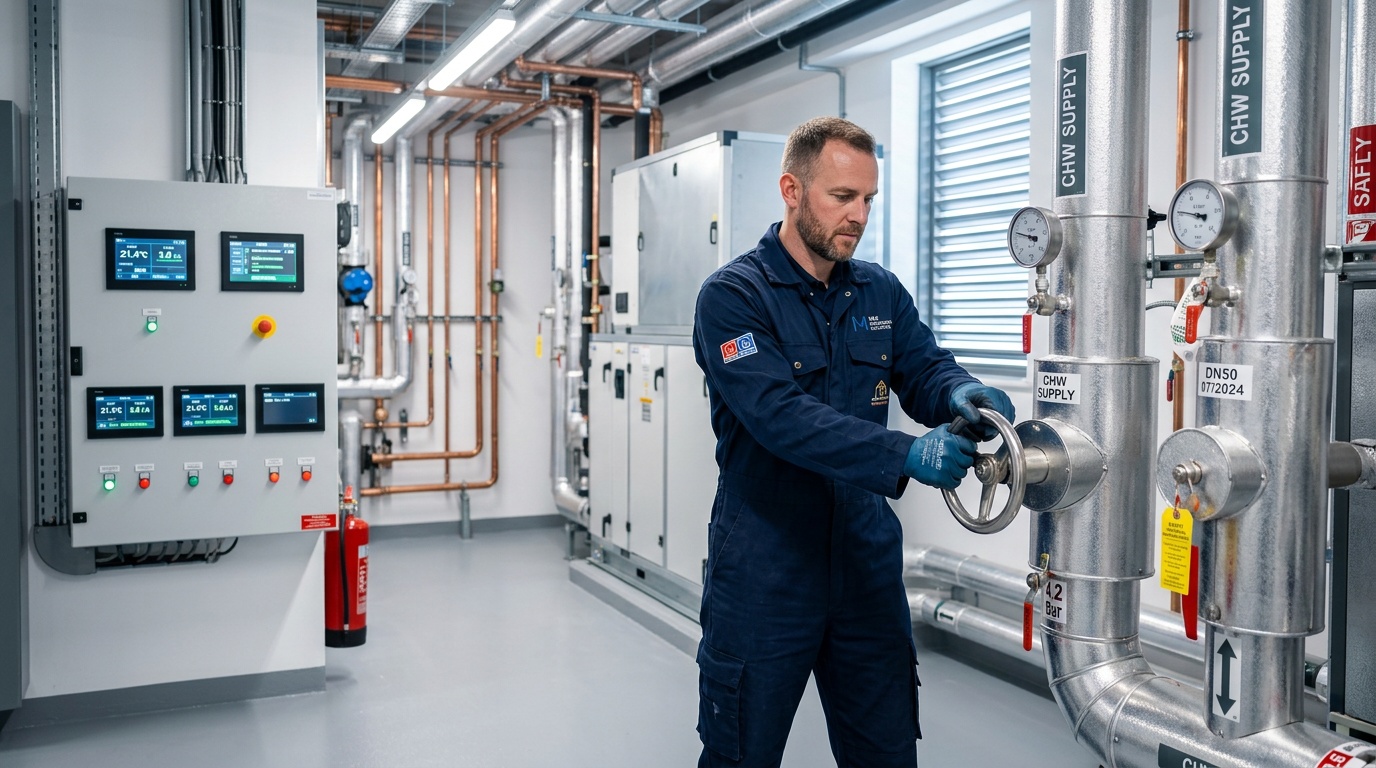
When unexpected electrical issues strike a commercial property, the immediate concern often shifts from the technical fault to the financial fallout. Facility managers and business owners across the West Midlands grapple with the uncertainty of Building Fabric Repairs & Maintenance costs, especially when facing emergency call-outs. Understanding the typical pricing structure for commercial electrical repairs is not just about budgeting; it’s about ensuring business continuity, legal compliance, and the safety of your premises.
My experience, spanning over 24 years from hands-on engineering to managing a 24/7 maintenance firm, has shown me time and again that transparency in commercial electrical repair pricing is paramount. It’s about moving beyond guesswork and understanding the factors that influence the final bill. This guide aims to demystify these costs, providing you with the knowledge to benchmark quotes and make informed decisions for your West Midlands business.
Commercial Electrical Repair Costs: Average Price Ranges by Service Type
Pinpointing exact figures for commercial electrical repairs can be challenging due to the bespoke nature of each job. However, by examining common service categories, we can establish realistic price ranges that facility managers in the West Midlands can use as a benchmark. These figures generally reflect the complexity, materials, and specialised skills required for commercial settings, which often differ significantly from domestic call-outs. Understanding these averages helps in anticipating expenditure and evaluating quotes more effectively.
Factors like the scale of the property, the age of the existing electrical infrastructure, and the specific components involved all play a part. For instance, a simple light fitting repair will naturally command a different price than a comprehensive power distribution system overhaul. The average cost of commercial electrical repairs in the West Midlands can range from £85 for minor fixes to over £3,000 for extensive system work, according to recent data.
Lighting & Emergency Systems
Issues with commercial lighting, including emergency lighting systems, can range from a single faulty bulb or fixture to a complete failure of the emergency backup power. Repairing or replacing standard lighting units typically involves labour and parts, with costs varying based on the type of fitting and accessibility. Emergency lighting systems, however, require specialised knowledge to ensure they meet stringent safety regulations. A faulty emergency light could render a commercial space non-compliant and unsafe during a power outage. The average cost for light installation and repair in the West Midlands is around £187, as reported by Able Group.
Power Distribution & Switchgear
The heart of any commercial electrical system lies in its power distribution units and switchgear. Problems here can be complex, ranging from tripped breakers and faulty RCDs to issues within main distribution boards or sub-panels. The cost for these repairs is significantly influenced by the urgency and the potential impact on business operations. Work on switchgear often requires highly qualified electricians and may involve temporary power solutions, adding to the overall expense. A double socket installation, for example, averages around £200, indicating the baseline cost for basic power point work, while more complex distribution tasks will naturally be higher.
Compliance Testing (EICR & PAT)
Ensuring your commercial property adheres to electrical safety standards is non-negotiable. This involves regular testing, such as an Electrical Installation Condition Report (EICR) and Portable Appliance Testing (PAT). An EICR, which assesses the fixed wiring, is a legal requirement for most commercial properties and helps identify potential hazards before they lead to failure or fire. The average cost of an EICR for a commercial property in the West Midlands typically falls between £150 and £375, depending on the size and complexity of the electrical installation, according to Checkatrade. PAT testing involves checking individual appliances and is priced per item or per block of items.
Fire Alarm & Security Integration
The integration of fire alarm systems and security infrastructure with the building's electrical supply is a specialised area. Repairs or upgrades to fire alarm systems, particularly Grade A systems, require meticulous attention to detail and compliance with strict building codes. Installation costs for a Grade A fire alarm system can be around £1,750, as noted by Checkatrade. Any faults in these systems, or in security camera power supplies and access control systems, necessitate prompt professional attention, often involving complex diagnostics and system-wide checks to ensure full functionality and safety.
Estimated Commercial Electrical Repair Price Ranges (West Midlands)
Service Type
Typical Cost Range (Indicative)
Notes
Minor Lighting Repair/Replacement
£85 - £250
Single fixture, bulb, or switch replacement.
Emergency Lighting System Check/Minor Repair
£150 - £400
Focus on battery or unit function.
EICR (Electrical Installation Condition Report)
£150 - £375
For standard commercial properties; varies by size. (Source: Checkatrade)
PAT Testing
£1.50 - £5.00 per item (bulk discounts apply)
Cost per appliance tested.
Double Socket Installation
£180 - £250
Basic installation labour and parts. (Source: Checkatrade)
Major fault across power, lighting, or safety systems. (Source: Able Group)
What Drives Labour Rates for Commercial Electricians in the West Midlands?
The labour rate charged by commercial electricians in the West Midlands is not a fixed figure; it’s a dynamic cost influenced by several critical factors. Understanding these can help you decipher quotes and ensure you are paying a fair price for skilled service. Unlike domestic electricians, those working on commercial projects often face more complex systems, stricter regulatory demands, and a higher expectation of immediate response times. These elements combine to shape the rates you see on your invoices, reflecting the specialised nature of the work.
When assessing labour costs, consider that commercial electricians are not merely fixing wires; they are safeguarding business operations. This involves a level of responsibility and technical expertise that commands a premium. The aim is always to provide dependable electrical solutions that keep your business running smoothly and safely. For instance, the pricing for commercial electrical repairs in West Midlands is significantly shaped by the expertise required.
Urgency & Call-Out Premiums
The single most significant driver of increased labour costs is urgency. When an electrical fault occurs outside standard working hours or requires an immediate fix to prevent significant business disruption, call-out premiums are almost always applied. This premium covers the cost of mobilising an electrician at short notice, potentially disrupting their personal time or requiring them to pull resources from other scheduled work. For a 24/7 service, the ability to dispatch a qualified technician at any hour is a valuable asset, and this rapid response capability is reflected in emergency rates, which can be 1.5 to 2 times higher than standard hourly charges.
Site Complexity & Access Requirements
The physical environment where the electrical work needs to be carried out profoundly impacts labour time and, consequently, cost. Commercial properties, especially older ones or those with specialised machinery, can present unique challenges. This might include working at significant heights, in confined spaces, or areas requiring extensive dismantling of existing structures to access faulty wiring. Furthermore, the need to minimise disruption to ongoing business operations means electricians may have to work around operational schedules, often during quiet periods or overnight, which adds complexity and time to the job. The requirement for specialised access equipment, such as scissor lifts or scaffolding, also contributes to the overall expense.
Regional Variations Across Birmingham, Coventry & Wolverhampton
While the West Midlands operates as a connected economic region, some localised variations in labour rates can exist between its major urban centres. Generally, electricians in larger cities like Birmingham might command slightly higher rates due to higher overheads and greater demand, compared to smaller towns or more rural areas within the region. However, for specialised commercial electrical services, the difference is often marginal, as qualified technicians tend to operate across wider geographical areas to meet demand. The average cost of a commercial electrical repair in the West Midlands is influenced by these regional dynamics, though expertise and service availability remain key price determinants.
Certification & Insurance Thresholds
Commercial electrical work demands a higher level of qualification and insurance than most domestic tasks. Electricians must hold relevant certifications, such as NICEIC registration, and possess professional indemnity and public liability insurance that covers the scale of commercial operations. These compliance requirements ensure a high standard of safety and competence. The cost of maintaining these certifications, ongoing training, and substantial insurance policies is factored into the overall labour rates. For example, NICEIC registered electricians are required for commercial work to ensure compliance with BS 7671, and their adherence to these standards is a mark of quality that underpins their charging structure.
Pros of Hiring Certified Commercial Electricians
Ensured compliance with BS 7671 and other safety regulations.
Access to qualified professionals experienced in complex systems.
Higher likelihood of work being completed correctly and safely the first time.
Professional indemnity insurance provides financial protection against errors.
Reliable fault finding and diagnostic capabilities for commercial-grade equipment.
Peace of mind knowing your property and occupants are safe.
Potential Cons/Considerations
Higher hourly rates compared to unqualified or domestic electricians.
Call-out premiums can significantly increase costs for emergency services.
Work may take longer if site access is difficult or operations must be accommodated.
Specialised testing equipment or parts may add to the overall bill.
Quotes require careful scrutiny to ensure all charges are transparent.
Why Reactive Repairs Inflate Your Commercial Energy & Maintenance Bills
The temptation to delay a minor electrical fault until it becomes a major issue is one of the most costly decisions a facility manager can make. I have seen it countless times across the West Midlands: a flickering light ignored, a breaker that trips intermittently, a socket that feels warm. Each one is a precursor to a much larger, more expensive problem. The pricing for commercial electrical repairs in West Midlands can spike dramatically when a simple preventative fix becomes an emergency call-out, involving premium labour rates and expedited parts supply.
The Hidden Costs of Downtime
When an electrical system fails in a commercial setting, the visible cost is the repair bill. But the real damage is far more insidious and wide-reaching. For a retail space, every hour of lost power means lost sales, disrupted operations, and potentially spoiled stock. For an office, it means staff idle time, missed deadlines, and frustrated clients. For facilities like healthcare or warehousing, the consequences can be far more severe. These costs rarely appear on a maintenance invoice, but they directly impact your bottom line. A reactive approach treats the symptom, not the cause, leaving your business exposed to repeated disruption. The true price of a reactive repair is the sum of the invoice, the lost productivity, and the damage to your business's reputation.
How Planned Preventative Maintenance (PPM) Reduces Long-Term Spend
Switching from a reactive to a proactive maintenance strategy is the single most effective way to control electrical costs and protect your assets. Planned Preventative Maintenance (PPM) is not an expense; it is an investment in operational reliability. By scheduling regular inspections and servicing of your electrical systems, small issues are identified and corrected before they can escalate into failures. This approach allows for better budget forecasting through fixed-cost service agreements, reduces the likelihood of expensive emergency call-outs, and extends the lifecycle of your electrical infrastructure. Adherence to industry standards like SFG20 provides a structured, auditable framework for maintenance, ensuring nothing is overlooked and your compliance is always current.
The Impact of Energy Drift on Operational Budgets
One of the least understood consequences of neglected electrical maintenance is "energy drift". The gradual, incremental increase in a building's energy consumption due to poorly performing components. Loose connections, failing contactors, unbalanced loads, and ageing components all force your electrical system to work harder, drawing more power to deliver the same output. This inefficiency can add 10 to 15 per cent to your annual energy bills, a cost that compounds year after year. Reactive repairs do not address this slow decline. A comprehensive PPM programme, combined with regular energy audits, identifies and rectifies these inefficiencies, directly reducing your operational expenditure. Our Building Fabric Repairs & Maintenance service incorporates this holistic view, ensuring your electrical systems are not only safe but also operating at peak commercial efficiency.
Key Insight: A well-maintained electrical system is a more energy-efficient one. For every £1 spent on preventative maintenance, you can expect to save £3 to £5 on future repairs and energy costs combined. Waiting for a fault to occur is the most expensive maintenance strategy available.
How to Vet Commercial Electricians & Secure Transparent Quotes
The challenge of finding a reliable commercial electrician in the West Midlands often comes down to uncertainty. How do you know a quote is fair? How do you verify a company's claims? With years of experience, I can tell you that a systematic approach to vetting contractors is the only way to ensure you are getting a quality, compliant service at a fair price. It is about moving from a transactional relationship to a partnership built on trust and technical competence. The steps below form a practical checklist for any facility manager or business owner.
Verifying NICEIC & Part P Registration
This is your non-negotiable first step. In commercial settings, electrical work must comply with BS 7671 (the IET Wiring Regulations). A NICEIC registration is a clear indicator that an electrician is competent, insured, and regularly assessed against these standards. Do not accept verbal assurances. Ask to see their NICEIC certificate and verify its validity online. Part P registration, while more commonly associated with domestic work, is also relevant for certain commercial installations. These certifications are not bureaucratic hurdles; they are your legal protection and a guarantee of minimum standards. An electrician who cannot produce valid, current certification should be removed from your list immediately. This verification directly impacts the pricing for commercial electrical repairs in West Midlands, as registered professionals factor in the cost of compliance, but also provide the peace of mind that the work is to code.
The Pre-Survey Checklist for Facility Managers
Before inviting an electrician to quote, arm yourself with information. A prepared facility manager receives more accurate and, often, more competitive quotes. Use this checklist:
Pre-Survey Checklist
Document the Issue: Note when the fault occurs, what equipment is affected, and any error messages or unusual behaviours.
Review Your Records: Have your last EICR, maintenance logs, and any relevant building plans ready. This saves time and helps the electrician diagnose faster.
Define the Scope Clearly: Prepare a brief description of the problem. A clear brief attracts precise quotes.
Check Insurance Cover: Confirm the electrician holds at least £5 million public liability insurance. Ask for a copy of their certificate.
Ask for SFG20 Compliance: If you require PPM, ask if they adhere to SFG20 standards. This ensures a structured, industry-recognised maintenance schedule.
Request References: For larger projects, ask for contact details of similar commercial clients in the West Midlands.
Understand Your Budget Range: Use the pricing data from earlier in this guide to benchmark your expectations.
Understanding Fixed versus Hourly Commercial Rates
When reviewing quotes, you will typically encounter two pricing structures: fixed-price and time-and-materials. A fixed-price quote offers certainty; the cost is agreed upon before work begins, covering all labour and materials for the specified scope. This is ideal for defined jobs like replacing a distribution board or installing a new circuit. It protects you from unexpected overruns. An hourly rate, by contrast, charges for the actual time spent on site plus materials, and is common for fault-finding or emergency repairs where the scope is unknown. While hourly rates offer flexibility, they also carry the risk of cost escalation. Always ask for an estimated time for the job and a cap on costs where possible. For non-emergency work, insist on a fixed-price quotation. Understanding this distinction is key to interpreting Pricing for commercial electrical repairs in West Midlands and selecting the right approach for your situation. Our Building Fabric Repairs & Maintenance offers both fixed-price contracts for PPM and transparent hourly rates for reactive work, ensuring total cost clarity.
Frequently Asked Questions on Commercial Electrical Pricing
Even with detailed pricing breakdowns and strategies for vetting contractors, specific questions about commercial electrical repair costs persist. These queries often reflect the real-world concerns that facility managers and business owners face when balancing urgent repairs against tight budgets. Below, I address the most common questions with the direct, practical answers you need to make informed decisions about your West Midlands commercial property.
Quick Reference: The most effective way to control electrical costs is to combine a fixed-price PPM contract with a clear, written scope of work for any reactive repair. This dual approach eliminates uncertainty and aligns your maintenance spending with operational priorities.
Do I need an EICR for my commercial property and how much does it cost?
Yes, as a commercial property owner or landlord in the UK, you are legally required to ensure that the electrical installations in your property are safe. An Electrical Installation Condition Report (EICR) is the recognised method for demonstrating compliance with the Electricity at Work Regulations 1989 and BS 7671. The recommended frequency for a commercial EICR is at least every five years, or more frequently for higher-risk environments such as industrial premises or buildings with public access. The cost varies primarily by property size and complexity. For a standard commercial unit in the West Midlands, you can expect to pay between £150 and £375, as reported by Checkatrade. This investment provides a documented baseline of your electrical system's safety, directly informing your maintenance priorities and budget.
How do emergency repair costs compare to planned maintenance?
The cost disparity between emergency repairs and planned preventative maintenance is significant and frequently misunderstood. An emergency call-out for a commercial electrical fault typically attracts a premium rate, often 1.5 to 2 times the standard hourly charge, plus any out-of-hours surcharge. You are also paying for immediate diagnosis, which can take longer under pressure, and for expedited parts sourcing. Compare this to the cost of a scheduled Building Fabric Repairs & Maintenance visit, where an electrician inspects your systems during normal hours, identifies potential faults, and rectifies them before failure occurs. A PPM visit might cost a few hundred pounds; the same fault caught during an emergency can cost over a thousand pounds plus the value of lost business time. The financial argument for proactive over reactive electrical maintenance is overwhelming.
Are there hidden charges I should watch for?
Transparency in pricing is the hallmark of a reputable commercial electrical contractor. However, common areas where unexpected costs can appear include call-out fees that do not include the first hour of labour, charges for diagnostic time that are separate from repair time, and mark-ups on parts supplied. Some contractors also levy a surcharge for accessing equipment in difficult locations, such as rooftops or basements. To avoid surprises, always request a written itemised quotation before work begins. A trustworthy provider will specify the hourly rate, any call-out fee, the estimated time for diagnosis, and the pricing policy for replacement parts. When evaluating Pricing for commercial electrical repairs in West Midlands, ask directly: "What is included in your quoted price, and what could increase the final bill?" If a contractor hesitates to provide a clear breakdown, consider it a significant red flag. Our Building Fabric Repairs & Maintenance service operates on a fully transparent pricing model, ensuring you understand every cost before we start work.
Understanding these common questions and their answers equips you to engage with electrical contractors from a position of knowledge. The goal is not to find the cheapest quote, but to secure fair, transparent pricing for work that meets all safety and compliance standards. A commercial electrical system is too critical to your business operation to leave to guesswork. By applying the benchmarks, vetting processes, and cost awareness outlined here, you can protect your property, your people, and your bottom line.
When you're faced with a dripping tap, a blocked drain, or a more serious plumbing emergency, the first question that often springs to mind is not just about fixing the problem, but about the financial impact. Understanding how much does residential plumbing service cost in Birmingham? is essential for budgeting and peace of mind. It’s easy to get caught out by unexpected charges, especially when dealing with urgent situations. At M&E Maintenance Solutions, we believe in transparency and providing our clients with the knowledge they need to make informed decisions about their property maintenance.
As Stuart Butcher, Founder and MD of MEMS Facilities Maintenance, I've spent over two decades seeing firsthand how plumbing issues can escalate from minor annoyances to major financial drains if not handled correctly. My journey started as an apprentice combustion engineer, and that "boots-on-the-ground" experience taught me the real cost of downtime and the value of getting things right the first time. This isn't just about pipes and water; it's about ensuring your home or business runs smoothly, safely, and cost-effectively.
The Real Cost of Plumbing in Birmingham: What to Expect
Pinpointing an exact figure for plumbing services in Birmingham is challenging, as costs can fluctuate based on numerous factors. However, we can provide a solid foundation for understanding typical expenses. For standard plumbing work during business hours, you can expect hourly rates to generally fall between £50 and £80 per hour, according to CCR-Mag.com. This rate typically covers the plumber's labour for the time spent on-site. Small, straightforward repairs, such as fixing a leaky faucet or replacing a valve, might start from around £85, as noted by Jack The Plumber.
When it comes to pricing structures, plumbers often offer either an hourly rate or a fixed price for a specific job. An hourly rate means you pay for the time the plumber works, plus any parts used. This can be cost-effective for simple, quick fixes where the time commitment is predictable. Conversely, a fixed-rate quote provides certainty on the total cost before work begins. This is often preferred for more complex jobs like installations or significant repairs, as it removes the risk of escalating labour charges. Many providers, including M&E, offer accurate quotes with upfront and transparent pricing for both residential and commercial needs.
The impact of call-out fees and emergency surcharges cannot be overstated. Many plumbers in the UK will charge a call-out fee, which can range from £40 to £80, often covering the first hour of labour. This fee is usually applied even if the problem is resolved quickly or if you decide not to proceed with further work after the initial assessment. When emergencies strike outside of standard working hours. Evenings, weekends, or bank holidays. These fees can significantly increase. Emergency plumbing work is often charged at a premium rate, reflecting the availability and urgency required, as highlighted by Hamuch.com. M&E provides 24-hour emergency plumbing and electrical services, ensuring you're covered when you need it most, liaising directly with insurance companies to expedite work.
Typical Plumbing Cost Structures in Birmingham
Service Type
Typical Cost Range (UK)
Notes
Hourly Labour Rate
£50 - £80 per hour
Based on plumber's expertise and demand. (CCR-Mag.com)
Small Repair (e.g., leaky tap)
From £85
May include call-out fee and first hour. (Jack The Plumber)
Standard Call-Out Fee
£40 - £80
Often includes the first hour of labour.
Day Rate (Estimate)
£300 - £500
For a full day's work. (EstimateAI)
Emergency Call-Out
Premium rates apply
Significantly higher than standard rates; 24/7 service may incur extra charges. (Hamuch.com)
Breaking Down the Costs: Common Residential Plumbing Jobs in Birmingham
To give you a clearer picture of how much does residential plumbing service cost in Birmingham?, let's look at some of the most frequent jobs homeowners encounter. These estimates are based on typical UK pricing and can serve as a useful guide for budgeting, though actual costs may vary depending on the specific circumstances and the provider you choose.
Unblocking a drain is a common requirement. A minor clog in a sink or shower might be resolved relatively quickly, with costs starting from around £85 to £150. However, more severe blockages deeper in the system, or those requiring specialist equipment like drain jetting, can push the price up significantly, potentially reaching £200 to £400 or more, especially if multiple attempts or extensive pipe cleaning are needed. The location of the blockage and the accessibility of the drain also play a role in the final charge.
Toilet and cistern repairs or installations are another frequent service. A simple repair to a running toilet, like replacing a faulty flush valve or inlet valve, might cost between £75 and £120. If a full toilet replacement is necessary, including the cistern and pan, you could be looking at £200 to £400 for basic models, excluding the cost of the new fixture itself. Labour for a full installation typically accounts for a significant portion of this sum.
Leak detection and pipe repair can vary widely in cost. Identifying the source of a leak, especially if it's hidden within walls or floors, can be a complex process. Basic leak detection might add £50-£75 to the repair cost. The actual pipe repair itself depends on the material and length of pipe needing replacement. A small section of copper pipe repair could be £100-£250, but if it involves extensive work, accessing difficult areas, or repairing multiple leaks, the cost can easily climb to £300-£600 or higher.
Boiler servicing and minor repairs are essential for home heating and hot water. A standard annual boiler service typically costs between £70 and £120. This preventative measure helps ensure safety and efficiency. Minor repairs, such as replacing a thermostat, a pump, or a pressure valve, might add £100 to £300 to the service cost, depending on the part and labour required. It's important to ensure your boiler is serviced by a Gas Safe registered engineer, which M&E ensures for all gas-related work.
Water heater maintenance and replacements also represent a significant potential expense. Routine maintenance, like flushing the tank or replacing an anode rod, might cost £100-£200. However, replacing an entire water heater unit can range from £500 to £1,500 or more, depending on the type (e.g., combi, conventional, unvented), capacity, and brand. Installation costs are additional and reflect the complexity of connecting the new unit, including pipework and electrical connections.
Estimated Costs for Common Plumbing Jobs in Birmingham (UK)
Service
Estimated Cost Range (Labour & Basic Parts)
Notes
Drain Unblocking (Minor)
£85 - £150
May require specialist equipment for deeper clogs.
Drain Unblocking (Major/Jetting)
£200 - £400+
Depends on severity and access.
Toilet Repair (e.g., flush valve)
£75 - £120
Labour and standard replacement parts.
Toilet Installation (Basic)
£200 - £400
Excludes cost of the toilet fixture itself.
Leak Detection
£50 - £75 (added to repair)
For locating hidden leaks.
Pipe Repair (Small Section)
£100 - £250
For standard copper pipework.
Boiler Service
£70 - £120
Annual safety and efficiency check by Gas Safe engineer.
Minor Boiler Repair (e.g., valve)
£100 - £300 (additional)
Cost of part and labour.
Water Heater Replacement
£500 - £1,500+
Varies by type and capacity; excludes installation complexity.
*Estimates are for guidance only and may not include VAT or specific material markups. Always request a detailed quote.
Beyond the Invoice: Factors Influencing Your Birmingham Plumbing Bill
Once you have a baseline understanding of average rates and common job costs, the next logical question is why two seemingly identical jobs can result in vastly different final invoices. The answer lies in several variable factors that go beyond the simple description of the work. Understanding these elements is key to accurately interpreting any quote you receive and avoiding unwelcome surprises. When you are evaluating how much does residential plumbing service cost in Birmingham, recognising these influences will help you separate a fair price from an inflated one.
Job Complexity and Time Required
The most obvious cost driver is the sheer complexity of the task. A straightforward tap replacement in an accessible kitchen cabinet is a very different proposition from a concealed pipe repair buried within a solid wall. Complexity dictates the time a skilled engineer needs on site. A job estimated at two hours might stretch to six if unforeseen issues arise, such as corroded fittings that snap off or pipework that does not match modern standards. Plumbers account for this by either charging an hourly rate to cover unpredictable durations or by offering a fixed price that builds in a contingency for typical complications. The more complex the job, the higher the quote will naturally be to cover the potential for extended labour and specialist tooling.
Materials and Parts: Quality vs. Cost
The materials used on a job represent a significant portion of the final bill, and there is often a genuine choice to be made between economy and longevity. A basic £15 washing machine valve might suffice for a rental property, but a commercial-grade brass valve at £45 offers a far longer service life and greater reliability for a family home. Reputable plumbers will itemise parts on a quote and explain the difference. Cheaper materials reduce your upfront cost but can lead to earlier failure and repeat call-outs. When comparing quotes, examine the quality of the specified components, not just the total figure. Investing in better materials through a service like our Plumbing and Electrical Services often pays for itself through reduced future maintenance.
The Plumber's Experience and Specialisation
Experience commands a premium, and for good reason. A time-served engineer with decades of hands-on knowledge will typically diagnose a fault faster, bring fewer unnecessary replacement parts, and complete the work to a higher standard than a newly qualified operative. Specialisation also plays a role. A plumber who focuses solely on gas boiler repairs (and holds the relevant Gas Safe Register credentials) may charge a different rate to one who handles general domestic plumbing. For commercial or complex residential systems, an engineer experienced with that specific infrastructure is worth the higher rate. You are paying for their diagnostic speed and their ability to avoid costly mistakes. This is particularly relevant when dealing with older buildings common across Birmingham, where non-standard pipework and layouts demand genuine expertise. Our Plumbing and Electrical Services are delivered by engineers who combine technical precision with commercial awareness, ensuring the job is done properly the first time.
Geographical Location within Birmingham and Travel Time
Birmingham is a large and varied city, and your specific postcode influences your plumbing bill. Travel time from the engineer's base or their previous job directly impacts the total cost. A plumber operating in the city centre might charge a different rate than one serving the outer suburbs like Sutton Coldfield or Solihull. Some firms include travel within a set radius in their standard call-out fee, while others charge a separate mileage rate. Congestion charges, parking costs in central zones, and the accessibility of the property (e.g., a flat on a high floor with no lift) can all add increments to a quote. When obtaining estimates, ask explicitly whether travel and parking are included, so you can compare like with like across different providers.
Time of Day, Weekends, and Bank Holidays
The timing of a plumbing visit is perhaps the most significant single cost multiplier. Standard working hours, typically 8 am to 6 pm Monday to Friday, attract the lowest rates. Any work scheduled outside these hours, including evenings, weekends, or bank holidays, incurs a premium. Emergency call-outs, especially those involving a 24-hour service, command the highest surcharges. As noted by Hamuch.com, these emergency rates reflect the need for an engineer to interrupt their personal time and respond immediately. A burst pipe at 3 am on Christmas Day will cost substantially more than the same repair scheduled for a Tuesday morning. Understanding this premium structure helps you make informed decisions. For non-urgent issues, scheduling a standard-hours appointment will always be the most cost-effective approach. If an emergency does strike, knowing that a provider like M&E offers transparent pricing for its 24-hour services provides reassurance that you will not face hidden or inflated charges.
Key Factors That Shape Your Plumbing Bill
Job Complexity: Straightforward repairs cost less; concealed faults or multiple complications increase labour time and the final price.
Material Quality: Economy parts reduce the upfront cost but may fail sooner; investing in higher-grade components saves money over time.
Engineer Experience: Skilled specialists charge more but diagnose faster and deliver better, longer-lasting results.
Location and Travel: Your Birmingham postcode, congestion charges, and parking costs all contribute to the total quote.
Time of Booking: Standard weekday hours are cheapest; evenings, weekends, and bank holidays attract significant premium rates.
Urgency: Pre-planned work is always more economical than emergency call-outs, which carry the highest surcharges.
Recognising these six factors gives you the confidence to evaluate any plumbing quote you receive in Birmingham. Instead of focusing solely on the bottom line, you can assess whether the price fairly reflects the complexity, the parts, the engineer's expertise, the travel required, and the timing of the work. This level of understanding transforms you from a passive customer into an informed buyer, capable of identifying genuine value versus overpriced quotes. When you next ask yourself how much does residential plumbing service cost in Birmingham, these criteria will be your guide to making a sound financial decision for your property.
Decoding Your Birmingham Plumbing Quote: Avoiding Hidden Costs and Red Flags
By now, you have a clearer picture of how much does residential plumbing service cost in Birmingham? for common jobs and the factors that influence pricing. However, the real skill lies in interpreting the quotes you actually receive. I have lost count of the number of homeowners and facility managers who have shown me a quote that looked reasonable on the surface but was riddled with contingency clauses and vague terms. Let me share what every comprehensive quote should contain, the tactics that signal trouble, and when it pays to walk away.
What to Look for in a Comprehensive Quote
A professional, transparent quote does more than state a number. It gives you confidence that the engineer understands your problem and has planned the solution properly. Here is what I expect to see in a quote I would trust:
Clear itemisation. Separate lines for labour, materials, call-out fee, and VAT. No lump sums that hide the breakdown.
Scope of work. A precise description of what will be done, including any preparatory tasks or follow-up visits. Vague language like "repair as required" is a red flag.
Materials specification. The type and brand of any parts or fixtures to be installed. This lets you compare quality across quotes.
Timeline. Estimated start date, duration of work, and expected completion. Delays cost you, so clarity matters.
Guarantees and warranties. Written assurance that the work and parts are covered for a defined period. A reputable firm stands by its work.
Terms of payment. When payment is due, what methods are accepted, and whether a deposit is required. Be wary of demands for full payment upfront.
Conditions and exclusions. Any circumstances that could change the price, such as hidden damage discovered during the job. These should be reasonable and specific.
If a quote lacks any of these elements, ask the provider to clarify before you agree. I always encourage clients to request a written quote from M&E for this very reason: we provide upfront, transparent pricing with full breakdowns, so there are no surprises when the invoice arrives.
Questionable Pricing Tactics and What They Mean
Over my career, I have seen every pricing trick in the book. Some are simply unprofessional; others are deliberately misleading. Here are the ones to watch for:
The "from" price. A quote that says "from £85" without specifying what triggers the higher figure. This rarely ends up at the minimum.
The hourly rate without a cap. If the quote says "£60 per hour" but gives no estimate of hours, you are signing a blank cheque. Always request a fixed price or a maximum number of hours.
Separate charges for "diagnosis". Some firms add a diagnostic fee on top of the call-out charge, even for simple faults. A proper quote should include diagnosis within the scope.
Pressure to sign immediately. "This price is only valid today" is a classic manipulation tactic. Legitimate quotes have reasonable validity periods, typically 14 to 30 days.
Vague material markups. If the quote says "materials at cost plus 20%", ask for a written list of estimated part prices. Markups of 10-15% are standard; anything higher warrants scrutiny.
These tactics are not always malicious; sometimes they reflect a lack of professionalism in the quoting process. But when you see several of them in one quote, it is a signal that the provider may not have your best interests at heart.
The 'Right First Time' Approach: Value Beyond the Price Tag
I built M&E on a simple principle: do the job properly the first time, even if it takes a bit longer or costs a bit more in parts. This philosophy directly reduces your total cost of ownership. A cheap fix that fails after a month means you pay twice: once for the initial repair and again for the emergency call-out when it lets go at the worst possible moment.
When you evaluate a quote, do not fixate solely on the bottom line. Ask yourself: does this quote suggest a thorough understanding of my problem? Does it include quality materials that will last? Does the provider have a reputation for follow-through and accountability? The cheapest quote in the pile can easily become the most expensive if it leads to repeated failures and disruption to your home or business. Investing in a partner who takes the "right first time" approach protects your property and your peace of mind.
Ask Before You Accept
Before approving any quote, ask the plumber directly: "Can you guarantee that this price covers the full scope of work, including any unforeseen complications up to a certain limit?" A confident answer from a reputable firm gives you the assurance you need. At M&E, we stand behind our quotes and communicate any changes immediately so you are never caught out.
When to Walk Away: Signs of an Unreliable Quote or Service
Knowing when to decline a quote is just as important as knowing what to accept. Here are the clear warning signs that should prompt you to look elsewhere:
No written quote at all. Any firm that refuses to put the terms in writing is not worth your time.
Demand for full payment in cash before the work starts. This is a major red flag, often associated with unlicensed operatives.
Inability to provide proof of insurance or relevant certifications. For gas work, a Gas Safe Register number is mandatory. For electrical work, ask for NICEIC or similar accreditation.
Pressure to start immediately without a proper assessment. A competent plumber will want to see the problem before quoting, not offer a price over the phone for an unseen issue.
No company address or local presence. An address in Birmingham or the West Midlands ensures accountability and response capability. "Vans from out of town" often disappear after the job.
Unusually low price compared to other quotes. If one quote is 40% lower than the rest, something is being compromised: materials, labour quality, or compliance. Trust your instincts.
When you encounter any of these signs, politely decline and seek a more reliable provider. Your property is too important to trust to someone who cannot offer basic transparency and accountability.
The Engineer's Perspective: Investing in Long-Term Building Health and Compliance
This is where I shift from discussing rates and quotes to addressing the bigger picture: how plumbing services fit into the long-term health, safety, and value of your property. I have been in this industry for over 24 years, and I can tell you that the cheapest route today is rarely the most cost-effective over a decade. Think of your plumbing system as an asset that requires stewardship, not just emergency repairs.
A small leak left unattended can rot floorboards, damage ceilings, and encourage mould. A neglected boiler can develop heat exchanger cracks that lead to a complete system failure in the middle of winter. I have seen countless clients pay five times the cost of a simple service visit because they waited for a breakdown. Planned preventative maintenance (PPM) is not an expense; it is an investment in reliability. Regular inspections of pipes, fittings, and appliances catch minor issues before they escalate. For commercial properties, a PPM schedule ensures that downtime is minimised and that your building remains operational and safe.
Ensuring SFG20 Compliance and Asset Protection
SFG20 is the industry standard for building maintenance specifications in the UK. Adherence to these standards is not optional; it is a legal and insurance requirement. When we service a commercial plumbing system, we follow SFG20 schedules to the letter. This means that every valve is checked, every drain is tested, and every safety device is verified. Compliance documentation protects you in the event of an audit or an insurance claim. It also extends the life of your plumbing assets by ensuring that maintenance is performed at the correct intervals and to the correct specifications. If your current provider cannot show you SFG20 compliance records, you are carrying a significant risk.
The True Cost of Downtime vs. Preventative Investment
For a business, a major plumbing failure can mean lost trade, staff disruption, and reputational damage. Consider a restaurant in Birmingham's city centre: a blocked kitchen drain forces closure for a day. The lost revenue, wasted stock, and staff wages far exceed the cost of an annual drain jetting service. I often calculate the "cost of doing nothing" for clients. The numbers consistently show that preventative investment pays for itself many times over by avoiding emergency call-outs, product spoilage, and operational interruptions. The same logic applies to homes: a burst pipe on a weekend costs more in emergency plumbing charges and property restoration than a routine pipe inspection.
Case Study: Birmingham Office Block Avoids £12,000 Flood Damage
A commercial landlord in Birmingham's Jewellery Quarter contacted us after noticing a persistent damp patch in a ground-floor ceiling. Rather than ignoring it, they scheduled a full leak detection survey. Our engineers identified a pinhole leak in a concealed copper pipe, which we repaired immediately. The total cost was £350. A few weeks later, a similar pipe in an adjacent building that had not been inspected burst, causing extensive water damage, floor replacement, and two days of business closure for three tenants. The total claim exceeded £12,000. The proactive inspection saved our client a fortune and preserved their tenant relationships.
Choosing a Partner, Not Just a Plumber
When you engage a plumbing provider, you are choosing more than a tradesperson; you are choosing a partner responsible for the safety and efficiency of your property. At M&E, we offer Plumbing and Electrical Services that go beyond fixing immediate problems. We provide long-term maintenance contracts, compliance documentation, and 24-hour emergency response. Our engineers are trained to see your building as a system, not a collection of separate fixtures. We liaise directly with insurance companies to expedite emergency work, and we ensure 100 per cent compliance with all relevant regulations. That is the value of choosing a partner who cares about your building's health, not just the next invoice. When you choose MEMS, you get the corporate capability of a large firm with the accountability of a family business. That is the combination that protects your property and your budget for years to come.
When you think of the major crossings over Scotland's mighty River Forth, your mind likely conjures images of the elegant Forth Road Bridge or the imposing Forth Rail Bridge. These iconic structures rightly capture much of the attention. However, nestled downstream, serving a vital purpose for nearly a century, stands a different kind of engineering feat: the Kincardine Bridge. It’s a structure often overlooked, yet its unique design and historical context make it a fascinating subject and a testament to early 20th-century civil engineering prowess. As someone who has spent over two decades understanding the nuts and bolts of critical infrastructure, I appreciate the ingenuity required to build something that not only serves its immediate purpose but also stands the test of time.
This bridge represents more than just a way to get from A to B; it’s a piece of industrial history and a functional marvel. Understanding its significance helps paint a clearer picture of Scotland's transport evolution, particularly in the Fife and Clackmannanshire regions. Let's explore why the Kincardine Bridge, despite being less famous than its neighbours, remains a cornerstone of the local transport network and a remarkable piece of engineering.
The Kincardine Bridge: Scotland’s Forgotten River Crossing
Why the Kincardine Bridge Still Matters
Opened in 1936, the Kincardine Bridge was a pioneering project, representing the first road crossing of the River Forth downstream of Stirling. Its construction was a response to a growing need for better connectivity across the estuary, facilitating trade and travel between Fife and the Central Belt. While the Forth Road Bridge and Forth Rail Bridge, built decades later, are more prominent structures, the Kincardine Bridge continues to play an indispensable role. It serves as a critical artery for local traffic and commercial transport, particularly for those accessing the industrial areas around Kincardine and Grangemouth. Its continued operation is a testament to the foresight of its designers and the ongoing maintenance efforts that keep it functional. For local businesses and residents, it is far from forgotten; it is an essential part of their daily lives and economic activity.
The importance of the Kincardine Bridge extends beyond its immediate traffic function. It stands as a symbol of a different era of engineering, one that relied on immense manual labour and robust mechanical principles. Unlike the suspension and cantilever designs of its more famous Forth counterparts, the Kincardine Bridge boasts a unique swing mechanism. This distinctive feature allows it to adapt to maritime traffic, a crucial consideration for a busy estuary. Its enduring utility highlights the importance of diverse infrastructure solutions, where different bridge types are suited to specific geographical and operational needs. This bridge is a practical solution that has proven its worth through nearly a century of service.
Conceptual Timeline: Key Milestones of the Kincardine Bridge
1932: Construction Commences
1936: Bridge Opens to Traffic (October 29th)
1936: Largest Swing Bridge in Europe at Opening
Present Day: Continues to serve as a vital transport link
The Kincardine Bridge was a landmark project, not just for its scale but for its innovative engineering solutions that enabled it to handle both road and river traffic effectively.
The Story of Its Construction (1932-1936)
The construction of the Kincardine Bridge was an undertaking of significant scale and ambition, particularly during the 1930s. The project commenced in 1932 and was completed over approximately four years, culminating in its opening on 29 October 1936. This period was marked by the immense effort required to erect such a substantial structure. The engineers faced the challenge of building piers in the tidal waters of the Forth and constructing a vast central span designed to rotate. The sheer volume of materials used underscores the magnitude of the task. It's estimated that around 4,000 tonnes of steel and a staggering 150,000 rivets were employed in its construction, reflecting a method of building that relied heavily on precision assembly and brute strength.
When it was completed, the Kincardine Bridge held a significant title: it was the largest swing bridge in Europe. This distinction speaks volumes about the pioneering spirit of the engineers involved. The design was a pragmatic solution to the dual demands of road transport and river navigation. The ability of the central span to pivot open allowed taller vessels to pass through the estuary, a capability not shared by fixed bridges of the era. This innovative approach ensured the bridge served its purpose without unduly hindering maritime trade, a common challenge in bridge design over busy waterways. The story of its construction is a narrative of human endeavour, engineering ingenuity, and a commitment to improving national infrastructure during a challenging economic period.
Engineering Marvel: How the Swing Bridge Works
The Central Pivot and the 364-Foot Moving Span
The heart of the Kincardine Bridge's unique functionality lies in its ingenious swing mechanism. Unlike static bridges, a swing bridge rotates horizontally around a central pivot point to allow vessels to pass. The Kincardine Bridge features an exceptionally long central span of 364 feet (approximately 111 metres). This impressive length was necessary to create a wide enough channel for ships navigating the River Forth. The entire weight of this enormous steel span is supported by a substantial central pier, which houses the intricate machinery that enables the rotation. This pivot allows the span to swing open, typically to a position perpendicular to the main bridge, creating two separate navigable channels on either side of the central pier.
The engineering required to achieve this rotation is considerable. The central pier is a massive concrete foundation designed to bear the immense load of the steel span. Within this pier, a complex system of gears, bearings, and counterweights works in harmony. When activated, the machinery engages with the span, lifting it slightly off its main supports to reduce friction, and then rotates it. This precise movement is critical; it must be smooth, controlled, and executed within specific timeframes to manage traffic flow and maritime schedules efficiently. The 364-foot span is a defining characteristic, making the Kincardine Bridge a distinctive sight and a marvel of mechanical engineering from its era.
Why 150,000 Rivets and 4,000 Tonnes of Steel Were Used
The sheer quantity of materials used in the Kincardine Bridge’s construction is a direct reflection of its scale and the engineering demands of the time. Approximately 4,000 tonnes of steel formed the structural backbone of the bridge, providing the strength and rigidity required for a span of this size and to withstand the forces of wind and traffic. Steel was the material of choice for its superior strength-to-weight ratio, allowing for longer spans compared to earlier iron structures. The choice of steel was paramount for the swing span, which needed to be both substantial and capable of precise movement.
The 150,000 rivets used were not mere fasteners; they were integral to the bridge's structural integrity. In the early 20th century, riveting was the primary method for joining large steel components. Hot rivets were inserted into pre-drilled holes and hammered into place, forming a strong, permanent connection as they cooled and contracted. This labour-intensive process required skilled teams working meticulously to ensure every join was secure. The combination of 4,000 tonnes of steel and 150,000 rivets created a structure built for endurance, designed to handle heavy loads and the dynamic stresses associated with a rotating span, solidifying its status as a major engineering accomplishment.
How the Swing Bridge Is Operated Today
Operating a swing bridge like the Kincardine Bridge today involves a sophisticated blend of modern technology and established procedures. While the fundamental mechanical principles remain, the control systems have likely been updated for greater precision, safety, and efficiency. The operation is primarily managed by trained personnel who monitor both road and river traffic. Before the bridge is swung, signals are given to halt all road vehicles approaching the crossing. Simultaneously, maritime traffic is managed by harbour authorities or the relevant navigation service, ensuring the waterway is clear for the bridge's movement.
The process typically involves activating an electrical or hydraulic system housed within the central pivot. This system engages the span, often lifting it slightly to disengage locking mechanisms and reduce friction on the main support bearings. The span is then rotated, usually through 90 degrees, to allow vessels to pass. Once the maritime traffic has cleared the zone, the process is reversed. The span is rotated back to its closed position, precisely realigned with the bridge approaches, and secured. Modern systems often incorporate sensors to ensure exact positioning and locking before road traffic is permitted to resume. This careful, coordinated operation ensures the continued safety and functionality of the Kincardine Bridge for both road users and river navigators.
Kincardine vs. Clackmannanshire Bridge: What’s the Difference?
When navigating the crossings over Scotland's Firth of Forth, it's easy to get the distinct structures confused. While the iconic Forth Bridge (rail) and Forth Road Bridge are widely recognised, the Kincardine Bridge and the Clackmannanshire Bridge, though geographically close and serving similar functions, are fundamentally different in their design, history, and engineering. Understanding these differences is key for anyone planning a route, researching local infrastructure, or simply appreciating the varied approaches to bridge building. Many travellers find themselves wondering which crossing to use or how they differ, a common point of confusion that this guide aims to clarify. For facility managers and business owners, appreciating the nuances of infrastructure can inform planning and risk assessment, much like understanding the specific needs of a building's plant room.
The presence of two distinct crossings in relatively close proximity highlights a strategic approach to infrastructure development, particularly in managing traffic flow and providing essential connectivity. The Kincardine Bridge, opened in 1936, was a pioneering structure designed primarily as a swing bridge to accommodate maritime traffic. Decades later, the Clackmannanshire Bridge, part of the larger Clackmannanshire Bridge project which also involved improvements to the existing Kincardine Bridge, was constructed as a modern, fixed-span structure to increase capacity and improve traffic flow. This development reflects an evolution in engineering capabilities and a response to increasing traffic demands, demonstrating how infrastructure must adapt over time. The need for a new crossing alongside the old Kincardine Bridge underscores the challenges of managing aging infrastructure versus implementing modern solutions.
The Two-Bridge Strategy: A Case Study in Infrastructure Planning
The decision to build the Clackmannanshire Bridge near the existing Kincardine Bridge was a sophisticated piece of infrastructure planning. It wasn't about replacing the older structure, but rather about creating a dual-crossing system to alleviate congestion and provide redundancy. This strategy is a common approach in modern civil engineering, especially for critical transport links. By having two bridges in close proximity, traffic can be managed more effectively, with one bridge often used for specific directions or types of traffic, and the older bridge potentially serving a more localised role or being reserved for specific vehicle types. The project aimed to improve journey times and reliability for commuters and commercial vehicles travelling between Fife and the Clackmannanshire region.
This dual-bridge approach offers significant advantages. Firstly, it increases the overall capacity of the crossing point, which is essential for economic activity and regional connectivity. Secondly, it provides resilience. If one bridge requires urgent maintenance or faces an incident, traffic can be diverted to the other, minimising disruption. This concept of redundancy and managed capacity is directly transferable to facility management. Just as having backup systems for critical plant equipment ensures business continuity, having multiple transport links ensures the smooth operation of local economies. The development represents a forward-thinking approach, acknowledging that infrastructure needs evolve and require strategic, often multi-faceted, solutions rather than single, static answers.
Side-by-Side Comparison: Age, Length, Type, and Purpose
To truly grasp the distinction between these two vital crossings, a direct comparison is invaluable. The Kincardine Bridge, a testament to early 20th-century engineering, opened in 1936. It is primarily known for its distinctive 364-foot (111-metre) central swing span, a design choice that allowed maritime traffic to pass freely. Its total length is approximately 2,172 feet (662 metres). Its primary purpose was to provide the first road crossing downstream on the Forth, connecting Fife with the mainland and facilitating industrial and commuter traffic. The Kincardine Bridge still operates today, a functional piece of history.
In contrast, the Clackmannanshire Bridge, which opened much later in 2008 as part of a significant upgrade project, is a modern, fixed-span structure. It stretches 1,200 metres (approximately 3,937 feet) across the River Forth, making it considerably longer than the Kincardine Bridge. This impressive length is supported by a 35,000-tonne concrete deck. Its design is typical of contemporary bridge construction, prioritising capacity and durability for modern vehicle loads. The Clackmannanshire Bridge serves as the primary route for northbound traffic on the A985, while the Kincardine Bridge handles southbound traffic, creating a clear, efficient division of labour between the two structures. This division ensures optimised traffic flow and maintains the historical significance of the older swing bridge.
Feature
Kincardine Bridge
Clackmannanshire Bridge
Opened
29 October 1936
2008
Type
Swing Bridge
Fixed-Span Bridge
Total Length
Approx. 662 metres (2,172 ft)
1,200 metres (3,937 ft)
Central Span (Kincardine)
364 feet (111 m) - Swing Mechanism
N/A (Fixed Structure)
Primary Purpose
First road crossing downstream of Stirling; accommodate river traffic
Increase capacity, improve traffic flow, provide redundancy
Sustainable Infrastructure: Lessons from the Clackmannanshire Bridge
The construction of the Clackmannanshire Bridge offers a compelling case study in how modern infrastructure projects can integrate sustainability and environmental responsibility from the ground up. While the Kincardine Bridge represents a marvel of early mechanical engineering, its younger neighbour showcases advancements in materials science and environmental stewardship. The project team behind the Clackmannanshire Bridge made significant efforts to minimise its ecological footprint, setting a benchmark for future developments. For those of us in facility management, understanding these principles of sustainable construction and lifecycle planning is not just about environmental consciousness; it's about long-term cost savings, regulatory compliance, and building resilience into our assets.
The Clackmannanshire Bridge project demonstrated a remarkable commitment to using recycled materials and mitigating environmental impact. This focus on sustainability goes beyond merely complying with regulations; it’s about proactively designing for a reduced environmental burden and creating positive ecological outcomes. These lessons are directly applicable to the maintenance and management of commercial buildings. Just as a bridge can be built with an eye towards its long-term impact, so too can a building's systems be maintained and upgraded with sustainability at the forefront. This forward-thinking approach ensures that our infrastructure, whether it's a bridge or a building, remains efficient, compliant, and responsible for decades to come.
Recycled Materials and Salt Marsh Creation: An Environmental First
A standout feature of the Clackmannanshire Bridge project was its extensive use of recycled materials. The construction utilised an astonishing 750,000 tonnes of recycled materials, with over 85% of all waste products from the project being recycled on-site or locally. This included using recycled aggregate in the concrete for the bridge's substantial deck. Such a massive recycling effort significantly reduced the demand for virgin resources, lowered the carbon emissions associated with transporting new materials, and minimised landfill waste. This approach to material sourcing is a prime example of circular economy principles applied to large-scale construction.
Beyond material reuse, the project also involved significant environmental enhancement. A key initiative was the creation of new salt marsh habitats adjacent to the bridge. This was designed to compensate for any unavoidable impact on existing intertidal zones and to provide valuable ecological benefits. These new habitats support biodiversity, offer natural flood defences, and improve water quality. This proactive creation of ecological assets, rather than just minimising damage, represents a sophisticated level of environmental planning. It shows that infrastructure development can actively contribute to ecological restoration, a principle that facility managers can emulate by investing in green roofs, sustainable drainage systems, or biodiversity initiatives within their property portfolios.
Environmental Innovation in Infrastructure
The Clackmannanshire Bridge project is a leading example of integrating environmental considerations into major civil engineering works. By diverting a vast quantity of waste from landfill through the use of recycled aggregates and creating new, valuable salt marsh habitats, the project demonstrates that large-scale construction can coexist with, and even benefit, the natural environment. This commitment to sustainability, from material sourcing to ecological enhancement, provides a blueprint for responsible development.
What Facility Managers Can Learn About Lifecycle Planning
The Clackmannanshire Bridge project offers profound lessons for facility managers regarding lifecycle planning. The sheer scale of recycled materials used and the proactive creation of new habitats highlight a holistic approach to asset management. This means considering not just the initial construction or installation, but the entire lifespan of the asset, including its environmental impact and material recovery at the end of its service. For commercial buildings, this translates to selecting materials with lower embodied energy, designing for deconstruction and reuse, and planning for energy efficiency and waste reduction throughout the building's operational life.
By embracing the principles demonstrated in projects like the Clackmannanshire Bridge. Prioritising recycled materials, minimising waste, and considering ecological impact. Facility managers can develop more sustainable, cost-effective, and resilient building operations. This forward-thinking approach aligns with modern business objectives and regulatory expectations.
Moreover, the project’s dual-bridge strategy, with the new Clackmannanshire Bridge complementing the older Kincardine Bridge, is a powerful analogy for planned preventative maintenance (PPM) versus reactive repairs. The new bridge represents proactive investment, ensuring capacity and reliability. The older bridge, though still functional, may require ongoing attention to remain fit for purpose, much like an aging HVAC system. Facility managers must recognise that investing in proactive maintenance and upgrades, informed by lifecycle assessments, is far more economical and less disruptive than waiting for critical systems to fail. This lifecycle perspective ensures that buildings remain efficient, safe, and compliant over the long term, mirroring the enduring utility of well-planned infrastructure.
Planning Your Visit: Best Viewpoints, Cycling Routes, and Travel Tips
When you plan a trip to witness this remarkable piece of Scottish infrastructure, proper preparation transforms a simple sightseeing stop into a meaningful engineering appreciation experience. The kincardine bridge operates on a strict maritime schedule, meaning timing your visit correctly is essential. Unlike static structures, this crossing requires coordinated traffic management to allow vessels to pass through the estuary. I have always found that understanding the operational rhythm of critical infrastructure makes visiting it far more rewarding. Whether you are a photographer capturing the mechanical sweep of the span or a cyclist exploring the Fife coastline, knowing where to position yourself and how to navigate the surrounding roads will save you considerable time and frustration.
Where to See the Swing Bridge in Action
The most effective vantage points for observing the swing mechanism are located along the western approach, near the former ferry terminal grounds. This elevated position provides an unobstructed view of the central pivot and the rotating span as it clears the navigational channel. Photographers will appreciate the clear sightlines to capture the entire arc of movement. From this angle, you can observe the precise coordination required between harbour authorities and road traffic controllers. The mechanical hum of the drive system and the visual sweep of the steel structure offer a tangible demonstration of mid-twentieth-century engineering precision. I recommend visiting during daylight hours to fully appreciate the scale of the operation and the surrounding waterway activity.
Additional viewing opportunities exist along the eastern bank, offering a complementary perspective of the bridge closing back into its closed position. This side of the crossing provides excellent context for observing how the span aligns with the approach roadways and locks into place. The contrast between the historic swing structure and the modern concrete deck of the Clackmannanshire bridge nearby creates a compelling visual timeline of transport evolution. Both vantage points allow visitors to study the crossing without obstructing local traffic flow. Respect for road users and adherence to designated viewing areas ensures a safe experience for everyone involved.
Cycle and Walk Routes Around Both Crossings
The region surrounding the Forth crossings offers several well-established routes for cyclists and pedestrians seeking to explore the area on foot or by bicycle. The Forth Cycle Network connects the Kincardine crossing directly to the wider national cycling infrastructure, providing safe paths along the A985 and connecting roadways. Cyclists will find the terrain relatively straightforward, with gentle gradients leading towards the crossing points. The route between the two bridges covers approximately two kilometres, making it an ideal short journey for families or fitness enthusiasts. Dedicated cycle lanes run parallel to the main carriageway, ensuring separation from heavier commercial vehicles.
Walking routes provide an alternative for those preferring a slower pace while still engaging with the landscape. The waterfront paths near Grangemouth and Kincardine offer scenic detours away from the main traffic arteries. These trails often pass through former industrial zones that have been repurposed for public recreation, highlighting the region's ongoing economic transition. Pedestrians should remain vigilant at road crossings and follow designated footways, particularly when approaching the bridge approaches where sightlines can be restricted by the central pier structure. Proper planning of your route ensures you experience both the historical swing bridge and its modern counterpart without unnecessary detours.
How to Check for Closures and Restrictions on the A985
Reliable transportation planning requires real-time awareness of road conditions, especially when navigating a crossing that operates on a rotating schedule. The A985 corridor experiences periodic restrictions to accommodate bridge operations, maritime traffic, and occasional maintenance works. Before setting out, always consult official Scottish transport authorities for current status updates. The traffic.gov.scot portal provides authoritative information regarding temporary closures, signal timings, and unexpected incidents. This approach mirrors the contingency planning we apply to commercial building systems, where verifying system status before deployment prevents unnecessary downtime and ensures smooth operations.
Understanding the operational windows of the swing bridge helps visitors align their travel plans accordingly. Bridge movements typically occur at set intervals, though harbour schedules can adjust these timings based on vessel traffic. Local signage near the crossing provides advance warning when operations are imminent, allowing drivers and cyclists to prepare for temporary stops. Maintaining a flexible itinerary ensures you can adjust to these variations without compromising your overall schedule. Proactive verification of road status transforms a potentially frustrating delay into a manageable part of your journey, reflecting the same practical approach we apply to facility management and asset upkeep.
Visitor Planning Considerations
Pros
Clear sightlines from designated viewing areas for observing the swing mechanism
Well-maintained cycle paths connecting both bridge crossings for safe recreational travel
Direct access to official traffic portals for real-time closure and restriction updates
Cons
Bridge operations require temporary road stops that may delay unprepared visitors
Limited shelter at viewing points exposes visitors to unpredictable coastal weather conditions
Photography restrictions apply near active operational zones to maintain safety standards
bt careers
In the realm of UK infrastructure and digital connectivity, one name stands out: BT. As the nation's oldest and largest telecommunications company, BT Group is more than just a provider of phone and internet services. It's the backbone of modern communication, a key player in national security, and a massive employer offering a vast array of career opportunities. For anyone looking to build a stable and impactful career within a company that touches millions of lives daily, exploring BT careers is a logical step.
Key Takeaways
BT offers career paths that go far beyond phone and internet services, including roles in cybersecurity, engineering, and national infrastructure.
Salaries at BT are competitive for the telecom sector, with clear progression tied to technical certifications and on-the-job experience.
The company's role as a national security partner means many positions come with long-term stability and government-level clearance opportunities.
Apprenticeship programs at BT give you a direct route from entry-level training into skilled trades like network engineering and field operations.
Working at BT means your daily work directly supports millions of people and businesses across the UK, which adds real purpose to the job.
Navigating the sheer scale of BT Group and its various entities can be daunting. Many job seekers find themselves confused about the distinctions between BT, Openreach, EE, and Plusnet, and how to best position themselves for success. This guide cuts through that complexity. Drawing on extensive research into job postings, employee insights, and the company's structure, we provide a clear, practical roadmap to understanding BT careers, the types of roles available, and how to make your application stand out. Consider this your essential briefing before you even think about visiting the official BT careers login page.
BT Careers: Your Complete Guide to Joining the UK’s Digital Backbone
BT Group is a cornerstone of the United Kingdom's infrastructure, connecting people, businesses, and communities across the nation and beyond. Founded in 1846, it has evolved from a telegraph company to a global communications powerhouse, continually innovating to meet the demands of a connected world. Understanding why BT Group matters for your career begins with appreciating its sheer scale and national significance. With over 100,000 employees globally, operating in more than 180 countries, the British Telecom company is a major force in technology, digital transformation, and connectivity. Its work ensures that critical services function, businesses thrive, and individuals stay connected. For those seeking employment, a career with BT offers stability, development opportunities, and the chance to be part of a company shaping the future of communication.
Did You Know? BT Group is a foundational element of the UK's digital future, employing over 100,000 people worldwide and operating in more than 180 countries. Its historical significance as the UK's oldest telecommunications company is matched by its ongoing commitment to innovation and connectivity.
This guide is designed to demystify the process of pursuing a career within the BT Group family. We aim to provide a comprehensive overview that goes beyond the listings you might find on a typical careers page. You'll gain clarity on the distinct roles played by BT's main subsidiaries, understand the wide spectrum of job opportunities available from entry-level apprenticeships to senior executive positions, and get practical advice to help you navigate the application process. Our goal is to equip you with the knowledge needed to identify the right path for you within this expansive organisation, ensuring you can target your efforts effectively and make an informed decision about your next career move.
Understanding the BT Group Family: BT, Openreach, EE and Plusnet
One of the most common points of confusion for job seekers interested in BT careers is the relationship between the parent company, BT Group, and its various operating brands. Understanding these distinctions is absolutely essential for targeting your job search effectively. BT Group plc is the overarching organisation, a publicly listed company that owns and manages a portfolio of telecommunications and IT services. This parent entity sets the strategic direction and oversees the financial health of its subsidiaries, but the day-to-day operations and specific services are delivered through distinct brands, each with its own focus and career opportunities.
Openreach is perhaps the most well-known of BT's infrastructure arms. It's responsible for building and maintaining the UK's digital communications network. The physical infrastructure of fibre optic cables, exchanges, and poles that most homes and businesses rely on for broadband and phone services. If you're interested in network engineering, field operations, or fibre deployment, Openreach jobs are likely where you'll find your niche. It operates independently from the retail brands, providing wholesale access to communication providers. This means that while you might work for Openreach, the service you help build could be sold by BT, Sky, TalkTalk, or many others.
EE, which stands for Everything Everywhere, is BT Group's primary consumer-facing mobile and connectivity brand. It offers mobile phone plans, 4G and 5G network services, and increasingly, home broadband solutions. Careers within EE typically involve customer service, sales, marketing, retail management, and mobile technology development. It's the brand most directly interacting with millions of individual consumers across the UK for their mobile needs. Similarly, Plusnet is another value-focused broadband and mobile provider within the BT Group portfolio. It caters to customers seeking straightforward, affordable services. Roles here often mirror those found in EE, focusing on customer support, sales, and operational roles within a more budget-conscious segment of the market.
Choosing which subsidiary to apply to depends entirely on your career aspirations and interests. If your passion lies in the foundational technology that connects the nation, Openreach offers roles in engineering and network infrastructure. For direct customer interaction, sales, and mobile technology, EE and Plusnet provide abundant opportunities. For a broader view of the entire business, including strategy, finance, and corporate governance, focusing on BT Group plc itself might be more appropriate. Each brand presents a unique environment, and many job seekers find that exploring the specific career pages for Openreach, EE, and Plusnet, in addition to the main BT careers portal, is the most effective approach to identify suitable BT careers.
Understanding BT Group's Core Brands
Brand
Primary Focus
Key Activities
Typical Roles
BT Group plc
Parent Company & Corporate Strategy
Overall business direction, finance, HR, group strategy, large business services
Executive Management, Finance, Legal, Group HR, Strategy, Large Enterprise Sales
Openreach
Digital Infrastructure Provider
Building, maintaining, and upgrading the UK's physical network infrastructure (fibre, copper)
Network Engineers, Fibre Engineers, Field Technicians, Project Managers, Network Planners, Customer Service (technical support)
EE
Mobile & Consumer Connectivity
Providing mobile services (4G/5G), consumer broadband, and related technology
Sales Advisors, Customer Service Representatives, Mobile Engineers, Marketing Specialists, Retail Management
Plusnet
Value Broadband & Mobile
Offering affordable broadband, phone, and mobile services
Customer Support Agents, Sales Consultants, Billing Specialists, Operational Staff
Types of Jobs at BT Group: From Apprenticeships to Executive Roles
The breadth of roles available within the BT Group family is genuinely extensive, reflecting its multifaceted operations from network engineering to customer engagement. For those interested in technology and engineering, BT Group, particularly through Openreach, offers a vast number of positions. This includes roles for network engineers focused on designing, building, and maintaining the physical and digital infrastructure, fibre optic technicians responsible for installations and repairs, and software developers working on the platforms that power communication services. Whether it's ensuring the stability of the national broadband network or developing the next generation of mobile technology, technical expertise is highly valued across the group. These positions often require specific qualifications or a keen interest in problem-solving and innovation.
Beyond the technical core, BT Group provides significant employment in sales, customer service, and contact centre operations. These roles are vital for connecting with customers, resolving issues, and driving revenue. Positions range from frontline customer service representatives who assist millions with their queries, to telesales professionals promoting new services, and team leaders managing contact centre operations. The British Telecom company understands that excellent customer experience is paramount, making these roles critical to its success. Whether you excel at communication, problem-solving, or sales, there are likely opportunities to fit your skills within these customer-facing departments.
Corporate functions form another substantial segment of BT careers. These roles support the business's overall operations and strategic objectives. This includes positions in finance, where you might be involved in budgeting, financial planning, or accounting; human resources, managing talent acquisition, employee relations, and development; and marketing, focusing on brand strategy, advertising, and market analysis. Project management is also a key area, overseeing complex initiatives across different departments and subsidiaries. These corporate roles require a blend of organisational skills, strategic thinking, and often, specialised professional qualifications. For those seeking to advance their career aspirations, exploring these diverse functions is key.
For individuals starting their professional journey, BT Group offers structured graduate schemes and early careers programmes. These initiatives are designed to attract bright, ambitious talent and provide them with comprehensive training, mentorship, and exposure to various parts of the business. Graduate schemes typically involve rotational placements, allowing participants to gain diverse experience and identify areas for specialisation. These programmes are a fantastic entry point for university graduates looking to build a long-term career within a major corporation, offering a clear path for development and progression.
Apprenticeships are a cornerstone of BT's commitment to nurturing talent from an early age. The company offers hundreds of apprenticeship positions each year, providing individuals with the opportunity to "earn while you learn." These programmes combine practical, on-the-job training with formal education, leading to recognised qualifications. Apprenticeships are available across a wide range of disciplines, from engineering and IT to customer service and business administration. They are an excellent route for school leavers or those looking to retrain, offering a hands-on approach to building a career and gaining valuable skills within the dynamic telecommunications sector.
Technology & Engineering: Roles in network design, fibre deployment, software development, cybersecurity, and IT support.
Sales & Customer Service: Positions in contact centres, retail stores, account management, and technical support for consumer and business clients.
Corporate Functions: Opportunities in finance, human resources, marketing, legal, procurement, and project management.
Graduate Schemes: Structured programmes for university graduates offering training, mentorship, and exposure to various business areas.
Apprenticeships: Earn-while-you-learn programmes combining practical experience with formal qualifications in technical, customer service, and business roles.
BT Salaries and Benefits: What You Can Really Expect
When considering any career move, transparency around salary and benefits is paramount. For a company as large and influential as BT Group, understanding the financial and non-financial rewards is key to assessing whether a role aligns with your career goals and personal needs. My experience, spanning over two decades in technical fields and now leading a service-focused firm, has taught me that while the headline salary is important, the total package. Including benefits and perks. Often tells a more complete story of an employer's commitment to its staff. BT Group, as a major player in the UK's digital infrastructure, offers a comprehensive benefits framework designed to attract and retain talent across its diverse operations. This section aims to peel back the layers, providing a clearer picture of what you can realistically expect when pursuing BT careers.
Salary ranges within BT Group can vary significantly, reflecting the wide spectrum of roles and responsibilities across its various entities like BT, Openreach, and EE. Entry-level positions, such as apprenticeships or customer service roles, will naturally command different remuneration compared to senior engineering, project management, or executive leadership positions. Based on research covering hundreds of job postings and employee reviews, typical entry-level salaries might begin in the region of £20,000 to £25,000, particularly for apprentices and trainees, as outlined on sites like BT's official careers portal. As you progress into more specialised technical roles, such as a fibre optic engineer or a network specialist, salaries can climb to £30,000 to £45,000. For experienced professionals in areas like software development, cyber security, or senior project management, remuneration packages can range from £50,000 upwards of £70,000 or more, depending on the specific skill set and seniority. It's important to remember that these figures are indicative and can fluctuate based on location, experience, and the specific demands of the role within the BT Group company structure.
Beyond the base salary, BT Group typically provides a strong core package of employee benefits. A significant component for many is the pension scheme, where BT often offers competitive employer contributions, helping employees build long-term financial security. Generous annual leave allowances are standard, providing a good work-life balance from the outset, with entitlements increasing with length of service. Many employees also benefit from discounted broadband and mobile services through the company's own offerings, a tangible perk for staying connected. Access to employee assistance programmes, offering confidential support for personal and professional challenges, is another common feature. These foundational benefits are designed to support employees' well-being and financial health throughout their tenure, making the overall employment proposition more attractive than just the take-home pay.
In addition to the standard benefits, BT Group often provides a range of additional perks that contribute to a positive working environment and employee development. Many roles include opportunities for paid volunteering days, allowing staff to give back to their communities. Mentoring programmes are frequently available, connecting employees with experienced colleagues for guidance and career development. BT also places emphasis on employee well-being, offering access to resources, workshops, and initiatives focused on physical and mental health. For those in technical or development roles, there can be support for further training, certifications, and professional development, ensuring employees stay at the forefront of technological advancements within the telecommunications sector. These extras demonstrate a commitment to fostering a supportive and growth-oriented culture.
Comparing BT's offerings to other major UK employers reveals a competitive picture. As one of the nation's largest employers and a foundational part of the UK's digital infrastructure, the British Telecom company generally matches or exceeds the benefits provided by many other large corporations in the technology and service sectors. While specific salary benchmarks can be found on platforms like Indeed or BT careers login pages, the comprehensive nature of their benefits. From pension and leave to employee discounts and well-being support. Positions them as an attractive employer. The emphasis on long-term career growth, combined with practical daily perks, often makes BT Group a preferred choice for individuals seeking stable, rewarding employment with a company that plays a significant role in the UK's connected future.
BT Group Salary and Benefits Overview
Category
Details
Typical Range/Description
Salary Ranges
Entry-Level/Apprenticeships
Approx. £20,000 - £25,000 (based on research from 247UKCareers)
Technical/Specialist Roles
Approx. £30,000 - £45,000
Experienced/Senior Roles
£50,000+ (upwards of £70,000 for senior positions)
Core Benefits
Pension
Competitive employer contributions
Annual Leave
Generous allowance, increasing with service
Employee Discounts
Discounted broadband, mobile services
Well-being Support
Employee Assistance Programmes (EAP)
Additional Perks
Volunteering
Paid volunteering days
Development
Mentoring programmes, training, certifications
Health & Wellness
Access to health and wellness resources
How to Apply for a Job at BT Group: Step-by-Step Application Guide
Securing a position within the BT Group demands a strategic approach far removed from casual applications. The recruitment process for bt careers is rigorous, designed to identify candidates who possess both technical competence and cultural alignment. Treating your application like a precise engineering project ensures you present the strongest possible case to the hiring team. This section outlines the exact steps required to navigate the portal, prepare effectively, and succeed in the selection stages.
Finding the official careers page and avoiding third-party sites
Navigate with absolute precision to the source of truth. The digital recruitment ecosystem is cluttered with aggregator sites that may host outdated listings or pose security risks. The official portal is jobs.bt.com. This platform hosts the definitive listing of vacancies and serves as the direct gateway to the Applicant Tracking System. For roles within the infrastructure division, you must visit openreach.com/careers. Do not rely on random job boards for submission. Third-party sites can be useful for discovery, but they often lag behind the live data on the official BT careers page. Using the official site guarantees your application reaches the correct recruitment team without administrative friction or data loss.
When searching, filter by location, business unit, and job family to narrow the field efficiently. The BT Group company structure means that a vacancy listed under one brand may have different hiring managers than another. Always verify that the role is active and posted by the correct entity. If you encounter a listing on a third-party aggregator, cross-reference the details with the official site. This verification step protects your time and ensures you are applying to a genuine opportunity. Registering on the official portal allows you to save roles and receive alerts, streamlining your workflow for future openings.
Crafting your CV and cover letter for BT
Your CV functions as your technical specification document. If it does not match the requirements of the role, automated screening tools will filter it out before a human reads it. You must mirror the language of the job description. Extract key skills and competencies from the posting and ensure they are explicitly stated in your CV. Highlight relevant certifications, such as GCSEs, A-Levels, degrees, or industry-specific qualifications. Quantify your achievements wherever possible. Statements like "Managed a team of ten" or "Reduced response times by 20%" provide concrete evidence of your capability. Generic descriptions lack impact and will not differentiate you from other applicants.
The cover letter must be concise and targeted. Avoid repeating your CV verbatim. Instead, use this space to demonstrate your understanding of the specific business unit you are targeting. If you are applying for bt openreach jobs, discuss your interest in network infrastructure and field operations. If you are applying to a contact centre role, focus on your communication skills and customer service ethos. Show that you have researched the organisation. Mentioning recent initiatives or values alignment signals genuine interest. Proofread meticulously. Errors in a cover letter suggest a lack of attention to detail, a trait that is unacceptable in technical and corporate roles alike.
Online tests: what to expect and how to prepare
Expect a structured gauntlet of online assessments. These are standard filters used to evaluate cognitive abilities and behavioural fit. BT Group typically engages third-party providers to administer these tests. You will likely encounter numerical reasoning tests, which assess your ability to interpret data, graphs, and financial information. Verbal reasoning tests evaluate your logical deduction based on written passages. Situational judgement tests present workplace scenarios, asking you to select the most effective and least effective responses. These tests measure alignment with BT's core values and decision-making frameworks.
Preparation is non-negotiable. Use practice tests to familiarise yourself with the format and timing. Time management is critical during these assessments; you cannot afford to dwell on a single question. Develop a strategy to answer efficiently and accurately. For numerical and verbal tests, ensure your basic skills are sharp. Review fundamental concepts before the test day. For situational judgement tests, think about the professional standards expected in the role. Choose responses that demonstrate integrity, collaboration, and a customer-first mindset. Approach these tests with the same rigour you would apply to a technical examination. Consistent practice will improve your speed and confidence.
Assessment centres and interviews
Passing the initial filters may lead to an invitation to an assessment centre or a structured interview. The format varies depending on the role. Technical positions may involve practical scenarios, case studies, or detailed technical discussions with subject matter experts. Corporate roles often feature group exercises designed to observe your collaboration, leadership, and problem-solving abilities in a team setting. BT values candidates who demonstrate alignment with their values of openness, integrity, and commitment to the customer. During these stages, maintain a professional demeanour and engage actively with other participants.
In one-to-one interviews, utilise the STAR method to structure your responses. Situation, Task, Action, Result provides a clear, evidence-based narrative that highlights your specific contributions. Describe a challenge you faced, the action you took, and the outcome achieved. Quantify results where possible. Ask insightful questions about the team's objectives, the challenges the department faces, and the company's digital strategy. This demonstrates foresight and genuine engagement. Research the interviewer's background if possible, and tailor your questions to show you understand the business context. Persistence matters; if you do not receive immediate feedback, wait for the timeline provided before following up. Respect the process and maintain professionalism throughout.
Tips from current and former employees
Insider intelligence provides a significant advantage. Review employee feedback on platforms like bt group glassdoor and other review sites to understand the culture of the specific department. Look for recurring themes regarding management style, work-life balance, and career progression. This research helps you tailor your interview responses and determines if the role aligns with your professional values. Ensure your digital footprint is professional. Recruiters often perform background checks, and a clean online presence is essential. Avoid controversial content and ensure your social media profiles present a polished image.
Key Insight: The recruitment process at BT Group can be lengthy due to the volume of applicants. Patience and continued preparation are virtues. Do not let delays discourage you. Use the waiting period to upskill, research the business further, or apply for other roles. Persistence without annoyance demonstrates genuine interest and resilience.
Application Checklist
Verify the vacancy on the official jobs.bt.com portal before applying.
Customise your CV to mirror the keywords and requirements of the job description.
Quantify achievements and highlight relevant certifications.
Write a concise cover letter addressing the specific business unit and role.
Complete online assessments with timed practice sessions.
Research company values and department culture via employee reviews.
Prepare STAR method examples for interview scenarios.
Ask insightful questions about team challenges and strategic goals.
Follow up professionally after the agreed timeframe.
What is the difference between BT and Openreach for job seekers?
BT is the parent company, while Openreach is its infrastructure arm that builds and maintains the UK's digital network. For job seekers, Openreach offers roles in network engineering, field operations, and fibre deployment, whereas BT Group covers strategy, finance, and corporate governance.
What types of careers are available at BT Group?
BT careers span a wide range from entry-level apprenticeships to senior executive positions. You can find roles in network engineering, customer service, sales, marketing, retail management, mobile technology development, and corporate functions like finance and strategy across brands like BT, Openreach, EE, and Plusnet.
How do I apply for a job at BT?
To apply for a BT career, start by visiting the official BT careers portal or the separate career pages for Openreach, EE, and Plusnet. Tailor your application to the specific subsidiary and role, and ensure your CV highlights relevant skills and experience for the position you are targeting.
What is it like working for EE as part of BT Group?
EE is BT's primary consumer-facing mobile and connectivity brand, so working there means direct interaction with millions of customers. Careers at EE focus on customer service, sales, retail management, and mobile technology development, offering a fast-paced environment focused on consumer needs.
Are there apprenticeship opportunities at BT?
Yes, BT offers apprenticeship programmes across its group, including Openreach, EE, and Plusnet. These apprenticeships provide hands-on training in fields like engineering, IT, customer service, and sales, making them a solid entry point into the UK's digital backbone.
How can I make my BT application stand out?
To make your BT application stand out, research the specific subsidiary you are applying to and align your skills with their focus. Highlight relevant experience, whether in engineering for Openreach or customer service for EE, and demonstrate your understanding of BT's role in UK infrastructure.
What subsidiaries does BT Group own for job seekers?
BT Group owns Openreach, EE, and Plusnet, each with distinct focuses. Openreach handles network infrastructure, EE serves mobile and broadband consumers, and Plusnet offers value services, so job seekers can choose based on whether they prefer engineering, customer-facing roles, or corporate positions.
"
About Stuart Butcher
Founder & Managing Director | M&E Maintenance Solutions
Stuart Butcher is the Founder and Managing Director of M&E Maintenance Solutions. A ""boots-on-the-ground"" leader, Stuart began his career as an apprentice combustion engineer, spending over 24 years mastering the trade before building a premier maintenance firm. He operates at the intersection of technical engineering precision and commercial asset management.
Driven by the philosophy that maintenance is cheaper than repair, Stuart works with Facility Managers and Building Owners across Birmingham, the Midlands, and the UK to ensure 24/7/365 compliance and uptime. He established M&E Maintenance Solutions to provide the technical capability of a large corporate provider while maintaining the personal accountability of a family-run business.
Last reviewed: June 21, 2026 by the M&E Maintenance Solutions Limited Team
luton and dunstable hospital
Luton and Dunstable Hospital at a Glance: Address, Contact, and Key Services
Whether you are a patient, a visitor, or a contractor coordinating works on site, having the correct details for Luton and Dunstable Hospital saves time and reduces stress. I have compiled the essential information below so you can get what you need without bouncing between pages.
Key Takeaways
This guide gives patients, visitors, and contractors one place to find everything they need.
Having the right details before you arrive cuts down on confusion and wasted time.
The information is pulled together so you do not have to search through multiple pages.
Knowing the correct site details helps everyone from a first-time visitor to a maintenance crew.
A single source of truth for Luton and Dunstable Hospital saves you from bouncing between different sources.
Hospital address and contact details (Luton site)
Luton and Dunstable University Hospital is located at Lewsey Road, Luton, Bedfordshire, LU4 0DZ. The main switchboard can be reached on 0300 123 4000. For patient enquiries or to raise concerns, the Patient Advice and Liaison Service (PALS) is available on 0300 123 4002 or by emailing [email protected]. The official hospital website is bedfordshirehospitals.nhs.uk, which provides direct access to departments and online services.
Key Contact Information for Luton and Dunstable Hospital
At the latest inspection, the Care Quality Commission rated the trust as Good overall. Areas such as caring, effective, and responsive were rated Good, while safety required improvement in some specific services. You can read the full report on the CQC website by searching for Bedfordshire Hospitals NHS Foundation Trust. This rating reflects the dedication of clinical staff and the support from estates and facilities teams who maintain a safe environment.
A-Z of major departments and services
Luton and Dunstable Hospital offers a comprehensive range of services. Key departments include the Emergency Department, Maternity and Neonatal Unit, Bariatric Surgery (a specialist obesity service), Cardiology, Orthopaedics, and Paediatrics. The trust also runs a dedicated cancer centre, renal dialysis unit, and a range of outpatient clinics. For a complete A-Z list, visit the hospital website or contact PALS.
Accident & Emergency (A&E)
Bariatric surgery
Cardiology
Maternity and neonatal intensive care
Orthopaedics and trauma
Paediatrics and child health
Renal dialysis
Oncology and radiotherapy
Visiting hours and patient guidelines
Visiting hours at Luton and Dunstable Hospital are generally 11:00 to 20:00 daily, but these can vary by ward. Some areas such as maternity and intensive care have restricted hours. It is always best to check with the specific ward before travelling. The hospital recommends limiting visitors to two per patient to avoid overcrowding. For the latest guidelines, including any restrictions due to infection control, refer to the visiting information page on the trust website.
How to book or cancel an appointment
Outpatient appointments can be booked online through the NHS e-Referral service or by calling the appointments line on 0300 123 4001. To cancel or reschedule, contact the clinic directly using the number on your appointment letter. You can also update your details via the hospital website.
The Bedfordshire Hospitals Merger: What It Means for Patients and the Trust
On 1 April 2020, Luton and Dunstable University Hospital NHS Foundation Trust merged with Bedford Hospital NHS Trust to form Bedfordshire Hospitals NHS Foundation Trust. This merger created a single organisation serving more than 350,000 people across Bedfordshire and North Hertfordshire. Understanding what this change means helps patients and contractors alike navigate services more effectively.
Timeline of the trust merger (April 2020)
The merger was finalised on 1 April 2020, combining two previously separate trusts under a single board and management structure. The new trust operates both sites: Luton and Dunstable University Hospital and Bedford Hospital. Since then, the trust has worked to standardise policies, share clinical expertise, and improve patient pathways across the two hospitals.
Comparison of the two hospital sites: Luton & Dunstable University Hospital vs. Bedford Hospital
Luton and Dunstable University Hospital (LU4 0DZ) is the larger of the two sites, offering a full emergency department, specialist surgery including bariatric procedures, and a major trauma centre. Bedford Hospital (MK42 9DJ) provides a range of acute services but does not have the same level of specialist surgical capability. For complex cases, patients may be referred from Bedford to Luton. The trust has worked to ensure that referrals and transfers between sites are seamless.
Key point: The merger does not change where you attend appointments. Your referral letter will specify the site. If you are unsure, call the appointments line or check the trust website.
How the merger affects patient services and referrals
Patients should continue to attend their usual site. Some outpatient clinics may move between sites to improve access, and the trust aims to offer more consistent waiting times. The merger has allowed the trust to recruit more consultants and share specialist staff across both hospitals. For contractors and facility managers, it means dealing with a single trust procurement and estates team.
How Modern Building Services Keep Luton and Dunstable Hospital Running Safely
Few visitors to Luton and Dunstable Hospital give a second thought to the plant room, the boiler house, or the ventilation ducts running behind the ceiling tiles. Yet the quality of care delivered on every ward depends directly on infrastructure that operates silently in the background. As a building services provider working with NHS estates teams, we see the reality every day: a failure in the heating system can cancel elective surgeries, a loss of power to an ICU can become a life-threatening emergency, and poor ventilation in a sterile theatre can compromise infection control.
The hidden role of HVAC, electrical, and plumbing systems in patient care
The mechanical and electrical (M&E systems) inside a hospital are not merely comfort provisions. They are clinical tools in their own right. Operating theatres require precise temperature and humidity control to maintain sterile conditions. Maternity and neonatal units demand strict pressure differentials to protect vulnerable patients. The hospital's hot water system must deliver water at 60°C to storage to prevent Legionella, while outlets need to be safe for handwashing. Electrical resilience, including standby generators, ensures critical equipment stays powered during a mains failure. Every one of these systems must function reliably, 24 hours a day, 365 days a year. Downtime in a hospital is not an inconvenience; it is a clinical risk.
Compliance standards (SFG20, Gas Safe, F-Gas) and how they link to CQC ratings
The Care Quality Commission inspects hospitals on five key domains: safe, effective, caring, responsive, and well-led. How a hospital manages its estate directly influences several of these, particularly safety. Compliance with industry standards such as SFG20 for planned maintenance, Gas Safe for gas systems, and F-Gas for refrigeration is the minimum baseline for ensuring that building systems do not fail. When the CQC inspects a hospital, it reviews maintenance logs, service histories, and incident reports. A backlog of overdue checks or a pattern of reactive repairs raises red flags. For Bedfordshire Hospitals NHS Foundation Trust, maintaining a Good CQC rating depends partly on the estates team demonstrating rigorous, auditable maintenance across both the Luton and Bedford sites.
Preventative maintenance: protecting assets and ensuring 24/7 uptime
Reactive maintenance waiting for something to break and then fixing it is the most expensive and dangerous approach in a hospital environment. Planned preventative maintenance (PPM) identifies wear before failure occurs. A quarterly service on an air handling unit costs a fraction of an emergency call-out on a weekend, and it avoids ward closures. At MEMS, we design PPM schedules around the NHS's operational needs, scheduling intrusive works during low-activity periods and tagging critical assets with digital compliance records. For the facility managers overseeing the Luton and Dunstable Hospital estate, a proactive programme protects the trust's capital investment in plant equipment and, more importantly, protects the patients who depend on that equipment functioning without interruption.
How M&E Maintenance Solutions supports hospital infrastructure: We provide 24/7 planned preventative maintenance, emergency call-out cover, and compliance management for commercial and healthcare facilities. Our engineering teams work to SFG20, Gas Safe, and F-Gas standards, delivering digital certifcate trails within 24 hours. If you manage a healthcare estate and want to discuss a maintenance audit or compliance review, CLICK TO CALL US NOW.
Sustainability in Healthcare: Luton and Dunstable Hospital's Green Initiatives
The NHS has committed to reaching net zero carbon emissions by 2040, and the Bedfordshire Hospitals NHS Foundation Trust is actively contributing to that goal. Sustainability in healthcare is not simply about environmental ethics; it directly reduces operational costs, freeing budget for frontline services. For a trust serving over 350,000 people, every percentage point saved on energy spend represents tens of thousands of pounds that can be redirected to patient care.
Air-to-water heat pumps, solar PV, and LED lighting: what's already in place
Luton and Dunstable Hospital has already invested in several low-carbon technologies. Air-to-water heat pumps have been installed to supplement traditional gas-fired boilers, providing efficient heating during milder conditions. Solar photovoltaic panels on available roof space generate a portion of the hospital's daytime electrical demand. Across both the Luton and Bedford sites, the trust is rolling out LED lighting replacements, which use up to 80 per cent less energy than older fluorescent fittings and last significantly longer, reducing maintenance frequency. These measures form part of a broader estates strategy to decarbonise the hospital estate while maintaining resilience.
How energy-efficient plant reduces operational costs and carbon footprint
The financial logic behind these investments is straightforward. A heat pump delivering a coefficient of performance (COP) of 3.5 produces 3.5 units of heat for every unit of electricity consumed, compared to a gas boiler at roughly 0.9 effective efficiency when system losses are included. Over a heating season, the difference translates into thousands of pounds in fuel savings. Reduced electricity consumption from LED lighting cuts the trust's grid demand and lowers its carbon liability under the Carbon Reduction Commitment scheme. For a facility of this size, the cumulative effect of multiple efficiency measures can reduce annual energy costs by 15 to 20 per cent, a material saving that directly supports the trust's financial position.
The role of planned preventative maintenance in sustaining green investments
Installing a heat pump or solar array is only the first step. Without proper maintenance, the performance of these systems degrades. A fouled heat exchanger in a heat pump can drop its COP by 30 per cent. Dirty solar panels can lose 20 per cent of their generation capacity. Planned preventative maintenance schedules, aligned with the original equipment manufacturer's recommendations, preserve the operating efficiency of every green asset. At Luton and Dunstable Hospital, the estates team relies on service partners who understand both conventional plant and renewable technologies. Keeping heat pumps, inverters, and lighting controls properly maintained ensures that the trust's sustainability investments deliver their projected returns year after year.
Air-to-water heat pumps: Supplement gas boilers for efficient low-carbon heating
Solar photovoltaic panels: Generate on-site renewable electricity for daytime load
LED lighting retrofit: Reduces lighting energy use by up to 80 per cent
HVAC optimisation controls: Zone heating and cooling to avoid unnecessary plant operation
Legionella risk management: Maintains water safety while minimising energy waste from over-heating
Working at Luton and Dunstable Hospital: Jobs, Apprenticeships, and Career Opportunities
For many people in Bedfordshire and beyond, the question is not just about visiting the hospital but about joining its workforce. Whether you are a qualified clinician, an aspiring apprentice, or someone seeking non-clinical support roles, understanding how to navigate the recruitment process at Luton and Dunstable Hospital can save you time and frustration. The trust employs thousands of staff across two sites, and its commitment to developing local talent through apprenticeships and career pathways is a cornerstone of its workforce strategy.
How to apply for clinical and non-clinical roles
All vacancies for the Bedfordshire Hospitals NHS Foundation Trust are advertised on the NHS Jobs website (jobs.nhs.uk) and on the trust’s own careers portal at bedfordshirehospitals.nhs.uk/join-our-team. You can filter by site, department, or job type, including nursing, allied health professionals, medical roles, administrative posts, and estates and facilities positions. The application process typically requires you to create an NHS Jobs account, complete an online application form with evidence against the person specification, and upload your CV and cover letter. For clinical roles, you will likely need to provide professional registration numbers (e.g., NMC, GMC) and references from previous employers. Shortlisted candidates are invited to an interview, which may include a practical assessment or a presentation. The trust processes applications promptly, but competition for certain roles can be strong, so a well-prepared application that addresses each criterion is essential.
Apprenticeship programmes explained (levels, real stories)
The trust supports over 275 apprentices at any one time, covering levels 2 through 7 across clinical and non-clinical areas. Apprenticeships are available in nursing, healthcare support, business administration, IT, catering, and even engineering and estates management. For example, a level 2 healthcare support worker apprenticeship combines on-the-job training with college study, leading to a nationally recognised qualification without the need for a university degree. At higher levels, degree apprenticeships in nursing or operating department practice allow apprentices to earn while they learn, graduating with a full degree and no student debt. The trust deliberately recruits from local communities, so if you live in Luton, Dunstable, or surrounding areas, you have a genuine advantage. I have seen apprentices progress from entry-level roles into senior positions within five years, a testament to the trust’s investment in its people.
What to expect from the recruitment process
The recruitment process is designed to be fair, transparent, and aligned with NHS values. After you submit your application, the hiring manager reviews it against the essential and desirable criteria. If shortlisted, you will be invited to an interview at the Luton and Dunstable Hospital site or via video call. For clinical posts, you may also complete a numeracy and literacy test or a clinical scenario exercise. The trust aims to inform candidates of the outcome within two weeks of the interview. Successful applicants then undergo pre-employment checks: identity verification, right-to-work checks, occupational health clearance, and Disclosure and Barring Service (DBS) checks where required. Once cleared, you receive a formal offer and a start date. The process from application to start typically takes four to eight weeks, so patience and prompt response to requests are key.
Step-by-step guide to applying for jobs at Luton and Dunstable Hospital:
Create an account: Register on NHS Jobs with your email address and set up your profile, including your qualifications and work history.
Search for vacancies: Use filters for location (Luton), department, and job type. Save searches to receive alerts for new roles.
Read the person specification: Carefully review the essential and desirable criteria. Tailor your application to demonstrate how you meet each point using specific examples from your experience.
Submit your application: Complete the online form, attach your CV and supporting statement, and submit before the closing date. Keep a copy for your records.
Prepare for interview: If shortlisted, research the trust’s values, review common NHS interview questions, and prepare examples of your teamwork and problem-solving skills. Arrive early at the Lewsey Road site or ensure your video setup works.
Complete pre-employment checks: Respond promptly to requests for references, DBS clearance, and occupational health forms. Delays can slow your start date.
Accept the offer: Once all checks are cleared, you will receive a formal contract. Read it carefully, sign it, and begin your induction programme.
What is the address of Luton and Dunstable Hospital?
Luton and Dunstable Hospital is located at Lewsey Road, Luton, Bedfordshire, LU4 0DZ. The hospital is known as Luton and Dunstable University Hospital and serves as a major acute site for the Bedfordshire Hospitals NHS Foundation Trust.
Is Luton and Dunstable Hospital a good hospital?
Yes, Luton and Dunstable Hospital received an overall rating of Good from the Care Quality Commission at its latest inspection. The trust was rated Good in caring, effective, and responsive areas, though safety required improvement in some specific services.
What services does Luton and Dunstable Hospital offer?
Luton and Dunstable Hospital provides a comprehensive range of services including an emergency department, maternity and neonatal care, bariatric surgery, cardiology, orthopaedics, paediatrics, oncology, and a renal dialysis unit. The hospital also runs a dedicated cancer centre and numerous outpatient clinics.
What are the visiting hours at Luton and Dunstable Hospital?
Visiting hours at Luton and Dunstable Hospital are generally from 11:00 to 20:00 daily, but hours can vary by ward. Areas such as maternity and intensive care have restricted hours, and the hospital recommends limiting visitors to two per patient to prevent overcrowding.
How do I book or cancel an appointment at Luton and Dunstable Hospital?
Outpatient appointments at Luton and Dunstable Hospital can be booked online through the NHS e-Referral service or by calling the appointments line on 0300 123 4001. To cancel or reschedule, contact the clinic directly using the number on your appointment letter.
What is the history of Luton and Dunstable Hospital?
Luton and Dunstable University Hospital merged with Bedford Hospital NHS Trust on 1 April 2020 to form Bedfordshire Hospitals NHS Foundation Trust. The merger combined two separate trusts under a single board, serving over 350,000 people across Bedfordshire and North Hertfordshire.
Who runs Luton and Dunstable Hospital?
Luton and Dunstable Hospital is run by the Bedfordshire Hospitals NHS Foundation Trust, which also manages Bedford Hospital. The trust was formed in April 2020 and operates both sites with a unified management structure and board.
"
About Stuart Butcher
Founder & Managing Director | M&E Maintenance Solutions
Stuart Butcher is the Founder and Managing Director of M&E Maintenance Solutions. A ""boots-on-the-ground"" leader, Stuart began his career as an apprentice combustion engineer, spending over 24 years mastering the trade before building a premier maintenance firm. He operates at the intersection of technical engineering precision and commercial asset management.
Driven by the philosophy that maintenance is cheaper than repair, Stuart works with Facility Managers and Building Owners across Birmingham, the Midlands, and the UK to ensure 24/7/365 compliance and uptime. He established M&E Maintenance Solutions to provide the technical capability of a large corporate provider while maintaining the personal accountability of a family-run business.
Last reviewed: June 20, 2026 by the M&E Maintenance Solutions Limited Team
Best overall maintenance services for Birmingham property owners.
Commercial property management requires more than just reacting to breakdowns. It demands a strategic approach to asset protection, regulatory compliance, and operational continuity. For building owners in the West Midlands, understanding the full scope of required services is the first step toward securing a reliable maintenance partner. The best overall maintenance services for Birmingham property owners deliver a seamless blend of technical precision and commercial foresight, ensuring your facilities remain compliant and efficient throughout the year.
Key Takeaways
Good property maintenance goes beyond fixing breakdowns and requires a planned strategy to protect your assets and stay compliant with regulations.
Building owners in the West Midlands need a partner who combines hands-on technical skill with a clear understanding of commercial priorities.
Year-round efficiency and compliance depend on having a maintenance provider that thinks ahead and keeps your facilities running smoothly.
A reliable maintenance service should handle everything from emergency repairs to scheduled inspections so you can focus on your core business.
Top-tier maintenance providers cover essential mechanical systems, emergency response protocols, and site-specific enhancements. You should expect comprehensive HVAC servicing, rigorous plumbing inspections, certified electrical checks, and sustainable upgrades tailored to local climate demands.
What Comprehensive Maintenance Services Should Birmingham Property Owners Expect?
I have spent 24 years inside plant rooms and on roofing pitches across the Midlands. When you engage a professional facility management team, you are looking for a structured framework, not a random collection of tradespeople. Comprehensive maintenance spans critical mechanical systems, rapid emergency response, and climate-adaptive site improvements.
HVAC, Plumbing, Electrical, and General Repairs: The Core Services
The backbone of any commercial building relies on its mechanical infrastructure. Heating, ventilation, and air conditioning systems require regular filter replacements, coil cleanings, and refrigerant checks to maintain efficiency and meet F-Gas regulations. Simultaneously, plumbing networks must be inspected for leaks, pressure drops, and drainage blockages. Electrical systems demand periodic testing and inspection to guarantee safety compliance. At M&E Maintenance Solutions, we treat these core services as interconnected rather than isolated tasks. A failing compressor increases energy consumption, which strains your electrical grid. We address the entire ecosystem to prevent cascading failures.
Breakdowns rarely occur during standard business hours. A burst pipe on a Saturday morning or a total HVAC failure during a heatwave can halt operations instantly. Reliable providers must offer round-the-clock emergency call-out services. You need a team that dispatches engineers within hours, not days. Downtime translates directly to lost revenue and tenant dissatisfaction. A structured emergency protocol ensures that critical systems are restored swiftly, minimising disruption to your business continuity.
Beyond the Basics: Landscaping, Pool Care, and Sustainable Upgrades
Modern property management extends beyond internal mechanics. External factors influence building health significantly. Grounds maintenance, including gutter cleaning and drainage flushing, prevents water ingress. For properties with leisure facilities, pool care and chemical balancing are essential. Furthermore, forward-thinking owners invest in sustainable upgrades. Integrating air source heat pumps, solar photovoltaic arrays, and LED lighting retrofits reduces long-term operational costs. These improvements align with net-zero targets while lowering utility expenditure.
Service Category
Essential Frequency
Key Compliance Standard
Commercial Impact
HVAC Servicing
Quarterly
F-Gas & SFG20
Energy efficiency & tenant comfort
Plumbing & Drainage
Bi-annually
Water Regulations
Prevents water damage & mould
Electrical Testing
Annually
EICR & BS7671
Legal safety compliance
Emergency Call-Out
24/7/365
Service Level Agreements
Minimises business downtime
Why Proactive Maintenance Saves You Money (Especially in Birmingham's Climate)
Many facility managers view maintenance as a cost centre. I view it as an asset preservation strategy. Proactive maintenance reduces overall repair costs by up to 30% compared to reactive approaches (source: Birmingham Property Management). When you address minor wear before it becomes a major failure, you protect your capital investment and maintain predictable budgeting.
The Hidden Costs of Reactive Repairs
Waiting for equipment to fail is a financially dangerous strategy. Emergency call-outs command premium rates. Unplanned downtime disrupts tenant activities and damages your commercial reputation. Furthermore, major component replacements cost significantly more than routine replacement parts. A blocked filter is inexpensive to replace; a burnt-out compressor requires extensive labour and parts procurement. Reactive maintenance also accelerates asset depreciation, reducing your property valuation over time.
Birmingham's Weather Challenges: Rain, Drought, and Mildew
The West Midlands climate presents specific environmental stresses. Birmingham experiences high annual rainfall, which saturates roofing membranes and overwhelms drainage systems if gutters remain blocked. Prolonged dry periods followed by heavy downpours cause ground movement and subsidence risks. High humidity levels encourage mould growth in ventilation ducts. Proactive providers adjust their inspection schedules to address these seasonal variations. We clear debris before storm seasons and check insulation integrity during temperature fluctuations to prevent condensation damage.
How Planned Preventative Maintenance (PPM) Protects Your Assets
A structured PPM schedule transforms maintenance from a chore into a systematic safeguard. Engineers follow detailed checklists that document every valve, switch, and sensor. This approach generates a complete asset history, which is invaluable for warranty claims and future refurbishments. Regular servicing keeps equipment operating at peak performance, ensuring you get the best overall maintenance services for Birmingham property owners. A well-maintained building commands higher rental yields and attracts premium tenants who prioritise operational reliability.
Proactive Maintenance Strategy
Pros
Reduces emergency call-out costs by up to 30%
Extends the operational lifespan of mechanical assets
Ensures continuous regulatory compliance and safety
Stabilises annual facility management budgets
Cons
Requires upfront budget allocation before breakdowns occur
Necessitates detailed record-keeping and scheduling
Demanding strict adherence to inspection timelines
How to Vet a Maintenance Provider: A Birmingham Property Owner's Checklist
As a property owner in Birmingham, selecting the right maintenance partner is not just about getting a leaky tap fixed; it’s about safeguarding your investment, ensuring tenant satisfaction, and maintaining legal compliance. I’ve seen too many businesses fall foul of choosing the wrong provider. It starts with a clear process of due diligence. You must ask the right questions and look for specific credentials before signing on the dotted line. This checklist is designed to help you cut through the noise and find a provider you can trust to deliver the best overall maintenance services for Birmingham property owners.
Licensing, Insurance, and Certification Requirements
The first layer of vetting should always involve verifying a provider's foundational qualifications. In the UK, certain trades require specific certifications to operate legally and safely. For instance, gas work must be conducted by Gas Safe registered engineers, and refrigeration systems fall under F-Gas regulations. A reputable firm will readily provide proof of these certifications for their engineers. Equally important is their insurance coverage. Public liability insurance protects you from claims should accidental damage or injury occur on your property. Employers' liability insurance covers their staff. Always ask for copies of their current certificates and policies. For commercial buildings, adherence to standards like SFG20 is a strong indicator of professionalism and a commitment to proper maintenance protocols.
Red Flags: Billing Errors, Poor Communication, and Unsafe Practices
Your facility management partner should operate with transparency and efficiency. Be wary of providers who exhibit certain warning signs. Frequent billing errors or unclear invoices that require multiple calls to resolve are a major red flag, suggesting disorganisation or potential overcharging. Poor communication, such as unanswered calls, delayed responses to emails, or a lack of clear updates on job progress, indicates a lack of commitment to client service. You should also be alert to any signs of unsafe working practices on-site. For example, staff not using appropriate personal protective equipment (PPE), poor waste disposal, or lack of proper site safety assessments. These issues not only pose risks to your property and personnel but also suggest a disregard for regulatory compliance, which can have serious legal ramifications.
Questions to Ask Before Signing a Contract
Before you commit, engage in a thorough discussion. Ask potential providers about their response times for routine and emergency calls. What are their guaranteed Service Level Agreements (SLAs)? Inquire about their approach to Planned Preventative Maintenance (PPM); do they offer a structured schedule tailored to your building's specific needs? Understand their reporting procedures: how will you be kept informed about completed works, ongoing issues, and upcoming requirements? Ask about their staff's qualifications and ongoing training, especially concerning new technologies or regulatory changes. Finally, request references from clients with similar property portfolios in the Birmingham area. Speaking to existing clients provides invaluable insight into their reliability, quality of work, and overall customer service. A provider like M&E Maintenance Solutions, with its clear focus on commercial building maintenance and compliance, will welcome these questions and provide comprehensive answers.
Your Maintenance Provider Vetting Checklist
Licensing & Certifications: Verified Gas Safe, Refcom F-Gas, BES, ISO 9001, SafeContractor?
Insurance: Current Public Liability and Employers' Liability certificates provided?
SFG20 Compliance: Do they maintain to industry-standard SFG20 protocols?
Response Times: Clearly defined SLAs for routine and emergency call-outs?
PPM Schedule: Customised, proactive maintenance plan offered?
Reporting: Transparent, timely reporting on works and recommendations?
Staff Training: Engineers up-to-date with current regulations and technologies?
References: Available for similar commercial properties in the region?
Billing Transparency: Clear, itemised invoices with no hidden charges?
Communication: Responsive and professional communication channels?
The True Cost of Poor Maintenance: Billing Errors, Downtime, and Legal Risks
It’s a simple truth I’ve learned over 24 years in this trade: the cheapest option upfront often proves to be the most expensive in the long run. Cutting corners on maintenance or hiring unqualified providers doesn't just lead to inconvenience; it incurs significant financial penalties, operational disruption, and serious legal exposure. For property owners in Birmingham, understanding these hidden costs is paramount to budgeting effectively and protecting your assets. The best overall maintenance services for Birmingham property owners are those that prevent these costly issues from arising in the first place.
Common Billing Disputes and How to Avoid Them
One of the most frustrating aspects of dealing with subpar maintenance providers is inaccurate or inflated billing. This can manifest as charges for work not performed, excessive mark-ups on parts, or labour hours that don't reflect actual time spent. Such disputes erode trust and consume valuable management time. To avoid these pitfalls, insist on detailed, itemised invoices that clearly break down labour, parts, and any additional charges. A provider with a clear, transparent pricing structure and a commitment to accurate record-keeping is essential. For example, if a service provider claims to have spent four hours on a simple task, question the scope and efficiency of that work. Implementing a clear authorisation process for any work exceeding a certain cost threshold also helps maintain control and prevents unexpected expenses. Properties with deferred maintenance often see their repair costs increase by up to 30% compared to proactive strategies, according to industry data.
Property Damage from Reckless or Unqualified Staff
When maintenance staff lack proper training, experience, or a commitment to care, the risk of property damage escalates dramatically. This could range from minor cosmetic issues, like scratches on flooring or walls, to severe structural damage caused by incorrect system operation or accidental breaches. For instance, an unqualified individual attempting HVAC repairs might inadvertently cause refrigerant leaks, damaging sensitive components or posing an environmental hazard. Similarly, improper handling of plumbing systems can lead to burst pipes and extensive water damage. Beyond the immediate repair costs, such incidents can lead to tenant dissatisfaction, potential legal claims, and a significant reduction in property value. Choosing providers who invest in ongoing staff training and adhere to strict safety protocols is not an optional extra; it's a necessity for protecting your building.
Compliance Failures: SFG20, Gas Safe, and F-Gas Regulations
Failure to comply with mandatory regulations is a direct route to legal trouble and financial penalties. For commercial properties in the UK, several key standards must be met. SFG20 provides a benchmark for planned preventative maintenance, ensuring systems are kept in optimal condition. Gas Safe Register certification is non-negotiable for anyone working on gas appliances, safeguarding against carbon monoxide poisoning and explosions. The F-Gas Regulation governs the use and handling of fluorinated greenhouse gases found in air conditioning and refrigeration systems, requiring certified engineers and meticulous record-keeping to prevent leaks. Non-compliance in any of these areas can result in hefty fines, prohibition notices from regulatory bodies, and potential criminal prosecution. Moreover, insurance policies may be invalidated if damage results from a breach of statutory duties. A professional maintenance firm will have a clear strategy for ensuring compliance across all services, protecting you from these severe risks.
Common Concerns About Maintenance Risks
What happens if my maintenance provider causes damage?
You should immediately document the damage and notify your provider. If they are properly insured, their public liability insurance should cover the costs. If not, you may have to pursue legal action, which highlights the importance of vetting their insurance beforehand.
How can I ensure my property remains compliant with regulations?
Partner with a maintenance provider that demonstrates a clear commitment to compliance. They should proactively manage certifications, keep detailed records, and regularly update their practices to meet evolving legal requirements, such as those outlined by SFG20, Gas Safe, and F-Gas regulations.
Are there specific legal obligations for landlords in Birmingham regarding maintenance?
Yes, landlords have a legal duty to ensure properties are safe and well-maintained. For non-emergency issues, Alabama law typically requires repairs within 14 days (Title 35, Chapter 9A). Failure to meet these obligations can lead to legal challenges and penalties.
Why Local Expertise Matters: MEMS Facilities Maintenance's Approach to Birmingham Properties
After 24 years in the trade. Starting as an apprentice combustion engineer and now overseeing a team of specialists. I understand the difference between a maintenance contract and a true partnership. For Birmingham property owners, the choice of provider directly impacts operational uptime, energy costs, and legal compliance. Local knowledge matters because every building has a unique history, every climate zone presents specific challenges, and every facility manager deserves a partner who understands the region's distinct demands. That is precisely why M&E Maintenance Solutions builds relationships rather than just dispatching engineers.
Our 24/7/365 Commitment to Birmingham Property Owners
Breakdowns do not schedule themselves conveniently around bank holidays or weekends. A HVAC failure during a summer heatwave or a plumbing issue on Christmas morning can halt operations for a retail centre or office block. We maintain a fully manned emergency desk that dispatches certified engineers within hours, not days. Our team holds Gas Safe, Refcom F-Gas, and SafeContractor certifications, ensuring every response meets the highest safety standards. Over 20 core staff members, supported by strategic partners across the Midlands, guarantee that your facility never waits long for resolution. This round-the-clock capability transforms an emergency from a crisis into a manageable event. When you choose M&E Maintenance Solutions, you secure a partner who treats your building's uptime as seriously as you do.
The MEMS Standard: Right First Time, Every Time
Cutting corners in maintenance creates cascading failures that erode asset value. Our philosophy is straightforward: diagnose properly, fix thoroughly, and verify compliance. We do not apply temporary patches that fail weeks later. Instead, we assess the entire system. Checking for contributing factors such as incorrect airflow, pressure imbalances, or ageing components. Our engineers maintain detailed digital records of every visit, documenting compliance against SFG20 standards and regulatory requirements. This approach reduces repeat call-outs and provides you with a transparent asset history. The best overall maintenance services for Birmingham property owners are built on this principle: thoroughness saves money over time. We refuse to compromise on quality, even when a quick fix might appear cheaper upfront.
"M&E Maintenance Solutions transformed our approach to facility management. Their engineers identified a refrigerant leak that three previous providers had missed. The rectification saved us over £4,000 in annual energy costs and prevented a major system failure. Their 24/7 response is genuinely exceptional."
Sustainable Solutions: Heat Pumps, Solar PV, and LED Upgrades
Forward-thinking property owners recognise that sustainability reduces operational expenditure while improving tenant satisfaction. M&E Maintenance Solutions offers a suite of energy-efficient upgrades designed for commercial buildings across the West Midlands. Air source heat pumps provide efficient heating and cooling with lower carbon emissions than traditional gas systems. Solar photovoltaic arrays generate on-site electricity, offsetting grid consumption and providing long-term cost stability. LED lighting retrofits reduce electricity usage by up to 70% while improving illumination quality and requiring less frequent replacement. Each solution is evaluated for compatibility with your existing infrastructure, ensuring a seamless integration. By investing in these upgrades, you not only lower utility bills but also future-proof your property against tightening environmental regulations. Sustainable maintenance is not a trend. It is a strategic business decision that enhances asset value and operational efficiency.
Which maintenance services do commercial property owners in Birmingham need most?
The most critical services for commercial property owners in Birmingham are HVAC servicing, plumbing inspections, and electrical testing. These core mechanical systems keep your building compliant and efficient. Emergency call-out cover is also essential because breakdowns happen outside business hours.
What is the most important rule for commercial property maintenance?
The golden rule for commercial property maintenance is proactive planned preventative maintenance (PPM). Addressing minor wear before it becomes a major failure reduces overall repair costs by up to 30%. It protects your asset value and prevents costly emergency call-outs.
What are the 5 Ps of property management for commercial buildings?
The 5 Ps of property management for commercial buildings are Planning, Prevention, Performance, Partnership, and Profitability. A structured maintenance plan prevents failures, ensures systems perform efficiently, relies on a trusted partner, and ultimately protects your bottom line.
How much should I budget for commercial property maintenance in Birmingham?
Budget around 1 to 2 per cent of the property's value annually for routine maintenance. However, proactive maintenance can reduce total costs by up to 30 per cent compared to reactive repairs. A structured service schedule helps with predictable budgeting.
What is the 50 per cent rule in commercial property maintenance?
The 50 per cent rule suggests that half of your rental income should go towards operating expenses, including maintenance. For commercial properties, this covers HVAC, plumbing, electrical, and emergency services. A good maintenance partner helps you stay within that budget.
Why is emergency maintenance availability critical for Birmingham property owners?
Emergency maintenance availability is critical because breakdowns rarely happen during office hours. A burst pipe or HVAC failure on a weekend can halt operations. 24/7 emergency call-out ensures engineers arrive within hours, not days, minimising downtime and tenant dissatisfaction.
How does Birmingham's climate affect commercial property maintenance needs?
Birmingham's high rainfall and humidity cause drainage blockages, mould growth, and subsidence risks. Proactive maintenance adjusts inspection schedules for seasonal changes, clearing debris before storms and checking insulation to prevent condensation damage. This protects your building fabric and internal systems.
"
About Stuart Butcher
Founder & Managing Director | M&E Maintenance Solutions
Stuart Butcher is the Founder and Managing Director of M&E Maintenance Solutions. A ""boots-on-the-ground"" leader, Stuart began his career as an apprentice combustion engineer, spending over 24 years mastering the trade before building a premier maintenance firm. He operates at the intersection of technical engineering precision and commercial asset management.
Driven by the philosophy that maintenance is cheaper than repair, Stuart works with Facility Managers and Building Owners across Birmingham, the Midlands, and the UK to ensure 24/7/365 compliance and uptime. He established M&E Maintenance Solutions to provide the technical capability of a large corporate provider while maintaining the personal accountability of a family-run business.
Last reviewed: June 19, 2026 by the M&E Maintenance Solutions Limited Team
Every facility manager knows the feeling of discovering a problem that was hiding in plain sight. A boiler running inefficiently for months. A refrigerant leak slowly degrading system performance. A compliance certificate that expired without anyone noticing. In building operations, the most expensive failures are the ones you never saw coming. The same principle applies to a different kind of risk, one that sits outside the plant room but inside your organisation. Understanding what is inside information and how it affects your business is becoming a necessary part of commercial responsibility, particularly for those who handle confidential data about buildings, tenants, and corporate strategy.
The term might sound like it belongs on a trading floor rather than in a facilities office, but any professional who receives privileged knowledge about a company's plans, contracts, or assets needs to understand where the legal boundaries lie. This guide explains the concept in plain English, with practical context for facility managers and business owners across the UK.
Inside information is precise, non-public knowledge that would likely affect a company's share price or investment value if it were made public. It is regulated under UK Market Abuse Regulation and carries serious penalties for unlawful use or disclosure, including up to ten years' imprisonment and unlimited fines. For facility managers, it includes confidential data about client expansion plans, contract awards, or building defects that a reasonable investor would want to know before making a decision.
The "Silent Alarm" in Your Building: Understanding Inside Information
Why Facility Managers Need to Grasp This Concept (Even If It's Not About Stocks)
You might wonder why a building professional should care about a regulation designed for financial markets. The reason is that inside information often travels through operational channels before it reaches the stock exchange. When a landlord tells you about a planned sale of the property before it is public knowledge, or when a contractor shares news of a major contract win that could affect share prices, you have crossed into regulated territory. The law does not distinguish between someone who trades on that information and someone who passes it on. In our experience advising building services firms across the West Midlands, the line between operational know-how and privileged data is thinner than most people realise.
The Commercial Reality: Unforeseen Risks of Confidential Data
The commercial risk is not limited to financial penalties. The FCA can impose unlimited fines and pursue criminal prosecution leading to up to ten years imprisonment for insider dealing under the Criminal Justice Act. Research from ESMA indicates that over half of all insider trading cases involve tipping rather than direct trading, meaning the person who passed the information is often the one who faces prosecution. For a facility management firm, the reputational damage can be just as severe as any fine. A single allegation of unlawful disclosure can destroy client trust built over decades. Every piece of confidential data you hold about a client, whether it is their expansion plans, maintenance schedules, or tenancy agreements, carries a duty of care. Treating that data casually is not just a compliance failure; it is a business continuity risk.
Myths vs. Reality: What Inside Information Isn't
A common misunderstanding is that inside information only applies to share traders or investment bankers. Another is that if you do not personally buy or sell shares based on the information, you have done nothing wrong. The law on tipping makes it an offence to pass inside information to another person if you know or suspect they might use it to deal. Even discussing a confidential project with a colleague who then acts on it can create legal exposure. Inside information is not the same as general market gossip or industry speculation. It must be precise, non-public, and price-significant. Rumours overheard at a trade show do not qualify. Concrete knowledge of a forthcoming merger or contract award does. Understanding what is inside information means recognising that its power lies in its specificity and your position of trust.
Key Insight: In our work with commercial property clients across Birmingham and the West Midlands, we have seen that the most common source of inadvertent unlawful disclosure is casual conversation between colleagues. A facility manager mentions a planned building closure to a maintenance contractor, who mentions it to a supplier, who acts on it. The chain of liability begins with the person who first shared the information. Protecting confidential data requires treating every piece of privileged knowledge as if it were a live electrical circuit. One loose connection can bring down the whole system.
Decoding "Inside Information": The Core Definition and Key Tests
The Official Line: What Regulators Mean by 'Precise, Non-Public, Price-Significant'
UK regulation, specifically the Market Abuse Regulation, defines inside information as information of a precise nature that has not been made public, relating directly or indirectly to one or more issuers or financial instruments, and which would be likely to have a significant effect on the price of those instruments if it were made public. Breaking that down, "precise" means specific enough to draw a conclusion about a possible effect on prices. "Non-public" means not available to the general investment community. "Price-significant" means a reasonable investor would consider it relevant to their investment decision. This three-part test is the standard against which all potential inside information is measured. The inside information definition mar framework applies to all financial instruments traded on UK markets, including bonds, derivatives, and commodities, which means any commercial contract with a publicly listed counterparty can generate regulated information.
Applying the 'Reasonable Investor' Test to Building Operations
The reasonable investor test is a useful practical tool. Ask yourself whether an average person making investment decisions would want to know this information before acting. In a building context, if you learn that a major tenant is vacating a commercial property before the market knows, that is information a reasonable investor would want. If you discover that a building has a latent structural defect that will require expensive remediation, that too is material. The test removes ambiguity. It does not require you to be a legal expert. It asks you to apply common sense about what would matter to someone deciding whether to invest in or transact with a company. The question is insider information illegal can be answered by applying this test. If the information meets the three criteria and you trade on it or pass it to someone who does, the answer is yes.
Synonyms and Layman's Terms: From 'Scoop' to Strategic Data
The term inside information has several synonyms that help clarify its meaning. Common alternatives include "privileged information," "confidential data," "exclusive knowledge," and "insider knowledge." A thesaurus might list "scoop," "tip-off," or "intelligence" as informal equivalents. The phrase inside information synonym searches often lead to terms like "confidential intelligence" or "private data." In everyday business language, it is the information you have because of your position that others do not have. The inside information or insider information distinction is worth noting. "Insider information" is often used interchangeably in casual speech, but the regulatory term is "inside information," and "insider trading" or "insider dealing" refers to the illegal act of trading on that information. Understanding these synonyms helps distinguish between information that is merely confidential and information that carries regulatory consequences. The term "scoop" might describe a news story, but it does not capture the legal weight of precise, non-public, price-significant data.
Real-World Examples: Inside Information Beyond the Stock Market
When we talk about inside information, the immediate thought often goes to stock traders and corporate takeovers. However, the principle extends far beyond the financial markets and into the everyday operations of commercial businesses, including facility management. As Stuart Butcher, founder of MEMS Facilities Maintenance, I've seen firsthand how confidential data can circulate within client relationships and project management. Understanding what is inside information in practical terms is about recognising privileged knowledge that could influence business decisions, regardless of whether you are directly trading shares. For facility managers, landlords, and business owners across the UK, grasping these scenarios is key to maintaining compliance and protecting your organisation's reputation.
Scenario 1: A Major Contract Win Before Public Announcement
Imagine your facilities management company has just secured a significant, multi-year contract to manage a portfolio of commercial properties owned by a publicly listed real estate investment trust (REIT). This contract, let's say it is worth tens of millions of pounds, has not yet been announced to the public or the market. For your firm, this is fantastic news, potentially impacting your own company's valuation if you are also publicly traded, or significantly boosting your operational capacity and client base. If the REIT is publicly listed, this contract award is precisely the kind of information that regulators would classify as inside information. It is precise, it is certainly not public, and it would very likely have a significant effect on the REIT’s share price if it were made public. The Market Abuse Regulation (MAR) dictates strict rules around such information. If you, or any employee of your firm, were to act on this knowledge. Perhaps by buying shares in the REIT before the announcement, or even sharing this 'scoop' with a contact who might trade. You could be engaging in unlawful disclosure of inside information or insider dealing. The consequences can be severe, including substantial fines and potential imprisonment, as covered by the Criminal Justice Act, which can lead to up to 10 years imprisonment and an unlimited fine.
Scenario 2: Confidential Building Project Data (e.g., Unannounced Upgrade Plans)
Consider a situation where you are managing a large, high-profile commercial building. The landlord, a significant property developer, is planning a major, unannounced upgrade to the building's facade and energy systems. This project involves substantial capital expenditure and is intended to attract premium tenants, thereby increasing the building's value and the developer's asset worth. If this developer is a listed company, the details of this project. Its scope, cost, and timeline. Constitute inside information. It is precise information about future plans that has not yet been disclosed to the market. A reasonable investor would certainly wish to know about such a significant development before making investment decisions concerning the developer's company or its assets. As the facility manager, you are privy to these plans, perhaps through site surveys, contractor discussions, or direct briefings. Your role in maintaining the building means you are directly involved. You must treat this information with the utmost confidentiality. Discussing these plans casually with colleagues, or worse, with external parties who might use it for financial gain, could lead to accusations of unlawful disclosure of inside information. The definition of inside information requires careful consideration of its potential price impact, and major construction projects often fit this bill.
Scenario 3: Proprietary Maintenance Techniques or Research Findings
Let's look at this from the perspective of a specialised service provider. Suppose your facilities maintenance company, MEMS Facilities Maintenance, develops a groundbreaking, proprietary method for diagnosing and resolving a common but costly issue in commercial HVAC systems. This technique significantly reduces repair times and energy consumption, offering a clear competitive advantage. If MEMS were a publicly listed company, this new technique would be considered inside information until it was officially announced or patented and made public. Similarly, if you were conducting research on behalf of a publicly traded client regarding the efficiency of a new type of building material, and your findings revealed a critical flaw or a significant performance improvement that would impact the material's market value, that research data would be inside information. The key here is the information's potential to affect investment decisions. It is not just about knowing something others do not; it is about knowing something that, if public, would change how people view the value of a company or its assets. The inside information synonym might be 'exclusive knowledge', but its regulatory weight is far greater than a simple competitive edge.
Distinguishing Inside Information from General Business Confidentiality
It is important to differentiate specific 'inside information' from standard business confidentiality. Many aspects of our daily work are confidential: client lists, pricing structures, internal performance reviews, or upcoming marketing campaigns. These are important to protect, but they typically do not meet the regulatory definition of inside information unless they possess a direct, significant, and non-public link to the financial performance or share price of a publicly traded entity. Knowing that a competitor is launching a new service is general market intelligence; knowing that your primary publicly traded client has just secured a landmark contract that will double their revenue is 'inside information'. The inside information definition hinges on three criteria: precision, non-public status, and price significance. General business confidentiality focuses on protecting competitive advantage or private operational details. Inside information, however, is about safeguarding market integrity by preventing unfair advantages gained from non-public, price-sensitive data. This distinction is critical for facility managers and their teams to understand, as the penalties for mishandling inside information are far more severe than for a breach of standard business confidentiality.
Key Insight: In my 24 years in facilities maintenance, I have learned that trust is built on discretion. Whether it is a tenant's lease renewal terms or a landlord's unannounced development plans, the information we handle is sensitive. For businesses operating in the UK, particularly those interacting with publicly listed entities, understanding the specific regulatory definition of inside information is not just about compliance; it is about upholding the integrity of your operations and protecting your business from severe legal and reputational damage. The responsibility lies with every individual who has access to such privileged data.
Type of Information
Potential Inside Information (if related to a public company)
General Business Confidentiality
Why the Distinction Matters
Contractual News
A major, unannounced contract win for a publicly listed client that will significantly impact their revenue.
A standard, publicly known contract renewal with an existing client for routine services.
Price sensitivity and non-public status are key for regulatory classification.
Project Development
Confidential plans for a substantial, unannounced building acquisition or sale by a listed property developer.
Routine, ongoing maintenance schedules for a building that are standard operational practice.
The impact on asset value and market perception is critical.
Operational Data
Proprietary research findings on a new technology that could drastically alter a publicly traded manufacturer’s production costs or market position.
Internal company performance metrics not shared externally, which do not directly correlate to share price impact.
Regulatory definitions require information that would likely affect financial instrument prices.
Your Responsibility: Identifying, Managing, and Protecting Confidential Data
In the domain of commercial facilities management, information is currency, but not all information is created equal. Certain types of data carry significant legal weight, and understanding what is inside information is paramount to avoiding severe penalties. As the Founder and Managing Director of MEMS Facilities Maintenance, I have seen how easily confidential data can be mishandled, leading to unintended consequences for businesses. It is not just about keeping secrets; it is about adhering to regulations that protect market integrity and your own organisation's reputation. This section provides a practical guide to navigating your responsibilities when dealing with potentially sensitive information.
What to Do If You Receive (or Possess) Potential Inside Information
Discovering you might be in possession of inside information can be unsettling, especially given the potential ramifications. The first and most critical step is to cease any discussion or dissemination of the information immediately. Do not share it with colleagues, business partners, or anyone outside of a strictly defined need-to-know basis within your organisation. If the information relates to a publicly listed company, and you are considering any action that could be construed as dealing or tipping, you must stop and seek professional legal advice. For facility managers, this might mean receiving advance notice of a major tenant's relocation plans before it is public, or learning about a significant, unannounced asset sale by a client company. Remember, the Market Abuse Regulation (MAR) applies broadly. Your immediate action should be to assess if the information meets the criteria: precise, non-public, and price-significant. If in doubt, treat it as inside information and handle it with extreme caution. The law states that is insider information illegal to trade on or disclose, so erring on the side of caution is always the prudent course.
Establishing 'Insider Lists' and Controlled Disclosure Protocols
While the formal requirement for 'insider lists' is primarily for issuers of financial instruments, the principle behind them is a cornerstone of good practice for any organisation handling sensitive data, particularly when dealing with publicly traded entities. An insider list is essentially a record of individuals who have access to inside information. For your business, this translates to establishing clear protocols for who can access what information and under what circumstances. This means implementing strict access controls for confidential project details, client financial data, or unannounced strategic plans. If your firm is involved in a project where inside information might arise, define a limited group of personnel who are authorised to receive and discuss it. Documenting who has access, when, and why, creates a transparent audit trail. This practice is not just about compliance; it is about maintaining accountability and preventing accidental breaches. Developing controlled disclosure protocols ensures that sensitive information is only shared through authorised channels, minimising the risk of unlawful disclosure of inside information.
The Dangers of Unlawful Disclosure: Penalties and Reputational Damage
The consequences of unlawful disclosure of inside information, often referred to as 'tipping', are severe. Under the Criminal Justice Act, individuals found guilty of insider dealing or unlawful disclosure can face up to 10 years imprisonment and an unlimited fine. The Financial Conduct Authority (FCA) actively pursues cases of market abuse, imposing substantial financial penalties; some individual insider dealing cases have resulted in fines exceeding £5 million. Beyond the direct legal penalties, the reputational damage can be catastrophic. For a facilities management firm like MEMS, trust and integrity are fundamental. An accusation or conviction related to market abuse can erode client confidence instantly, leading to lost business, difficulty securing new contracts, and long-term damage to your brand. Research from ESMA indicates that a significant proportion of insider trading cases stem from such 'tipping' activities, highlighting that the person who passes on the information often bears substantial legal responsibility. Understanding inside information or insider information means recognising that both the act of trading and the act of disclosing carry grave risks.
Building a Culture of Information Integrity in Your Organisation
Ultimately, protecting your organisation from the risks associated with inside information requires fostering a culture of integrity and awareness. This begins with comprehensive training for all staff who might encounter sensitive data. Educate your teams on the definition of inside information, the legal implications, and the company's specific policies for handling confidential data. Encourage employees to ask questions and report any concerns without fear of reprisal. Regular refreshers on data protection and market abuse regulations are essential. Implement clear, written policies that outline procedures for handling non-public information, including who is authorised to receive and disseminate it. For facility managers, this means treating every piece of privileged client or project information with the utmost care, understanding that even casual conversations can have serious legal consequences. By embedding these principles into your daily operations, you build a defence against inadvertent breaches and reinforce your organisation's commitment to ethical conduct and regulatory compliance. This proactive approach is key to managing risks related to what is inside information.
Key Insight: The responsibility for managing inside information rests with every individual who gains access to it through their professional role. For facility managers and building owners across the UK, this means understanding that confidential client plans, unannounced contract awards, or significant building development data can fall under strict regulatory scrutiny. Implementing clear protocols, providing ongoing staff training, and fostering an environment where information integrity is paramount are not merely best practices; they are essential safeguards against severe legal penalties, financial sanctions, and irreparable reputational damage. Treat all non-public, price-sensitive information with the diligence it legally requires.
the scalpel london
A landmark building does more than define a skyline. It houses the commerce, decisions, and daily operations that drive a city forward. But behind the polished glass and angular steel, every high‑rise is a living machine. For facility managers, understanding what lies beneath the facade. Both literally and figuratively. Separates those who keep the lights on from those who chase emergencies. The Scalpel London, officially 52 Lime Street, exemplifies this reality. This guide examines the building from an engineer’s standpoint: its architecture, its mechanical and electrical systems, and what it takes to keep such an asset performing at its best.
Key Takeaways
Understanding the mechanical and electrical systems deep inside a high‑rise separates proactive facility management from constant emergency chasing.
The Scalpel London's polished exterior hides a complex network of systems that need engineering precision to avoid costly downtime and disruption.
Treating a landmark building like a living machine helps keep operations running smoothly rather than reacting to failures.
True building value comes from the performance of its hidden infrastructure, not just its skyline appearance.
The Scalpel London: Location, Architecture and Key Specifications
Prime City Address and Construction Timeline
The Scalpel London stands at 52 Lime Street, in the heart of London’s insurance district. Completed in 2018 after a four‑year construction period, the tower was developed by the Commercial Union Properties and designed by Kohn Pedersen Fox (KPF). Engineering consultancy Arup delivered the structural and building services design, while Skanska served as the main contractor. The building’s location places it among the City’s most recognisable commercial addresses, offering direct access to Leadenhall Market and Liverpool Street Station.
The building’s distinctive angular form, resembling a scalpel blade, is not purely aesthetic. KPF designed the tapering profile to maximise daylight to neighbouring buildings while reducing wind tunnel effects at street level. Arup’s engineering team achieved significant material savings through computational beam design, cutting 700 tons of steel and 1,800 cubic metres of pre‑stressed concrete compared with conventional approaches. These innovations directly reduced embodied carbon and contributed to a 25% lower modelled operating carbon emission than UK building regulations required. The Arup project page details how these efficiencies delivered over 2,000 tons of CO₂ savings.
Comparing 52 Lime Street to Neighbouring Skyscrapers
Facility managers benchmarking The Scalpel against its neighbours will find a building that balances architectural ambition with operational pragmatism. The table below highlights key differences for commercial tenants and maintenance planners.
Building
Height
Floors
Notable Feature
Sustainability Rating
The Scalpel (52 Lime Street)
190 m
42
Angular faceted design, low energy consumption
BREEAM Excellent
The Gherkin (30 St Mary Axe)
180 m
41
Iconic lattice form, naturally ventilated
BREEAM Excellent
The Cheesegrater (122 Leadenhall)
225 m
47
Tapered wedge to protect St Paul’s views
BREEAM Very Good
The Walkie Talkie (20 Fenchurch Street)
160 m
38
Rooftop sky garden, curved facade
BREEAM Excellent
The Scalpel’s competitive edge lies in its material efficiency and reduced carbon footprint, factors increasingly weighted in corporate lease decisions.
Behind the Facade: M&E Systems and Operational Reality
The Engineer’s Perspective on Skyscraper Plant Rooms
A 42‑storey building is not a scaled‑up version of a low‑rise office. Every mechanical and electrical system must accommodate vertical distribution, pressure differentials, and the demands of thousands of occupants spread across multiple zones. In my 24 years maintaining commercial assets, I have seen that plant rooms at the top of such towers face unique challenges: equipment must be sized for height‑induced pressure drops, and access for servicing becomes a logistical exercise. The Scalpel’s engineers designed multiple plant levels. Rooftop, mid‑zone, and basement. To distribute loads efficiently and reduce riser congestion. For the facility manager, this means a segmented maintenance strategy rather than a one‑size‑fits‑all schedule.
Critical Mechanical and Electrical Infrastructure
The following systems constitute the backbone of The Scalpel’s operational reliability:
HVAC: High‑efficiency chillers, air‑handling units (AHUs), and variable‑air‑volume (VAV) terminals serving floor‑by‑floor zones. Heat recovery ventilators reduce energy waste.
Building Management System (BMS): Centralised control of heating, cooling, lighting, and access. Real‑time monitoring alerts the control room to deviations.
Vertical Transportation: Eight high‑speed passenger lifts and two goods lifts, with destination‑dispatch software to minimise wait times.
Fire Safety: Smoke extraction, sprinklers, and fire‑rated dampers integrated into the BMS. Compliance with BS 9999 and SFG20 standards.
Electrical Distribution: 11 kV incoming supply stepped down to LV panels per floor. UPS and generator backup for critical systems.
Plumbing and Drainage: Pressure‑boosted cold water and hot water calorifiers, with greywater recycling for cooling tower make‑up.
Preventing Downtime Before It Disrupts Trade
Real‑world lesson: A single failed fan coil unit on a summer afternoon can cascade into a full building cooling outage if the BMS is not tuned to isolate faults. Proactive maintenance. Quarterly inspections of contactors, filters, and sensor calibration. Costs a fraction of emergency call‑out premiums and lost tenant productivity. At MEMS, we apply the same rigour to every plant room, whether it serves a 10‑storey office or a 42‑storey landmark.
The Scalpel’s vertical infrastructure demands a planned preventative maintenance (PPM) regime that respects manufacturer intervals and SFG20 guidance. Reactive repairs during peak occupancy hours are disruptive and expensive. A well‑executed maintenance plan ensures that the building’s M&E systems support its commercial purpose: uninterrupted trade, comfortable tenants, and defensible compliance records.
Sustainability Credentials and Regulatory Compliance
BREEAM Excellence and Carbon Reduction Strategies
The Scalpel London achieved a BREEAM Excellent rating, placing it among the top quartile of commercial buildings for environmental performance. This rating is not a marketing badge; it reflects measurable outcomes that directly affect operational costs and tenant appeal. The building’s modelled operating carbon emissions are 25% lower than the UK building regulations baseline, a figure verified through the design stage energy assessment. Arup’s engineering team delivered a 2,000‑tonne reduction in CO₂ emissions through two primary innovations: computational beam design that saved 700 tons of steel, and a pre‑stressed concrete core that cut 1,800 cubic metres of material. These savings reduced embodied carbon without compromising structural integrity. For the facility manager, these metrics translate into lower energy bills, reduced exposure to carbon pricing mechanisms, and a stronger position in lease negotiations with sustainability‑focused tenants.
Why SFG20 and F‑Gas Compliance Are Non‑Negotiable
A BREEAM Excellent shell means little if the mechanical and electrical systems inside are not maintained to the standards that underpin that certification. SFG20 is the industry‑standard maintenance specification for building services. Adherence to SFG20 schedules for HVAC, fire safety, and electrical systems is a contractual requirement in most commercial leases and a condition of insurance cover. Equally critical is F‑Gas compliance (Regulation EU 517/2014, retained in UK law). The Scalpel’s refrigeration and air‑conditioning circuits contain fluorinated gases with high global warming potential. Leak detection, record‑keeping, and regular inspections are mandatory. A facility manager who fails to maintain F‑Gas logs risks fines of up to £200,000 per offence and reputational damage that can deter tenants. The City of London Corporation expects all buildings in its jurisdiction to demonstrate compliance as part of their operational licence.
Proactive Maintenance Versus Reactive Repairs
Engineering reality: A reactive repair on a high‑rise plant room costs 3-5 times more than a scheduled service. Emergency call‑out rates, parts delivered at premium, and lost tenant revenue during downtime all compound. At MEMS, we see facility managers who treat sustainability compliance as a one‑off certification exercise. In truth, BREEAM Excellent is a snapshot; maintaining it requires continuous inspection, calibration, and documentation. A single refrigerant leak or an unchecked air‑handling unit can degrade the building’s operational carbon performance and void warranty cover. The Scalpel’s design, with its multiple plant levels and segmented HVAC zones, demands a maintenance partner who understands vertical distribution and the specific compliance obligations of each system. Proactive maintenance is an investment in asset value, not an expense.
The table below summarises the key compliance milestones for a building of The Scalpel’s calibre.
Compliance Area
Standard
Frequency
Consequence of Non‑Compliance
Refrigerant leak checks
F‑Gas (EU 517/2014)
Quarterly (systems > 5 kg)
Fines up to £200,000; reputational damage
HVAC maintenance
SFG20
Quarterly / Annually
Voided warranty; reduced BREEAM score
Fire safety systems
BS 9999
Monthly / Annually
Legal liability; insurance invalidation
Energy performance
EPC (minimum C)
Every 10 years
Restricted leaseability; higher carbon costs
Tenant Mix, Amenities and Commercial Functionality
Key Occupiers and Floor Allocation Overview
The Scalpel London’s tenant profile reflects its position in the insurance and professional services sector. The building’s 42 storeys accommodate a mix of financial, legal, and technology firms, with the largest occupiers including Aon, Hiscox, and Norton Rose Fulbright. These tenants occupy multiple floors, typically between levels 4 and 35, with the upper floors reserved for executive suites and meeting spaces that require enhanced security and access control. The ground floor and mezzanine levels house retail and banking facilities, including a Santander branch and a café, which serve the daily footfall of over 4,000 workers. For facility managers, understanding the allocation of floors is critical: different occupiers have different hours of operation, security protocols, and mechanical loads. A law firm’s document storage demands different cooling and fire suppression than a trading floor’s server rooms. The KPF project page confirms the floor‑by‑floor zoning that supports this diverse occupier mix.
Restaurant Spaces and Public Access Points
The Scalpel London includes a restaurant and bar on the 38th floor, operated by a premium hospitality group. This space offers panoramic views across the City and is accessible via a dedicated lift lobby that separates public visitors from office tenants. The facility manager must coordinate kitchen ventilation, grease extraction, and fire safety systems that differ from standard office floors. Public access points. The main entrance on Lime Street, the lift lobby, and the restaurant reception. Require separate security and cleaning schedules to manage visitor flows without disrupting occupier operations. The NLA London project page notes that the building’s design includes a publicly accessible plaza at ground level, which hosts events and provides seating. This ground‑floor activation contributes to the building’s social sustainability score under BREEAM assessment.
Benchmarking Amenity Requirements for Modern Leases
Modern commercial leases increasingly demand more than floor area and a BREEAM certificate. Tenants now expect:
24/7 access and security. Biometric entry, CCTV, and secure bike storage.
High‑speed connectivity. Fibre‑optic backbone and dedicated comms rooms per floor.
Wellness facilities. Shower suites, changing rooms, and air quality monitoring.
Flexible meeting spaces. Bookable rooms on multiple floors with AV integration.
Sustainability reporting. Real‑time energy and carbon dashboards for corporate ESG reporting.
The Scalpel’s amenity package includes a roof terrace, cycle storage, and a dedicated concierge desk. For facility managers, these features dictate service level agreements (SLAs) that cover cleaning, security, and maintenance. A tenant with a 24‑hour trading operation requires HVAC and lift availability outside standard office hours, which increases mechanical wear and energy costs. Benchmarking these requirements against the building’s capacity. Such as its 59,400 m² of net lettable area. Ensures that the maintenance plan aligns with occupier expectations. The building’s official site provides floor plans and amenity details that facility managers can use to cross‑reference their own contracts.
The Facility Manager’s Checklist for High-Rise Maintenance
You have read about The Scalpel London’s architecture, its mechanical and electrical systems, its sustainability credentials, and its tenant mix. Now comes the practical question: how do you ensure that your own high‑rise asset. Whether it is 20 storeys or 42. Remains reliable, compliant, and cost‑effective? I have spent over two decades maintaining commercial buildings across the West Midlands and beyond, and I know that the difference between a well‑run facility and a constant fire‑fighting operation comes down to three things: the quality of your maintenance partner, the rigour of your audit process, and your willingness to invest in long‑term asset protection. This checklist gives you the framework to evaluate where you stand and what to change.
Auditing Your Current Maintenance Provider
The first step is an honest assessment of your existing maintenance arrangement. Many facility managers inherit a provider when they take over a building, and inertia keeps them in place. But a provider who was adequate five years ago may no longer meet the demands of a modern, high‑performance asset. Start by reviewing your contract against the following criteria:
SFG20 compliance: Does your provider schedule and document maintenance to SFG20 standards? If they cannot produce a digital log for every service visit, you are exposed.
Reactive vs. proactive spend: Calculate the ratio of emergency call‑outs to planned visits. If reactive work exceeds 30% of your total spend, your provider is not preventing failures. They are waiting for them.
Reporting transparency: Do you receive clear, timestamped reports with photographs and recommendations? Or do you get a single line invoice with no detail?
F‑Gas and refrigerant records: For buildings with large HVAC circuits, ask to see the leak detection logs. Missing or incomplete records are a regulatory red flag.
Response times: What is the guaranteed response time for a breakdown? Is it measured in hours or minutes? For a high‑rise, a four‑hour delay can cost tenants thousands in lost productivity.
If your provider fails on two or more of these points, it is time to look for a partner who treats maintenance as a strategic function, not a box‑ticking exercise.
Essential Questions for Commercial Building Partners
When you evaluate a new maintenance provider, you are not just buying a service; you are entering a partnership that affects your building’s value, your tenants’ satisfaction, and your own professional reputation. I recommend asking these questions during the selection process:
What is your experience with buildings over 30 storeys? Vertical infrastructure requires specialist knowledge of pressure differentials, riser management, and multi‑zone HVAC. A provider who only works on low‑rise offices will struggle.
How do you handle F‑Gas compliance? They should have certified engineers, a digital log system, and a clear process for leak detection and repair.
Can you provide references from similar assets? Ask for contact details of facility managers at buildings with comparable floor counts and tenant profiles.
What is your approach to energy efficiency? A good provider will identify opportunities to reduce consumption. Such as optimising chiller sequencing or adjusting VAV setpoints. Not just fix what breaks.
Do you offer a single point of contact? In a high‑rise, coordination between HVAC, electrical, fire safety, and plumbing teams is critical. A single account manager who understands the whole picture saves time and prevents miscommunication.
The answers to these questions will reveal whether a provider sees your building as a series of isolated tasks or as an integrated system that requires holistic care.
Securing Long-Term Asset Protection and Efficiency
The final piece of the checklist is about the long view. Short‑term cost savings. Skipping a quarterly service, deferring a chiller overhaul, using cheap filters. Always lead to higher costs later. I have seen it happen time and again: a facility manager saves £2,000 on a PPM visit, only to face a £20,000 emergency repair and two days of lost rent. The table below summarises the trade‑offs you need to consider.
Reactive Maintenance vs. Planned Preventative Maintenance
Planned Preventative Maintenance (PPM)
Predictable annual budget with no surprise costs
Extended equipment lifespan, typically 15-20% longer
Lower energy bills through optimised performance
Full compliance documentation for audits and leases
Minimal tenant disruption; work scheduled outside hours
Reactive (Breakdown‑Driven) Maintenance
Unpredictable emergency costs, often 3-5 times higher per event
Accelerated asset depreciation and early replacement
Higher energy consumption from poorly tuned systems
Gaps in compliance records, risking fines and lease breaches
Disruptive call‑outs during business hours, affecting tenant confidence
The choice is clear. Yet I still meet facility managers who believe they are saving money by reacting. They are not. They are deferring the cost and adding a premium. The most successful asset managers treat maintenance as an investment in uptime, compliance, and energy efficiency. They partner with a provider who shares that philosophy and who has the engineering depth to deliver it.
Ready to audit your current maintenance strategy? At MEMS Facilities Maintenance, we bring 24 years of engineering experience to every building we serve. We are big enough to handle a 42‑storey asset, yet small enough to treat your facility manager as a partner, not a number. CLICK TO CALL US NOW for a no‑obligation review of your compliance and maintenance programme.
The Scalpel London houses a range of commercial tenants, primarily from the insurance and financial sectors typical of the City of London. While the article does not list specific companies, the building's prime location in the insurance district attracts major firms. Facility managers should expect high-value tenants requiring reliable HVAC and building services to support uninterrupted trade.
Who owns The Scalpel London?
The Scalpel London, officially 52 Lime Street, was developed by Commercial Union Properties and completed in 2018. Ownership details are not fully disclosed in the article, but the building is held by institutional investors common in London's commercial property market. For maintenance planning, knowing the ownership structure helps align service contracts with landlord requirements.
What is Lime Street famous for?
Lime Street is famous for being the heart of London's insurance district, home to iconic skyscrapers like The Scalpel, The Gherkin, and The Cheesegrater. It also provides direct access to Leadenhall Market and Liverpool Street Station. For facility managers, this means high footfall and demanding commercial tenants who expect minimal disruption to operations.
Who are the tenants in The Scalpel?
The Scalpel London's tenants are predominantly from the insurance and financial services sectors, reflecting its location in the City's insurance district. The article does not name specific occupiers, but the building's BREEAM Excellent rating and low carbon footprint make it attractive to corporate tenants with sustainability goals. Maintenance teams must cater to these high standards.
How does The Scalpel London achieve its energy efficiency?
The Scalpel London achieves energy efficiency through computational beam design that saved 700 tons of steel and 1,800 cubic metres of concrete, reducing embodied carbon. Its HVAC system uses high-efficiency chillers, heat recovery ventilators, and a BMS for real-time monitoring. These measures deliver 25% lower operating carbon emissions than UK building regulations require.
What makes The Scalpel London unique architecturally?
The Scalpel London's unique angular form, designed by Kohn Pedersen Fox, resembles a scalpel blade and maximises daylight to neighbouring buildings while reducing wind tunnel effects. Arup's engineering team used computational design to cut material use significantly. This architectural efficiency directly lowers operational costs and carbon footprint, a key advantage for commercial tenants.
What maintenance challenges does a 42-storey building like The Scalpel present?
A 42-storey building like The Scalpel presents challenges such as vertical distribution of mechanical systems, pressure differentials in plant rooms, and logistical access for servicing. Multiple plant levels (rooftop, mid-zone, basement) require a segmented maintenance strategy. Proactive PPM following SFG20 standards is essential to avoid disruptive reactive repairs during peak occupancy.
"
About Stuart Butcher
Founder & Managing Director | M&E Maintenance Solutions
Stuart Butcher is the Founder and Managing Director of M&E Maintenance Solutions. A ""boots-on-the-ground"" leader, Stuart began his career as an apprentice combustion engineer, spending over 24 years mastering the trade before building a premier maintenance firm. He operates at the intersection of technical engineering precision and commercial asset management.
Driven by the philosophy that maintenance is cheaper than repair, Stuart works with Facility Managers and Building Owners across Birmingham, the Midlands, and the UK to ensure 24/7/365 compliance and uptime. He established M&E Maintenance Solutions to provide the technical capability of a large corporate provider while maintaining the personal accountability of a family-run business.
Last reviewed: June 18, 2026 by the M&E Maintenance Solutions Limited Team
In the world of commercial property, lighting isn't just about illuminating a space; it's about creating an environment that fosters productivity, ensures safety, and crucially, minimises operational costs. Whether you're managing an office block in Birmingham or a retail unit in the West Midlands, the quality and efficiency of your lighting system directly impact your bottom line and your legal obligations. I’ve spent over two decades working on the tools and now managing complex building services, and I’ve seen firsthand how overlooked lighting can lead to unexpected expenses and significant headaches. When it comes to installing or upgrading your lighting, the choice of electrician is paramount. This isn't a job for a general handyman; it demands specific expertise.
Choosing the right professional ensures your installation is safe, compliant, and optimised for performance. It’s about more than just flicking a switch; it’s about understanding electrical systems, safety regulations, and the latest in energy-saving technology. For businesses and landlords across the West Midlands, finding reliable, skilled electricians for lighting installations is key to maintaining operational continuity and avoiding costly mistakes. This guide will help you understand why specialist knowledge is essential and point you towards the best options available to you.
Why Lighting Installations Demand a Specialist Electrician
When you're looking to install new lighting, upgrade an existing system, or implement smart lighting controls, you need more than just someone who knows how to wire a plug. Lighting installations, particularly in commercial settings, involve complex circuits, specific safety standards, and often, a need for energy efficiency. This is where a specialist electrician truly proves their worth. They possess the in-depth knowledge required to handle everything from intricate wiring to the latest LED and smart technology, ensuring your installation is not only functional but also compliant and cost-effective. My own journey, starting as an apprentice combustion engineer, taught me that understanding the 'why' behind a system. Its commercial implications, its safety requirements. Is just as important as the technical 'how'.
The difference between a general electrician and one specialising in lighting is significant. A specialist understands the nuances of different lighting types, their energy consumption profiles, and how they integrate with your building’s power infrastructure. They can advise on the best solutions to meet your specific needs, whether that’s enhancing workplace productivity with task lighting, improving safety with emergency lighting, or reducing energy bills with high-efficiency LEDs. For businesses in the West Midlands, this expertise translates directly into tangible benefits, avoiding the pitfalls that can arise from inadequately planned or executed installations.
Qualifications That Matter: 18th Edition, Part P, and NICEIC Registration
When selecting an electrician for any lighting project, especially in a commercial context, certain qualifications aren't just preferable; they are essential for safety and compliance. The Part P building regulations in England and Wales, for example, mandate that most domestic and all commercial fixed electrical installations must be carried out by a qualified person. This ensures that work meets stringent safety standards, preventing risks like electric shock and fire. For lighting installations, this means adhering to the latest BS 7671 (IET Wiring Regulations), currently the 18th Edition, which covers everything from basic wiring to surge protection and energy efficiency.
Furthermore, registration with a competent person scheme, such as the NICEIC (National Inspection Council for Electrical Installation Contracting) or ELECSA, demonstrates that an electrician meets high standards of technical competence and safety. NICEIC-registered electricians are regularly assessed to ensure their work is safe and to current standards. They can self-certify their work, meaning it complies with building regulations without needing to be inspected by your local authority. This not only saves time and money but also provides peace of mind. When you see these credentials, you know you're dealing with professionals who are committed to doing the job correctly and legally. For businesses in the West Midlands, these qualifications are the bedrock of a safe and reliable lighting installation.
Key Insight: Compliance is Non-Negotiable
Failure to comply with electrical safety regulations like Part P and the 18th Edition can lead to severe penalties, void insurance claims, and most importantly, put people at risk. Always verify an electrician's credentials and registration number before authorising work.
The Risks of Using a General Electrician for Complex Lighting Work
Opting for a general electrician or someone without specific lighting installation experience for a commercial project can seem like a cost-saving measure initially, but it often leads to far greater expenses and risks down the line. A generalist might not be up-to-date with the latest advancements in lighting technology, such as smart controls, energy-efficient LEDs, or specialised emergency lighting systems. This lack of specialised knowledge can result in incorrect specifications, inefficient installations, and systems that fail to meet modern performance expectations. Imagine installing a new office lighting system that flickers intermittently or creates uncomfortable glare; it’s not just an aesthetic issue, it directly impacts employee well-being and productivity.
Beyond performance, safety and legal compliance are significant concerns. An unqualified electrician might overlook critical safety requirements stipulated by the 18th Edition or fail to understand the implications of Part P regulations for your specific installation. This can result in unsafe wiring, potential fire hazards, or systems that are notifiable to building control, leading to retrospective costs and legal issues. Furthermore, insurance policies may be invalidated if work is not carried out by certified professionals. For businesses in the West Midlands, the gamble of using a non-specialist can lead to downtime, increased energy bills due to inefficiency, and the costly necessity of rectifying poor workmanship. My own experience tells me that cutting corners on electrical work is one of the most expensive mistakes a business can make.
Safety Hazards: Incorrect wiring can lead to shocks, fires, and electrical faults.
Non-Compliance: Failure to meet BS 7671, Part P, and local building regulations.
Poor Performance: Inefficient energy use, inadequate light levels, flickering, or glare.
Increased Costs: Repeated call-outs for fixes, higher energy bills, potential voided insurance.
System Incompatibility: Inability to integrate with smart home/building management systems.
Energy-Efficient and Smart Lighting: Why Expertise Pays Off
The shift towards energy-efficient and smart lighting is not just a trend; it's a fundamental change in how we manage commercial spaces, driven by cost savings and environmental responsibility. LED technology, for instance, can reduce energy consumption for lighting by up to 80% compared to older incandescent or halogen bulbs, as noted by industry reports. However, maximising these savings requires a specialist's touch. An expert electrician understands the lumen output, colour temperature (Kelvin), and beam angles required for different applications, ensuring you get the right light quality without overspending on energy. They can also advise on controls like dimmers, occupancy sensors, and daylight harvesting systems, which further optimise energy use. These systems can automatically adjust light levels based on need, significantly cutting electricity bills.
Smart lighting systems offer even greater potential for control and efficiency. Integrating these systems allows for remote management, scheduling, and customisation of lighting across an entire building. This could mean dimming lights in unoccupied meeting rooms, scheduling office lighting to switch off automatically at closing time, or even adjusting ambient light based on natural daylight. Implementing such a system requires a deep understanding of network protocols, integration with building management systems (BMS), and robust wiring infrastructure. A specialist electrician ensures that these complex systems are installed correctly, reliably, and securely. For businesses in the West Midlands seeking to reduce their operational expenditure and enhance their building's functionality, investing in expert installation of energy-efficient and smart lighting is a strategic decision that yields substantial returns. It's about future-proofing your property and making it work smarter, not harder.
Top Recommended Electricians for Lighting Installations in the West Midlands
When you need lighting installations in the West Midlands, selecting the right electrical contractor is paramount. You need a firm that combines technical prowess with a deep understanding of commercial needs, compliance, and customer service. Based on our experience and market knowledge, we've identified several providers who consistently deliver exceptional results. The key is to find a partner who not only understands the electrical work but also how it impacts your business operations, safety, and energy costs. Here’s a look at some highly regarded options for businesses and landlords in the region.
24/7 availability, deep technical expertise, focus on energy efficiency and asset management, compliance-focused. As founder Stuart Butcher, I ensure our team bridges the gap between the boiler room and the boardroom.
When evaluating these options, consider your specific project requirements. For instance, if your priority is cutting-edge smart lighting integration and proactive maintenance tailored to commercial assets, M&E Maintenance Solutions stands out. Their approach is built on ensuring your building’s systems contribute to business continuity and cost savings. If you have a mix of domestic and commercial needs or are looking for a general electrical service provider, West Midlands Electrician Ltd or SM Electrical might be suitable. For extensive national coverage and rapid reactive services, Able Group offers a broad reach. Remember, the best choice depends on aligning the provider's strengths with your project's unique demands.
Pros of Specialist Lighting Electricians
Ensured Compliance: Adherence to 18th Edition, Part P, and safety standards.
Optimised Energy Savings: Expertise in LED and smart control integration for reduced bills.
Enhanced Performance: Professional design for optimal light quality and functionality.
Reduced Risk: Minimisation of electrical faults, fires, and downtime.
Longevity: Correct installation leads to longer system lifespan.
Peace of Mind: Certified professionals with insurance and guarantees.
Potential Downsides of Generalists
Compliance Issues: May not be fully aware of or adhere to latest regulations.
Inefficient Solutions: Suboptimal energy usage leading to higher costs.
Safety Risks: Increased likelihood of faults and hazardous installations.
Limited Scope: May lack experience with advanced lighting technologies.
Costly Rectification: Poor work may require expensive repairs or re-installation.
How to Choose the Right Electrician for Your Lighting Project: A Step-by-Step Checklist
As the Founder of MEMS Facilities Maintenance, I've seen countless businesses in Birmingham and across the West Midlands face the challenge of finding reliable tradespeople. When it comes to something as critical as your lighting installation, making the wrong choice can lead to significant headaches, unexpected costs, and even safety risks. It’s not a decision to be rushed or based solely on the cheapest quote. My 24 years in the industry have taught me that a structured approach, focusing on competence and clarity, is the only way to ensure a successful outcome. This checklist is designed to guide you through the process, helping you identify and secure the best professional for your specific lighting needs, ensuring compliance and long-term satisfaction.
The market for electrical services can seem overwhelming, with many providers claiming expertise. However, specialist lighting installations require a particular set of skills and qualifications that go beyond standard electrical work. You need someone who understands not just the wiring, but the application of light itself. Its effect on productivity, safety, and energy consumption. By following these steps, you can confidently navigate the selection process, avoid common pitfalls, and ensure your investment in new lighting delivers the performance and value you expect. This methodical approach is key to finding recommended electricians for lighting installations West Midlands businesses can truly rely on.
Step 1: Define Your Lighting Needs. Indoor, Outdoor, Emergency or Smart?
Before you even pick up the phone, clarity on your project scope is paramount. What exactly do you need your new lighting to achieve? Are you looking to upgrade the general ambient lighting in an office space, install functional task lighting in a workshop, or perhaps enhance the exterior appeal and security of your premises with outdoor lighting? Each scenario demands a different approach and potentially different expertise. For commercial properties, understanding the requirements for emergency lighting is also a legal necessity, ensuring safe egress during power failures. Furthermore, the growing adoption of smart lighting systems, controlled via apps or integrated building management systems, requires electricians proficient in modern networking and control technologies.
Clearly articulating your requirements helps you filter potential electricians from the outset. If your project involves specific environmental considerations, such as damp or hazardous areas, you’ll need an electrician familiar with the relevant safety ratings and fittings. Similarly, if energy efficiency is a primary driver, you’ll want someone who can advise on and install the latest LED technology and intelligent control systems, like occupancy sensors or daylight harvesting, which can reduce energy consumption. For example, understanding if you need high colour rendering index (CRI) lighting for detailed work, or specific lumen outputs for large open-plan areas, will shape the advice you receive. Defining these needs upfront ensures you engage with professionals who truly match your project's complexity and objectives, rather than those offering a one-size-fits-all solution.
This is where you separate the capable professionals from the cowboys. For any significant electrical work, especially fixed installations like lighting, compliance with safety regulations is non-negotiable. In England and Wales, most domestic and all commercial fixed electrical installations must comply with Part P of the Building Regulations. This means the work must be carried out by a qualified electrician who is registered with a competent person scheme, or the work must be notified to your local authority building control department, which incurs additional costs and delays. The current standard for electrical installations is the BS 7671 IET Wiring Regulations, 18th Edition. An electrician stating they are "18th Edition qualified" signifies they are up-to-date with the latest safety standards.
Look for registration with recognised bodies like the NICEIC, ELECSA, or NAPIT. These organisations rigorously assess their members to ensure they meet high standards of competence and safety. NICEIC-registered electricians can self-certify their work, meaning it complies with building regulations. Crucially, you must also confirm they hold adequate public liability insurance. This protects you financially in the unlikely event of damage to your property or injury caused by their work. Never hesitate to ask for proof of these qualifications and insurance certificates; it’s standard practice and a clear indicator of a professional outfit. This due diligence is essential when seeking recommended electricians for lighting installations West Midlands businesses can trust.
Key Insight: Qualification Verification is Essential
A qualified electrician will readily provide proof of their certifications (e.g., 18th Edition, Part P registration) and insurance details. If they are hesitant or unable to do so, it’s a significant red flag. Always ask for their registration number and verify it on the scheme provider's website.
Step 3: Read Reviews and Ask for References. What to Look For
In today's connected world, online reviews and testimonials offer a valuable window into an electrician's past performance and customer satisfaction. Websites like Google Reviews, Trustpilot, or industry-specific platforms can provide insights into reliability, punctuality, quality of work, and overall professionalism. While a few negative reviews are inevitable for any business, look for consistent patterns. Are customers praising their attention to detail, clear communication, and tidiness? Or are recurring complaints about missed deadlines, poor workmanship, or unexpected charges? According to research, around 90% of UK homeowners prioritise verified reviews when hiring tradespeople, and this sentiment extends strongly to commercial clients.
Beyond online reviews, don't be afraid to ask for direct references. A reputable electrician should be able to provide contact details for previous clients, particularly those with similar projects to yours. Speaking directly with a past client allows you to ask specific questions about their experience, such as the project timeline, how issues were resolved, and whether they would hire the electrician again. When evaluating references or online feedback, consider the context. Was the project comparable in size and complexity? Did the electrician communicate effectively throughout? My own firm, MEMS, thrives on repeat business and referrals, which is a direct result of building trust through transparency and consistent, high-quality service. This personal recommendation and verifiable track record are invaluable in making an informed decision.
Step 4: Get Multiple Quotes. What a Fair Price Looks Like
Obtaining at least three detailed quotes for your lighting installation is a standard best practice that helps you gauge market rates and identify potential discrepancies. A quote should be more than just a total figure; it needs to be itemised. Look for a breakdown that includes labour costs, materials (specifying types of fittings, cables, etc.), and any associated charges like waste disposal or certification fees. This transparency allows you to compare like-for-like and understand where your money is going. The average cost of lighting installation in the UK can range significantly, from £100 to £500 per fitting, depending on complexity and materials, as reported by trade platforms. For commercial projects, the scale can amplify these costs, making detailed quotes essential.
Be wary of quotes that are significantly lower than others. This could indicate cut corners on materials, a lack of understanding of the full scope, or potentially an unqualified contractor trying to win business. Conversely, an excessively high quote might suggest an inflated price or an overestimation of the work required. The goal is not necessarily the cheapest option, but the best value. A fair quote reflects the electrician's expertise, the quality of materials used, and the time required to complete the job safely and to standard. When you receive your quotes, discuss them thoroughly with each prospective electrician. Ask them to explain any items you do not understand and clarify assumptions made. This dialogue helps ensure all parties are aligned on the project's scope and budget, preventing surprises later on.
Step 5: Confirm Guarantees and Aftercare. Protecting Your Investment
A professional electrician stands behind their work. Once you have chosen your preferred contractor, it's essential to confirm the guarantees they offer. Most reputable electricians will provide a warranty on their workmanship, typically ranging from six months to several years. This guarantee should cover any defects arising from the installation itself. It's also important to understand the warranty on the actual lighting products and components supplied, as these often come from manufacturers and may have different terms. A comprehensive guarantee provides peace of mind, assuring you that your investment is protected against faulty installations or premature failures.
Furthermore, consider the aftercare services the electrician provides. Will they be available for follow-up questions, minor adjustments, or emergency support if an issue arises after the project is completed? For commercial clients, understanding the availability for reactive maintenance or planned preventative maintenance (PPM) is especially important. At MEMS, we offer 24/7 support for our clients, understanding that business continuity is paramount. While not all electricians offer this level of availability, a good professional will outline their support structure post-installation. Confirming these details ensures you have a reliable partner for the ongoing performance and maintenance of your new lighting system, safeguarding your operational efficiency and minimising potential downtime. This proactive step ensures your lighting investment continues to serve your business effectively for years to come.
Need expert advice on your next lighting project? From defining your needs to ensuring full compliance, the team at M&E Maintenance Solutions has the technical expertise and commercial understanding to deliver exceptional results. Click to call us now for a consultation.
A Real Lighting Installation Project: From Brief to Completion
As Stuart Butcher, I’ve seen firsthand how crucial effective lighting is for any commercial operation. It’s not just about aesthetics; it’s about safety, productivity, and operational costs. I recall a specific project we undertook for a growing business with offices in Birmingham that perfectly illustrates the impact of expert planning and execution. They were struggling with an outdated lighting system that was not only energy-intensive but also failing to provide adequate illumination for their staff, leading to complaints and a dip in morale. This situation presented a clear challenge: how to modernise their lighting to meet current standards, improve efficiency, and ensure minimal disruption to their daily business activities.
The initial brief highlighted their concerns: high energy bills directly attributable to their old fluorescent and incandescent fittings, frequent bulb replacements, and a general feeling that the office environment was tired and uninviting. They needed a solution that was cost-effective, compliant with all safety regulations, and would provide a noticeable improvement in working conditions. This is precisely the kind of scenario where a planned, professional approach makes all the difference. My team and I approached this as we do every project. By understanding the core business needs and applying our technical expertise to deliver a tangible return on investment, bridging the gap between technical requirements and commercial outcomes.
The Client's Challenge: Outdated Lighting in a Birmingham Office
Our client, a professional services firm based in the heart of Birmingham, was operating under a lighting system that had clearly reached the end of its serviceable life. The existing setup, a mix of older fluorescent tubes and some basic halogen downlights, was characterised by several significant issues. Firstly, energy consumption was alarmingly high, contributing substantially to their monthly overheads. The light output was inconsistent, leading to dark spots and glare in work areas, which negatively affected employee comfort and productivity. Maintenance was also a constant headache; bulbs failed frequently, requiring regular, disruptive replacements. This reactive approach meant that for much of the time, the lighting was suboptimal, impacting the perception of their workspace and potentially their business image.
Beyond the operational inefficiencies, there was also a growing concern about compliance. While the existing system was functional, it didn't meet modern energy efficiency standards or the latest safety requirements for commercial installations. The firm recognised that their outdated lighting was not just an inconvenience but a potential liability and a missed opportunity to reduce operating costs. They needed a comprehensive lighting upgrade that would address all these pain points, transforming their office environment into a more efficient, comfortable, and compliant space. This is where the expertise of recommended electricians for lighting installations West Midlands businesses can trust becomes indispensable.
The Solution: LED Retrofit with Smart Controls and Emergency Lighting
To address the Birmingham office's challenges, we proposed a multi-faceted solution centred around a full LED retrofit, integrated with modern smart controls and essential emergency lighting. The primary objective was to slash energy consumption while significantly improving light quality. We selected high-quality LED panels and fittings, chosen for their excellent lumen output, appropriate colour temperature (4000K Cool White) for office environments, and long lifespan. This upgrade alone was projected to reduce lighting energy use by up to 80%, a substantial saving for the client. To further optimise this, we incorporated daylight harvesting sensors in areas near windows. These sensors automatically dim the artificial lights when sufficient natural light is present, ensuring energy is only used when necessary.
Crucially, the installation also included a new, compliant emergency lighting system. This was designed to provide adequate illumination in escape routes and critical areas during a power outage, ensuring the safety of all occupants and meeting stringent legal requirements. We also integrated a simple smart control system. This allowed for central scheduling of lighting, ensuring lights were off in unoccupied areas after working hours, and offered flexible dimming capabilities for different zones. The entire project was planned and executed with minimal disruption to the client’s operations, including phased installations during off-peak hours and meticulous site management. This comprehensive approach ensured the new system was not only energy-efficient and safe but also enhanced the overall functionality and appeal of the office space.
Key Insight: Proactive Upgrades Pay Dividends
Investing in a modern, energy-efficient lighting system isn't just about saving money on electricity bills. It’s about improving workplace conditions, reducing maintenance overheads, and ensuring legal compliance. A well-planned LED retrofit can offer a significant return on investment through all these avenues.
The Outcome: Energy Savings, Compliance, and Minimal Disruption
The results of the LED retrofit project were immediate and substantial. Post-installation, the client reported a verified reduction in their lighting energy consumption by approximately 75% within the first quarter. This significant saving directly impacted their operational expenditure, providing a tangible return on their investment. Furthermore, the improved light quality led to positive feedback from staff regarding comfort and focus; the flickering and glare issues were completely eliminated. The new system met all current BS 7671 and Part P regulations, ensuring full compliance and providing the firm with peace of mind regarding safety and legal obligations.
The implementation of the smart control system offered additional benefits, allowing for easier management of lighting schedules and energy usage, further optimising efficiency. The new emergency lighting system provided a critical safety upgrade, meeting all required standards. Throughout the installation process, our team prioritised minimal disruption. By scheduling work strategically and maintaining clear communication with the client, the office remained fully operational, avoiding any loss of productivity. This case study demonstrates how a specialised electrical contractor can transform a commercial space, delivering not just functional improvements but also significant cost savings and enhanced safety, solidifying the value of choosing the right professionals for lighting installations in the West Midlands.
Frequently Asked Questions About Lighting Installations in the West Midlands
When considering new lighting installations or upgrades for your commercial property in the West Midlands, a host of practical questions often arise. It’s my experience that clarity on these points helps business owners and facility managers make informed decisions, avoiding common pitfalls and ensuring they select the right service for their needs. From understanding costs and the necessity of professional help to choosing the most efficient lighting types and verifying an electrician's credentials, these are the concerns we frequently address. Providing direct, honest answers is part of our commitment to helping you navigate this process confidently.
The West Midlands is a dynamic region with diverse commercial properties, each with unique lighting requirements. Whether you're managing a retail unit in Coventry, an industrial unit in Wolverhampton, or an office block in Birmingham, the principles of good lighting installation remain consistent. However, local regulations, market costs, and available services can vary. This section aims to provide concise answers to the most common queries, drawing on our expertise and industry knowledge to guide you towards the best possible outcome for your lighting project. By addressing these FAQs, we hope to demystify the process and highlight why professional expertise is so important.
How much does lighting installation cost in the West Midlands?
The cost of lighting installation in the West Midlands, as elsewhere in the UK, can vary significantly based on several factors. These include the type and number of fittings required, the complexity of the wiring, the existing infrastructure, and the specific electrician's rates. Generally, the average cost for lighting installation can range from around £100 to £500 per fitting, according to industry estimates. For commercial properties, this figure can be higher due to the scale of the project, the need for specific safety certifications, and the requirement for more specialised fittings, such as high-output LEDs or integrated smart control systems. A full office lighting upgrade, for example, involving multiple fittings, extensive wiring, and smart technology, could easily run into several thousand pounds. It’s essential to obtain detailed, itemised quotes from several qualified electricians to get an accurate estimate for your specific needs.
Do I need a qualified electrician or can I do it myself?
For most lighting installations in commercial properties, and even many in domestic settings, a qualified electrician is not just recommended but legally required. In England and Wales, fixed electrical installations, including most lighting circuits, are covered by Part P of the Building Regulations. This means the work must be carried out by a registered electrician who can self-certify their work, or it must be notified to your local authority building control. Attempting to do this work yourself without the necessary qualifications and understanding of BS 7671 (IET Wiring Regulations) poses serious safety risks, including electric shock, fire hazards, and potential voiding of your building insurance. Therefore, for any fixed lighting installation, engaging a qualified and registered electrician is paramount for safety and compliance.
What are the best types of lighting for energy savings?
When it comes to energy efficiency, LED (Light Emitting Diode) lighting is overwhelmingly the best choice for both commercial and domestic applications. Compared to traditional incandescent or halogen bulbs, LEDs can consume up to 80% less energy to produce the same amount of light. They also have a significantly longer lifespan, reducing maintenance costs and waste. Beyond basic LEDs, integrating smart lighting controls can further optimise energy savings. Systems incorporating occupancy sensors, daylight harvesting, and scheduling capabilities ensure that lights are only on when and where they are needed, and at the appropriate brightness levels. For businesses in the West Midlands looking to reduce their energy bills and environmental impact, a comprehensive LED retrofit with smart controls is the most effective strategy.
How do I verify an electrician's credentials and reviews?
Verifying an electrician's credentials and reputation is a critical step in ensuring a safe and satisfactory installation. Firstly, always ask for their registration details with a recognised competent person scheme, such as the NICEIC, ELECSA, or NAPIT. You can usually verify these registrations on the respective scheme providers' websites. They should also be able to provide proof of their 18th Edition qualification. Secondly, check for their public liability insurance details to ensure you are protected. For reviews, look at multiple platforms like Google, Trustpilot, or industry-specific directories. Pay attention to consistent themes in customer feedback. Are they praised for reliability, quality of work, and communication, or are there recurring complaints? Asking for references from previous clients with similar projects can also provide valuable insights.
What should I ask an electrician before hiring them?
Before committing to an electrician for your lighting project, it’s wise to ask a series of pertinent questions to ensure they are the right fit. Start by asking for their specific experience with lighting installations, particularly commercial ones, and if they are familiar with the type of lighting you require (e.g., LED, smart controls, emergency lighting). Request proof of their qualifications and registration with a competent person scheme (e.g., NICEIC, 18th Edition certified). Inquire about their public liability insurance coverage. Ask for a detailed, itemised quote and understand what it includes, such as materials, labour, and certification. Clarify their warranty on workmanship and the products they supply. Finally, discuss their availability, typical project timelines, and how they handle unforeseen issues or site disruptions. This thorough questioning helps ensure transparency and competence.
Need expert advice for your lighting installation? M&E Maintenance Solutions provides professional, compliant, and efficient electrical services across the West Midlands. We bridge the gap between technical requirements and commercial realities. Call us today to discuss your project.
Top rated plumbers for leak repairs in Birmingham commercial.
Understanding Commercial Water Leaks: Detection and Immediate Response
Water damage accounts for approximately 25% of all commercial property insurance claims, according to the Insurance Information Institute. A single 1/8-inch leak in a commercial pipe can waste up to 250 gallons of water per day, as reported by the EPA. For facility managers in Birmingham, where aging infrastructure and expanding clay soil increase slab leak risks, a hidden leak is not just a maintenance inconvenience; it is a direct threat to business continuity and asset value.
Key Takeaways
Water damage is the leading cause of commercial property insurance claims, making early leak detection a financial priority for facility managers.
A small pipe leak in a Birmingham commercial building can waste hundreds of gallons daily, driving up water bills and risking structural damage.
Birmingham's aging pipes and clay soil create unique slab leak risks that require plumbers with local experience.
Ignoring a hidden leak threatens both daily operations and long-term property value, not just maintenance budgets.
Our team has repaired hundreds of commercial leaks across the West Midlands. We have seen the silent damage that runs behind walls, under concrete slabs, and through ceiling voids. The difference between a minor repair and a catastrophic insurance claim often comes down to how quickly you detect the issue and who you call first. In this section, I will explain what to look for, how modern detection works, and the immediate steps every facility manager should take.
Commercial leaks rarely announce themselves with a visible puddle. More often, the first sign is an unexplained increase in your water bill. Other indicators include damp patches on walls or ceilings, musty odours, unexplained mould growth, or a drop in water pressure across a floor. In multi-story buildings, a leak in an upper floor can travel along pipe chases and appear several floors below, making origin detection difficult. Pay attention to cracks in foundations or slabs, especially in Birmingham's clay soil, which expands and contracts, stressing underground pipes. If you notice any of these signs, do not wait. Every hour of delay compounds the damage and the cost.
Acoustic and Thermal Detection Methods
Modern commercial leak detection has moved well beyond listening sticks. Acoustic sensors can pinpoint the exact location of a pressurised leak by capturing the sound frequency of escaping water. Thermal imaging cameras identify temperature anomalies behind walls or under floors, revealing moisture without any destructive probing. For slab leaks common in Birmingham commercial properties, we use tracer gas detection: a non-toxic gas is introduced into the pipe, and a sensitive detector locates where it escapes. These methods allow us to locate the leak with centimetre accuracy, often without breaking a single tile. This precision is what separates a quick repair from a prolonged demolition. When you search for top rated plumbers for leak repairs in Birmingham commercial, you want a team equipped with these tools, not just a van and a wrench.
Immediate Action Checklist for Facility Managers
The first ten minutes after discovering a leak determine the scale of the damage. Follow this checklist to contain the situation and protect your property.
Isolate the water supply: Shut off the relevant valve or main stopcock. Label clearly so it can be turned back on when safe.
Shut down electrical equipment in the affected area: Water and electricity are a lethal combination. Disconnect power to any wet equipment.
Move valuable inventory and equipment: Prioritise high-value or water-sensitive items. Shift stock, electronics, documents, or machinery to dry areas.
Document the scene: Take photos and notes for insurance purposes. Include timestamps and visible water paths.
Call a commercial specialist immediately: Do not use a general handyman. You need a contractor who understands commercial systems, who can respond with the right detection gear and with a 24/7 help desk.
Notify your insurance broker: Early notification can streamline your claim. Most policies require prompt reporting.
Key insight: Proactive leak detection can reduce water damage repair costs by up to 50% (industry estimate). The cost of a detection survey is tiny compared to the potential loss. Many of our clients now schedule annual acoustic and thermal inspections as part of their planned preventative maintenance programme.
How to Vet Commercial Plumbing Specialists for Complex Repairs
Finding a reliable commercial plumber is not the same as picking a local residential contractor. Your building has complex pipework, high-pressure systems, and compliance obligations under SFG20 and other standards. The wrong choice can lead to substandard repairs, failed inspections, and legal liability. Below, I share the vetting framework we use ourselves when selecting subcontractors and that every facility manager should apply.
Essential Certifications for Commercial Compliance
Start by verifying that the contractor holds Gas Safe Register certification if your leak involves gas lines. For water systems, look for membership in the Water Industry Approved Plumbers Scheme (WIAPS) or similar. Refcom F-Gas certification is essential if the leak affects refrigerant pipes. Safety accreditation such as SafeContractor or CHAS demonstrates that the company meets health and safety standards. Check that they carry public liability insurance covering your property value, typically £5 million or more. Our company, M&E Maintenance Solutions, holds all these accreditations, and our Building Fabric Repairs & Maintenance service integrates these certifications into every job. Do not skip this check. A contractor without proper credentials can void your insurance and leave you exposed.
Questions to Ask Before Signing a Contract
Before you agree to any repair or maintenance contract, ask these questions directly:
Do you follow SFG20 maintenance standards? This is the industry benchmark for commercial building services.
Can you provide a written scope of work with fixed pricing for the repair, including any contingency for unforeseen issues?
What detection methods do you use before breaking into walls or floors?
Do you have a 24/7 help desk that is actually staffed by engineers, not a call centre?
Can you provide references from other commercial clients in Birmingham or the West Midlands?
A reputable company will answer these without hesitation. Vague responses or upselling of unnecessary services are red flags. We encourage our clients to visit our workshop, meet the team, and see the equipment. That transparency is part of our Building Fabric Repairs & Maintenance ethos.
Evaluating Response Times and Emergency Protocols
In a water leak emergency, response time is everything. The Institute of Business and Home Safety reports that 40% of businesses never reopen after a major flood. You need a partner who can be on site within hours, not days. Ask for guaranteed response times in writing. Check whether they have engineers living locally or only a central depot. Our team is based in Birmingham and can reach most commercial properties within 60 to 90 minutes of a call. We also maintain a stocked inventory of common pipe materials and fittings to avoid waiting for parts. When you need top rated plumbers for leak repairs in Birmingham commercial, look for a company that offers 24/7/365 support with a live help desk. That is the level of readiness your estate deserves.
Vetting Criterion
Reliable Specialist
Risky Provider
Certification
Gas Safe, WIAPS, Refcom, SafeContractor
None or only basic licence
Detection technology
Acoustic, thermal, tracer gas
Guesswork or destructive probing
Response time guarantee
Within 2 hours for emergencies
Next day or variable
Pricing transparency
Upfront fixed estimate, clear scope
Time and materials, vague quotes
24/7 support
Staffed by engineers, not call centres
Answering machine or voicemail
Pros of Choosing a Certified Commercial Specialist
Compliance with all regulations and insurance requirements
Accurate diagnosis using advanced detection equipment
Unpredictable response times worsen business interruption
Hidden charges and scope creep inflate final bills
No proactive maintenance plan. You only see them when it breaks
Commercial Leak Repair Costs and Pricing Transparency
Money is the language of business, and water leaks speak it fluently. Every hour a leak runs untreated, your operating budget takes a hit through wasted water, energy inefficiency, and accelerated asset deterioration. Yet many facility managers discover that commercial leak repair pricing varies wildly between contractors, with no clear explanation why. Understanding what drives those costs and how pricing models differ is the difference between a controlled expense and a budget-blowing emergency.
Factors That Influence Commercial Leak Repair Pricing
Commercial leak repair is not a one-price-fits-all service. Several variables determine the final cost, and a reputable contractor will explain each one before quoting. The urgency of the work is a primary driver: an emergency call-out during business hours differs from a 2 a.m. response with overtime labour rates. Access complexity is another major factor. A leak behind an accessible ceiling tile is cheap to reach; a leak under a reinforced concrete slab or inside a riser shaft requires cutting, coring, and subsequent restoration. Material costs also vary. Copper piping, press-fit stainless steel, and specialist fittings for high-pressure systems carry different price points. Finally, detection method matters. A visual inspection costs little, but acoustic or thermal imaging surveys add value by preventing unnecessary demolition.
Other considerations include the size of the leak, the type of pipe (domestic water, HVAC, fire suppression), and whether the repair requires specialist certifications such as Gas Safe or Refcom F-Gas. Our team always provides a detailed breakdown of these factors so clients understand exactly what they are paying for. When evaluating top rated plumbers for leak repairs in Birmingham commercial properties, pricing transparency is one of the first indicators of a trustworthy partner.
Upfront Estimates Versus Emergency Call-Outs
The difference between a planned repair and an emergency call-out is not just convenience. It is a fundamental difference in cost structure and risk. An upfront estimate allows you to budget, compare quotes, and schedule work at a time that minimises business disruption. The contractor can assess the job methodically, order necessary parts, and assign the right team. The price is fixed, and there are no surprises.
By contrast, an emergency call-out typically carries a premium rate, often double the standard hourly charge, plus a call-out fee. The contractor arrives without full knowledge of the issue, may need to source parts at short notice (with associated markups), and works under time pressure that can lead to cutting corners or unnecessary demolition. The most reliable top rated plumbers for leak repairs in Birmingham commercial settings will provide a fixed-price quotation before any work begins, based on a thorough site assessment. They will also explain the conditions under which additional costs might arise, such as discovering hidden damage behind walls. This transparency is a hallmark of a professional commercial partner.
Fixed-price estimate: Includes detection, repair, testing, and basic restoration. No hidden extras.
Time and materials emergency: Hourly labour, parts at cost plus margin, call-out fee. Unpredictable total.
Emergency premium: Typically 50% to 100% above standard rates for out-of-hours attendance.
Part sourcing markup: Specialist fittings sourced at short notice often carry a procurement fee.
Restoration costs: Cutting into walls or floors requires plastering, tiling, or flooring repair, often quoted separately.
The True Cost of Downtime and Property Damage
The visible cost of a leak repair is only part of the financial picture. The hidden costs can dwarf the plumbing bill. Business interruption is the most significant. If a leak forces you to close a retail floor, halt production, or evacuate an office building, the lost revenue per hour can be substantial. Add to that the cost of relocating staff, replacing damaged stock or equipment, and potential penalties for failing to meet client contracts. The Insurance Information Institute reports that water damage accounts for approximately 25% of all commercial property insurance claims. Worse, the Institute of Business and Home Safety notes that 40% of businesses never reopen after a major flood. A slow response to a small leak can escalate into a total loss event.
Property damage compounds the problem. Water wicks into porous building materials, causing structural weakening, mould colonisation within 24 to 48 hours, and degradation of electrical systems. Birmingham's humidity accelerates this process. The cost of drying, remediation, and restoration often exceeds the original repair cost several times over. Our Building Fabric Repairs & Maintenance service addresses exactly this scenario, providing integrated repair and restoration to return your property to full operational condition as quickly as possible. The most cost-effective strategy is to prevent the leak in the first place, which is why we advocate for proactive maintenance over reactive fixes.
Key insight: A proactive leak detection programme can reduce water damage repair costs by up to 50%, according to industry estimates. The cost of an annual acoustic and thermal survey is a fraction of even a single emergency repair. Pairing this with a transparent pricing model from a trusted partner eliminates financial surprises and protects your bottom line. Our Building Fabric Repairs & Maintenance offering combines detection, repair, and restoration under a single, clear cost structure designed for commercial estate managers who value predictability.
Protecting Your Estate with Planned Preventative Maintenance
Every commercial leak I have repaired over my 24 years in this industry shares one common trait. The facility manager always wishes they had acted sooner. The shift from reactive firefighting to planned preventative maintenance (PPM) is not a luxury reserved for buildings with generous budgets. It is a financial and operational necessity for any estate manager who values business continuity. When you engage a partner for top rated plumbers for leak repairs in Birmingham commercial properties, you are already thinking about asset protection. The next step is to stop leaks before they start by embedding a structured PPM programme into the way you manage your estate.
Why Proactive Maintenance Beats Reactive Repairs
The numbers are unambiguous. According to industry estimates, proactive leak detection can reduce water damage repair costs by up to 50%. Yet many estates still operate on a fix-it-when-it-breaks model, treating maintenance as a cost to be minimised rather than an investment in asset performance. I see it regularly a facility manager saves budget by skipping a quarterly service visit. On paper it looks like a saving for three months. Then a pump seizes or a joint fails, and suddenly they are paying for an emergency call-out, parts at a premium, and overtime labour, not to mention the cost of shutting down a floor of operations. The reactive path is almost always more expensive when you account for the full picture including lost revenue, damaged stock, and accelerated asset depreciation.
A proactive PPM schedule flips this equation entirely. Instead of paying a premium for crisis response, you pay a predictable, budgeted amount for regular inspections, filter changes, system testing, and minor adjustments that keep everything running efficiently. Components wear gradually. A bearing that is greased quarterly lasts years longer than one left until it seizes. A filter changed on schedule keeps energy costs lower because the system does not have to work as hard to move air or water. A pipe inspected annually for corrosion can be replaced during a planned shutdown rather than bursting at 2 a.m. on a Saturday when no one is on site to contain the flow. Our Building Fabric Repairs & Maintenance programme is built around this philosophy, giving estate managers visibility and control over their building systems rather than reacting to failures after the damage is done. The barrier for most facility managers is not understanding the value of prevention; it is finding a partner they trust to deliver the programme consistently across multiple trades and properties.
Building Compliance and Asset Longevity
Planned preventative maintenance is not optional under UK law. Regulations governing commercial buildings require regular inspection and testing of water systems, gas appliances, fire suppression systems, and electrical installations. SFG20 is the recognised standard for maintenance specifications, and adherence to it demonstrates due diligence in the event of an incident or insurance claim. Failure to comply can result in fines, invalidated policies, and in the worst case prosecution. Our team integrates SFG20 compliance into every PPM schedule we design, ensuring that your documentation is audit-ready at all times. Certifications including Gas Safe Register, Refcom F-Gas, SafeContractor, and NQA ISO 9001 are not badges on a wall. They are evidence of a systematic approach to safety and quality that protects both your people and your property.
Beyond compliance, PPM directly extends the working life of your building assets. A commercial boiler maintained to manufacturer specifications operates at peak efficiency and can last 20 years or more. The same boiler neglected for five years may fail catastrophically, requiring premature replacement at a cost of tens of thousands of pounds. The same principle applies to pipework, valves, pumps, and the building fabric itself. Regular inspection catches small issues before they become large ones. A minor weep from a joint spotted during a quarterly inspection can be fixed for the cost of a gasket. Left unnoticed for six months, that same weep can saturate insulation, corrode surrounding metalwork, and cause a ceiling collapse that requires weeks of restoration. Our Building Fabric Repairs & Maintenance service combines plumbing, drainage, and structural repairs under a single compliance framework, simplifying your vendor management and reducing the risk of gaps in your maintenance coverage. When you protect the fabric of your building, you protect the value of your estate.
Securing 24/7/365 Support for Your Facility
Even the best PPM programme cannot eliminate every risk. A sudden pipe burst caused by an external contractor, extreme weather, or an unforeseen material defect can still occur. When it does, you need a partner who answers the phone at any hour and dispatches a technician with the right skills and equipment, not someone who has to drive an hour to collect parts first. Our help desk is staffed continuously by engineers who understand commercial systems, not a call centre relaying messages to a duty manager. We guarantee a response within 60 to 90 minutes across Birmingham and the West Midlands, and we carry a stocked inventory of common pipe materials, fittings, and detection equipment so that we arrive prepared. That speed is the difference between a contained incident involving a mop and a wet vacuum and a flooded building that requires weeks of drying, remediation, and restoration. Every technician wears a uniform with a visible identification card, so your security team knows exactly who is on site and why.
This level of readiness is built into our service model because we have seen what happens when it is absent. For estate managers looking for top rated plumbers for leak repairs in Birmingham commercial settings, the quality of emergency support is as important as the quality of the repair itself. We offer consolidated reporting across multiple properties, single-invoice billing, and a dedicated account manager who knows your portfolio and your compliance deadlines. That continuity means we spot patterns across your estate a recurring issue in one building that suggests a wider problem rather than treating each call as an isolated event. When you partner with a team that combines proactive maintenance with genuine 24/7/365 emergency cover, you are not just buying a service. You are buying peace of mind that your building is protected around the clock, every day of the year.
Key insight: The most cost-effective leak repair is the one that never happens. A comprehensive PPM programme backed by 24/7 emergency support gives you both protection and preparedness. Our integrated approach means you have one partner for detection, repair, restoration, and ongoing compliance. That reduces your administrative burden, controls costs, and gives you confidence that your estate is protected around the clock. Whether you manage a single commercial property or a portfolio across the West Midlands, investing in planned preventative maintenance is the single most effective step you can take to protect your assets and your bottom line.
How much does a plumber charge for fixing a leak in a Birmingham commercial property?
The cost for fixing a commercial leak in Birmingham varies widely depending on the leak's location and complexity. For a straightforward pipe repair, you might pay between £200 and £500, but slab leaks or hidden leaks requiring advanced detection can cost significantly more. Always get a fixed-price written scope of work before any repair begins.
How much does a plumber charge for leak detection in a commercial building?
Leak detection costs for commercial buildings in Birmingham typically range from £150 to £400 for a standard survey using acoustic or thermal methods. More complex tracer gas detection for slab leaks may cost more, but this investment is tiny compared to the potential damage from an undetected leak. Many facility managers find that annual detection surveys reduce repair costs by up to 50%.
How to tell if a plumber is good for commercial leak repairs?
A good commercial plumber holds essential certifications like Gas Safe Register, WIAPS, and SafeContractor or CHAS accreditation. They should use modern detection methods such as acoustic sensors and thermal imaging rather than just breaking into walls. Ask for references from other Birmingham commercial clients and confirm they follow SFG20 maintenance standards.
What are the common problems in commercial plumbing systems?
Common commercial plumbing problems include slab leaks caused by Birmingham's expanding clay soil, hidden leaks behind walls or under floors, and pipe corrosion in aging infrastructure. Unexplained water bill increases, damp patches, mould growth, and low water pressure are typical signs. These issues require specialist detection equipment to locate without unnecessary demolition.
How long does a plumber usually take to fix a leak in a commercial property?
The time to fix a commercial leak depends on the leak's accessibility and detection method. With modern acoustic or thermal detection, a specialist can locate the leak within hours, and a simple pipe repair may take a few hours. Complex slab leaks or repairs requiring structural access can take one to two days. A top rated plumber for leak repairs in Birmingham commercial will give you a clear timeline in the written scope.
What immediate steps should a facility manager take after discovering a commercial water leak?
First, isolate the water supply by shutting off the relevant valve and label it clearly. Then shut down electrical equipment in the affected area, move valuable inventory to dry areas, and document the scene with photos for insurance. Finally, call a commercial plumbing specialist immediately and notify your insurance broker to streamline the claim.
How can I find top rated plumbers for leak repairs in Birmingham commercial properties?
Look for plumbers with commercial-specific certifications like Gas Safe Register, WIAPS, and Refcom F-Gas, plus safety accreditations such as SafeContractor. They should use advanced detection methods like acoustic sensors, thermal imaging, or tracer gas to avoid unnecessary demolition. Check that they have a 24/7 help desk staffed by engineers and can provide references from other Birmingham commercial clients.
"
About Stuart Butcher
Founder & Managing Director | M&E Maintenance Solutions
Stuart Butcher is the Founder and Managing Director of M&E Maintenance Solutions. A ""boots-on-the-ground"" leader, Stuart began his career as an apprentice combustion engineer, spending over 24 years mastering the trade before building a premier maintenance firm. He operates at the intersection of technical engineering precision and commercial asset management.
Driven by the philosophy that maintenance is cheaper than repair, Stuart works with Facility Managers and Building Owners across Birmingham, the Midlands, and the UK to ensure 24/7/365 compliance and uptime. He established M&E Maintenance Solutions to provide the technical capability of a large corporate provider while maintaining the personal accountability of a family-run business.