homes for sale in dubai
If you're a commercial landlord or private buyer looking at homes for sale in dubai, you'll find everything from budget units to ultra-luxury estates. But here's what most guides miss: the climate-specific maintenance that can make or break your investment. That's where our 24/7 facilities team comes in. We've spent 17 years keeping buildings running in demanding environments.
Key Takeaways
- Before you buy any property in Dubai, inspect the building's cooling and ventilation to see if it can handle the extreme heat and humidity.
- A property without a responsive maintenance plan will lose value fast in the local climate, so look for a building with a reliable 24/7 facilities partner.
- Hot and dusty conditions put constant strain on HVAC, plumbing and electrical systems, which means your long-term costs depend on how well those systems are maintained.
- High-end finishes and smart home features are attractive, but they need routine care to survive the harsh environment; cheap materials fail sooner here than anywhere else.
- Work with a maintenance team that knows Dubai's building codes and weather patterns so you don't get hit with surprise repair bills after your purchase closes.
What is the Dubai residential sales market?
The Dubai residential sales market covers all freehold and leasehold properties available for purchase across the emirate. Foreign buyers can own freehold properties in designated zones without restriction, with prices ranging from affordable units to ultra-luxury estates per JamesEdition.
Freehold zones designated by the Dubai Land Department let non-residents own property outright. A major draw for international investors. Current listings include budget-friendly options sorted by price, as recorded by A Place in the Sun. Luxury segments average $1,701,837 per unit, with Palm Jumeirah villas averaging AED 41.8 million per Property Finder. All transactions must comply with Dubai Land Department regulations, including a 4% registration fee. Factor that into your budget.
Leasehold options remain available for non-freehold zones, typically offering 99-year terms for buyers who prefer lower upfront costs. Off-plan developments let you secure units at pre-construction prices with staged payment plans. For those searching on platforms similar to Zillow for Dubai, multiple local portals provide verified listings with real-time updates.
Benefits of Dubai property investment
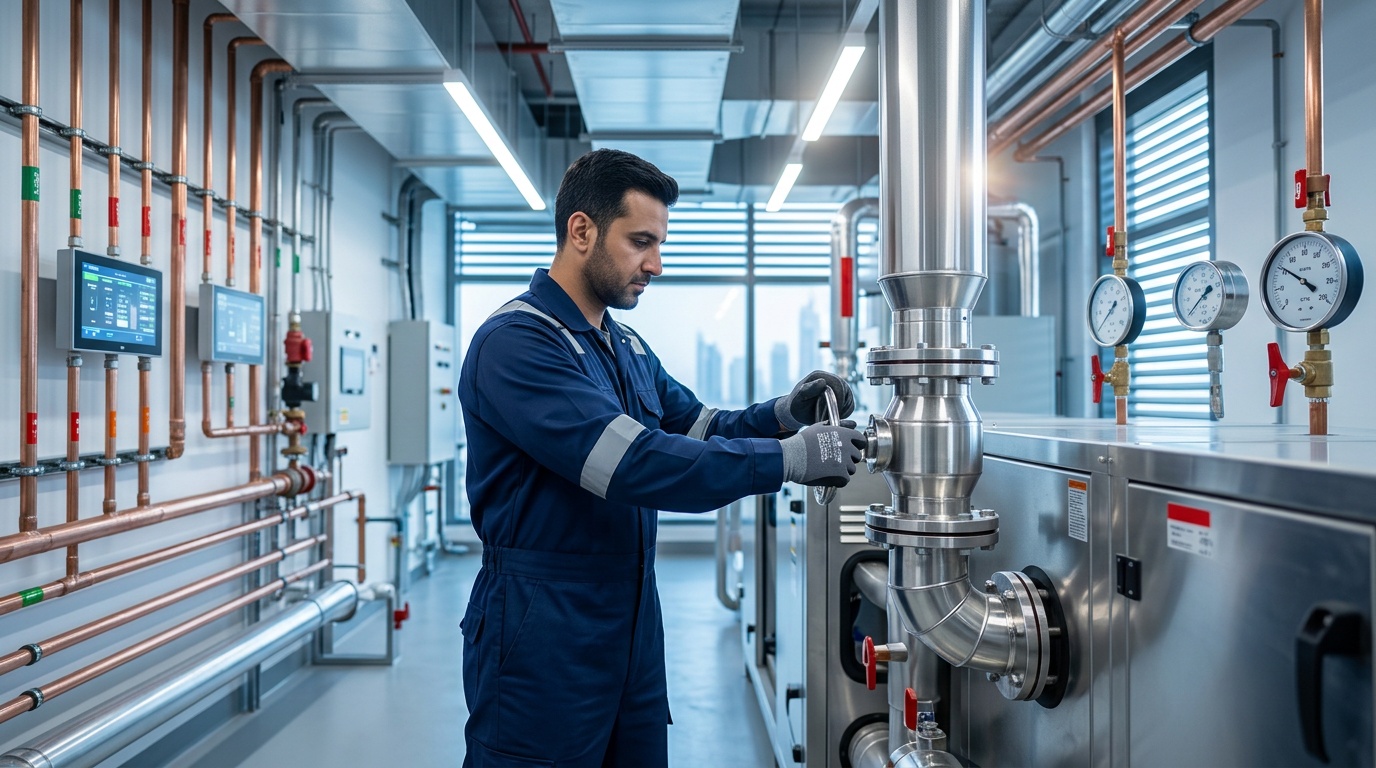
Investing in Dubai real estate delivers strong capital appreciation. Dubai Hills Estate, a premier residential zone, attracts premium tenants and consistently delivers above-average value growth. For foreign buyers, the process is straightforward: designated freehold zones allow full ownership without local sponsorship. A major benefit over many other Middle Eastern markets.
Price diversity is another advantage. Cheap houses for sale in dubai start at under AED 500,000, ideal for first-time buyers or rental portfolios. At the top end, luxury properties offer world-class amenities, private beach access, and 24/7 security, with average prices of $1,701,837 according to JamesEdition. Unlike many global markets, Dubai imposes no annual property tax, reducing long-term holding costs.
Climate-specific maintenance is a common concern. The region's high temperatures and frequent dust storms take a toll. Investors should engage a local HVAC specialist familiar with Gulf conditions to keep systems like HVAC, filtration, and structural elements compliant and efficient. That reduces unexpected repair costs and protects asset value. For those asking how much is a house in dubai in usd, the range spans from $130,000 for entry-level units to over $36 billion for ultra-luxury estates, per Sotheby’s Realty data.
Additional benefits include high rental yields that often outperform European and Asian markets. Single family homes for sale in dubai in family-friendly zones like Arabian Ranches offer access to top-tier international schools and healthcare facilities. Ideal for relocating families. The Dubai government’s ongoing infrastructure investments, including new metro lines and leisure developments, further support long-term property value growth.
How to Choose a property in Dubai
Selecting the right property requires a practical, engineering-focused approach. Not just an emotional reaction to a show apartment. Before viewing any property in Dubai, define your primary objective. Are you securing a high-yield rental asset or a long-term family residence? That distinction dictates your location. Dubai Marina appeals to professionals seeking high rental returns; Dubai Hills Estate offers the schooling and green spaces families need. Align the asset type with your financial goals to avoid costly misallocations.
Once the objective is clear, analyse the structural integrity and building systems. From my years on the tools managing commercial assets across the UK, I've seen how extreme heat and fine dust degrade building envelopes and HVAC infrastructure. When inspecting a villa or apartment, don't just look at the finishes. Investigate the service charge history and the condition of the central plant. A property with low upfront capital cost often hides massive deferred maintenance liabilities. Request a comprehensive inspection of the mechanical and electrical systems to avoid inheriting a money pit disguised as a bargain.
Understanding Legal Frameworks and Ownership Structures
Foreign nationals often ask about the legalities of property purchase in Dubai for international buyers. The process is straightforward but requires strict adherence to Dubai Land Department (DLD) regulations. Identify whether the title is freehold or leasehold. Freehold grants absolute ownership of the land and the property. The gold standard for international investors. Leasehold, typically lasting 99 years, grants rights to the building but not the land. Ensure your conveyancer verifies the title deed against the DLD registry to confirm the developer has cleared all master community fees before you transfer funds.
Financing is another hurdle. UAE banks require a significant deposit. Usually 20% to 25% for expatriates. Alongside a stringent affordability assessment. Also account for the DLD fee (4% of the purchase price) and mortgage registration fees. These are non-negotiable statutory costs. For those wondering about the final outlay in USD after these additions, it can be 8% to 10% higher than the listed sale price. Factor these into your liquidity planning to ensure the transaction remains viable.
Evaluating Property Condition and Hidden Costs
The Gulf's physical environment presents unique challenges for standalone homes in Dubai. High humidity and salt air in coastal areas like Palm Jumeirah accelerate corrosion of external fixtures and HVAC condensers. Inland, dust storms clog filtration systems, forcing air handling units to work harder and consume more electricity. A competent survey must include a thermal imaging scan to identify moisture ingress within the walls. A common issue where the building envelope hasn't been maintained to a high standard. Don't rely solely on a visual inspection; demand data-driven evidence of the building’s health.
Beyond the structure itself, analyse the "Total Cost of Ownership." This includes annual service charges, which can vary wildly between developments. A listed price might look attractive, but if the service charge is AED 25 per square foot, your net yield will be severely impacted. Scrutinise the owners' association budget. Look for evidence of a proactive maintenance strategy rather than a reactive one. A well-managed building with a healthy reserve fund protects your capital appreciation and ensures the asset remains liquid when you eventually sell.
Selecting the Right Location and Developer
The developer matters as much as the location. Established names with a track record of delivering high-specification builds are less likely to have cut corners during construction. When looking at luxury properties, the provenance of the build quality matters immensely. Visit the site at different times of the day to assess traffic noise and the building’s orientation. A west-facing villa might offer stunning sunsets, but the thermal gain in summer will make the property uncomfortable and expensive to cool without industrial-grade shading and glazing.
Consider the infrastructure maturity of the area. While more affordable houses in Dubai are often found in emerging communities, weigh the savings against the inconvenience of incomplete roads or a lack of retail amenities. For a commercial-minded buyer, infrastructure equates to liquidity. Properties in well-established, master-planned communities retain their value better during market fluctuations. Whether you're buying a studio or a mansion, the same principle applies: buy the asset for its utility and structural soundness, not just its prestige address.
Stuart’s Insight: In the Middle East, the building’s "skin" is your first line of defence against operational costs. Always check the U-value of the glazing and the quality of the insulation. If the developer skimped on the building envelope, your cooling bills will remain high regardless of how new your air conditioning system is.
For a comprehensive overview of the market and regulatory landscape, refer to the detailed entry on Real estate in Dubai.
References
Frequently Asked Questions
When advising clients on Dubai property purchases, I encounter the same technical and legal queries repeatedly. Below, I have addressed the most common questions with the direct, engineering-focused answers you require to make a sound investment.
Can foreigners buy property in Dubai?
Yes, foreign nationals can acquire freehold ownership in designated areas. The Dubai Land Department regulates these zones, which include Dubai Marina, Palm Jumeirah, and Arabian Ranches. Unlike many other regions, you do not need a local sponsor or partner to hold the title deed. The process is transparent, but you must ensure your finances are structured to meet the Central Bank’s mortgage regulations if you require financing.
How much is a house in Dubai in USD?
The market spans a vast price spectrum. Entry-level apartments and more affordable houses in Dubai can start around $130,000 (approx. AED 477,000). At the opposite end, luxury properties on Palm Jumeirah or in Emirates Hills frequently exceed $5 million. It is essential to calculate your budget in USD after accounting for the 4% DLD transfer fee and approximately 2% in agent and mortgage fees to avoid liquidity shortfalls.
What are the ongoing maintenance costs for Dubai properties?
This is where MEP (Mechanical, Electrical, and Plumbing) systems expertise becomes essential for buyers. Beyond the service charges paid to the building management, you must budget for HVAC maintenance. In the Gulf’s extreme heat and high humidity, air conditioning systems require quarterly filter changes and annual coil cleaning to prevent compressor failure. A neglected system can lose efficiency over time, significantly increasing your electricity spend. I always recommend a pre-purchase technical audit to identify any deferred maintenance.
Is Dubai property a good investment for rental income?
For investors seeking yield, the numbers are compelling. Gross rental yields in Dubai often outperform those in London, New York, and Hong Kong. To maximise this, focus on single family homes in family-centric zones like Mirdif or Springs, where demand from long-term tenants remains high. Ensure the property meets the latest Al Sa'fat green building regulations, as energy-efficient buildings command higher rents and lower vacancy rates.
Stuart’s Technical Note: When evaluating property in Dubai for international buyers, pay close attention to the district cooling charges (if applicable) and the building’s DEWA (Dubai Electricity and Water Authority) profile. An older building with poor insulation will have a much higher "chiller" bill, which effectively acts as a hidden monthly tax on your investment returns. Always request the last 12 months of utility statements before finalising the transfer.
Recommended services for building fabric repairs Birmingham.
Imagine this: a leaky roof forces your Birmingham office to close for three days. The cost? Emergency call-out fees, damaged IT equipment, and lost productivity. In my 24 years in this industry, I've seen facility managers pay five times more by deferring a £300 repair. That's why finding the right Recommended services for building fabric repairs Birmingham. is your first step toward protecting your asset's value. Your building's fabric. Roof, walls, windows, floors. Is the protective shell for your internal systems. When it fails, everything inside is at risk.
Key Takeaways
- A small roof leak left unchecked can trigger a chain of expensive emergencies from damaged equipment to lost business income.
- Scheduling routine inspections for your building's roof, walls, windows, and floors helps you catch minor issues before they become major failures.
- Choosing a reputable contractor for fabric repairs in Birmingham protects your facility's internal systems and preserves your property's long-term value.
- Delaying a modest repair often leads to costs that multiply fivefold when you factor in urgent call-out charges and downtime.
- Your building's outer shell is the first line of defence for everything inside it, so investing in its upkeep is a direct investment in your operational continuity.
Many facility managers treat the building fabric as a secondary concern compared to mechanical or electrical systems. But the physical shell is what protects those expensive internal systems. A leaky roof or failing cladding compromises the most advanced HVAC. At MEMS, we approach building health from the outside in, ensuring every seal, joint, and tile does its job.
Building fabric maintenance covers routine inspection and repair of a structure's physical components. The roof, walls, windows, and floors. For Birmingham properties, these services prevent water ingress, maintain compliance, and reduce energy waste. Recommended services include gutter clearing, cladding repair, masonry work, and internal joinery, typically scheduled per SFG20 standards to avoid pricey emergency repairs.
Why Commercial Building Fabric Maintenance Matters for Birmingham Properties
The Commercial Reality of Neglected Fabric
Deferred maintenance hits your bottom line fast. A small leak in a gutter or a minor crack in the masonry might seem trivial during a busy quarter, but these are the entry points for water ingress. Once moisture enters the envelope, it damages insulation, internal finishes, and even structural stability. Early detection of fabric issues typically costs hundreds; late intervention can run into thousands. That's why we push for proactive checks. Your building is a revenue-generating tool, and any fabric failure directly threatens that revenue.
Stuart’s Professional Insight: In the boardroom, building maintenance is often viewed as a cost centre. In reality, it's a form of insurance. A well-maintained building fabric can cut your total energy costs by preventing heat loss and improving thermal efficiency. Every pound spent on planned inspection saves ten on emergency call-outs and potential business closure.
Beyond direct repair costs, there's business continuity. A failing roof in a warehouse or loose cladding on a retail unit halts operations. Our Building Services Technicians focus on keeping your doors open and your staff safe. We know your building is a revenue tool. Any fabric failure is a direct threat to that revenue.
Local Factors: Birmingham’s Climate and Building Stock
Birmingham's diverse architectural history and weather patterns create unique challenges. Our city mixes Victorian industrial heritage, mid-century concrete, and modern glass-and-steel. Each reacts differently to the damp, cold winters and fluctuating temperatures typical of the Midlands. The damp climate accelerates mortar joint degradation and timber window rot. Urban pollution near heavy traffic routes and industrial zones also erodes stone and brickwork faster.
Managing these factors requires understanding Birmingham's construction history. The transition from traditional masonry to curtain walling in modern offices calls for different inspection techniques. We've repaired thousands of commercial properties across the region and know that a "one size fits all" plan never works. A bespoke strategy accounting for age and exposure is the only way to ensure long-term stability.
Essential Building Fabric Repair Services for Birmingham Commercial Buildings
Roofing, Cladding, and Guttering
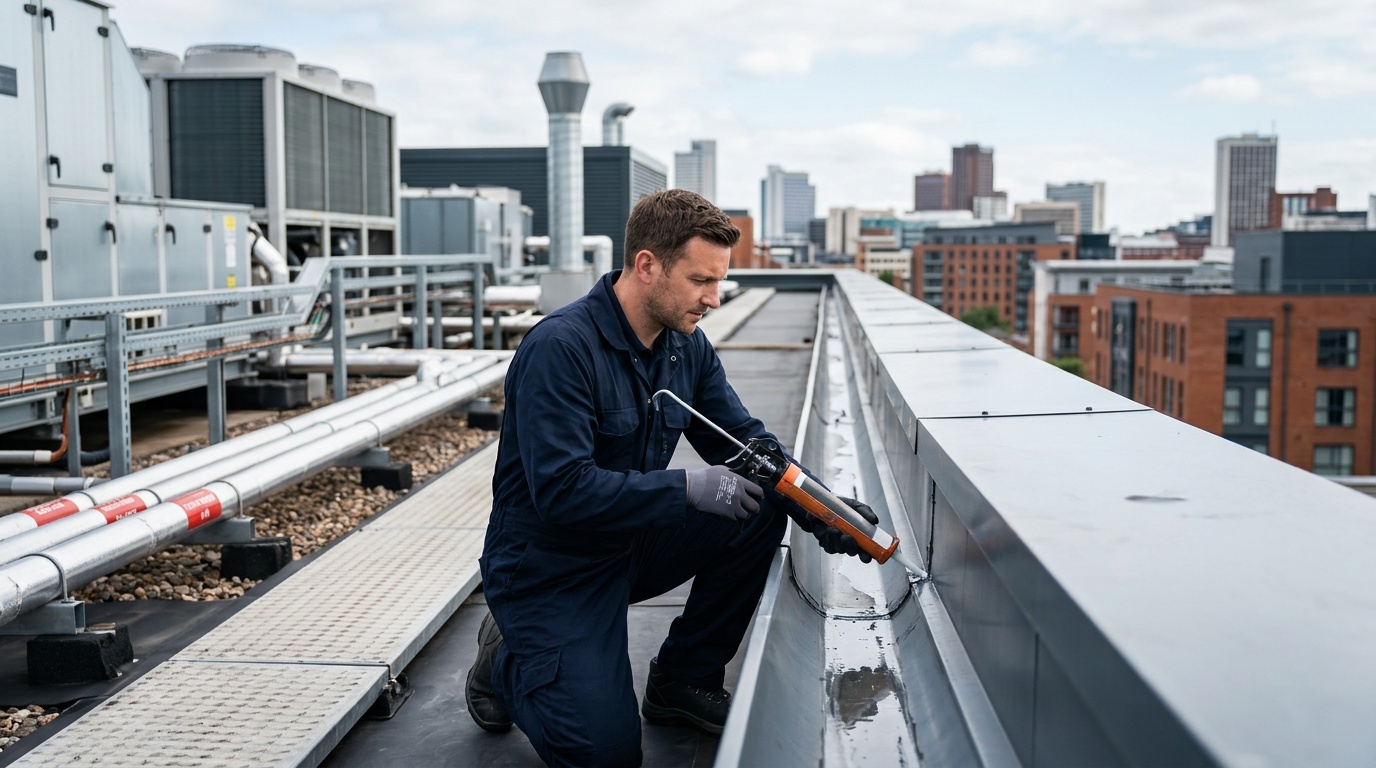
The roof and gutters are the most critical parts of the building envelope. Blocked gutters are the leading cause of water damage in commercial properties, yet they're often overlooked. When rainwater can't flow freely, it backs up into cavity walls or overflows onto cladding. Our Building Fabric Repairs & Maintenance service includes regular gutter clearance and cladding inspections to catch loose panels or failing seals before they become safety hazards. For high-rise office blocks, wind loads can accelerate defects, so we stay ahead.
Windows, Doors, and Joinery
External joinery and glazing are key for security and energy efficiency. Drafty windows or poorly fitting doors drain your heating budget and annoy staff. As part of our Building Fabric Repairs & Maintenance, we provide comprehensive glazing repairs and carpentry to keep the building airtight. Whether it's replacing a blown double-glazing unit or repairing a fire door to maintain compliance, these small interventions have a big impact on facility performance.
Flooring, Painting, and Drainage
Internal fabric maintenance matters too for a professional, safe environment. We handle everything from vinyl floor installation in healthcare settings to decorative painting in commercial offices. And drainage. Many clients need frequent help there. From simple blockages to excavations for pipe repairs, ensuring water moves away from the foundation prevents subsidence and damp. Our team focusses on minimising disruption to your daily operations.
Inspection Frequency and Scheduling Best Practices
Effective maintenance follows a structured schedule. We use SFG20 as the benchmark for frequencies, ensuring every element is inspected at the right time based on material and usage. For most Birmingham commercial properties, here's the recommended schedule to get the most from Recommended services for building fabric repairs Birmingham.:
| Building Element | Common Issue | Recommended Inspection Frequency |
|---|---|---|
| Gutters & Downpipes | Debris buildup and blockages | Bi-annually (Spring and Autumn) |
| Roofing & Cladding | Loose panels, leaks, or moss | Annually |
| External Glazing | Seal failure or frame rot | Every 6 to 12 months |
| Fire Doors | Hinge wear or closing failure | Six-monthly (Statutory) |
| Internal Flooring | Trip hazards or wear | Annually |
Adhering to these schedules catches minor defects before they escalate. It also provides a clear audit trail for compliance. A requirement for many insurance policies and health and safety audits. By integrating these Recommended services for building fabric repairs Birmingham. into your annual budget, you move from reactive firefighting to controlled asset management.
The True Cost of Neglect: Proactive vs Reactive Maintenance in the Midlands
The most expensive repair bill is the one that arrives after a catastrophic failure. I've watched businesses across the West Midlands pay five times the necessary amount for a problem that a planned inspection would have caught for a fraction of the cost. Proactive vs reactive spending is the difference between managing a budget and fighting a crisis. When you choose Building Fabric Repairs & Maintenance, you control your expenditure instead of being dictated to by inevitable material breakdown.
A Cost Comparison: Early Detection vs Emergency Repairs
Let's look at the hard numbers. Our internal data at MEMS shows that early detection of building fabric issues typically costs hundreds, while late intervention costs thousands. That's not just a labour rate difference. It's the compound cost of secondary damage. A small patch of cracked sealant on a flat roof might cost £300 during a scheduled visit. Ignored, that same defect lets water penetrate insulation and ceiling tiles, eventually requiring a full roof overlay, interior redecoration, and possibly IT equipment replacement. The stark contrast for Birmingham commercial properties looks like this:
| Maintenance Approach | Typical Cost Profile | Business Impact | Asset Lifespan |
|---|---|---|---|
| Proactive (PPM) | Low, predictable monthly or quarterly fees | Minimal disruption; scheduled out of hours | Maximised; components replaced before failure |
| Reactive (Emergency) | High; includes call-out premiums and secondary damage | Significant downtime; potential business closure | Reduced; constant stress cycles degrade materials |
The "savings" from skipping maintenance are illusory. They vanish with the first major failure. Insurance assessors now look hard at "gradual deterioration." If they decide a leak was caused by neglect rather than an acute event, they may refuse the claim, leaving you fully liable for thousands in repairs.
Case Study: A Birmingham Office Block Saved Thousands
Here's a concrete example. We worked on a multi-storey office block in central Birmingham. The facility manager noticed minor staining on top-floor ceiling tiles but decided to monitor it to preserve his quarterly budget. Three months later, a severe weather event hit the Midlands, turning that minor leak into a torrent. Water damaged the ceiling, electrical circuits, and the IT server room below.
We responded for an emergency. The total bill for strip-out, drying, and reinstatement exceeded £18,000. If the manager had engaged our Building Fabric Repairs & Maintenance service for a routine inspection, we would have spotted the failed flashing for around £450. That's a difference of over £17,500. Not even counting lost tenant productivity. This case drives home a simple engineering truth: the building always demands payment. Pay a small amount regularly to keep it in shape, or pay a fortune when it forces your hand.
This asset management approach is especially relevant when seeking Recommended services for building fabric repairs Birmingham. It's not just about fixing a broken window or a leaking gutter. It's about finding a partner who understands the local climate and construction methods. Our team at MEMS uses decades of local experience to forecast where failures are likely, giving you foresight to protect your bottom line.
Integrating Building Fabric Repairs with Sustainable Technologies
Modern facility management isn't just about fixing what's broken. It's about optimising the entire building envelope to support your environmental and financial goals. When we assess a property for Recommended services for building fabric repairs Birmingham., we look at how the physical structure interacts with your mechanical systems. A draughty building with poor insulation forces HVAC to work harder, consuming more energy and hiking your carbon footprint. Aligning fabric repairs with sustainable upgrades creates a synergy that improves overall asset performance.
Combining Fabric Upgrades with Heat Pumps and Solar PV
Many Birmingham businesses are transitioning to heat pumps and solar PV to meet net-zero targets. But these technologies are highly sensitive to building fabric quality. A heat pump struggles to maintain efficiency in a building with single-glazed windows or a poorly insulated roof. Before investing in expensive renewable plant, address the basics. Our holistic audit identifies heat loss and air leakage areas. We then prioritise Recommended services for building fabric repairs Birmingham. that maximise your return on green tech investment. Upgrading window seals, improving roof insulation, or repairing cladding to eliminate thermal bridges. To ensure your systems run at peak efficiency, we also recommend a regular M&E HVAC Compliance Health Check.
This integrated strategy keeps the energy you generate or heat you pump into a room where it belongs. Inside. Properties that undergo fabric repairs before installing renewables see a significantly faster payback period. It's practical engineering that avoids the common mistake of over-specifying mechanical systems to compensate for a leaky shell. Our team ensures your building is "renewable-ready" through meticulous attention to physical details others might overlook.
Our Renewable Energy Solutions can be seamlessly integrated with your fabric maintenance plan for a long-term sustainability roadmap. We help you navigate modern energy requirements while keeping your building's physical integrity front and centre.
How M&E's Internal Innovation Policy Ensures Reliability
At MEMS, our internal innovation policy sets us apart from standard contractors. We don't just read a manufacturer's brochure and recommend a product to clients. We trial new materials and methods on our own projects first. This lets us verify the durability of a new sealant, the effectiveness of an insulation board, or the reliability of a modern glazing technique before we suggest it for your facility. This boots-on-the-ground testing means every sustainable upgrade we propose has been proven in the real Birmingham climate.
We know facility managers can't afford to be early adopters of unproven tech. Your priority is uptime and compliance. By filtering innovations through our own rigorous standards, we give you a shortlist of sustainable solutions that are actually fit for purpose. This policy ensures the Recommended services for building fabric repairs Birmingham. we provide are both environmentally sound and commercially viable, built to last. We bridge the gap between cutting-edge sustainability and the practical reality of a busy commercial site.
Integrating Fabric Repairs with Sustainable Upgrades
Pros
- Significantly improved thermal efficiency and lower utility bills.
- Enhanced performance and lifespan of heat pumps and HVAC systems.
- Contribution towards corporate social responsibility and EPC ratings.
- Reduced condensation and improved internal air quality for occupants.
Cons
- Requires a higher initial capital investment compared to basic repairs.
- Necessitates a comprehensive audit to identify the correct sequence of works.
- Potential for longer project timelines due to the installation of new technologies.
How to Choose a Reliable Building Fabric Repair Contractor in Birmingham

Selecting the right partner for your building maintenance affects your compliance, budget, and peace of mind. The market is full of generalists, but commercial building fabric demands specialist knowledge. When you search for Recommended services for building fabric repairs Birmingham., you need a contractor who understands local building stock and the specific regulatory demands of the West Midlands. A reliable contractor offers more than just a pair of hands. They provide a strategic partnership that protects your asset value over the long term.
Key Questions to Ask Your Potential Contractor
Before you sign a contract, vet your provider thoroughly. I advise facility managers to ask three specific questions. First, do they adhere to SFG20 standards? That's the benchmark for compliance and ensures work meets a recognised engineering specification. Second, what's their in-house emergency response capacity? If a storm damages your roof, you need a team that can respond immediately, not subcontract at a premium. Third, ask for case studies showing experience with buildings similar to yours. You want a team that has seen the issues common in Birmingham's commercial properties and knows how to fix them properly.
The MEMS Difference: Local Expertise, Customer-First Philosophy
MEMS was built on being "big enough to cope, small enough to care." We offer the technical capability and certifications of a large firm with the accountability and personal service of a local business. Our technicians are highly trained Building Services Technicians who understand minimising disruption to your operations. We provide a 24/7 help desk and rapid emergency response so you're never left waiting. We pride ourselves on transparent communication and high-quality workmanship that stands the test of time. For a deeper collaboration, our M&E Strategic Partner Programme offers a comprehensive approach to long-term asset management.
If you're looking for a partner to manage your Recommended services for building fabric repairs Birmingham., we invite you to experience the MEMS difference. We're currently offering a free initial inspection for new commercial clients in the Birmingham area. We'll assess your property's condition and give you a no-obligation report on any risks we spot. Don't wait for a small issue to become a major expense. CLICK TO CALL US NOW to schedule your inspection and take the first step towards a more reliable, efficient, and compliant building.
Stuart’s Checklist for Vetting a Contractor:
- Do they have a physical presence in the West Midlands?
- Can they provide digital compliance certificates within 24 hours?
- Are their technicians directly employed and DBS checked?
- Do they offer a 24/7 emergency help desk with real people on the line?
- Is their pricing transparent with no hidden "out-of-hours" premiums?
Frequently Asked Questions
What is meant by fabric maintenance for commercial buildings?
Fabric maintenance involves the routine inspection and repair of a building's physical shell, including the roof, walls, windows, floors and guttering. For commercial properties in Birmingham, this proactive work prevents water ingress, maintains health and safety compliance and reduces energy waste. At MEMS, we schedule these services using SFG20 standards to avoid costly emergency call-outs.
What is the phone number for building fabric repairs in Birmingham?
You can contact MEMS Facilities Maintenance directly to arrange building fabric repairs across Birmingham and the West Midlands. While I cannot share a specific number here, a quick search for MEMS Birmingham will give you our office line. We handle everything from roof leaks to masonry cracks with a 24/7 call-out service.
What is included in building maintenance for commercial properties?
Building maintenance covers the full range of fabric repairs, including roof, cladding and gutter clearance, window and door joinery, internal flooring, painting and drainage. For a Birmingham office block or warehouse, this also means scheduled inspections of mortar joints, cladding seals and fire doors. We tailor each plan to the site's age, exposure and use.
What is fabric in facilities management?
In facilities management, fabric refers to the physical envelope of a building, the roof, walls, windows, doors and floors that protect internal systems. Proper fabric maintenance stops moisture, heat loss and safety hazards before they escalate. For our clients across the West Midlands, we treat the fabric as the first line of defence for asset value and business continuity.
What is the 80 20 rule in building maintenance?
The 80 20 rule, or Pareto principle, holds that roughly 80% of problems stem from 20% of causes. In building fabric maintenance, that means focusing inspections on the most vulnerable points such as gutter outlets, roof flashing and sealant joints. At MEMS, we find that targeting this critical 20% prevents the majority of water ingress and structural issues.
Why does Birmingham's climate require specific building fabric repairs?
Birmingham's damp winters and fluctuating temperatures accelerate decay in mortar, timber and cladding. Combined with urban pollution near industrial routes, stonework and brickwork erode faster than in drier regions. Our teams use material-specific techniques for the city's Victorian, mid-century and modern buildings to ensure repairs last.
national treatment center
Managing a national treatment centre means you're never just keeping the lights on. You're maintaining a high-stakes environment where clinical excellence must run without interruption. In my twenty-four years. From apprentice on the tools to managing director. I've seen a single equipment failure halt elective surgeries and put patient safety at risk. When your facility is designed to slash NHS backlogs, downtime isn't an inconvenience. It's a failure of service delivery that hits your reputation and your bottom line.
Key Takeaways
- A single piece of failed equipment can stop elective surgeries and endanger patients, making preventive maintenance essential for clinical safety.
- Because national treatment centres are built to cut NHS waiting lists, any downtime directly damages your service delivery, reputation, and financial performance.
- In a high‑stakes clinical environment, treating your facility's systems as critical assets rather than routine upkeep is the only way to guarantee uninterrupted care.
- After 24 years on the tools, I know that a reactive maintenance approach is unacceptable when lives and surgical schedules depend on reliable operations every moment.
The real challenge? You're caught between the boiler room's technical demands and the boardroom's strategic goals. The fix is moving from reactive firefighting to asset lifecycle management. With proactive maintenance, every air handling unit, backup generator, and water system operates at peak efficiency. That protects your budget from emergency shock costs and keeps your facility safe and compliant for patients and staff.
Why a National Treatment Centre Demands a Cohesive Maintenance Strategy
The real cost of fragmented maintenance contracts
I've seen this play out too many times: three different contractors, one complex fault, and a week of finger-pointing before anyone fixes the thermostat. Fragmentation kills accountability. When a BMS error affects theatre temperatures, each contractor blames the other. Meanwhile, the delay risks cancelled procedures. Administratively, managing five or six vendors drains resources. Multiple call-out fees, inconsistent reporting, audit headaches.
Fragmented maintenance also creates "maintenance drift". Small issues fall between contract gaps. A pump gets serviced, but the electrical panel feeding it gets ignored. Over time, those oversights become major failures. In a national treatment centre, where high patient throughput is the priority, you need a strategy that treats the building as one integrated organism. Engineering reality: neglect one system, and you risk the whole facility.
Stuart’s Engineering Insight: The Reactive Trap
Proactive maintenance programmes can cut unplanned downtime in healthcare facilities. If most of your maintenance spend goes to emergency fixes, your strategy is broken. Shifting to a planned preventative maintenance model turns unpredictable capital outlays into manageable operational expenditure.
How a single provider reduces risk and simplifies compliance
Consolidating maintenance under one multi-trade partner gives you a single point of truth. When we manage a site, our engineers look at the system holistically. How the steam boiler interacts with sterilisation units, how ventilation impacts cleanroom pressure regimes. That joined-up thinking is the only way to keep a 24/7 treatment centre operational.
Compliance gets simpler too. Forget chasing different firms for Gas Safe certificates, F-Gas logs, or NICEIC reports. With one provider, you get one digital dashboard for every document. That transparency turns CQC inspections from defensive scrambling into confident demonstration. You're not hoping you're compliant. You have the data to prove it.
Regulatory Compliance: The Non-Negotiable Backbone of a Treatment Centre

HVAC compliance: HTM 03-01 and CIBSE guidance
Ventilation in healthcare is infection control, not comfort. In a national treatment centre, HTM 03-01 is the legal and clinical baseline. It governs the design, installation, and validation of specialised Commercial Ventilation Repair Services in high-risk areas like operating theatres and recovery rooms. Get the air change rates or pressure differentials wrong, and you put patients at immediate risk of surgical site infections.
Our approach: rigorous quarterly inspections, annual validations, and a focus on filtration efficiency and ductwork integrity. Not just checking fans spin. If a system is nearing end of life, we give you a clear replacement roadmap before failure strikes. Compliance isn't a tick-box exercise; it's the framework that keeps your facility safe.
Electrical safety: BS 7671, HTM 06-01 and emergency power
Electrical resilience is the lifeblood of a clinical environment. BS 7671 is the starting point, but healthcare demands HTM 06-01's stricter standards on supply reliability and no-break power for critical areas. In a national treatment centre, a power cut must never mean lost life-support or surgical lighting. That means testing your UPS and standby generators under load regularly. Not just pressing a test button.
We manage the entire electrical infrastructure, from high-voltage transformers to final circuits in consultation rooms. Regular Plumbing and Electrical Services are scheduled to cause zero disruption to clinical hours. Using thermographic imaging, we catch thermal anomalies in distribution boards before they cause fires or circuit failures. That level of precision separates a standard contractor from a healthcare specialist.
Water hygiene: Legionella control under ACoP L8
Waterborne pathogens are a silent threat. Compliance with ACoP L8 and HTM 04-01 is mandatory for any national treatment centre. Proper Legionella management can seriously reduce waterborne infection risks. That means rigorous temperature monitoring, showerhead descaling, regular flushing of dead legs. The works.
Our water hygiene teams go beyond temperature checks. We conduct comprehensive risk assessments that examine the entire system design. Time and again, we find outdated plumbing configurations creating stagnant zones that chemicals alone can't treat. By identifying those risks and making physical modifications, we keep your water supply safe for both clinical and domestic use. Protecting your facility from a Legionella outbreak demands strict discipline and expert oversight.
Compliance Checklist for Facility Managers
- HTM 03-01: Are your theatre air change rates validated annually by a competent person?
- BS 7671 & HTM 06-01: Is your emergency generator tested under full building load at least once a month?
- ACoP L8: Do you have a digital logbook that records every temperature check and remedial action?
- F-Gas: Are all air conditioning units above 5 tonnes CO₂ equivalent leak-tested and recorded?
- SFG20: Is your maintenance schedule aligned with the industry standard for healthcare assets?
Beyond Compliance: How Proactive Maintenance Directly Improves Patient Care
In a clinical environment, the building isn't just a container for medical activity. It's a functional part of care delivery. When we talk about maintenance in a national treatment centre, we shift from engineering tasks to patient outcomes. A well-maintained facility gives surgeons and nurses the stable foundation they need to focus on their work. When systems are managed with precision, the environment itself becomes an asset for recovery, not a source of complication.
The link between stable HVAC, air quality, and patient recovery
Air quality is critical for preventing healthcare-associated infections. In a national treatment centre, the HVAC must maintain specific pressure regimes to stop contaminants from moving into sterile zones. If a filter bypasses or a fan loses efficiency, those pressure gradients become compromised. That's not just a technical fault. It's an immediate risk increase for every patient undergoing a procedure. We change HEPA filters based on pressure drop data, not calendar dates, ensuring the air stays as pure as clinical standards require.
Beyond infection control, thermal comfort directly affects patient recovery and staff performance. Temperature or humidity fluctuations stress patients and fatigue surgical teams under heavy theatre lights. By proactively maintaining chillers, boilers, and humidification units, we eliminate that drift. Our engineers calibrate sensors and check actuator responsiveness, so the BMS maintains a steady state that supports healing and professional focus.
Electrical resilience: preventing downtime in critical areas
Electrical failure in healthcare is a high-stakes event that can jeopardise patient safety in seconds. Compliance mandates backup systems, but proactive maintenance ensures they actually work under stress. For a national treatment centre, resilience means the transition from grid to standby power is seamless and invisible to clinical equipment. We conduct regular black-start testing and load-bank trials to verify generators and UPS can handle full operational demand. That rigour prevents the nightmare scenario of power loss during a critical surgical phase.
Case Study: Resilience in Action
I'll give you a real example. A regional treatment facility avoided total shutdown during a local grid failure because of a proactive “point-of-failure” audit we'd done three months prior. During that audit, we found a degrading capacitor in the main UPS. A component that would have failed under the sudden surge of a power transfer. We replaced it during a scheduled maintenance window, saving the facility from significant financial loss in lost theatre time and cancelled appointments. That's the difference between checking a box and truly managing an asset.
Water safety and the hidden cost of a Legionella outbreak
The financial and reputational cost of a Legionella outbreak can cripple a healthcare provider. Beyond legal ramifications, the clinical cost is measured in patient lives. In a national treatment centre, complex water distribution systems often create “blind spots” where water stagnates. Proactive maintenance means relentless temperature monitoring and chemical dosing. But also physical inspections to identify and remove dead legs. We treat water hygiene as a dynamic challenge, adapting flushing regimes to the building's actual usage patterns so no part of the system becomes a breeding ground for pathogens.
Built for the Future: Sustainable Upgrades That Balance Cost and Compliance
The drive toward a Net Zero healthcare estate often looks like a budget burden, but when done right, sustainability and cost-efficiency go hand in hand. For a national treatment centre, the goal is to cut energy consumption without compromising the stringent conditions required for clinical safety. Modernising the plant room isn't about being “green”. It's about installing equipment that's more reliable, easier to maintain, and significantly cheaper to run. By integrating Renewable Energy Solutions, you can redirect funds from utility bills back into frontline patient care.
Air-to-water heat pumps vs. traditional boilers: a side-by-side comparison
Switching from gas-fired boilers to air-to-water heat pumps is one of the most effective ways to decarbonise a treatment centre. Yes, the upfront capital is higher, but the long-term operational savings are substantial. Heat pumps run at significantly higher efficiencies than conventional condensing boilers. In healthcare, this transition needs careful engineering. The lower flow temperatures of a heat pump still must meet high-grade heat demands for domestic hot water and space heating in older buildings. We often recommend a bivalent approach: heat pumps handle the base load, and high-efficiency boilers provide top-up during extreme cold peaks.
| Feature | Traditional Gas Boilers | Air-to-Water Heat Pumps |
|---|---|---|
| Energy Efficiency | Moderate to High (Condensing) | Very High (SCOP) |
| Carbon Footprint | High (Fossil Fuel Combustion) | Low (Electric, Zero Local Emissions) |
| Maintenance Needs | Annual Combustion & Flue Checks | Filter Cleaning & F-Gas Inspections |
| Lifespan | Moderate | Longer |
| Operating Cost | Subject to Gas Price Volatility | Reduced with Optimisation |
LED lighting and solar PV: reducing energy spend without compromising care
Lighting accounts for a big chunk of any 24/7 clinical facility's electrical load. Upgrading to LED is the simplest upgrade with the fastest return on investment. Treatment centres can cut energy costs significantly by switching to LED lighting and modern HVAC controls. Plus, LED systems generate less waste heat, reducing the cooling load in summer. When paired with roof-mounted solar PV arrays, a national treatment centre can generate some of its own electricity. A hedge against rising energy markets and a boost to overall site resilience.
Why M&E’s ‘open door’ innovation policy removes risk from new technology
The biggest hurdle to adopting new technology in healthcare? Fear of the unknown. No facility manager wants their building to be a test case for unproven equipment. At M&E Maintenance Solutions, we operate an “open door” innovation policy. We trial new technologies in our own controlled environments or non-critical applications before recommending them to you. We analyse real-world performance data, ease of repair, and long-term durability of everything from smart sensors to new refrigerants. This rigorous internal vetting means when we propose a sustainable upgrade, it's backed by engineering evidence, not marketing brochures. We take the risk so you don't have to.
Your Essential Maintenance Audit: A Five-Step Plan for Treatment Centre Managers
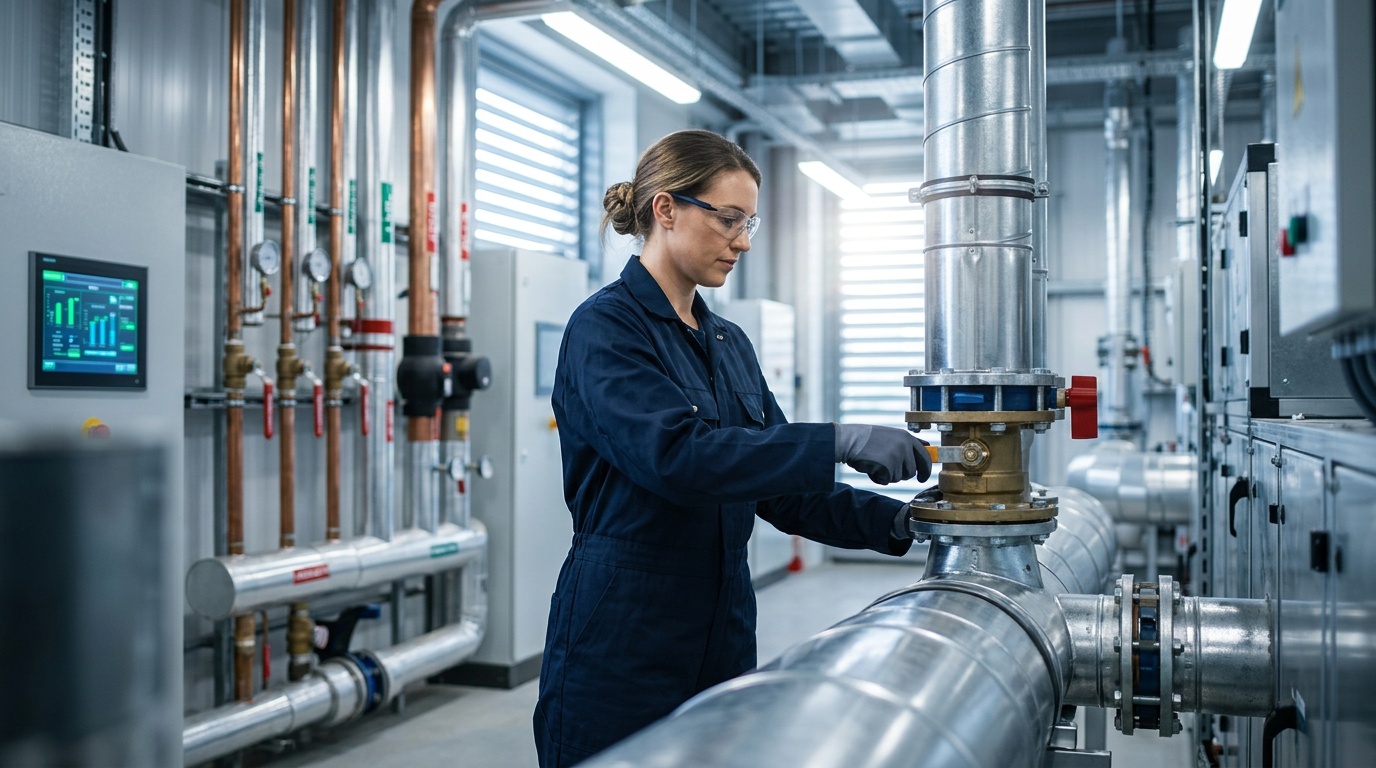
After twenty-four years working with facility managers across the NHS and private healthcare, I've learned that the difference between a smoothly running site and one plagued by failures often comes down to a simple audit. You don't need a complete overhaul overnight. You need a structured method to find where your maintenance strategy is leaking value, risking compliance, and wasting budget. The five steps below will give you a clear picture of where you stand and a roadmap to a more resilient facility. Commit to working through them, and you'll move from reactive firefighting to strategic asset management.
Step 1: Map your current compliance schedule against SFG20 standards
First, gather every service schedule you have for your HVAC, electrical, and plumbing systems. Lay them out against the SFG20 specification for healthcare buildings. SFG20 isn't a suggestion. It's the recognised industry standard for maintenance frequency and scope. In my experience, most of the facilities we audit have contracts covering only a fraction of what SFG20 requires. A standard air handling unit service might omit fan belt tension checks or filter differential pressure readings. Those omissions accumulate. Mapping to SFG20 exposes every gap in your compliance coverage. This step alone can save you from a non-compliance finding during a CQC inspection.
Step 2: Identify critical systems with the highest patient impact
Not all equipment carries the same weight. A failure in theatre ventilation can halt surgery immediately; a faulty boiler in an outpatient wing may cause discomfort but no clinical delay. Rank your assets by their direct effect on patient care and business continuity. Start with life safety systems: emergency generators, UPS units, fire alarms, medical gas supplies. Then move to environmental control systems that support clinical activity: theatre air handling, temperature control in pharmacy storage, water hygiene in wards. For each system, ask: “If this fails tomorrow, what's the impact on patient throughput?” In a national treatment centre, where every appointment slot is tight, the answer often justifies a more frequent or rigorous maintenance regime.
Step 3: Analyse your reactive vs. proactive spend ratio
Pull your maintenance invoices for the last twelve months. Separate them into two piles: planned preventative maintenance (PPM) and emergency call-outs. Now calculate the percentages. If a disproportionate amount of your total spend is on reactive work, your strategy is out of balance. Reactive work carries a premium: emergency labour rates, parts at retail cost, and the hidden expense of downtime. In healthcare, a single unplanned outage can cost tens of thousands in lost theatre time and rescheduled appointments. The goal is to shift that ratio so most of your budget goes into proactive care. That shift protects your operational budget from unpredictable spikes and extends asset life. If your current provider is driving a high reactive ratio, ask why. The answer may reveal you need a better partner.
Step 4: Consolidate contractor relationships for accountability
Juggling five different contractors for gas, electrical, water hygiene, HVAC, and building fabric creates accountability gaps. When a problem spans multiple trades, each blames the other, and the delay lands on your desk. Consolidation gives you a single point of responsibility. A single provider with in-house multi-trade capability can guarantee every system is maintained to a unified standard. You also simplify your compliance audit trail: one digital logbook for all certificates, one monthly report, one account manager who knows your facility. This reduces your administrative load and ensures no maintenance task falls through the cracks. In a national treatment centre, where the plant room's complexity demands coordination, consolidation isn't just convenient. It's a risk management necessity.
Step 5: Plan a capital replacement roadmap with expert guidance
The final step is to look forward. Every piece of plant equipment has a finite lifespan. A boiler installed ten years ago is approaching its failure curve. Same for chillers, UPS batteries, cooling towers. Rather than waiting for an unexpected breakdown that forces a panic purchase, plan a capital replacement roadmap. Work with a maintenance partner who can assess the condition and remaining life of your major assets. Prioritise replacements based on patient impact and energy efficiency gains. For example, replacing an aging chiller with a modern high-efficiency unit can cut energy consumption significantly and improve reliability. Spreading the cost over a multi-year plan avoids budget shocks and maintains clinical continuity. At M&E Maintenance Solutions, we provide M&E HVAC Compliance Health Check surveys that give you the data you need to make these decisions with confidence.
Stuart’s Practical Advice: Start with One System
Don't try to audit every system at once. Pick one area. Your theatre HVAC or emergency power supply. And run through all five steps on that system alone. The insights you gain will immediately improve your facility's resilience and give you a template for the rest of the building. Once you see the difference a structured audit makes, you'll want to apply it across your entire national treatment centre. The key is to start. And the time to start is now.
References
Frequently Asked Questions
What is a national treatment centre?
A national treatment centre is a specialised healthcare facility designed to reduce NHS backlogs by providing high patient throughput for elective surgeries and procedures. These centres require constant clinical excellence and uninterrupted operation, making reliable maintenance critical. A single equipment failure can halt surgeries and compromise patient safety, so facility managers must prioritise proactive upkeep.
Why is proactive maintenance important for a national treatment centre?
Proactive maintenance is vital for a national treatment centre because it prevents unplanned downtime that can cancel elective surgeries and damage patient safety. Moving from reactive firefighting to planned preventative maintenance shifts costs from unpredictable emergency repairs to manageable operational spending. This approach keeps air handling units, generators, and water systems operating at peak efficiency, protecting both the budget and the facility’s reputation.
How does a single maintenance provider reduce risk in a national treatment centre?
A single maintenance provider gives a national treatment centre a unified point of accountability, synchronising all technical disciplines from HVAC to electrical systems. This holistic view ensures that issues like a building management system error affecting theatre temperatures are resolved quickly without contractors blaming each other. It also simplifies compliance by storing all certificates and reports in one digital dashboard, making CQC inspections straightforward.
What are the key HVAC compliance regulations for a national treatment centre?
National treatment centres must follow Health Technical Memorandum HTM 03-01 and CIBSE guidance for ventilation systems in operating theatres and recovery rooms. These regulations govern air change rates, pressure differentials, and filtration efficiency to control airborne pathogens and prevent surgical site infections. Regular quarterly inspections and annual validations are essential to maintain compliance and patient safety.
What electrical safety standards apply to a national treatment centre?
National treatment centres must comply with BS 7671 wiring regulations plus the stricter HTM 06-01 standard, which focuses on electrical supply reliability and no-break power for critical care areas. Uninterruptible power supplies and standby generators must be load-tested regularly to ensure surgical lighting and life-support equipment never fail during a power cut. Managing the entire electrical infrastructure, from transformers to final circuits, is part of a cohesive maintenance strategy.
How does fragmented maintenance cause problems in a national treatment centre?
Fragmented maintenance with separate contractors for HVAC, electrical, and plumbing creates a lack of accountability and leads to maintenance drift where small issues are overlooked. When a complex fault occurs, contractors blame each other, delaying repairs and increasing the risk of cancelled procedures. Administratively, managing multiple vendors drains resources and results in inconsistent reporting, making audits difficult and emergency costs higher.
Compare emergency response times for plumbers in West Midlands.
It's 3:00 AM on a Tuesday. A main water pipe bursts in the third-floor plant room of your Birmingham office complex. By the time security notices the pressure drop, water is seeping through ceiling tiles into the executive boardroom. Every minute isn't just a plumbing issue. It's a direct hit to your building's structural integrity and your bottom line. When you compare emergency response times for plumbers in West Midlands, you're not looking for a quick fix. You're looking for a partner who understands that in a commercial environment, time is the most expensive commodity you have.
Key Takeaways
- A burst pipe at 3 AM in a commercial building can cause structural damage and financial loss that compounds with every passing minute.
- Comparing emergency plumbing response times is about finding a partner who treats time as the most expensive asset in your facility.
- In a commercial environment, a quick fix isn't enough you need a team that understands the full impact of water damage on your building and budget.
- Your emergency plumbing partner should be ready to act before the water reaches critical areas like executive boardrooms or electrical rooms.
- Response time guarantees mean nothing without the experience to assess and contain commercial-scale water emergencies on the spot.
Engineering Reality: The Price of a Leak
A burst pipe under mains pressure can release a significant volume of water quickly, leading to extensive damage to equipment and structure if not addressed promptly.
The Real Cost of Waiting: Why Emergency Response Times Matter for Commercial Properties
In my two decades managing mechanical and electrical systems, I've seen minor leaks turn into six-figure insurance claims because a facility manager prioritised the lowest call-out fee over the fastest response window. For a commercial site, water damage is multi-layered: immediate destruction of assets like servers, carpets, and drywall, then secondary damage. Mould growth, Legionella risk in stagnant pockets, and potential electrical fires when water meets high-voltage distribution boards.
Reputational risk is equally punishing. If you manage a retail centre in Solihull or a hotel in Coventry, a plumbing failure that forces a half-day closure can alienate tenants and customers. A provider who arrives in four hours instead of one has effectively cost you three hours of trade. For most West Midlands businesses, that far outweighs any saving on the initial invoice.
Comparing Emergency Response Time Guarantees: What the Promises Actually Mean
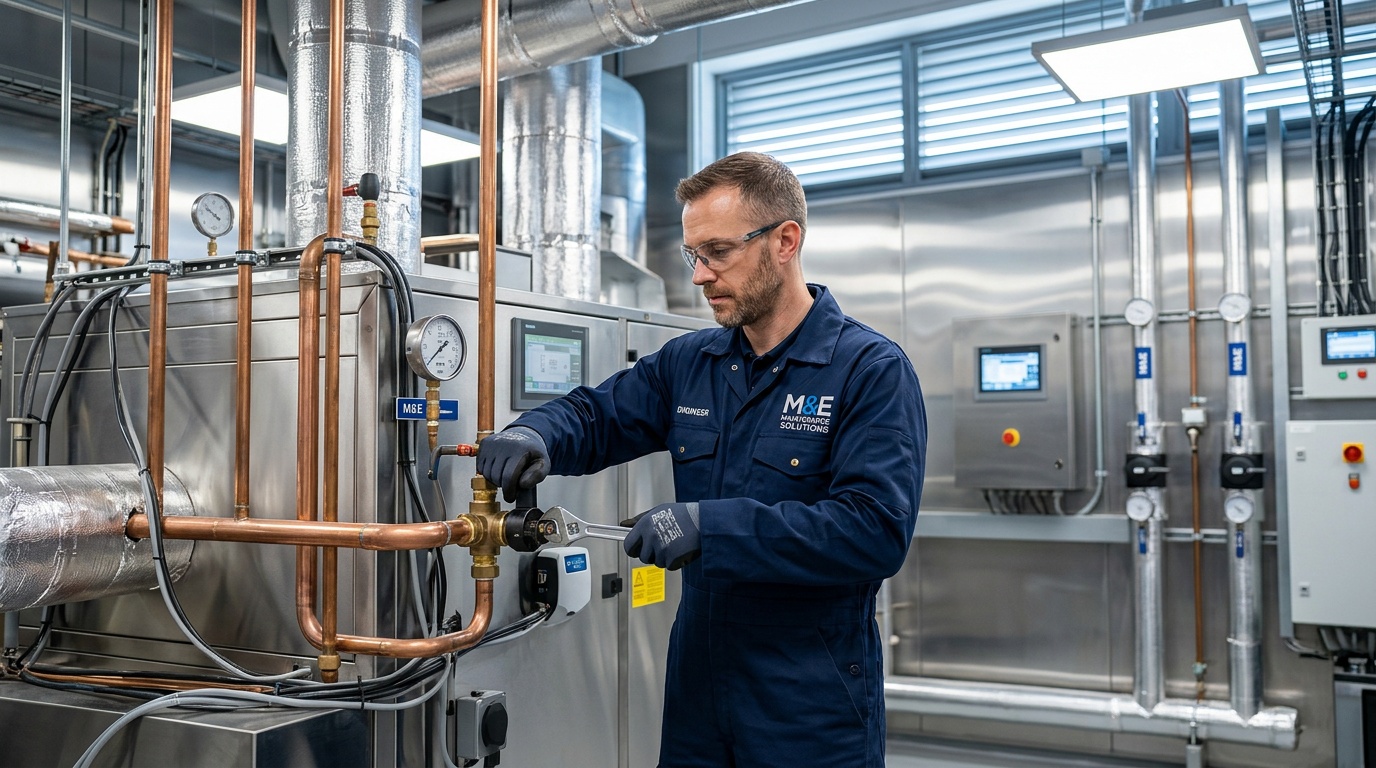
Many providers claim "rapid response," but as a facility manager, you need to look at the contractual reality. National firms often promise a two-hour window, but their fine print defines "response" as a return phone call from a dispatcher. Not an engineer through your door with a toolkit. You must distinguish between a target response time and a guaranteed arrival time. When you evaluate emergency plumbing providers, ask for their historical performance data in postcodes like B1, CV1, or WV1 during peak traffic hours.
| Provider Type | Advertised Response | The Commercial Reality | Best For |
|---|---|---|---|
| National FM Corporations | 2-4 Hours | Heavy reliance on subcontractors; arrival times vary by local availability. | Low-risk, non-essential sites. |
| Local Sole Traders | "Asap" | Limited by their current job; no backup if the engineer is stuck elsewhere. | Domestic repairs or small shops. |
| MEMS (Regional Specialists) | Guaranteed Windows | Directly employed engineers with local depot hubs across the Midlands. | Critical infrastructure and high-value assets. |
Why Some Plumbers Take Longer Than They Promise. Red Flags You Need to Know
The most common reason for a failed response time is the "hidden middle man." Many providers who appear local are actually national helpdesks that subcontract to the lowest bidder. This creates a communication vacuum: the person on the phone has no idea where the engineer is. Subcontractors often prioritise their own high-margin private work over a low-fixed-fee call-out, leading to those "no-show" frustrations that keep facility managers awake at night.
Another red flag is a lack of real-time fleet tracking. In a modern maintenance organisation, the office should be able to tell you exactly which street their van is on. Without GPS-backed dispatching, a "30-minute arrival" is nothing more than a guess. At MEMS, we operate with full transparency because we know your ability to manage tenant expectations depends on the accuracy of the information we provide. If a provider cannot give you a live update, they are not operating at a commercial grade.
Commercial vs Residential Emergency Plumbing: Why the Difference Matters for You
A residential plumber is used to fixing a leaky kitchen tap or a domestic boiler. They are rarely equipped to handle the complexities of a commercial plant room, booster pumps, or large-scale TMV (Thermostatic Mixing Valve) arrays. When you assess emergency plumbing response capabilities, ensure the provider has the technical competence to match their speed. Arriving quickly is useless if the engineer doesn't have the parts or knowledge to isolate a 4-inch commercial main or repair a failing pressurisation unit.
Commercial plumbing involves different regulations and higher stakes. We deal with complex drainage systems, central heating plants, and water storage requirements that a domestic plumber simply doesn't encounter. The assets at stake include building compliance and the safety of hundreds of occupants. That's why we structure our response teams around commercial expertise. We don't just send a plumber; we send a mechanical engineer who understands the entire building ecosystem and the specific standards you must adhere to. For comprehensive facility support, we also offer building fabric repairs and maintenance to address any structural damage caused by water ingress.
How to Vet a Plumber's Response Time Before You Need Them

The worst time to compare emergency response times is when the water is already rising. Proactive vetting is the only way to ensure your building remains operational. Demand to see a provider's Service Level Agreement (SLA) performance reports for the last six months. A reputable firm will have no issue showing you their average arrival times and first-fix rates. If they hesitate, it's a clear sign their internal processes aren't being measured.
5 Questions to Ask Any Emergency Plumbing Provider
- Are your engineers directly employed or subcontracted?
- What is your average real-world arrival time across the West Midlands?
- Can you provide GPS tracking updates during a call-out?
- Do you carry commercial-grade parts for common failures in your vans?
- What is your protocol for simultaneous emergencies during peak hours?
To truly protect your facility, look beyond the initial promise. Ask about out-of-hours coverage and how they handle multiple simultaneous emergencies. A partner like MEMS is built for the "worst-case scenario," ensuring that even during a regional cold snap or a major storm, our commercial clients in the West Midlands receive priority. When you evaluate emergency plumbing providers, remember that reliability is the foundation of any successful maintenance strategy. By choosing a partner with a proven track record and a focus on commercial excellence, you ensure your building remains a safe, compliant, and profitable environment. You can learn more about our company's history and commitment to the region on our about page.
Making the Right Choice for Your Commercial Plumbing Emergency Needs
After reviewing the landscape of emergency plumbing providers across the West Midlands, one conclusion stands out: speed without technical competence is a hollow promise. The facility managers who protect their assets best treat response time as one component of a broader capability assessment. You need a partner whose van stock includes commercial-grade fittings, whose engineers hold relevant gas and water regulations certifications, and whose dispatch system can pinpoint your exact location in Birmingham, Wolverhampton, or Walsall without fumbling for a postcode.
The future of commercial maintenance is moving towards integrated digital platforms that provide real-time job tracking and automated compliance reporting. Providers that invest in these systems, like MEMS, offer more than a rapid arrival. They offer a complete service history that supports your legal obligations under the Health and Safety at Work Act and your insurers' requirements. When you compare emergency plumbing providers, look for this technological backbone. It transforms a reactive fix into a documented part of your asset management strategy. For a full overview of our mechanical and electrical capabilities, visit our M&E Maintenance Solutions service page.
The Verdict for West Midlands Facility Managers
For high-stakes commercial environments where every minute of downtime directly hits revenue and tenant satisfaction, the optimal choice is a regional specialist with directly employed engineers, guaranteed arrival windows, and a proven track record in the Midlands. MEMS Maintenance Solutions combines the accountability of a family-run business with the infrastructure of a national provider. We do not subcontract. We do not guess our arrival times. We show up with the right parts and the right knowledge to restore your building's systems efficiently, leaving you free to focus on running your operation.
Looking ahead, the increasing complexity of commercial building systems means that generalist plumbers will become even less suitable for emergency work. Smart building controls, variable speed pumps, and advanced water treatment systems require specialist training. By establishing a relationship with a dedicated commercial provider now, you ensure that when the next pipe bursts or the next boiler locks out, you are not starting the search from scratch. You already have a partner who knows your site, your equipment, and your compliance obligations. That peace of mind is the true value of a carefully vetted emergency response partner. For a deeper understanding of plumbing systems and standards, you can refer to authoritative resources.
References
Frequently Asked Questions
What should I look for when comparing emergency response times for plumbers in the West Midlands?
When you compare emergency response times for plumbers in West Midlands, look beyond the advertised window. Ask for historical performance data in your specific postcode during peak hours. A provider that guarantees a two-hour arrival but defines 'response' as a phone call is not giving you the speed your commercial site needs.
Why do some plumbers take longer than their advertised response time?
The most common reason is the hidden middle man. Many firms that appear local are actually national helpdesks subcontracting to the lowest bidder. Those subcontractors often prioritise their own private work over a fixed-fee call-out, leading to no-shows or delays. If you compare emergency response times for plumbers in West Midlands, ask if the engineers are directly employed and if the company uses real-time fleet tracking.
How does commercial plumbing differ from residential plumbing in an emergency?
A residential plumber is equipped for a leaky tap, not a 4-inch commercial main or a failing pressurisation unit. Commercial plumbing involves different regulations, higher stakes, and complex systems like booster pumps and TMV arrays. When you compare emergency response times for plumbers in West Midlands, ensure the provider has the technical competence to match their speed, otherwise a fast arrival is useless.
What is the real cost of waiting for a slow emergency plumber in a commercial property?
Every minute of delay multiplies damage: water destroys servers, carpets, and drywall, then causes mould and electrical risks. For a retail centre or hotel, a half-day closure can alienate tenants and customers. When you compare emergency response times for plumbers in West Midlands, weigh the hourly rate against business interruption. A four-hour arrival instead of one costs you three hours of trade, which far outweighs any saving on the invoice.
How can I verify a plumber's actual response time before I need them?
The worst time to compare emergency response times for plumbers in West Midlands is during a crisis. Vet providers beforehand by asking for their average arrival times in your postcode, checking if they have local depot hubs, and requesting references from similar commercial clients. A reputable firm will share performance data and explain how they dispatch engineers.
What does a guaranteed response time actually mean in practice?
Many national firms promise a two-hour window but define 'response' as a return phone call, not an engineer at your door. You need to distinguish between a target and a guaranteed arrival. When you compare emergency response times for plumbers in West Midlands, ask for the contractual definition and whether they have directly employed engineers with local depots to back up that guarantee.
Why is it important to ask if engineers are directly employed when comparing emergency plumbers?
Directly employed engineers are accountable to the company and prioritise your call-out. Subcontractors often juggle multiple clients and may delay your job for higher-margin work. If you compare emergency response times for plumbers in West Midlands, a provider with its own fleet and GPS tracking can give you live updates, which is essential for managing tenant expectations and minimising downtime.
facilities
What Does 'Building Infrastructure' Actually Mean in Commercial Building Management?
I've spent over two decades managing plant rooms and boiler systems across the West Midlands, and I've noticed the term "facilities" is often used as a catch-all bucket for anything a business owner wants to ignore until it breaks. A dictionary definition focuses on equipment or spaces provided for a purpose. In the boardroom, it means the physical infrastructure that makes your business run. It's the invisible engine of your company.
Key Takeaways
- Facilities are the physical infrastructure that keeps your business running, not just a vague term for things you ignore.
- Too many companies only think about their plant rooms and boiler systems when something fails, which costs more in the long run.
- Treating facilities as the invisible engine of your company means investing in regular maintenance instead of emergency repairs.
- A clear definition of facilities helps shift your mindset from reactive fixes to strategic management of your building's core systems.
In a commercial context, "building infrastructure" refers to the entire physical environment and the integrated systems. HVAC, plumbing, electrical, and structural. Required to support a business. It covers both hard assets like boilers and air conditioning units, and soft services like cleaning and security that keep a building safe, compliant, and operational.
Many managers mistakenly think the term only refers to washrooms. That narrow view is dangerous. If you only see your physical assets through the lens of basic amenities, you overlook the complex mechanical and electrical systems that dictate your overheads. A synonym like "infrastructure" or "physical assets" carries more weight during budget discussions because it highlights high-value machinery, not just soap dispensers.
Stuart’s Perspective: When I talk about your building, I'm talking about its heartbeat. Your boilers, pumps, and distribution boards are the organs. If you treat your building's systems as a mere expense line rather than a critical operational asset, you're essentially planning for a future system failure.
How you define this term directly impacts your contracts and job descriptions. A technician who thinks they're just looking after "the building" might miss the nuance of SFG20 compliance or F-Gas regulations. When we define building maintenance work at MEMS, we mean the rigorous, technical maintenance of every moving part within your four walls. It's about shifting from a reactive mindset to total asset lifecycle management, ensuring every pound spent on maintenance adds years to your equipment's life.
The reality is that a building is not a passive backdrop. It's a living ecosystem of mechanical and electrical assets that directly impact your bottom line. In my experience, the dictionary definition is inadequate for a commercial property manager. Your building's systems are the difference between a structure that just stands there and one that actively supports your business goals. When I walk into a site in Birmingham, I don't see "amenities." I see chilled water pumps that stop servers from melting and emergency lighting that keeps you legal during a power cut. The real meaning lives in the plant room, not in a glossary. It encompasses every physical asset that requires energy, maintenance, or compliance checks. If you treat your building's infrastructure as a passive backdrop, you're already losing the battle against rising operational costs and unexpected downtime.
Spelling and Synonyms: Getting the Language Right to Command Respect

Precision is the hallmark of a professional engineer. I've seen countless tender documents and maintenance logs where a simple spelling error. Like writing "facilites". Undermines the entire document. It might seem small, but if a provider can't get basic spelling right on a report, how can you trust them to calibrate a complex BMS or manage a high-pressure steam boiler? Professionalism starts with the details, including the language we use to describe our trade.
Choosing the right terminology also helps you communicate with stakeholders who may not understand the technical side. If you're speaking to an accountant, use terms like "fixed assets" or "capital equipment." To an insurance auditor, focus on "statutory compliance" and "risk mitigation." Varied language prevents your reports from becoming repetitive and ensures your message hits home. It shows you understand the commercial implications of the engineering work being performed.
| Context | Preferred Terminology | Impact on Stakeholder |
|---|---|---|
| Financial Reporting | Capital Assets / Infrastructure | Highlights long-term value and depreciation. |
| Health & Safety | Statutory Plant / Compliance | Emphasises legal obligation and safety. |
| Daily Operations | Building Systems / Utilities | Focuses on uptime and immediate functionality. |
| Maintenance Strategy | Technical Assets / MEP Services | Denotes the complexity of the engineering involved. |
The word itself carries different connotations depending on the industry. In a retail environment, it leans toward customer-facing amenities. In a manufacturing plant in Birmingham, it refers to heavy-duty power and cooling systems that keep production lines moving. By tailoring your vocabulary, you demonstrate a deeper understanding of your building's specific challenges. This precision builds trust between the person holding the tools and the person signing the cheques.
Why 'facilites' is a red flag in professional communication
Attention to detail is the bedrock of engineering, and it starts with the basics. I've seen tender documents and maintenance reports where "facilities" is misspelled as "facilites." This isn't just a minor typo; it's a red flag. If a provider lacks the care to proofread their own documentation, how much care are they taking with your £20,000 chiller unit? Your written communication is a direct reflection of your operational standards. Precision in spelling demonstrates a mindset of accuracy essential for compliance and safety.
We operate in a sector where a single misplaced decimal or misread manual can lead to catastrophic equipment failure. A provider who can't master correct spelling is likely cutting corners elsewhere. Whether it's a report, compliance certificate, or health and safety briefing, the language must be impeccable. It shows respect for the client and an understanding of the professional gravity of the work. Don't underestimate the power of a well-written, error-free report. It's often the only evidence you have that your assets are being managed correctly during an audit.
The most effective synonyms for the term in business writing
Using the same word repeatedly makes your reports sound repetitive and unprofessional. Depending on the context, choose a synonym with more specific weight. In financial meetings, refer to "Capital Assets" or "Fixed Infrastructure" to remind the board you're managing high-value investments. When discussing legal obligations, "Statutory Plant and Machinery" are far more descriptive and carry necessary gravity. This nuanced language helps you secure the budget required for proper upkeep.
If you're writing for an insurance audit, use "Physical Assets" to focus on tangible items requiring protection. For operational discussions, "Building Systems" or "MEP Services" (Mechanical, Electrical, and Plumbing) demonstrate technical understanding of the complexity involved. By varying your vocabulary, you ensure your message is tailored to your audience, whether they're accountants looking at depreciation or engineers looking at schematics.
How precise language builds trust with contractors and stakeholders
Trust is built on clarity. When you use precise terminology in your briefs and contracts, you leave no room for interpretation. If you ask for "building maintenance work" and the contractor provides basic cleaning, the fault lies in imprecise language. By using specific terms like "HVAC diagnostics" or "Legionella risk assessment," you signal that you know what you're talking about. This professional competence commands respect and ensures you get the quality of service your building deserves.
Precise language also bridges the gap between technical teams and stakeholders. When I explain a technical issue to a client, I use clear, unambiguous terms. I don't hide behind jargon. This transparency builds a level of trust rare in the maintenance industry. It shows that you're a partner in their success, not just a vendor ticking boxes. In the West Midlands, we pride ourselves on plain speaking and honest work. Using the right words is the first step in establishing a relationship built on mutual respect and a shared goal of keeping the building at peak performance.
The Full Scope of Building Systems: From HVAC to Cleaning Supplies
A building is a collection of interdependent systems. You can't look at your HVAC system in isolation from insulation or occupancy levels. Real building maintenance work involves understanding how these elements interact. For example, a poorly maintained air conditioning system doesn't just make the office uncomfortable; it forces the motors to work harder, drawing more current and spiking your energy bills. That's the commercial reality of engineering: negligence is a hidden tax on your business.
We often see managers trying to squeeze budgets by buying the cheapest consumables. Low-grade filters or basic cleaning chemicals. This is a false economy. A cheap, thin air filter allows more particulates into your ductwork, which coats heat exchanger coils and reduces thermal efficiency. You might save £5 on the filter, but you'll spend £500 on restorative cleaning or increased electricity costs later. Quality matters at every level of the supply chain.
The Impact of Quality on Maintenance
High-Quality Components
- Extended replacement intervals reduce labour costs.
- Better energy efficiency lowers monthly utility spend.
- Lower risk of catastrophic system failure during peak loads.
- Maintains manufacturer warranties and asset value.
Budget Consumables
- Frequent breakdowns lead to expensive emergency call-outs.
- Increased wear and tear on primary mechanical parts.
- Higher energy consumption due to poor system performance.
- Potential for non-compliance with environmental standards.
The link between product durability and maintenance frequency is undeniable. When we specify parts at MEMS, we look for items that offer the best total cost of ownership, not the lowest initial price. Whether it's the grade of lubricant in a pump or the durability of rubbish bags in the warehouse, every choice affects the operational rhythm of the site. True building management is about making choices that protect the building's future, not just the current month's cash flow.
How to Choose a Maintenance Partner That Delivers Consistency
Finding a partner to manage your building shouldn't be a gamble. The biggest red flag in this industry is a lack of transparency. If your current provider sends different technicians every time, or if you have to chase them for weeks to get a gas safety certificate, your building is at risk. Consistency is the foundation of safety. You need a team that knows your plant room like the back of their hand, someone who can spot a weeping valve or a fraying belt before it causes a total shutdown.
When evaluating a provider, look for those who adhere strictly to SFG20 standards. This is the industry benchmark for planned maintenance, ensuring every task is performed to a specific, legal requirement. Additionally, 24/7 emergency cover is essential. Buildings don't wait for office hours to fail. You need a single point of contact who understands your site's specific quirks and can mobilise a team at 2:00 AM on a Sunday if a pipe bursts or the heating fails.
The MEMS Standard: We believe in testing new technology. Such as remote monitoring sensors or high-efficiency pumps. On our own time before recommending them to you. A maintenance partner should be a filter for innovation, bringing you only the solutions that actually improve your bottom line.
Ultimately, the right partner functions as an extension of your own team. They should provide clear, digital documentation for every maintenance task, keeping you compliant and protected in case of an audit. In the West Midlands, where industrial and commercial heritage meets modern business needs, you need a firm that respects the old systems while mastering the new. That's the only way to ensure your building remains a productive asset rather than a constant liability.
The most frustrating misconception I encounter is the idea that "building infrastructure" is just a polite way of referring to washrooms. While washroom hygiene is part of the wider remit, confining the term to toilets ignores the heavy engineering that keeps a commercial site operational. When a stakeholder asks about the state of the building's systems, they should be thinking about the roof condition, integrity of fire suppression systems, and efficiency of the building management system (BMS). This narrow view leads to an "out of sight, out of mind" mentality that misses early warning signs of mechanical failure in your HVAC plant or electrical switchgear. The true scope includes the structural envelope, internal environment, air quality, temperature, and safety of lifts. Reducing this to a discussion about washroom consumables is a disservice to the complexity of modern asset management and leaves your business exposed to significant operational risks.
The language we use dictates the quality of service we receive. If your contract specifies "general building maintenance," you might find a contractor painting a wall while your condenser unit leaks refrigerant. Precision ensures job titles reflect actual capabilities. A "Facilities Technician" should be a multi-skilled engineer, not just a handyman. Terminology shapes expectations of daily operations and response times. When we draft a scope of work at MEMS, we avoid vague language. We specify exact assets, the SFG20 standards to which they will be maintained, and KPIs for response times. This clarity prevents the "that's not my job" culture. By accurately defining the term in contracts, you move from reactive to proactive partnership, ensuring everyone understands what building infrastructure entails and why it requires a significant, strategic portion of the annual budget.
Building a Proactive Maintenance Strategy for Long-Term Success
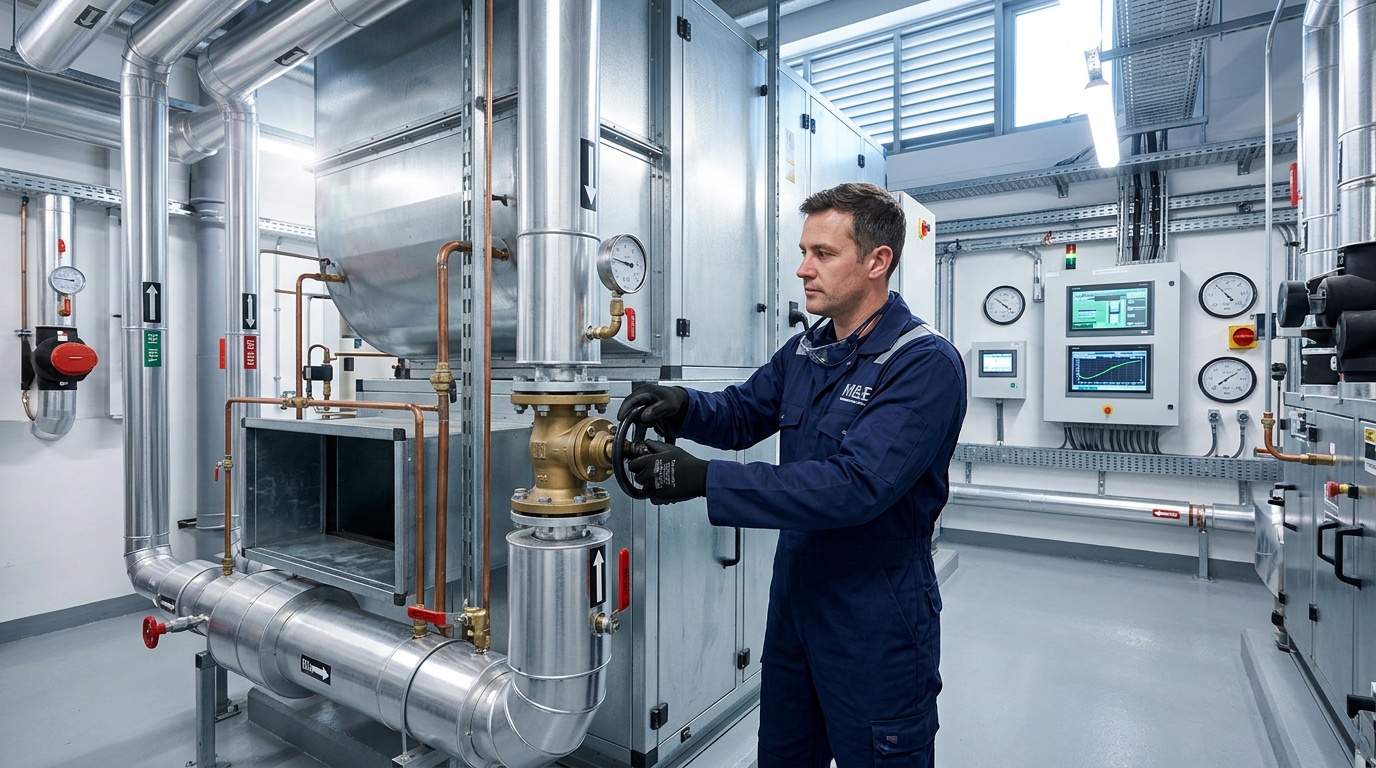
After two decades working inside commercial buildings across the West Midlands, I've seen the same pattern repeat: a site manager inherits a reactive maintenance contract, cuts costs on consumables, then wonders why the chiller fails during a heatwave. The truth is that your building's physical assets are not a burden to be minimised; they're a strategic investment that, when managed correctly, delivers predictable performance and lower total cost of ownership. The difference between a building that drains cash and one that supports growth lies entirely in the approach to maintenance.
The verdict is straightforward: treating your building as a passive collection of rooms and equipment is a recipe for escalating emergency spend and compliance risk. Instead, view it as a machine requiring consistent, expert attention. This means investing in quality components, adhering to recognised standards like SFG20, and partnering with a provider who understands the commercial implications of every engineering decision. The upfront cost of a planned maintenance programme is always lower than the hidden costs of reactive repairs, lost productivity, and legal penalties.
The Verdict: Shift from Reactive to Proactive
If you take one thing from this guide, let it be this: every pound you spend on planned preventative maintenance returns multiple pounds in avoided downtime and extended asset life. I have clients in Birmingham who significantly reduced their emergency call-out spend within a couple of years by switching to a structured PPM schedule. The key is consistency. You need a partner who turns up on time, documents every task, and communicates clearly when a component is approaching the end of its service life. That's the only way to stop small issues from becoming catastrophic failures.
Don't wait for a breakdown to validate the importance of your building's systems. Start by auditing your current contracts. Are you paying for SFG20 compliance but not receiving the paperwork? Are your technicians rotating so often that no one knows the quirks of your plant room? These are signs your current approach is failing. A proactive strategy eliminates these gaps by assigning a dedicated team who own the asset knowledge and take responsibility for its performance.
Recommendations: Immediate Actions for Facility Managers
First, standardise your language. Use precise terms in all contracts and reports. Replace vague phrases like "general building upkeep" with specific scopes covering HVAC, electrical, plumbing, and fire safety. This clarity forces contractors to deliver exactly what you need and eliminates excuses. Second, invest in quality consumables. A premium air filter costs more upfront but protects your heat exchangers and reduces energy consumption. The same principle applies to cleaning chemicals, lubricants, and replacement parts. Cheap supplies are a false economy that accelerates wear on expensive assets.
Third, demand digital documentation. Every maintenance visit should produce a time-stamped, digital report that includes photographs, readings, and recommendations. This creates a traceable history that protects you during insurance audits and helps you make informed decisions about capital replacements. Fourth, establish a single point of contact. If you have to explain your building's history to a different person every time you call, you're losing efficiency. A dedicated account manager who knows your site inside out can pre-empt issues and coordinate responses faster than a call centre.
Future Considerations: Technology and Partnership
The next frontier in building management is data. Remote monitoring sensors, building management system integration, and predictive analytics are becoming more accessible. These tools allow you to spot trends in temperature, vibration, and energy usage before they become problems. However, technology is only as good as the people interpreting it. The value comes from a partner who can analyse the data and recommend practical, cost-effective interventions. At MEMS, we test new monitoring equipment on our own plant before recommending it to clients, ensuring the technology delivers real savings rather than just generating noise.
Looking ahead, the relationship between facility managers and their maintenance partners will become more collaborative. Contracts will shift from transactional "fix-when-broken" models to outcome-based agreements that reward uptime and efficiency. This evolution requires trust and transparency. You need a partner who shares your commercial goals, not just a vendor who invoices for hours worked. By choosing a provider that combines technical expertise with a genuine stake in your building's performance, you set the foundation for a resilient, cost-effective operation that supports your business for decades to come.
References
Stuart’s Final Word: Your building is one of your largest capital investments. Treat it with the same strategic rigour you apply to your financial portfolio. Invest in quality maintenance, demand accountability from your partners, and never underestimate the value of a well-written contract. The buildings that thrive are the ones whose managers understand that building infrastructure is not a cost centre; it's the engine room of the business.
Frequently Asked Questions
What is the meaning of facilities in commercial building management?
In commercial building management, facilities refer to the entire physical infrastructure that keeps your business running. That includes the hard assets like boilers, HVAC systems, and electrical panels, plus the soft services like cleaning and security. It's not just washrooms or break rooms; it's the mechanical and electrical systems that dictate your overheads and operational reliability.
What are examples of building facilities?
Building facilities cover everything from your heating and cooling plant to your lighting and plumbing systems. Think boilers, air conditioning units, distribution boards, fire alarms, lifts, and even the cleaning supplies that keep your environment hygienic. In a manufacturing setting, it also includes heavy-duty power and cooling systems that keep production lines moving.
Is it 'facility' or 'facilities'?
Use 'facility' when referring to a single building or location, and 'facilities' when talking about multiple buildings or the collection of systems within one site. In commercial maintenance, we often say 'facilities management' because we're dealing with the whole range of assets. Getting the spelling right matters too; I've seen 'facilites' in tender documents, and it immediately undermines credibility.
What are considered facilities in a commercial building?
Facilities in a commercial building include all the integrated systems that support your business operations: HVAC, electrical, plumbing, fire safety, security, and structural elements. It also covers the consumables and services like cleaning and waste management. If you only think of washrooms, you're missing the high-value machinery that actually drives your energy bills and compliance costs.
What are 5 examples of facilities?
Five common examples are: 1) HVAC systems including boilers and chillers, 2) electrical distribution boards and lighting, 3) plumbing and water systems, 4) fire detection and suppression equipment, and 5) security systems like CCTV and access control. Each one needs proper maintenance to avoid expensive breakdowns and keep your building safe and compliant.
Why does the language we use for facilities matter?
The words you choose affect how stakeholders view your building's assets. If you call a boiler 'just part of the building,' an accountant sees an expense. Call it a 'capital asset' or 'infrastructure,' and they see long-term value. Precision in language also builds trust with your maintenance team; when they understand they're managing technical assets, not just amenities, they take compliance and lifecycle management more seriously.
Best providers for air conditioning services in Birmingham businesses.
The True Cost of Commercial AC Failure in Birmingham
When an air conditioning unit fails in a busy Birmingham office or retail unit, the immediate reaction is often to look at the repair quote. That's a mistake. The real cost of a breakdown is not the invoice from an engineer; it's the silent drain on your business operations. In my two decades managing plant rooms across the West Midlands, I've seen server rooms overheat, forcing IT shutdowns that cost thousands in lost productivity per hour. I've seen retail spaces become unbearable during a humid July, driving customers straight into the arms of competitors with better climate control.
Key Takeaways
- When your air conditioning fails, the repair bill is the smallest part of the problem compared to lost productivity and customers walking out the door.
- A broken AC in a server room can trigger an IT shutdown that costs thousands per hour, far more than any service call.
- Uncomfortable retail spaces during a heatwave drive shoppers to competitors who keep their climate under control.
- Smart business owners look past the immediate repair quote and focus on the operational risk of a breakdown.
- Preventative maintenance is the only way to avoid the hidden costs of downtime that hit your bottom line harder than any invoice.
Reactive maintenance is a financial trap. If you only call for help when the vents stop blowing cold, you're already losing money. Beyond the emergency call-out fees, a neglected system runs at a significantly lower efficiency. Dust-clogged condensers and ageing compressors force the system to work harder, which translates directly into higher energy bills. For many firms, these hidden inefficiencies can lead to a noticeable increase in monthly utility spend. A cost that far outweighs the price of a structured maintenance plan.
The best providers for air conditioning services in Birmingham businesses are those who offer fixed-price Planned Preventative Maintenance (PPM) rather than just emergency repairs. Look for firms with in-house F-Gas certified engineers who provide digital compliance logs within 24 hours of site visits. Reliability is found in local specialists who understand the specific demands of the region's commercial building stock.
Why downtime costs more than the repair bill
Downtime is a predator of profit. In a commercial environment, the environment is a tool for productivity. If your air conditioning fails, staff concentration drops and equipment risks thermal damage. For a Birmingham business, a failed AC unit in a data centre or a medical facility is not a mere inconvenience; it's a critical failure that can lead to data loss or spoiled stock. When you factor in the cost of staff being unable to work and the potential for long-term asset damage, the repair bill becomes the smallest part of the equation.
The hidden inefficiencies draining your budget
Energy drift is the most common way Birmingham businesses lose money on their HVAC systems. Without regular calibration, sensors fail and valves stick, leading to "fighting" systems where heating and cooling run simultaneously. This waste is invisible on the shop floor but glaring on the balance sheet. Proper maintenance ensures that every kilowatt of energy consumed is converted into effective climate control, protecting your margins from the volatile energy market.
What to Look for in a Commercial Air Conditioning Partner
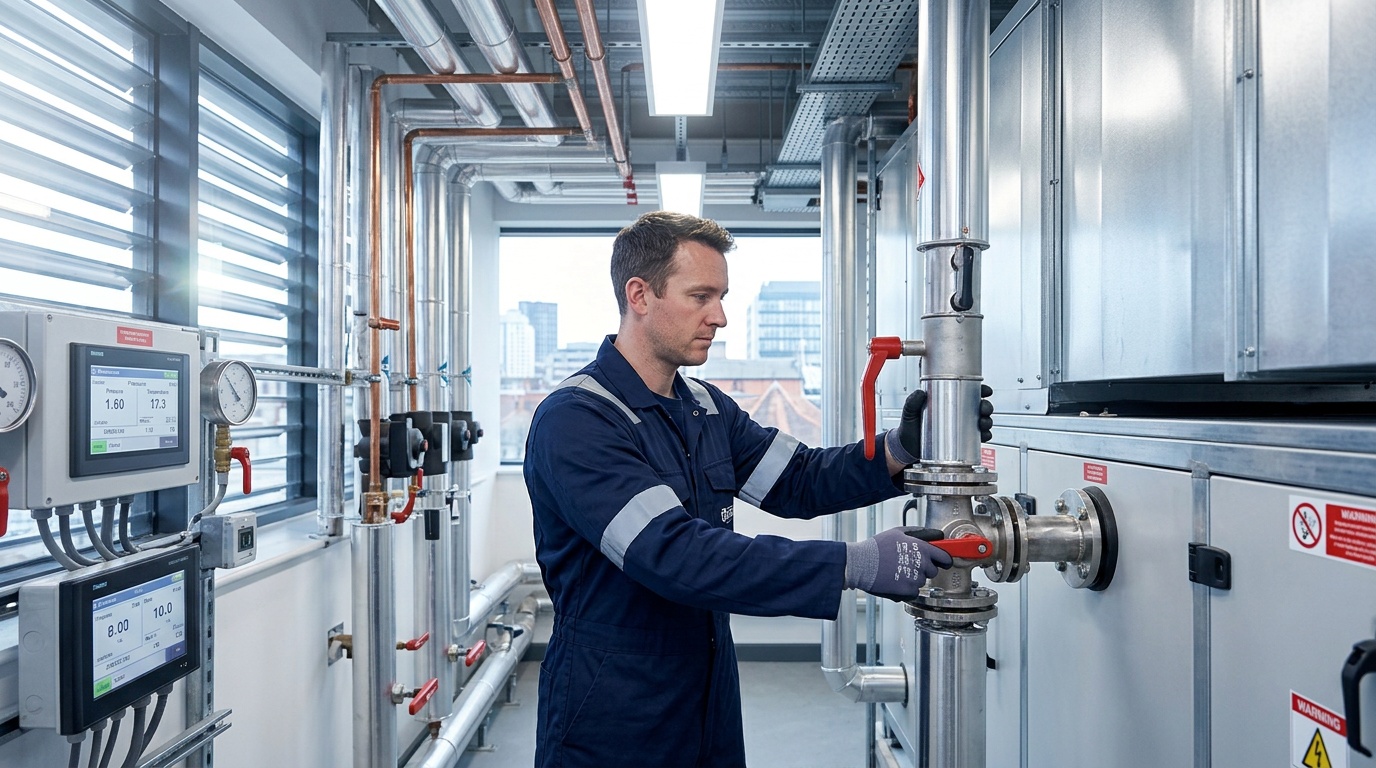
Selecting the right partner requires looking past the marketing gloss of national FM firms. You need a provider that treats your building as a unique asset, not just a postcode on a spreadsheet. The best providers for air conditioning services in Birmingham businesses are those who employ their own engineers. Subcontracting is a plague in this industry; it leads to inconsistent quality, broken communication, and a lack of accountability when things go wrong. When an engineer arrives at your site, they should be a direct representative of the company you hired, carrying the specific tools and knowledge for your system.
Transparency in Service Level Agreements (SLAs) is another non-negotiable factor. A "24/7" promise is worthless if it only leads to a call centre in another country. You need a partner who guarantees a physical response time and has the logistical capability to reach Birmingham city centre or the surrounding industrial estates within hours, not days. This level of service is only possible when the provider has a local footprint and a dedicated fleet of stocked vehicles ready for deployment.
In-house teams vs subcontractors: why it matters
In-house engineers provide a level of continuity that subcontractors cannot match. They get to know your building's quirks, from the specific access requirements of a listed building in the Jewellery Quarter to the complex ductwork of a modern office block. This familiarity allows for faster diagnostics and more accurate repairs. Moreover, in-house teams are more likely to be invested in the long-term health of your equipment, as their reputation is directly tied to the performance of the assets they maintain.
| Feature | Local Specialist (MEMS) | National FM Corporation |
|---|---|---|
| Engineer Status | Directly Employed Engineers | Often Subcontracted Labour |
| Response Times | Guaranteed Local Response | Variable (Postcode Dependent) |
| Accountability | Direct Line to Management | Multi-layer Call Centres |
| Technical Focus | Specialist Engineering | Generalist "Jack of all trades" |
Certifications that prove compliance: F-Gas, SFG20, Gas Safe
Compliance is the baseline for safety and legal protection. Your provider must be F-Gas certified to handle refrigerants, as the fines for non-compliance are severe and the environmental impact is significant. Additionally, adherence to SFG20 standards is the gold standard for maintenance scheduling. It provides a clear roadmap for what needs to be checked and when, ensuring that you are never paying for unnecessary work while never missing a critical safety check. If a provider cannot produce these certifications on demand, they are a risk to your business.
Integrating your cooling with wider air management is also essential. This is why we recommend professional Commercial Ventilation Repair Services to ensure that fresh air flow complements your AC system. Without functional ventilation, your air conditioning has to work twice as hard to maintain air quality, leading to premature wear and tear on expensive components.
Why Birmingham Businesses Need a Local Specialist
Birmingham has a unique architectural mix, from Victorian brickwork to glass-fronted skyscrapers. Each of these building types presents different thermodynamic challenges. A national chain often applies a "one size fits all" approach that fails to account for these local variables. As a local specialist, we understand how the urban heat island effect in the city centre impacts condenser performance and how the hard water in certain parts of the West Midlands can lead to rapid scaling in humidification systems.
The best providers for air conditioning services in Birmingham businesses act as partners rather than vendors. This means providing proactive advice on system upgrades and energy-saving technologies. We maintain an "open door" innovation policy where we internally test new components and refrigerants before recommending them to clients. This ensures that the solutions we provide are not just theoretically sound but have been proven to work in real-world West Midlands conditions.
Birmingham’s Local Specialist Advantage
Pros
- Deep knowledge of local building regulations and heritage constraints.
- Faster emergency response due to proximity to the M5/M6 corridor.
- Personalised service with a dedicated lead engineer for your site.
- Support for the local West Midlands economy and supply chain.
Cons
- May have smaller total headcounts than global corporations.
- Limited geographic reach outside of their core regional hubs.
The difference between a phone number and a partnership
A partnership is built on trust and technical honesty. If a system is twenty years old and leaking R22 refrigerant, a partner will tell you it is time to replace it rather than continuing to take your money for "patch-up" repairs that will inevitably fail. We focus on the total cost of ownership, helping you plan your capital expenditure so that equipment replacements never come as a surprise. This strategic approach is what separates the best providers for air conditioning services in Birmingham businesses from the rest of the market.
Effective climate control also relies on the integrity of your air distribution. Our Commercial Ventilation Repair Services are designed to work in tandem with your AC, ensuring that the entire HVAC ecosystem is balanced. When these systems are synchronised, the comfort levels in your building improve and your energy consumption drops, providing a double win for your business operations.
The Hidden Savings: Integrating Sustainable Tech with Your AC
Modernising your building infrastructure is no longer just about environmental social governance; it's about financial survival. In my experience, the best providers for air conditioning services in Birmingham businesses are those who look beyond the refrigerant circuit to see how your cooling interacts with the rest of your plant room. Integrating technologies like Renewable Energy Solutions like air-source heat pumps or solar PV arrays with your existing HVAC setup can slash operational costs. When we audit a site, we often find that the AC system is working in isolation, missing opportunities to recover heat or use renewable energy during peak sun hours.
Heat recovery is perhaps the most overlooked efficiency gain in the West Midlands commercial sector. A well-designed system can take the heat rejected by your cooling process and use it to provide hot water or pre-heat air for other parts of the building. This reduces the load on your boilers and balances your energy profile. For businesses looking to future-proof their assets, this level of technical integration is the difference between a high-performing building and a liability that drains cash every quarter.
Can your existing AC system work with renewables?
Many facility managers assume they need a complete system overhaul to go green, but that is rarely the case. Many modern inverter-driven AC units can be integrated with Building Management Systems (BMS) that prioritise renewable energy inputs. By retrofitting smart controls and sensors, we can ensure your cooling runs hardest when your solar panels are generating the most power, or when the grid prices are at their lowest. This intelligent scheduling protects your equipment from unnecessary wear while significantly lowering your carbon footprint.
Proactive Efficiency Tip
Ask your engineer to perform a "system harmony" check. This involves ensuring your AC isn't fighting against your heating or ventilation systems. Simple adjustments to deadbands and setpoints can often reduce energy consumption without any capital expenditure. It is a cost-effective way to improve your building’s performance immediately.
Compliance health checks that protect your assets
Compliance is often viewed as a bureaucratic hurdle, but it is actually a powerful tool for asset protection. Regular F-Gas inspections and SFG20-compliant maintenance visits act as an early warning system. They allow us to catch small leaks or electrical faults before they escalate into catastrophic failures. For Birmingham business owners, staying compliant means avoiding the heavy fines associated with refrigerant leaks and ensuring that your insurance remains valid in the event of a system-related incident.
A major part of this compliance involves the surrounding air quality and movement. This is where Commercial Ventilation Repair Services become essential. If your ventilation is neglected, your AC system is forced to recirculate stale, dirty air, which clogs filters and increases the strain on the fan motors. By maintaining both systems under a single, cohesive strategy, you ensure that your building remains a healthy, compliant, and cost-effective environment for your staff and clients.
Five Questions Your Current AC Provider Hopes You Never Ask
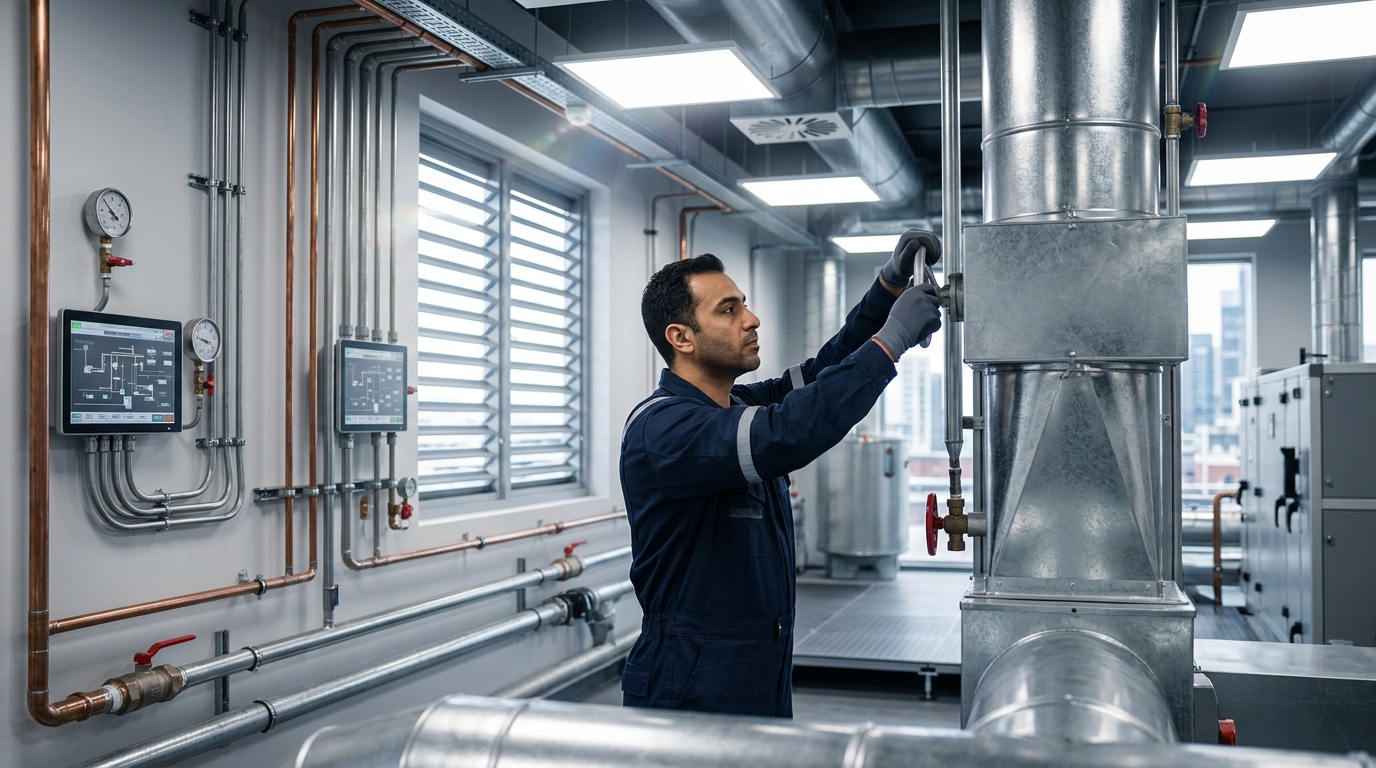
If you are currently paying for a maintenance contract but still facing unexpected breakdowns, it is time for a hard conversation with your vendor. Many national firms rely on the fact that facility managers are too busy to audit the technical details of their service. The best providers for air conditioning services in Birmingham businesses are those who welcome scrutiny because their work stands up to it. You should start by asking for a detailed asset register that shows exactly what work was performed on each specific unit during the last visit. If they provide a generic "system checked" tick-box, they aren't doing the job properly.
Transparency is the foundation of any commercial partnership. If your provider is vague about their response times or uses hidden "admin fees" for every call-out, they are not aligned with your business interests. A true partner provides a fixed-price preventative plan that covers the essentials, giving you budget certainty. They should also be able to demonstrate that they are using their own engineers rather than a rotating door of low-cost subcontractors who have no long-term interest in your building’s performance.
Red flags: hidden fees, vague ETAs, and other common complaints
One of the most common complaints I hear from Birmingham facility managers who switch to us is the "paperwork black hole." If you have to chase your provider for three weeks to get a simple F-Gas certificate or a job sheet, your compliance is at risk. Another major red flag is a lack of technical detail in repair quotes. A professional quote should explain exactly what failed, why it failed, and what steps are being taken to prevent a recurrence. If the answer is always "it just wore out," they probably aren't looking deep enough into the root cause of the issue.
What a transparent, fixed-price preventative plan looks like
A proper Planned Preventative Maintenance (PPM) schedule is a comprehensive roadmap for your asset's life. It should include everything from chemical coil cleaning and leak testing to electrical terminal tightening and control calibration. The best providers for air conditioning services in Birmingham businesses will tailor this plan to your specific usage patterns. For example, a restaurant in the city centre will need more frequent filter changes than a low-occupancy office in Solihull. This bespoke approach ensures you are never overpaying for service while never under-maintaining your equipment.
Finally, ensure your provider looks at the "lungs" of your building as well as the "heart." Integrating Commercial Ventilation Repair Services into your PPM schedule prevents the buildup of grease and dust in ductwork that can lead to fire risks and poor air quality. When you have one specialist team managing both the cooling and the ventilation, you eliminate the "blame game" that often happens between different contractors. You get a single point of accountability and a building that runs exactly as it was engineered to perform.
Making Strategic Investment Decisions for Your HVAC Assets
After reviewing the technical requirements for compliance and the benefits of local specialist support, the final step is to view your air conditioning infrastructure as a strategic asset rather than a simple utility cost. In my experience, the most successful Birmingham businesses are those that move away from reactive spending. Instead, they adopt a lifecycle approach to their plant equipment. This means understanding that every pound spent on high-quality maintenance and sustainable integration is an investment in the company’s long-term profitability and resilience against rising energy costs.
When considering the future of your building, you must look at the total cost of ownership. A cheap service contract often leads to expensive equipment replacements long before the asset’s natural lifespan should have ended. The best providers for air conditioning services in Birmingham businesses focus on extending the life of your existing equipment through precision engineering and proactive component replacement. This strategic approach ensures that your capital expenditure is planned, budgeted for, and aligned with your business goals rather than being dictated by unexpected emergencies.
Future-Proofing Your Cooling Strategy
The regulatory environment in the UK is shifting towards net-zero targets, and your cooling systems must keep pace. Future-proofing involves more than just buying a new unit; it requires an integrated approach to building management. Consider how your air conditioning interacts with your lighting, security, and fire systems. A modern Building Management System (BMS) can automate these interactions to ensure optimal performance. For instance, the AC can be set to reduce output automatically when motion sensors detect that a floor is empty, leading to significant savings on your annual energy bills.
Preparing for Refrigerant Phase-Downs
The UK is continuing to phase down high Global Warming Potential (GWP) refrigerants. If your current system uses older gases, you may face soaring costs for top-ups or a legal requirement to replace the equipment. A forward-thinking maintenance partner will help you plan for this transition by suggesting low-GWP alternatives during your scheduled upgrades, avoiding a last-minute scramble when the law changes.
Maximising ROI Through System Integration
True efficiency is found in the synergy between different building systems. Integrating your air conditioning with your commercial ventilation is the most effective way to improve indoor air quality while reducing energy waste. Our Commercial Ventilation Repair Services ensure that your air handling units are working in perfect harmony with your cooling cycles. This prevents the common issue of negative pressure, where poor ventilation causes your conditioned air to escape through gaps in the building envelope, forcing your AC to run continuously without ever reaching the set temperature.
Investing in these integrated solutions provides a clear return on investment through lower utility bills and reduced carbon taxes. It also creates a more comfortable environment for your employees, which can lead to higher productivity and lower staff turnover. For Birmingham-based firms competing in a tight labour market, the quality of the workplace environment is a significant factor in attracting and retaining talent. Your HVAC strategy is, therefore, a direct contributor to your human resources success as well as your bottom line.
Conclusion and Your Next Steps
The search for the best providers for air conditioning services in Birmingham businesses should not be based on who offers the lowest hourly rate. It must be based on who offers the highest level of engineering integrity, local accountability, and transparent communication. We have explored how the right partner can protect you from the hidden costs of downtime, ensure you meet all legal compliance standards, and integrate sustainable technologies that lower your overheads for years to come.
Your next step is to conduct a thorough audit of your current arrangements. Use the checklists provided in this guide to question your existing provider or to evaluate new candidates. Look for a team that is willing to get their hands dirty, that understands the specific challenges of Birmingham’s commercial properties, and that treats your assets with the same care they would their own. If you are ready to move from reactive stress to proactive control, the path is clear.
Taking Action for Better Climate Control
Do not wait for the next heatwave or the next system failure to highlight the weaknesses in your current setup. Proactive management is the hallmark of a successful facility manager. By choosing a partner that offers a holistic service, including expert Commercial Ventilation Repair Services, you ensure that every aspect of your building’s climate and air quality is managed by specialists who are accountable for the results. This is how you protect your business, your staff, and your bottom line in an increasingly competitive market.
References
Frequently Asked Questions
Why does commercial AC failure cost more than just the repair bill?
The repair bill is only the tip of the iceberg. When a system fails in a Birmingham office or retail space, you lose productivity, footfall, and risk damage to sensitive equipment like servers. I've seen IT shutdowns cost thousands per hour, and overheated shops drive customers to competitors. That's why reactive maintenance is a financial trap.
What are the hidden inefficiencies that drain HVAC budgets in commercial buildings?
Energy drift is the biggest culprit. Without regular calibration, sensors fail and valves stick, causing heating and cooling to run at the same time. This waste is invisible on the shop floor but shows up clearly on your energy bills. A neglected system also works harder, driving up monthly utility costs far beyond the price of a maintenance plan.
What should Birmingham businesses look for in a commercial air conditioning service provider?
Look for a provider that offers fixed-price Planned Preventative Maintenance (PPM) rather than just emergency repairs. They should employ their own F-Gas certified engineers, not subcontractors, and provide digital compliance logs within 24 hours. A local specialist who understands Birmingham's building stock will guarantee a physical response time, not just a call centre promise.
Why are in-house engineers better than subcontractors for AC maintenance?
In-house engineers know your building's quirks, from access issues in the Jewellery Quarter to complex ductwork in modern offices. This familiarity means faster diagnostics and more accurate repairs. They're also directly accountable for the long-term health of your equipment, unlike subcontractors who lack continuity and investment in your system.
What certifications are essential for a commercial HVAC provider in Birmingham?
Your provider must be F-Gas certified to handle refrigerants legally and safely. Adherence to SFG20 standards is the gold standard for maintenance scheduling, ensuring nothing is missed. If they can't produce these certifications on demand, they're a risk to your business. Gas Safe Register is also non-negotiable for any gas-related work.
How does Planned Preventative Maintenance (PPM) save money compared to reactive repairs?
PPM catches small issues before they become costly breakdowns. It keeps your system running at peak efficiency, lowering energy bills and preventing the hidden costs of downtime. With a fixed-price plan, you avoid emergency call-out fees and get predictable budgeting, while your equipment lasts longer and stays compliant.
What is the commercial impact of poor indoor air quality from a failing AC system?
Poor air quality leads to staff discomfort, reduced concentration, and higher absenteeism. In retail, it drives customers away. In server rooms or medical facilities, it risks hardware failure or spoiled stock. These operational costs far outweigh the price of proper maintenance, making climate control a direct factor in your bottom line.
What Is the Defence Academy of the United Kingdom and Why Does It Matter?
The Defence Academy of the United Kingdom is the country's premier centre for postgraduate defence education, leadership development, and strategic studies. Based at Shrivenham Defence Academy in Oxfordshire, it trains military officers, civil servants, and international partners in command, management, and defence policy. For facility managers and estate professionals, it represents a complex, 24/7 operational site where uninterrupted building performance directly supports national security training.
History and Role: The Merger of Staff Colleges That Created a Single Centre for Defence Education
Established in 2000, the Academy brought together the Royal Military College of Science, the Joint Services Command and Staff College, and several other specialist training organisations under one roof. The idea was to break down silos between the Royal Navy, British Army, and Royal Air Force by creating a shared environment for joint education. Today, the defence academy of the united kingdom delivers over 400 courses each year, from foundation-level leadership programmes to the prestigious Royal College of Defence Studies course for future generals and permanent secretaries.
Core Responsibilities: Training Military and Civilian Personnel, Developing Policy, and Fostering International Partnerships
The Academy's mission covers three distinct areas. First, it educates UK military personnel at key career transition points, preparing them for command and staff roles. Second, it trains civilian civil servants who work in defence policy and procurement, ensuring they understand military thinking. Third, it hosts officers from allied nations, building relationships that strengthen NATO and other international coalitions. This mix of students means the campus must support everything from classified briefings to cross-cultural networking events, all while maintaining strict security protocols.
A Practical Visitor's Guide to the Shrivenham Campus

Exact Address, Access Procedures, and ID Requirements
The defence academy shrivenham address is: Defence Academy of the United Kingdom, Shrivenham, Swindon, Wiltshire, SN6 8LA. Access is strictly controlled. All visitors must be pre-registered by a sponsor on the Academy's security system at least 48 hours before arrival. You will need to bring a valid passport or UK driving photocard licence. On arrival, report to the main gate guardroom where your details will be checked against the visitor list. Mobile phones and laptops are permitted but may be subject to search. Cameras are restricted in certain areas, so check with your host before taking photos.
Accommodation Options: On-Site Messes (Harding Hall) and Nearby Hotels
For students attending residential courses, on-site accommodation is provided in Harding Hall and other mess blocks. These offer single en-suite rooms with communal dining and lounge areas, typically at a subsidised rate for military personnel. For short-term visitors or contractors, the on-site visiting officers' quarters are available subject to availability. If those are full, several hotels lie within a ten-minute drive including the Hilton Swindon and the White Hart in Faringdon. Book well ahead during peak course periods in September and January.
Facilities: Lecture Theatres, Joint Services Library, Sports Halls, and Dining Rooms
The campus is self-contained. The Joint Services Library holds one of the UK's largest collections of defence and security literature, with digital access to thousands of journals. Lecture theatres range from intimate seminar rooms to the 300-seat main auditorium. Sports facilities include a gymnasium, squash courts, and outdoor pitches. Catering is provided through several dining rooms and a bar, with halal, vegetarian, and special dietary options available. For visitors working on site, the coffee shop in the main atrium is a useful meeting point.
Visitor Checklist
- Pre-register at least 48 hours before your visit
- Bring a valid passport or UK photocard driving licence
- Confirm camera policy with your host before arriving
- Book accommodation early for September and January courses
- Allow 15 minutes to clear security at the main gate
Behind the Scenes: Keeping the Academy's Critical Infrastructure Running 24/7
The Unsung Work of HVAC, Electrical, and Plumbing Teams That Ensure No Training Hour Is Lost
A single cancelled lecture because of a heating failure or power outage can disrupt an entire cohort's timetable. That is why the shrivenham defence academy relies on round-the-clock mechanical and electrical maintenance. The HVAC system alone covers dozens of buildings, from 1970s accommodation blocks to modern lecture theatres, each with different heating and cooling demands. Electrical teams maintain backup generators, uninterruptible power supplies for server rooms, and distribution boards that feed classified IT networks. Plumbing crews look after everything from domestic water systems to laboratory drainage. Every trade works to the same objective: keep the building services invisible so that training stays visible.
How Planned Preventative Maintenance (PPM) and Rapid Response Prevent Downtime
Planned preventative maintenance is the backbone of the Academy's facilities strategy. Air handling units are serviced quarterly, boiler plant is inspected before each heating season, and emergency lighting is tested monthly. This schedule is defined by SFG20 standards, the UK's recognised maintenance specification for buildings. When something does fail, a rapid response team is on site within two hours to restore services. The combination of PPM and fast reaction means that building-related downtime accounts for less than 0.5% of training hours each year.
Real-World Example: Maintaining Comfort and Compliance in Lecture Halls and Accommodation Blocks
Consider the main lecture theatre, which seats 300 students. The room must be maintained at 21°C with fresh air supply meeting CIBSE guidelines. If the air handling unit fails, the room becomes stuffy within 20 minutes, and students lose concentration. Our team recently replaced the main fan coil unit in that theatre during a two-week summer shutdown, installing a more efficient model that reduced energy consumption by 18%. In the accommodation blocks, we manage legionella control through weekly temperature monitoring and quarterly tank inspections, ensuring compliance with the Health and Safety Executive's Approved Code of Practice L8.
| Area | Critical System | PPM Frequency | Risk if Neglected |
|---|---|---|---|
| Lecture theatres | Air handling units | Quarterly | Loss of ventilation, cancelled classes |
| Accommodation blocks | Hot water calorifiers | Monthly temp checks | Legionella, health hazard |
| Server rooms | Uninterruptible power supply | Quarterly battery test | Data loss, network outage |
| Dining facilities | Commercial kitchen extract | Six-monthly deep clean | Fire risk, grease buildup |
Modernising a Historic Estate: Sustainability and Smart Building Upgrades at Shrivenham
Adoption of Air-to-Water Heat Pumps, Solar PV, and LED Lighting to Reduce Operational Costs
The Academy occupies a mix of historic and modern buildings, some dating back to the Second World War. Retrofitting them for energy efficiency is a challenge, but progress is real. Air-to-water heat pumps have replaced oil-fired boilers in several accommodation blocks, cutting carbon emissions by around 40% per building. Solar photovoltaic panels on the library and main admin block generate enough electricity to offset a portion of the campus's base load. LED lighting with motion sensors has been installed in corridors, stairwells, and car parks, reducing lighting energy use by up to 60% in those areas. These upgrades are funded through a combination of central government sustainability budgets and energy savings reinvested into further improvements.
Lessons for Estate Managers: How the Academy Cuts Energy Bills While Meeting Carbon Targets
The approach at Shrivenham offers a model for any large estate. The first step is always measurement. Sub-metering on each building allows the facilities team to identify exactly where energy is being wasted. The second step is low-cost quick wins: adjusting heating setpoints, installing time controls, and repairing insulation. Only then do they move to capital projects like heat pumps and solar. This phased approach means every pound spent delivers measurable savings. For estate managers in the public sector or commercial property, the lesson is clear: you cannot manage what you do not measure.
The 'Test Before You Trust' Approach: How M&E Trials New Technology on Site
Before rolling out any new technology across the campus, the engineering team runs a pilot in a single building. When considering smart building controls, they installed a building management system in one accommodation block first, monitored energy and comfort data for six months, and only then specified the same system for the rest of the estate. This 'test before you trust' philosophy avoids costly mistakes and builds confidence among stakeholders. It also generates real-world performance data that helps justify further investment to budget holders.
Retrofit Considerations for Historic Buildings
Pros
- Lower energy bills year on year
- Reduced carbon footprint meets government targets
- Improved comfort for occupants
- Extended lifespan of existing building fabric
Cons
- Higher upfront capital cost than like-for-like replacement
- Planning constraints on listed or protected structures
- Disruption during installation in occupied buildings
- Need for specialist design input to match old and new systems
How Shrivenham Compares to Other UK Defence Training Establishments
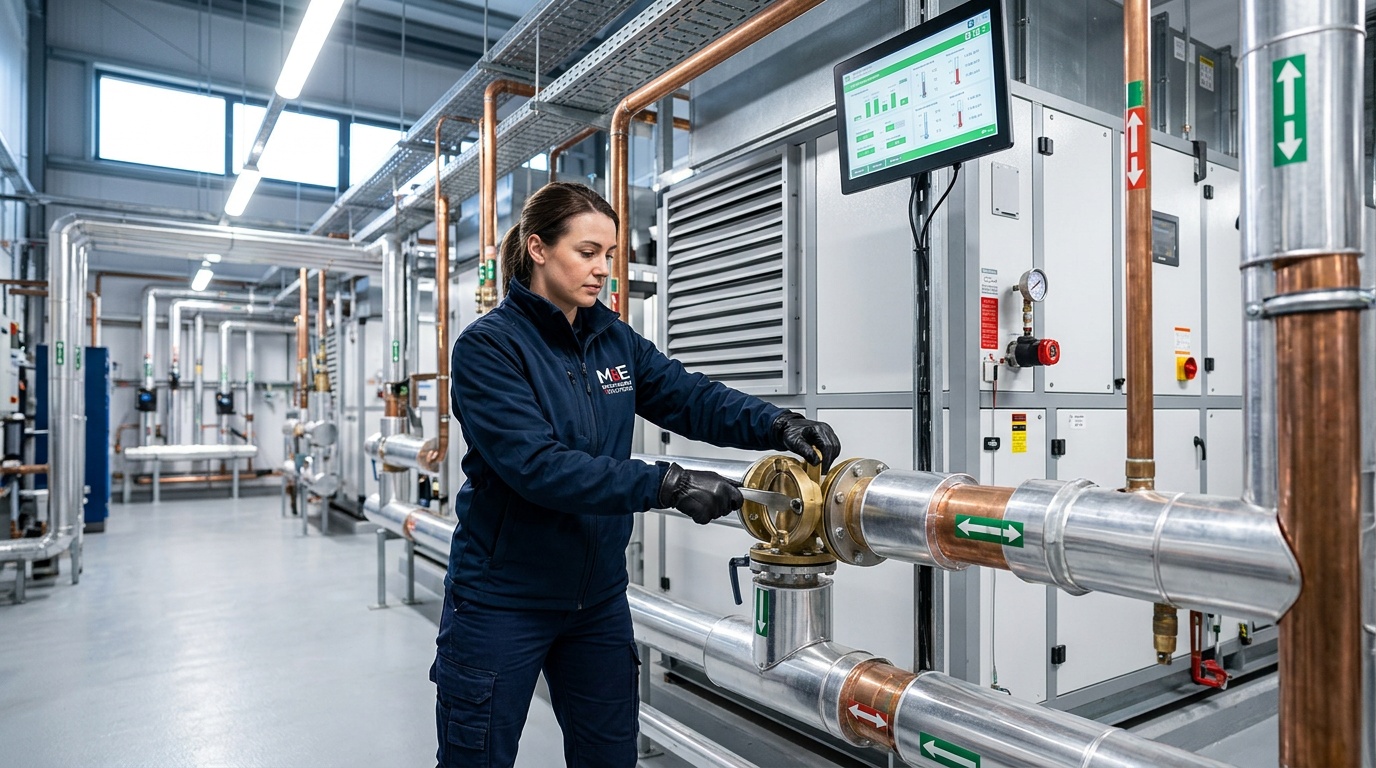
Shrivenham vs Sandhurst: Officer Initial Training vs Advanced Postgraduate Education
Sandhurst (Royal Military Academy Sandhurst) trains army officers at the start of their careers. It is about drill, leadership fundamentals, and physical fitness. Shrivenham, by contrast, educates officers who already have ten or more years of service. The focus at the defence academy of the united kingdom is on strategy, command, and joint operations. A student at Sandhurst learns how to lead a platoon. A student at Shrivenham learns how to plan a brigade-level deployment. The two institutions are complementary, not competing.
Shrivenham vs Cranwell: Air Force-Centric Training vs Joint-Service Command Courses
RAF Cranwell focuses on air and space power, training pilots, engineers, and air traffic controllers. Its courses are specific to the Royal Air Force. Shrivenham delivers joint-service education where officers from all three services study together. A Royal Navy commander sits alongside an RAF wing commander and an army lieutenant colonel on the same course. This joint environment is unique to Shrivenham and is designed to break down inter-service barriers before officers reach senior command positions.
What This Means for Students, Staff, and Facility Managers: Courses, Facilities, and Daily Life
For students, the choice between these establishments depends on career stage. Junior officers go to Sandhurst or Cranwell. Mid-career officers come to Shrivenham. For facility managers, the difference is in the operational demands. Sandhurst runs physically intensive training outdoors. Cranwell has airfield-specific infrastructure. Shrivenham is a campus-based academic environment with lecture theatres, libraries, and residential blocks. The maintenance focus here is on environmental comfort, IT resilience, and security systems, rather than parade grounds or runways.
| Establishment | Primary Focus | Target Audience | Facility Management Emphasis |
|---|---|---|---|
| Shrivenham Defence Academy | Postgraduate Defence Education, Strategy, Joint Operations | Mid-career Officers, Civil Servants, International Partners | Environmental Control, IT Resilience, Security, Accommodation |
| Royal Military Academy Sandhurst | Initial Officer Training, Leadership Fundamentals | Junior Officers, Officer Cadets | Physical Training Facilities, Parade Grounds, Barracks |
| RAF Cranwell | Air and Space Power, Specialist Air Force Training | Pilots, Engineers, Air Traffic Controllers | Airfield Infrastructure, Technical Training Facilities |
Finding the Campus: Exact Location and Arrival Procedures
Understanding the precise defence academy shrivenham address is the first step for any contractor or visitor requiring site access. The primary postcode, SN6 8LA, directs you to the main entrance in Shrivenham, Oxfordshire. Unlike a standard commercial office park, this is an active military installation with stringent security protocols. All visitors must be pre-registered by a sponsoring member of staff at least 48 hours in advance. Upon arrival at the main gate, you must present a valid form of photographic identification, such as a passport or a UK driving licence. The guardroom conducts thorough checks to reconcile your details with the visitor list. Mobile devices and laptops are permitted for business use, but security personnel may inspect them. Photography is strictly prohibited in specific operational zones, so always confirm the policy with your host before attempting to document any defence academy of the united kingdom photos for official records.
On-Site Accommodation and Essential Facilities
For personnel attending residential courses, the defence academy shrivenham accommodation options primarily centre around Harding Hall and various mess facilities. These provide functional, single en-suite rooms designed for rest between intensive training modules. While the on-site mess offers a practical solution for course attendees, contractors and short-term visitors often require nearby hotel alternatives in Swindon or Faringdon. Regarding campus amenities, the infrastructure is designed to support a high-density population. The Joint Services Library offers extensive defence literature, while the sports halls and dining rooms provide necessary welfare facilities. For the facility manager, understanding the load these amenities place on the mechanical and electrical infrastructure is paramount. High-usage dining facilities require powerful commercial kitchen extraction systems, while the library demands precise environmental controls to protect archived materials.
Sustaining Operations: The Engineering Behind the Scenes

Maintaining a 24/7 operational tempo at the shrivenham defence academy requires a maintenance strategy that prioritises reliability above all else. The mechanical and electrical systems here are not merely backdrops; they are active enablers of national security education. HVAC systems must manage the diverse thermal loads of 1970s-era accommodation blocks and modern, glass-fronted lecture centres simultaneously. Electrical teams focus heavily on power quality and resilience, ensuring that uninterruptible power supplies (UPS) for server rooms and classified networks never falter. Plumbing infrastructure must handle high-volume demand while adhering to strict water treatment protocols. This level of performance is achieved through rigorous Planned Preventative Maintenance (PPM). By adhering to SFG20 standards, the engineering teams replace components before they fail, ensuring that a burst pipe or a failed chiller never interrupts a single minute of strategic-level training.
Infrastructure Reliability Focus
- HVAC Resilience: Multi-zone climate control for lecture theatres and IT server rooms.
- Power Integrity: Regular load testing of backup generators and UPS batteries.
- Water Safety: Proactive legionella control through temperature monitoring and system disinfection.
- Compliance: Strict adherence to Gas Safe and electrical installation regulations across all campus buildings.
Real-World Infrastructure Challenges
Consider the engineering requirements of a 300-seat lecture theatre. The air handling units must maintain a consistent 21°C while providing adequate fresh air changes to prevent CO2 buildup, which can degrade cognitive performance. When the M&E teams at MEMS approach such a task, we look at the lifecycle of the equipment. Recently, a project to replace an ageing fan coil unit in a primary teaching space was scheduled during a holiday period to avoid disruption. We installed high-efficiency EC motors that reduced the energy consumption of that specific unit by 18%. In the accommodation blocks, the focus shifts to domestic hot water systems. We implement a rigorous regime of thermal disinfection and calorifier inspections to ensure the health and safety of every occupant, meeting the rigorous standards expected of a defence establishment.
Modernising a Historic Estate: Sustainability and Upgrades
The defence academy of the united kingdom faces the challenge of meeting Net Zero targets while operating within a historic building stock. Modernisation is not just about installing new technology; it is about integrating it into a complex existing fabric without compromising heritage features. The adoption of air-to-water heat pumps has been a game-changer for several accommodation blocks, replacing inefficient oil-fired systems and cutting carbon emissions by approximately 40%. Additionally, the installation of solar PV arrays on large roof spans, such as those on the library and admin blocks, helps offset the base electrical load. LED lighting upgrades with intelligent DALI controls have been implemented in corridors and car parks, reducing lighting energy costs by up to 60%. These projects require meticulous planning to ensure that the electrical infrastructure can handle the new loads and that the installation causes zero disruption to the academic calendar.
Phased Implementation Strategy
For estate managers overseeing similar complex sites, the Academy’s approach offers a blueprint for success. The first phase is always data collection. Sub-metering allows the facilities team to identify energy "leaks" and prioritise the most inefficient buildings. The second phase involves low-cost behavioural and control changes, such as optimising building management system (BMS) setpoints and improving time controls. Only after these fundamentals are addressed does the team move to high-capital expenditure projects like heat decarbonisation. This phased approach ensures that every pound of the budget delivers a measurable return on investment. It also allows the engineering team to "test before they trust," piloting new smart building technologies in a single building before rolling them out across the entire estate.
| System Component | Traditional Approach | Modern Sustainable Approach | Impact on Operations |
|---|---|---|---|
| Heating Plant | Oil or Gas Boilers | Air-to-Water Heat Pumps | Reduced carbon footprint, lower fuel costs |
| Lighting | Fluorescent Tubes / SON Lamps | LED with Motion Sensors | 60% energy saving, reduced maintenance |
| Power Source | Grid Only | Solar PV & Grid Integration | Lower electricity bills, energy resilience |
| Control Systems | Manual Time Clocks | Smart BMS with Analytics | Optimised comfort, proactive fault detection |
Strategic Positioning Within UK Defence Training
To understand the unique role of the defence intelligence academy uk and the wider Shrivenham site, one must distinguish it from initial training centres. While establishments like Sandhurst focus on the physical and leadership fundamentals of junior officers, Shrivenham is the intellectual heart of the military. It is where experienced personnel go to understand the "why" and "how" of defence policy and joint operations. This distinction is important for facility managers, as the infrastructure requirements differ vastly. Shrivenham requires high-specification IT networks, advanced library archives, and comfortable accommodation for international delegations. It is a joint-service environment where the Royal Navy, British Army, and Royal Air Force study together. This joint nature ensures that the facilities are versatile and capable of supporting a diverse range of educational and strategic activities that are not found at single-service establishments.
Facility Management Across Different Establishments
The operational focus at Shrivenham is distinctly different from that of a training depot like Cranwell or Sandhurst. At Shrivenham, the priority is the "campus experience". Reliable Wi-Fi, comfortable lecture environments, and high-quality catering. The maintenance teams must be adept at managing complex building management systems and ensuring that the learning environment is never compromised by technical failures. In contrast, initial training centres focus more on parade squares, assault courses, and basic living standards. For the commercial facility manager, the lesson here is context. Your maintenance strategy must align with the primary function of your building. A commercial office in Birmingham requires the same level of HVAC precision and electrical reliability as a lecture hall at Shrivenham to ensure that business productivity remains high.
Synthesis: The Intersection of Heritage and High-Tech Facilities
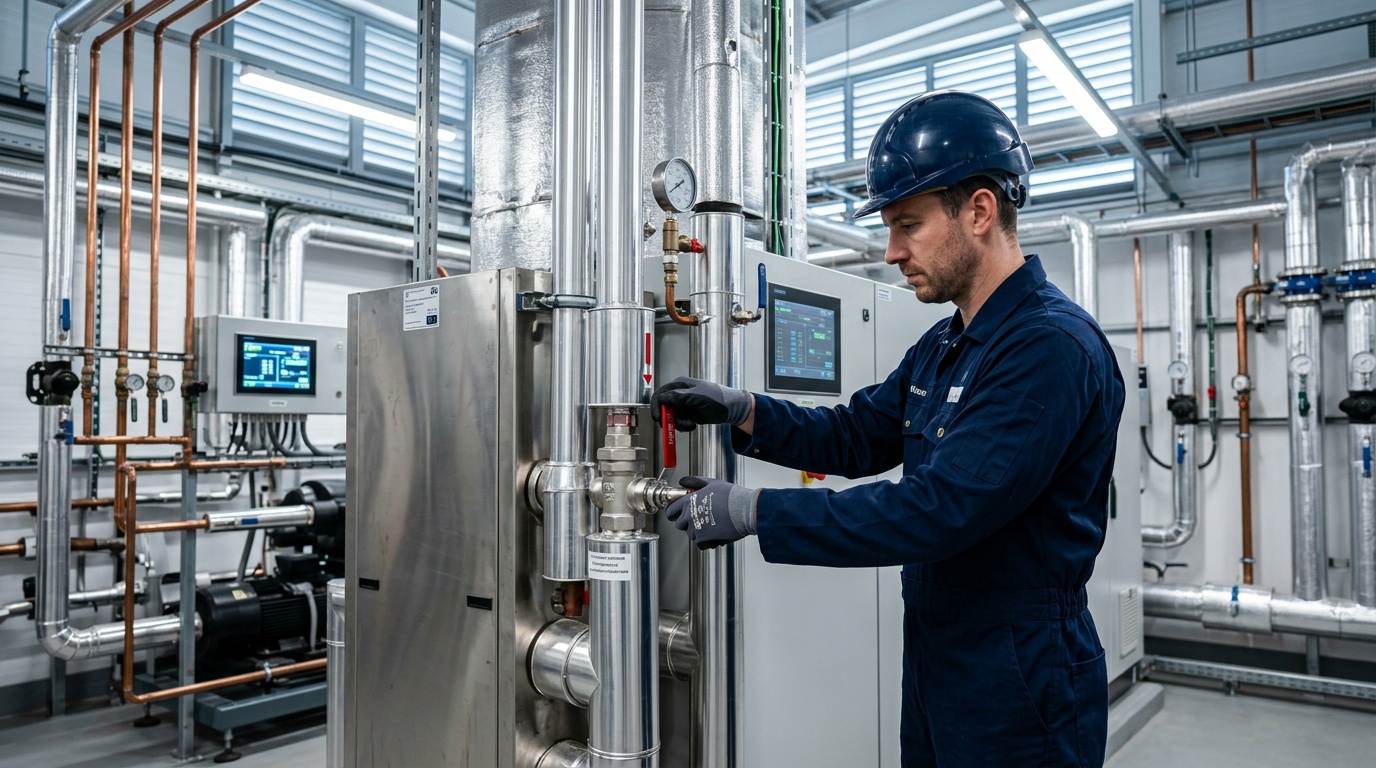
The shrivenham defence academy represents a unique challenge in estate management. It is a site where 19th-century architecture sits alongside cutting-edge defence research labs. For the facility manager, this is not merely a maintenance job; it is a balancing act between preserving history and meeting the demands of a modern, digital-first educational environment. The success of the defence academy of the united kingdom depends on the seamless integration of its building systems. When the HVAC is silent and the power is stable, the focus remains where it should: on the strategic development of the nation's leaders. We have seen how a proactive approach to maintenance prevents the costly disruptions that can derail high-level training. By treating the estate as a strategic asset rather than a sunk cost, the Academy ensures that every pound spent on maintenance contributes to the broader mission of national security. This philosophy is one that any business owner in the West Midlands or across the UK can apply to their own commercial property. Your building is a tool for your trade; keeping it in peak condition is a commercial necessity.
Future Considerations for Estate Resilience
Looking ahead, the focus for Shrivenham and similar complex estates will be on data-driven decision-making. The adoption of "Digital Twins". Virtual models of the physical building. Allows M&E teams to simulate the impact of equipment failures or energy upgrades before a single tool is lifted. For the defence intelligence academy uk and its analytical staff, this level of technological integration is second nature. We anticipate that future upgrades will prioritise even greater automation in building management systems (BMS), using AI to predict maintenance needs rather than just reacting to them. For the private sector, the lesson is to start investing in sub-metering and data analytics now. You cannot manage what you do not measure, and in an era of rising energy costs, precise data is the only way to maintain a competitive edge while meeting environmental obligations.
Final Verdict: Recommendations for High-Stakes Facility Management
Managing a site like the shrivenham defence academy requires a partner who understands that "good enough" is never good enough. Whether you are managing a military base or a commercial office block in Birmingham, the principles remain the same. You need a maintenance provider who offers a 24/7 response, adheres to SFG20 standards, and views your compliance as their own legal responsibility. The Academy’s success is built on a foundation of rigorous planning and skilled execution. We recommend that all facility managers conduct a full audit of their current PPM schedules to identify gaps in coverage. Pay particular attention to your critical infrastructure: the plant rooms, the backup generators, and the emergency lighting. These are the systems that protect your people and your livelihood. Do not wait for a failure to discover that your maintenance strategy has been neglected.
Key Takeaways for Your Own Estate
To conclude, the Shrivenham model provides a blueprint for any organisation that cannot afford downtime. First, prioritise Planned Preventative Maintenance to stabilise your long-term costs. Second, invest in sustainable technologies that offer a clear return on investment, such as LED lighting and high-efficiency plant. Third, ensure your provider offers total transparency through digital compliance records. At MEMS, we apply these same standards to every site we manage. We believe that a well-maintained building is a safer, more productive, and more profitable one. The defence academy shrivenham facilities are a testament to what can be achieved when engineering excellence meets a clear strategic vision. We are proud to support the UK's defence estate, and we bring that same level of dedication to every commercial client we serve.
Stuart’s Engineering Checklist for Estate Managers
- Review your PPM schedule: Does it meet SFG20 standards, or is it a "basic" check?
- Check your compliance certificates: Are your Gas Safe and F-Gas records digital and up to date? You can also consult the official UK government page for the Defence Academy for more information.
- Audit your energy use: Where are the "leaks" in your building's performance?
- Plan for failure: Do you have a 24/7 emergency contact who can be on-site within hours?
References
Frequently Asked Questions
What is Shrivenham Defence Academy?
Shrivenham Defence Academy is the Defence Academy of the United Kingdom, a postgraduate centre for defence education based in Oxfordshire. It trains military officers, civil servants, and international partners in command, strategy, and defence policy. Unlike basic training establishments like Sandhurst, it focuses on advanced leadership and strategic studies.
What is the most prestigious military academy in the UK?
The most prestigious military academy in the UK is the Royal Military Academy Sandhurst for initial officer training. However, for postgraduate defence education and strategic leadership, the Defence Academy of the United Kingdom at Shrivenham is the premier institution. It delivers courses like the Royal College of Defence Studies for future generals and senior civil servants.
How can I visit the Shrivenham Defence Academy?
The address is Defence Academy of the United Kingdom, Shrivenham, Swindon, Wiltshire, SN6 8LA. All visitors must be pre-registered by a sponsor at least 48 hours before arrival. You need a valid passport or UK driving photocard licence, and allow 15 minutes to clear security at the main gate. Book on-site accommodation early during peak course periods in September and January.
What courses are offered at the Defence Academy?
The Academy delivers over 400 courses each year, ranging from foundation-level leadership programmes to the prestigious Royal College of Defence Studies course. Subjects include joint command, staff roles, defence policy, and international security. The Joint Services Library supports this with one of the UK's largest collections of defence literature.
Why is 24/7 facility maintenance critical at the Defence Academy?
A single cancelled lecture due to a heating or power failure can disrupt an entire cohort's timetable. That is why the Academy relies on round-the-clock mechanical and electrical maintenance for its HVAC, backup generators, and plumbing. Planned preventative maintenance following SFG20 standards and a two-hour rapid response team keep the campus running so training is never interrupted.
What is the role of the Defence Academy in international partnerships?
The Academy hosts officers from allied nations, building relationships that strengthen NATO and other international coalitions. This mix of UK military, civilian civil servants, and international students supports cross-cultural networking and joint strategic thinking. All activities must balance security protocols with the need for open collaboration.
uk london property prices
London Property Prices: The Current Context for Estate Managers
In my two decades managing plant rooms and commercial assets, I’ve learned one thing: the building’s valuation dictates the maintenance strategy. When we look at uk london property prices, we’re not just talking residential figures. We’re looking at the baseline for asset replacement costs and insurance premiums. If a boiler fails in a building worth £10 million, the business interruption cost is exponentially higher than in a smaller regional facility. The financial stakes in the capital demand a shift from reactive repairs to precision engineering.
Key Takeaways
- The valuation of London properties directly determines the appropriate maintenance strategy for commercial assets.
- High property values in the capital establish the baseline for asset replacement costs and insurance premiums.
- The substantial financial risks associated with London properties demand a shift from reactive repairs to precision engineering.
The Average London House Price: A Snapshot
The market has stabilised after recent interest rate adjustments. While the average 3 bed house price london professionals track sits near £650,000, the broader picture shows a mix of new-build premiums and older stock. A high valuation doesn’t always mean modern plant equipment. Many high-value properties in the City or Westminster rely on legacy systems that need specialist care to maintain their market position.
Understanding the £500k+ Barrier: What Does it Mean for Commercial Assets?
Crossing the half-million-pound threshold changes the ROI calculation for any refurbishment or maintenance project. When uk london property prices sit this high, the cost of “doing nothing” becomes the most expensive line item on your balance sheet. We see it in the commercial sector: landlords must justify high service charges. If the Commercial Air Conditioning Maintenance system is sluggish or the water hygiene is questionable, property value takes a hit. High-value assets demand high-specification maintenance to stay Grade-A investments.
Stuart Butcher’s Engineering Reality: “A building is a living organism. You wouldn’t buy a Ferrari and then skip the oil changes to save fifty quid. London property is the Ferrari of the global real estate market. If you aren’t investing in your plant room, you’re effectively devaluing your asset every single day it runs inefficiently.”
Key Market Drivers: What’s Really Moving Prices?
Supply remains the primary driver, but energy performance is rapidly becoming a secondary price setter. Tenants and buyers now scrutinise EPC ratings and communal heating efficiency. uk london property prices are increasingly influenced by the operational cost of the building. A property with a modern, well-maintained plant room attracts a premium because it represents lower risk and lower overheads for the occupant. The shift from “location, location, location” to “efficiency, compliance, value” is a trend every estate manager must track.
Beyond the Headline Figures: Where Value Truly Lies in London Real Estate
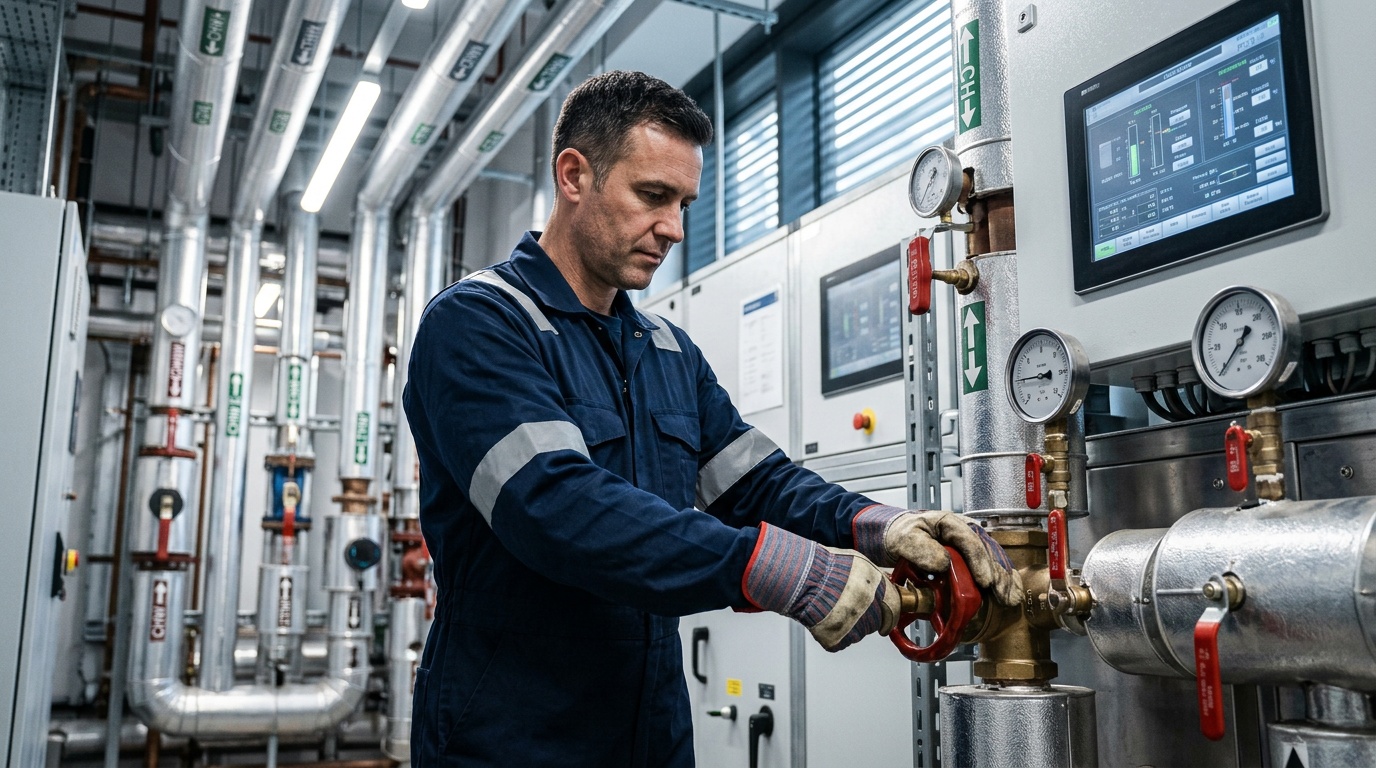
Analysing the market requires a granular approach. Looking at london property prices by area reveals a fragmented map where price growth often ties to infrastructure improvements like the Elizabeth Line or local regeneration schemes. But as an engineer, I look at the “Hidden Value Index”. The gap between market price and the actual condition of mechanical services. A building might look pristine, but if the pipework is corroded or the switchgear is obsolete, the true value is significantly lower than the asking price suggests.
Borough-by-Borough Breakdown: Identifying Price Discrepancies
There’s a stark contrast when you compare the cheapest house prices in london. Often in boroughs like Barking and Dagenham or Bexley. Against the astronomical figures in Kensington and Chelsea. For a facilities manager, the challenges remain consistent regardless of postcode. In lower-cost areas, the focus is extending the life of ageing equipment. In high-cost boroughs, it’s cutting-edge technology and seamless uptime. Both require a structured PPM schedule to protect the underlying capital value of the estate.
| Region | Typical Market Focus | M&E Maintenance Priority |
|---|---|---|
| Prime Central London | Capital Preservation | 24/7 Uptime & High-Spec Integration |
| Outer London Boroughs | Yield Optimisation | Lifecycle Extension & Energy Efficiency |
| Regeneration Zones | Growth Potential | Commissioning & Compliance Handover |
Postcode Pointers: Micro-Markets and Their Price Implications
Specific postcodes carry their own micro-economies. When reviewing london house prices by postcode, you see how proximity to transport hubs or commercial centres inflates demand. From a maintenance perspective, these dense urban environments present unique logistical hurdles. Access for heavy plant replacement or even routine gas safety inspections requires meticulous planning and local knowledge. At MEMS, we understand that a postcode like EC1 or W1 demands a different operational approach than a site in the West Midlands. Especially regarding parking, noise restrictions, and out-of-hours working.
The ‘Hidden Value’ Index: Property Prices vs. Building Condition
The most successful estate managers look past the uk london property prices and focus on the plant room. A building with a documented history of SFG20 compliant maintenance is worth more than a neglected one, period. When a system is maintained properly, it operates within its designed parameters, reducing wear on expensive components like compressors and heat exchangers. This proactive stance prevents sudden, catastrophic failures that lead to emergency levies on tenants or unexpected capital expenditure that wipes out a year’s profit. Value is preserved through grease, filters, and regular calibration. Not just through market appreciation.
The 5-Year Price Trajectory: Forecasting London’s Property Market & Maintenance Needs
Reviewing a london house prices graph 5 years in the making shows a resilient market that has weathered global pandemics and economic shifts. While prices have fluctuated, the long-term trend remains upward. This sustained growth in uk london property prices means the cost of land and space is at a premium. Consequently, plant rooms are often squeezed into smaller footprints, making accessibility for maintenance more difficult. Forward-thinking managers are now planning their maintenance cycles in five-year blocks to mirror these market trends, ensuring their assets remain competitive and compliant.
Historical Price Trends: What the Last Half-Decade Tells Us
The data from the last five years indicates that while capital growth has slowed in some sectors, the cost of labour and materials for building upkeep has risen. This creates a “maintenance squeeze.” If your building value is stagnant but your repair costs are climbing, your net position weakens. I advise our clients to look at historical data not as a guarantee of future profit, but as a reminder that buildings age regardless of the market. A system installed five years ago is now entering its mid-life phase, where failure rates typically begin to climb if preventative measures have been neglected.
Predicting Future Maintenance Demands Based on Property Age and Price
As uk london property prices continue to evolve, we see a direct correlation between property age and the sophistication of required maintenance. Older London stock requires a sympathetic but rigorous approach to M&E, often involving integration of modern controls with legacy pipework. Newer developments, while more efficient, rely heavily on complex sensors and electronics that require specialist software and diagnostic tools. Predicting these needs allows for better budgeting and ensures the technical capability of your FM partner matches the demands of your property portfolio.
The Rise of Energy-Efficient Homes: A New Premium?
The London property market is undergoing a fundamental shift in how value is perceived. For decades, the focus remained almost exclusively on location and square footage. Today, a property’s Energy Performance Certificate (EPC) rating is a primary driver of its market value. As uk london property prices face pressure from higher interest rates and living costs, buyers and commercial tenants are prioritising operational efficiency. A building that costs less to heat and light holds a distinct competitive advantage. We are seeing a clear “green premium” emerge, where assets with modern, high-efficiency plant rooms command higher rents and enjoy lower void periods. This trend is especially visible when analysing london property prices by area, as boroughs with stringent sustainability mandates often see more resilient valuations.
Heat Pumps, Solar PV, and LED Lighting: Quantifying Their Impact on Property Value
The integration of Renewable Energy Solutions and intelligent lighting systems has moved from “nice-to-have” to “must-have” for Grade-A commercial space. From an engineering perspective, these systems reduce the load on primary plant equipment, extending the lifecycle of expensive assets like chillers and boilers. For the estate manager, this translates into a dual benefit: lower day-to-day utility expenditure and a stronger position in the resale or letting market. When we evaluate the average 3 bed house price london stakeholders might use as a benchmark for residential blocks, the presence of a communal ground-source heat pump or a well-maintained solar array can add a significant percentage to the total valuation. It signals that the building is future-proofed against rising carbon taxes and energy volatility.
Future-Proofing Your Estate: Balancing Capital Expenditure with Long-Term Operational Savings
One of the most common challenges I encounter is the tension between upfront capital expenditure (CapEx) and long-term operational savings (OpEx). Many managers are tempted by the cheapest house prices in london or the lowest bid for a maintenance contract, but this is a false economy. True value lies in the “Whole Life Cost” of the asset. By investing in high-efficiency equipment now, you mitigate the risk of spiralling energy costs later. This is where our approach at MEMS differs from the large faceless firms. We provide a forensic analysis of your plant room, identifying where a strategic investment today could save significant costs in energy and emergency repair costs over the next five years. It’s about treating your building as the high-performance asset it is.
Stuart Butcher’s Engineering Reality: “I often tell clients that a shiny lobby and a fresh coat of paint will attract a tenant, but a perfectly tuned plant room will keep them. If your building is leaking money through inefficient heating or poor power factor correction, you are effectively burning banknotes in the basement. Efficiency is the new currency in the London market.”
Navigating the London Property Market: Actionable Steps for Estate Managers
The complexity of the London market requires a proactive and highly organised approach to asset management. With uk london property prices remaining a significant investment for any portfolio, the role of the estate manager has never been more critical. You are no longer just a caretaker; you are a guardian of capital. To succeed, you must move beyond simple reactive fixes and adopt a strategy that aligns your mechanical and electrical maintenance with your financial goals. The following steps provide a framework for auditing your current position and ensuring your assets are performing as they should be.
Key Questions to Ask Your Current FM Provider About Asset Value
If you are outsourcing your maintenance, it’s time for a difficult conversation. Does your provider understand the specific pressures of the London market? Can they provide real-time data on your asset health, or do you only hear from them when something breaks? When we look at london house prices by postcode, expectations for service quality vary dramatically. In prime postcodes, tenants expect 24/7 responsiveness and absolute compliance. You should be asking your provider for a detailed asset register that maps the remaining lifecycle of every major component. If they cannot tell you the condition of your air handling units or the last time your calorifiers were cleaned to L8 standards, they are not managing your risk; they are ignoring it.
Budgeting for Maintenance: Aligning Costs with Property Value and Compliance
Budgeting for a high-value London property should never be a one-size-fits-all exercise. Your maintenance spend should be proportional to the value of the asset and the complexity of the systems within it. For those tracking london house prices graph 5 years worth of data, it is clear that buildings with a history of deferred maintenance suffer from price stagnation. Your budget must account for SFG20 compliance, statutory inspections, and a sinking fund for plant replacement. We work with our clients to create a 5-year planned preventative maintenance (PPM) schedule that smooths out these costs, preventing the kind of financial shocks that can derail a property’s profitability. Proper budgeting ensures the building remains a high-yielding asset rather than a bottomless pit for emergency repairs.
The MEMS Difference: Proactive Maintenance for Capital Preservation and Operational Excellence
At MEMS, we bridge the gap between the boiler room and the boardroom. We understand that in the context of uk london property prices, even a single day of downtime can be extremely costly. Our “Big enough to cope, small enough to care” philosophy means you get the technical expertise and 24/7 coverage of a national firm, with the personal accountability of a family business. We don’t just fix things when they break; we use our 24 years of engineering experience to predict failures before they happen. By partnering with us, you are not just hiring a contractor; you are installing a safety net for your capital investment. We ensure your plant rooms are as impressive as your balance sheet.
Reactive vs. Proactive Maintenance: Impact on Asset Value
Proactive Maintenance (PPM)
- Extends equipment lifespan.
- Ensures full legal compliance (Gas Safe, SFG20).
- Reduces energy consumption through optimised performance.
- Provides predictable budgeting for capital expenditure.
Reactive Maintenance (Breakdown)
- Leads to expensive emergency call-out fees.
- Increases the risk of catastrophic system failure.
- Results in higher energy bills due to inefficient operation.
- Creates potential legal liabilities from non-compliance.
It is essential for every estate manager to conduct an annual audit of their mechanical and electrical infrastructure. In a market where every square foot is valuable, inefficiency is a direct drain on your bottom line. By focusing on the “Hidden Value Index” and ensuring your maintenance strategy is as solid as your location, you protect your investment against the inevitable fluctuations of the economic cycle. For those managing assets in the capital, the choice is clear: remain reactive and watch your asset depreciate, or partner with specialists who understand that in the sector of uk london property prices, precision engineering is the ultimate form of financial protection.
The London property sector is at a crossroads where traditional valuation metrics meet the harsh realities of operational expenditure. For the astute estate manager, the focus must shift from mere acquisition cost to the total cost of ownership. In a climate where uk london property prices remain a significant barrier to entry, the efficiency of the building’s mechanical and electrical infrastructure is the only lever left to pull for improving net yields. We are moving away from an era of passive asset holding into a period of active, precision engineering management.
Synthesising Market Trends with Asset Performance
When we analyse the trajectory of london property prices by area, it becomes apparent that the “location premium” is being challenged by the “operational efficiency premium.” High-value zones such as Mayfair or the City of London are no longer guaranteed safe havens if the underlying building systems are obsolete. Tenants in these postcodes expect seamless environments. A breakdown in the HVAC system or a failure in the domestic hot water supply is not just a technical fault; it is a breach of the premium service level expected. So, the modern estate manager must view M&E maintenance not as a cost centre, but as a direct contributor to rental value and asset longevity.
Future Considerations: Regulation and Technological Integration
Looking ahead, the intersection of property value and building performance will be defined by two major factors: tightening government legislation on carbon emissions and the integration of the Internet of Things (IoT) within building management systems. For those tracking london house prices graph 5 years into the future, the gradient of growth will likely be steeper for properties that are “smart” and “green.” We anticipate that buildings which fail to meet Minimum Energy Efficiency Standards (MEES) will see a sharp decline in value, effectively becoming stranded assets. Estate managers must therefore prioritise the digitisation of their maintenance logs and the retrofitting of high-efficiency plant equipment to ensure their portfolios remain liquid and desirable.
The challenge of managing average 3 bed house price london equivalents in the commercial sector requires a nuanced approach to lifecycle costing. It is not enough to simply replace a broken boiler; one must consider the coefficient of performance (COP) of the new unit and how it integrates with existing controls. At MEMS, our approach is rooted in this level of detail. We do not just provide a reactive service; we provide a strategic partnership that aligns your engineering assets with your financial goals.
Final Recommendations for Capital Preservation
To navigate the complexities of the current market, I recommend a three-step audit of your current operations. First, verify the compliance status of every mechanical system; non-compliance is a hidden liability that can wipe out the value of even the most prime real estate. Second, analyse your energy consumption data against the cheapest house prices in london boroughs to understand where your operational spend is leaking. Finally, engage with a maintenance partner who understands the specific demands of the capital. The “big enough to cope, small enough to care” philosophy is not just a slogan; it is a necessity for managing high-value assets where downtime is measured in thousands of pounds per hour.
The health of your building’s mechanical and electrical systems is the silent partner in your property’s valuation. As uk london property prices continue to evolve, the properties that will hold their value and provide the best returns are those managed with a proactive, engineering-led mindset. Do not wait for a catastrophic failure to reveal the weaknesses in your asset management strategy. By focusing on the “Hidden Value Index” and ensuring your building operates at peak efficiency, you safeguard your investment against both market downturns and regulatory changes. The future belongs to the efficient, and at MEMS, we are ready to ensure your estate is prepared for the challenges ahead.
References
Frequently Asked Questions
Are house prices dropping in London, UK?
Recent data shows uk london property prices have stabilised after interest rate adjustments, not a dramatic drop. The average across all sectors sits around £520,000 to £550,000, with prime commercial zones still holding firm. For estate managers, this stability means the cost of deferring maintenance is as high as ever.
Why are flats not selling in London?
In many cases, flats sit unsold because buyers are scrutinising operational costs like service charges and EPC ratings. A building with outdated plant equipment or poor energy performance is a hard sell, even in a good postcode. The market is shifting from 'location alone' to 'efficiency, compliance, and maintenance history'.
How do London property prices affect maintenance costs for commercial buildings?
High property values raise the stakes for every mechanical failure. A boiler breakdown in a £10 million building creates business interruption costs far beyond a smaller facility. That is why precision maintenance and SFG20 compliance are not optional: they protect asset value and rental yield.
What is the average London house price currently?
The overall average for uk london property prices is around £520,000 to £550,000, though a 3-bed house often tracks near £650,000. Prime commercial postcodes can exceed this by 400%. The figure matters because it sets the baseline for insurance premiums and replacement cost strategies.
Why does a high property valuation not always mean modern infrastructure?
Many high-value buildings in central London rely on legacy M&E systems that require specialist care. A £10 million valuation does not guarantee a modern plant room; often the opposite is true. Estate managers must look past the price tag and inspect the actual condition of boilers, chillers, and switchgear.
How does energy performance impact London property prices?
Energy performance is becoming a major price driver. Tenants and buyers demand low operating costs, so a strong EPC rating and efficient communal heating add a premium. A well-maintained plant room signals lower risk and lower overheads, directly supporting the property's market position.
What is the 'Hidden Value Index' for London real estate?
It is the gap between the market price of a property and the actual condition of its mechanical services. A building might look perfect but have corroded pipework or obsolete switchgear, making its real value significantly lower. The best estate managers track this index by prioritising documented, compliant maintenance.
retail park cribbs causeway
Beyond the Bricks: Understanding the Infrastructure of a Major Retail Hub
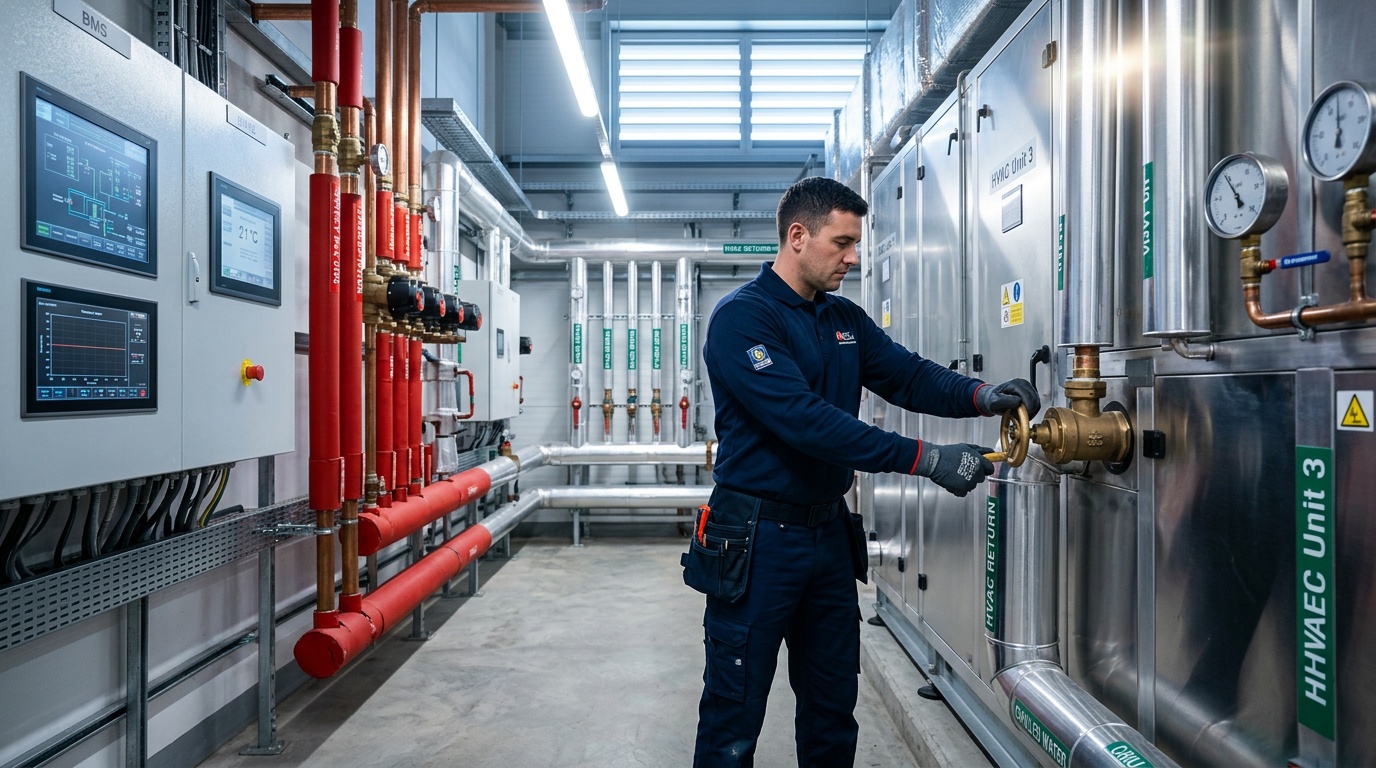
The 'Engine Room' of Cribbs Causeway: Maintenance & Facility Management Insights
A retail park the size of Cribbs Causeway operates like a small town. Behind the polished shopfronts lies a network of plant rooms, distribution boards, and mechanical systems that demand constant attention. The biggest risk to these sites isn't a catastrophic failure. It's the gradual degradation of efficiency. Scale in a condenser, or a slightly unbalanced fan, can increase energy consumption significantly before anyone notices a physical symptom. Effective facility management involves scheduled inspections that catch these "silent" killers before they impact the profit and loss sheet.
Powering the Park: Electrical Systems and Energy Efficiency
The electrical infrastructure of a major retail hub is its nervous system. It must handle massive peak loads, particularly during seasonal trading periods. For the facility manager, this means ensuring switchgear is maintained to prevent thermal imaging "hot spots" and that emergency lighting systems are fully compliant with BS 5266. At M&E Maintenance Solutions, we treat electrical maintenance as a safety and financial priority. An optimised electrical system reduces utility overheads and ensures the site remains operational during grid fluctuations. A non-negotiable requirement for 24/7 commercial operations.
Keeping it Flowing: Plumbing and HVAC Essentials
Heating, ventilation, and air conditioning (HVAC) are the most visible aspects of comfort for any retail visitor. In large retail parks, the sheer volume of air that must be conditioned daily requires powerful, redundant systems. Plumbing in these environments also extends beyond toilets; it includes trace heating for pipes in exposed areas to prevent freezing during harsh winters. A proactive maintenance regime ensures consistent water pressure and air quality, preventing the "stuffy" environment that drives customers away.
The M&E Maintenance Solutions Approach
We bridge the gap between the boiler room and the boardroom. Our approach to managing sites like the retail park cribbs causeway involves total transparency. We provide real-time compliance reporting and utilise SFG20 standards for every maintenance task. By focusing on the "Right Way" rule, we ensure every valve, sensor, and motor is either performing to spec or replaced with a high-efficiency alternative. This reduces the Total Cost of Ownership (TCO) and extends the lifecycle of your assets.
Logistics & Access: Managing the Site for Facility Managers
Prime Location: Accessibility via Road and Public Transport (M5 J17 & Bus Routes)
The site’s location is a masterclass in logistics. Situated directly adjacent to Junction 17 of the M5 motorway, it's highly accessible for regional shoppers. And for your maintenance teams. For those using public transport, a dedicated bus interchange connects the site to Bristol city centre and surrounding towns. From a facility management perspective, managing this flow involves maintaining the bus shelters, ensuring the integrity of the pedestrian walkways, and managing the traffic light systems that govern the internal road network. The ease of access is a major draw, but it places a heavy burden on the site’s infrastructure to handle peak-time congestion. Delivery access for maintenance equipment and emergency vehicles must be planned carefully.
Parking Pointers: Maintaining Car Park Infrastructure
With thousands of spaces, the car parks are a feat of civil engineering. Proper maintenance here involves more than just sweeping the tarmac. It requires the regular servicing of payment machines, the cleaning of CCTV lenses for security, and the maintenance of LED lighting columns to ensure safety after dark. A well-maintained car park reduces liability risks and improves the "arrival experience." Nobody wants to navigate a pothole-ridden surface or a poorly lit corner to reach their destination. We ensure that the mechanical elements of access control and lighting are never an afterthought.
Opening Hours and Key Facilities: Scheduling Maintenance Around Operations
Operating hours at Cribbs Causeway vary between the mall and the retail park, with many stores opening early and closing late to capture the commuter and leisure crowds. For the facility team, this means "out of hours" work is a standard part of the job. Maintenance on the main mall plant must often occur between 10:00 PM and 6:00 AM to avoid disrupting trade. This requires a maintenance partner who is "big enough to cope" with 24/7 emergency call-outs and "small enough to care" about the specific timing needs of your business operations.
Key Maintenance Considerations for Facility Managers
- Coordinate with tenants to schedule PPM during low-traffic periods to minimise disruption.
- Ensure car park lighting and payment systems are tested regularly to prevent congestion.
- Monitor HVAC performance during peak hours to maintain comfort and energy efficiency.
- Plan for seasonal changes, such as trace heating in winter and increased cooling loads in summer.
The Unseen Architects: Ensuring Sustainability and Efficiency at Cribbs Causeway
The Drive for Greener Retail: Sustainability Initiatives at Cribbs Causeway
Sustainability is no longer a buzzword; it is a commercial imperative. Large retail parks are under increasing pressure to reduce their carbon footprint. This involves the installation of energy-efficient LED lighting, the integration of smart building management systems (BMS) to trim energy waste, and the implementation of comprehensive recycling programmes. For a facility manager, the goal is to meet these green targets without compromising on the reliability of the building's systems. We help our clients navigate the balance between "eco-friendly" and "economically viable" through strategic M&E upgrades.
How Modern Building Services Contribute to Environmental Goals
Modern building services are the primary drivers of sustainability. By upgrading to high-efficiency condensing boilers, installing variable speed drives (VSDs) on pumps and fans, and utilising smart metering, a retail park can slash its energy consumption. These technologies allow for "demand-led" operation, where systems only work as hard as the current occupancy or weather conditions require. This not only lowers utility bills but also significantly reduces the site's Scope 1 and 2 emissions, helping property owners meet their EPC (Energy Performance Certificate) targets and legal obligations.
The Role of Air-to-Water Heat Pumps and Solar PV in Large Estates
Air-to-water heat pumps provide an efficient method of space heating without relying on fossil fuels, while Solar PV arrays mounted on vast warehouse roofs can generate substantial amounts of on-site electricity. But these systems require specialist maintenance to ensure they remain efficient. Inverter maintenance, refrigerant checks, and panel cleaning are essential. At M&E, we provide the technical expertise to install and maintain these green technologies, ensuring your investment delivers the promised return on investment and carbon savings.
Pros and Cons of Sustainable Upgrades in Retail Parks
Pros
- Significant reduction in long-term operational expenditure (OpEx).
- Improved EPC ratings and compliance with Part L of the Building Regulations.
- Enhanced corporate reputation among eco-conscious consumers and tenants.
Cons
- High initial capital expenditure (CapEx) for technology like Solar PV.
- Complex integration with existing legacy building management systems.
- Requires specialist, ongoing maintenance to prevent efficiency degradation.
M&E's Commitment: Future-Proofing Your Commercial Property
The retail sector is changing, and the infrastructure must change with it. Future-proofing a site like the retail park cribbs causeway means anticipating regulatory changes and technological advancements. Our commitment is to provide maintenance solutions that stand the test of time. By adhering to strict engineering standards and prioritising the "Right Way" over the quick fix, we ensure your commercial property remains a valuable, compliant, and efficient asset for decades to come. We don't just fix the problem of today; we engineer out the problems of tomorrow.
References
Frequently Asked Questions
What is Cribbs Causeway famous for?
Cribbs Causeway is famous for being one of the South West's most significant commercial destinations, featuring both an enclosed shopping mall and a large external retail park. It attracts thousands of daily visitors due to its prime location near Bristol and the M5 motorway.
Can you park all day at the mall Cribbs Causeway?
Yes, the car parks at Cribbs Causeway offer thousands of spaces for visitors. From a facility management perspective, these car parks are a feat of civil engineering, designed to handle peak-time congestion and significant surface water runoff.
What is the difference between the Mall and the Retail Park at Cribbs Causeway?
The Mall is the enclosed shopping centre with flagship department stores and a covered food court, relying on complex central plant rooms and sophisticated smoke ventilation systems. The Retail Park consists of external retail warehouse units with individual storefront plant, large-format glazing, and extensive external drainage systems.
Why is proactive maintenance important for a site like Cribbs Causeway?
In my experience, the biggest risk to these sites is gradual degradation of efficiency, not catastrophic failure. A slightly unbalanced fan or scale in a condenser can increase energy consumption significantly before anyone notices. Scheduled inspections catch these silent killers before they impact the profit and loss sheet.
How does M&E Maintenance Solutions approach facility management at Cribbs Causeway?
We bridge the gap between the boiler room and the boardroom. Our approach involves total transparency with real-time compliance reporting and SFG20 standards for every task. We ensure every valve, sensor, and motor performs to spec or is replaced with a high-efficiency alternative, reducing Total Cost of Ownership and extending asset lifecycle.
What are the key HVAC and plumbing challenges in a retail park?
The sheer volume of air that must be conditioned daily requires powerful, redundant systems. Plumbing extends beyond toilets to include trace heating for exposed pipes to prevent freezing in winter. A proactive regime ensures consistent water pressure and air quality, preventing the stuffy environment that drives customers away.
How accessible is Cribbs Causeway Retail Park by road and public transport?
The site is directly adjacent to Junction 17 of the M5 motorway, making it highly accessible for regional shoppers. A dedicated bus interchange connects to Bristol city centre and surrounding towns. Managing this flow involves maintaining bus shelters, pedestrian walkways, and traffic light systems to handle peak-time congestion.
Electrical vs plumbing maintenance contracts: pros and cons UK.
The Commercial Reality: Why Your Maintenance Contract Choice Matters
I've spent twenty-four years in this industry, starting as an apprentice combustion engineer and working my way into the boardroom. I've seen what happens when a facility manager tries to shrink the maintenance budget. A burst pipe doesn't just spill water. It destroys stock, ruins flooring, and forces you to close your doors. A power failure doesn't just turn off the lights. It halts production lines and compromises security systems. The decision between electrical vs plumbing maintenance contracts: pros and cons UK facility managers face should carry the same weight as a capital expenditure project. You're not buying a service visit; you're buying business continuity.
Key Takeaways
- I've spent twenty-four years in this industry, starting as an apprentice combustion engineer and working my way into the boardroom.
- I've seen what happens when a facility manager tries to shrink the maintenance budget.
- It destroys stock, ruins flooring, and forces you to close your doors.
I recently helped a facility manager in the West Midlands who faced a catastrophic pump failure. Because they lacked a proactive maintenance partner, the repair cost hit fifty times the annual service fee. The business lost three days of trade. That's the real cost of treating maintenance as a grudge purchase. Cheap contracts often exclude essential tasks like water treatment or thermal imaging, leaving you exposed.
Downtime's True Cost: Beyond the Lost Hour
The true cost of downtime extends far beyond the repair invoice. It includes lost revenue, emergency call-out premiums, and damage to your reputation. If your commercial property houses tenants, their income stops when your infrastructure fails. They'll look to you for compensation. A comprehensive maintenance contract is your primary evidence of diligence, proving you took every reasonable step to protect building occupants.
Compliance Is Non-Negotiable: What You're Legally Required to Do
In the UK, electrical systems must comply with BS 7671 and the Electricity at Work Regulations 1989. Plumbing and gas work requires Gas Safe Register compliance, the Water Supply Regulations 1999, and often Refcom F-Gas for refrigeration. Ignorance of these regulations won't hold up in court. If a system failure causes injury or property damage, liability falls on you. A properly structured contract gives you documented proof that you've met your duties.
Understanding the Core Differences: Electrical vs. Plumbing Maintenance Contracts
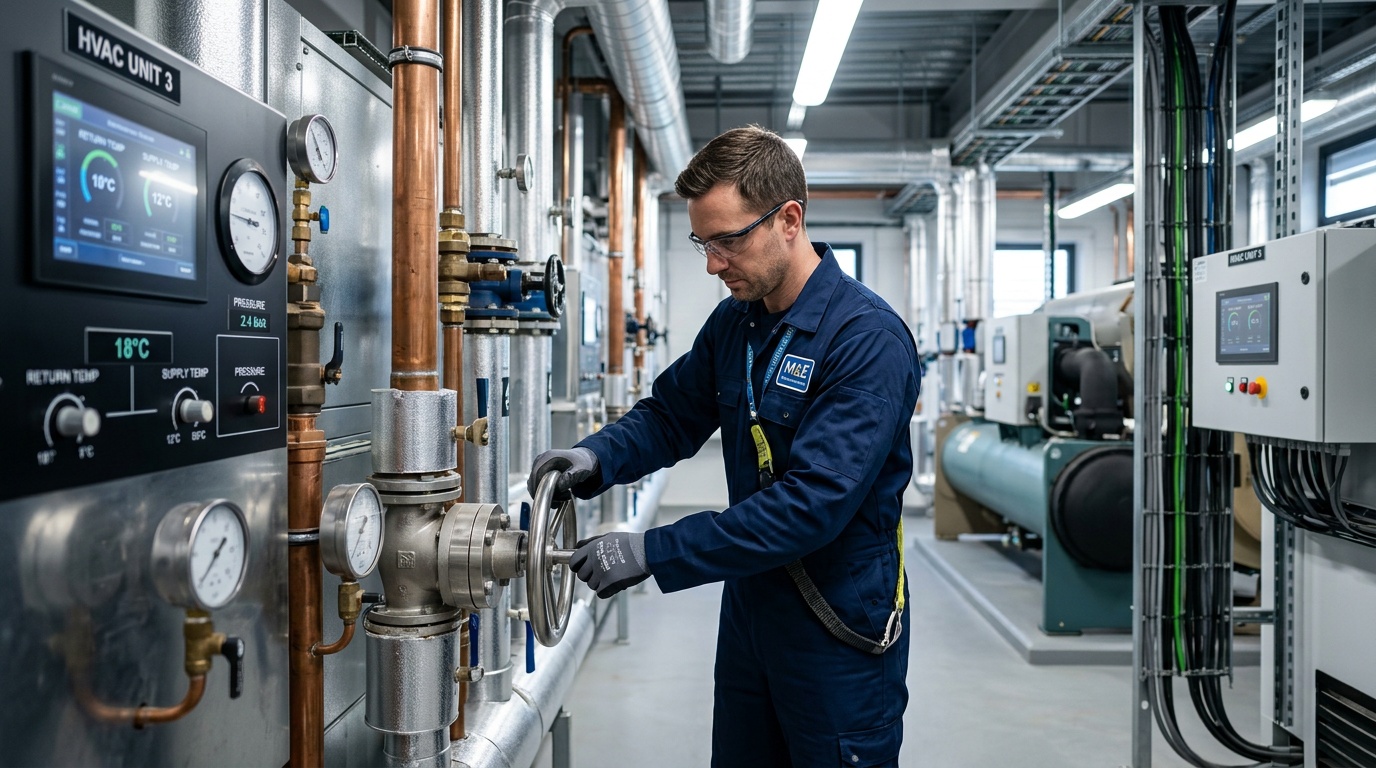
Electrical and plumbing maintenance require very different skill sets, certifications, and approaches to risk. Treating them as interchangeable is a mistake that leads to substandard work and safety hazards. Let me break it down simply.
Scope of Work: What's Actually Covered?
Electrical contracts cover power distribution, lighting, and safety systems: fixed wire testing, emergency lighting checks, panel inspections. Plumbing contracts deal with water delivery, drainage, and heating: pipework integrity, pump servicing, drainage. In modern commercial buildings these lines blur. Heating systems need both Gas Safe engineers and electricians. Your contract must explicitly list which assets are covered and which are excluded.
Specialist Skills & Certifications: The Foundation of Safety
You can't compromise on qualifications. For electrical work, engineers must be competent. Ideally registered with NICEIC or ECA. For plumbing and heating, Gas Safe Register is mandatory for any work on natural gas or LPG. At M&E Maintenance Solutions, we ensure our engineers hold Refcom F-Gas too, so whoever enters your plant room understands the complex safety protocols required to keep your building operational and legal.
Common Failure Points: Proactive Care for Each System
Electrical systems often fail due to thermal stress, loose connections, or dust and moisture. Proactive care means infrared scanning and torque testing. Plumbing systems typically fail from corrosion, scale buildup, or freezing. Proactive care means water analysis and insulation checks. Recognising these different failure modes is why you need a provider who understands specific maintenance schedules for each discipline.
Regulatory Landscape: BS 7671 vs. Water Regulations & Gas Safe
The UK regulatory environment is complex. Your maintenance contract must address each set of requirements. A generic service visit that doesn't produce the correct certification leaves you non-compliant. That's a risk I'd never advise taking.
| Feature | Electrical Maintenance | Plumbing & HVAC Maintenance |
|---|---|---|
| Primary Focus | Power distribution, lighting, safety systems. | Water delivery, drainage, climate control. |
| Key Legislation | Electricity at Work Regs, BS 7671. | Gas Safe (Installation and Use) Regs, Water Regs. |
| Common Hazards | Fire risk, electric shock, system overload. | Flooding, Legionella, gas leaks, scalding. |
| Proactive Tasks | Thermographic surveys, RCD testing, bonding checks. | Water treatment, pressure testing, pump servicing. |
The Pros and Cons: Weighing Up Specialist vs. Combined M&E Contracts
Now we get to the core question: should you hire a dedicated electrical firm plus a separate plumbing company, or opt for a combined Mechanical and Electrical solution? That's the heart of the electrical vs plumbing maintenance contracts: pros and cons UK debate. Each approach has clear advantages and trade-offs.
Specialist Electrical Maintenance Contracts: Advantages & Drawbacks
A specialist electrical contractor brings deep expertise in power systems. They live and breathe BS 7671. The downside? Coordination. If you have a combined fault. Say a pump that won't start. The electrician blames the plumber and vice versa. That finger‑pointing delays getting your system back online.
Specialist Plumbing Maintenance Contracts: Advantages & Drawbacks
Specialist plumbing and heating engineers are experts in fluid dynamics and combustion. Ideal for complex boiler repairs. But they often lack the capability to handle the control systems that govern modern plant rooms. Today's HVAC systems are as much about electronics as mechanics. A specialist plumber might fix the valve but can't recalibrate the Building Management System (BMS).
The Case for Combined M&E Maintenance: Streamlining Your Operations
A combined approach gives you a single point of accountability. With one provider, you have one contract, one invoice, one point of contact for all Plumbing and Electrical Services. If a fault crosses disciplines, it's handled internally without delay. For facility managers juggling multiple buildings, that integration reduces stress and improves response times.
When to Choose Separate vs. Integrated: A Decision Framework
Use this framework. If you manage a small, single‑use property with simple systems, separate specialists might suffice. But if you manage a large commercial estate, a school, or a healthcare facility, the integrated model wins. The complexity of modern buildings demands a holistic view. The electrical vs plumbing maintenance contracts: pros and cons UK analysis almost always favours integration for any site where downtime carries a high financial penalty.
Pros of Combined M&E Contracts
- Single point of contact for all building systems.
- Improved coordination for complex, multi-disciplinary faults.
- Streamlined compliance reporting across all disciplines.
- Potential cost savings through bundled service delivery.
Cons of Combined M&E Contracts
- Risk of a "jack of all trades" provider lacking deep specialist knowledge.
- Potential for larger firms to be less flexible than local specialists.
- Dependency on a single provider for critical infrastructure.
Beyond the Basics: Future-Proofing Your Contracts with Innovation & Integration
The old model of siloed maintenance doesn't cut it anymore. Modern commercial buildings demand systems thinking. If you're still managing separate contracts for every trade, you're missing opportunities for efficiency, cost reduction, and sustainability. Especially as renewable technologies become standard.
The Blurring Lines: How Renewables Impact Electrical and Plumbing Needs
Renewable technologies like air‑to‑water heat pumps and solar PV are blurring traditional boundaries. A heat pump needs both electrical expertise for the controls and compressor, and plumbing knowledge for the hydronic side. Solar PV connects to your electrical distribution but often integrates with hot water generation. A pure electrician or pure plumber may lack the full picture. You need a partner who understands the entire system.
M&E Maintenance Solutions' 'Open Door' Policy: Vetted Technology for Your Estate
At M&E Maintenance Solutions, we operate an open door policy towards technology. We evaluate new HVAC products rigorously before offering them to clients. We test them, understand their failure modes, and ensure they integrate with your existing infrastructure. When you choose us, you get vetted innovation, not experimental kit. We've applied this approach to Commercial Air Conditioning Maintenance, LED lighting upgrades, and solar thermal installations across the Midlands.
Integrating Compliance and Sustainability: A Holistic Approach
Compliance and sustainability aren't conflicting goals. A well‑maintained system is both safer and more efficient. By integrating your contracts, every service visit considers both compliance requirements and energy performance. For example, a quarterly HVAC service should check refrigerant leaks (F‑Gas compliance) and optimise airflow for efficiency. One engineer can achieve both if they've got the right training. That holistic approach cuts your carbon footprint and your operational costs at the same time.
The Cost of Silos: Why Integrated Maintenance Saves Money in the Long Run
Operating separate contracts creates hidden costs: multiple admin fees, coordination schedules, and wasted time managing different account managers. When a fault crosses disciplines, you face delays while contractors wait for each other. The electrical vs plumbing maintenance contracts: pros and cons UK discussion almost always concludes that integration reduces total cost of ownership. At MEMS, we see it daily. Clients who consolidate their maintenance with us typically reduce annual spend by 15 to 20 percent. Simply by eliminating duplication and improving response times.
Your Action Plan: Securing the Right Maintenance Contract for Your Commercial Property
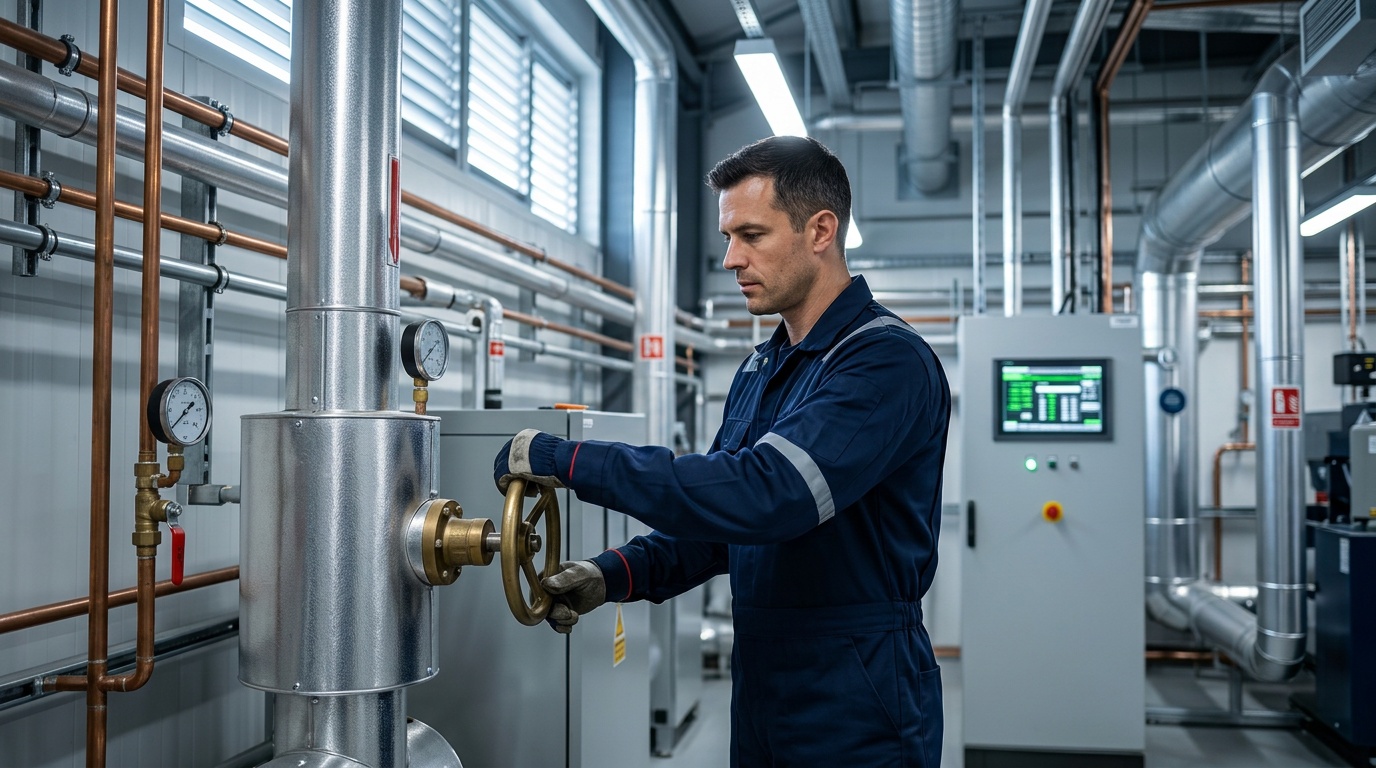
You now understand the landscape. Time to act. Use the framework below to evaluate your current contracts or pick a new provider. This isn't about finding the cheapest quote. It's about finding the partner who will protect your asset and your reputation.
Questions to Ask Potential Providers: The 'MEMS Standard' Checklist
When interviewing providers, ask: What certifications do your engineers hold? Can you show evidence of SFG20 adherence? How do you handle emergency call‑outs outside office hours? What's your average response time for a critical fault? Can you service both electrical and mechanical aspects of my HVAC system? If a provider hesitates on any of these, they're not ready for the complexity of your building.
Understanding Service Level Agreements (SLAs) and Response Times
Your SLA is the backbone of your contract. It defines response times for different fault categories. A critical failure. Total loss of heating in winter. Should guarantee a four‑hour response. A minor issue might allow 48 hours. Make sure your SLA matches your business risk. If you operate a 24‑hour facility, you need round‑the‑clock support. At MEMS, we provide a M&E HVAC Compliance Health Check with 24/7/365 coverage because building failures don't observe office hours.
Identifying Hidden Costs and Common Contract Exclusions
Read the small print. Common exclusions include specialist testing (thermographic surveys), consumables (filters, belts), and out‑of‑hours call‑out fees. Some contracts exclude remedial work. They'll diagnose but charge extra for the repair. Your contract must state clearly what's included and what's chargeable. Hidden costs erode your maintenance budget. Demand transparency before you sign.
The MEMS Advantage: 24/7/365 Reliability and Asset Protection
Choosing the right partner turns maintenance from a cost centre into a strategic advantage. At MEMS, we hold SafeContractor, Refcom F‑Gas, Gas Safe Register, and ISO 9001 certifications. We employ over twenty core staff and use strategic partners to cover any requirement across the UK. Our reputation is built on referrals and long‑term relationships. We're big enough to cope with complex estates but small enough to care about every client. When you partner with us, you get a team that treats your building's health as our own responsibility.
The choice between electrical vs plumbing maintenance contracts: pros and cons UK facility managers face isn't binary. The answer lies in integration, expertise, and genuine partnership. If you're ready to move beyond reactive firefighting and into proactive asset management, contact us today. We'll audit your current setup and show you how a unified approach can save you money, improve compliance, and protect your business.
References
Frequently Asked Questions
What is the main difference between electrical and plumbing maintenance contracts for commercial buildings?
Electrical maintenance contracts cover power distribution, lighting, and safety systems like fixed wire testing and emergency lighting checks. Plumbing maintenance contracts focus on water delivery, drainage, and heating systems, often requiring Gas Safe registered engineers. In a commercial setting, these disciplines overlap on systems like HVAC, which need both electrical and plumbing expertise to keep your building compliant and operational.
Which trade pays more in the UK, electricians or plumbers?
In the UK, both trades command competitive rates, but plumbers and heating engineers can earn a slight premium due to the higher risk and regulation around gas work and water hygiene. However, hourly rates alone don’t tell the full story. The total cost of a maintenance contract depends on the scope of work, certifications required, and the urgency of callouts. A cheap single-trade quote often misses critical compliance tasks, costing you more in the long run.
Is plumbing or electrical a better trade to specialise in for commercial maintenance?
Neither is better than the other. Both are equally essential for a commercial building's operation. Electrical systems keep the lights on and machinery running, while plumbing systems protect against water damage and maintain heating. The real question is whether your facility manager can afford to manage separate specialists or whether a partner who handles both disciplines offers better continuity and accountability.
What certifications should I look for in an electrical or plumbing maintenance provider?
For electrical work, look for NICEIC or ECA registration as evidence of competence, plus adherence to BS 7671. For plumbing and gas, the Gas Safe Register is mandatory for any work on natural gas or LPG, and Refcom F-Gas certification for refrigeration systems. A provider that holds SafeContractor and ISO 9001, like M&E Maintenance Solutions, gives you confidence that every engineer on site meets legal and industry standards.
How do maintenance contracts help with UK compliance for electrical and plumbing systems?
A maintenance contract provides documented evidence that you have taken all reasonable steps to comply with the Electricity at Work Regulations 1989, BS 7671, and the Water Supply Regulations 1999. Without proper service records and certification, a system failure that causes injury or damage could leave you personally liable. A proactive contract ensures inspections and testing are scheduled and logged, so you can prove diligence in court or to an insurer.
What are the most common failure points in commercial electrical and plumbing systems?
Electrical systems often fail from thermal stress, loose connections, or dust and moisture buildup. Infrared scanning and torque testing can catch these early. Plumbing systems typically suffer from corrosion, scale, or freezing pipes. Water analysis and insulation checks are key. Recognising these different failure modes shows why you need a maintenance partner who understands each discipline’s specific schedules rather than offering a one-size-fits-all service.