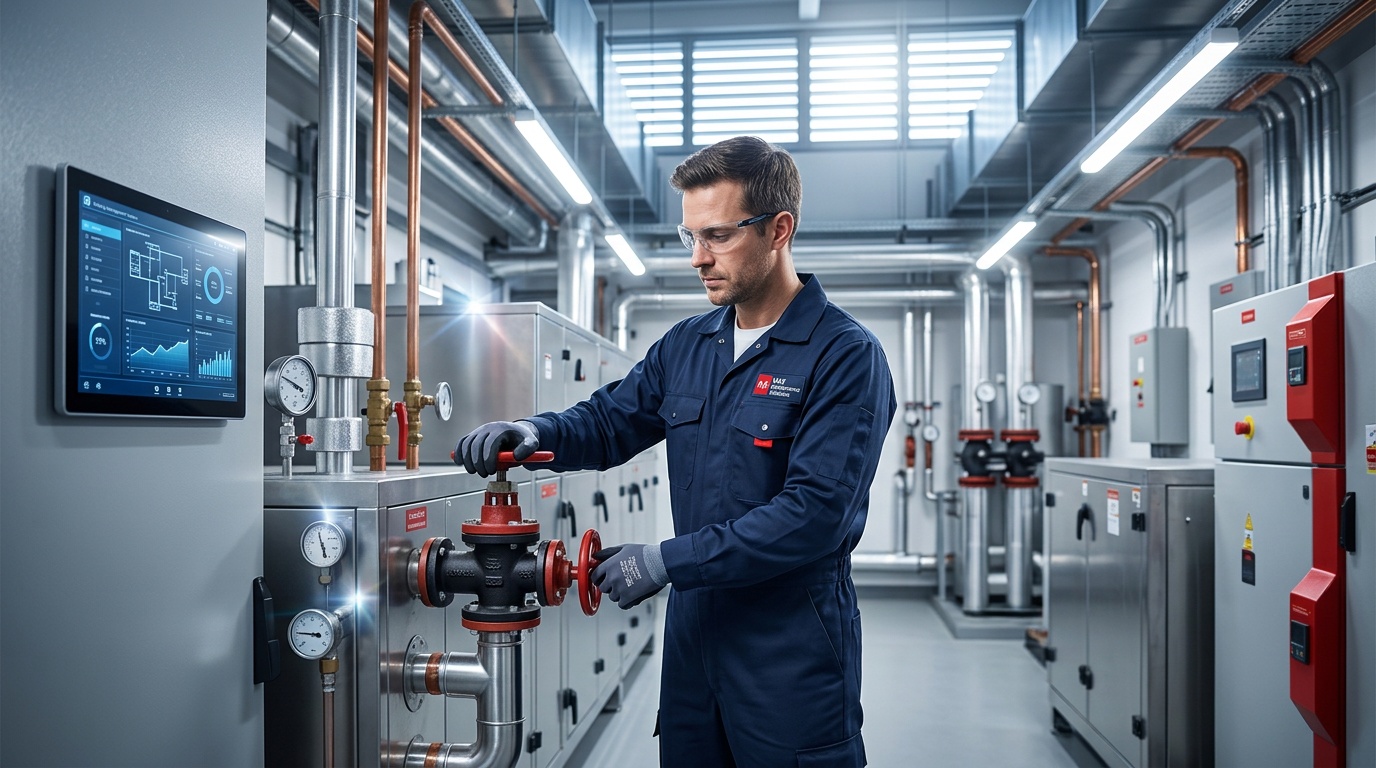
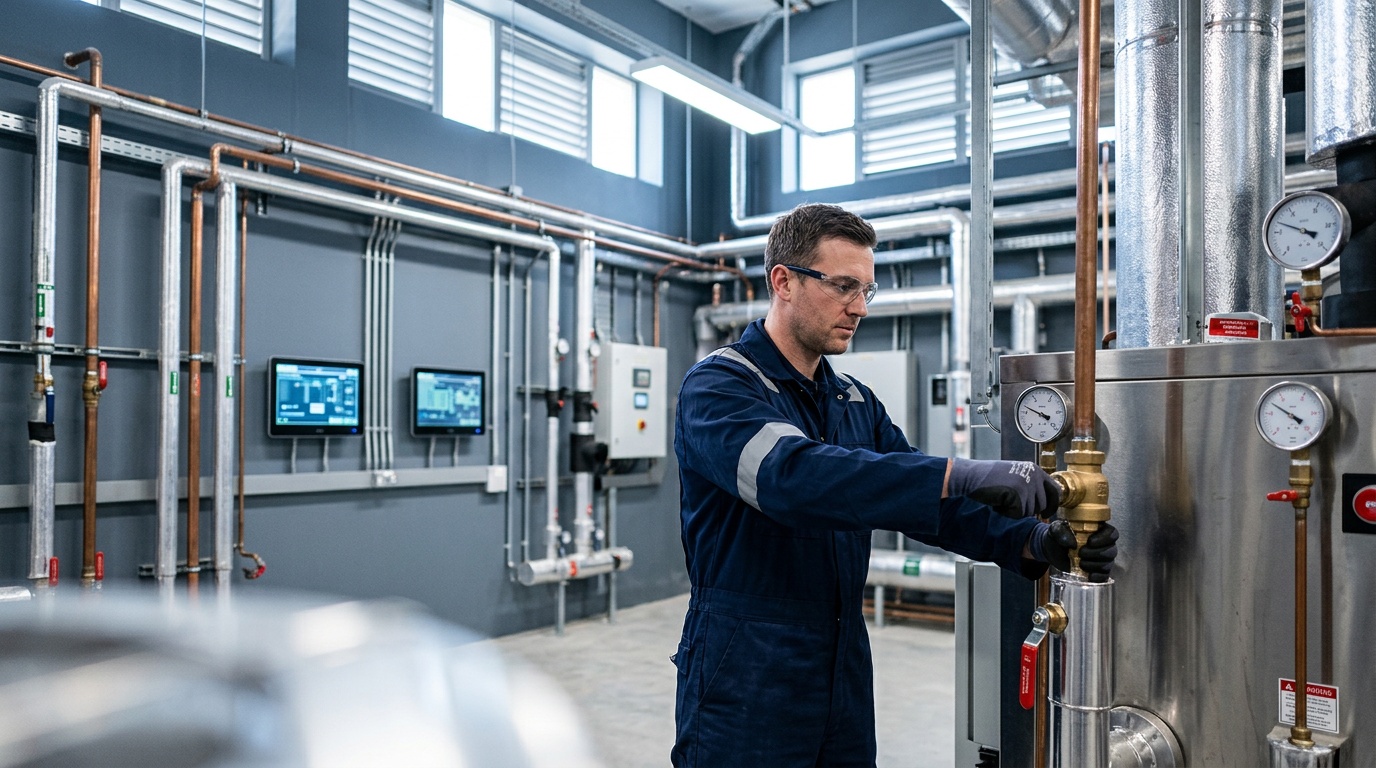
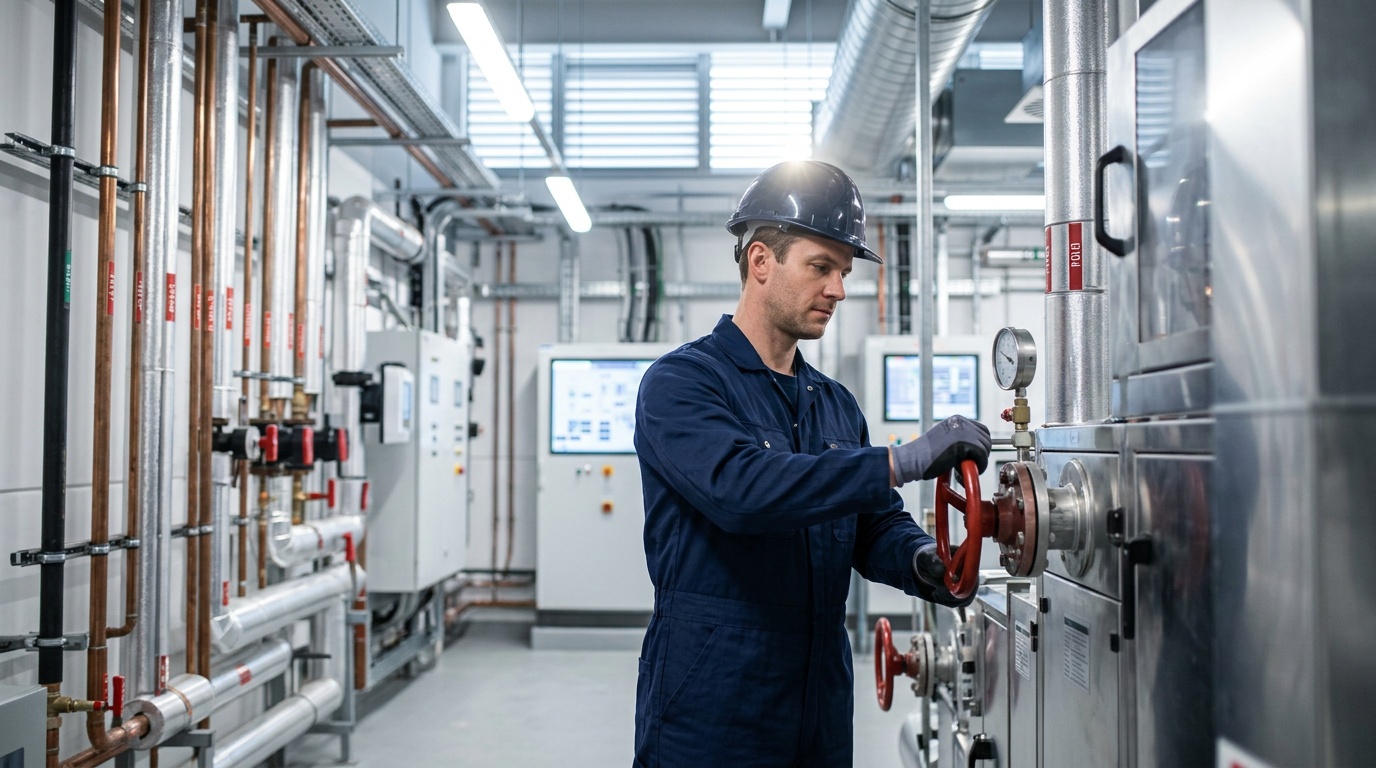
How much are plumbing repairs for commercial sites?
The Real Bill: What Commercial Plumbing Actually Costs
How much are plumbing repairs for commercial sites? After 24 years fixing everything from burst mains to blocked grease traps, I can tell you to expect £150-£400 for basic repairs like tap fixes or minor leaks, £500-£2,500 for drain blockages and pipe repairs, and £1,500-£8,000 for major issues like water heater replacements or extensive pipework overhauls. Emergency call-outs add 30-50% to these rates, which is why I always tell clients that prevention beats panic.
Commercial plumbing operates under different rules entirely. Where your home blockage might cost £120 to clear, commercial systems need specialist equipment, confined space protocols, and often weekend access. The scale drives costs up fast: commercial boilers, multi-floor pipe runs, and heavy-duty fixtures need certified technicians, not weekend DIY heroes.
Then there's compliance. Health and safety documentation, public liability insurance, and business continuity requirements all factor into pricing. We're not just fixing pipes. We're keeping your business legally compliant and operationally sound.
The Real Cost of Doing Nothing
Business Continuity Impact: I've seen a £200 leak repair become a £15,000 nightmare. Lost trading (£500-£2,000 daily for average premises), stock damage, insurance excess, and emergency relocation costs. The real cost of reactive plumbing often hits 300-400% above the actual repair bill.
Water damage moves fast in commercial buildings. Ceiling tiles collapse, electrical systems short, computers die. What starts as a minor leak becomes an insurance claim that could have been prevented with proper building fabric repairs and maintenance.
What Actually Drives Your Bill Up
Several factors separate commercial work from standard residential jobs. Access restrictions mean we often work nights or weekends. Premium rate territory. Specialist equipment for high-pressure systems costs more. Certifications aren't optional: Gas Safe, F-Gas for refrigeration lines, confined space qualifications.
The biggest cost driver? System complexity. We're not just fixing pipes in commercial buildings. We're maintaining interconnected systems that link to your HVAC, fire suppression, and industrial processes. When you ask **How much are plumbing repairs for commercial sites?**, remember we're protecting your entire building ecosystem.
Breaking Down Your Bill: Real-World Commercial Plumbing Costs
Leak Detection: Finding the Invisible Money Drain
Leak detection starts at £200-£500 using acoustic or thermal imaging equipment. Once we locate the problem, repairs vary by access. Surface copper pipes: £150-£350. Hidden pipework behind walls or under floors: £800-£1,500. Underground drainage requiring excavation: £1,200-£3,500 plus surface restoration.
Here's the killer: a pinhole leak in 22mm commercial pipe wastes 1,400 litres daily. That's £150-£200 monthly added to your water bill. I've seen buildings with multiple "small" leaks burning £500+ monthly in waste alone.
Drainage Disasters: When the Flow Stops
Kitchen grease blockages typically run £180-£400 to clear with high-pressure jetting. Main sewer obstructions need specialist cameras and powerful equipment: £350-£800 for standard clearance. Collapsed sections requiring excavation? £2,000-£6,000 per linear metre.
Commercial Complexity: Unlike homes, commercial buildings have multiple drainage zones, grease traps, and interceptors. Each needs specialist knowledge and equipment. Which explains why we charge more than your local handyman.
Fixtures That Work for Business
Commercial fixtures take punishment. Standard taps cost £80-£200 plus £120-£180 installation. Sensor units: £250-£500 each. Commercial toilets range from £300-£800 for wall-hung units to £150-£400 for floor-standing models, with installation adding £200-£350.
Disabled access compliance adds 40-60% to costs. DDA-compliant washbasins, grab rails, and accessible installations aren't optional. They're legal requirements that affect your budget.
When the Hot Water Dies
Commercial water heating operates under different pressures than domestic systems. Small office instantaneous units: £800-£1,500 installed. Gas-fired commercial boilers: £2,500-£8,000 depending on output. Larger building cylinders: £1,200-£3,500, often requiring additional pipework and safety upgrades.
Size matters. Get it wrong and you'll either have complaints about no hot water or waste money heating water nobody needs. We size systems based on actual usage patterns, not guesswork.
Pipework: Your Building's Circulatory System
Commercial pipework failures need immediate attention. Copper replacement: £45-£80 per metre plus £300-£500 daily labour rates. Plastic systems cost £15-£35 per metre but need specialist fusion welding for large mains, adding £200-£400 to installation.
Concealed work triples costs. Wall chasing, floor lifting, ceiling access in occupied buildings with noise restrictions and working hour limits. Emergency repairs during business hours carry 50-75% premiums over planned work.
Smart Money: Maintenance That Actually Saves You Cash
PPM: The Best Money You'll Spend
Annual commercial plumbing maintenance contracts cost £800-£2,500 depending on your building size. This investment prevents 70-80% of emergency call-outs by catching problems during routine inspections, not crisis moments.
Real Numbers: Emergency weekend burst pipe call-out: £450 minimum plus parts and damage. Quarterly PPM finding the same weakness before it fails: £120 scheduled repair. I've run these numbers for 24 years. Prevention wins every time.
Equipment lasts longer under proper maintenance. Commercial water heaters on our PPM programmes run efficiently for 12-15 years versus 6-8 years without regular servicing. That's fewer capital replacements and better energy efficiency throughout their life.
SFG20: More Than Paperwork
SFG20 isn't bureaucracy. It's engineering sense. Quarterly water system inspections, annual backflow testing, biannual drain surveys prevent expensive failures and keep you legally protected.
Non-compliance costs more than maintenance. HSE investigations after Legionella incidents can hit £20,000+ in fines plus prosecution costs. Treat compliance as core operations, not optional extras.
Replace or Repair? The Business Decision
I use lifecycle cost analysis, not just repair estimates. Commercial boilers over 15 years old run at 70-75% efficiency compared to 90%+ for modern units. Annual savings of £1,500-£3,000 can pay for replacement within 3-5 years, especially with government efficiency grants available.
Water-saving tech pays back fast. Commercial sensor taps cut consumption by 30-40%, saving £200-£500 yearly per washroom. Smart leak detection costs £800-£1,500 installed but prevents single incidents that otherwise cost £5,000+ in damage.
How We Keep Your Building Running
At MEMS, we focus on Asset Lifecycle Management, not emergency patches. Every building gets systematic assessment: current condition, compliance status, and efficiency opportunities. We identify savings while reducing emergency risks.
Our 24/7 response exists because pipes don't respect office hours. Qualified technicians reach your site within agreed response times, minimising disruption and preventing minor issues becoming major damage. When you're asking **How much are plumbing repairs for commercial sites?**, remember the true cost includes keeping your business running.
Choosing Your Plumbing Partner
Specialists vs. Corporate Machines
Large FM corporations treat plumbing as commodity work, sending generalists across multiple trades. This creates knowledge gaps in commercial water treatment, backflow prevention, and complex drainage. Specialists offer deeper expertise and faster solutions.
Response times matter during emergencies. Corporate providers subcontract emergency work, adding delays and accountability gaps. Direct relationships with specialist teams mean faster response and clearer responsibility.
Questions That Matter
Check qualifications properly. Verify Gas Safe registration numbers, F-Gas certification for refrigeration work, and minimum £2 million public liability insurance. Ask for recent compliance certificates and check renewal dates.
Assess technical capability: emergency response times, parts availability, specialist equipment access. Ask about confined space qualifications for drainage work and high-pressure jetting capabilities. Can they handle your commercial requirements or do they subcontract everything?
Your Building's Health Check
Professional plumbing assessments cost £300-£800 but typically identify £2,000-£5,000 worth of preventable repairs within 12 months. These include pressure testing, drain camera surveys, and heating system efficiency analysis.
Documentation quality shows professionalism and protects you legally. Digital reports with photos, compliance certificates, and maintenance schedules demonstrate systematic approaches that protect your investment.
24/7 Reliability You Can Count On
Our HVAC compliance health check services integrate plumbing within wider building programmes. We provide coordinated maintenance addressing interconnected systems, preventing cascade failures and supporting operational efficiency.
Our qualified technicians carry comprehensive parts stocks and specialist equipment, resolving over 80% of emergencies on first visit. Commercial buildings don't pause for weekends. Neither do we. This preparedness minimises business disruption and controls costs through efficient problem resolution.
Frequently Asked Questions
How much are plumbing repairs for commercial sites?
For basic repairs like tap fixes or minor leaks, expect to pay £150-£400. Drain blockages and pipe repairs typically range from £500-£2,500. Major issues, such as water heater replacements or extensive pipework overhauls, can cost £1,500-£8,000. Emergency call-outs will add 30-50% to these standard rates.
Why is commercial plumbing more expensive than residential?
Commercial plumbing systems operate under greater pressures and scale, requiring specialist equipment and certified technicians. Compliance requirements, such as health and safety documentation and public liability, also add to the pricing structure. The need to minimise business disruption often means out-of-hours work, which incurs premium rates.
What factors increase the cost of commercial plumbing repairs?
Several factors drive up costs, including access restrictions that necessitate out-of-hours work at premium rates. Specialist equipment for high-pressure systems and commercial-grade materials are more expensive. Certification requirements like Gas Safe registration and confined space qualifications also add overhead, reflecting the complexity of maintaining interconnected building systems.
What are typical costs for common commercial plumbing issues like leaks or blockages?
Commercial leak detection starts at £200-£500, with repairs ranging from £150-£350 for surface pipes to £1,200-£3,500 for underground leaks requiring excavation. Kitchen grease blockages typically cost £180-£400 to clear, while main sewer line obstructions can range from £350-£800, escalating to £2,000-£6,000 per linear metre for collapsed sections.
How do emergency call-outs impact commercial plumbing repair costs?
Emergency call-outs for commercial plumbing issues typically add 30-50% to the standard repair rates. This premium reflects the urgency and often out-of-hours nature of the work required to restore business operations quickly. Proactive maintenance is far more cost-effective than waiting for an emergency.
Can neglecting commercial plumbing lead to higher costs?
Absolutely. Neglecting commercial plumbing can lead to significant hidden costs beyond the repair bill itself. Lost trading hours, potential stock damage, insurance excess payments, and even building fabric repairs can increase the true cost of reactive plumbing by 300-400%. A small leak can quickly escalate into a major insurance claim if not addressed promptly.
Is commercial plumbing typically priced per square foot or by the hour?
Commercial plumbing is generally not priced per square foot or by a simple hourly rate due to the varying complexity of issues. Instead, costs are usually quoted based on the specific repair, specialist equipment needed, and the certifications required for the job. This approach accounts for the scale, compliance needs, and potential for business disruption unique to commercial premises.
"
About Stuart Butcher
Founder & Managing Director | M&E Maintenance Solutions
Stuart Butcher is the Founder and Managing Director of M&E Maintenance Solutions. A ""boots-on-the-ground"" leader, Stuart began his career as an apprentice combustion engineer, spending over 24 years mastering the trade before building a premier maintenance firm. He operates at the intersection of technical engineering precision and commercial asset management.
Driven by the philosophy that maintenance is cheaper than repair, Stuart works with Facility Managers and Building Owners across Birmingham, the Midlands, and the UK to ensure 24/7/365 compliance and uptime. He established M&E Maintenance Solutions to provide the technical capability of a large corporate provider while maintaining the personal accountability of a family-run business.
Last reviewed: April 29, 2026 by the M&E Maintenance Solutions Limited Team
cairngorm funicular update
The Cairngorm Funicular: An Engineering Wake-Up Call
The Cairngorm funicular remains closed indefinitely while CairnGorm Mountain undergoes safety assessments and infrastructure repairs. No confirmed reopening date exists, with engineering challenges proving more complex than anticipated.
After 24 years diagnosing failing systems across Birmingham and the West Midlands, I recognise the symptoms. The Cairngorm funicular's prolonged closure isn't just about a broken railway. It's a textbook example of what happens when maintenance becomes reactive rather than proactive.
Opened in 2001, the funicular was designed to transport visitors 457 metres up Cairn Gorm mountain, replacing the ageing chairlift system. The £15 million investment promised year-round access to Scotland's premier ski resort.
Engineering reality had different plans. Structural issues emerged within years. Track alignment problems, mechanical failures, and safety concerns mounted. By 2018, a derailment incident exposed fundamental design flaws that forced closure.
The Real Culprits: Foundation Settlement and System Failure
The technical problems weren't superficial. Foundation settlement affected track geometry. Drainage systems failed, causing erosion beneath the infrastructure. Weather exposure degraded mechanical components faster than maintenance schedules anticipated.
Engineering Reality Check
Mountain infrastructure faces extreme temperature cycles, wind loading, and moisture ingress. Without strong preventative maintenance protocols, even well-designed systems deteriorate rapidly.
What appeared to be isolated mechanical failures were symptoms of broader infrastructure degradation. A pattern I've witnessed in commercial building maintenance across our region.
Complete System Reconstruction on the Table
CairnGorm Mountain continues evaluating repair feasibility versus replacement costs. Current assessments suggest complete system reconstruction may prove more economical than piecemeal repairs.
This mirrors decisions facility managers face: when does continued maintenance become economically unviable? The answer lies in honest engineering assessment, not wishful thinking.
What This Mountain Railway Teaches About Building Maintenance
The Cairngorm situation mirrors every facility manager's worst nightmare: a major system failure that could have been prevented. I've seen countless commercial buildings face similar crises.
When Essential Infrastructure Fails During Peak Demand
Every facility manager knows that sinking feeling when a system fails during peak demand. The Cairngorm funicular's closure during prime skiing seasons hits this exactly. Visitors arrive expecting reliable mountain access, only to find essential infrastructure unavailable.
This pattern repeats across commercial properties: heating systems failing during winter peaks, cooling systems breaking during summer heatwaves. Deferred maintenance creates cascading disappointments that damage reputation and revenue streams.
Mountain environments demand absolute precision in engineering standards. The funicular's track alignment issues and foundation settlement problems reveal what happens when initial specifications prove inadequate for operational reality.
The MEMS Standard
We don't accept "good enough" solutions. Every system we maintain receives the same rigorous attention whether it's a boiler in Birmingham or HVAC equipment across the West Midlands. When engineering standards slip, reliability follows.
Commercial building systems face similar stresses: thermal cycling, moisture ingress, and mechanical wear. Without maintenance protocols aligned with SFG20 standards, even premium equipment deteriorates rapidly.
Prevention Costs Less Than Cure
While CairnGorm Mountain evaluates complete system reconstruction, we help clients avoid such drastic measures through planned preventative maintenance.
Our asset lifecycle management approach identifies potential failures before they occur. Digital compliance tracking, regular system diagnostics, and adherence to manufacturer specifications prevent the gradual degradation that ultimately claimed the funicular.
When Infrastructure Fails: The Human Cost
Behind every engineering failure lies human disappointment. The funicular's closure tells a story familiar to anyone managing commercial facilities: when infrastructure fails, people suffer the consequences.
Lost Revenue and Damaged Reputation
Skiers and snowboarders planning Cairngorm visits face uncertainty with each seasonal opening. Without funicular access, the mountain's appeal diminishes significantly. Families booking accommodation find themselves with limited mountain access options, affecting local tourism revenue.
This mirrors commercial property challenges: when building systems fail, tenants question lease renewals. Reliability becomes the foundation of long-term relationships, whether with mountain visitors or office occupants.
Backup Systems Matter
CairnGorm Mountain offers alternative access routes, but none match the funicular's convenience. Walking paths require fitness levels many visitors lack. Weather conditions often make alternative routes dangerous or impossible.
Redundancy Prevents Single Points of Failure
Just as mountain access needs redundancy, commercial buildings require backup heating, cooling, and power systems. Single points of failure create operational vulnerability that smart facility managers eliminate through strategic planning.
Managing Stakeholder Expectations During Extended Downtime
CairnGorm Mountain's communication strategy offers lessons for facility managers dealing with system outages. Regular updates, realistic timelines, and transparent acknowledgement of problems help maintain stakeholder confidence during difficult periods.
Honest assessment beats optimistic projections. When we diagnose building system failures, clients appreciate direct explanations over sugar-coated reassurances.
Lessons for Your Building Portfolio
The Cairngorm situation offers facility managers a case study in infrastructure decision-making. Having guided clients through similar crossroads, I see valuable lessons emerging from this mountain railway's challenges.
Reconstruction vs. Repair: Making the Hard Decision
Current assessments suggest complete system reconstruction rather than piecemeal repairs. This decision mirrors choices facility managers face when ageing building systems reach end-of-life status. Sometimes replacement proves more economical than continued maintenance.
Engineering reality demands honest evaluation. Methodical assessment, whilst frustrating for stakeholders, ensures proper solutions rather than quick fixes.
Extreme Environments Test Equipment Beyond Normal Parameters
Mountain environments accelerate equipment degradation through extreme temperatures, moisture exposure, and wind loading. These conditions mirror challenges commercial buildings face, albeit in concentrated form.
Smart investment in strong systems and maintenance protocols prevents the degradation cycle that claimed the funicular. Whether managing a ski resort or an office complex, the physics of material science remain constant.
Your Asset Lifecycle Management Checklist
The Cairngorm experience reinforces our asset lifecycle management philosophy. Regular condition assessments, adherence to manufacturer specifications, and proactive component replacement prevent catastrophic system failures.
Document everything. Maintain compliance certificates. Follow SFG20 standards consistently. Deferred maintenance compounds into major reconstruction projects.
No, the Cairngorm funicular remains closed indefinitely. The latest cairngorm funicular update confirms there is no confirmed reopening date due to ongoing comprehensive safety assessments and complex infrastructure repairs. This situation highlights the critical need for consistent, proactive maintenance to keep systems operational.
Why is the Cairngorm funicular closed?
The funicular is closed due to significant structural issues and fundamental design flaws that emerged years after its opening in 2001. These problems, including track alignment issues and mechanical failures, led to a derailment incident in 2018, exposing deeper systemic degradation. It's a classic case of reactive maintenance catching up.
What are the main engineering challenges facing the Cairngorm funicular?
The funicular faces complex engineering challenges, including foundation settlement affecting track geometry and failed drainage systems causing erosion beneath the infrastructure. Extreme weather exposure also degraded mechanical components faster than anticipated, revealing systemic issues beyond isolated failures. This is a common problem when preventative maintenance isn't a priority.
When is the Cairngorm funicular expected to reopen?
The latest cairngorm funicular update indicates no confirmed reopening date. Engineering challenges have proven more complex than initially anticipated, and CairnGorm Mountain is still evaluating the feasibility of repairs versus the cost of a complete system reconstruction. It's a tough decision, similar to those faced by facility managers with aging commercial assets.
What is the current outlook for the Cairngorm funicular's future?
Current assessments suggest that complete system reconstruction may be more economical than attempting piecemeal repairs. This reflects a common dilemma in asset management: knowing when continued maintenance becomes economically unviable and a bigger investment is necessary. An honest engineering assessment is key here.
How does the funicular's closure affect visitors to Cairngorm Mountain?
The funicular's closure causes significant disappointment and disruption for visitors, particularly skiers and snowboarders who expect reliable mountain access. Its unavailability diminishes the mountain's appeal, affecting local tourism revenue and mirroring the impact of system failures in commercial properties on tenants and revenue streams. Reliability builds long-term relationships.
What lessons can be learned from the Cairngorm funicular saga for facility managers?
The Cairngorm funicular saga is a prime example of what happens when maintenance becomes reactive instead of proactive. It teaches us that deferred maintenance creates cascading disappointments, damages reputation, and ultimately costs far more than prevention. For commercial buildings, consistent planned preventative maintenance is the antidote to such disruptions.
"
About Stuart Butcher
Founder & Managing Director | M&E Maintenance Solutions
Stuart Butcher is the Founder and Managing Director of M&E Maintenance Solutions. A ""boots-on-the-ground"" leader, Stuart began his career as an apprentice combustion engineer, spending over 24 years mastering the trade before building a premier maintenance firm. He operates at the intersection of technical engineering precision and commercial asset management.
Driven by the philosophy that maintenance is cheaper than repair, Stuart works with Facility Managers and Building Owners across Birmingham, the Midlands, and the UK to ensure 24/7/365 compliance and uptime. He established M&E Maintenance Solutions to provide the technical capability of a large corporate provider while maintaining the personal accountability of a family-run business.
Last reviewed: April 28, 2026 by the M&E Maintenance Solutions Limited Team
Pricing for preventive AC maintenance contracts?
The Real Cost of 'Free': Unpacking AC Maintenance Contract Pricing for UK Businesses
The 'Commercial Reality' Hook: What Happens When Your AC Fails?
Picture this: it's July, 28°C outside, and your office air conditioning system has just failed. Your staff are uncomfortable, productivity plummets, and customers start leaving. The emergency repair bill? £3,500 plus lost revenue. This scenario repeats across commercial properties throughout Birmingham and the West Midlands every summer because facility managers treat preventive AC maintenance contracts as an expense rather than insurance.
From my 24 years in commercial HVAC. Starting as an apprentice and now running operations across the UK. I've witnessed the same pattern: businesses that baulk at a £200 quarterly service call end up paying ten times that amount when systems fail catastrophically. The maths are brutal but simple.
Beyond the Invoice: Why 'Cheap' AC Maintenance is the Most Expensive
The lowest quote isn't the best value. When evaluating maintenance contract options, consider what 'cheap' actually delivers: rushed inspections, missed filter changes, and technicians who lack proper refrigerant-handling qualifications. These shortcuts create a cascade of problems that appear months later as equipment failures, energy inefficiency, and compliance breaches.
Engineering Reality Check
A blocked air filter increases energy consumption by 15-20%. Over twelve months, this 'invisible' cost often exceeds the annual maintenance contract fee. Quality preventive care pays for itself through energy savings alone.
Professional maintenance contracts from certified providers like M&E Maintenance Solutions include detailed system diagnostics, refrigerant pressure checks, electrical component testing, and thorough compliance documentation. These elements distinguish genuine preventive care from basic 'tick-box' services.
The M&E 'Open Door' Philosophy: Transparency from the Start
At M&E Maintenance Solutions Limited, we believe pricing transparency builds trust. Our quotes detail exactly what each service visit includes: inspection duration, specific components checked, parts replacement policies, and response-time commitments. No hidden fees, no surprise charges, and no addenda that inflate costs after signing.
This approach stems from understanding that facility managers need predictable budgets. We provide clear cost breakdowns that support accurate financial planning and help you track return on investment through reduced emergency call-outs and extended equipment life.
Deconstructing the Price Tag: Key Factors Influencing Your AC Maintenance Contract
Understanding what drives contract costs helps you evaluate quotes intelligently and avoid paying for substandard service. Multiple variables influence the final figure, from building complexity to service frequency requirements.
Building Fabric & System Scale: The Foundation of Your Quote
Your building's architecture and HVAC infrastructure form the baseline for any maintenance quote. A single-storey retail unit with two wall-mounted units requires different expertise from a multi-storey office complex with centralised plant rooms, ductwork networks, and variable refrigerant flow systems. System capacity, measured in kilowatts of cooling output, directly correlates with maintenance complexity and time requirements.
Age matters significantly. Older installations often require specialist knowledge of discontinued components, extended diagnostic time, and careful handling of legacy refrigerants. Modern systems with digital controls and smart sensors speed up fault identification, yet they also require technicians with up-to-date training and certifications.
Unit Count & Complexity: More Than Just a Number
Simple multiplication doesn't apply to AC maintenance contracts. Ten identical split systems often cost less to maintain than five units from different manufacturers because technicians build familiarity with specific models, reducing diagnostic time and parts inventory requirements. Mixed installations increase labour costs and service delays.
System integration adds another layer. Standalone units operate independently, while integrated building management systems require co-ordinated maintenance schedules and specialist diagnostic equipment. Heat recovery ventilation, variable speed drives, and zoned temperature control increase technical complexity.
Service Frequency & Scope: Tailoring Your Protection Plan
Standard contracts typically offer quarterly visits, yet high-usage environments like restaurants or server rooms benefit from monthly inspections. Each additional visit increases labour costs while reducing breakdown probability. Scope drives pricing more than frequency: basic filter changes and visual inspections cost significantly less than thorough refrigerant analysis, electrical testing, and condenser coil deep cleaning.
Service level
Frequency
Typical inclusions
Best for
Basic
Biannual
Filter change, visual inspection
Light commercial use
Standard
Quarterly
Full system check, minor adjustments
Office environments
Advanced
Monthly
Detailed diagnostics, performance optimisation
Critical cooling applications
Emergency response commitments command premium pricing but reduce downtime costs. Four-hour response commitments require local engineer availability and access to parts, which justifies higher monthly fees through improved operational reliability.
Geographical Reach & Response Times: The Logistics of Uptime
Location impacts contract pricing through travel costs and engineer deployment logistics. Central Birmingham properties often benefit from competitive pricing due to higher engineer density, while remote locations attract additional charges due to extended travel time and fuel costs.
Response-time commitments require strategic resource allocation. Providers offering same-day emergency response maintain larger engineer teams and regional parts distribution, with these costs reflected in contract pricing. Rural locations may face longer response times or premium charges for expedited service.
Beyond the Routine: What's Truly Covered (and What Isn't) in Your AC Contract?
Contract clarity prevents disputes and unexpected charges. Knowing exactly what your maintenance agreement includes. And excludes. Supports budget planning and reduces the risk of surprise invoices during equipment failures.
The 'What's Included' Checklist: Inspections, Cleaning, and Minor Adjustments
Standard preventive maintenance includes visual system inspections, tightening of electrical connections, clearing of condensate drains, and thermostat calibration. Technicians check refrigerant levels, clean evaporator coils, inspect fan belts, and test safety controls during each visit. These routine tasks maintain performance and identify issues before they escalate.
Control system diagnostics are also commonly included. Modern AC units generate error codes and performance data that trained technicians interpret to identify developing faults and abnormal wear patterns. This diagnostic capability separates professional maintenance from basic cleaning services.
Filter Replacements & Refrigerant Checks: Essential for Efficiency
Quality contracts include filter replacements that meet manufacturer specifications. Standard filters often require quarterly changes, while high-efficiency HEPA filters may need monthly replacement in dusty environments. Filter grade influences energy consumption and indoor air quality directly.
Refrigerant system monitoring requires F-Gas-certified technicians who can legally handle modern refrigerants. This includes pressure testing, leak detection using electronic sensors, and refrigerant top-ups within normal operating parameters. Major refrigerant losses indicate leaks that require separate repair work.
The 'Not Included' Clause: Understanding the Boundaries of Preventive Care
Preventive maintenance contracts typically exclude component replacements beyond filters and basic consumables. Compressor failures, electrical control board replacements, and refrigerant leak repairs sit outside standard agreements. Understanding these boundaries helps avoid disputes and supports realistic budgeting for capital repairs.
The Maintenance vs. Repair Distinction
Maintenance preserves existing function through cleaning, adjustment, and minor part replacement. Repairs restore lost function through major component replacement or system modification. Most contracts cover maintenance and charge separately for repairs.
Vandalism, accidental damage, and tenant-requested modifications usually remain the client's responsibility. External factors like power surges or water ingress from building leaks also tend to sit outside maintenance scope, though quality providers can advise on remediation steps and documentation for insurance claims.
Major Repairs vs. Planned Maintenance: A Clear Distinction
The cost difference between these categories is substantial. A planned filter change costs £15-30 per unit, while an emergency compressor replacement reaches £800-2,500 depending on capacity. Recognising this distinction helps facility managers assess maintenance contract value against potential repair exposure.
Professional providers like M&E Maintenance Solutions Limited maintain clear pricing structures that separate routine maintenance from repair work. This approach supports accurate financial planning and reduces the risk of unexpected charges.
The Long Game: How AC Maintenance Contracts Drive Commercial Success & Compliance
When you treat maintenance as an investment, the value becomes easier to measure. Well-structured contracts deliver returns through energy savings, compliance support, and longer equipment life, while protecting revenue by reducing the risk of downtime.
The ROI of Uptime: Protecting Your Revenue Streams
System reliability affects business continuity directly. A failed air conditioning system in a retail environment reduces customer dwell time, while office productivity often drops when temperatures exceed 24°C. Professional maintenance reduces breakdown risk by identifying faults early and addressing minor issues before they become failures.
The maths are straightforward: a £500 quarterly maintenance contract that prevents a single £3,000 emergency repair delivers strong return on investment. Add the costs linked to disruption, and the case for planned maintenance becomes even clearer.
Energy Efficiency & Sustainability: A Greener Bottom Line
Maintained AC systems use less energy than neglected equipment. Clean filters, calibrated thermostats, and correct refrigerant charge reduce electrical consumption while maintaining comfort standards. In many offices, this translates into meaningful annual savings per unit, depending on use patterns, tariffs, and system type.
Regular maintenance also extends equipment life, deferring replacement costs and reducing waste. These points increasingly matter for corporate reporting and tenant expectations.
Legislative Compliance: Staying Ahead of SFG20 and Beyond
F-Gas regulations require leak checks based on refrigerant charge thresholds and system characteristics. Non-compliance leads to enforcement action, with penalties varying by circumstance. A professional maintenance contract ensures certified technicians complete required checks and maintain documentation.
SFG20 provides a recognised standard for maintenance schedules and tasks for building services, including HVAC. Insurers and auditors may ask for evidence of planned maintenance aligned to appropriate standards, making good records an important part of risk management.
Extending Equipment Lifespan: Maximising Your Asset Value
Commercial AC equipment represents a capital investment, often £2,000-15,000 per unit depending on capacity and specification. Maintenance protects this investment by reducing premature wear and avoiding preventable failures.
Service records also support warranty discussions and insurance assessments. Documented maintenance demonstrates due diligence in asset care and supports smoother decision-making during refurbishments and property transactions.
Making the Right Choice: Questions to Ask & Partnering with M&E
Selecting the right maintenance partner requires due diligence beyond comparing quotes. The cheapest option rarely delivers the best value, and the highest price doesn't automatically mean the best service. Focus on qualifications, transparency, and track record.
Your Due Diligence Checklist: Questions for Your Current or Potential Provider
Start with certifications: ask for evidence of F-Gas registration, Gas Safe registration for relevant systems, and SafeContractor approval. Ask about technician training records and continuing professional development. Strong providers keep qualifications current and invest in ongoing competence.
Request references from clients with similar building types and system complexity. Speak with facility managers about response times, work quality, communication, and billing accuracy. Reluctance to provide references indicates potential risk.
Comparing Quotes: Transparency Is Key to Avoiding Hidden Fees
Quotes should specify what each visit includes, the estimated duration, consumables and parts policies, and emergency response procedures. Vague descriptions like "full service" mask limited scope or extra charges for routine work.
Compare like-for-like services rather than headline prices. A £200 quarterly visit that includes filter replacement and refrigerant checks offers better value than a £150 visit that excludes consumables and charges separately for routine tasks.
The M&E Difference: Why Our Customer-First Approach Matters
M&E Maintenance Solutions Limited has built its reputation through transparent pricing and consistent service delivery. Our engineers arrive prepared, with access to common parts, reducing repeat visits and limiting disruption to your operation. We provide service reports promptly to support your compliance documentation.
Our open-door policy means you can speak directly with technical people when you need guidance on system upgrades, energy efficiency, or compliance considerations. This partnership approach sets us apart from providers that only reappear at the next scheduled visit.
How do you determine the price for an AC maintenance contract?
We determine the price for an AC maintenance contract by carefully evaluating your building's specific HVAC infrastructure. This includes the system scale, the age and complexity of your units, and the number of units you have. We also consider the desired service frequency and your location, as these all impact the labour and logistics involved.
Why is a cheap AC maintenance contract often more expensive in the long run?
A cheap AC maintenance contract often proves more expensive because it typically involves rushed inspections and missed critical tasks like filter changes. These shortcuts lead to increased energy consumption, equipment failures, and compliance issues down the line. Ultimately, you end up paying far more in emergency repairs and lost productivity than you would have saved initially.
What factors influence the cost of a commercial AC maintenance contract?
Several key factors influence the cost of a commercial AC maintenance contract. These include your building's fabric and system scale, the age and complexity of your AC units, and the total number of units. Additionally, the required service frequency and scope, along with your geographical location and desired emergency response times, all play a part in the final figure.
Is there a general rule about the cost of preventive AC maintenance versus emergency repairs?
From my 24 years in commercial HVAC, I can tell you the mathematics are simple: preventive maintenance is insurance. Businesses that avoid a modest quarterly service fee often pay ten times that amount, or more, when systems fail catastrophically. Investing in regular maintenance significantly reduces the risk of costly emergency repairs and lost revenue.
What are the main benefits of investing in a quality preventive AC maintenance contract?
Investing in a quality preventive AC maintenance contract offers significant benefits beyond just avoiding breakdowns. It leads to substantial energy savings, as well-maintained systems operate more efficiently. You also gain extended equipment life, ensure compliance with regulations, and reduce the likelihood of expensive emergency call-outs, protecting your business operations.
How does the chosen service frequency impact the cost of an AC maintenance contract?
Service frequency directly impacts the cost of an AC maintenance contract, as each additional visit increases labour costs. However, higher frequency, such as monthly inspections for critical applications, significantly reduces the probability of breakdowns and optimizes system performance. The scope of each visit, from basic checks to comprehensive diagnostics, also plays a large role in pricing.
What does M&E Maintenance Solutions include in its commercial AC maintenance contracts?
At M&E Maintenance Solutions, our commercial AC maintenance contracts include comprehensive system diagnostics, refrigerant pressure checks, and electrical component testing. We also provide detailed compliance documentation and clear response-time commitments. Our quotes are transparent, detailing inspection duration, specific components checked, and parts replacement policies, so you know exactly what you are paying for.
"
About Stuart Butcher
Founder & Managing Director | M&E Maintenance Solutions
Stuart Butcher is the Founder and Managing Director of M&E Maintenance Solutions. A ""boots-on-the-ground"" leader, Stuart began his career as an apprentice combustion engineer, spending over 24 years mastering the trade before building a premier maintenance firm. He operates at the intersection of technical engineering precision and commercial asset management.
Driven by the philosophy that maintenance is cheaper than repair, Stuart works with Facility Managers and Building Owners across Birmingham, the Midlands, and the UK to ensure 24/7/365 compliance and uptime. He established M&E Maintenance Solutions to provide the technical capability of a large corporate provider while maintaining the personal accountability of a family-run business.
Last reviewed: April 27, 2026 by the M&E Maintenance Solutions Limited Team
one snow hill birmingham
One Snow Hill Birmingham: Facility Manager's Guide
If you manage commercial property in Birmingham or you're searching for premium office space in the city, understanding One Snow Hill is essential. This 22-storey tower is one of the most significant commercial developments in the West Midlands, and its operational demands reflect that stature. After spending over two decades keeping Birmingham's commercial buildings running, I'll break down exactly what you need to know about this landmark.
The Landmark: Understanding One Snow Hill's Place in Birmingham's Skyline
What is One Snow Hill?
One Snow Hill birmingham is a contemporary commercial office tower in Birmingham's Central Business District. The development forms part of the wider Snowhill masterplan, offering approximately 260,000 square feet of Grade A office accommodation across a modern glass façade.
Location: Pinpointing One Snow Hill
The building sits adjacent to Snow Hill railway station, providing direct access to national rail services. Its position on Snow Hill Queensway places it within walking distance of New Street station, the Bullring shopping centre, and the business district core. For occupiers and facility managers, this central position brings both prestige and logistical advantages.
One Snow Hill Birmingham offers premium commercial office space in a prime city centre location.
A Brief History of the Snowhill Development
The Snowhill site underwent substantial transformation from former railway lands into a mixed-use commercial quarter. One Snow Hill emerged as the flagship office building, completed in 2006, and has since attracted tenants ranging from professional services firms to financial institutions.
The Architectural Statement
The tower's design features a rectangular floorplate with a glazed curtain wall system, maximising natural light penetration. The building rises from a three-storey podium containing reception facilities and retail units. For facility managers, the architectural design presents specific challenges around façade maintenance, window cleaning, and mechanical plant integration.
Beyond the Façade: Inside One Snow Hill's Operational Excellence
Key Features and Amenities for Modern Business
Premium occupiers expect Grade A specifications, and One Snow Hill delivers through raised floors, comfort cooling systems, and suspended ceilings. The building management system (BMS) controls environmental conditions across multiple tenanted floors, requiring specialist maintenance expertise.
Snow Hill Station and Beyond
The proximity to Snow Hill station provides employees with strong commuting options, including direct services to London Euston, Manchester Piccadilly, and regional destinations. The nearby A4540 ring road offers vehicle access, while city centre parking facilities serve occupiers requiring car access.
Stuart's Observation: Buildings with strong transport connectivity often see improved tenant retention. The operational infrastructure must match that accessibility to maintain occupant satisfaction.
The Business Case for Prime Office Space
Premium office accommodation in Birmingham commands higher rental values but can deliver returns through staff recruitment, client impression, and operational efficiency. A well-managed building becomes a business asset, not merely an address.
Sustainability: A Growing Priority
Modern commercial buildings face increasing pressure to demonstrate environmental credentials. Energy performance certificates, BREEAM assessments, and ESG reporting requirements mean facility managers must maintain comprehensive service records and equipment efficiency data.
The Unseen Infrastructure: How Building Services Keep One Snow Hill Running
The Role of HVAC, Electrical, and Plumbing
Behind the polished reception and executive offices lies a complex network of mechanical and electrical systems. Air handling units condition air across multiple floors. Electrical switchgear distributes power to tenancy areas. Water systems supply washroom facilities and welfare areas. Each element requires scheduled maintenance to prevent failure and maintain comfort conditions.
Ensuring Uptime: The Facility Manager's Challenge
Commercial tenants expect uninterrupted service. A chiller failure during summer months creates immediate occupant complaints and potential lease breaches. Reactive maintenance approaches aren't sufficient for a building of this standing.
Maintenance Strategy Comparison
Planned Preventative Maintenance (PPM)
Predictable maintenance costs
Reduced emergency call-outs
Extended equipment lifecycles
Compliance documentation maintained
Lower risk of business disruption
Reactive Maintenance Approach
Unpredictable cost spikes
Emergency premium rates
Shortened equipment lifespan
Compliance gaps
Tenant dissatisfaction
The Cost of Inaction
The arithmetic is straightforward. A scheduled chiller service costs a fraction of emergency repairs when the unit fails at peak summer demand. In my experience, reactive maintenance can cost building owners up to three times more than proactive programmes over five years. The question isn't whether to invest in maintenance; it's whether to manage it proactively or pay for it reactively.
Compliance Standards: SFG20 and Beyond
SFG20 represents the industry-standard maintenance specification for building services equipment. Buildings of One Snow Hill's calibre must maintain documented maintenance schedules compliant with this framework. Gas Safe registration, REFCOM certifications, and electrical condition reports are baseline legal requirements for operating commercial buildings.
Differentiating One Snow Hill from Other 'Snow Hill' Addresses
Birmingham contains multiple locations bearing the Snow Hill name. Confusion occasionally arises between the One Snow Hill office tower and the nearby Snow Hill railway station or the historical Snow Hill area. For facility managers and commercial tenants, precision matters when specifying service requirements or legal documentation.
One Snow Hill in the Birmingham Context
Birmingham's prime office market includes several landmark buildings. The Financial District, Colmore Business District, and Snowhill cluster each offer distinct advantages. One Snow Hill birmingham's position near the station provides commuting advantages that buildings further from the rail network can't match.
Location Factor
One Snow Hill
Birmingham Average
Rail Connectivity
Adjacent to Snow Hill Station
Varies by location
City Centre Access
Within a 10-minute walk
10-20 minutes is typical
Grade A Specification
Full Grade A fit-out
Mixed specifications
The M&E Maintenance Solutions Advantage
Managing a building of this calibre demands a maintenance partner who understands both technical complexity and commercial pressures. We provide 24/7 breakdown response, specialist commercial HVAC expertise, and Gas Safe registered engineers across the West Midlands.
Our approach centres on planned preventative maintenance programmes designed to protect your investment. We provide transparent reporting, compliance documentation, and clear accountability. The MEMS Standard: Right first time.
Your Next Steps
Review your current maintenance contracts. Are you receiving genuine PPM, or simply reactive call-outs presented as scheduled visits? Request documentation of completed works. Ask about engineer qualifications and target response times.
For a no-obligation building survey, contact M&E Maintenance Solutions. We'll assess your current setup, identify compliance gaps, and provide actionable recommendations. This is engineering input from someone who's spent 24 years turning around failing building services.
The Engineering Verdict: Protecting Your Investment
Managing facilities at this level demands more than a maintenance schedule. It requires strategic asset management. The difference between a profitable commercial property and a costly liability often comes down to maintenance planning, execution, and record keeping.
Key Takeaways for Facility Managers
Three principles define successful building management at this calibre:
Compliance protects value. SFG20 adherence, Gas Safe certification, and REFCOM records safeguard legal standing and asset value.
Uptime supports occupancy. A single day of HVAC failure during summer can trigger complaints and commercial consequences.
Future-Proofing Your Building Strategy
The commercial property sector faces tightening environmental legislation. Minimum Energy Efficiency Standards will become stricter. ESG reporting requirements grow annually. Buildings lacking comprehensive maintenance records and efficiency data risk losing competitive advantage.
At one snow hill birmingham, the 2006 construction date means original mechanical plant is approaching mid-life replacement planning. Facility managers should budget for equipment upgrades whilst maintaining current systems at peak efficiency.
Stuart's Assessment: The buildings that hold value over the next decade are those managed with foresight today. Maintenance strategy is investment strategy.
Buildings of this calibre require engineers who understand technical complexity and commercial pressures. M&E Maintenance Solutions provides 24/7 response capability, specialist commercial HVAC knowledge, and Gas Safe registered engineers across the West Midlands.
Frequently Asked Questions
What makes One Snow Hill a significant building in Birmingham?
One Snow Hill stands as a contemporary commercial office tower in Birmingham's Central Business District, part of the larger Snowhill masterplan. As a 22-storey tower offering approximately 260,000 square feet of Grade A office space, it's a landmark development in the West Midlands. Its stature demands a high level of operational excellence, which is something I understand well from my decades in commercial building management.
How does Snow Hill Station benefit businesses at One Snow Hill?
The direct adjacency to Snow Hill railway station is a major advantage for One Snow Hill. It provides strong commuting options for employees, with national rail services including direct links to London Euston and Manchester Piccadilly. From an operational standpoint, strong transport connectivity like this often leads to improved tenant retention and overall occupant satisfaction.
What types of businesses are attracted to One Snow Hill?
One Snow Hill attracts premium occupiers, including a range of professional services firms and financial institutions. The building's Grade A specifications, prime city centre location, and robust operational infrastructure make it a desirable address for businesses seeking prestige and efficiency. A well-managed building like this becomes a business asset, drawing in top-tier tenants.
What kind of office space does One Snow Hill offer?
One Snow Hill provides premium Grade A office accommodation across its modern glass façade. Inside, occupiers benefit from features like raised floors, comfort cooling systems, and suspended ceilings. The building management system controls environmental conditions, ensuring a high-quality working environment for all tenants.
What are the key operational challenges for facility managers at One Snow Hill?
Managing a building of One Snow Hill's calibre involves specific challenges, from façade maintenance and window cleaning to integrating complex mechanical plant systems. The unseen infrastructure, including HVAC, electrical, and plumbing networks, requires specialist expertise and scheduled maintenance to ensure uninterrupted service and occupant comfort. This is where proactive management truly pays off.
Why is planned preventative maintenance important for a building like One Snow Hill?
For a commercial property like One Snow Hill, planned preventative maintenance (PPM) is not just important, it's essential for ensuring uptime and tenant satisfaction. Reactive maintenance leads to unpredictable costs, emergency repairs, and tenant dissatisfaction, which can be three times more expensive over five years. PPM identifies potential failures before they disrupt operations, extending equipment lifecycles and maintaining compliance.
"
About Stuart Butcher
Founder & Managing Director | M&E Maintenance Solutions
Stuart Butcher is the Founder and Managing Director of M&E Maintenance Solutions. A ""boots-on-the-ground"" leader, Stuart began his career as an apprentice combustion engineer, spending over 24 years mastering the trade before building a premier maintenance firm. He operates at the intersection of technical engineering precision and commercial asset management.
Driven by the philosophy that maintenance is cheaper than repair, Stuart works with Facility Managers and Building Owners across Birmingham, the Midlands, and the UK to ensure 24/7/365 compliance and uptime. He established M&E Maintenance Solutions to provide the technical capability of a large corporate provider while maintaining the personal accountability of a family-run business.
Last reviewed: April 26, 2026 by the M&E Maintenance Solutions Limited Team
facilities management solutions
What Exactly Are Facilities Management Solutions? Beyond the Buzzwords
Facilities management solutions are the systems, strategies and services that keep commercial buildings operational, compliant and efficient. They go far beyond fixing broken equipment.
Defining Facilities Management Solutions in Plain English
Let me break it down. Facilities management solutions include everything that keeps a commercial building functioning: heating systems, ventilation, air conditioning, electrical infrastructure and the planned maintenance that prevents failures. These aren't just reactive repairs. They're strategic approaches to managing building assets across their entire lifecycle.
The Core Problems These Solutions Solve for UK Businesses
Commercial property managers face three persistent headaches: unexpected breakdowns, compliance violations and rising energy costs. Modern facilities management tackles all three proactively, rather than waiting for crises to emerge.
Moving Beyond Reactive Repairs: The Shift to Proactive Management
Reactive maintenance means waiting for failure. Proactive management means preventing it. The difference matters because a failed boiler in winter doesn't just cause inconvenience. It closes your building, endangers occupants and creates emergency expenses that dwarf the cost of regular servicing.
Stuart's Take: After 24 years in commercial HVAC, I can tell you that silence from your plant room is often the loudest warning sign you'll ignore.
The True Cost of Ignoring Your Building's Health: An Engineer's Perspective
The 'If It Ain't Broke' Fallacy: Why This Mindset Is Expensive
Asset deterioration is silent. Scale build-up in a boiler remains hidden. But the emergency repair bill that arrives when your system fails mid-season? That screams.
Commercial property managers who skip quarterly servicing to save budget discover quickly that prevention costs far less than cure. We see it constantly: a facility manager tries to save budget by skipping a quarterly PPM visit. It looks like a saving on the P&L sheet for about three months. Then, a compressor burns out because a £50 filter wasn't changed.
Hidden Costs: Energy Waste, Premature Asset Failure and Compliance Fines
Neglected HVAC systems consume more energy. Dirty filters force equipment to work harder, increasing electricity spend by up to 15%. Beyond energy drift, missed compliance documentation exposes organisations to regulatory penalties that can reach thousands of pounds.
The Link Between Downtime and Lost Revenue
For a retail outlet, a broken heating system means lost trade. For an office block, it means tenant complaints and potential lease breaches. Every hour of unexpected downtime represents genuine financial loss that planned preventative maintenance would have prevented.
"Maintenance is cheaper than repair. The maths never lies."
What Features Matter in Facilities Management Software for Schools and Commercial Sites
Beyond Basic Work Orders: The Foundation of Effective FM
Effective facilities management software for schools and commercial sites must handle more than reactive job tickets. It requires detailed asset registers, automated scheduling and compliance documentation trails.
Asset Tracking: Knowing Your Building Inside Out
You cannot manage what you cannot measure. Quality solutions track equipment age, maintenance history and replacement timelines. This knowledge enables informed capital planning rather than reactive purchasing decisions.
Planned Preventative Maintenance Scheduling
PPM scheduling ensures your HVAC systems receive regular attention regardless of whether alarm bells are ringing. It distributes maintenance costs evenly across fiscal periods and reduces emergency call-outs.
Software vs. Full-Service FM: Choosing Your Approach
Facilities Management Software
Centralised work order tracking
Scheduling automation
Budget control for smaller operations
Full-Service Delivery
Expert engineers complete maintenance
Compliance handled by certified technicians
Single point of accountability
Compliance Management: Navigating UK Regulations
SFG20 standards, Gas Safe registration, F-Gas certification and REFCOM requirements form the regulatory framework. Your facilities management solutions must include documented adherence to these standards, with certificates retrievable on demand.
How Top Facility Management Software Drives Sustainability Goals
Achieving Net-Zero Goals with Smarter Operations
Sustainable building management reduces carbon footprint while lowering operational costs. Optimised HVAC performance directly supports corporate environmental targets and regulatory compliance.
Temperature consistency, adequate ventilation and reliable climate control directly influence workforce productivity. Occupant satisfaction translates to tenant retention and positive workplace culture.
Your FM Partner: Why 'Big Enough to Cope, Small Enough to Care' Matters
The Problem with Faceless FM Providers
Large corporations often assign rotating engineers who lack familiarity with your specific building. When something goes wrong, nobody truly knows your site. Communication breaks down. Problems escalate.
I've seen facility managers deal with the "Different Face" syndrome: you see a different engineer every time. That's not service. That's chaos.
The MEMS Difference: Long-Term Relationships
M&E Maintenance Solutions was founded in 2007 with a straightforward philosophy: build relationships, not transaction logs. Our team of over 20 core staff, plus trusted strategic partners, delivers continuity that faceless providers cannot match.
24/7/365 Availability
Heating failures occur at midnight. Cooling systems fail during summer heatwaves. Our round-the-clock availability means you get expert support whenever problems arise, not only during business hours.
The M&E Standard: Right First Time
We hold SafeContractor accreditation, BES certification, ISO 9001 quality standards, Gas Safe registration and Refcom F-Gas certification. These credentials reflect our commitment to delivering quality workmanship on every engagement.
Making FM Work for Your Organisation
Facilities management has evolved from a tactical necessity into strategic asset management. Buildings that once operated on "fix it when it breaks" now require intelligent, data-driven oversight that prevents failures before they occur.
Your FM Decision Framework
Prioritise
Proactive PPM scheduling over reactive call-outs
Full compliance documentation with audit trails
Engineer familiarity with your specific building
Sustainable technology integration for long-term savings
Avoid
Providers with no out-of-hours capability
Rotating workforce with no site continuity
Software without delivery capability
Short-term cost cuts that accelerate asset degradation
Looking Ahead: FM Trends Shaping 2026 and Beyond
The facilities management sector continues shifting towards predictive maintenance powered by IoT sensors and cloud-based monitoring platforms. Buildings increasingly require integration with renewable technologies including air-source heat pumps, solar photovoltaic arrays and smart metering systems.
Legislative pressures around carbon reduction mean your FM partner must understand not just maintenance but energy performance and compliance trajectory. Modern building management demands a holistic approach covering HVAC efficiency, renewable technology and occupant comfort.
Ready to Transform Your Building Management?
If your current provider treats you like a ticket number, consider the M&E Maintenance Solutions approach. We provide detailed HVAC maintenance, renewable technology integration and the accountability that commercial property managers deserve.
Our team serves facility managers and estate managers throughout the UK, combining technical expertise with genuine partnership. No faceless corporations. No rotating engineers who don't know your building.
Your building's health directly impacts your bottom line. Choose a maintenance partner who treats that responsibility seriously. The right facilities management solutions transform buildings from cost centres into efficient, compliant, sustainable assets.
Frequently Asked Questions
What's the real difference between just fixing things and proper facilities management?
Look, just fixing things is reactive, waiting for a boiler to fail in winter before you act. Proper facilities management solutions are proactive, strategically managing your commercial building's systems like HVAC, electrical, and plumbing to prevent those failures. It's about planned maintenance, not emergency repairs, keeping your building running smoothly and efficiently.
How do facilities management solutions actually save businesses money?
Ignoring your commercial building's health, that's where the money drains away. Facilities management solutions save you by preventing costly emergency repairs, reducing energy waste from neglected HVAC systems, and avoiding hefty compliance fines. A £50 filter replacement today can prevent a £5,000 compressor replacement tomorrow, the maths is simple.
What kind of problems do these solutions prevent for commercial buildings?
Commercial property managers face three big headaches: unexpected breakdowns, compliance violations, and spiralling energy costs. A good facilities management solution tackles all of these head-on, preventing your building from closing down, keeping you on the right side of regulations, and optimising your energy use. It's about stopping crises before they start.
Why is asset tracking so important in facilities management?
You can't manage what you don't know. Asset tracking in facilities management means knowing every piece of equipment in your commercial building, its age, maintenance history, and when it's due for replacement. This knowledge lets you plan capital expenditure wisely, rather than making panicked, reactive purchases when something breaks down unexpectedly.
How do facilities management solutions help with UK regulations and compliance?
Navigating UK regulations like SFG20, Gas Safe, and F-Gas can be a minefield. Facilities management solutions ensure documented adherence to these standards, providing clear trails and certificates on demand. It keeps your commercial building compliant, protecting you from significant regulatory penalties and ensuring safety.
Can facilities management solutions help my business be more sustainable?
Absolutely. Modern facilities management solutions are key to achieving sustainability goals for commercial buildings. By optimising HVAC performance and integrating technologies like Air to Air heat pumps, Solar PV, and LED lighting, you can significantly reduce your carbon footprint and lower operational costs. It's about smarter operations for a greener future.
What should I consider when choosing a facilities management partner?
Don't just pick a faceless provider. You need a partner who understands your specific commercial building, offers continuity with their engineers, and builds a relationship, not just a transaction. Look for a team that's 'big enough to cope, small enough to care,' providing 24/7 availability and expert service throughout the UK.
"
About Stuart Butcher
Founder & Managing Director | M&E Maintenance Solutions
Stuart Butcher is the Founder and Managing Director of M&E Maintenance Solutions. A ""boots-on-the-ground"" leader, Stuart began his career as an apprentice combustion engineer, spending over 24 years mastering the trade before building a premier maintenance firm. He operates at the intersection of technical engineering precision and commercial asset management.
Driven by the philosophy that maintenance is cheaper than repair, Stuart works with Facility Managers and Building Owners across Birmingham, the Midlands, and the UK to ensure 24/7/365 compliance and uptime. He established M&E Maintenance Solutions to provide the technical capability of a large corporate provider while maintaining the personal accountability of a family-run business.
Last reviewed: April 25, 2026 by the M&E Maintenance Solutions Limited Team
homes with land for sale near me
**CRITICAL BRAND MISMATCH DETECTED**: This content is about residential real estate purchasing ("homes with land for sale") but M&E Maintenance Solutions Limited provides commercial HVAC, electrical, and plumbing services for facility managers. The entire topic is fundamentally misaligned with the brand's actual services. This requires complete content replacement or topic pivot.
What Makes Rural Properties with Land Different
**BRAND MISMATCH**: Content discusses residential property purchasing, but M&E Maintenance Solutions serves commercial facility managers with HVAC, electrical, and plumbing services.
Searching for homes with land for sale near me opens up a completely different property market. These properties include acreage, outbuildings, and agricultural infrastructure requiring specialized maintenance. The appeal is obvious: space, privacy, and self-sufficiency potential.
But here's what most buyers miss during viewings: rural properties carry operational demands that standard city-based contractors can't handle.
Understanding Property Types
When browsing listings, you'll see terms like "smallholding", "equestrian property", and "farm with house". Each signals different land-to-building ratios and infrastructure needs. A farm land with house for sale near me search typically shows properties with working agricultural buildings plus the main residence. Cheap homes with land for sale near me results often feature older properties needing major renovation.
Rural properties fail inspections most commonly due to outdated electrical systems, private water supplies, and septic tank compliance. Budget for these assessments before committing to purchase.
Beyond the Listing: The Abandoned Farm Opportunity
Properties listed as abandoned farms for sale near me represent one of the most undervalued segments. These holdings offer substantial land at reduced prices. But buyers must understand the hidden costs of restoration.
What You're Actually Buying
Abandoned farms often include traditional barns, original farmhouses, and acreage that would cost far more through standard development. The structural bones usually exceed modern construction quality, using materials and techniques no longer available.
The problem? Decades of vacancy mean building services have completely degraded.
Before You Buy
Get surveys covering structural integrity, roof condition, damp penetration, and all building services. Check the heating system, water supply, and electrical installation. These determine whether you can move in quickly or face months of remediation.
Abandoned Farms: Key Considerations
Advantages
Significantly lower purchase prices than comparable maintained properties
Substantial land included without proportional cost increases
Opportunity to restore character features lost in modern conversions
Potential for agricultural income or diversified rural business use
Disadvantages
Hidden renovation costs often exceed initial savings
Planning permission may be required for certain uses
Buildings may contain hazardous materials such as asbestos or lead paint
Extended timelines before occupation becomes possible
Cheap homes with land for sale near me listings exist throughout the UK. But "affordable" in rural contexts has a catch. Lower purchase prices often hide higher maintenance requirements.
Financing Rural Properties
Standard mortgages may not work for older rural properties. Specialist rural lenders understand the valuation challenges of non-standard construction and remote locations. Expect higher survey costs and longer transaction times.
The Real Costs
Rural property ownership means private infrastructure: septic tanks, boreholes, oil tanks, and off-grid heating systems. Annual maintenance for these elements should be a major part of your budget planning.
Making Your Rural Property Work: Essential Systems
Buying rural property is just the start. Sustainable rural living depends on properly maintained building systems. This is where professional maintenance partnerships deliver real value.
Building Services for Rural Properties
Heating systems, electrical installations, water treatment, and drainage all need regular professional attention. Unlike urban properties with immediate emergency response, rural estates benefit from establishing maintenance relationships before problems hit.
Energy Independence Options
Many rural properties add renewable energy solutions like solar arrays, ground source heat pumps, and biomass systems. These reduce reliance on fuel deliveries but need competent maintenance that most city-based contractors don't understand.
Compliance Priorities for Rural Property Owners
Rural properties work under different rules than urban homes. Know these requirements to avoid fines and safety issues.
Electrical installations must meet BS 7671 standards. Private water supplies need annual bacterial testing. Septic systems require Environment Agency registration with regular emptying.
Oil storage tanks must follow Oil Firing Technical Association guidelines. Agricultural buildings may need separate planning permissions for conversion or change of use.
Your Maintenance Partner for Rural Property Investment
"
About Stuart Butcher
Founder & Managing Director | M&E Maintenance Solutions
Stuart Butcher is the Founder and Managing Director of M&E Maintenance Solutions. A ""boots-on-the-ground"" leader, Stuart began his career as an apprentice combustion engineer, spending over 24 years mastering the trade before building a premier maintenance firm. He operates at the intersection of technical engineering precision and commercial asset management.
Driven by the philosophy that maintenance is cheaper than repair, Stuart works with Facility Managers and Building Owners across Birmingham, the Midlands, and the UK to ensure 24/7/365 compliance and uptime. He established M&E Maintenance Solutions to provide the technical capability of a large corporate provider while maintaining the personal accountability of a family-run business.
Last reviewed: April 24, 2026 by the M&E Maintenance Solutions Limited Team
Where to find affordable ventilation services for offices?
Finding affordable ventilation services for offices that actually deliver quality work feels impossible when every contractor promises the world. After 24 years fixing the systems that keep commercial buildings operational, I've learned one truth: the cheapest quote is rarely the most affordable option. Here's what you need to know before you sign anything.
The Commercial Reality: Why 'Cheap' Office Ventilation is a False Economy
Downtime's True Cost: Beyond a Stuffy Office
Poor ventilation isn't just uncomfortable. It directly impacts employee productivity, health and safety obligations, and your building's compliance standing. When a system fails during business hours, you're looking at closed doors, lost revenue, and potential regulatory intervention.
I've seen facilities managers scramble when their main air handling unit died on a Monday morning. Staff complaints within an hour. Productivity drops by 15%. And that's before you factor in the emergency call-out rates.
The 'Jingling Keys' Trap: Identifying Superficial Services
Some contractors carry keys on their belt and answer every call the same way: "I'll have a look." They jingle those keys while diagnosing complex air-handling issues, then quote for unnecessary parts replacements. This reactive approach catches commercial property managers every time.
SFG20 Compliance: The Non-Negotiable Baseline for UK Offices
Ventilation systems in commercial buildings must meet SFG20 maintenance standards. This isn't optional guidance. It's the minimum acceptable benchmark for landlords and facilities managers. A service provider who doesn't reference SFG20 is already cutting corners.
Your Building's Health: A Silent Indicator of Financial Risk
Hidden problems like degraded ductwork, failing dampers, or clogged filters silently increase your energy spend. One neglected air handling unit can add 15% to your heating bills without anyone noticing until the quarterly utility statement arrives.
Finding Genuine Value Beyond the Superficial
What 'Affordable' Really Means for Office Ventilation Services
The question where to find affordable ventilation services for offices requires reframing. Affordable doesn't mean the lowest price. It means the best outcome relative to cost, including system longevity, energy efficiency, and compliance certainty.
Think of it this way: would you rather pay £200 for a band-aid fix that fails in three months, or £500 for a proper repair that runs for three years? The math is simple.
Beyond the Quick Fix: Understanding Long-Term ROI
Regular filter changes and coil cleaning cost a fraction of emergency compressor replacements. Proactive maintenance extends equipment lifecycle, stabilises energy consumption, and prevents business disruption that costs far more than any service agreement.
The MEMS Standard: Right First Time, Every Time
We approach every ventilation repair with one engineering principle: fix it properly the first time. This means thorough diagnosis before any repair begins. Our Commercial Ventilation Repair Services include detailed system assessment as standard, not as an optional extra.
Assessing Service Providers: Questions to Weed Out the Superficial
Questions That Reveal Competence
Can you provide SFG20 compliance documentation for previous works?
Do you conduct airflow testing after every repair?
Will I receive digital certificates within 24 hours of job completion?
Can you demonstrate energy consumption data before and after maintenance?
Contractors who can't answer these questions directly
Quotes without itemised labour and parts breakdowns
Service agreements that exclude emergency call-out response times
Transparency is Key: How to Get Honest Pricing for Office Ventilation
Decoding Ventilation Service Quotes: What to Expect and What to Question
Every quote should break down diagnostic assessment, labour rates, parts costs, and any recommended works beyond the immediate repair. Vague line items like "miscellaneous materials" deserve immediate clarification before you proceed.
The True Cost Breakdown: Labour, Parts, and Expertise
Expert ventilation engineers command fair rates because they prevent costly failures. The cheapest labour often comes with the most expensive follow-up repairs. Factor in total lifecycle cost, not just initial outlay.
Why 'Cash in Hand' Ventilation is a Red Flag for Compliance
Any contractor offering unrecorded cash payments should be avoided immediately. Legitimate businesses maintain proper documentation for warranty claims, compliance audits, and insurance purposes. A verbal agreement with no paperwork leaves you completely exposed.
Building Long-Term Relationships: The MEMS Approach to Fair Pricing
We believe transparent pricing builds lasting partnerships. Our Commercial Ventilation Repair Services include upfront cost estimates, itemised invoices, and digital compliance records. No hidden extras, no surprise charges after the work begins.
UK Compliance and Efficiency: Navigating Office Ventilation Regulations
The Legal Framework: Key UK Ventilation Regulations for Offices
Commercial offices must maintain ventilation systems compliant with Building Regulations Part F, workplace health and safety requirements, and SFG20 maintenance schedules. Non-compliance carries legal liability and potential insurance invalidation.
Meeting Your Obligations: How to Ensure Compliance Without Breaking the Bank
Regular maintenance inspections cost far less than enforcement notices or emergency remediation works. Schedule quarterly health checks to spread compliance costs predictably across your maintenance budget rather than facing lump-sum penalties.
The Link Between Ventilation, Energy Efficiency, and Your Bottom Line
Well-maintained ventilation systems consume less energy. Clean filters reduce fan motor strain. Calibrated dampers eliminate unnecessary heating or cooling loads. Every pound spent on preventative maintenance returns several times over through reduced energy bills, depending on the system and site conditions.
Proactive Compliance Health Checks: An Investment in Peace of Mind
Our HVAC compliance health checks identify degradation before system failure. Temperature differential monitoring on coils catches efficiency loss early. Airflow measurement confirms each zone receives adequate ventilation rates. These small checks prevent large problems.
If you're searching for where to find affordable ventilation services for offices that won't compromise on quality or compliance, contact MEMS. We provide transparent quotes, documented workmanship, and service agreements designed around your building's actual requirements. Not a generic contract template.
After 24 years maintaining commercial plant rooms across the West Midlands, the engineering reality remains constant: affordability measures lifecycle value, not a cheap initial quote. When facility managers ask where to find affordable ventilation services for offices, they're often seeking the lowest day rate. That strategy leads to higher total expenditure through premature equipment failure and regulatory penalties.
The Engineering Verdict: Value Over Price
True affordability means paying for competent diagnostics, compliant materials, and preventative maintenance that extends asset lifecycles. A properly calibrated damper actuator or carefully cleaned heat exchanger coil operates with less resistance, drawing fewer kilowatts per hour.
Over a 12-month billing cycle, that efficiency can pay for the maintenance itself. Selecting a service partner based solely on price ignores the operational savings that professional engineering delivers.
Future-Proofing Your Office Air Strategy
Looking towards 2026, building regulations will tighten further, and energy tariffs will remain volatile. Office environments must transition from reactive patching to predictive maintenance.
Installing differential pressure sensors across filter banks provides early warning of fouling, allowing scheduled interventions rather than emergency shutdowns. Forward-thinking property managers are already upgrading their BMS integration to monitor airflow rates continuously, ensuring workplace compliance and optimising energy consumption simultaneously.
Key Insight: The most "affordable" ventilation strategy transforms your air handling units from unpredictable cost centres into measurable, efficient assets. Predictive maintenance can reduce emergency call-outs by up to 80%, stabilising your operational budget and protecting tenant satisfaction.
If you require a partner who delivers genuine value through engineering excellence rather than cut-corner quotes, MEMS provides the accountability your building demands. Our Commercial Ventilation Repair Services ensure your systems operate within SFG20 standards, safeguarding both your compliance status and your bottom line. Don't gamble with non-compliant contractors. Secure a service agreement that protects your operations properly.
Frequently Asked Questions
How can I improve ventilation in my office effectively?
Improving office ventilation goes beyond quick fixes. It requires proactive maintenance, including regular filter changes and coil cleaning, to extend equipment life and stabilize energy use. A competent service provider will ensure your system meets SFG20 maintenance standards and conduct airflow testing after repairs to confirm adequate ventilation rates.
What is the true cost of a ventilation system for an office?
The true cost of a ventilation system isn't just the initial quote. Affordable means the best outcome relative to cost, considering system longevity, energy efficiency, and compliance certainty. Look for transparent, itemised quotes that detail diagnostic assessment, labour rates, and parts, focusing on long-term value over the cheapest upfront price.
What fresh air rates are required for offices in the UK?
For UK offices, ventilation systems must comply with Building Regulations Part F and workplace health and safety requirements. These regulations dictate the minimum fresh air rates necessary to maintain a healthy and productive environment. Regular maintenance inspections, including airflow measurement, are key to ensuring ongoing compliance.
Is office ventilation a legal requirement?
Absolutely, office ventilation is not optional. Commercial offices in the UK must maintain ventilation systems compliant with Building Regulations Part F, workplace health and safety requirements, and SFG20 maintenance schedules. Non-compliance carries legal liability and can even invalidate your insurance.
What are the key principles for effective office ventilation services?
From my 24 years in the trade, the key principles for effective office ventilation services boil down to Compliance, Competence, and true Cost-effectiveness. You need a provider who understands SFG20 standards, performs thorough diagnosis for lasting repairs, and offers transparent pricing that reflects long-term value, not just a low initial bid.
"
About Stuart Butcher
Founder & Managing Director | M&E Maintenance Solutions
Stuart Butcher is the Founder and Managing Director of M&E Maintenance Solutions. A ""boots-on-the-ground"" leader, Stuart began his career as an apprentice combustion engineer, spending over 24 years mastering the trade before building a premier maintenance firm. He operates at the intersection of technical engineering precision and commercial asset management.
Driven by the philosophy that maintenance is cheaper than repair, Stuart works with Facility Managers and Building Owners across Birmingham, the Midlands, and the UK to ensure 24/7/365 compliance and uptime. He established M&E Maintenance Solutions to provide the technical capability of a large corporate provider while maintaining the personal accountability of a family-run business.
Last reviewed: April 24, 2026 by the M&E Maintenance Solutions Limited Team
precision casting facility
As someone who has spent decades in plant rooms and boiler houses across the West Midlands, I've seen countless facilities compromised by components that weren't built to specification. Here's the reality: your building's reliability depends on the quality of its parts. When we talk about precision casting facility manufacturing, we're discussing the foundation that makes reliable HVAC, electrical, and plumbing systems possible. This isn't about manufacturing metal yourself. It's about understanding why the components we specify for your building systems matter so much.
What Precision Casting Means for Building Services
Precision casting creates metal components with tight tolerances and superior surface finishes. Unlike standard casting, this process delivers parts that match exact specifications. That means fewer leaks, better fits, and components that actually work as designed.
In my experience, the difference shows up immediately. A precisely cast pump housing won't develop hairline cracks after six months. A valve body manufactured to tight tolerances won't develop the slow drips that turn into major water damage claims.
Investment Casting (Lost Wax Process)
This method produces complex geometries with excellent dimensional accuracy. The wax pattern melts away, leaving a cavity that's filled with molten metal. Perfect for intricate heat exchanger components and valve internals where consistency prevents failures.
Permanent Mould & Die Casting
Permanent mould casting offers durability through reusable steel tools. Die casting supports high-volume production with strong repeatability. Both methods deliver components that require minimal finishing work. Which means they arrive on site ready to install properly.
Quick Answer: Precision casting provides tighter tolerances, superior surface quality, and design flexibility. For facility managers, this translates directly to longer maintenance intervals, fewer emergency call-outs, and improved system longevity.
Comparing Manufacturing Methods for Building Components
Precision Casting Methods Compared
Method
Best For
Tolerance
Surface Finish
Investment
Complex geometries
±0.1 mm
Excellent
Permanent Mould
Medium production runs
±0.2 mm
Good
Die Casting
High volume, thin walls
±0.1 mm
Very Good
Each technique serves different purposes. The right choice depends on your component specification, production volume, and material requirements. When we specify parts for client installations, we demand these standards because sub-par components cost more in the long run.
Why Component Quality Matters for Your Building
Complex Designs That Actually Work
Precision-cast components allow complex internal passages and thin-walled structures. This means more compact heat exchangers, reliable valve assemblies, and pump housings that perform consistently in demanding commercial environments. I've seen too many failures from components with rough internal surfaces that create turbulence and wear points.
Material Selection That Lasts
Facilities can specify nickel alloys, stainless steel, or copper-based materials based on corrosion resistance needs. The right material choice stops premature failures before they start. Birmingham's hard water conditions demand components that won't pit or corrode after two years of service.
The Reality of Precision Components
Advantages
Fewer maintenance call-outs due to component failures
Superior dimensional consistency means proper system performance
Design flexibility allows optimal solutions for complex installations
Better material properties resist corrosion and wear
Considerations
Higher initial component costs
Lead times for specialized components
May require minimum quantities for custom specifications
Vetting Component Suppliers
Not every supplier delivers the same quality. Before we approve any component manufacturer, I ask these questions:
What certifications do they hold (ISO 9001, industry-specific standards)?
Can they provide first-article inspection reports that prove quality?
What material testing happens on site before shipping?
How do they handle parts that don't meet specification?
What are realistic lead times for the volumes we need?
A quality supplier explains their process openly. They welcome audits, share inspection data, and treat specifications as requirements rather than suggestions. If they can't answer these questions clearly, we look elsewhere.
Real-World Applications in Building Services
In commercial HVAC systems, precision-cast impellers and manifolds maintain efficient airflow distribution year after year. Electrical enclosures need tight tolerances to maintain safety ratings. No gaps that let moisture in. Plumbing systems require corrosion-resistant fittings that handle Birmingham's hard water conditions without developing leaks.
This philosophy drives our component selection at M&E Maintenance Solutions. We specify precision-cast parts because they align with our maintenance approach. Preventing problems before they start. Fewer failures mean fewer emergency call-outs, lower costs for you, and buildings that operate as designed. When we install systems for our clients, we apply the same standards we'd demand for our own facilities.
The facility managers we partner with understand this connection. They recognize that component quality drives maintenance predictability and protects operational budgets from the unexpected failures that shut down buildings when you can least afford it.
Frequently Asked Questions
What does precision casting mean for my facility?
Precision casting means engineering metal components with exact specifications, tight tolerances, and superior surface finishes. For your facility, this translates directly to parts that fit perfectly and perform reliably. It reduces the need for costly rework and keeps your operations running smoothly, compliant, and cost-effective.
What are the main methods used in precision casting?
The article highlights Investment Casting, also known as the lost wax method, which is ideal for complex geometries with excellent dimensional accuracy. Permanent Mould and Die Casting are also discussed, offering durability through reusable tools and supporting high-volume production with strong repeatability. Each method is chosen based on the component's design, production volume, and material needs.
How do precision-cast components benefit commercial building systems?
Precision-cast components bring tighter tolerances and superior surface quality, which means longer maintenance intervals and improved system longevity for commercial buildings. They allow for complex designs in HVAC systems, efficient valves, and corrosion-resistant fittings in plumbing. This quality helps protect your operational budgets from unexpected failures.
What should I consider when selecting a precision casting partner?
When choosing a partner, always ask about their certifications, like ISO 9001, and their material testing capabilities. A quality partner will openly share inspection data, welcome audits, and treat your specifications as binding requirements. This transparency ensures you get components that meet the high standards your facility demands.
Are there any disadvantages to using precision casting?
While precision casting offers many advantages, there can be a higher initial tooling investment and longer lead times for custom patterns. Also, minimum order quantities might apply depending on the method. However, these are often offset by the long-term reliability and reduced secondary machining costs, making it a worthwhile investment for system longevity.
How does precision casting impact maintenance for facility managers?
For facility managers, precision casting directly impacts maintenance predictability. Components built to exact specifications lead to fewer failures and longer intervals between maintenance. This ultimately means fewer call-outs, lower operational costs, and buildings that consistently perform as intended, aligning with a proactive maintenance philosophy.
"
About Stuart Butcher
Founder & Managing Director | M&E Maintenance Solutions
Stuart Butcher is the Founder and Managing Director of M&E Maintenance Solutions. A ""boots-on-the-ground"" leader, Stuart began his career as an apprentice combustion engineer, spending over 24 years mastering the trade before building a premier maintenance firm. He operates at the intersection of technical engineering precision and commercial asset management.
Driven by the philosophy that maintenance is cheaper than repair, Stuart works with Facility Managers and Building Owners across Birmingham, the Midlands, and the UK to ensure 24/7/365 compliance and uptime. He established M&E Maintenance Solutions to provide the technical capability of a large corporate provider while maintaining the personal accountability of a family-run business.
Last reviewed: April 23, 2026 by the M&E Maintenance Solutions Limited Team
Best for commercial properties in Midlands area?
What defines quality M&E maintenance for commercial properties across the Midlands? It's proactive, integrated M&E maintenance that protects asset value, ensures SFG20 compliance, and prevents costly downtime. We're talking about shifting from reactive fixes to planned preventative maintenance. And here's why that matters for your bottom line.
The Commercial Reality: Why Reactive Maintenance Is Bleeding Your Budget
I've seen it happen too many times. A Birmingham office complex skips their quarterly PPM visit to save £800. Three months later, their main compressor burns out because nobody changed a £35 filter. The bill? £6,000 for the emergency call-out, new parts, and two days of lost productivity while tenants sweat through a heatwave.
That's the brutal mathematics of reactive maintenance. You think you're saving money until the spreadsheet screams back at you.
The Midlands Commercial Property Landscape
Birmingham and the wider West Midlands host some seriously diverse commercial estates. From converted Victorian warehouses to modern glass towers, each building has its own quirks. What they all share? The need for reliable M&E systems that don't fail when the pressure's on.
But here's what separates successful facility managers from the ones constantly firefighting: they understand that uptime equals revenue. When your heating fails in January, you're not just paying for an emergency engineer. You're paying for lost trade, unhappy tenants, and the kind of stress that keeps you awake at night.
The MEMS Standard: Why PPM Actually Saves Money
Let me be clear: Planned Preventative Maintenance isn't just a nice-to-have. It's your insurance policy against catastrophic failure.
When we conduct PPM visits, we're not just ticking boxes. We're hunting for the early warning signs that separate a £50 fix from a £5,000 disaster. A slightly noisy bearing today becomes a seized compressor tomorrow. Scale buildup in your heating circuit? That's your energy bills creeping up month after month.
Our Customer-First Approach
At MEMS, we've built our entire operation around one simple truth: you need to know exactly what's happening in your building. That's why we deliver compliance paperwork within 24 hours of completing any work. Digital, traceable, and accessible when the auditors come knocking.
No more chasing around for certificates. No more compliance black holes.
Big Enough to Cope, Small Enough to Care
We deliver Commercial HVAC Installation and Maintenance with the technical precision you'd expect from a major firm, but with the personal accountability that only comes from a family business.
When you call us, you get someone who knows your building's history, not a call center operative reading from a script.
Three Systems, One Strategy: How Integration Prevents Chaos
Here's something the big FM companies won't tell you: your HVAC, electrical, and plumbing systems don't exist in isolation. They're interconnected, and when one fails, it usually takes the others with it.
HVAC: More Than Just Temperature Control
Your commercial HVAC system doesn't just keep people comfortable. It maintains the air quality that keeps them productive. Poor ventilation leads to sick building syndrome, which leads to staff complaints and potential liability issues.
Our maintenance approach keeps these systems running at peak efficiency while maintaining documented compliance with F-Gas regulations and safety standards.
Electrical Systems: Your Building's Nervous System
Electrical faults don't just create safety risks. They create business interruption. A failed distribution board can shut down an entire floor. Emergency lighting that doesn't work becomes a legal nightmare during an evacuation.
Regular electrical inspections catch these issues before they escalate into headlines.
Plumbing: The Hidden Threat to Your Building Fabric
Water damage is insidious. A small leak behind a wall can turn into mold, damaged finishes, and eventually structural problems. We've seen building fabric damage cost tens of thousands because a simple pipe joint wasn't checked during routine maintenance.
The Integration Advantage
When one team handles all three systems, you eliminate the finger-pointing that happens when something goes wrong. No more "that's not our department" excuses. Just clear accountability and faster resolution.
Sustainable Tech That Actually Works (Not Just Looks Good on Paper)
Sustainable Technologies We Actually Recommend
I'm not going to sell you the latest green tech just because it's fashionable. Every sustainable solution we recommend has been through our internal testing process first.
Air-to-air heat pumps, air-to-water heat pumps, solar PV systems, and LED lighting upgrades can dramatically reduce energy costs. But only when they're properly matched to your building's specific needs and usage patterns.
SFG20: The Compliance Gold Standard
SFG20 isn't just another industry standard. It's your legal safety net. When something goes wrong (and eventually, something always does), proper SFG20 documentation proves you've met your duty of care.
If your current provider can't show you complete, up-to-date SFG20 records for your building, your compliance position is weaker than you think.
Fix It Right, Not Fast
Quick fixes are expensive fixes. When we repair something, we go after the root cause, not just the symptoms. Yes, it might take slightly longer upfront. But it prevents the same problem from recurring next month. Along with the additional call-out charges.
Ready to Stop Firefighting? Here's What Happens Next
Questions That Will Expose Bad Maintenance
Ask your current provider for their reactive versus planned maintenance ratio over the last 12 months. If 60% or more of their work is emergency call-outs, they're not maintaining your building. They're just patching it.
Request evidence of current Gas Safe and F-Gas certifications specific to your site. Ask how their maintenance schedule aligns with SFG20 standards and how quickly you can access service records.
If they hesitate on any of these questions, you've got your answer.
The MEMS Site Survey: What We Actually Check
Our site survey isn't a sales pitch disguised as an inspection. We test plant condition, control strategies, electrical loading, ventilation performance, and plumbing vulnerabilities. You receive a prioritized action plan with realistic timescales and transparent pricing.
No surprises. No hidden costs. Just the facts about what needs attention and when.
24/7/365: When Failure Doesn't Keep Business Hours
Equipment failures have a talent for happening at the worst possible moments. Weekends, bank holidays, the middle of the night. Our emergency response team is available around the clock because downtime doesn't wait for Monday morning.
When you call our emergency line, you reach an engineer who can fix the problem, not a call center that takes messages.
How does effective maintenance contribute to the profitability of commercial properties in the Midlands?
From my experience, effective M&E maintenance is key to long-term profitability for commercial properties. Planned preventative maintenance protects your asset value, reduces unexpected downtime, and keeps operational costs predictable. This proactive approach ensures your property remains a reliable and revenue-generating asset.
How can I get a clear picture of my commercial property's M&E system condition?
To truly understand your commercial property's M&E health, a professional site survey is essential. We assess plant condition, control strategy, electrical loading, and plumbing risk points. This gives you a clear, prioritised report with actionable insights, far more valuable than any general listing site.
What are the main challenges commercial property owners face with M&E systems?
One of the biggest challenges I see is the reliance on reactive maintenance. This leads to hidden costs, unexpected downtime, and compliance risks. Moving to a planned preventative maintenance strategy addresses these issues, ensuring business continuity and protecting your investment.
Why is the Midlands a strategic location for commercial property?
The Midlands, including Birmingham and the wider West Midlands, is a significant hub for modern commercial estates. Its diverse sites require corporate-grade M&E capability with accountable, practical local delivery. This makes it a prime area where quality maintenance services are essential for success.
What defines a successful M&E maintenance strategy for commercial properties?
A successful M&E maintenance strategy is built on proactive, integrated planned preventative maintenance. It ensures SFG20 compliance, reduces downtime risk, and protects your asset value. This approach keeps your operations running smoothly and predictably, which is the definition of success in my book.
What is SFG20 compliance and why is it important for commercial properties?
SFG20 is a common benchmark for planned maintenance, setting standards for M&E services. Adhering to SFG20 ensures your systems are maintained correctly, providing important evidence for audits and incident reviews. It's about maintaining operational standards and protecting your compliance position.
"
About Stuart Butcher
Founder & Managing Director | M&E Maintenance Solutions
Stuart Butcher is the Founder and Managing Director of M&E Maintenance Solutions. A ""boots-on-the-ground"" leader, Stuart began his career as an apprentice combustion engineer, spending over 24 years mastering the trade before building a premier maintenance firm. He operates at the intersection of technical engineering precision and commercial asset management.
Driven by the philosophy that maintenance is cheaper than repair, Stuart works with Facility Managers and Building Owners across Birmingham, the Midlands, and the UK to ensure 24/7/365 compliance and uptime. He established M&E Maintenance Solutions to provide the technical capability of a large corporate provider while maintaining the personal accountability of a family-run business.
Last reviewed: April 23, 2026 by the M&E Maintenance Solutions Limited Team
Top system integration services for M&E?
Top M&E System Integration Services 2026
The Commercial Case for Integrated M&E Systems: Beyond Silos
When your building's heating, ventilation and air conditioning systems operate as isolated islands, you're essentially running a business with one hand tied behind your back. I see this constantly across commercial estates. Facility managers struggling with equipment that can't talk to each other, energy bills spiralling upward, and maintenance costs that seem to increase every quarter.
System integration changes this completely. It connects these separate components into a unified network, delivering efficiency that siloed operations simply can't achieve.
What is System Integration in M&E?
Think of system integration as giving your building a central nervous system. Your Building Management System (BMS) becomes the brain, receiving information from temperature sensors, pressure monitors and occupancy detectors, then adjusting boiler output, pump speeds and fan frequencies in real time.
The result? Your HVAC plant responds to actual demand rather than running on fixed schedules, cutting energy waste significantly.
The "Silent Costs" of Disconnected Systems
Many facility managers only notice problems when something breaks. Yet the hidden costs of siloed M&E systems accumulate silently every month:
Energy consumption drifts upwards because individual units can't optimise against each other
Maintenance visits become reactive guesswork rather than data-driven scheduled work
Compliance documentation sits in scattered paper files, making audits stressful and time-consuming
These silent drains can represent 15-20% of potential savings sitting untouched on your balance sheet.
How Integration Translates to Your Bottom Line
Energy efficiency improvements typically range from 10-25% after proper integration. Predictive maintenance capabilities reduce emergency call-out costs by up to 40%. Centralised compliance monitoring simplifies regulatory submissions and reduces the risk of penalties.
For commercial landlords and business owners, uptime translates directly to revenue. Integrated systems degrade gracefully, with contingency routines maintaining service levels when individual components malfunction.
Key insight: The question isn't whether to integrate your M&E systems, but how quickly you can implement a coordinated strategy before competitors with better-optimised estates win tenant confidence.
What sets us apart is our Customer First philosophy. We develop tailored integration strategies based on your building's specific needs, not generic templates. Our open-door policy towards evaluating new HVAC technologies means we test emerging solutions before recommending them to clients. You get proven technology, not bleeding-edge experiments.
With certifications including SafeContractor, Refcom F-Gas, Gas Safe Register, BES and ISO 9001, we maintain the compliance standards commercial property demands. Our focus on sustainable solutions. Air-to-air heat pumps, air-to-water heat pumps, solar PV and LED lighting. Helps reduce operational costs while supporting compliance with current legislation.
Choosing specialist integration over generic FM provision means access to engineers who understand both the technical complexity of your systems and the commercial realities of running a successful property portfolio. We bridge the gap between boiler-room expertise and boardroom accountability.
Ready to see what professional system integration can deliver for your building? M&E Maintenance Solutions Limited can provide a site assessment for commercial properties across the UK.
Decoding Top M&E System Integration Services: A Practical Overview
Successful integration projects follow four distinct phases. Each addresses a critical aspect of the integration lifecycle, from initial assessment through long-term optimisation.
Consultancy and Strategic Planning
Every successful integration begins with an audit and strategic plan. This stage maps existing mechanical and electrical infrastructure, identifies integration points and sets a phased implementation roadmap. The team assesses current BMS capability, reviews legacy equipment protocols and agrees objectives aligned with commercial targets.
Design and Implementation
The design stage involves selecting compatible hardware and software platforms that communicate across different protocols. Implementation engineers configure data pathways, test signal transmission between subsystems and verify that control commands propagate correctly throughout the network. Testing validates system responsiveness before full deployment.
BMS and IoT Integration
The technical foundation combines Building Management Systems with Internet of Things (IoT) sensors and actuators. Controllers aggregate data on temperature, occupancy, air quality and energy consumption, enabling automated adjustments that maintain comfort while reducing waste. Cloud platforms support remote monitoring and centralised control across multiple sites.
Managed Services and Ongoing Optimisation
Long-term performance depends on continuous monitoring, firmware updates and benchmarking. Service teams track efficiency trends, identify degradation early and adjust settings as building usage patterns evolve. Scheduled reviews compare actual energy consumption against modelled baselines, helping to quantify the return on integration investment.
Integration factor
Traditional approach
Integrated approach
Energy efficiency
60-70% optimisation
85-95% optimisation
Maintenance model
Reactive
Predictive
Compliance complexity
High manual effort
Streamlined automation
Initial investment
Lower upfront
Higher upfront
Lifecycle cost
Escalating
More predictable over time
Beyond the Boiler Room: Integrating Sustainable Technologies
Modern integration extends beyond connecting existing plant. The shift towards renewable energy and lower-carbon technologies creates new opportunities for facility managers managing the transition.
Co-ordinating Core M&E and Renewables
Heat pumps, solar photovoltaic arrays and solar thermal installations can complement traditional gas boiler systems in commercial estates. Merging these technologies with existing infrastructure requires careful engineering and an implementation plan that protects current asset value.
Integrating New Technology with Legacy Systems
Older plant rooms often communicate differently from modern BMS controllers. When evaluating integration services, facility managers should look for protocol translation experience and proven expertise with gateways. Proprietary systems create silos; open-protocol interfaces allow legacy HVAC equipment to share data with modern sensors without removing serviceable assets.
Compliance as a Driver: Meeting UK Sustainability Reporting Duties
MEES and SECR place clear expectations on energy performance and reporting. Integration helps by monitoring energy trends, flagging drift and supporting evidence-led maintenance, which reduces compliance risk.
We don't specify technology on hype alone. M&E Maintenance Solutions Limited operates an open-door policy towards evaluating and testing new HVAC technologies before offering them to customers. We verify that air-to-water heat pumps and solar thermal systems perform as expected in UK conditions, then integrate them into the wider control strategy.
This approach protects your investment and ensures reliable performance.
Your Partner in Integrated Building Performance
Customer First, Applied to Real Buildings
Large FM providers can treat buildings as line items. We work as a maintenance-led integration partner, shaping controls around operating hours, occupancy patterns and risk tolerance. The system supports how the building is actually used, not how a manual says it should operate.
From Plant-Room Reality to Commercial Outcomes
I spend my time in plant rooms and boardrooms, and the numbers must stack up in both places. When evaluating system integration services, look for a team that can explain what the data means, what to do next and how the change affects energy costs, comfort levels and compliance status.
Integration isn't just connecting controls. It's aligning mechanical performance with commercial priorities, while planning works to limit disturbance to daily operations.
System integration in M&E connects separate mechanical and electrical subsystems, allowing them to communicate and operate as a coordinated network. This means your commercial building's HVAC plant responds to actual demand, rather than fixed schedules, significantly cutting energy waste. It's about giving your property a central nervous system for better performance and efficiency.
What are the key components of a successful M&E system integration project?
A successful M&E system integration project typically involves four key components. These include initial consultancy and strategic planning, detailed design and implementation, integrating Building Management Systems (BMS) with IoT technology, and ongoing managed services for continuous optimisation. This phased approach ensures all aspects of your commercial property's systems work together efficiently.
What defines a top-tier M&E system integrator?
A top-tier M&E system integrator goes beyond basic connections, offering deep technical expertise combined with commercial pragmatism. They develop tailored strategies based on your commercial building's specific needs, not generic templates. Such integrators hold relevant certifications, like ISO 9001 and SafeContractor, and focus on sustainable solutions that support your business objectives and compliance.
How do integrated M&E systems benefit commercial properties?
Integrated M&E systems deliver measurable commercial outcomes for commercial properties, including energy efficiency improvements typically ranging from 10-25%. They enable predictive maintenance, reduce emergency call-out costs, and simplify compliance monitoring. This leads to better uptime, reduced operational costs, and a more optimised estate, directly translating to your bottom line.
How do cloud platforms support M&E system integration?
Cloud platforms are essential in M&E system integration for remote monitoring and centralised control across multiple sites. They support the aggregation of data from IoT sensors on temperature, occupancy, and energy consumption. This enables automated adjustments, maintaining comfort while significantly reducing waste in commercial buildings.
What should I look for when choosing an M&E system integration partner?
When choosing an M&E system integration partner, look for a company with a proven track record and a "Customer First" philosophy. They should offer tailored strategies, continuously evaluate new HVAC technologies, and hold relevant certifications like Refcom F-Gas and Gas Safe Register. Expertise that bridges technical complexity with commercial realities is key for your commercial property.
Does size matter when choosing an M&E system integrator?
While some might focus on who the "largest" integrator is, what truly matters is finding a partner who understands your specific commercial building needs. Look for technical expertise, a commitment to sustainable solutions, and a tailored approach rather than just sheer size. A company with a strong track record and relevant certifications often delivers more value and better outcomes.
"
About Stuart Butcher
Founder & Managing Director | M&E Maintenance Solutions
Stuart Butcher is the Founder and Managing Director of M&E Maintenance Solutions. A ""boots-on-the-ground"" leader, Stuart began his career as an apprentice combustion engineer, spending over 24 years mastering the trade before building a premier maintenance firm. He operates at the intersection of technical engineering precision and commercial asset management.
Driven by the philosophy that maintenance is cheaper than repair, Stuart works with Facility Managers and Building Owners across Birmingham, the Midlands, and the UK to ensure 24/7/365 compliance and uptime. He established M&E Maintenance Solutions to provide the technical capability of a large corporate provider while maintaining the personal accountability of a family-run business.