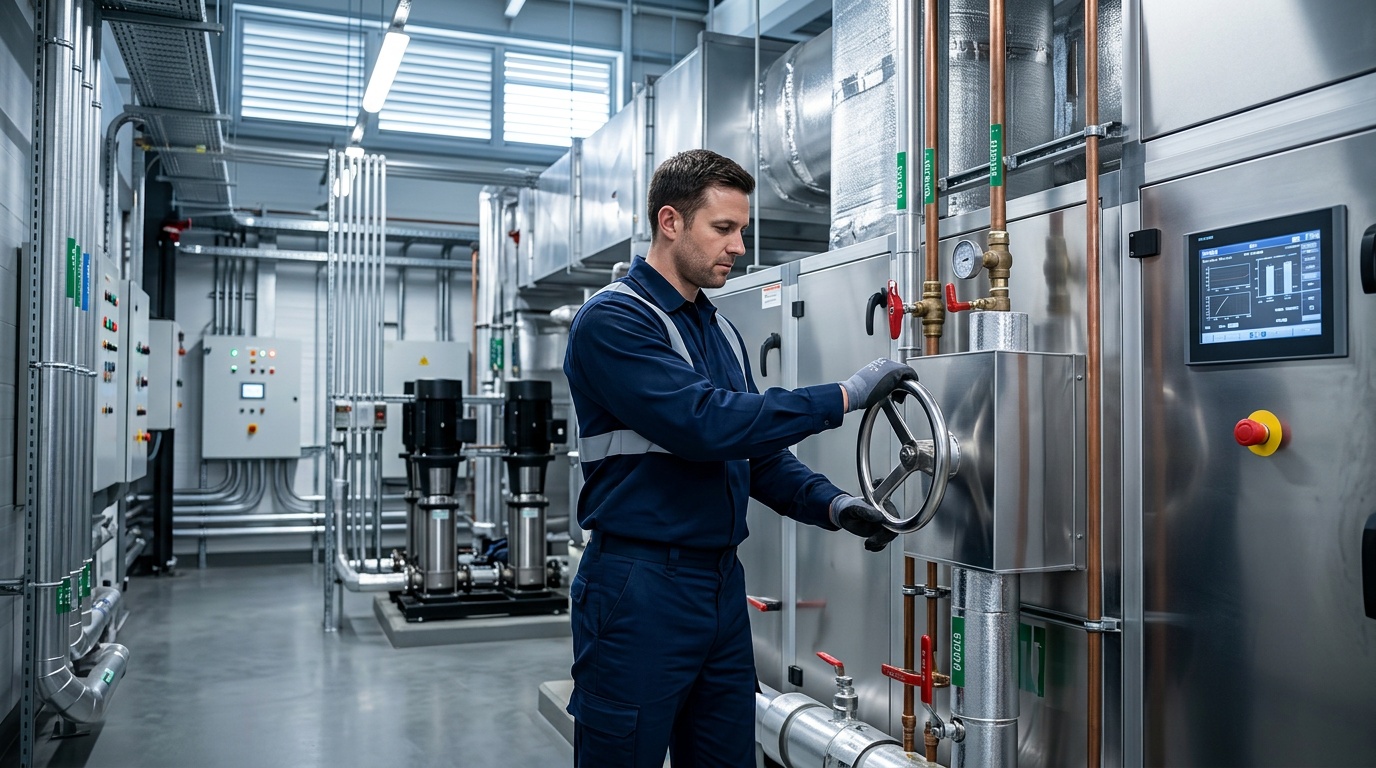
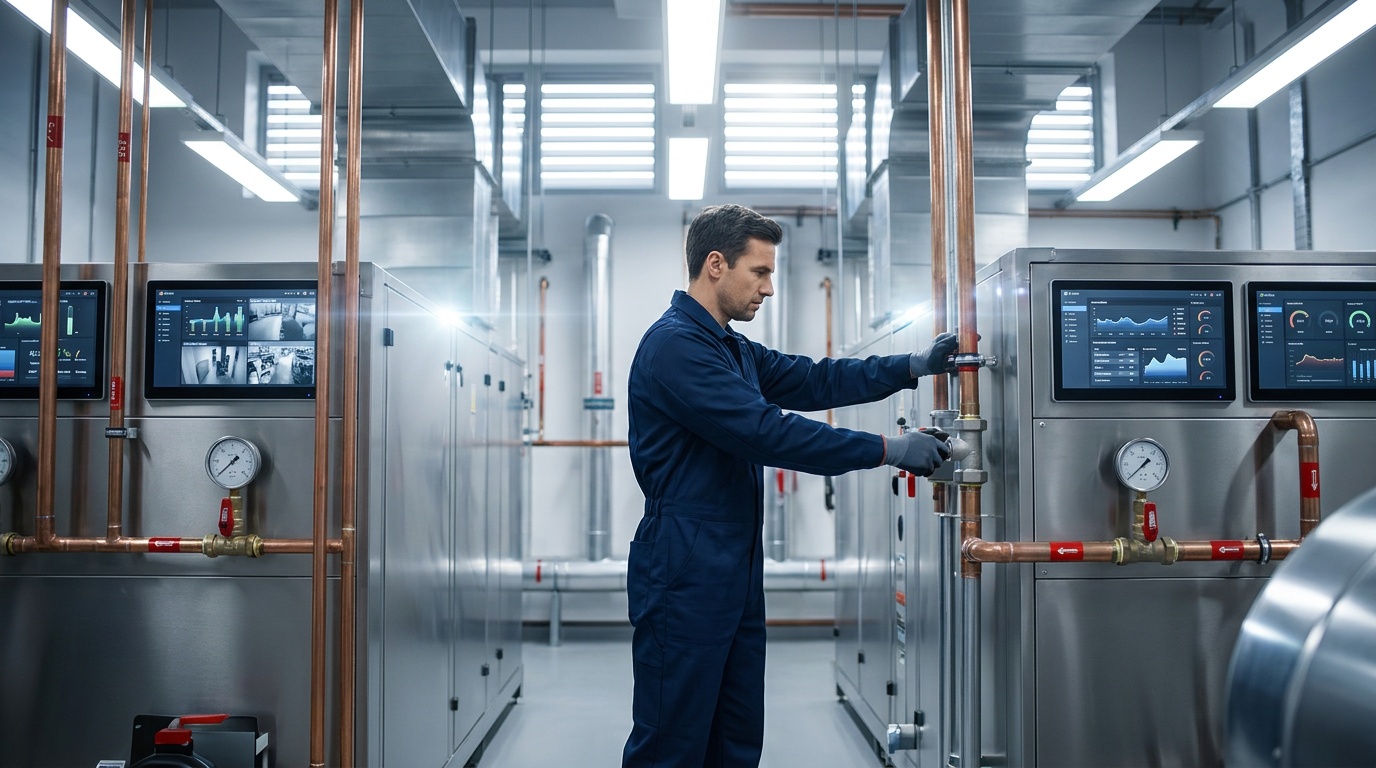
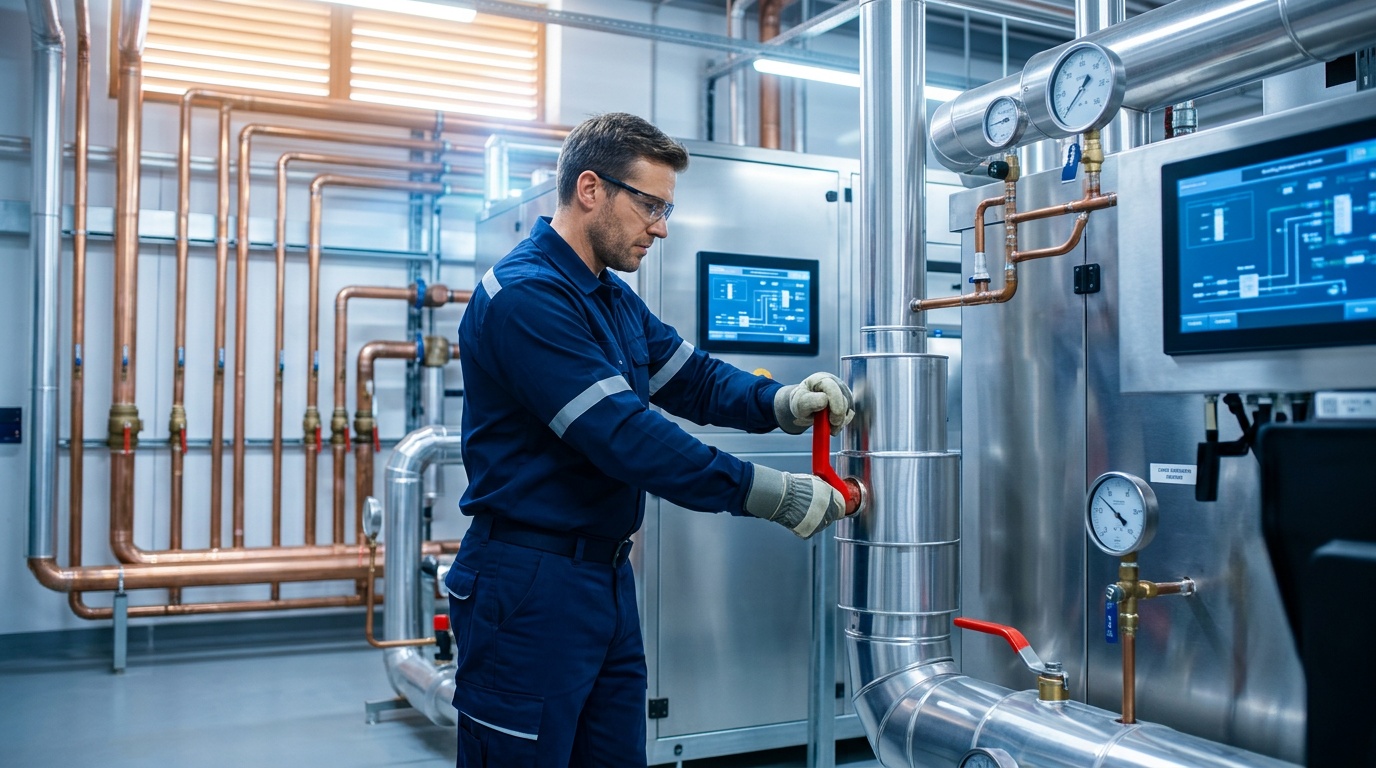
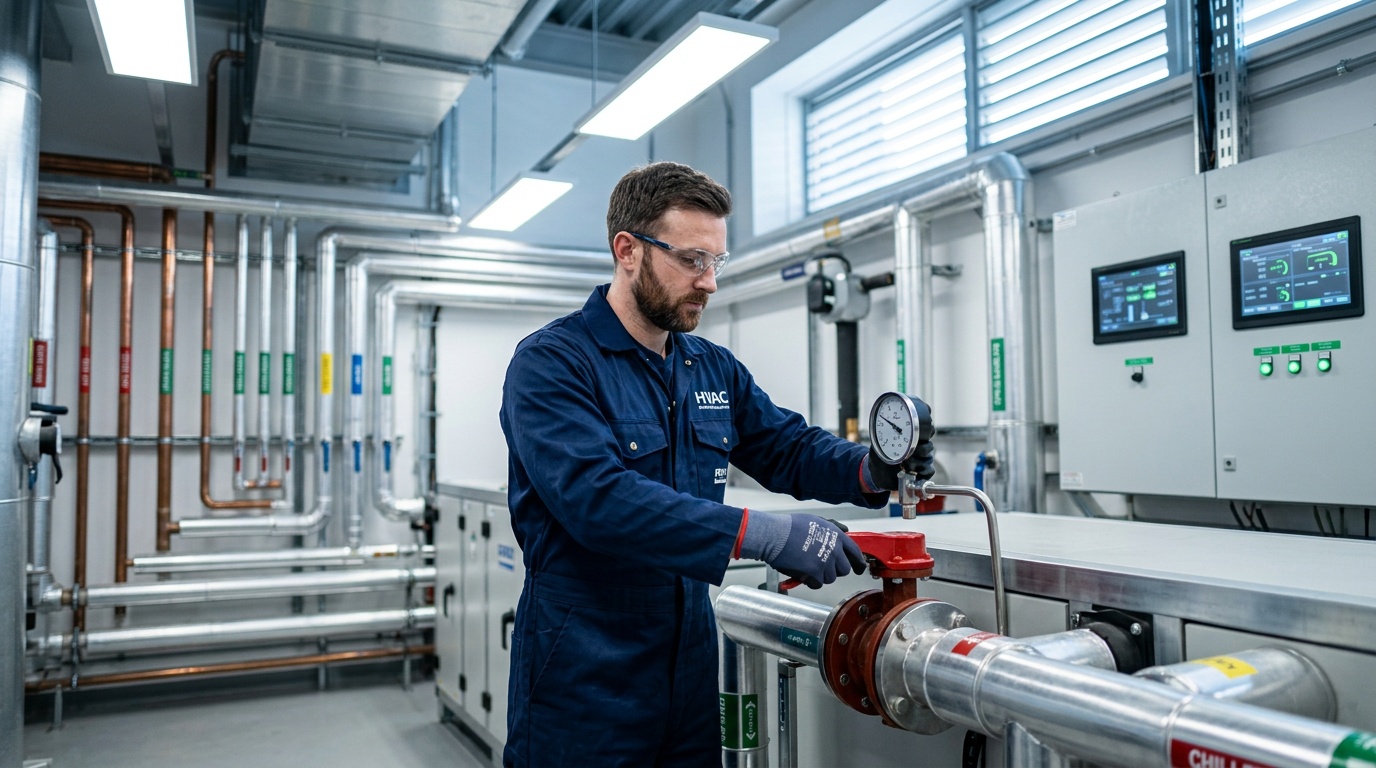
The Commercial Case for Future-Proofing: Top Renewable Energy Solutions for 2026
The top renewable energy solutions for 2026 include solar PV with smart storage, air-to-water heat pumps, and emerging technologies such as green hydrogen systems. These solutions deliver measurable cost savings, regulatory compliance, and operational resilience for commercial buildings.
Why 'Business As Usual' Is No Longer an Option
Your energy bills aren't just rising. They're becoming unpredictable. I've watched facility managers across the Midlands get blindsided by 300% price spikes while their buildings burn through electricity like it's still cheap.
The old model of relying solely on grid electricity exposes your business to volatile pricing and potential supply interruptions. By 2026, buildings without renewable integration will face higher operational costs and struggle to meet tightening environmental regulations.
Here's what I've seen: facility managers watch their energy costs double while their renewable-equipped competitors reduce theirs by 40%. Generate your own power, store what you don't use immediately, sell excess back to the grid.
The Facility Manager's Mandate: Compliance, Costs, and Carbon Footprints
The regulatory environment is shifting rapidly. Building Energy Performance Certificates now carry real financial consequences for poor ratings. Carbon reporting requirements are expanding beyond large corporations to medium-sized commercial properties.
Your role as a facility manager now includes energy strategy, not just maintenance scheduling. The solutions must deliver on three fronts: immediate cost reduction, regulatory compliance, and long-term asset value protection.
Engineering Reality Check
A 50 kW solar installation with battery storage typically pays for itself within 6-8 years through reduced grid dependency and peak shaving. The system then delivers 15+ years of essentially free electricity generation.
M&E's 'Open Door' Approach to Innovation: Vetted Solutions for Your Estate
M&E Maintenance Solutions maintains an open door policy towards evaluating new HVAC technologies before offering them to customers. We test equipment in real-world conditions, measure actual performance against manufacturer claims, and only recommend solutions that meet our reliability standards.
This approach means you get proven technology, not experimental systems that might fail during peak demand periods. Our 24/7 maintenance capability keeps your renewable installations performing year-round.
Solar PV and Smart Storage: Powering Your Premises with Proven Technology
Beyond the Rooftop: Getting Real Returns from Solar PV
The misconception that solar PV doesn't work in Britain's climate costs facility managers thousands in missed opportunities. I've installed systems that generate 20-30% of peak output even on overcast December days. Modern photovoltaic panels work from daylight, not direct sunshine.
Smart positioning beats weather conditions every time. South-facing installations deliver optimal returns, but east-west configurations spread generation across longer periods, reducing peak demand charges. For commercial properties with high daytime consumption, this extended generation window often delivers better financial returns than chasing maximum peak output.
Battery Storage: Your Backup Plan When the Grid Fails
Solar PV alone leaves you dependent on daylight hours and grid connectivity. Battery storage transforms your renewable installation into a dependable power source that can support essential loads during outages and expensive peak periods.
Modern lithium-ion systems charge during lower-cost periods and discharge when grid electricity prices spike. During grid failures, your building keeps lighting, security systems, and core HVAC functions running while competitors shut down. This operational continuity protects revenue streams and maintains tenant satisfaction.
Real Numbers
A typical 100 kW solar array with 200 kWh battery storage reduces grid dependency by 60-70% for standard office buildings. Peak shaving alone saves £15,000-£25,000 annually on demand charges, depending on tariffs and usage patterns.
The ROI Reality: What Solar Actually Costs vs. Saves
Solar PV generates electricity at approximately 4-6p per kWh after installation costs. Grid electricity sits at 25-35p per kWh during peak periods. Every kilowatt-hour your system produces saves 20-30p compared with grid purchases.
Battery storage adds another saving layer through time-shifting. Charge during off-peak at 10-15p per kWh, discharge during peak hours at 40-50p. For many commercial sites, this arbitrage justifies the storage investment within three years.
Installation Done Right: The M&E Standard
We approach renewable installations with the same standards we apply to commercial HVAC. Our certified engineers design systems based on actual energy consumption patterns, not theoretical calculations. We measure real-world performance against projections and adjust configurations to maximize returns.
Our planned preventative maintenance programmes keep solar installations operating efficiently. Regular cleaning, inverter servicing, and battery health monitoring prevent the gradual performance losses that plague poorly maintained systems.
Air-to-water heat pumps extract thermal energy from outside air and transfer it to your building's water-based heating and cooling systems. These units operate efficiently in low temperatures, making them suitable for year-round commercial applications across the UK.
The technology delivers heating, cooling, and hot water from a single system. During winter, the heat pump extracts warmth from outdoor air to heat your building. In summer, the process reverses to provide cooling. This dual capability reduces the need for separate heating and cooling plant, lowering both capital spend and maintenance demands.
How Heat Pumps Actually Work
Heat pumps don't generate heat. They move it. The refrigeration cycle uses a compressor, condenser, expansion valve, and evaporator to transfer thermal energy from one location to another. For every unit of electricity consumed, modern air-to-water heat pumps deliver 3-4 units of heating or cooling energy in suitable conditions.
This coefficient of performance (COP) makes heat pumps among the most efficient HVAC options available. A COP of 4.0 means heating costs drop by around 75% compared with direct electric heating. Against gas boilers operating at 90% efficiency, heat pumps reduce energy consumption significantly, with results varying by building conditions and design quality.
Performance Reality
Modern air-to-water heat pumps maintain strong efficiency in cold weather when correctly selected and installed. Actual performance depends on design temperatures, emitter sizing, insulation levels, and commissioning quality.
Meeting Regulations While Cutting Costs
Heat pumps support compliance with Part L of the Building Regulations, which sets requirements for improved energy efficiency and reduced carbon emissions. The technology contributes to stronger Energy Performance Certificate ratings and helps with Minimum Energy Efficiency Standards (MEES) targets.
Operationally, heat pumps provide steady temperature control without the wide swings from traditional systems. This gradual, continuous approach maintains occupant comfort while reducing energy waste from excessive on-off cycling.
Proven Performance: Our Testing Approach
Our open door policy means we test heat pump systems before recommending them to clients. We monitor real-world performance data, measure actual COPs against manufacturer specifications, and check reliability during peak demand periods.
M&E provides heat pump maintenance through planned preventative programmes. Regular refrigerant checks, filter cleaning, and performance monitoring maintain efficiency and reduce breakdown risk during extreme weather.
Your Implementation Roadmap: Deploying Renewable Solutions with Engineering Precision
Step One: Professional Site Assessment
Successful renewable deployment starts with understanding your building's actual energy consumption patterns, not theoretical calculations. Professional energy audits identify peak demand periods, seasonal variations, and load reduction opportunities before renewable systems are sized.
Our engineers analyze your existing HVAC infrastructure, electrical capacity, and structural suitability for solar installations. This assessment determines which combination of renewable technologies delivers the strongest returns for your building and operational needs.
Integration Strategy: Connecting New Technology to Existing Systems
The most cost-effective approach often integrates renewable solutions with existing HVAC and electrical systems rather than replacing everything at once. Smart controllers coordinate renewable generation, battery storage, and grid connection to optimize energy flows automatically.
This integration requires careful electrical design and control programming. Our certified engineers ensure dependable operation between traditional and renewable systems, maintaining building comfort while increasing energy savings.
Long-Term Success: Maintenance That Protects Your Investment
Renewable energy systems need ongoing maintenance to meet performance projections. Solar panels need cleaning, inverters need servicing, battery systems need health monitoring. Heat pumps need refrigerant checks and filter maintenance, just like other HVAC plant.
M&E provides 24/7 support for renewable installations, backed by planned preventative maintenance programmes. This approach protects your renewable energy investment throughout its operational lifespan.
We protect system performance through disciplined maintenance scheduling, continuous monitoring, and responsive support when performance deviates from expectations. Right first time, maintained properly, delivering returns over the long term.
Frequently Asked Questions
What are the main renewable energy solutions businesses should consider for 2026?
For 2026, commercial buildings should focus on proven solutions like solar PV with smart battery storage and air-to-water heat pumps. Emerging technologies, such as green hydrogen systems, are also gaining traction. These solutions offer measurable cost savings, compliance with regulations, and improved operational resilience.
How do renewable energy solutions help commercial buildings save money?
Renewable energy systems allow businesses to generate their own power, reducing reliance on expensive grid electricity. Solar PV, for example, can produce electricity at approximately 4-6p per kWh, significantly less than peak grid rates. Battery storage adds savings by enabling charging during off-peak periods and discharging when grid prices are high.
Can solar PV systems really work effectively in the UK's climate?
Absolutely. It's a common misconception that solar PV needs constant direct sunshine. Modern photovoltaic panels generate electricity from daylight, meaning they produce power even on overcast days. Smart positioning, like east-west configurations, can extend generation periods, often providing better financial returns for commercial properties with high daytime consumption.
What role does battery storage play with solar PV for commercial properties?
Battery storage transforms solar PV from a daylight-dependent system into a reliable, 24/7 power source. It allows you to store excess energy generated during the day and use it during peak tariff periods or power outages. This capability ensures operational continuity, protecting revenue streams and maintaining tenant satisfaction during grid failures.
Why is integrating renewable energy becoming a necessity for facility managers?
Facility managers face rising, unpredictable energy bills and tightening environmental regulations. Buildings without renewable energy integration will incur higher operational costs and struggle to meet compliance requirements, like those for Building Energy Performance Certificates. Integrating these solutions delivers immediate cost reduction, regulatory compliance, and long-term asset value protection.
How do air-to-water heat pumps contribute to efficient building climate control?
Air-to-water heat pumps extract thermal energy from the outside air, transferring it to your building's water-based heating and cooling systems. This method is highly efficient for both heating and cooling commercial properties. It reduces reliance on traditional fossil fuel systems, lowering carbon footprints and operational costs.
What makes M&E Maintenance Solutions' approach to renewable energy different?
At M&E, we have an "open door" policy for evaluating new HVAC technologies, testing equipment in real-world conditions before recommending it. Our certified engineers design systems based on actual consumption, not just theoretical numbers, and provide 24/7 maintenance to ensure strong performance. We focus on proven technology that meets our reliability standards, ensuring your investment delivers throughout its working life.
"
About Stuart Butcher
Founder & Managing Director | M&E Maintenance Solutions
Stuart Butcher is the Founder and Managing Director of M&E Maintenance Solutions. A ""boots-on-the-ground"" leader, Stuart began his career as an apprentice combustion engineer, spending over 24 years mastering the trade before building a premier maintenance firm. He operates at the intersection of technical engineering precision and commercial asset management.
Driven by the philosophy that maintenance is cheaper than repair, Stuart works with Facility Managers and Building Owners across Birmingham, the Midlands, and the UK to ensure 24/7/365 compliance and uptime. He established M&E Maintenance Solutions to provide the technical capability of a large corporate provider while maintaining the personal accountability of a family-run business.
Last reviewed: March 30, 2026 by the M&E Maintenance Solutions Limited Team
ABM UK vs M&E Maintenance Solutions Limited
The Facility Manager's Dilemma: Finding a Building Maintenance Partner That Actually Works
You've been there. Standing in a plant room that's too hot, listening to a compressor that sounds like it's dying, while your facilities provider tells you they'll "escalate the issue." Meanwhile, your building occupants are complaining, and you're watching productivity drop with every degree the temperature climbs.
When you're comparing ABM UK vs M&E Maintenance Solutions Limited, you're not just choosing between two contractors. You're choosing between two completely different philosophies about how commercial buildings should be maintained.
The Real Problem: Reactive vs Proactive Maintenance
Most facility managers inherit a broken system. Your HVAC equipment gets attention only when it stops working. By then, you're paying emergency rates for parts that should have been replaced months ago during planned maintenance.
A failed compressor in July doesn't just create discomfort. It stops business operations. I've seen retail spaces lose thousands in revenue because customers won't stay in a sweltering shop. I've watched office productivity plummet when air conditioning fails during a heatwave.
Two Different Approaches to Building Maintenance
The UK facilities management market splits cleanly down the middle. On one side, you have large multinational providers offering everything from cleaning to security. On the other, specialist firms that focus on specific building systems.
ABM UK falls into the first camp. A global facilities provider with broad service capabilities. M&E Maintenance Solutions Limited represents the specialist approach. We've spent 17 years focusing exclusively on commercial HVAC, mechanical systems, and the building technologies that keep your premises running efficiently.
The Real Question: Do you want a provider that does everything adequately, or one that excels at keeping your building's most expensive systems running properly?
ABM UK operates as part of ABM Industries, a Fortune 500 company. Their strength is standardised processes across multiple service areas. We take the opposite approach. A focused team of over 20 engineers and strategic partners who specialise in the systems that typically consume 40-60% of your building's energy budget.
Where ABM offers breadth, we deliver depth in HVAC maintenance, compliance, and sustainable building technologies. The difference matters when your heating fails in January or your cooling system gives up in July.
Service Scope: Why Specialisation Matters
ABM UK: The One-Stop Shop
ABM UK delivers integrated facility management. Cleaning, security, grounds maintenance, building maintenance. If you're running a multi-site portfolio and need consistent service delivery nationwide, their standardised approach can work well. You get one contract, one point of contact, unified reporting.
The trade-off? When your HVAC system develops a fault, you're relying on their building maintenance division, which handles everything from leaky taps to complex plant room equipment.
M&E Maintenance Solutions: Focused on What Matters Most
We specialise in mechanical and electrical building services, with particular expertise in commercial HVAC and complementary services. Our engineers understand commercial heating, cooling, and ventilation systems inside out. When something goes wrong, we know exactly what to check and how to fix it properly the first time.
Service Area
ABM UK
M&E Maintenance Solutions Limited
HVAC Maintenance
Part of broader FM offering
Core focus with certified engineers
Heat Pump Installation
Via subcontractors and partners
Direct expertise in air-to-air and air-to-water systems
Energy Efficiency Upgrades
Available via specialist divisions
Integrated solar PV, LED lighting, and solar thermal solutions
Compliance Certification
Standard FM compliance
Gas Safe Register, Refcom F-Gas Certification, BES, and ISO 9001
Geographic Coverage
UK-wide standardised service
Commercial buildings throughout the UK with tailored approach
When Should You Choose Each?
Choose ABM UK if you need comprehensive facility management with single-point accountability across multiple services. Choose us when your priority is keeping HVAC systems running efficiently, maintaining compliance, and implementing sustainable building technologies that actually reduce your operating costs.
Innovation: How We Test Technology Before You Pay for It
Our 'Test First' Approach to New Technology
Here's where we're different. When a new HVAC technology comes to market. Say, an improved heat pump design or a smart building control system. We don't just read the brochure and recommend it to clients.
We test it ourselves first. In our own facilities. For months.
This internal vetting process means when we recommend air-to-water heat pumps or solar thermal systems, we know exactly how they perform in real-world conditions. You're not funding an experiment on your building. You're getting proven technology.
ABM UK's Technology Strategy
ABM UK uses global technology partnerships and standardised implementation across their international portfolio. Their focus tends toward facility management software, predictive maintenance platforms, and centralised monitoring. For large organisations needing consistent technology deployment across multiple sites, this approach can work well.
The Testing Advantage: ABM UK vs M&E Maintenance Solutions Limited differs significantly here. We test solutions ourselves before recommending them. No nasty surprises, no underperforming equipment.
Why Internal Testing Protects Your Investment
Most facilities providers rely on manufacturer claims when recommending new technology. We actually use the equipment ourselves before suggesting it to clients. This process reveals issues like installation complexity, maintenance burden, and real energy performance. Before your site becomes the testing ground.
When we recommend heat pump installations, that advice comes from measuring actual performance, not brochure promises.
Questions to Ask Any Provider About Technology
Before choosing between ABM UK vs M&E Maintenance Solutions Limited. Or any other provider. Ask these questions:
How do you validate manufacturer claims before installation?
Can you show me performance data from similar installations?
What happens if the system underperforms?
Who covers the costs if energy savings don't materialise?
These questions separate providers that sell equipment from providers that deliver results.
Customer Service: Corporate Scale vs Personal Relationships
Our Approach: Engineers Who Know Your Building
We've built our business through customer referrals and long-term relationships. When you call with an HVAC problem, you speak to engineers who understand your site and system history. We know the quirks of your plant room, the controls that sometimes play up, and the temporary fixes that need permanent solutions.
This continuity speeds up diagnosis and reduces downtime. When something goes wrong, we don't start from scratch. We know your building.
ABM UK's Model: Standardised Service Delivery
ABM UK uses scale and standardised procedures to deliver consistent service across their client base. For organisations with multiple sites needing uniform service standards and consolidated reporting, their systematic approach can reduce administrative burden.
Big Enough to Cope, Small Enough to Care: We combine commercial-grade capability with direct accountability. You get specialist support without being treated like an account number.
When Responsiveness Makes the Difference
Commercial buildings can't afford extended downtime when HVAC systems fail. Our specialisation means faster fault-finding and quicker resolution for mechanical and electrical issues. We carry the right parts, know the common failure points, and can often fix problems without multiple site visits.
That's the advantage of working with specialists rather than generalists.
Compliance and Sustainability: Getting It Right the First Time
SFG20 Compliance: Why Proper Maintenance Matters
SFG20 compliance isn't just about ticking boxes. It's about preventing equipment failure and protecting people. As Gas Safe Register and Refcom F-Gas certified engineers, we understand exactly what needs testing, when it needs checking, and how to document everything properly.
ABM UK handles compliance through their broader facilities model. For sites where HVAC and refrigerant systems represent major compliance exposure, having specialists who live and breathe these regulations can make a difference.
Sustainable Technologies That Actually Work
We install and maintain air-to-air heat pumps, air-to-water heat pumps, solar PV, LED lighting, and solar thermal systems. The key difference? We only recommend what we've proven works in commercial buildings.
Our testing program means when we suggest a solar PV installation or heat pump upgrade, the recommendation comes with real performance data, not optimistic projections.
The Cost Equation: Planned maintenance costs less than emergency repairs. Specialist attention to HVAC maintenance reduces avoidable failures and the expensive call-out costs that follow.
ABM UK's Environmental Approach
ABM UK approaches sustainability through operational improvements across the wider facility, often focused on reporting, monitoring, and portfolio consistency. This can work well for organisations needing consolidated environmental performance data across many sites.
The Economics of Proper Maintenance
Here's what 17 years in this business has taught me: planned maintenance always costs less than unplanned repairs. Our preventative maintenance programs keep commercial HVAC systems running efficiently and catch problems before they become emergencies.
Energy-efficiency projects pay back when they're designed and installed correctly. Heat pumps, LED upgrades, and solar PV can deliver measurable savings. But only if they're properly specified, installed, and maintained.
Making Your Decision: ABM UK vs M&E Maintenance Solutions Limited
Choose ABM UK when you need comprehensive facility management with standardised delivery across multiple sites. Choose us when your priority is HVAC performance, mechanical systems compliance, and sustainable technology delivered with specialist expertise.
For commercial buildings where heating, cooling, and ventilation systems drive significant operating costs and compliance responsibilities, we offer the depth of expertise that comes from 17 years of doing one thing properly.
Frequently Asked Questions
Who is ABM in the UK?
ABM UK is the British operation of ABM Industries, a large, global facilities provider. They offer comprehensive facility management services, including cleaning, security, grounds maintenance, and building maintenance across the UK. Their model suits organisations seeking single-source accountability for broad facility functions.
Who owns the ABM company?
ABM UK is a subsidiary of ABM Industries, a publicly traded Fortune 500 company. This global parent company manages facilities across multiple countries, providing a wide range of services. Their strength lies in standardised processes and broad service coverage.
How does ABM UK's approach differ from specialist maintenance providers like M&E Maintenance Solutions?
ABM UK, as a large multinational, offers comprehensive, integrated facility management across many services, suitable for broad, multi-site needs. In contrast, M&E Maintenance Solutions Limited specialises in deep expertise in commercial HVAC and mechanical systems. We focus on efficiency and compliance, providing depth where ABM offers breadth.
What services does M&E Maintenance Solutions Limited specialise in?
M&E Maintenance Solutions Limited focuses on commercial HVAC and mechanical building services. This includes HVAC maintenance, heat pump installations, solar PV systems, and LED lighting upgrades, all backed by SFG20-compliant planned preventative maintenance. We aim to keep your critical systems running efficiently and sustainably.
Why would a facility manager choose a specialist like M&E Maintenance Solutions?
Facility managers choose a specialist like us when their priority is deep expertise in critical systems, particularly HVAC, which often consumes a significant portion of a building's energy budget. We focus on maximising efficiency, ensuring compliance, and implementing sustainable technologies that reduce operational costs. It's about getting top-tier performance where it matters most for your building.
How does M&E Maintenance Solutions approach new technology?
At M&E, we have an 'open door' policy for evaluating new HVAC technologies, but with a critical step: rigorous internal trialling. We test new solutions like air-to-water heat pumps or solar thermal systems in real-world commercial conditions ourselves. This means when we recommend a technology, it's already proven, protecting your capital investment and ensuring it performs as expected.
"
About Stuart Butcher
Founder & Managing Director | M&E Maintenance Solutions
Stuart Butcher is the Founder and Managing Director of M&E Maintenance Solutions. A ""boots-on-the-ground"" leader, Stuart began his career as an apprentice combustion engineer, spending over 24 years mastering the trade before building a premier maintenance firm. He operates at the intersection of technical engineering precision and commercial asset management.
Driven by the philosophy that maintenance is cheaper than repair, Stuart works with Facility Managers and Building Owners across Birmingham, the Midlands, and the UK to ensure 24/7/365 compliance and uptime. He established M&E Maintenance Solutions to provide the technical capability of a large corporate provider while maintaining the personal accountability of a family-run business.
Last reviewed: March 29, 2026 by the M&E Maintenance Solutions Limited Team
what is M&E HVAC Compliance Health Check
Understanding the 'Why': What is an M&E HVAC Compliance Health Check and Why It Matters
Picture this: your office air conditioning fails during a July heatwave. Within hours, productivity drops by 20%, staff comfort plummets, and you're facing emergency repair costs that could have funded six months of planned maintenance.
An M&E HVAC Compliance Health Check prevents exactly this scenario. It's a systematic assessment of your building's heating, ventilation, and air conditioning systems that verifies legal compliance with F-Gas regulations, Legionella control, and energy performance standards. More importantly, it identifies problems before they become business-stopping failures.
After 24 years in this industry. From apprentice on the tools to managing sites across the Midlands. I can tell you that silence in a plant room is often the loudest warning you'll ignore. Asset failure doesn't announce itself with fanfare. Scale buildup in a boiler is silent. Refrigerant leaks develop quietly. But the bill when your system fails? That screams.
I've watched too many facility managers treat compliance as paperwork. Compliance isn't about ticking boxes. It's about preventing the £50,000 emergency replacement that follows catastrophic failure.
What Makes MEMS Different
M&E Maintenance Solutions approaches every health check as a business continuity assessment. We don't just audit your systems; we evaluate your operational strategy to keep the doors open and lights on.
SFG20: Your Legal Safety Net
SFG20 sets maintenance frequency and scope for building services equipment. It's not a suggestion. It's the industry standard that courts reference during liability disputes. When we conduct a health check, we audit your current maintenance against these benchmarks, identifying gaps that expose you to regulatory penalties or system failures.
Audit Your Current Provider: Five Critical Questions
Test your current maintenance strategy:
F-Gas compliance: Do you receive digital certificates within 24 hours of refrigerant work?
Legionella management: Are water systems tested according to HSG274 guidelines?
Energy performance: Has your building had a TM44 inspection if it has over 250 kW of cooling capacity?
Documentation: Can you access five years of maintenance records digitally?
Emergency response: What response time is offered for system failures?
If your provider hesitates on any answer, you've found gaps that need immediate attention.
What We Actually Inspect: Beyond the Basic Service
The Complete System Assessment
We examine every component affecting building performance and occupant safety. Air handling units, ductwork integrity, control systems, and heat exchangers all get scrutinized. Mechanical components like compressors, pumps, and fans receive performance testing against manufacturer specifications.
The inspection extends to building management systems. Sensor calibration, alarm functions, data logging accuracy. Each component gets tested for wear patterns that predict future failures, not just current operation.
F-Gas Compliance: No Room for Error
F-Gas violations carry hefty penalties, making this non-negotiable. We verify refrigerant containment, check leak detection systems, and audit all refrigerant handling records. Pressure testing, leak-rate calculations, and engineer certification verification are standard procedure.
We test automatic leak detection systems where fitted and verify that only certified engineers have accessed refrigerant circuits. No shortcuts.
Legionella: The Silent Killer
Legionella bacteria multiply in water temperatures between 20°C and 45°C. A single contaminated cooling tower can affect an entire building. Our health check identifies temperature dead spots, stagnant water areas, and inadequate biocide treatment before they become health hazards.
We examine cooling towers, evaporative condensers, and humidification systems against HSG274 guidelines, testing water temperatures and chemical treatment effectiveness.
Air Quality: Productivity Depends on It
Poor air quality kills productivity and employee health. We measure ventilation rates, CO2 levels, and filtration efficiency to verify fresh air supply meets occupancy requirements and extract systems remove contaminants effectively.
COSHH assessments cover refrigerants, cleaning chemicals, and water treatment products, verifying proper storage, handling procedures, and emergency response plans.
TM44 Energy Assessments: Mandatory for Large Systems
Buildings with air conditioning over 250 kW cooling capacity require TM44 inspections every five years. We measure actual energy consumption against design specifications, identifying wasteful operation patterns and opportunities for energy reduction.
This includes heating seasonal efficiency, cooling system performance ratios, and building fabric thermal performance data that supports targeted improvements.
The MEMS Difference: Why Our Approach Works
Partnership, Not Transaction
We don't just conduct compliance checks. We become your building's health partner. Every site visit includes detailed discussions with your facilities team about operational challenges, budget constraints, and expansion plans. Our recommendations align with your business objectives, not just compliance minimums.
Innovation Without Risk
We maintain an open door policy for evaluating new HVAC technologies, but we never use clients as test subjects. Every piece of equipment we recommend has undergone internal testing at our own facilities first.
Proven Technology Only
When we suggest Air to Water heat pumps or Solar PV integration during your assessment, you get proven technology. We've tested everything from advanced building management systems to hybrid heating solutions at our own facilities first.
Beyond HVAC: Total Building Health
Building compliance extends beyond HVAC systems. Our approach examines electrical safety, water system hygiene, and mechanical plant integration. This holistic view identifies cross-system issues that single-discipline inspections miss.
We coordinate with strategic partners for specialist services while maintaining direct accountability for compliance outcomes. No finger-pointing when multiple contractors share responsibility.
The MEMS Standard
When we identify compliance issues, we provide immediate temporary measures alongside longer-term strategic recommendations. This prevents emergency shutdowns while planning sustainable improvements.
Every compliance certificate we issue is backed by SafeContractor and ISO 9001 credentials. Your insurance company, regulatory inspectors, and legal advisers can trust our assessments.
The Real Cost of Doing Nothing
Hidden Costs Add Up Fast
Regulatory penalties are just the start. Non-compliance can mean increased insurance premiums, voided warranties, and legal exposure for directors under health and safety legislation. HSE prohibition notices can stop operations entirely. Revenue loss that dwarfs compliance costs.
When Systems Fail, Revenue Dies
HVAC failures don't happen during convenient maintenance windows. They strike during peak trading, important client meetings, critical production runs. A failed data centre cooling system costs £10,000 per hour in lost server capacity.
Retail environments become uninhabitable within hours of summer cooling failure. Office productivity plummets when winter heating fails. These operational impacts dwarf preventive compliance costs.
Staff Health = Business Health
Poor indoor air quality increases sick leave and reduces cognitive performance. Legionella outbreaks can prove fatal. Inadequate ventilation spreads respiratory infections throughout buildings.
Professional service firms suffer reputational damage following building-related health incidents. The cost of rebuilding client trust often exceeds immediate financial penalties.
Reactive Maintenance: The Expensive Trap
Emergency call-outs command premium rates. Parts become time-critical. Temporary solutions need complete rework later.
Buildings without proper health checks experience accelerated equipment deterioration, higher energy consumption, and compounding failures that multiply maintenance costs year after year.
Your Next Steps: Getting Started
Booking Your Assessment
Contact our team for a no-obligation site assessment. We'll discuss your building's specific requirements, current maintenance regime, and compliance concerns. Our initial consultation identifies priority areas and provides clear timelines.
We coordinate with your facilities team to plan access requirements and safety procedures, minimising disruption while achieving thorough system assessment.
What Happens During the Visit
Our certified engineers arrive with calibrated testing equipment and complete documentation systems. We provide real-time updates on findings, explaining technical issues in commercial terms that support your decision-making.
You get photographic evidence, performance measurements, and immediate safety observations. We identify urgent issues needing prompt attention alongside longer-term improvement opportunities.
Your Detailed Report
Within 48 hours, you receive a digital report detailing findings, compliance status, and prioritised recommendations. The report includes cost estimates for identified improvements and timelines supporting ongoing compliance.
Our reports provide documentation for insurance claims, regulatory inspections, and budget planning. Each recommendation includes justification based on safety requirements, energy savings, or operational improvements.
Long-Term Partnership
The health check is just the beginning. We develop ongoing maintenance partnerships that keep your systems compliant, efficient, and reliable year-round. Our planned preventive maintenance programmes reduce compliance management burden while optimising building performance.
Ready to protect your building investment and maintain compliance? Contact M&E Maintenance Solutions today to schedule your HVAC compliance health check.
Frequently Asked Questions
What does M&E stand for?
M&E stands for Mechanical and Electrical. In the context of commercial buildings, it refers to the essential systems that keep a property operating, such as heating, ventilation, air conditioning, and electrical infrastructure. Our M&E HVAC Compliance Health Check specifically focuses on the mechanical and electrical aspects of your HVAC systems.
What is HVAC M&E?
HVAC M&E refers to the Mechanical and Electrical systems that make up your building's Heating, Ventilation, and Air Conditioning. This includes everything from the air handling units and ductwork to the electrical controls and pumps. Ensuring these systems are compliant and efficient is what our M&E HVAC Compliance Health Check is designed to do.
Is HVAC under M&E?
Absolutely, HVAC systems are a core part of a building's Mechanical and Electrical (M&E) infrastructure. Our M&E HVAC Compliance Health Check specifically evaluates these systems, including air handling units, control systems, and heat exchangers. We ensure they meet regulatory standards for safety, efficiency, and occupant well-being.
What is HVAC compliance?
HVAC compliance means ensuring your heating, ventilation, and air conditioning systems meet all current safety regulations, environmental laws, and energy performance standards. This includes adhering to F-Gas regulations, managing Legionella risks, and meeting energy efficiency benchmarks like TM44 inspections. It is your insurance policy against fines, energy waste, and system failures that can disrupt business operations.
What is the $5000 rule for HVAC?
There isn't a specific '$5000 rule' for HVAC that is widely recognized in the industry. What we often see, though, are the significant hidden costs and emergency repair expenses that arise from neglecting proper HVAC compliance and maintenance. These can far exceed smaller figures, potentially leading to major system failures and substantial financial penalties.
"
About Stuart Butcher
Founder & Managing Director | M&E Maintenance Solutions
Stuart Butcher is the Founder and Managing Director of M&E Maintenance Solutions. A ""boots-on-the-ground"" leader, Stuart began his career as an apprentice combustion engineer, spending over 24 years mastering the trade before building a premier maintenance firm. He operates at the intersection of technical engineering precision and commercial asset management.
Driven by the philosophy that maintenance is cheaper than repair, Stuart works with Facility Managers and Building Owners across Birmingham, the Midlands, and the UK to ensure 24/7/365 compliance and uptime. He established M&E Maintenance Solutions to provide the technical capability of a large corporate provider while maintaining the personal accountability of a family-run business.
Last reviewed: March 28, 2026 by the M&E Maintenance Solutions Limited Team
Energy-efficient HVAC vs cost-saving options compared?
The Commercial Reality: Energy-Efficient vs Cost-Saving HVAC Options
In my 24 years managing HVAC systems across the Midlands, I've seen countless facility managers fall into the same trap: thinking "energy-efficient" and "cost-saving" are opposing choices. They're not. The real question isn't whether to choose between energy-efficient HVAC and cost-saving options, but which systems deliver both outcomes over their operational lifespan.
A facility manager recently called our emergency line after their "budget-friendly" HVAC system failed during a July heatwave. The unit had cost £3,000 less upfront than the energy-efficient alternative. The emergency repair bill? £4,800, plus three days of lost productivity. That's the hidden cost of choosing price over performance.
What "Energy-Efficient" Actually Means for Your Building
Energy efficiency in commercial HVAC isn't marketing speak. It's measurable performance based on engineering standards. An energy-efficient system typically features:
Variable-speed compressors that adjust output to actual demand
Advanced heat exchangers for better heat transfer
Smart controls that prevent constant full-capacity operation
These systems reduce energy consumption by 20-40% compared to standard units. For a typical Birmingham office building, that translates to £2,000-£5,000 in annual savings on utility bills. The efficiency gains compound over the system's 15-20-year lifespan.
The "Cost-Saving" Trap: Hidden Long-Term Expenses
Budget HVAC systems appear attractive until you examine total cost of ownership. Lower-priced units often lack variable-speed technology, which means they cycle on and off frequently. This creates:
Temperature fluctuations that affect occupant comfort
Increased wear on components from constant cycling
Higher maintenance frequency and repair costs
The MEMS Cost Reality Check
A £15,000 "budget" HVAC system typically costs £8,000-£12,000 more over 10 years than a £20,000 energy-efficient unit when you factor in energy bills, repairs and downtime. The cheaper option becomes the expensive mistake.
M&E's Approach: Vetting for Performance, Not Just Price
Our Commercial HVAC Installation and Maintenance service evaluates systems based on total cost of ownership, not initial outlay. We assess energy ratings, maintenance requirements and compatibility with your building's specific demands.
We've installed energy-efficient heat pump systems that reduced clients' heating costs by around 35% whilst providing better comfort control. These installations may qualify for government incentives, further improving the financial case.
Don't let upfront pricing drive your HVAC decision. Contact our team on 0121 380 5630 for a site assessment that reveals the true cost implications of your options. Our expertise helps you select systems that protect both your budget and business continuity.
The True Cost of Ownership: Calculating Long-Term Financial Impact
The sticker price tells you nothing about what you'll actually spend. In 24 years of managing commercial HVAC systems, I've watched facility managers focus on the initial investment whilst ignoring operational costs that follow for the next two decades.
Here's the math that matters: A £12,000 system consuming 40% more energy than a £16,000 alternative can cost £20,000+ more over its lifespan. An energy-efficient variable-speed heat pump uses 30-50% less electricity than a fixed-speed unit. For a 5,000 square foot Birmingham office, that means £1,800-£3,200 in annual savings.
Over 15 years, the "expensive" efficient system becomes the clear financial winner.
How System Design Affects Repair Frequency
Budget HVAC systems fail more often because they're built with lower-grade components and lack protective features. Single-speed compressors cycle on and off frequently, creating mechanical stress. Quality systems with variable-speed technology run smoothly at partial loads, reducing wear and extending component life.
ROI Reality Check
A properly specified energy-efficient HVAC system typically pays back its premium within 3-5 years through reduced energy and maintenance costs. After that point, it significantly outperforms budget alternatives. We've documented cases where efficient systems saved clients over £8,000 annually.
UK Grants and Incentives for Energy-Efficient Systems
The Government's push toward net zero creates financial opportunities for facility managers. Heat pump installations may qualify for grants through the Boiler Upgrade Scheme. Tax relief may be available on qualifying energy-efficient equipment purchases.
Our Commercial HVAC Installation and Maintenance team can advise on application requirements and ensure installations meet qualifying criteria, maximizing your potential benefit whilst delivering reliable performance.
Beyond the Boiler Room: M&E's Integrated Building Approach
Your HVAC system doesn't operate in isolation. It's part of a building ecosystem where insulation, ventilation and building fabric influence performance. I've seen energy-efficient units fail to deliver promised savings because they're fighting poor insulation or being undermined by inadequate ventilation.
The smart approach? Examine the whole building. A premium heat pump battling single-glazed windows and poor insulation consumes significantly more energy than the same unit in a properly sealed building envelope.
How HVAC Interacts with Building Fabric and Controls
Building fabric provides the foundation for HVAC efficiency. Air leakage through poorly sealed windows and doors forces systems to work harder, which can wipe out efficiency gains. We assess thermal bridging, insulation performance and air tightness before recommending HVAC upgrades.
Smart controls multiply efficiency benefits by learning occupancy patterns and adjusting output accordingly. Variable refrigerant flow systems with zone control reduce energy consumption by 30-45% compared to traditional on/off systems, particularly in buildings with changing occupancy schedules.
The M&E 'Open Door' Innovation Policy
We future-proof installations by specifying systems compatible with emerging technologies. Our designs include smart sensors, IoT connectivity and modular approaches that adapt to changing building requirements without full replacement. This protects your investment against technological obsolescence.
Planned Preventative Maintenance: Your Efficiency Insurance Policy
The most energy-efficient system becomes a cost drain without proper maintenance. Dirty filters increase energy consumption by 15-25%. Refrigerant leaks reduce capacity whilst increasing compressor workload. Our planned preventative maintenance (PPM) schedules maintain efficiency throughout the system's operational life.
We've documented cases where quarterly PPM visits maintained around 95% of original efficiency after 10 years, whilst neglected systems lost 30-40% efficiency within five years. Regular maintenance isn't a cost to minimize. It's protection for your operating budget.
Your Action Plan: Making the Smart HVAC Decision
Stop accepting vague promises from HVAC providers. Demand specifics:
Efficiency ratings with independent verification
Whole-life cost projections including energy and maintenance
Clear maintenance plans with defined schedules
Case studies from similar buildings in your sector
Warning signs that your current system is draining your budget include rising monthly energy bills despite stable occupancy, frequent service call-outs, temperature complaints from occupants and humidity issues. These symptoms often point to inefficient operation.
When evaluating energy-efficient versus cost-saving HVAC options, ask for lifecycle cost analysis, not just purchase prices. Include energy use, maintenance costs and potential downtime in the calculation. The numbers reveal the true financial impact of your choice.
Ready to optimize your building's performance? Our team provides site surveys that identify efficiency opportunities and calculate potential savings. Contact us on 0121 380 5630 or [email protected] to see how our approach can turn HVAC from an operating expense into a well-managed commercial asset.
Frequently Asked Questions
What is the $5000 rule for HVAC?
While there isn't a single "rule" with a fixed number, my 24 years in commercial HVAC show that initial savings on a budget system are often quickly erased by higher energy bills, frequent repairs, and costly downtime. For example, I've seen a £3,000 upfront saving turn into a £4,800 emergency repair bill, plus lost productivity. The real cost of ownership often makes the cheaper option the more expensive mistake in the long run.
Does having the AC on 72 instead of 70 make it cheaper?
Absolutely, even small adjustments to your AC settings can lead to noticeable savings on your utility bills. Running your system at 72 degrees instead of 70 means it has to work less to maintain the desired temperature. This reduces energy consumption, especially with modern energy-efficient systems that feature smart controls and variable-speed compressors, directly lowering your operational costs.
What is the 20 degree rule for HVAC?
The "20-degree rule" often refers to maintaining a reasonable temperature difference between inside and outside, or avoiding drastic temperature swings. Rapidly changing set points or allowing large indoor-outdoor differences forces your HVAC system to work harder, increasing wear and energy use. Energy-efficient systems with variable-speed technology are designed to maintain more consistent temperatures with less stress, optimizing both comfort and system longevity.
How much does a new HVAC system cost 2000 square-foot 2025?
Pinpointing an exact cost for a 2000 square-foot commercial HVAC system in 2025 is difficult without a site assessment, as prices vary significantly based on system type, efficiency, and building demands. What I can tell you is that focusing solely on the initial purchase price is a mistake. A system that costs £15,000 upfront might end up costing £8,000-£12,000 more over 10 years than a £20,000 energy-efficient alternative, once you factor in energy bills and maintenance.
Why are energy-efficient HVAC systems a better long-term investment for commercial buildings?
Energy-efficient HVAC systems, while sometimes having a higher initial outlay, prove to be a better long-term investment due to significantly lower operational costs. They can reduce energy consumption by 20-40%, leading to thousands in annual savings on utility bills. Furthermore, these systems experience less wear and tear, reducing maintenance frequency and extending their operational lifespan, providing a strong return on investment over 15-20 years.
What features define an "energy-efficient" commercial HVAC system?
An energy-efficient commercial HVAC system is defined by specific engineering standards and measurable performance. Key features often include variable-speed compressors that adjust output precisely to demand, rather than running constantly at full power. They also incorporate advanced heat exchangers and smart controls, which together optimize performance, reduce energy consumption, and provide consistent comfort.
"
About Stuart Butcher
Founder & Managing Director | M&E Maintenance Solutions
Stuart Butcher is the Founder and Managing Director of M&E Maintenance Solutions. A ""boots-on-the-ground"" leader, Stuart began his career as an apprentice combustion engineer, spending over 24 years mastering the trade before building a premier maintenance firm. He operates at the intersection of technical engineering precision and commercial asset management.
Driven by the philosophy that maintenance is cheaper than repair, Stuart works with Facility Managers and Building Owners across Birmingham, the Midlands, and the UK to ensure 24/7/365 compliance and uptime. He established M&E Maintenance Solutions to provide the technical capability of a large corporate provider while maintaining the personal accountability of a family-run business.
Last reviewed: March 27, 2026 by the M&E Maintenance Solutions Limited Team
M&E HVAC Compliance Health Check options
The Commercial Reality: Why Your HVAC Isn't Just About Temperature
Your HVAC compliance health check protects against legal exposure, prevents costly emergency breakdowns, and cuts energy waste that's hitting your bottom line harder than you think.
Your HVAC system isn't just keeping staff comfortable. It's protecting your legal position, your energy spend, and your business continuity. When I walk into a commercial building, I don't just feel the temperature. I see compliance certificates, energy bills, and the difference between planned maintenance and emergency call-outs.
After 24 years in this industry, I can tell you that most facility managers underestimate what their HVAC system actually does. It's not temperature control. It's risk management.
Non-compliance doesn't announce itself with alarms. F-Gas regulations, Gas Safe requirements, and Legionella risk assessments operate on strict timelines. Miss a certificate renewal, and you're not just facing fines. You're facing potential closure orders and invalidated insurance cover.
I've seen businesses discover they're three months overdue on F-Gas compliance during an HSE spot check. The panic in that facility manager's eyes was real. The £5,000 fine was even more real.
Beyond Comfort: The Business Impact of Poor HVAC
A poorly maintained HVAC system can increase energy consumption by up to 25%, reduce equipment lifespan, and create the conditions for emergency failures during peak trading periods. We've seen retail spaces lose thousands in revenue because cooling failed during a July heatwave.
The right compliance health check identifies these risks months before they become costly problems.
What's Actually Included in a Proper HVAC Compliance Health Check?
Beyond the Clipboard: What a Real Check Looks Like
A proper HVAC compliance health check goes far beyond someone walking around with a clipboard. It includes evidence-led assessment of your building's mechanical systems.
This means thermal imaging to detect heat loss, vibration analysis on compressors, and airflow measurements that show whether the system's operating correctly or just circulating air unevenly.
The difference between a cursory inspection and a genuine health check? One checks a pulse, the other performs a full medical examination.
The Non-Negotiables: From Filters to F-Gas
Every compliance health check assessment covers these basics:
F-Gas compliance: Refrigerant leak detection and certification records
Air quality systems: Filter efficiency, ductwork cleanliness, and contamination risks
Energy performance: Power consumption analysis against baseline efficiency standards
Safety systems: Emergency shutdown procedures, pressure relief valves, and gas detection
Legionella risk assessment: Water system temperatures, stagnation points, and treatment protocols
Most HVAC failures stem from preventable maintenance oversights in these core areas. Simple as that.
SFG20 and Other UK Compliance Requirements
SFG20 defines maintenance frequencies and procedures for UK commercial buildings. When M&E Maintenance Solutions conducts a health check, we benchmark against SFG20 task sheets to identify gaps in your current maintenance regime.
This includes Gas Safe Register requirements, REFCOM F-Gas certification, and Building Engineering Services (BES) standards. Missing any of these creates legal exposure and insurance complications that no facilities manager wants to explain to senior management.
Choosing the Right Health Check for Your Building
Building-Specific Needs
Not every commercial building faces identical risks. A retail space in Birmingham city centre has different HVAC demands than a warehouse in the West Midlands. Age of installation, building usage patterns, and occupancy density all affect which health check options deliver maximum value.
We assess your risk profile first, then design the inspection scope accordingly.
What Gets Priority: High-Risk Compliance Areas
The harsh truth: F-Gas regulations carry significant financial penalties. Gas safety failures result in immediate prohibition notices. Legionella breaches create criminal liability for responsible persons.
Your health check should weight these high-risk areas appropriately. We structure assessments to address the most pressing compliance gaps first, ensuring legal protection whilst building towards system optimization.
Performance Checks: Finding Energy Waste
Energy drift adds around 15% annually to utility costs across commercial properties. Performance-focused health checks include thermal efficiency mapping, compressor performance analysis, and control system calibration checks.
This identifies where your HVAC system's wasting energy rather than supporting stable operation.
Future-Proofing Your HVAC Strategy
Modern HVAC compliance health checks extend beyond immediate regulatory requirements. They assess a building's readiness for emerging environmental standards and energy efficiency mandates.
The sustainability shift: Buildings account for a substantial share of UK carbon emissions. Your HVAC system isn't just about compliance today. It's about maintaining compliance as regulations tighten and energy costs rise.
Carbon Assessment Within Health Checks
A forward-thinking health check evaluates your system's carbon intensity. This includes refrigerant Global Warming Potential (GWP) review, energy consumption benchmarking against industry norms, and identification of lower-carbon upgrade pathways.
The F-Gas Regulation is already phasing down higher-GWP refrigerants. A thorough health check maps a practical transition timeline before emergency replacements become necessary.
Energy Efficiency Gains
Well-scoped health checks identify efficiency gains that reduce both costs and environmental impact. Variable speed drive reviews, heat recovery feasibility checks, and building management system optimization form part of this evaluation.
M&E Maintenance Solutions includes sustainability considerations within its assessment approach, helping clients prepare for future regulation changes whilst targeting near-term efficiency opportunities.
Your Next Steps
Questions to Ask Your Current Provider:
Do you provide SFG20-aligned documentation within 24 hours?
Can you evidence energy efficiency improvements identified by previous health checks?
What's your approach to emerging refrigerant regulations?
How do you customize checks for different building types?
Best Times for Health Checks:
Spring and autumn work well for thorough assessments. Pre-summer checks support cooling performance during peak demand. Pre-winter evaluations help reduce the risk of heating failures during colder periods.
Watch for these warning signs: sustained utility bill increases above 10%, repeated occupant comfort complaints, or equipment approaching a 10-year service interval.
A proper compliance health check moves maintenance from reactive call-outs to planned asset management. Rather than waiting for failures, you invest in operational continuity, regulatory confidence, and energy efficiency.
M&E Maintenance Solutions delivers this through hands-on engineering experience and compliance knowledge, supporting buildings to operate efficiently and safely throughout the year.
Your building's health affects your business continuity. Make decisions based on evidence, not guesswork.
Frequently Asked Questions
What is the $5000 rule for HVAC?
From my experience in UK commercial buildings, there isn't a specific '$5000 rule' that governs HVAC compliance. Our focus is squarely on established UK regulations like F-Gas, Gas Safe, and Legionella risk assessments, alongside engineering standards such as SFG20. These are the real drivers for legal protection, energy efficiency, and business continuity for commercial properties.
Is HVAC part of M&E?
Absolutely, HVAC is a fundamental part of M&E, or Mechanical & Electrical, services in commercial buildings. As someone who started as an apprentice combustion engineer, I can tell you it's not just about temperature; it's about legal compliance, energy spend, and ensuring your business keeps running. A comprehensive M&E approach always includes a deep dive into HVAC systems.
What is a HVAC maintenance checklist?
A proper HVAC maintenance checklist, especially for compliance, goes far beyond a quick visual check. It should cover F-Gas compliance, air quality systems like filters and ductwork, energy performance analysis, and safety systems including emergency shutdowns. We also always include a thorough Legionella risk assessment, benchmarking against SFG20 standards to identify any gaps in your current regime.
Does your HVAC system really need regular checkups?
Without a doubt, regular HVAC checkups are non-negotiable for any commercial property. Neglecting them opens you up to significant legal exposure, from F-Gas fines to potential closure orders due to missed Legionella assessments. Beyond compliance, regular maintenance prevents costly emergency breakdowns, reduces energy consumption by up to 25%, and protects your business continuity, especially during peak trading periods.
What is the 2 foot rule for HVAC?
While there might be specific installation guidelines that refer to '2 foot rules' in certain contexts, for commercial HVAC compliance in the UK, our primary concern is with comprehensive regulatory adherence. This means focusing on critical areas like F-Gas refrigerant management, Gas Safe requirements for gas appliances, and Legionella risk control in water systems. These broader compliance cornerstones are what truly protect your business and its assets.
"
About Stuart Butcher
Founder & Managing Director | M&E Maintenance Solutions
Stuart Butcher is the Founder and Managing Director of M&E Maintenance Solutions. A ""boots-on-the-ground"" leader, Stuart began his career as an apprentice combustion engineer, spending over 24 years mastering the trade before building a premier maintenance firm. He operates at the intersection of technical engineering precision and commercial asset management.
Driven by the philosophy that maintenance is cheaper than repair, Stuart works with Facility Managers and Building Owners across Birmingham, the Midlands, and the UK to ensure 24/7/365 compliance and uptime. He established M&E Maintenance Solutions to provide the technical capability of a large corporate provider while maintaining the personal accountability of a family-run business.
Last reviewed: March 27, 2026 by the M&E Maintenance Solutions Limited Team
Top plumbing services vs in-house teams for estates?
The Estate Manager's Dilemma: In-House Plumbing Teams vs. External Specialists
When your estate's plumbing fails at 2 am on a Sunday, you don't need a philosophy. You need a solution. I've spent 24 years watching estate managers make the wrong choice between in-house plumbing teams and specialist providers. This decision affects your operational budget, tenant satisfaction, and asset protection.
The wrong choice doesn't just cost money. It compromises everything you've built.
Estate Plumbing: Why Scale Changes Everything
Estate plumbing operates differently than single buildings. Multiple properties create cascading failure risks. A blocked drain in Building A affects water pressure in Building C. Your plumbing strategy must account for this interdependency or you'll spend your career playing catch-up.
Engineering Reality Check: Estate plumbing failures follow the 80/20 rule. Twenty per cent of your systems generate 80 per cent of your emergency calls. Your chosen approach must identify and fix these problem areas before they fail, not after.
Three Areas That Determine Success
This isn't about fixing leaks. Your plumbing decision affects operational continuity, regulatory compliance, and long-term asset preservation. Whether you choose in-house teams or external specialists determines your capability in each area.
The fundamental question: do you need plumbers who know your buildings, or buildings maintained by specialists who understand modern plumbing systems?
The In-House Case: Benefits and Hidden Costs
The Appeal: Immediate Response and Cost Control
In-house plumbing teams offer immediate response and detailed knowledge of your estate's quirks. They know which valve controls what and where previous repairs created workarounds. This familiarity speeds diagnosis and reduces disruption.
Budget-wise, in-house teams appear cost-effective. Fixed salaries, controlled overtime, and no call-out fees create predictable expenses. Estate managers prefer this financial certainty over variable contractor costs.
The Reality: Skill Gaps and Scalability Problems
Problems arise when your in-house team faces modern building systems. Many estates now integrate smart water management, pressure optimisation, and energy-efficient heating systems. These require specialised knowledge that generalist plumbers lack.
Pros
Immediate availability during working hours
Detailed knowledge of estate-specific systems
Predictable labour costs and budget planning
Direct management control over priorities
Cons
Limited expertise in specialised systems
Holiday and sickness coverage gaps
Training costs as technology changes
Equipment and van maintenance overheads
Compliance certification management burden
Here's the math: your in-house plumber's hourly rate might be £25, but add pension contributions, van costs, tool replacement, insurance, and training. The true cost approaches £45 per hour before any work begins.
External Specialists: What You Actually Get
Specialised Expertise and Modern Technology
Professional plumbing services handle district heating systems, commercial boiler plants, and smart building integration daily. They've solved problems your estate hasn't yet encountered.
These contractors invest in diagnostic equipment that costs more than many estate maintenance budgets. Thermal imaging cameras, pipe location technology, and pressure testing equipment become available without capital expenditure. This technology gap often determines repair speed and accuracy.
Compliance: Professional vs. Personal Risk
Building regulations evolve constantly. Water efficiency standards, legionella prevention protocols, and safety certifications require ongoing training. External specialists maintain these qualifications as part of their business model.
Compliance Reality: A single non-compliant installation triggers insurance voids and legal liability. Professional services carry appropriate certifications and insurance coverage that protects your estate beyond the repair itself.
Scalability and Systematic Maintenance
Estate plumbing demands vary seasonally and unpredictably. External services scale resources to match demand without affecting your payroll. During emergencies, they can deploy multiple specialists simultaneously.
At MEMS, our Building Fabric Repairs & Maintenance approach integrates plumbing with electrical, heating, and structural systems. This coordination prevents plumbing repairs from damaging recently completed work or conflicting with electrical installations.
Planned Preventative Maintenance becomes systematic rather than reactive. Professional services identify failure patterns across multiple properties, applying lessons from Building A to prevent similar issues in Buildings B through Z. Your in-house team knows your estate well. External specialists know how estates fail.
The Partnership Approach: Beyond Fixing Leaks
Service Provider vs. Strategic Partner
Your plumbing decision determines whether you get a service provider or a strategic partner. Quality external providers become an extension of your estate management team, understanding your priorities and constraints.
At MEMS, every repair affects long-term asset value. Our Building Fabric Repairs & Maintenance service aligns plumbing work with wider building health planning. We consider how today's pipe repair affects tomorrow's refurbishment plans.
Coordinated Maintenance Across All Systems
Modern estates require coordinated maintenance across all systems. When your plumbing contractor understands electrical systems, heating plant, and building fabric, repairs become quicker and less disruptive. Single-trade contractors create problems for other systems while solving plumbing issues.
Questions for Your Plumbing Partner: Can they coordinate with other trades? Do they carry comprehensive insurance? Will they provide detailed reports showing work completed and future maintenance requirements? Can they respond outside normal hours when your tenants need support?
The strongest partnerships develop when external specialists understand your estate's operational patterns, tenant expectations, and budget cycles. This knowledge allows them to recommend timing for major works and identify cost-saving opportunities across multiple properties.
Making the Right Choice for Your Estate
Side-by-Side Comparison
Factor
In-House Team
External Specialists
Response Time
Immediate during working hours
24/7 emergency coverage
Technical Expertise
Estate-specific knowledge
Advanced system specialisation
Cost Structure
Fixed but with hidden overheads
Variable with transparent pricing
Compliance Management
Your responsibility
Provider responsibility
Equipment Investment
Capital expenditure required
Included in service
Scalability
Limited by team size
Flexible resource allocation
When In-House Works (and When It Doesn't)
In-house plumbing teams can work for estates with simple systems, predictable maintenance patterns, and sufficient budget for ongoing training and equipment updates. If your buildings use standard domestic-grade plumbing and your team handles basic repairs competently, this approach might suffice.
This breaks down when estates include commercial boiler systems, district heating networks, or smart building technologies. These systems require specialist knowledge that costs more to build internally than to buy in.
When External Services Become Essential
External specialists become essential when your properties require specialist expertise. Multi-building estates, commercial-grade systems, and regulatory compliance requirements typically exceed in-house capabilities.
Professional response capability becomes a business continuity requirement when downtime costs exceed service costs. If a plumbing failure can close retail units or disrupt office operations, you can't afford amateur repairs.
The Future Favours Specialists
Smart water management systems, energy-efficient heating integration, and predictive maintenance technologies are reshaping estate plumbing. These developments favour external specialists who invest in training and equipment across multiple clients.
Strategic Recommendation: Modern building systems require specialist knowledge, compliance management, and technology investment that exceeds most estate maintenance budgets when developed internally. The economics increasingly favour external partnerships.
Estate managers who choose professional plumbing partners gain access to evolving expertise without ongoing training costs. They also transfer compliance risk to specialists who carry appropriate insurance and certifications. Most importantly, they ensure buildings receive maintenance that protects long-term asset value while supporting operational continuity.
The decision isn't whether to maintain your plumbing systems well. It's whether to build that capability internally or partner with specialists who deliver it as their core business. For most estates, the economics and expertise requirements make external partnership the practical choice.
Frequently Asked Questions
For estate managers, is it better to use an in-house plumbing team or external plumbing services?
From my 24 years in building systems, this decision depends on your estate's specific needs. In-house teams offer immediate familiarity, but external specialists bring broader expertise, advanced technology, and scalability for complex modern systems. Consider the true cost, including training and equipment, beyond just hourly rates.
What is the value of partnering with a professional plumbing service for estate maintenance?
Partnering with professional plumbing services provides access to specialized expertise in areas like smart water management and district heating. These services also ensure regulatory compliance and offer scalable resources for both emergencies and planned preventative maintenance. This proactive approach helps protect your assets and ensures operational continuity.
What qualities define a top-tier plumbing service for estates?
A top-tier plumbing service for estates offers deep expertise in modern systems, invests in advanced diagnostic technology, and prioritizes regulatory compliance. They should also provide scalable resources and adopt a proactive, planned preventative maintenance strategy. This partnership approach goes beyond simple repairs to protect your long-term asset value.
What kinds of specialized plumbing services do estates typically require?
Estate plumbing often requires specialized services beyond routine repairs, such as maintenance for district heating systems, commercial boiler plants, and smart building integration. Professional services also manage water efficiency standards, legionella prevention, and provide emergency response for complex, interconnected systems.
What key factors should estate managers consider when deciding on plumbing provision?
Estate managers should consider operational continuity, regulatory compliance, and long-term asset preservation. Evaluate the true cost of in-house teams, including skill gaps and equipment overheads, against the specialized expertise, advanced technology, and scalability offered by external plumbing services. The decision impacts everything from budget to occupant welfare.
"
About Stuart Butcher
Founder & Managing Director | M&E Maintenance Solutions
Stuart Butcher is the Founder and Managing Director of M&E Maintenance Solutions. A ""boots-on-the-ground"" leader, Stuart began his career as an apprentice combustion engineer, spending over 24 years mastering the trade before building a premier maintenance firm. He operates at the intersection of technical engineering precision and commercial asset management.
Driven by the philosophy that maintenance is cheaper than repair, Stuart works with Facility Managers and Building Owners across Birmingham, the Midlands, and the UK to ensure 24/7/365 compliance and uptime. He established M&E Maintenance Solutions to provide the technical capability of a large corporate provider while maintaining the personal accountability of a family-run business.
Last reviewed: March 26, 2026 by the M&E Maintenance Solutions Limited Team
M&E HVAC Compliance Health Check review
The Commercial Reality: Why Your HVAC Isn't Just About Comfort, It's About Compliance and Costs
An M&E HVAC Compliance Health Check review reveals whether your commercial building's heating, ventilation, and air conditioning systems meet current UK regulations whilst operating at peak efficiency. This assessment protects your business from legal exposure, prevents costly breakdowns, and identifies energy wastage that's silently draining your budget.
In my 24 years moving from apprentice combustion engineer to managing director, I've witnessed the same costly mistake repeatedly: facility managers treating HVAC systems as "set and forget" infrastructure. A blocked filter isn't merely dirty. It increases your energy spend by 15% whilst reducing system lifespan. Scale build-up in heat exchangers operates silently until your boiler fails during the coldest week of winter.
The regulatory environment has tightened significantly. F-Gas regulations now carry penalties up to £200,000 for non-compliance. Gas Safe requirements aren't suggestions. They're legal obligations that protect lives and property. When M&E Maintenance Solutions completes a compliance health check, we focus on equipment condition AND your compliance position.
Beyond the Boiler Room: The Financial Impact of Downtime
Every hour your HVAC system fails costs more than the repair bill. A retail space losing air conditioning in July doesn't only create discomfort. It can reduce footfall by 40%. Office productivity drops by 20% when temperatures exceed 25°C. Emergency call-outs cost three times standard maintenance rates, plus premium parts pricing.
The True Cost of Reactive Maintenance
A £50 filter replacement can become a £3,000 compressor failure. A £200 annual gas safety check prevents a £50,000 insurance claim rejection. Planned preventative maintenance isn't an expense. It's protection against catastrophic failure.
An M&E HVAC Compliance Health Check review transforms a facility manager from reactive firefighter to strategic asset manager. When we deliver digital certificates within 24 hours and maintain complete service histories, you get fixed equipment AND a clearer compliance record.
What Makes Our Health Check Different: Engineering Reality Meets Commercial Needs
More Than Just a Tune-Up
Our M&E HVAC Compliance Health Check review goes beyond basic servicing. The process includes structured assessment of HVAC performance against regulations, energy efficiency expectations, and safety standards. We check refrigerant leaks, verify gas safety, review electrical compliance, and analyze energy consumption patterns.
We examine key components from air handling units to control systems, looking at what's working today AND what's approaching failure. Measurements and records matter because compliance depends on evidence, not assumptions.
UK Compliance Standards You Can't Ignore
UK commercial buildings must navigate increasingly complex regulations. Here's what matters:
Critical Compliance Requirements
SFG20 standards: Dictate specific maintenance frequencies
F-Gas regulations: Require certified technicians and detailed refrigerant records
Gas Safe registration: Mandatory for gas work
REFCOM certification: Required for refrigerant handling
BS 7671: Electrical testing alignment
Non-compliance isn't just expensive. It creates serious risks to business continuity and legal liability.
When we perform a health check, we strengthen your compliance evidence. Test results, certificates, and maintenance records support due diligence. Insurers review these after claims. HSE inspectors request documentation during investigations. Landlord obligations require proof of competent management.
How We Future-Proof Your Systems: Innovation That Works
Tailored Solutions, Not Cookie-Cutter Approaches
Every commercial building presents unique challenges. A Victorian warehouse converted to offices requires different compliance planning than a modern retail park. We recognize this reality. Our M&E HVAC Compliance Health Check review is tailored to your building's age, usage patterns, and operational requirements.
A 24-hour gym needs a different ventilation approach than a nine-to-five office. We account for these variables and plan actions that fit your operating model.
Our 'Open Door' Innovation Policy: We Test Before You Buy
Heat pumps, smart controls, and energy monitoring tools can shift compliance from burden to managed process with clearer reporting. Our open door policy means we evaluate emerging technologies carefully before recommending them.
Technology Integration Strategy
We test new systems internally first, measuring performance against existing solutions. Only technologies proven in real operating conditions reach client recommendations. This protects investment decisions whilst keeping sites prepared for change.
When we recommend air-to-air heat pumps, LED lighting, or solar PV systems, those recommendations are based on internal trials and work delivered with strategic partners. This vetting process reduces the risk of adopting immature technology whilst you benefit from solutions that improve efficiency and control running costs.
Warning Signs: Your HVAC System Needs Attention Now
Early Warning Signals
Your building gives warnings before failure. Rising energy bills without increased usage indicate declining efficiency. Temperature variations between floors suggest control system faults or ductwork issues. Unusual noises from plant rooms indicate bearing wear, belt deterioration, or refrigerant problems.
These symptoms appear months before major breakdown. An M&E HVAC Compliance Health Check review identifies early warning signs, quantifies likely causes, and outlines practical next steps before emergency repairs are needed.
Audit Your Current FM Provider
Ask for evidence, not promises. Request current Gas Safe certificates, F-Gas registration details, and SFG20-aligned service documentation. Ask for digital copies of maintenance records from the past 12 months. Confirm emergency response times and out-of-hours availability.
Compliance Area
What to Verify
Red Flags
Gas Safety
Annual certificates, engineer registration
Missing documentation, expired certificates
Refrigerant Handling
REFCOM certification, leak records
No F-Gas documentation, unlicensed technicians
Maintenance Standards
SFG20 alignment, service schedules
Generic checklists, missed appointments
The Mathematics of Neglect
Delaying an M&E HVAC Compliance Health Check review multiplies costs. A minor refrigerant leak becomes a reportable incident. Worn components trigger wider system failures. Energy inefficiency compounds month after month.
Preventative maintenance costs far less than reactive repairs. Emergency call-outs during peak demand cost three times standard rates. Insurance claims linked to preventable failures face challenges when maintenance records are incomplete.
Why Choose M&E: Partnership Over Transactions
M&E Maintenance Solutions transforms traditional vendor relationships into long-term service partnerships. Since 2007, we've built our reputation on customer referrals and service delivery. Our 24/7/365 availability means support when breakdowns don't respect business hours.
An M&E HVAC Compliance Health Check review establishes your current position and maps next priorities. We don't patch problems. We protect assets, manage compliance, and support operational efficiency that maintains your investment over time.
Schedule your M&E HVAC Compliance Health Check review and identify compliance gaps before they become incidents or breakdowns.
Frequently Asked Questions
Is HVAC part of M&E?
Yes, HVAC, which covers heating, ventilation, and air conditioning, is a significant part of Mechanical and Electrical (M&E) systems in commercial buildings. M&E encompasses all the mechanical and electrical services needed for a building to function, and HVAC is central to comfort, safety, and operational efficiency.
What is an M&E HVAC Compliance Health Check review?
An M&E HVAC Compliance Health Check review is a thorough assessment of your commercial building's heating, ventilation, and air conditioning systems. It verifies that your HVAC systems meet current UK regulations, operate efficiently, and helps identify potential issues before they become costly breakdowns or compliance failures. This review goes beyond basic servicing to provide a clear picture of your compliance position and audit trail.
Why is neglecting commercial HVAC maintenance a problem?
Neglecting commercial HVAC maintenance leads to significant problems, including increased energy consumption, reduced system lifespan, and unexpected breakdowns. Simple issues like blocked filters can raise energy costs by 15%, while regulatory non-compliance, such as with F-Gas or Gas Safe requirements, carries substantial penalties and risks to safety. Proactive maintenance prevents these hidden dangers and protects your business.
What UK regulations does an M&E HVAC Compliance Health Check address?
An M&E HVAC Compliance Health Check reviews your systems against key UK regulations and standards. This includes SFG20 standards for maintenance frequencies, F-Gas regulations for refrigerants, and Gas Safe requirements for gas work. It also ensures adherence to HSE guidance for documented competency and electrical compliance with BS 7671.
How does an M&E HVAC Compliance Health Check protect my business financially?
An M&E HVAC Compliance Health Check protects your business financially by preventing costly reactive repairs and downtime. It identifies energy wastage, helps avoid expensive emergency call-outs, and ensures compliance to prevent fines or insurance claim rejections. Planned preventative maintenance, identified through the health check, is protection against catastrophic failure and supports long-term asset value.
How does M&E Maintenance Solutions tailor its HVAC compliance services?
M&E Maintenance Solutions tailors its HVAC compliance services to each commercial building's specific needs, age, and usage patterns. We understand that a Victorian warehouse has different requirements than a modern retail park. Our approach considers operational demands, tenant expectations, and regulatory exposure, ensuring solutions fit your operating model throughout the UK.
"
About Stuart Butcher
Founder & Managing Director | M&E Maintenance Solutions
Stuart Butcher is the Founder and Managing Director of M&E Maintenance Solutions. A ""boots-on-the-ground"" leader, Stuart began his career as an apprentice combustion engineer, spending over 24 years mastering the trade before building a premier maintenance firm. He operates at the intersection of technical engineering precision and commercial asset management.
Driven by the philosophy that maintenance is cheaper than repair, Stuart works with Facility Managers and Building Owners across Birmingham, the Midlands, and the UK to ensure 24/7/365 compliance and uptime. He established M&E Maintenance Solutions to provide the technical capability of a large corporate provider while maintaining the personal accountability of a family-run business.
Last reviewed: March 26, 2026 by the M&E Maintenance Solutions Limited Team
Best electrical maintenance companies for UK businesses?
The Commercial Reality: Why Electrical Maintenance Is Not Just About Avoiding Fires
What separates exceptional electrical maintenance companies from mediocre ones? They combine technical expertise with commercial understanding. They focus on preventing downtime, ensuring compliance, and optimising energy efficiency, rather than simply reacting to emergencies. Look for providers with SFG20 alignment, 24/7 availability, and a proven track record in commercial settings.
A power failure in a retail centre doesn't just turn off the lights. It stops tills, disables security systems, and forces customers to leave. In my 24 years in this industry, I've seen a single electrical fault cost businesses thousands in lost revenue within hours. Professional companies understand this commercial reality and structure their services around preventing such scenarios.
Smart facility managers recognise that electrical maintenance is business continuity insurance. When your building's electrical systems run smoothly, operations continue uninterrupted. When they fail, everything stops.
Compliance: Beyond the Letter of the Law
Electrical safety regulations exist to protect lives and property, but non-compliance also exposes businesses to legal liability and insurance complications. EICR certificates, PAT testing, and SFG20 adherence aren't bureaucratic exercises. They're your legal shield when inspectors arrive or incidents occur.
Professional electrical maintenance companies provide digital, traceable compliance certificates within 24 hours of completing work. If your current provider can't do this, you're legally exposed.
Efficiency: Where Savings Truly Lie
Poorly maintained electrical systems consume more energy. Loose connections create resistance, which generates heat and wastes power. Outdated lighting systems drain budgets unnecessarily. M&E Maintenance Solutions has seen energy bills drop by 15-20% after implementing proper electrical maintenance protocols combined with LED lighting upgrades.
The Hidden Cost Calculator
A single failed electrical component can trigger a cascade of problems. When a distribution board trips, it doesn't just affect one circuit. It can shut down HVAC systems, compromise refrigeration, and disable fire safety equipment. The true cost includes emergency call-out fees, lost productivity, potential stock spoilage, and customer dissatisfaction.
The Cost of Neglect: Beyond the Repair Bill
Reactive electrical maintenance is expensive maintenance. Emergency call-outs cost three times more than planned visits. Parts sourced urgently carry premium prices. The real expense lies in the domino effect of electrical failures on other building systems.
At M&E Maintenance Solutions, we operate on an engineering truth: maintenance is cheaper than repair. When electrical systems receive proper planned preventative maintenance, they support rather than sabotage your business operations.
Beyond the Spark: What Makes Exceptional Electrical Maintenance Companies
Finding quality electrical maintenance companies requires looking past glossy marketing brochures. After two decades managing commercial electrical systems, I can tell you that genuine quality lies in measurable competencies and proven track records.
The Credentials That Matter: Certifications, Accreditations, and the 'Right Way' Rule
Electrical work isn't a place for shortcuts. Exceptional providers hold multiple certifications: NICEIC approval, ECA membership, and ISO 9001 quality management systems. These aren't just certificates on the wall. They represent audited competence and ongoing professional development.
Ask potential providers for their certification numbers and verify them independently. Any hesitation or inability to provide immediate verification should end the conversation.
Proactive vs. Reactive: Identifying a True Partner, Not Just a Repairman
Most electrical contractors wait for things to break. Professional companies prevent failures through systematic planned preventative maintenance. They conduct thermal imaging surveys to identify hot spots before they become fire risks. They test circuit integrity before connections fail.
A true electrical maintenance partner provides maintenance schedules aligned with SFG20 standards, not arbitrary timescales that suit their convenience.
24/7/365 Availability: Because Breakdowns Don't Work 9 to 5
Electrical failures don't respect business hours. Quality providers offer genuine 24/7 response capabilities with qualified engineers, not just answering services that take messages.
The True Test of Availability
Call their emergency number at 2 am on a Sunday. If you reach an answering machine or an overseas call centre, they're not truly available when you need them most. Genuine 24/7 providers have UK-based engineers on standby.
Local Expertise, National Reach: Understanding Your Specific Business Needs
Commercial buildings have unique electrical demands. Retail spaces need strong point-of-sale power supplies. Manufacturing facilities require three-phase distribution systems. Office blocks need reliable data centre power.
Top electrical maintenance companies combine local knowledge of building types with national coverage capabilities. They understand your sector's specific requirements whilst providing consistent service standards across multiple locations.
Compliance Essentials: What Your Electrical Maintenance Provider Must Deliver
Electrical compliance isn't optional in commercial buildings. Professional providers understand that proper documentation and systematic testing protocols protect both property and people. After managing electrical systems across the Midlands for over two decades, I've seen the consequences when providers cut corners.
SFG20: The Benchmark for Planned Preventative Maintenance
SFG20 provides the industry standard for maintenance frequencies and procedures. It specifies exactly when electrical systems require inspection, testing, and servicing. Any provider claiming to offer professional electrical maintenance should demonstrate SFG20 adherence through documented maintenance schedules.
Ask your provider for their SFG20 compliance matrix. If they hesitate or provide vague responses, they're not maintaining your systems to recognised standards.
EICR (Electrical Installation Condition Report): What to Expect
EICR testing evaluates the safety and condition of electrical installations. Commercial buildings typically require EICR certification every five years, though some insurance policies mandate shorter intervals. Professional providers supply detailed EICR reports with clear remedial action plans.
Quality EICR reports classify defects by severity. C1 defects require immediate attention. C2 defects need prompt remediation. Any provider issuing EICR certificates without detailed defect classifications isn't providing proper service.
PAT Testing: Keeping Your Devices Safe and Compliant
Portable electrical equipment requires regular safety testing. PAT testing frequencies depend on equipment type and usage environment. Office equipment might need annual testing, whilst construction tools require more frequent inspection.
Quality PAT testing includes visual inspection, earth continuity testing, and insulation resistance measurement. Providers who only perform visual checks aren't delivering proper PAT testing services.
The Compliance Documentation Standard
Professional electrical maintenance companies provide digital certificates within 24 hours of completing work. These certificates should include test results, defect classifications, and recommended actions. Paper certificates or delayed documentation suggests poor operational systems.
The 'Paperwork Black Hole': Red Flags to Watch
Poor documentation practices expose businesses to legal liability. Warning signs include delayed certificate provision, incomplete test results, and missing engineer qualifications on certificates. Professional providers maintain digital records accessible to clients at any time.
M&E Maintenance Solutions provides clients with immediate access to all compliance documentation through secure digital platforms. This transparency ensures facility managers can demonstrate compliance during inspections or insurance assessments.
Your Action Plan: Partnering for Electrical Excellence and Business Continuity
Selecting electrical maintenance providers requires systematic evaluation rather than price comparison alone. Quality companies combine technical competence with commercial understanding, delivering services that support business operations rather than disrupting them.
When to Switch: Signs Your Current Provider Isn't Cutting It
Several indicators suggest inadequate electrical maintenance service. Emergency call-outs exceeding planned maintenance visits signal reactive rather than proactive service. Missing or delayed compliance certificates create legal exposure. Rising energy bills often indicate poor electrical system maintenance.
If your current provider can't demonstrate SFG20 compliance or provide immediate access to certification records, consider alternative arrangements.
Building a Long-Term Relationship: The Partnership Approach
Professional electrical maintenance requires continuity. Engineers familiar with your building's systems identify potential issues before they become problems. Quality providers often assign dedicated account managers who understand your specific operational requirements.
M&E Maintenance Solutions operates on partnership principles. We learn your building's electrical infrastructure, understand your business cycles, and schedule maintenance activities to limit operational disruption. This approach delivers better outcomes than transactional service relationships.
Professional electrical maintenance protects your business investment whilst ensuring safe, compliant operations. Choose providers who demonstrate technical competence, maintain proper certifications, and understand your commercial requirements.
Frequently Asked Questions
What defines the best electrical maintenance companies for UK businesses?
The best electrical maintenance companies combine technical expertise with a sharp commercial understanding. They focus on preventing costly downtime, ensuring compliance with regulations, and optimising energy efficiency for your operations. Look for providers with SFG20 alignment, genuine 24/7 availability, and a proven track record in commercial settings, not just reacting to emergencies.
What certifications should top electrical maintenance providers hold?
Truly professional electrical maintenance companies hold multiple certifications, such as NICEIC approval, ECA membership, and ISO 9001 quality management systems. These are not just pieces of paper, but represent audited competence and a commitment to ongoing professional development. Always ask for their certification numbers and verify them independently.
How do professional electrical maintenance companies help businesses save money?
Professional companies help businesses save by preventing costly downtime, which can run into thousands of pounds in lost revenue within hours. They also improve energy efficiency, as poorly maintained systems consume more power. Implementing planned preventative maintenance is always cheaper than dealing with emergency repairs and their domino effect on other building systems.
Why is skilled electrical maintenance so important for UK businesses?
Skilled electrical maintenance is essentially business continuity insurance. It ensures your operations run uninterrupted, prevents power failures that stop tills and security systems, and protects against legal liability from non-compliance. Neglecting it exposes businesses to significant financial losses, legal issues, and higher energy consumption.
What is the difference between proactive and reactive electrical maintenance?
Reactive maintenance means waiting for something to break, which leads to expensive emergency call-outs and significant business disruption. Proactive maintenance, offered by the best companies, prevents failures through systematic planned preventative maintenance, thermal imaging surveys, and regular testing. This approach ensures your electrical systems support, rather than sabotage, your business operations.
What does 24/7 availability truly mean for an electrical maintenance company?
Genuine 24/7 availability means qualified, UK-based engineers are on standby, ready to respond to electrical failures at any hour, any day. It is not just an answering service that takes messages. Electrical failures do not respect business hours, so a true partner provides immediate, expert response when you need it most.
How does electrical maintenance ensure compliance for businesses?
Professional electrical maintenance companies ensure compliance by providing essential checks like EICR certificates and PAT testing, adhering to SFG20 standards. These are your legal shield when inspectors arrive or incidents occur. They provide digital, traceable compliance certificates within 24 hours, protecting your business from legal liability and insurance complications.
"
About Stuart Butcher
Founder & Managing Director | M&E Maintenance Solutions
Stuart Butcher is the Founder and Managing Director of M&E Maintenance Solutions. A ""boots-on-the-ground"" leader, Stuart began his career as an apprentice combustion engineer, spending over 24 years mastering the trade before building a premier maintenance firm. He operates at the intersection of technical engineering precision and commercial asset management.
Driven by the philosophy that maintenance is cheaper than repair, Stuart works with Facility Managers and Building Owners across Birmingham, the Midlands, and the UK to ensure 24/7/365 compliance and uptime. He established M&E Maintenance Solutions to provide the technical capability of a large corporate provider while maintaining the personal accountability of a family-run business.
Last reviewed: March 25, 2026 by the M&E Maintenance Solutions Limited Team
what is M&E Maintenance Solutions
What Exactly Does 'M&E Maintenance Solutions' Mean for Your Commercial Property?
M&E Maintenance Solutions refers to comprehensive Mechanical and Electrical maintenance services for commercial buildings, specialising in HVAC systems, compliance management, and sustainable building operations. Founded in 2007, the company focuses on proactive maintenance strategies that prevent costly breakdowns whilst maintaining regulatory compliance.
M&E: The Foundation of Building Operations
M&E stands for Mechanical and Electrical systems. The invisible infrastructure that keeps commercial buildings functioning. Mechanical systems include heating, ventilation, air conditioning (HVAC), and water services. Electrical systems encompass power distribution, lighting, and building management systems. When these fail, business stops.
The "Solutions" element distinguishes professional service providers from basic repair contractors. It means addressing root causes, not just symptoms. A blocked filter isn't only cleaned; the maintenance schedule gets reviewed to prevent recurrence.
Core Services You Can Expect
Professional M&E maintenance encompasses Planned Preventative Maintenance (PPM), emergency response, compliance certification, and energy optimisation. This includes Gas Safe Register compliance, F-Gas certification for refrigeration systems, and adherence to SFG20 standards.
Modern providers also integrate sustainable technologies: air-to-water heat pumps, solar PV systems, LED lighting upgrades, and building management systems that reduce operational costs whilst improving occupant comfort.
Why 'Solutions' Matters More Than Repairs
The difference between maintenance and solutions lies in strategic thinking. Maintenance fixes problems; solutions prevent them. This approach extends asset lifecycles, reduces energy consumption, and supports ongoing compliance.
Engineering Reality: Reactive maintenance can cost 3-5 times more than planned maintenance. A £200 quarterly service can prevent a £2,000 emergency breakdown.
In practice, this means a proactive maintenance model delivered by over 20 core staff across the UK, supported by an open-door policy for evaluating new technologies before recommending them to clients. The focus remains on commercial buildings where downtime directly affects revenue.
The M&E Maintenance Solutions Difference: Proactive Compliance and Future-Proofing
Planned Preventative Maintenance (PPM) in Action
PPM transforms building maintenance from crisis management to strategic asset protection. Instead of waiting for equipment failure, scheduled inspections identify wear patterns, replace components before failure, and optimise system performance. This approach can reduce energy consumption by up to 15% whilst cutting unexpected downtime.
Professional PPM schedules align with manufacturer recommendations and regulatory requirements, ensuring that compliance certificates remain current whilst protecting warranty coverage. Without this foundation, you're just running another reactive repair service.
SFG20 Standards: Your Assurance of Professional Practice
SFG20 provides the industry framework for maintenance frequencies and procedures across all building systems. These standards specify when HVAC filters require replacement, how often boilers need inspection, and the testing protocols for safety systems. Compliance isn't optional; it's part of your legal protection.
Professional providers use SFG20 as their baseline, not their ceiling. This maintains consistent service quality regardless of which engineer attends your site. Digital compliance tracking provides audit trails that satisfy insurance requirements and regulatory inspections.
Integrating Sustainability During Routine Maintenance
Modern M&E maintenance integrates energy-efficient technologies during routine upgrades. Air-to-water heat pumps can replace ageing heating systems, LED lighting reduces electrical loads, and solar PV systems can offset energy consumption. These get planned alongside maintenance, not treated as entirely separate projects.
Commercial Reality: Sustainable upgrades during planned maintenance typically cost less than standalone retrofit projects. Disruption is usually minimal because access is already scheduled.
The 'Open Door' Innovation Policy: Vetted Technologies
Technology evaluation needs real-world testing before client recommendation. Professional providers test new HVAC technologies internally, monitoring performance data and reliability before offering them commercially. This protects clients from becoming unwilling beta testers.
Done properly, this includes structured evaluation, so recommendations are based on proven performance rather than marketing claims.
The Commercial Realities: Bottom Line Protection and Uptime
The True Cost of Downtime
When HVAC systems fail during peak trading hours, the financial impact extends beyond immediate lost sales. Staff productivity drops in uncomfortable environments, customer satisfaction falls, and insurance claims for spoiled stock may become necessary. A single day of system failure can cost retail operations £5,000-£15,000 in direct losses.
Professional M&E maintenance reduces these scenarios through monitoring and proactive component replacement. Calculate your daily revenue, consider downtime risk, and compare that figure against annual maintenance investment.
Cutting Operational Expenses Through Efficient Systems
Poorly maintained HVAC systems consume far more energy than optimised equipment. Dirty filters force fans to work harder, scaled heat exchangers reduce thermal efficiency, and worn components create imbalances that waste energy.
Financial Reality: A £3,000 annual PPM contract can reduce energy costs and avoid emergency repairs, but results vary by site, usage, and equipment condition.
Occupant Comfort Affects Your Bottom Line
Temperature variations above 2°C from optimal can reduce cognitive performance and increase employee sick days. Consistent environmental control through professional maintenance supports stable working conditions and productivity. This benefit rarely appears in maintenance budgets but directly affects operational success.
M&E systems protect building structures from moisture damage, temperature extremes, and air quality issues that degrade construction materials. Proper ventilation prevents condensation damage, controlled heating prevents freeze damage, and filtered air reduces particulate contamination.
This represents a joined-up approach that treats building systems as part of overall asset protection rather than isolated pieces of equipment. It supports building longevity whilst maintaining conditions needed for business continuity.
Ask for their reactive versus planned maintenance ratio. Professional providers typically aim for roughly 80% planned maintenance and 20% reactive repairs. If those numbers are reversed, you're paying premium rates for crisis management rather than strategic asset care.
Request maintenance schedules aligned with SFG20 frequencies. Generic "quarterly visits" can indicate a less tailored approach; component-based schedules demonstrate deliberate planning.
Do They Actually Follow SFG20 Standards?
Professional providers reference SFG20 standards and can supply digital compliance tracking. They should explain why specific maintenance frequencies matter for your equipment types and regulatory requirements.
How Do They Handle New Technologies?
Ask about their technology evaluation process, sustainable upgrade options, and energy-efficiency improvements during routine maintenance. Strong providers integrate these into planned works rather than presenting them as disconnected extras.
What's Their Communication Style?
Ask for clear reporting timescales after service visits, including photographs and compliance certificates where relevant. Professional providers keep you informed without creating unnecessary admin work.
Are They a Partner or Just Another Contractor?
Large FM corporations often treat sites as numbers; specialist providers treat them as partnerships. Look for consistent engineering teams who understand your building's requirements and operational patterns.
The right provider combines capability with accountability. They respond promptly, maintain accurate site history, and plan work around operational needs to minimise disruption.
Frequently Asked Questions
What does M&E stand for in commercial property services?
M&E stands for Mechanical and Electrical systems. These are the essential services like heating, ventilation, air conditioning (HVAC), power distribution, and lighting that keep a commercial building running smoothly. Without proper M&E, your business simply stops.
What is M&E maintenance for commercial buildings?
M&E maintenance refers to the comprehensive care of a commercial building's Mechanical and Electrical systems, with a strong focus on HVAC. It involves proactive strategies to prevent breakdowns, manage compliance, and ensure sustainable operations. Our goal is to keep your commercial property functioning efficiently and reliably.
How do M&E Maintenance Solutions differ from basic repairs?
M&E Maintenance Solutions go beyond simply fixing problems; we focus on preventing them and addressing root causes. This means implementing Planned Preventative Maintenance (PPM), ensuring compliance, and optimising systems for energy efficiency. Our approach extends asset lifecycles and significantly reduces the risk of costly emergency breakdowns.
What types of maintenance services are included in M&E Maintenance Solutions?
Our M&E Maintenance Solutions include Planned Preventative Maintenance (PPM), rapid emergency response, compliance certification, and energy optimisation. We adhere to industry standards like SFG20 and manage certifications such as Gas Safe and F-Gas. We also integrate sustainable technologies like air-to-air heat pumps and LED lighting upgrades.
Why is Planned Preventative Maintenance (PPM) a core part of M&E Solutions?
PPM is fundamental because it transforms building maintenance from crisis management to strategic asset protection. By identifying wear and replacing components before failure, PPM significantly reduces unexpected downtime and can cut energy consumption by up to 15%. It also ensures your compliance certificates stay current and protects equipment warranties.
How do M&E Maintenance Solutions integrate sustainable practices?
We integrate sustainable technologies directly into our maintenance and upgrade plans. This includes installing air-to-air heat pumps, solar PV systems, and LED lighting upgrades during routine work. These planned improvements reduce operational costs, improve occupant comfort, and help clients meet their environmental goals.
What commercial benefits does M&E Maintenance Solutions offer businesses?
Choosing M&E Maintenance Solutions protects your bottom line by preventing costly downtime and reducing operational expenses. Proactive maintenance extends the life of your assets and ensures ongoing regulatory compliance. This strategic approach helps avoid significant financial losses that can arise from unexpected system failures in commercial properties.
"
About Stuart Butcher
Founder & Managing Director | M&E Maintenance Solutions
Stuart Butcher is the Founder and Managing Director of M&E Maintenance Solutions. A ""boots-on-the-ground"" leader, Stuart began his career as an apprentice combustion engineer, spending over 24 years mastering the trade before building a premier maintenance firm. He operates at the intersection of technical engineering precision and commercial asset management.
Driven by the philosophy that maintenance is cheaper than repair, Stuart works with Facility Managers and Building Owners across Birmingham, the Midlands, and the UK to ensure 24/7/365 compliance and uptime. He established M&E Maintenance Solutions to provide the technical capability of a large corporate provider while maintaining the personal accountability of a family-run business.
Last reviewed: March 25, 2026 by the M&E Maintenance Solutions Limited Team
Recommended 24/7 HVAC support for commercial properties?
The Commercial Reality: Why 'Business as Usual' Hinges on Uninterrupted HVAC
When your commercial HVAC system fails, it's not just about comfort. It's about business survival. Professional 24/7 support combines emergency breakdown response with planned preventative maintenance (PPM) that stops failures before they happen and keeps you compliant with regulations.
The Silent Killer of Productivity: When Comfort Fails, Business Suffers
A failed air conditioning system in July doesn't just make staff uncomfortable. It can cut productivity by 20% and send customers straight to your competitors. I've seen a Birmingham retail store lose £15,000 in weekend revenue because their cooling died Saturday morning. The repair? £800. The lesson? Expensive.
Temperature extremes create chaos. Staff become sluggish, customers flee, sensitive equipment overheats. Your building transforms from revenue generator to liability overnight.
Beyond Comfort: The Cascading Costs of HVAC Downtime
HVAC failures hit multiple cost centers at once. Emergency call-outs cost premium rates. Replacement parts outside normal hours? Double the price. Meanwhile, your business hemorrhages money through lost footfall and operational chaos.
But here's what really hurts: reputational damage. A sweltering restaurant loses customers for good. An office that can't maintain decent working conditions watches good staff walk out the door. These costs dwarf any repair bill.
Defining '24/7': What It Actually Means for Your Business
Real 24/7 support means a qualified engineer answers your emergency call within minutes. Not some call center taking messages. It means clear response times, usually within four hours for business-affecting breakdowns.
At M&E Maintenance Solutions Limited, our 24-hour heating and air conditioning service puts Gas Safe registered engineers on the road any time, day or night. When your system dies at 2am Sunday, we're already moving.
Engineering Reality Check: A £300 quarterly PPM visit prevents a £3,000 emergency breakdown. The math's simple. Reactive maintenance costs ten times more than prevention.
The M&E Approach: Prevention First, Response Ready
We work on two fronts: stop problems through rigorous PPM schedules, and stay ready for immediate response when prevention isn't enough. Our engineers carry comprehensive diagnostics and common parts in their vans.
This isn't idealistic thinking. It's commercial reality. Even perfectly maintained systems fail, but proper maintenance slashes emergency callouts by 80%. When breakdowns happen, preparation cuts disruption to hours instead of days.
Beyond the Breakdown: The Hidden Value of Professional HVAC Partnership
Tenant Satisfaction: The Direct Link to Your Bottom Line
Comfortable tenants renew leases. It's that simple. When your HVAC maintains consistent temperatures year-round, you avoid the complaints that send commercial tenants hunting for new premises. Research consistently shows poor indoor air quality and unreliable temperature control among top reasons businesses relocate.
The financial impact is immediate. Happy tenants stick around, recommend your property, and maintain higher productivity. This translates to stable rental income and fewer costly void periods.
Compliance Made Simple: SFG20 and Documentation Done Right
SFG20 task schedules guide planned maintenance across most commercial estates. Professional 24/7 HVAC support maintains digital records of every inspection, repair, and certificate. Automatically.
When audits hit, you need instant access to maintenance logs. Our help desk issues digital documentation within 24 hours of any service visit. No missing paperwork, no last-minute scrambling.
Predictive Maintenance: Spotting Problems Before They Spot You
The M&E Advantage: Our Building Services Technicians identify brewing failures during routine visits, converting 70% of urgent repairs into scheduled maintenance windows. Result? Predictable costs and zero business disruption.
Modern HVAC systems tell stories through performance data. Trained technicians read these stories, spotting early warning signs that let you schedule repairs during quiet periods, source parts at standard rates, and protect business continuity.
We also catch the knock-on issues that kill HVAC reliability. Electrical supply problems, blocked condensate drains, and access difficulties that make servicing dangerous or impossible.
Choosing Your 24/7 HVAC Partner: Why M&E Stands Apart
Response Time & Real Expertise: When Every Minute Counts
When your HVAC dies at 2am Saturday, you discover the quality of your support contract. At M&E Maintenance Solutions Limited, our constantly staffed help desk doesn't just log your call. It dispatches Gas Safe registered technicians who understand commercial downtime costs money.
Our engineers arrive in clearly marked uniforms with displayed ID cards, maintaining security and professionalism during emergency situations. More importantly, they're qualified to diagnose complex HVAC issues accurately on the first visit.
Big Enough to Cope, Small Enough to Care
Massive FM corporations treat your site like an account number. We treat it like a business asset. Our engineers learn your building's quirks, remember previous repairs, and spot patterns that rotating contractors miss completely.
This continuity means faster diagnosis and targeted fixes. When the same engineer who serviced your plant last month returns for an emergency, he already knows your system's history and weak spots.
Integrated Solutions: HVAC Doesn't Work in Isolation
HVAC systems don't operate independently. A blocked drain floods your plant room. Electrical faults trigger HVAC shutdowns. Smart support recognizes these connections.
We hold SafeContractor, Refcom F-Gas, Gas Safe Register, BES, and ISO 9001 certifications. This means safe, compliant work across HVAC and related building services during one visit. No waiting for additional specialists.
Vetting Your Provider: Questions That Separate Pros from Pretenders
Critical Questions for Evaluating 24/7 HVAC Support
Certification proof: Can they show current Gas Safe and F-Gas certificates for attending engineers?
Response guarantee: What's their maximum response time for emergencies in your area?
Engineer continuity: Will you see the same faces regularly, or different contractors each visit?
Documentation speed: Do you get digital certificates within 24 hours of completed work?
Joined-up support: When non-HVAC issues affect plant reliability, can they coordinate through qualified partners?
Professional 24/7 HVAC support shows accountability through proper identification, documented qualifications, and clear communication. At M&E Maintenance Solutions Limited, we focus on keeping your business operational. Not just fixing what's broken.
For immediate assistance with your commercial HVAC needs, contact us on 0121 380 5630 or email [email protected].
Frequently Asked Questions
What's the financial benefit of planned HVAC maintenance versus emergency repairs?
From my experience, the principle is simple: preventative maintenance always costs less. A small, regular investment in planned preventative maintenance, or PPM, can prevent a breakdown that costs ten times more in emergency call-outs, premium parts, and lost business revenue. It is about protecting your commercial asset and ensuring business continuity.
What are the regulatory requirements for HVAC systems in commercial buildings?
For commercial properties, regulatory compliance is non-negotiable. We follow frameworks like SFG20 task schedules, which are widely used for planned maintenance and documentation. A good 24/7 HVAC support service ensures all inspections, repairs, and certificates are properly recorded and accessible for audits, giving you confidence.
How much is a commercial HVAC service call?
The cost of a commercial HVAC service call varies significantly based on whether it is a planned visit or an emergency. Emergency call-outs, especially outside normal hours, typically incur higher fees due to the urgency and premium rates for parts. This is why we always advocate for proactive maintenance, as it is far more cost-effective than dealing with unexpected breakdowns.
What is considered an HVAC emergency?
An HVAC emergency is any failure that significantly impacts your commercial operations, staff comfort, or customer experience. This could be a complete system breakdown, extreme temperature fluctuations, or issues that compromise regulatory compliance. Our 24/7 support means we are ready to respond rapidly, often within four hours, to get your business back on track.
Why is 24/7 HVAC support essential for commercial properties?
Uninterrupted HVAC is the backbone of commercial operations. A system failure can halt productivity, drive customers away, and damage your reputation, costing far more than the repair bill. True 24/7 support ensures immediate emergency response and proactive maintenance to keep your business running smoothly.
How does planned preventative maintenance (PPM) benefit my commercial property?
PPM is about preventing costly failures before they happen. Regular, scheduled maintenance visits identify potential issues early, allowing us to address them during planned downtime and at standard rates. This approach significantly reduces the likelihood of disruptive emergency breakdowns and helps maintain regulatory compliance.
What are the unseen benefits of partnering with a 24/7 HVAC provider?
Beyond just fixing problems, a reliable 24/7 HVAC partner boosts tenant satisfaction and retention, which translates to stable rental income. It also provides compliance confidence through meticulous record-keeping and allows for predictive maintenance, turning potential issues into planned solutions to support your business continuity.
"
About Stuart Butcher
Founder & Managing Director | M&E Maintenance Solutions
Stuart Butcher is the Founder and Managing Director of M&E Maintenance Solutions. A ""boots-on-the-ground"" leader, Stuart began his career as an apprentice combustion engineer, spending over 24 years mastering the trade before building a premier maintenance firm. He operates at the intersection of technical engineering precision and commercial asset management.
Driven by the philosophy that maintenance is cheaper than repair, Stuart works with Facility Managers and Building Owners across Birmingham, the Midlands, and the UK to ensure 24/7/365 compliance and uptime. He established M&E Maintenance Solutions to provide the technical capability of a large corporate provider while maintaining the personal accountability of a family-run business.