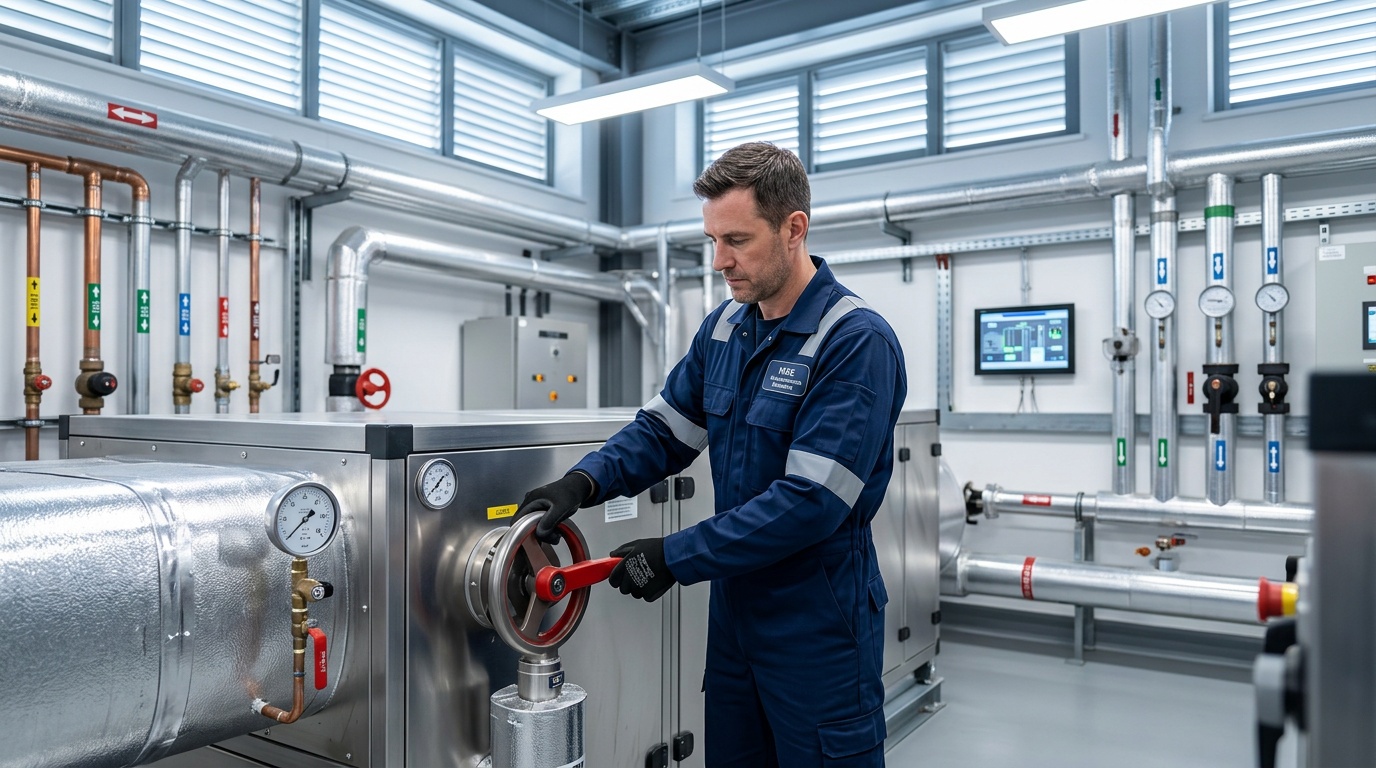
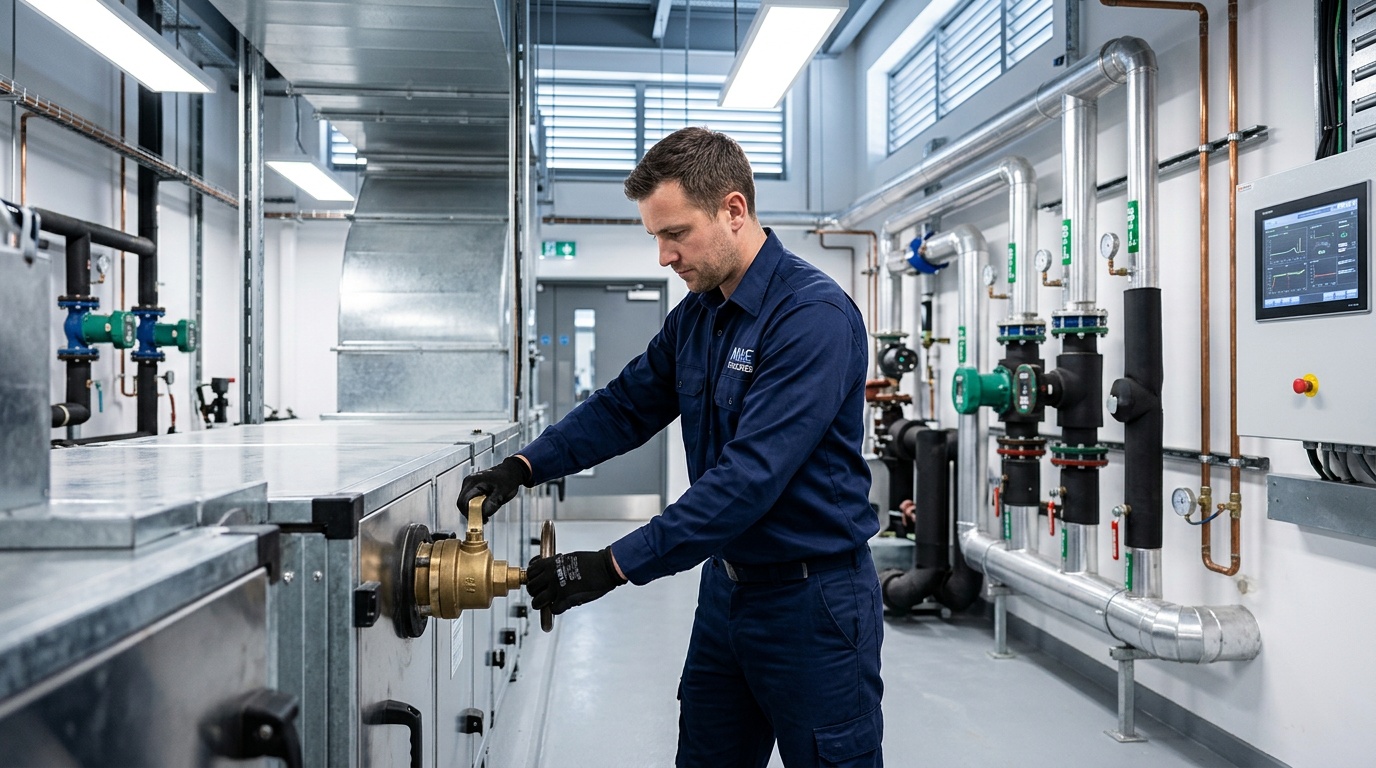
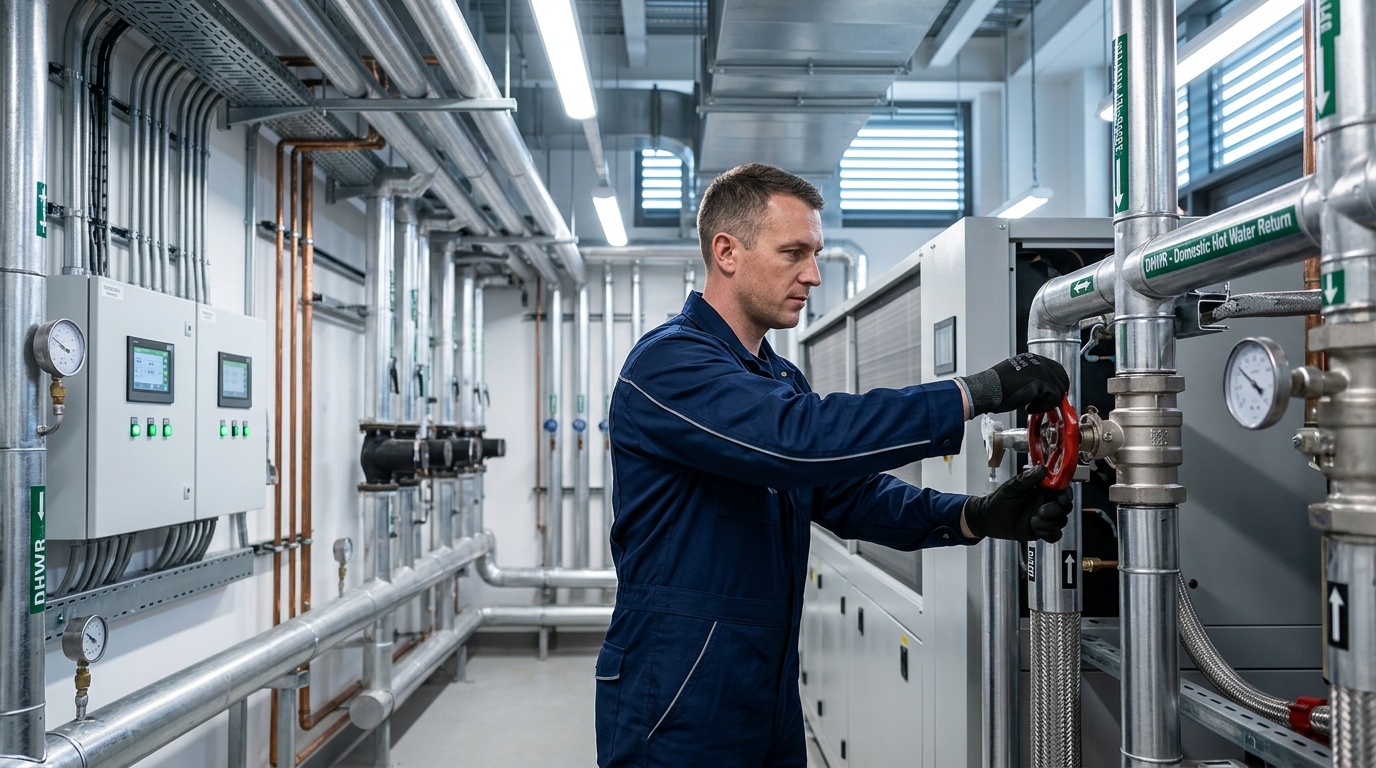
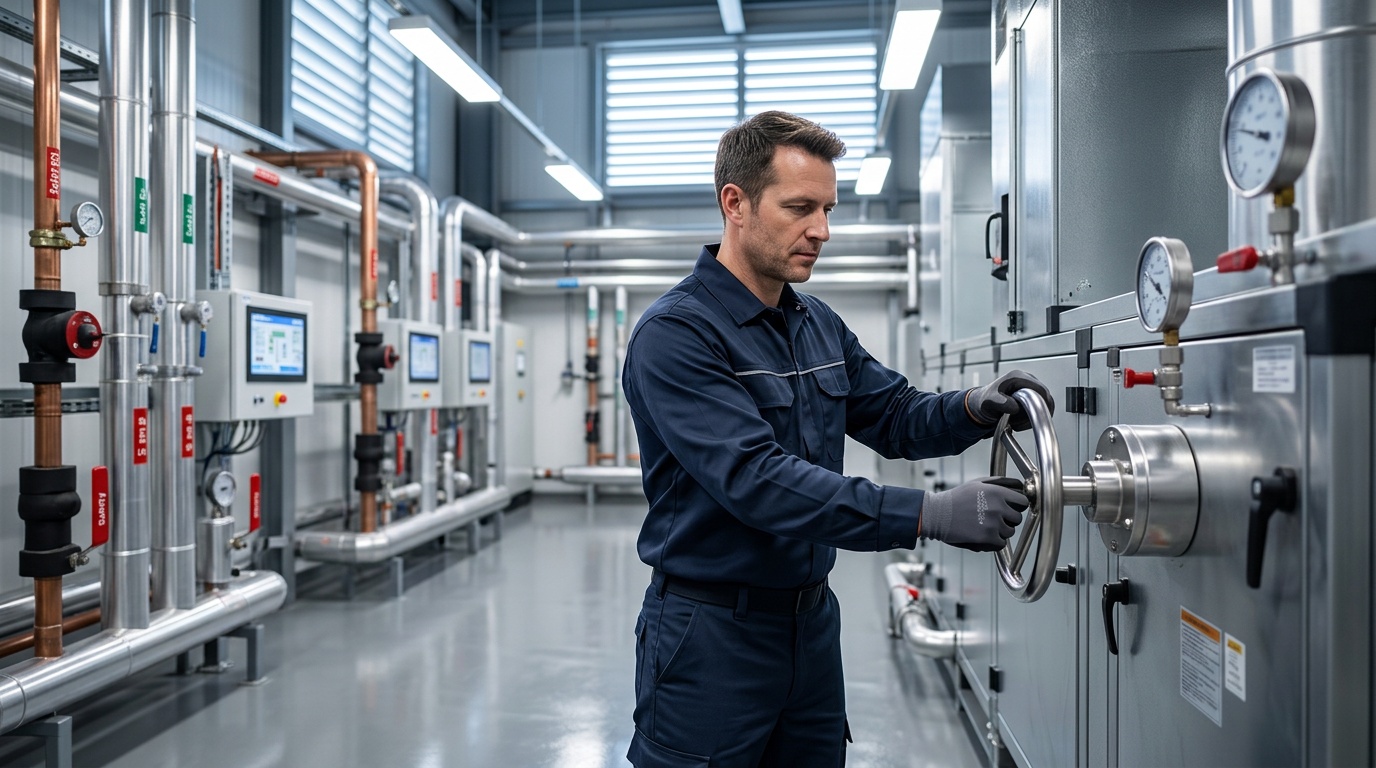
Understanding the M&E Strategic Partner Programme: Your Gateway to Improved Building Performance
The M&E Maintenance Solutions Strategic Partner Programme connects specialist HVAC contractors, technology suppliers, and complementary service providers with a certified, compliance-led commercial maintenance firm founded in 2007. This M&E Strategic Partner Programme guide covers eligibility, what both parties gain, and how to apply.
This is not a subcontractor list. A Strategic Partner Programme is a structured, values-aligned collaboration between M&E Maintenance Solutions and specialist firms whose capabilities extend or complement core HVAC delivery. Partners are vetted, integrated into service delivery, and held to the same compliance standards the company applies internally--Gas Safe, REFCOM F-Gas, SafeContractor, and ISO 9001.
M&E Maintenance Solutions' Vision: Beyond Traditional FM
M&E Maintenance Solutions has built its reputation on referrals, not advertising. The business serves Facility Managers and Estate Managers across the UK, specialising in commercial HVAC maintenance and sustainable building technologies--including air-to-air and air-to-water heat pumps, solar PV, solar thermal, and LED lighting. The Strategic Partner Programme exists to scale that capability without sacrificing accountability.
The MEMS Standard: Partners are not suppliers filling a gap. They are extensions of a compliance-first, customer-first culture. If your firm cannot meet that standard, this programme is not the right fit.
The 'Customer First' and 'Open Door' Philosophy in Practice
M&E runs an open-door policy for evaluating new HVAC technologies before recommending them to clients. Strategic Partners with innovative products or methods enter a structured vetting and testing pipeline, gaining real-world validation alongside a certified commercial operator. That kind of endorsement is worth more than any marketing spend--and it benefits the partner, the end client, and the wider industry.
Why Partnering with M&E Means Partnering for Success
Who We Seek: The Ideal M&E Strategic Partner Profile
Beyond Technical Prowess: Shared Values and Vision
Technical competence is the entry requirement, not the differentiator. M&E Maintenance Solutions seeks partners who treat compliance as a baseline--not a selling point. If your firm views Gas Safe registration, REFCOM F-Gas certification, or ISO 9001 as optional extras, this programme isn't aligned with your operating model. Cutting corners on a commercial site creates liability for everyone on that contract. Full stop.
Commitment to Compliance, Sustainability, and Efficiency
M&E's service portfolio spans air-to-air and air-to-water heat pumps, solar PV, solar thermal, and LED lighting. Partners operating in these disciplines must demonstrate an active commitment to sustainable outcomes and current legislative compliance. Clients are Facility and Estate Managers who are accountable for their buildings. Partners must share that accountability--not dilute it.
A Proven Track Record of Reliability and Excellence
Every partner reflects directly on client relationships that took years to earn. Prospective partners must provide evidence of consistent delivery: traceable job records and independently verifiable certifications. A strong portfolio of commercial HVAC work across UK sites carries significantly more weight than marketing materials.
Non-Negotiable Standards: Partners must hold relevant certifications for their discipline--Gas Safe, REFCOM F-Gas, SafeContractor, or ISO 9001 equivalents. Unverified credentials disqualify an application at the first stage.
Cultural Alignment: The 'M&E Standard' in Practice
The M&E Standard means one thing: right first time. An engineer arrives knowing the system, carries the right parts, and leaves a compliant, documented job behind. The "different face every visit" problem that plagues large FM corporations is precisely what this programme is designed to avoid. Continuity of personnel and knowledge retention aren't perks--they're requirements.
Geographic Reach and Local Expertise
Midlands base preferred: Birmingham and the wider West Midlands represent the core operational geography, though UK-wide partners are considered for specialist disciplines.
Local site knowledge: Partners with established relationships in specific regions add genuine value to client delivery.
Response capability: Commercial maintenance doesn't operate on office hours. Partners must demonstrate the capacity to respond outside standard working hours when client contracts require it.
Scalable resource: Partners should provide evidence of the ability to scale without compromising quality, matching M&E's own model of over 20 core staff supported by a growing partner network.
The Mutual Benefits: What You and Your Clients Gain
For Strategic Partners: Growth, Innovation, and Influence
Joining the M&E Strategic Partner Programme gives specialist firms access to a certified, referral-driven client base that already values compliance and quality. You're not cold-calling sceptical Facility Managers. You're entering established relationships built on trust--the kind that doesn't come with a marketing budget, only with consistent delivery over many years.
Access to M&E's Internal Vetting and Innovation Pipeline
M&E Maintenance Solutions trials new HVAC products internally before recommending them to any client. Partners supplying heat pump systems, solar PV, solar thermal, or LED lighting solutions can enter that structured real-world testing process. Independent validation alongside a certified commercial operator is the kind of proof point no brochure can replicate.
Benefit Area
Strategic Partner Gains
End-Client Gains
Compliance Assurance
Alignment with Gas Safe, REFCOM, ISO 9001 frameworks
Fully documented, legally traceable service records
Commercial Reach
Access to UK-wide Facility and Estate Manager relationships
Broader specialist capability under one accountable firm
Technology Validation
Real-world product testing and endorsement pipeline
Proven, vetted solutions before site deployment
Reputation
Association with a referral-built, certified HVAC brand
Continuity of personnel and consistent service standards
Broader Service Offerings and Client Satisfaction
Facility Managers running multiple commercial sites need a single point of accountability. When partners integrate cleanly into M&E's delivery model for building fabric repairs and maintenance, clients receive broader specialist coverage without the co-ordination overhead of managing separate contractors. Fewer moving parts. Less compliance risk. Simpler sign-off.
The Commercial Reality: Every partner interaction is a direct reflection on M&E Maintenance Solutions. Clients who refer business do so because the standard never slips. Partners who maintain that standard share in a reputation that no marketing budget can buy.
Driving Compliance, Sustainability, and Cost Savings Across the UK
Sustainable building performance requires specialist depth across multiple disciplines--no single firm covers everything well. Partners who deliver measurable energy savings through heat pump installations or solar PV deployments contribute directly to client cost reduction and legislative compliance. That's a commercially and ethically sound position to occupy.
Inside the Partnership: Roles, Responsibilities, and How It Works Day-to-Day
Defining Roles: A Collaborative Framework
M&E Maintenance Solutions co-ordinates service delivery and client accountability. Strategic Partners execute specialist scope within agreed compliance parameters. Neither party operates in isolation. Shared documentation, traceable job records, and clear escalation routes define the working relationship from day one--not after something goes wrong.
Key Responsibilities for Strategic Partners: Upholding the M&E Standard
Maintain all relevant certifications: Gas Safe, REFCOM F-Gas, SafeContractor, or discipline-specific equivalents
Deliver fully documented, compliant job records within agreed timeframes
Provide consistent personnel where operationally possible
Report site issues transparently, without delay
Participate in performance review cycles as part of continuous improvement
M&E's Commitment: Support, Resources, and Joint Problem-Solving
Partners receive clear scope briefs, client background, and direct access to M&E's internal technical knowledge. I've built this business on solving problems with people, not passing blame down the chain. When site challenges arise, the response is collaborative. That's not a policy--it's how the team operates.
How Partnerships Are Evaluated: Continuous Improvement, Not Box-Ticking
Performance is reviewed against defined metrics: compliance documentation rates, client feedback, response times, and job completion quality. Partners who consistently meet the M&E Standard progress to deeper integration. Those who don't are supported to improve--or respectfully exited. Accountability runs in both directions. That's what makes this a genuine partnership rather than a preferred supplier list.
Taking the Next Step: Becoming an M&E Strategic Partner
The Application and Onboarding Process: A Clear Pathway
Complete an initial values and capability assessment
Agree scope, standards, and documentation requirements
Complete onboarding and integration into M&E's delivery framework
Questions to Ask Yourself Before Applying
Be honest with these. They matter.
Are all your certifications current and independently verifiable?
Can you provide evidence of consistent delivery across commercial UK sites?
Does your team operate to a "right first time" standard without supervision?
Are you genuinely committed to sustainable, compliant outcomes for end clients?
Your Next Move: If you answered yes to the above, M&E Maintenance Solutions wants to hear from you. Contact the team directly to begin your application and take the first step towards building a partnership that delivers real commercial value.
What is the purpose of the M&E Strategic Partner Programme?
The M&E Strategic Partner Programme connects specialist HVAC contractors and technology suppliers with our certified, compliance-led commercial maintenance firm. It allows us to scale our capability without sacrificing the accountability and quality our commercial clients expect. We aim to deliver corporate-level capability with direct accountability, serving Facility Managers and Estate Managers across the UK.
What does it take to become an M&E Strategic Partner?
To become a Strategic Partner, your firm needs to demonstrate technical competence, a shared commitment to compliance, sustainability, and efficiency, and a proven track record of reliability. We look for partners who treat compliance as a baseline, holding certifications like Gas Safe, REFCOM F-Gas, SafeContractor, and ISO 9001. Cultural alignment with our "right first time" standard is also essential.
What benefits do firms gain by joining the M&E Strategic Partner Programme?
Strategic Partners gain access to our certified, referral-driven client base that already values compliance and quality, built on trust since 2007. You also get access to our internal vetting and innovation pipeline, allowing for real-world validation of new technologies. This collaboration offers a commercial advantage by positioning you with a trusted commercial operator.
What kind of companies does M&E Maintenance Solutions seek for its Strategic Partner Programme?
We seek specialist HVAC contractors, technology suppliers, and complementary service providers who align with our compliance-first, customer-first culture. Ideal partners excel in disciplines like air-to-air and air-to-water heat pumps, solar PV, solar thermal, and LED lighting, demonstrating a commitment to sustainable outcomes and current legislative compliance. They must also have a proven track record and verifiable certifications.
What standards and certifications are required for M&E Strategic Partners?
Partners must hold relevant certifications for their discipline, such as Gas Safe, REFCOM F-Gas, SafeContractor, and ISO 9001 equivalents. These are non-negotiable standards that ensure every partner operates with the same high level of compliance and quality that M&E Maintenance Solutions applies internally.
How does M&E Maintenance Solutions evaluate new technologies with its partners?
We operate an open-door policy for evaluating new HVAC technologies before recommending them to clients. Strategic Partners with innovative products or methods can enter a structured vetting and testing pipeline, gaining real-world validation alongside our trusted commercial operations. This benefits the partner, the end client, and the wider industry.
"
About Stuart Butcher
Founder & Managing Director | M&E Maintenance Solutions
Stuart Butcher is the Founder and Managing Director of M&E Maintenance Solutions. A ""boots-on-the-ground"" leader, Stuart began his career as an apprentice combustion engineer, spending over 24 years mastering the trade before building a premier maintenance firm. He operates at the intersection of technical engineering precision and commercial asset management.
Driven by the philosophy that maintenance is cheaper than repair, Stuart works with Facility Managers and Building Owners across Birmingham, the Midlands, and the UK to ensure 24/7/365 compliance and uptime. He established M&E Maintenance Solutions to provide the technical capability of a large corporate provider while maintaining the personal accountability of a family-run business.
Last reviewed: March 12, 2026 by the M&E Maintenance Solutions Limited Team
Colliers vs M&E Maintenance Solutions Limited
The Commercial Facility Manager's Dilemma: Colliers vs. M&E Maintenance Solutions - Who Is Your Building's Best Ally?
Specialised M&E vs. Integrated Facility Management: Understanding the Real Question
You're not comparing like for like here. Colliers is a global, publicly listed real estate services firm spanning investment, leasing, and facilities management. M&E Maintenance Solutions, founded in 2007, exists for one purpose: keeping commercial HVAC, electrical, and plumbing systems compliant, efficient, and running. One company does many things. The other does one thing exceptionally well.
Key Takeaways
Colliers provides a wide array of global real estate services, including facilities management.
M&E Maintenance Solutions focuses specifically on maintaining commercial HVAC, electrical, and plumbing systems.
The decision between the two depends on needing a broad service provider versus a dedicated system maintenance specialist.
Why This Choice Hits Your Bottom Line Harder Than You Think
The wrong call costs money. A generalist FM provider may tick administrative boxes while your ageing chiller degrades silently. Specialist M&E engineers catch what generalists miss--because mechanical systems are all they do. For facility managers prioritising compliance and uptime, that distinction separates a planned repair from an emergency shutdown.
Key Insight: The question isn't which company is larger. It's which company is directly accountable for the mechanical health of your specific building.
M&E Maintenance Solutions serves facility managers and estate managers across the UK with a focused service portfolio: HVAC, air-to-air and air-to-water heat pumps, solar PV, solar thermal, and LED lighting. Certified under SafeContractor, REFCOM F-Gas, Gas Safe, and ISO 9001, the company's reputation is built on referrals--not marketing spend. With over 20 core staff and a network of strategic partners, it delivers corporate-level capability with direct accountability. That's the model I built from day one.
Colliers: A Global Player in Integrated Property Services
Colliers suits clients seeking a single vendor across multiple property disciplines--investment advisory, project management, and facilities management under one commercial relationship. Their scale is genuine. In this comparison, Colliers represents breadth; M&E Maintenance Solutions represents depth. Neither is wrong. The question is which one your building actually needs.
Colliers: Strengths and Limitations
Pros
Global reach and multi-discipline capability
Single-vendor convenience for large estates
Strong technology and reporting platforms
Cons
Less M&E specialisation at engineer level
Large corporate structure can reduce direct accountability
Response agility may be slower for specialist mechanical faults
Beyond the Boiler Room: Service Scope and Specialisation
M&E Maintenance Solutions: HVAC, Electrical, and Plumbing Expertise
Best for: facility managers requiring certified, specialist M&E compliance across commercial estates. M&E Maintenance Solutions holds Gas Safe, REFCOM F-Gas, SafeContractor, and ISO 9001 certifications. Every engineer works to SFG20 standards--not as a marketing claim, but as a contractual baseline. When your chiller fails at 11pm, the attending engineer holds the correct certifications and knows your system's history. That's not something you get from a subcontracted supply chain.
Colliers: The Integrated Facility Management Approach
Colliers' M&E delivery typically operates through subcontracted supply chains. For clients who prioritise portfolio-level reporting over engineering depth, that model functions. But for any facility manager whose primary concern is mechanical compliance, a subcontracted layer introduces accountability gaps that tend to surface at the worst possible moment--usually mid-January with a boiler down.
The Key Difference: Specialisation and Compliance Efficiency
Criteria
M&E Maintenance Solutions
Colliers
Core Focus
Commercial HVAC, M&E compliance
Integrated property and facilities management services
Certifications
Gas Safe, REFCOM, SafeContractor, ISO 9001
Varies by regional delivery partner
SFG20 Adherence
Standard operating procedure
Dependent on subcontractor frameworks
Engineer Continuity
Dedicated engineers per site
Managed through facilities management co-ordination teams
Sustainable Technologies
Air-to-water heat pumps, solar PV, LED lighting
Broad sustainability advisory capability
Geographic Focus
UK commercial estates
Global, multinational operations
When a Specialist Outperforms a Generalist
The deciding factor is accountability. If your building's mechanical systems are your primary operational risk, a specialist with direct engineer accountability outperforms a generalist coordinating subcontractors. Planned Preventative Maintenance (PPM) delivered by certified in-house engineers reduces reactive spend and protects asset value. A broad FM contract delivered through third parties rarely achieves the same engineering consistency--I've seen the handover paperwork, and it shows.
Facility managers looking to extend the lifespan and efficiency of their building fabric can benefit from specialised services like building fabric repairs and maintenance, ensuring the entire property remains in optimal condition.
The 'Open Door' Innovation Policy: How M&E Vets New Technologies Before They Reach Your Building
Internal Trials, Not Manufacturer Literature
Most FM providers adopt new technologies based on manufacturer brochures and commercial incentives. We don't. M&E Maintenance Solutions' open door policy means every new HVAC technology is evaluated and tested internally before it's offered to a single client. If it doesn't perform under real operating conditions, it doesn't reach your building. Full stop.
That discipline matters. I've watched too many facility managers become unwilling guinea pigs for unproven kit because their FM provider chased a rebate. That's not how we work.
Proven Sustainable Technologies We Currently Offer
M&E Maintenance Solutions currently offers air-to-water heat pumps, solar PV, solar thermal, and LED lighting--each having passed internal scrutiny before client recommendation. You're not absorbing the risk of early adoption. We already have.
Key Insight: Technology adoption methodology matters as much as the technology itself. Field-testing before recommending protects clients from costly installations that underdeliver on their promise.
To explore how renewable options can integrate into your facilities, check out our renewable energy solutions.
Response Times and Reliability: Keeping Your Commercial Operations Running
24/7/365 Availability--Because Breakdowns Don't Work 9 to 5
Breakdowns don't respect business hours. M&E Maintenance Solutions operates 24/7/365, supported by a continuously staffed helpdesk. The engineer who arrives holds the correct certifications and understands your site's history. That's the MEMS Standard: right first time, every time.
A Mechanical Failure Isn't an Inconvenience. It's a Revenue Event.
A failed chiller in August or a boiler outage in January stops trade. It empties offices. It triggers complaints, lease clause reviews, and in the worst cases, enforcement notices. A large corporate FM structure co-ordinating subcontractors across regions adds layers between your call and a qualified engineer on site. Every layer costs time. Time costs money.
Building Long-Term Partnerships: Compliance, Asset Protection, and Accountability
Built on Referrals. Not Marketing.
M&E Maintenance Solutions has grown organically since 2007 through referrals. That's not accidental--it's the commercial outcome of genuine accountability. Proactive compliance health checks, SFG20-standard Planned Preventative Maintenance, and dedicated engineer continuity per site mean your building is known, not just serviced. Engineers who've visited your plant room six times know things a first-visit subcontractor never will.
Compliance Is Your Legal Baseline--Treat It as One
Gas Safe, REFCOM F-Gas, SafeContractor, and ISO 9001 certifications aren't marketing assets at M&E. They're operational requirements. Compliance certificates are traceable and delivered promptly. That paper trail is your legal protection if something goes wrong--and in my experience, it's the first thing an inspector or insurer asks for.
Which Risk Can You Actually Afford to Carry?
For facility managers across the UK whose primary concern is mechanical compliance, asset longevity, and operational uptime, M&E Maintenance Solutions is the specialist choice. Colliers serves a different need: consolidated property services at portfolio scale. Both are legitimate operations. The question is simpler than the comparison: if a mechanical failure closes your building, do you need a company that manages property--or one that owns the outcome directly?
Book a site survey today and find out what your building actually needs before it tells you itself.
How do Colliers and M&E Maintenance Solutions differ in their approach to commercial building maintenance?
Colliers offers broad, integrated property services globally, often using subcontractors for mechanical and electrical work. M&E Maintenance Solutions, on the other hand, is a UK-based specialist, focused solely on the mechanical and electrical health of commercial buildings with direct engineer accountability. It's about depth of engineering expertise versus breadth of property services.
For facility managers, what advantages does M&E Maintenance Solutions' specialist focus offer over a broader integrated service?
A specialist focus means our engineers are deeply familiar with complex HVAC, electrical, and plumbing systems. This leads to better compliance, proactive maintenance that generalists often miss, and ultimately, reduced operational risks and costs for your commercial estate. We ensure your critical systems are running efficiently and reliably.
What specific mechanical and electrical services does M&E Maintenance Solutions provide for commercial properties?
We concentrate on keeping your commercial HVAC, electrical, and plumbing systems in top condition. This includes maintenance for air-to-air and air-to-water heat pumps, solar PV, solar thermal, and LED lighting solutions. Our goal is to ensure compliance and efficiency across these core M&E assets.
How does M&E Maintenance Solutions ensure high levels of compliance and direct accountability for commercial HVAC, electrical, and plumbing systems?
We achieve this through our certified in-house engineers who understand SFG20 standards as a contractual baseline. Our team holds key certifications like Gas Safe, REFCOM F-Gas, SafeContractor, and ISO 9001, ensuring every job meets stringent regulatory requirements. This direct accountability means you always know who is responsible for your building's mechanical health.
How does M&E Maintenance Solutions evaluate and integrate new, sustainable technologies into its service offerings?
We operate with an "open door" innovation policy, meaning we internally trial and vet new HVAC technologies before recommending them to clients. This approach ensures that any sustainable solutions we offer, such as air-to-water heat pumps or solar PV, are proven reliable and genuinely beneficial for your commercial property.
When might a global integrated property services firm like Colliers be a suitable choice for a commercial client?
Colliers is well-suited for clients seeking a single vendor across multiple property disciplines, especially for large, multinational estates. Their strength lies in providing consolidated property services, including investment advisory and project management, where portfolio-level reporting is a primary concern.
What is the geographic focus of M&E Maintenance Solutions' specialist services?
M&E Maintenance Solutions proudly serves facility managers and estate managers across the entire UK. Our core staff and network of strategic partners ensure we can deliver corporate-level capability with direct accountability for commercial properties throughout the country.
"
About Stuart Butcher
Founder & Managing Director | M&E Maintenance Solutions
Stuart Butcher is the Founder and Managing Director of M&E Maintenance Solutions. A ""boots-on-the-ground"" leader, Stuart began his career as an apprentice combustion engineer, spending over 24 years mastering the trade before building a premier maintenance firm. He operates at the intersection of technical engineering precision and commercial asset management.
Driven by the philosophy that maintenance is cheaper than repair, Stuart works with Facility Managers and Building Owners across Birmingham, the Midlands, and the UK to ensure 24/7/365 compliance and uptime. He established M&E Maintenance Solutions to provide the technical capability of a large corporate provider while maintaining the personal accountability of a family-run business.
Last reviewed: March 11, 2026 by the M&E Maintenance Solutions Limited Team
Affordable duct cleaning for warehouses.
Affordable duct cleaning for warehouses is not about finding the cheapest quote. It's about securing a service that prevents energy waste, protects stored goods, and keeps your facility compliant -- priced around your building's actual needs, not a generic day rate.
The Commercial Case for Clean Warehouse Ducts: Beyond Air Quality
The Hidden Costs of Neglected Ductwork in Warehouses
Dirty ductwork in a warehouse is not a housekeeping issue. It's a financial liability. Accumulated dust, debris, and biological contaminants force your HVAC system to work harder, consuming more energy to deliver the same output. That energy drift appears quietly on your utility bills for months before anything visibly fails -- and by the time it does, you're looking at repair costs that dwarf what a scheduled clean would have cost.
Impact on Operational Efficiency and Energy Spend
A restricted duct system drives longer run cycles, accelerates component wear, and raises the probability of an emergency breakdown. I've seen facilities where a long-overdue duct clean cut monthly energy spend by a measurable margin within a single billing cycle. That's not a coincidence -- that's physics. Your plant is burning extra fuel to push air through a partially blocked system, and it'll keep doing so until something gives.
The MEMS Standard: Maintenance is cheaper than repair. A blocked duct today is a failed motor tomorrow.
Protecting Stored Goods and Equipment from Contamination
Warehouses storing food, pharmaceuticals, electronics, or textiles face direct stock loss if ductwork circulates particulate matter across racking. Contaminated air isn't just a health risk -- it's a product liability and insurance exposure. Our Building Fabric Repairs & Maintenance service addresses ductwork as part of the wider building envelope, protecting both assets and the people working around them.
The "Downtime Doesn't Work 9 to 5" Reality
A warehouse HVAC failure on a Saturday night during peak despatch doesn't wait until Monday morning. Our 24/7/365 availability means preventing downtime before it happens is always the priority -- but when the unexpected occurs, support is immediate. That's not a marketing line. It's how we're structured.
Decoding 'Affordable': What Warehouse Duct Cleaning Pricing Actually Reflects
Factors That Influence Warehouse Duct Cleaning Costs
Pricing is driven by duct linear metreage, system complexity, accessibility, contamination level, and whether post-clean compliance documentation is included. A quote issued without a site survey is a guess. Not a price.
Cost Factor
Low-Cost Provider
Value-Based Provider
Site Survey
Telephone estimate only
Physical inspection before quoting
Compliance Certificates
Not always provided
Issued within 24 hours, digitally traceable
SFG20 Adherence
Rarely referenced
Standard methodology
Post-Clean Report
Verbal only
Written report with photographic evidence
Value vs. Low Price: They Are Not the Same Thing
A cheap clean that leaves contamination behind -- or fails to meet TR19 guidance -- is not a saving. It's a deferred cost with added compliance risk. The word "affordable" should describe a transparent scope, qualified technicians, and documented outcomes. Not a race to the lowest day rate.
The M&E Approach to Transparent Pricing
Our Building Fabric Repairs & Maintenance service is scoped on-site. You get a clear breakdown before any work begins -- no hidden call-out charges, no upsells that weren't discussed upfront. You know exactly what you're paying for and why.
Signs Your Warehouse Ducts Need Attention Now
What You Can See: Dust, Debris, and the Racking Test
Dust rings around diffusers, debris on grilles, and visible particulate settling on racking near air outlets are immediate indicators. If your cleaning team is fighting a losing battle against surface dust, the ductwork is almost certainly the source. Clean the grille all you want -- if the duct behind it is fouled, the dust keeps coming.
Performance Indicators: What to Check Before Calling a Provider
Uneven temperature distribution across the warehouse floor
HVAC units running continuously without reaching the set point
Increased frequency of filter replacements
Unexplained rises in energy consumption
Staff reporting stuffiness or poor air quality
Odours that persist after general cleaning
The Compliance Dimension: HSE Exposure and Duty of Care
Neglected ductwork can harbour mould, bacteria, and allergens that trigger respiratory issues among warehouse staff. Beyond the duty-of-care obligation, that creates direct HSE exposure. A duct clean, done to the right standard, is a compliance investment -- not an optional operational task.
The M&E Difference: How We Actually Do the Work
Beyond a Brush and a Vacuum
Our Building Services Technicians use negative-pressure extraction, rotary contact cleaning, and post-clean airflow testing to verify results -- not just assume them. Every visit is documented with photographic evidence and a written compliance report. You see what was found, what was done, and what the system looks like now. That's the standard.
Accreditation, SFG20, and Why It Matters for Your Compliance File
Our work is aligned with SFG20 standards. We hold SafeContractor, Gas Safe Register, Refcom F-Gas Certification, and NQA ISO 9001 accreditations. That means when your insurance auditor or HSE inspector asks for your compliance file, it's complete. Not approximate. Complete.
We're large enough to handle warehouse portfolios across Birmingham and the West Midlands, and focused enough to care about the specific quirks of your building. Our 24/7/365 helpdesk means planned preventative maintenance (PPM) schedules are always backed by emergency cover -- so you're never left exposed between visits.
Your Duct Cleaning Checklist: Questions Every Facility Manager Should Ask
Before signing anything, ask these questions directly -- and pay attention to how they answer:
Experience: Have they cleaned ductwork in warehouses of comparable size and complexity?
Methodology: Do they follow TR19 guidance and SFG20 standards?
Documentation: Will you receive a written post-clean report with photographic evidence?
Compliance Certificates: Are these issued digitally within 24 hours?
Scope Clarity: Is the full scope confirmed in writing before work begins?
PPM Options: Can they build a planned preventative maintenance schedule to avoid reactive call-outs?
If a provider hesitates on any of these, that hesitation tells you everything. Protecting your assets and your people requires a partner who treats compliance as a baseline -- not an optional extra you pay more for.
The Partner Test: A qualified provider welcomes these questions. One who deflects them is telling you everything you need to know about the standard of work you'd receive.
Our Building Fabric Repairs & Maintenance service covers ductwork as part of a structured PPM programme -- scoped on-site, priced transparently, and backed by 24/7/365 availability. Contact our team to book a site survey and get a no-obligation assessment of your warehouse ductwork.
How much does affordable duct cleaning for warehouses usually cost?
The cost for affordable duct cleaning in warehouses isn't a fixed rate; it depends on factors like the linear metreage of your ductwork, system complexity, how accessible it is, and the level of contamination. A proper quote requires a physical site survey to understand your building's actual needs. We focus on delivering value that prevents energy waste and protects your assets, rather than just the cheapest price.
How often should a commercial warehouse's air ducts be cleaned?
The frequency for cleaning warehouse ducts depends on your operational environment and the type of goods stored. We recommend assessing your system for visible dust, reduced airflow, uneven temperatures, or increased energy consumption. A planned preventative maintenance schedule, tailored to your facility, is the best way to ensure ongoing compliance and efficiency.
What should I look for when getting a quote for warehouse duct cleaning?
When seeking a quote for warehouse duct cleaning, look for a provider who conducts a physical site inspection, not just a telephone estimate. A value-based provider will offer a transparent scope of work, use qualified technicians, and provide documented outcomes like post-clean reports with photographic evidence and compliance certificates. This ensures you're getting a thorough service that meets standards like TR19 guidance, not just a cheap, ineffective clean.
Are there any downsides to having warehouse air ducts cleaned?
The main drawback isn't duct cleaning itself, but rather a poorly executed or cheap service. A clean that fails to remove all contamination or doesn't meet industry standards like TR19 guidance can leave you with deferred costs, ongoing energy waste, and significant compliance risks. It's essential to choose a provider who offers a transparent scope and documented outcomes to avoid these issues.
What industry standards apply to warehouse duct cleaning?
Professional warehouse duct cleaning should always adhere to industry best practices, primarily TR19 guidance and SFG20 standards. These frameworks ensure a comprehensive cleaning process, proper documentation, and verified results. Our services are aligned with SFG20 standards, and we provide digital compliance certificates and detailed reports to keep your facility compliant and your liability managed.
Why is regular duct cleaning important for warehouses beyond just air quality?
Beyond just air quality, regular duct cleaning in warehouses is a financial and operational necessity. Neglected ductwork forces your HVAC system to work harder, increasing energy consumption and the risk of costly breakdowns. It also protects stored goods from contamination, which is critical for products like food or electronics, and ensures your facility maintains compliance with health and safety regulations.
What are the key signs that my warehouse ducts need cleaning?
You'll often see visible clues like dust rings around diffusers, debris on grilles, or particulate matter on racking near air outlets. Performance indicators include uneven temperatures, HVAC units running continuously, or unexplained rises in energy consumption. If staff report stuffiness or persistent odours, or your cleaning team is constantly fighting surface dust, it's a strong sign your ducts need attention.
"
About Stuart Butcher
Founder & Managing Director | M&E Maintenance Solutions
Stuart Butcher is the Founder and Managing Director of M&E Maintenance Solutions. A ""boots-on-the-ground"" leader, Stuart began his career as an apprentice combustion engineer, spending over 24 years mastering the trade before building a premier maintenance firm. He operates at the intersection of technical engineering precision and commercial asset management.
Driven by the philosophy that maintenance is cheaper than repair, Stuart works with Facility Managers and Building Owners across Birmingham, the Midlands, and the UK to ensure 24/7/365 compliance and uptime. He established M&E Maintenance Solutions to provide the technical capability of a large corporate provider while maintaining the personal accountability of a family-run business.
Last reviewed: March 11, 2026 by the M&E Maintenance Solutions Limited Team
How much do legionella risk assessments cost?
Legionella Risk Assessment Costs: What UK Commercial Facility Managers Need to Know
How much do legionella risk assessments cost? Broadly: £200 to £500 for small commercial premises, and £500 to £2,000-plus for complex commercial buildings. Enterprise-scale sites are priced on scope. Cost alone is the wrong question. The right question is: what does non-compliance cost you?
Why Pricing Varies So Dramatically Across the Sector
I've seen quotes for legionella assessments range from £75 to £5,000 for buildings of comparable size. That gap isn't random. It reflects assessor accreditation, system complexity, number of water outlets, and whether the provider is genuinely mapping your risk or simply generating a document. A cut-price assessment from an unaccredited provider gives you paper, not protection.
The Hidden Cost of Getting It Wrong
Commercial reality: A Legionella outbreak linked to your premises carries unlimited liability under the Health and Safety at Work etc. Act 1974. Legal costs, reputational damage, and potential prosecution make a £300 assessment look like the cheapest decision you'll ever make.
In my experience, the facility managers who push hardest on assessment costs are the same ones who've never seen the invoice for emergency remediation or an HSE enforcement notice. Compliance isn't a cost centre. It's risk management with a price tag attached.
Commercial Legionella Assessment Costs: A Breakdown by Property Type
Property Type
Typical Cost Range
Key Complexity Drivers
Small commercial (GP surgery, dental practice, small office)
£200 to £500
Multiple risk points, patient or public exposure
Medium to large commercial (care home, gym, multi-floor office)
£500 to £2,000+
Complex pipework, cooling towers, TMVs, high occupancy
Enterprise / multi-building estate
Bespoke quotation
Multiple water systems, phased assessments, ongoing monitoring
Care homes and gyms sit at the higher end because warm, stagnant water in showers, hydrotherapy pools, and calorifiers creates ideal conditions for Legionella growth. The assessment scope must reflect that reality, not just the building's square footage.
What Actually Determines the Cost of Your Legionella Assessment?
Price differences between providers come down to specific, auditable variables. Any competent assessor should be able to walk you through each one before quoting:
Building size and water system complexity: More outlets, more pipework dead-legs, and more risk-generating plant mean more assessment time.
Location and travel: Regional pricing varies; Birmingham and West Midlands sites typically attract competitive rates from local specialists.
Risk level: High-risk premises--healthcare, hospitality, leisure--require more detailed sampling and documentation.
Water testing and sampling: Microbiological sampling adds laboratory costs, typically £50 to £150 per sample.
Provider accreditation: Assessors holding Legionella Control Association (LCA) membership or equivalent qualifications command higher fees. Rightly so.
Turnaround time: Expedited compliance documentation carries a premium.
At M&E Maintenance Solutions Limited, we assess these factors transparently before quoting. No surprises on the invoice.
The Assessment Process: What's Included and Why It Justifies the Investment
The follow-up question to any cost conversation should always be: what does that fee actually cover? A compliant assessment isn't a walk-round with a clipboard. It's a structured, documented process with legal standing.
Hazard Identification and Risk Mapping
A competent assessor will identify every water outlet, storage vessel, calorifier, cooling tower, and dead-leg in your system. Each is evaluated against known Legionella growth conditions: water temperature between 20°C and 45°C, stagnation, and the presence of nutrients such as scale or sediment. This mapping forms the foundation of your written scheme of control.
Water System Testing and Sampling
Where risk indicators are present, microbiological sampling confirms whether Legionella bacteria are active. Laboratory analysis adds cost--typically £50 to £150 per sample--but it converts a risk assessment from a theoretical document into an evidence-based compliance record. Skipping sampling on high-risk systems to trim the bill is a false economy. You're saving tens of pounds and gambling with tens of thousands.
Control Measures, ACoP L8 Compliance, and Legal Documentation
The output must include a written scheme of control aligned with ACoP L8 and the COSHH Regulations 2002. This document defines temperature monitoring frequencies, flushing regimes for infrequently used outlets, and remediation priorities. Without it, you have no defensible compliance position.
The MEMS standard: Compliance documentation is not a report filed and forgotten. It's a live reference that drives your ongoing maintenance schedule. If your current provider delivers a PDF and disappears, your compliance programme has already stalled.
Post-Assessment Support and Reassessment Scheduling
ACoP L8 requires reassessment whenever significant changes occur to your water system, and at regular intervals regardless. A professional provider will schedule your next review, flag remediation priorities with clear timescales, and integrate those actions into your Planned Preventative Maintenance (PPM) programme. Post-assessment support isn't an optional extra; it's where compliance is maintained day-to-day. Integrating services such as M&E Maintenance Solutions HVAC Services alongside legionella risk management delivers a comprehensive approach to building system compliance.
How Planned Preventative Maintenance Reduces Long-Term Legionella Costs
A one-off assessment is a snapshot, not a strategy. Facility managers who treat legionella compliance as a standalone exercise consistently pay more over time than those who fold it into their PPM cycle.
Bundling legionella assessments with HVAC servicing, water system maintenance, and compliance documentation through a single provider cuts mobilisation costs, removes duplicate site visits, and produces a single audit trail. Volume discounts for multi-property estates are standard practice. If your current provider isn't offering them, ask why.
Legal Requirements and the Real Cost of Non-Compliance
ACoP L8 (Legionnaires' disease: The control of Legionella bacteria in water systems) is the governing standard. Compliance is a legal duty under the Health and Safety at Work etc. Act 1974 and the COSHH Regulations 2002. This isn't optional guidance--it's the baseline obligation for any dutyholder responsible for a commercial water system. Further detail is available on the HSE website.
The HSE can issue improvement notices, prohibition notices, and unlimited fines. Beyond regulatory penalties, a single confirmed Legionella case linked to your premises will trigger insurance scrutiny, potential policy invalidation, and civil litigation. At that point, the question of assessment cost is irrelevant.
Warning: An assessment from an unaccredited provider may satisfy no one--not the HSE, not your insurer, and not a court. Verify LCA membership or equivalent before signing any assessment contract.
How to Get Best Value: Questions to Ask Your Assessment Provider
Before commissioning any assessment, put these questions to the provider directly. Their answers will tell you everything you need to know:
Are you LCA-accredited or equivalent? Accreditation is non-negotiable.
What does the written scheme of control include? It must align with ACoP L8.
What is your documentation turnaround? Compliance documents should reach you within 48 hours.
Do you offer bundled PPM packages? Integrated maintenance reduces the total cost of compliance over time.
Can you support multi-site estates? Volume pricing should be standard, not exceptional.
M&E Maintenance Solutions Limited operates 24/7/365--because water system risks don't follow office hours. If your current provider can't answer these questions confidently, contact M&E Solutions for a site survey and a transparent quotation.
Budgeting for Legionella Compliance: The Bottom Line
A professional legionella risk assessment delivers three things: a legally defensible written scheme of control, evidence-based sampling records, and a structured reassessment schedule. That's not a one-off expense--it's the foundation of a continuous compliance programme.
Facility managers who build legionella compliance into their PPM budget as a recurring line item consistently spend less over a three-year horizon than those who commission isolated assessments reactively. The maths is straightforward: bundled site visits, a single audit trail, and near-zero emergency remediation costs.
Recommendation: Commission only from LCA-accredited providers. Insist on ACoP L8-aligned documentation within 48 hours. Integrate reassessment into your PPM cycle. For practical guidance on ACoP L8, see the Approved Code of Practice.
M&E Maintenance Solutions Limited operates 24/7/365 because compliance obligations don't observe office hours. Contact us for a transparent site survey and quotation tailored to your property type and risk profile.
How much should a legionella risk assessment cost for commercial premises?
For small commercial premises, expect costs between £200 and £500. Larger, more complex commercial buildings can range from £500 to £2,000 or more. Enterprise-scale sites require a bespoke quotation based on their specific scope and water systems.
Can a facility manager conduct their own legionella risk assessment?
While you might be tempted, I strongly advise against it. A proper legionella risk assessment requires expertise and accreditation to genuinely map your risk and ensure compliance, not just to produce a document. An unaccredited assessment may not satisfy legal requirements or protect your business from outbreaks.
Is a legionella risk assessment a legal requirement for UK commercial buildings?
Absolutely, it's a legal duty for any dutyholder responsible for a commercial water system in the UK. This is mandated by ACoP L8 and the Health and Safety at Work etc. Act 1974. Non-compliance can lead to unlimited fines, prosecution, and severe reputational damage.
What factors determine the cost of a legionella risk assessment?
Several factors influence the price, including the building's size and water system complexity, the number of water outlets, and the overall risk level of the premises. Other considerations are the need for water testing and sampling, provider accreditation, and your location. A competent assessor will account for these transparently.
What are the hidden costs of getting a legionella risk assessment wrong?
The real cost of a poor assessment goes far beyond the initial fee. You face unlimited liability under the Health and Safety at Work etc. Act 1974, potential legal costs, and severe reputational damage from an outbreak. A cut-price assessment from an unaccredited provider offers no true protection, leaving you exposed to significant financial and legal penalties.
How can planned preventative maintenance reduce long-term legionella costs?
Integrating legionella assessments into your Planned Preventative Maintenance (PPM) cycle is a smart move. This approach reduces overall costs by bundling services, cutting mobilisation expenses, and providing a single, clear audit trail. It transforms compliance from a one-off expense into a managed risk strategy for your commercial property.
"
About Stuart Butcher
Founder & Managing Director | M&E Maintenance Solutions
Stuart Butcher is the Founder and Managing Director of M&E Maintenance Solutions. A ""boots-on-the-ground"" leader, Stuart began his career as an apprentice combustion engineer, spending over 24 years mastering the trade before building a premier maintenance firm. He operates at the intersection of technical engineering precision and commercial asset management.
Driven by the philosophy that maintenance is cheaper than repair, Stuart works with Facility Managers and Building Owners across Birmingham, the Midlands, and the UK to ensure 24/7/365 compliance and uptime. He established M&E Maintenance Solutions to provide the technical capability of a large corporate provider while maintaining the personal accountability of a family-run business.
Last reviewed: March 10, 2026 by the M&E Maintenance Solutions Limited Team
Balfour Beatty vs M&E Maintenance Solutions Limited
The Commercial Reality: Why Your Choice of M&E Provider Matters More Than You Think
It is 2pm on a Friday in peak trading. Your HVAC system fails. Staff are sweltering, customers are leaving, and the engineer your national FM contractor sends has never set foot in your building before. That scenario is not hypothetical. I have walked into those situations hundreds of times in 24 years on the tools, and the root cause is almost always the same: the wrong provider for the wrong site. When evaluating Balfour Beatty vs M&E Maintenance Solutions Limited, the question is not simply who is bigger. It is who is right for your building.
The Hidden Costs of Partnering with the Wrong Firm
Large infrastructure firms carry overhead that gets passed to you through inflated call-out rates, slow response windows, and rotating engineer pools who learn your plant room on your time and your budget. A missed Planned Preventative Maintenance (PPM) visit costs far less than the emergency repair that follows. If your current provider cannot name the engineer attending your site next Tuesday, that is a commercial risk, not just an inconvenience.
Stuart's Rule: Every hour of HVAC downtime in a commercial building is lost revenue, not just a maintenance problem. Uptime is your bottom line.
My 24 Years of Experience: Lessons from the Plant Room
I started as an apprentice combustion engineer. I have stripped boilers, commissioned chillers, and crawled through plant rooms that had not seen a qualified engineer in years. What I built with M&E Maintenance Solutions in 2007 was a direct response to what I kept seeing: commercial clients paying premium prices for reactive fixes from firms that did not know their buildings. The physics of a failing HVAC system does not care about a contractor's annual turnover. Compliance does not negotiate. Neither do we.
Balfour Beatty vs M&E Maintenance Solutions: Core Services and Scale Compared
Understanding the Balfour Beatty vs M&E Maintenance Solutions Limited comparison requires clarity on what each firm actually does. Balfour Beatty operates at infrastructure scale: highways, rail, defence, and major construction projects. Their M&E arm, Balfour Beatty Kilpatrick, handles large-scale building services within that context. M&E Maintenance Solutions' expertise in building fabric repairs and maintenance is built for something entirely different: the ongoing mechanical and electrical health of commercial estates across the UK.
Balfour Beatty's Focus on Large Infrastructure Projects
Balfour Beatty's strength is scale. They are suited to new-build contracts, government frameworks, and multi-million-pound infrastructure programmes. Their processes are designed for project delivery, not the day-to-day compliance demands of a 50,000 sq ft commercial estate in Birmingham.
M&E Maintenance Solutions' Specialisation in Commercial Estates
Founded in 2007, M&E Maintenance Solutions focuses exclusively on commercial buildings. With over 20 core staff, strategic partners, and certifications including Gas Safe, REFCOM F-Gas, SafeContractor, and ISO 9001, the firm delivers SFG20-compliant PPM programmes alongside sustainable technologies: Air-to-Air heat pumps, Air-to-Water heat pumps, Solar PV, Solar Thermal, and LED lighting.
Key Differences in HVAC, Plumbing, and Sustainable Tech Delivery
Feature
Balfour Beatty
M&E Maintenance Solutions
Primary focus
Large infrastructure and construction
Commercial HVAC maintenance and compliance
PPM programmes
Project-based delivery
Ongoing SFG20-compliant PPM
Sustainable technology
Industrial-scale specification
Internally tested heat pumps, Solar PV, LEDs
Certifications
Major contractor accreditations
Gas Safe, F-Gas, ISO 9001, SafeContractor
Response model
Contracted response windows
24/7/365 availability
Client relationship
Contract-managed
Referral-driven, named engineer continuity
The practical gap between these two firms becomes clear when you examine day-to-day delivery. Balfour Beatty Kilpatrick is engineered for project handover, not ongoing asset stewardship. M&E Maintenance Solutions is built around the opposite priority: keeping your existing building compliant, efficient, and operational every single day of the year.
Criteria
Balfour Beatty Kilpatrick
M&E Maintenance Solutions
Primary focus
Large-scale infrastructure and new-build M&E
Ongoing commercial HVAC maintenance and compliance
Typical client
Government bodies, defence, major construction programmes
Facility managers and estate managers across UK commercial estates
PPM delivery
Project-phase commissioning; ongoing FM is not a core offering
SFG20-compliant PPM programmes as a primary service
Sustainable technology
Specified at design stage within large contracts
Air-to-Air heat pumps, Air-to-Water heat pumps, Solar PV, Solar Thermal, LED lighting, all internally vetted
Certifications
ISO standards within group structure
Gas Safe, REFCOM F-Gas, SafeContractor, BES, ISO 9001
Engineer continuity
Rotational pools across large contract portfolios
Named engineers with site-specific knowledge
24/7 availability
Within contracted project frameworks
24/7/365 availability; breakdowns do not work 9 to 5
The Balfour Beatty vs M&E Maintenance Solutions Limited comparison is not a contest of size. It is a question of fit. If you are procuring a new hospital wing, Balfour Beatty Kilpatrick belongs on your shortlist. If you are responsible for the mechanical and electrical health of a commercial estate and need a partner who knows your plant room, answers the phone at 3am, and holds every compliance certificate your insurer demands, M&E Maintenance Solutions' 24 hour air conditioning service is the correct answer.
Employee Insights and Culture: What Reviews Reveal About Reliability on Your Site
The engineers who arrive at your building are the product. Culture determines whether they are engaged, accountable, and technically sharp, or simply clocking in and moving on to the next job on a crowded schedule.
Balfour Beatty: Compensation Strengths and Operational Pressures
Pros
Competitive salaries within a FTSE-listed structure
Access to large-scale training programmes and career progression
Established processes and group-level resources
Cons
Reported work–life balance pressures across large contract portfolios
Engineer continuity on individual sites is limited by rotational staffing models
Corporate scale can create distance between site teams and decision-makers
M&E's Homegrown Team and Referral-Driven Growth
M&E Maintenance Solutions has grown since 2007 almost entirely through client referrals. That is not a marketing claim; it is a structural indicator. Referral-driven businesses retain clients because they retain engineers. When the same qualified technician services your site repeatedly, they learn its quirks: the pressure drop on Unit 3, the sensor that reads two degrees high in winter, the valve that needs watching. That institutional knowledge cannot be replicated by a rotating pool.
How Team Continuity Translates to Better Building Uptime
Named engineer continuity is not a soft benefit. It directly reduces diagnostic time, shortens repair windows, and cuts the frequency of repeat call-outs. When an engineer knows your plant room, they identify developing faults before failure, not after. That is the commercial difference between a PPM programme that works and one that merely ticks a compliance box.
Sustainability and Compliance: Proven Innovations for UK Commercial Facilities
At infrastructure scale, sustainable technology is specified at the design stage of major contracts. Balfour Beatty Kilpatrick integrates low-carbon systems into new-build programmes, which is appropriate for that context. The challenge for a facility manager running an existing commercial estate is that those solutions are engineered for project handover, not retrofitted compliance management. Balfour Beatty is well-documented for its role in these infrastructure projects.
M&E's Internal Vetting of Heat Pumps, Solar PV, and LEDs
M&E Maintenance Solutions operates an open-door policy towards new HVAC technologies: no product reaches a client site until it has been evaluated internally. The current portfolio includes Air-to-Air heat pumps, Air-to-Water heat pumps, Solar PV, Solar Thermal, and LED lighting, all selected for real-world performance in commercial buildings, not specification sheets.
Sustainability criteria
Balfour Beatty Kilpatrick
M&E Maintenance Solutions
Technology selection
Specified at design stage within large contracts
Internally tested before client deployment
Retrofit capability
Limited; primary focus is new-build
Core offering for existing commercial estates
SFG20 compliance
Within project frameworks
Ongoing PPM aligned to SFG20 standards
Certifications relevant to retrofit
Group ISO standards
REFCOM F-Gas, Gas Safe, SafeContractor, BES, ISO 9001
Real-World Impact on Energy Costs and SFG20 Standards
Sustainable technology only delivers savings when it is correctly installed, maintained to SFG20 standards, and monitored by engineers who understand the wider building system. A heat pump specified correctly but maintained poorly will underperform and erode your energy budget. M&E Maintenance Solutions HVAC services combines technology deployment with the compliance infrastructure to keep it performing.
Checklist for Facility Managers: Audit Your Current Provider and Choose Wisely
Questions to Ask About PPM and 24/7 Response
Can your provider confirm which named engineer will attend your next scheduled visit?
Are your PPM records aligned to SFG20 and available digitally within 24 hours of each visit?
Do your Gas Safe certificate and F-Gas documentation arrive without chasing?
Is 24/7/365 availability written into your contract, with a direct contact number that is answered?
Red Flags in Large FM Firms vs Signs of a True Partner
Red flag: A different engineer on every visit with no site handover notes.
Red flag: Emergency call-out rates that dwarf your annual PPM spend.
Red flag: Compliance certificates issued weeks after the visit.
Green flag: A provider whose growth comes from client referrals, not marketing spend.
Green flag: An engineer who mentions a fault they noticed last quarter before you raise it.
The Verdict on Balfour Beatty vs M&E Maintenance Solutions Limited: Balfour Beatty Kilpatrick is the right choice for large infrastructure procurement. For facility managers responsible for the day-to-day mechanical and electrical compliance of commercial estates, M&E Maintenance Solutions' Strategic Partner Programme delivers what large firms structurally cannot: continuity, accountability, and 24/7/365 availability from engineers who know your building.
Next Steps: Book a No-Obligation Site Survey
If the checklist above exposed gaps in your current provision, the next step is straightforward. Contact M&E Maintenance Solutions for a no-obligation site survey. We will assess your plant room, review your compliance position, and give you an honest picture of where your building stands, with no corporate jargon and no inflated proposal to follow.
24/7/365 availability: because breakdowns do not work 9 to 5. Neither do we.
How does M&E Maintenance Solutions differ from Balfour Beatty for commercial M&E needs?
Balfour Beatty operates at an infrastructure scale, focusing on major construction and large projects like highways and rail. M&E Maintenance Solutions, however, specializes in the ongoing mechanical and electrical health of commercial estates across the UK. We provide SFG20-compliant Planned Preventative Maintenance programmes, ensuring your building's compliance and efficiency every day.
Is Balfour Beatty considered a large company, and what is their primary focus?
Yes, Balfour Beatty is a FTSE-listed company with a multi-billion-pound turnover, operating at a significant scale. Their primary focus is on large infrastructure projects, new-build contracts, and government frameworks. Their processes are engineered for project delivery rather than the daily compliance demands of a commercial estate.
Is Balfour Beatty still operating in the UK?
Yes, Balfour Beatty is a major, active player in the construction and infrastructure sectors, continuing to deliver large-scale projects. The article highlights their operational focus and scale within the industry.
Does Balfour Beatty engage in government or federal contracting?
Yes, Balfour Beatty is well-suited for government frameworks, defence projects, and multi-million-pound infrastructure programmes. Their strength lies in handling large-scale contracts within the public sector. M&E Maintenance Solutions, by contrast, partners with facility managers and estate managers for ongoing commercial building maintenance.
What specific services does M&E Maintenance Solutions offer for commercial estates?
At M&E Maintenance Solutions, we deliver SFG20-compliant Planned Preventative Maintenance programmes, focusing on the mechanical and electrical health of commercial buildings. Our services include sustainable technologies such as Air-to-Air heat pumps, Air-to-Water heat pumps, Solar PV, Solar Thermal, and LED lighting. We ensure your building remains compliant, efficient, and operational.
Why is selecting the right M&E provider so important for commercial building uptime and revenue?
Choosing the right M&E provider is critical because downtime directly impacts your bottom line. A wrong partner can mean inflated call-out rates, slow responses, and engineers unfamiliar with your plant room, leading to lost revenue. My rule is, every hour of HVAC downtime in a commercial building is lost revenue, not just a maintenance problem. The right fit ensures uptime and compliance.
"
About Stuart Butcher
Founder & Managing Director | M&E Maintenance Solutions
Stuart Butcher is the Founder and Managing Director of M&E Maintenance Solutions. A ""boots-on-the-ground"" leader, Stuart began his career as an apprentice combustion engineer, spending over 24 years mastering the trade before building a premier maintenance firm. He operates at the intersection of technical engineering precision and commercial asset management.
Driven by the philosophy that maintenance is cheaper than repair, Stuart works with Facility Managers and Building Owners across Birmingham, the Midlands, and the UK to ensure 24/7/365 compliance and uptime. He established M&E Maintenance Solutions to provide the technical capability of a large corporate provider while maintaining the personal accountability of a family-run business.
Last reviewed: March 10, 2026 by the M&E Maintenance Solutions Limited Team
Cheapest boiler servicing for commercial properties.
The Hidden Costs of Skipping Commercial Boiler Servicing
Cheapest boiler servicing for commercial properties is not a one-off call-out. It is a Planned Preventative Maintenance (PPM) contract that keeps costs predictable, compliance intact, and your building operational. Skipping servicing to save money is often the most expensive decision a facilities manager can make.
A boiler failure in January is not a maintenance problem. It is a business continuity crisis. I have seen it repeatedly across commercial sites in Birmingham and the wider West Midlands: a skipped annual service leads to a seized heat exchanger mid-winter, triggering emergency call-out rates, parts sourced at premium cost, and a building full of staff who cannot work. The emergency repair bill alone typically runs three to five times the cost of the PPM visit that would have prevented it.
Our Building Fabric Repairs & Maintenance teams see this pattern across sectors, from healthcare to warehouse distribution. The boiler does not exist in isolation; when it fails, it pulls down productivity, triggers compliance breaches, and damages the asset itself. Uptime equals revenue. Downtime equals loss.
Common Myths About ‘Cheap’ One-Off Services
PPM Contract: What You Actually Get
Predictable annual cost with no surprise call-out premiums
Gas Safe certification issued and documented after every visit
SFG20-compliant service records protecting you legally
An engineer who knows your specific plant room
Priority response when something does go wrong
One-Off ‘Cheap’ Service: The Real Picture
No continuity; a different engineer each time
Compliance gaps that leave you legally exposed
No early-warning diagnostics between visits
Emergency call-out rates apply as soon as anything fails
Asset lifespan shortened through inconsistent care
The myth is that cheapest boiler servicing for commercial properties means the lowest invoice today. The reality is that a £180 one-off service with no follow-through costs far more than a structured PPM contract once you account for emergency fees, compliance risk, and accelerated asset depreciation. Building Fabric Repairs & Maintenance delivered under a planned contract is always cheaper than reactive repair. That is not opinion; it is 24 years of engineering evidence.
Commercial Boiler Service Costs Breakdown: What You Really Pay
Average Prices for UK Commercial Boilers by Size and Type
Cheapest boiler servicing for commercial properties starts with understanding what drives the price. A domestic boiler service runs £80 to £120. A commercial boiler service is a different animal entirely. Expect to pay £200 to £400 for a small commercial unit under 70 kW, rising to £500 to £900 for mid-range systems between 70 kW and 300 kW. High-output plant room boilers above 300 kW, common in healthcare and education sites, typically attract £900 to £1,500 per service visit, depending on complexity and access.
Boiler Output
Typical Sector
One-Off Service Cost
Annual PPM Contract (Est.)
Up to 70 kW
Small commercial, retail
£200 to £400
£350 to £600
70 kW to 300 kW
Office blocks, leisure
£500 to £900
£800 to £1,400
300 kW and above
Healthcare, education, warehouse
£900 to £1,500
£1,500 to £3,000+
One-Off vs Annual PPM Contracts: A Direct Comparison
The numbers above tell only half the story. A one-off service looks cheaper on day one. It is not cheaper across a twelve-month period. An annual Planned Preventative Maintenance contract bundles your service visits, compliance documentation, and priority response into a single predictable cost. When something fails outside that visit, you are covered under agreed rates rather than emergency call-out pricing, which routinely adds 40 to 80 per cent to any repair bill.
Cheapest boiler servicing for commercial properties, when measured across a full financial year, is almost always the PPM contract. The maths is straightforward: one emergency call-out at premium rates will frequently exceed the entire annual contract value. Our Building Fabric Repairs & Maintenance service operates on exactly this model, giving facilities managers cost certainty and legal protection at the same time.
Regional Price Differences and How to Avoid Premiums
London and the South East carry a 20 to 35 per cent price premium over the Midlands and North for equivalent commercial boiler work. Birmingham and the wider West Midlands sit at a competitive mid-point, offering strong engineering resource without the capital city surcharge. The practical way to avoid regional premiums is to contract with a provider whose engineers are already operating in your postcode area. Travel time and mobilisation costs are built into every call-out; a local provider absorbs those costs far more efficiently than a national firm dispatching from a distant depot.
Key Factors Driving Up Your Commercial Boiler Service Prices
Boiler Size, Fuel Type, and Accessibility Impacts
Three variables account for the majority of price variation in commercial boiler servicing. First, output rating: larger boilers require more time, more consumables, and often two engineers working at the same time. Second, fuel type: natural gas systems are the most straightforward to service; oil-fired and LPG systems carry additional complexity and specialist certification requirements. Third, accessibility: a boiler installed in a basement plant room with restricted access adds labour time directly to your invoice. Before accepting any quote, ask the provider to confirm that their pricing accounts for all three variables specific to your site.
Compliance Add-ons: Gas Safe, SFG20, and Legionella Testing
Compliance is not optional, and it is not free. Every commercial boiler service must be conducted by a Gas Safe registered engineer, with certification issued and retained. Gas Safe standards define the specific tasks required at each service interval; a provider not referencing SFG20 is not delivering a compliant service, regardless of price. Legionella risk assessments, whilst technically separate from boiler servicing, are frequently bundled into maintenance contracts for sites with hot and cold water systems. Bundling these assessments is cost-effective and keeps your compliance documentation consolidated.
Compliance shortcut: Ask any prospective provider three questions before signing: Are your engineers Gas Safe registered? Do you service to SFG20 standards? Will I receive documentation within 24 hours of each visit? A hesitation on any of these points is a red flag.
Out-of-Hours and Emergency Fees Explained
Breakdowns do not observe business hours. Out-of-hours call-outs on a transactional basis routinely attract a 50 to 100 per cent uplift on standard labour rates, plus premium parts sourcing. A PPM contract with a provider offering 24/7/365 availability removes much of this exposure. M&E Maintenance Solutions Limited operates a continuously staffed help desk because building failures at 2 am on a Sunday carry the same commercial consequence as those at 2 pm on a Tuesday. Cheapest boiler servicing for commercial properties always includes defined out-of-hours terms within the contract, not as an expensive afterthought.
Residential vs Commercial Boiler Servicing: Why Businesses Pay More (and How to Cut Costs)
Scale and Complexity Differences
A domestic boiler serves one household. A commercial boiler serves an entire building, often running continuously across multiple zones, feeding underfloor heating, hot water cylinders, and process equipment at the same time. The engineering time required is proportionally greater, the consumables more numerous, and the certification obligations far more demanding. Cheapest boiler servicing for commercial properties must account for this complexity; any quote that ignores it is either incomplete or a future liability.
Factor
Residential Servicing
Commercial Servicing
Typical duration
45 to 90 minutes
3 to 8 hours
Engineers required
One
One to three
Compliance documentation
Gas Safe certificate
Gas Safe, SFG20 records, F-Gas if applicable
Consequence of failure
Household discomfort
Business closure, legal exposure, revenue loss
Sustainable integration
Rare
Heat pump hybrid systems increasingly common
Legal Stakes for Facilities Managers and Landlords
Commercial landlords and facilities managers carry statutory obligations that residential property owners do not. Failure to maintain a Gas Safe service record is not an administrative oversight; it is a legal breach that can invalidate insurance, trigger enforcement action, and, in the worst cases, result in prosecution. SFG20 compliance provides the documented evidence that your maintenance programme meets industry standards. Without it, you are exposed. Our Building Fabric Repairs & Maintenance service ensures that every visit generates traceable records, issued within 24 hours, so your compliance position is always defensible.
Integration with Sustainable Tech Such as Heat Pumps
Hybrid systems pairing commercial boilers with air source or ground source heat pumps are becoming standard across new and refurbished commercial builds. Servicing these integrated systems requires engineers certified across both disciplines. A provider competent only in gas will miss heat pump performance degradation that directly increases your boiler’s workload and energy consumption. Building Fabric Repairs & Maintenance delivered by multi-skilled technicians protects the efficiency of the whole system, not just the gas-fired component.
How Often to Service Commercial Boilers and Smart Strategies for Savings
Recommended Frequency per SFG20 and Regulations
SFG20 mandates a minimum annual service for most commercial boiler plant, with quarterly inspections recommended for high-output systems above 300 kW or those operating in critical environments such as healthcare and education. Annual servicing alone is the legal floor, not the operational optimum. Sites with continuous occupancy or process-critical heating requirements should be on a quarterly PPM schedule to protect both asset integrity and occupant welfare.
Checklist: Audit Your Current Provider
Use this checklist to assess whether your existing maintenance arrangement is genuinely protecting you:
Gas Safe registration confirmed: Request the engineer’s licence number before any work begins.
SFG20 task sheets completed: Every visit should generate a documented task record, not just an invoice.
Documentation issued within 24 hours: Delayed paperwork is a compliance gap.
Engineer continuity: Your provider should assign a consistent engineer who knows your plant room.
Out-of-hours terms defined in writing: Verbal assurances are worthless at 2 am on a Sunday.
Emergency response time committed: Cheapest boiler servicing for commercial properties includes a defined response SLA, not a vague promise.
An engineer who visits your site four times a year builds institutional knowledge of your plant. He notices the pressure creeping up on the secondary circuit three months before it becomes a failure. He flags the flue seal that needs attention before it becomes a gas safety issue. That knowledge has commercial value that no one-off contractor can replicate. M&E Maintenance Solutions Limited operates as a partner in your building’s health, not a vendor turning up with a checklist. Big FM corporations rotate engineers constantly; you get a different face every visit and lose that accumulated site knowledge entirely.
The bottom line: Planned Preventative Maintenance under a structured contract, delivered by engineers who know your site, is the only genuine answer to cheapest boiler servicing for commercial properties across a full financial year. Book a site survey with M&E Maintenance Solutions Limited to receive a transparent PPM proposal with no hidden costs.
New regulations affecting commercial boilers require all landlords and maintenance providers to comply with updated standards, ensuring safer and more efficient operation. Understanding these legal obligations is critical for facilities managers. For detailed legal guidance, refer to the UK legislation on gas safety which outlines statutory responsibilities.
In addition to legal compliance, energy efficiency standards continue to evolve. The UK government has released consultations focused on improving boiler standards and efficiency, which will impact future maintenance and replacement schedules. Staying informed about these developments helps your organisation plan sustainable upgrades and avoid penalties.
How often should a commercial boiler be serviced, and what does it typically cost?
A commercial boiler requires annual servicing to maintain efficiency and compliance, preventing far greater costs down the line. While a one-off service might appear cheaper initially, a Planned Preventative Maintenance (PPM) contract offers the most cost-effective solution over a full year. Prices vary significantly based on boiler size, ranging from £350-£600 annually for smaller units up to 70 kW, to £1,500-£3,000+ for high-output systems above 300 kW under a PPM contract.
What is involved in servicing a commercial boiler system?
Servicing a commercial boiler system must be performed by a Gas Safe registered engineer to ensure safety and adherence to regulations. A proper service follows SFG20-compliant records and Gas Safe standards, covering specific tasks to maintain operational efficiency and identify potential issues early. With a Planned Preventative Maintenance contract, you benefit from an engineer familiar with your specific plant room, consistent care, and documented compliance after every visit.
What factors influence the cost of commercial boiler servicing?
Several key factors determine the price of commercial boiler servicing. These include the boiler's output rating, as larger units demand more time and resources, and its fuel type, with oil-fired and LPG systems requiring specialist certification. Accessibility, such as a boiler located in a restricted basement plant room, also adds to the labour time. Additionally, regional differences, like the 20-35 percent price premium in London and the South East, can impact the overall cost.
Why is skipping commercial boiler servicing a costly decision?
Skipping commercial boiler servicing is often the most expensive decision a facilities manager can make. A boiler failure, particularly during winter, quickly escalates into a business continuity crisis, leading to emergency call-out rates and premium parts. The resulting emergency repair bill can be three to five times the cost of a Planned Preventative Maintenance visit that would have prevented the issue, causing significant downtime and revenue loss for your operation.
What are the advantages of a Planned Preventative Maintenance (PPM) contract for commercial boilers?
A Planned Preventative Maintenance (PPM) contract for commercial boilers provides predictable annual costs, eliminating surprise emergency call-out premiums. You receive Gas Safe certification, SFG20-compliant service records, and an engineer who understands your specific plant room. This proactive approach includes early-warning diagnostics, priority response for any issues, and helps extend your boiler's asset lifespan through consistent, expert care.
How does regular servicing impact the life expectancy of a commercial boiler?
Regular, consistent servicing significantly impacts the life expectancy of a commercial boiler. Inconsistent care from one-off services can considerably shorten its operational life, leading to premature failure and expensive replacements. A structured Planned Preventative Maintenance (PPM) contract, with its consistent and expert approach, helps protect your asset, ensuring it operates efficiently for longer and avoids unexpected downtime.
"
About Stuart Butcher
Founder & Managing Director | M&E Maintenance Solutions
Stuart Butcher is the Founder and Managing Director of M&E Maintenance Solutions. A ""boots-on-the-ground"" leader, Stuart began his career as an apprentice combustion engineer, spending over 24 years mastering the trade before building a premier maintenance firm. He operates at the intersection of technical engineering precision and commercial asset management.
Driven by the philosophy that maintenance is cheaper than repair, Stuart works with Facility Managers and Building Owners across Birmingham, the Midlands, and the UK to ensure 24/7/365 compliance and uptime. He established M&E Maintenance Solutions to provide the technical capability of a large corporate provider while maintaining the personal accountability of a family-run business.
Last reviewed: March 9, 2026 by the M&E Maintenance Solutions Limited Team
is Renewable Energy Solutions worth it
The Commercial Reality: Why Rising Energy Costs Demand a Hard Look at Renewables
Is Renewable Energy Solutions worth it for UK commercial buildings in 2026? For most facility managers facing sustained energy price pressure, the answer is yes, but only when systems are correctly specified, integrated and maintained. The payback period for solar PV typically runs three to seven years on commercial estates, with air-to-water heat pumps delivering 30–50% reductions in heating costs when paired with existing HVAC infrastructure.
Picture a 10,000 sq ft Midlands office block. Energy bills have climbed 40% since 2021. The building manager is fielding complaints from tenants about running costs, and the landlord is watching yield erode. The gas boiler is ageing, compliance reviews are tightening, and the board wants a net-zero roadmap by 2030. This is not a hypothetical; it is the conversation I have weekly with estate managers across Birmingham and the wider West Midlands.
The question is not whether energy costs will keep rising. They will. The question is whether you absorb that cost indefinitely or invest in assets that generate returns. Asking is Renewable Energy Solutions worth it is the right starting point, but the answer depends entirely on your building’s load profile, roof space, heating demand, and existing M&E infrastructure.
The Hidden Risks of Sticking with Fossil Fuels
Fossil fuel dependency carries risks beyond the energy bill. Gas Safe compliance obligations are tightening. The Future Buildings Standard signals that new and retrofitted commercial buildings face increasingly strict carbon targets. If your estate relies solely on gas plant, you carry both financial and regulatory exposure simultaneously.
Engineering Reality: A gas boiler running at 78% efficiency on an ageing system costs you money on two fronts: fuel consumption above what a modern heat pump would draw, and the compliance overhead of maintaining legacy plant. Renewable integration is not idealism; it is asset management.
M&E Maintenance Solutions has been evaluating and integrating renewable technologies into commercial HVAC systems since 2007. Our open-door policy on testing new technologies before recommending them to clients means we do not sell solutions we have not proven on real buildings. That discipline is what separates genuine engineering advice from a sales pitch dressed in green language.
Determining whether is Renewable Energy Solutions worth it for your specific estate requires a site survey, not a brochure. The buildings that see the strongest returns are those where renewables are integrated with existing systems by engineers who understand both the mechanical and commercial consequences of every specification decision. M&E Maintenance Solutions Strategic Partner Programme delivers exactly that capability across commercial estates throughout the UK.
Breaking Down the Numbers: Real ROI Calculations for Commercial Renewables
Upfront Costs vs Payback Periods for Solar PV and Heat Pumps
Is Renewable Energy Solutions worth it financially? For a typical Midlands commercial building, solar PV installation costs range from £25,000 to £80,000 depending on roof space and system capacity. Payback periods sit between three and seven years, with a 20-year panel lifespan delivering substantial net returns. Air-to-water heat pumps carry higher upfront costs, typically £15,000 to £40,000 for commercial specification, but deliver 30–50% reductions in heating expenditure when correctly paired with existing HVAC infrastructure.
Technology
Typical Install Cost
Payback Period
Lifespan
Solar PV
£25,000–80,000
3–7 years
20–25 years
Air-to-Water Heat Pump
£15,000–40,000
5–9 years
15–20 years
Solar Thermal
£8,000–20,000
4–8 years
20+ years
Government Incentives: SEG and Capital Allowances
The Smart Export Guarantee (SEG) pays commercial operators for surplus electricity exported to the grid, improving solar PV returns meaningfully over the asset’s life. Capital allowances allow businesses to deduct renewable energy investments against taxable profits, reducing the effective capital outlay. Combined, these mechanisms materially shorten payback periods and should be factored into every financial model before a specification decision is made.
Best Renewable Systems for UK Commercial Buildings
Solar PV Integration with Existing Electrical Systems
Solar PV performs best on commercial buildings with south-facing roof space above 200 sq metres and daytime operational loads. Offices, retail units, and light industrial premises are ideal candidates. Integration with existing electrical distribution boards requires a competent M&E engineer to assess grid connection capacity and inverter specification. Poorly integrated systems underperform and create compliance risk.
Air-to-Water Heat Pumps Paired with HVAC
Air-to-water heat pumps deliver the strongest commercial case when replacing ageing gas plant in buildings with wet underfloor heating or low-temperature radiator circuits. M&E Maintenance Solutions tests every heat pump technology before recommending it, ensuring real-world performance data informs every specification. Pairing with a planned preventative maintenance schedule to SFG20 standards protects the investment and maintains manufacturer warranty compliance.
Why Biomass and Wind Fall Short for Most Estates
Pros
Biomass suits large estates with fuel storage space
Wind is viable on exposed rural commercial sites
Cons
Biomass requires significant fuel logistics and storage infrastructure
Wind turbines face planning restrictions across most urban and suburban estates
Neither integrates cleanly with standard commercial HVAC systems
Maintenance complexity exceeds solar PV and heat pumps by a wide margin
The Risks and Disadvantages You Will Not Hear from Sales Pitches
Upfront Capital and Financing Challenges
The single biggest barrier is capital. Even with government incentives, a full solar PV and heat pump retrofit on a mid-sized commercial estate requires six-figure investment. Financing options exist, including green loans and asset finance, but lease structures can complicate building sale or tenancy arrangements. Any financial model must account for interest costs when capital is borrowed rather than deployed from reserves.
Maintenance Realities and Long-Term Reliability
Renewables are not fit-and-forget. Inverters require periodic replacement. Heat pump refrigerant circuits need REFCOM-certified F-Gas compliance checks. Solar panels accumulate soiling that can degrade output by up to 15% without scheduled cleaning. Is Renewable Energy Solutions worth it long-term? Yes, provided maintenance is treated as seriously as it would be for any other M&E plant. Skipping planned maintenance on renewable assets is the same failed strategy as skipping it on a gas boiler.
Weather Dependency and Grid Integration
Solar PV output in the UK averages 900 to 1,100 peak sun hours annually, meaning winter generation is materially lower than summer. Buildings with high winter heating loads cannot rely on solar PV alone during peak demand periods. Grid connection upgrades are sometimes required for larger systems, adding cost and programme time that sales presentations routinely omit. Battery storage can partially address intermittency but adds additional capital cost and its own maintenance obligations.
M&E Maintenance Solutions News and Blog provides honest site assessments that quantify these variables before any specification is agreed, protecting clients from investments that underdeliver against projected returns. According to the Energy Trends and Prices Statistical Release, UK energy markets remain volatile, underscoring the need for smart renewable investments.
Seamless Integration, Planned Maintenance, and Compliance for Net Zero Success
Retrofitting Renewables into Legacy HVAC and Plumbing
Most commercial buildings in the Midlands were not designed with renewables in mind. Retrofitting solar PV or air-to-water heat pumps into legacy M&E infrastructure requires engineers who understand both the new technology and the existing system’s quirks. A heat pump specified without accounting for existing pipe sizing, flow temperatures, or electrical supply capacity will underperform regardless of the manufacturer’s datasheet claims. The integration work is where projects succeed or fail, and it is consistently the part that sales-led installations get wrong.
Preventative Maintenance Schedules to SFG20
Is Renewable Energy Solutions worth it without proper maintenance? No. Every renewable asset requires a structured planned preventative maintenance schedule to protect performance and compliance. SFG20 provides the maintenance baseline for commercial building services, and renewable systems fall squarely within its scope. Key scheduled tasks include:
Solar PV: Annual inverter inspection, panel cleaning, and generation data review against baseline
Air-to-Water Heat Pumps: Twice-yearly refrigerant circuit checks under REFCOM F-Gas certification, filter cleaning, and controls calibration
Solar Thermal: Annual fluid quality checks, expansion vessel pressure testing, and collector inspection
Skipping scheduled maintenance on renewable plant carries the same consequences as neglecting a gas boiler: degraded efficiency, voided warranties, and compliance exposure. The MEMS Standard applies equally to every technology we install and maintain. With renewable sources now providing a majority of the UK’s electricity generation, the importance of such standards has never been greater, as highlighted by the Energy Bible.
Case Study: Midlands Retail Park ROI After Installation
Real-World Result: A Midlands retail park retrofitted with a 120 kWp solar PV array and two air-to-water heat pumps replacing end-of-life gas plant. Year-one energy cost reduction: 34%. Projected full payback within six years, with SEG export income contributing approximately £3,200 annually. The estate manager now has a single planned maintenance schedule covering all M&E plant, maintained to SFG20 with full digital certification records.
This outcome was only achievable because the specification accounted for the building’s actual load profile, existing electrical infrastructure, and heating distribution system before a single component was ordered. Industry trends predict renewable power is set to officially overtake fossil fuels for the first time, emphasizing the forward-looking nature of these investments (Ember Energy insights).
If you are asking is Renewable Energy Solutions worth it for your estate, the honest answer requires a site survey, not a brochure. M&E Maintenance Solutions experience and accreditations since 2007, backed by Gas Safe, REFCOM F-Gas, and ISO 9001 accreditations. We do not recommend technology we have not tested on real buildings.
Contact M&E Maintenance Solutions to book a site assessment and receive a financial model built on your building’s actual data, not industry averages.
What are the main challenges or disadvantages when adopting renewable energy for commercial buildings?
The biggest hurdle is often the upfront capital investment and securing financing. Beyond that, the suitability and return depend heavily on your building's specific load profile, available roof space, and existing M&E infrastructure. Some technologies, like biomass or wind, also present challenges with fuel logistics, planning restrictions, or complex maintenance for most commercial estates.
Is investing in renewable energy solutions a worthwhile decision for UK commercial buildings?
For most facility managers facing rising energy costs, yes, it is. When systems like solar PV or air-to-water heat pumps are correctly specified, integrated, and maintained, they offer significant reductions in operational costs and improve compliance, transforming energy expenditure into an asset investment.
Can a commercial building become 100% energy self-sufficient using solar power?
While solar PV can significantly reduce a commercial building's reliance on grid electricity, achieving 100% self-sufficiency depends on many factors, including the building's load profile, roof space, and energy storage solutions. Many commercial buildings benefit from exporting surplus electricity to the grid through schemes like the Smart Export Guarantee, rather than aiming for complete off-grid operation.
What factors determine if renewable energy solutions are right for my commercial property?
Whether renewable energy solutions are worth it for your specific estate depends entirely on a detailed site assessment. Key factors include your building’s load profile, available roof space, heating demand, and existing mechanical and electrical infrastructure. It's about engineering reality, not just a sales pitch.
What kind of financial returns can commercial buildings expect from renewable energy investments?
For commercial solar PV, payback periods typically range from three to seven years, with a panel lifespan of 20-25 years. Air-to-water heat pumps, while having higher upfront costs, can deliver 30-50% reductions in heating expenditure, with payback periods generally between five and nine years. Government incentives like the Smart Export Guarantee and Capital Allowances also improve returns.
What are the risks of continuing to rely solely on fossil fuels for commercial buildings?
Beyond escalating energy bills, continued fossil fuel dependency carries significant regulatory and financial exposure. Gas Safe compliance obligations are tightening, and the Future Buildings Standard signals increasingly strict carbon targets for commercial properties. Relying on ageing gas plant means absorbing higher fuel consumption and facing ongoing compliance overheads.
"
About Stuart Butcher
Founder & Managing Director | M&E Maintenance Solutions
Stuart Butcher is the Founder and Managing Director of M&E Maintenance Solutions. A ""boots-on-the-ground"" leader, Stuart began his career as an apprentice combustion engineer, spending over 24 years mastering the trade before building a premier maintenance firm. He operates at the intersection of technical engineering precision and commercial asset management.
Driven by the philosophy that maintenance is cheaper than repair, Stuart works with Facility Managers and Building Owners across Birmingham, the Midlands, and the UK to ensure 24/7/365 compliance and uptime. He established M&E Maintenance Solutions to provide the technical capability of a large corporate provider while maintaining the personal accountability of a family-run business.
Last reviewed: March 9, 2026 by the M&E Maintenance Solutions Limited Team
is M&E Maintenance Solutions worth it
The Hidden Costs of Skipping Planned Preventative Maintenance in Commercial Buildings
Is M&E Maintenance Solutions worth it? If you manage a commercial building and your current provider is reactive rather than proactive, the answer is almost certainly yes. Founded in 2007 and holding Gas Safe, REFCOM F-Gas, and ISO 9001 certifications, M&E Maintenance Solutions Limited delivers SFG20-aligned Planned Preventative Maintenance (PPM) that protects your assets, your people, and your operating budget.
The "if it ain't broke, don't fix it" mindset is the most expensive policy a facility manager can adopt. A skipped quarterly PPM visit looks like a saving on the P&L for three months. Then a compressor burns out because a £50 filter was never changed, and you are paying emergency call-out rates, premium parts pricing, and potentially closing your doors to occupants. Reactive maintenance is not a strategy; it is a debt accumulation model.
Real-World Example: A Birmingham Office Block Breakdown
Consider a mid-sized office block in Birmingham whose FM team deferred HVAC servicing to cut costs. By month four, refrigerant levels had drifted, airflow was restricted, and the chiller unit failed on a 30-degree July afternoon. The emergency repair bill, lost productivity, and temporary cooling hire cost six times the annual PPM contract value. Preventing downtime before it happens is not a sales pitch; it is arithmetic.
The Engineering Truth Behind Asset Depreciation
PPM vs Reactive Maintenance: The Business Case
Pros of PPM with M&E Maintenance Solutions
Predictable maintenance spend with no surprise emergency invoices
SFG20-compliant servicing schedules that satisfy insurers and regulators
Extended asset lifespan, reducing capital replacement frequency
Digital compliance certificates issued within 24 hours of each visit
Energy efficiency maintained, keeping utility bills from drifting upward
Cons of Reactive-Only Maintenance
Emergency call-out rates typically two to three times standard pricing
Parts sourced urgently at premium cost with no procurement advantage
Compliance gaps that expose you to legal liability under health and safety legislation
Accelerated asset degradation, shortening equipment service life
Asset depreciation is silent. Scale build-up inside a heat exchanger does not trigger an alarm; it simply forces the system to work harder, consuming more energy and wearing components faster. By the time the fault is visible, the damage is done. This is precisely why is M&E Maintenance Solutions worth it becomes a straightforward question to answer: structured PPM interrupts that deterioration cycle before it reaches your balance sheet.
What M&E Maintenance Solutions Delivers: Core Services and SFG20 Compliance
Specialised HVAC, Electrical, and Plumbing for UK Commercial Sites
Founded in 2007, M&E Maintenance Solutions has built its reputation entirely on commercial building maintenance, with HVAC at the centre of every contract. The service portfolio covers air-to-air heat pumps, air-to-water heat pumps, solar PV systems, solar thermal, and LED lighting, all delivered under SFG20-aligned PPM schedules. Every visit produces traceable compliance documentation, issued digitally within 24 hours, so your audit trail is always current.
24/7/365 Helpdesk and Engineer Continuity
Breakdowns do not observe office hours. M&E operates a 24/7/365 helpdesk backed by a team of more than 20 core engineers and a network of strategic partners, meaning the same familiar faces return to your site rather than a rotation of strangers who must relearn your plant room at each visit. Engineer continuity is not a comfort metric; it directly reduces diagnostic time and misdiagnosis costs.
Proven Certifications: Gas Safe, REFCOM F-Gas, and ISO 9001
Certification
What It Covers
Why It Matters to You
Gas Safe Register
All gas appliance work on commercial sites
Legal requirement; unregistered work invalidates insurance
REFCOM F-Gas
Refrigerant handling and leak reporting
Mandatory under UK F-Gas regulations; non-compliance carries fines
ISO 9001
Quality management across all service delivery
Confirms consistent, auditable processes for every contract
SafeContractor
Health and safety compliance assessment
Satisfies procurement requirements for most corporate clients
BES Accreditation
Electrical service competency
Confirms engineers meet industry standards for electrical work
Asking whether is M&E Maintenance Solutions worth it becomes straightforward when you examine this certification stack against your current provider. Each accreditation represents a legal or commercial obligation that your building already carries. A provider who cannot match this list is transferring that compliance risk directly to you.
Internal Tech Trialling: Why M&E Vets Innovations Before Your Installation
Testing Air-to-Water Heat Pumps and Solar PV in Real Conditions
M&E Maintenance Solutions operates an open-door policy towards new HVAC technology, trialling equipment internally before recommending it to any client. Air-to-water heat pumps and solar PV systems are evaluated under genuine operating conditions, not manufacturer datasheets. This means that, when a technology reaches your building, its performance profile is already understood.
Benefits for Your Energy Bills and Occupant Comfort
The MEMS Standard: No technology is recommended to a client until it has been assessed in real operating conditions. For facility managers facing energy cost pressures and tightening legislation, this internal vetting process removes the risk of installing unproven equipment on a live commercial site.
Solar thermal, LED lighting upgrades, and air-to-air heat pumps can deliver measurable returns through reduced energy consumption. When these systems are specified correctly and installed by engineers who already know their behaviour, the payback period shortens and occupant comfort improves from day one, rather than after months of calibration.
Case Study: Modernising a West Midlands Retail Estate
A West Midlands retail estate with ageing HVAC infrastructure engaged M&E for a phased modernisation programme. LED lighting replacement reduced electrical consumption measurably across the estate. Air-to-air heat pump installation replaced inefficient legacy units, stabilising internal temperatures and reducing reactive call-outs. The result was a lower energy spend, a more comfortable trading environment, and a compliance position that satisfied both insurers and local authority requirements.
M&E vs the Big Faceless FM Firms: A Side-by-Side Comparison
PPM Discipline vs Reactive-Led Services
Large FM corporations often win contracts on price, then recoup margin through reactive call-outs billed at premium rates. The model suits them; it does not suit your balance sheet. M&E Maintenance Solutions HVAC services structures every contract around SFG20-aligned PPM schedules, so the reactive call-out becomes the exception rather than the revenue stream.
Long-Term Relationships vs Transactional Call-Outs
Criteria
M&E Maintenance Solutions
Typical Large FM Provider
Engineer Continuity
Same engineers return to your site
Rotating pool; no site familiarity
PPM Structure
SFG20-compliant scheduled visits
Often reactive-led with optional PPM add-ons
Compliance Documentation
Digital certificates within 24 hours
Variable; often delayed or paper-based
Technology Vetting
Internal trialling before client recommendation
Manufacturer-led specification only
Accountability
Direct access to decision-makers
Account manager layers; slow escalation
Sustainable Integration vs Standard Replacements
When ageing equipment reaches end of life, a large FM firm will replace like for like and move on. M&E assesses whether air-to-water heat pumps, solar PV, or solar thermal deliver a better long-term return for your specific site before specifying anything. That distinction matters when energy legislation tightens further through 2026 and beyond.
Your Checklist: Audit Your Current Provider and Decide if M&E is Right
Five Red Flags in Your Maintenance Contract
Run this audit now. If two or more of these apply to your current provider, your compliance position and your budget are both at risk.
Over 50% of spend is reactive: Your PPM programme is failing its core purpose.
No digital compliance certificates within 24 hours: You are legally exposed at every audit.
A different engineer attends each visit: Diagnostic time increases and building-specific faults can be missed.
No SFG20 reference in your contract: Your servicing schedule has no industry-standard backbone.
Energy bills creeping upward: Unserviced HVAC systems run inefficiently; the utility bill reflects it.
Questions to Ask Before Switching
Ask any prospective provider which SFG20 task groups cover your assets, and how frequently. Ask for proof of Gas Safe and REFCOM F-Gas certification. Ask who will attend your site, and what the engineer-continuity policy is. If the answers are vague, the risk transfers to you.
Next Steps: Book a Free Compliance Health Check
If is M&E Maintenance Solutions worth it is still a question, the most practical next step is a site survey. M&E Maintenance Solutions offers a compliance health check that maps your current asset condition against your legal obligations, at no cost. Contact the team directly through memsolutions.co.uk to arrange yours.
Keeping buildings safe and compliant requires strict adherence to emerging legislation. Guidance on the Building Safety Act 2022 ensures your teams understand necessary legal obligations and best practices. More details are available in building safety guidance.
Understanding the maintenance of engineering assets is critical to prolonging their lifespan and ensuring safety. Detailed protocols and advice can be found at the Health and Safety Executive’s site covering engineering maintenance.
Facility management encompasses a broad spectrum of activities, from maintenance to compliance and more. To better understand the scope and importance of this role, consider reviewing the facilities management overview on Wikipedia.
Frequently Asked Questions
What is M&E maintenance?
M&E maintenance, as delivered by my firm, M&E Maintenance Solutions, focuses on Planned Preventative Maintenance (PPM) for commercial buildings across the UK. We ensure your HVAC, electrical, and plumbing systems operate efficiently, protecting your assets and people. This proactive approach prevents costly breakdowns and keeps your building compliant with regulations.
Should you pay for AC maintenance?
Absolutely, paying for planned AC maintenance in a commercial building is not an expense, it's an investment. Skipping it leads to emergency repairs, premium parts, and potential business disruption, which often cost many times more than a preventative contract. Regular servicing extends equipment life, maintains energy efficiency, and keeps your operating costs predictable.
What does M&E stand for?
M&E stands for Mechanical and Electrical. In our context at M&E Maintenance Solutions, it refers to the core systems we maintain in commercial buildings, primarily Heating, Ventilation, and Air Conditioning (HVAC), alongside electrical and plumbing infrastructure. Our expertise covers these critical mechanical and electrical assets.
What are the main types of maintenance for commercial buildings?
While there are various approaches to maintenance, our focus at M&E Maintenance Solutions is primarily on Planned Preventative Maintenance (PPM) as opposed to reactive fixes. PPM involves scheduled servicing to prevent failures, while reactive maintenance only addresses issues after they occur. We believe PPM is the only sustainable strategy for commercial buildings.
Why is M&E Maintenance Solutions a good choice for commercial buildings?
M&E Maintenance Solutions is a strong choice because we provide SFG20-aligned Planned Preventative Maintenance for commercial buildings, backed by certifications like Gas Safe and ISO 9001. We offer predictable costs, extend asset life, ensure compliance, and operate a 24/7 helpdesk with consistent engineers. Our internal vetting of new technologies also ensures reliable, energy-efficient solutions for your site.
What certifications does M&E Maintenance Solutions hold?
We hold several important certifications that demonstrate our commitment to quality and compliance in commercial building maintenance. These include Gas Safe Register, REFCOM F-Gas, ISO 9001, SafeContractor, and BES Accreditation. These certifications ensure our work meets legal requirements and industry standards, giving our clients peace of mind.
"
About Stuart Butcher
Founder & Managing Director | M&E Maintenance Solutions
Stuart Butcher is the Founder and Managing Director of M&E Maintenance Solutions. A ""boots-on-the-ground"" leader, Stuart began his career as an apprentice combustion engineer, spending over 24 years mastering the trade before building a premier maintenance firm. He operates at the intersection of technical engineering precision and commercial asset management.
Driven by the philosophy that maintenance is cheaper than repair, Stuart works with Facility Managers and Building Owners across Birmingham, the Midlands, and the UK to ensure 24/7/365 compliance and uptime. He established M&E Maintenance Solutions to provide the technical capability of a large corporate provider while maintaining the personal accountability of a family-run business.
Last reviewed: March 8, 2026 by the M&E Maintenance Solutions Limited Team
is M&E HVAC Compliance Health Check worth it
The Hidden Costs of Skipping an M&E HVAC Compliance Health Check
Yes, an M&E HVAC Compliance Health Check is worth it. The cost of a structured inspection is a fraction of emergency repair bills, regulatory fines, or the revenue lost when your building goes dark in peak season. The answer to whether it's worth it lies in what you risk by skipping one -- and in 24 years on the tools, I've seen those risks become very expensive, very fast.
Picture a busy office block in Birmingham during the hottest week of July. The chiller unit fails. No cooling, no productivity, and within hours, your tenants are threatening lease reviews. The engineer arrives and finds a blocked condenser coil that a quarterly PPM visit would've spotted in minutes. Instead, you're paying emergency call-out rates, sourcing parts at a premium, and managing complaints. That £200 service visit has just become a £4,000 crisis.
Non-Compliance Fines and Legal Risks Under UK Regulations
F-Gas regulations can carry civil penalties exceeding £20,000 for unregistered refrigerant handling. The Energy Performance of Buildings Directive (EPBD) requires valid inspection records for systems above threshold capacities. If your paperwork isn't current and traceable, you're legally exposed. Gas Safe breaches can carry criminal liability. These aren't administrative inconveniences -- they're serious commercial risks that land on the facility manager's desk.
Energy Waste and Rising Utility Bills from Neglected Systems
Is Skipping the Health Check Worth the Risk?
Pros of Scheduling Regularly
Catches faults before they escalate to full system failure
Maintains valid compliance certificates for F-Gas, Gas Safe, and EPBD
Reduces energy consumption by keeping systems calibrated
Extends asset lifespan, protecting capital expenditure
Provides auditable records that protect you legally
Cons of Skipping It
Emergency repair costs typically run three to five times higher than planned maintenance
Regulatory fines for non-compliance can exceed £20,000
Degraded systems can consume up to 25% more energy
Manufacturer warranties may be voided on neglected equipment
Reputational damage with tenants and insurers
A dirty or poorly calibrated HVAC system doesn't just struggle -- it haemorrhages energy. Blocked filters force fans to work harder. Refrigerant imbalances gut cooling efficiency. These inefficiencies translate directly into utility bills that creep upward month by month, quietly draining budget that a single health check from M&E Maintenance Solutions Limited could have prevented. For many facility managers I speak to, the energy bill alone answers the question before we've even looked at the compliance side.
What Exactly Is an M&E HVAC Compliance Health Check?
Core Components of the Health Check Process
A compliance health check is a structured, documented inspection of your entire HVAC and mechanical plant estate. Engineers assess refrigerant charge levels, airflow rates, electrical connections, controls calibration, and heat exchanger condition. Every finding is logged against a traceable compliance record. This isn't a cursory glance -- it's a systematic audit that produces actionable evidence of your building's mechanical health. Think of it as an MOT for your entire plant room, not just a quick look under the bonnet.
Key UK Regulations Covered: SFG20, Gas Safe, F-Gas, and EPBD
SFG20 defines industry-standard maintenance task frequencies for every category of building services equipment. Gas Safe registration is a legal requirement for any work on gas-fired plant. REFCOM F-Gas certification governs refrigerant handling, with penalties for non-compliance that can exceed £20,000. The Energy Performance of Buildings Directive requires valid air-conditioning inspection reports for systems above threshold output. A proper health check addresses all four simultaneously, producing the paperwork that keeps you legally protected -- and gives you something concrete to show auditors, insurers, and tenants.
How It Differs from Standard PPM Visits
Feature
Standard PPM Visit
Compliance Health Check
Scope
Scheduled task list per asset
Full estate audit across all systems
Compliance Output
Individual service sheets
Consolidated compliance report
Regulatory Coverage
Single discipline
SFG20, Gas Safe, F-Gas, EPBD combined
Risk Identification
Reactive to visible faults
Proactive gap analysis across the estate
Frequency
Quarterly or annual per asset
Periodic whole-building review
Standard Planned Preventative Maintenance (PPM) keeps individual assets serviced. A compliance health check looks at the whole picture -- identifying where your estate has drifted from regulatory requirements and where hidden inefficiencies are bleeding money. Here's the distinction that matters: PPM maintains. A health check protects.
Proven ROI: Cost-Benefit Analysis of the Compliance Health Check
The Maths of Planned vs. Reactive Maintenance
SFG20 often prescribes quarterly inspections for commercial HVAC plant, depending on equipment type, duty, and risk. Skipping a single cycle doesn't save money -- it defers cost with interest. A quarterly visit costs a fraction of one emergency call-out. Factor in parts sourced at short notice, extended engineer time, and potential loss of service, and the reactive route runs three to five times more expensive than the planned alternative. I've watched facility managers make this calculation on the fly at 11 pm on a Friday. It's not a position you want to be in.
Quantifiable Gains: Energy Reductions, Downtime Avoidance, and Asset Lifespan
Neglected HVAC systems can consume up to 25% more energy than calibrated equivalents. Health checks that include coil cleaning, refrigerant optimisation, and controls tuning can deliver energy reductions of 15 to 40% on affected plant, depending on condition and usage. Asset lifespan tells an equally compelling story: a commercial chiller with consistent maintenance can operate reliably for 20 years; one that's neglected often fails well short of that. Push back a capital replacement by five years through disciplined servicing and you've more than paid for a decade of health checks.
Case Study: Real Savings from MEMS Health Checks
A West Midlands office estate managed through M&E Maintenance Solutions Limited had rising energy bills and two reactive call-outs in a single quarter. A compliance health check identified three air handling units running with blocked filters and a chiller operating with a refrigerant deficit. After remedial works, energy consumption dropped within the first billing cycle. The site recorded zero emergency call-outs across the following twelve months. One inspection. Twelve months of operational stability. That's the return.
The MEMS Standard: M&E Maintenance Solutions Limited has held ISO 9001, SafeContractor, REFCOM F-Gas, and Gas Safe accreditations since 2007. Every health check is delivered against those standards, producing compliance records designed to withstand regulatory scrutiny and support your position with insurers and tenants.
Why MEMS Stands Out: Vetted Innovation and Long-Term Partnership
We Test New Technology Before You're Asked to Pay for It
Most FM providers sell whatever a supplier is pushing that quarter. At M&E Maintenance Solutions Limited, we run an open-door policy on evaluating new HVAC technologies before they go anywhere near a client site. Air-to-water heat pumps, solar PV, solar thermal, and LED lighting are assessed internally first -- tested against real commercial building conditions, not just manufacturer brochures. By the time we recommend something to you, we've already run it ourselves and know exactly where it performs and where it doesn't.
Free Initial Site Survey: What You Don't Know Can Hurt You
We offer a free initial site survey because I know what it typically uncovers. Expired F-Gas records. EPBD inspection reports that have run past their validity period. Plant running outside SFG20 task frequencies -- sometimes for years, without anyone flagging it. That survey costs you nothing. The gaps it identifies, left unaddressed, can cost considerably more. Most facility managers I speak to after a first survey are surprised by at least one finding. That's not a criticism -- it's a gap their previous provider failed to catch.
24/7/365 availability, because breakdowns don't work 9 to 5. M&E Maintenance Solutions Limited has operated since 2007, holding ISO 9001, SafeContractor, REFCOM F-Gas, and Gas Safe accreditations throughout. Every engineer who attends your site knows your building -- not just the job sheet. That continuity is the difference between a partner and a contractor.
Built on Referrals, Not Marketing Spend
Large FM corporations rotate engineers and chase volume. We're built differently. With over 20 core staff and a network of strategic partners, M&E Maintenance Solutions Limited is large enough to handle complex commercial estates across the UK, and accountable enough to answer when you call. Our growth has come almost entirely through client referrals. That matters when your chiller fails at 11 pm on a Friday and you need someone who actually picks up.
Your Action Plan: Audit Your Current Setup and Book Today
Checklist: 7 Signs Your Provider Fails SFG20 Standards
Reactive spend dominates: If emergency call-outs account for the majority of your maintenance budget, your strategy is broken.
No digital compliance records: Certificates for Gas Safe, F-Gas, and EPBD inspections should be traceable and delivered within 24 hours of each visit.
SFG20 unfamiliarity: Ask your current provider directly. Hesitation is your answer.
Rotating engineers: A different face every visit means nobody knows your building's specific quirks -- and nobody's accountable for the pattern.
Rising utility bills: Unexplained energy drift is a symptom of uncalibrated plant, not market prices.
No whole-estate audit on record: Individual service sheets are not a substitute for a consolidated compliance report.
Warranties voided: Manufacturer warranties require documented maintenance intervals. Gaps in records cost you coverage -- often at the worst possible moment.
Questions to Ask Before Scheduling a Health Check
Before booking any provider, confirm they hold REFCOM F-Gas certification, Gas Safe registration, and ISO 9001 accreditation. Ask whether inspections are structured against SFG20 task frequencies, and whether you'll receive a consolidated compliance report covering your full estate -- not just individual service sheets per asset. If those answers aren't immediate and confident, you already have your answer about whether to proceed with that provider.
Next Steps with MEMS 24/7 Support
Preventing downtime before it happens starts with a single conversation. Book your free M&E HVAC Compliance Health Check with the commercial HVAC installation and maintenance team at M&E Maintenance Solutions Limited today -- it takes five minutes to get started, and your compliance report will be delivered by email. Our engineers will identify compliance gaps, quantify your energy waste, and produce a clear remediation plan. No obligation, no corporate sales process. Just an honest assessment from engineers who know exactly what they're looking for. Reach us on 0121 380 5630 or at [email protected]. The MEMS Standard: right first time, every time.
Founder & Managing Director | M&E Maintenance Solutions
Stuart Butcher is the Founder and Managing Director of M&E Maintenance Solutions. A ""boots-on-the-ground"" leader, Stuart began his career as an apprentice combustion engineer, spending over 24 years mastering the trade before building a premier maintenance firm. He operates at the intersection of technical engineering precision and commercial asset management.
Driven by the philosophy that maintenance is cheaper than repair, Stuart works with Facility Managers and Building Owners across Birmingham, the Midlands, and the UK to ensure 24/7/365 compliance and uptime. He established M&E Maintenance Solutions to provide the technical capability of a large corporate provider while maintaining the personal accountability of a family-run business.
Last reviewed: March 7, 2026 by the M&E Maintenance Solutions Limited Team
Where to buy HVAC installation services Birmingham.
Where to Buy HVAC Installation Services in Birmingham
The cheapest quote online is rarely the right answer. If you're looking for HVAC installation services in Birmingham, you need a certified, multi-discipline provider with verifiable compliance credentials, genuine local knowledge, and 24/7 support. That's what MEMS Facilities Maintenance delivers across Birmingham and the wider West Midlands.
A poorly installed system isn't just an inconvenience--it drives up energy costs, invites regulatory non-compliance, and shortens asset lifespan. Most facility managers don't realise that HVAC installation sits within a broader scope of building performance. Our Building Fabric Repairs & Maintenance service integrates every installation within the full structural context of your building, from ductwork penetrations through to ceiling finishes and partition integrity. One scope. No coordination gaps.
Why Professional HVAC Installation Protects Your Asset
I've been on the tools and I've run the strategy. After 24 years in this industry, the pattern never changes: a facility manager picks the cheaper contractor, a problem gets solved, and three new ones appear within six months. Here's what choosing a certified provider actually gives you:
Compliance assurance: MEMS holds Gas Safe, REFCOM F-Gas, SafeContractor, and ISO 9001 certifications. Every installation is documented and traceable--because if it isn't on paper, it didn't happen in the eyes of a regulator.
Sector experience: We serve government, healthcare, education, commercial, leisure, and warehouse distribution clients across the region. Each sector has its own operational pressures, and we know how to work within them.
Minimised disruption: Our Building Services Technicians are trained to work within live operational environments, making every effort to limit interference with your business. Complete elimination of disruption cannot be guaranteed.
24/7/365 availability: Breakdowns don't work 9 to 5. Our helpdesk is continuously staffed for emergency on-site response, because your building's uptime is your revenue.
How to Choose the Right HVAC Provider in Birmingham
The MEMS Standard: Right first time. Ask any prospective provider these questions before signing a contract.
There's a meaningful difference between a compliant partner and a liability dressed in a van. Before you commit to any contractor, verify these non-negotiables:
Certifications on display: Gas Safe and F-Gas registration must be current and verifiable. Technicians should wear identifiable uniforms with ID cards. If they can't show you this on arrival, that's your first red flag.
Planned Preventative Maintenance (PPM) capability: Installation without an ongoing PPM plan is a short-term fix. Your provider should offer contracted maintenance from day one--protecting the system they've just put in.
Fabric integration: HVAC installation affects walls, ceilings, drainage, and fire compartmentation. A provider offering Building Fabric Repairs & Maintenance alongside M&E works prevents the costly coordination gaps that come from splitting the scope across two contractors.
Sustainable methodology: Ask specifically about environmentally responsible practices and modern refrigerant handling. F-Gas compliance isn't optional--it's law.
For Birmingham businesses evaluating providers, MEMS offers a free site survey to assess your building's specific requirements before any commitment is made.
Quick answers for facility managers making informed decisions about HVAC installation in Birmingham.
What certifications should an HVAC installer hold in Birmingham?
At minimum, your provider must hold Gas Safe registration and REFCOM F-Gas certification. These are legal requirements, not optional credentials. MEMS additionally holds SafeContractor accreditation and ISO 9001 certification, giving you documented quality assurance across every installation. Ask to see current registration numbers before any work begins.
Do I need a maintenance plan after HVAC installation?
Yes. Installation without Planned Preventative Maintenance (PPM) is a false economy. Systems degrade without scheduled servicing, energy costs rise and warranty conditions may be voided. A contracted PPM plan from day one protects your asset and keeps compliance records current and traceable.
Will HVAC installation disrupt my business operations?
A professional provider plans around your operational hours. MEMS Building Services Technicians are trained to work within live environments, making every effort to limit disruption. Complete elimination of interference cannot be guaranteed, but structured phasing and clear communication keep downtime to a minimum.
Why does HVAC installation involve building fabric work?
Ductwork, pipework and equipment mounting all penetrate walls, ceilings and structural elements. Without proper fabric reinstatement, you face draughts, moisture ingress and fire compartmentation failures. Our Building Fabric Repairs & Maintenance service addresses these elements as part of a single, coordinated scope, removing the coordination risk that comes from using separate contractors.
Is 24/7 support available after installation?
Yes. Our helpdesk is continuously staffed, 24/7/365. For Birmingham businesses where building failure means lost trade, that availability is non-negotiable. Emergency on-site response is available the moment a fault is reported.
When evaluating providers for HVAC installation in Birmingham, these answers should form the baseline of your provider conversation. If a prospective contractor cannot address each point clearly, that is your answer.
Your Next Step: Protecting the Asset Long-Term
Every HVAC installation decision you make today shapes energy costs, compliance exposure, and operational continuity for years ahead. I've watched facility managers choose on day-rate price alone and spend three times more fixing it eighteen months later. That's not a theory--it's a pattern I've seen repeat across the Midlands more times than I can count.
MEMS operates across Birmingham and the West Midlands with a single standard: right first time, every time. Our certifications are current, our technicians are identifiable, and our Building Fabric Repairs & Maintenance capability means the installation is completed within the full structural context of your building--not handed off to a separate contractor for reinstatement. That joined-up approach sits alongside our full M&E Maintenance Solutions HVAC Services portfolio, designed to protect system performance and longevity from day one.
One practical step: Book a free site survey before committing to any provider. A credible installer will assess your building's specific requirements, identify fabric integration points, and present a PPM plan alongside the installation scope. If a prospective provider skips this step, that tells you everything.
For compliance reference, the Building Regulations Approved Document F sets out ventilation requirements that directly impact HVAC installation decisions--worth reviewing before you finalise any specification. And if you want to go deeper on system standards and best practice, the CIBSE Knowledge Portal is the industry's most authoritative resource for M&E and HVAC professionals.
Book your free site survey today. Contact MEMS Facilities Maintenance via our Building Fabric Repairs & Maintenance page and speak directly with an engineer who has been on the tools.
Can I install HVAC myself for my commercial property in Birmingham?
For commercial HVAC, DIY installation is not advisable. You need certified professionals holding Gas Safe and F-Gas registrations to ensure compliance, safety, and system efficiency. Poor installation can lead to higher energy costs and regulatory issues, risking your asset.
What is the typical cost for a new commercial HVAC system in Birmingham?
The cost of a new commercial HVAC system varies significantly based on your building's specific requirements, size, and system complexity. We offer a free site survey to assess your needs and provide an accurate, tailored quotation. Focusing solely on the cheapest quote can lead to long-term liabilities.
What should I look for in an HVAC installation provider in Birmingham, beyond basic certifications?
Beyond current Gas Safe and F-Gas certifications, look for a provider offering Planned Preventative Maintenance (PPM) from day one. They should also integrate HVAC work with building fabric repairs and demonstrate sustainable installation methodologies. This prevents costly coordination gaps and protects your asset.
Why is a free site survey important before committing to HVAC installation services?
A free site survey allows a professional provider to thoroughly assess your building's unique structure and operational needs. This ensures the proposed HVAC solution is correctly specified, compliant, and optimized for your specific environment, avoiding costly mistakes down the line. It's about getting it right first time.
What types of commercial clients does MEMS Facilities Maintenance serve for HVAC installation in Birmingham?
We serve a broad range of commercial clients across Birmingham and the West Midlands. Our experience includes government, healthcare, education, commercial, leisure, and warehouse distribution sectors. We understand the diverse operational environments of these businesses.
How does professional HVAC installation benefit my business long-term?
Professional HVAC installation protects your asset by ensuring compliance, minimizing energy costs, and extending the system's lifespan. It prevents new problems from arising, offers documented and traceable work, and provides access to 24/7 support for operational continuity. This approach safeguards your investment.
"
About Stuart Butcher
Founder & Managing Director | M&E Maintenance Solutions
Stuart Butcher is the Founder and Managing Director of M&E Maintenance Solutions. A ""boots-on-the-ground"" leader, Stuart began his career as an apprentice combustion engineer, spending over 24 years mastering the trade before building a premier maintenance firm. He operates at the intersection of technical engineering precision and commercial asset management.
Driven by the philosophy that maintenance is cheaper than repair, Stuart works with Facility Managers and Building Owners across Birmingham, the Midlands, and the UK to ensure 24/7/365 compliance and uptime. He established M&E Maintenance Solutions to provide the technical capability of a large corporate provider while maintaining the personal accountability of a family-run business.