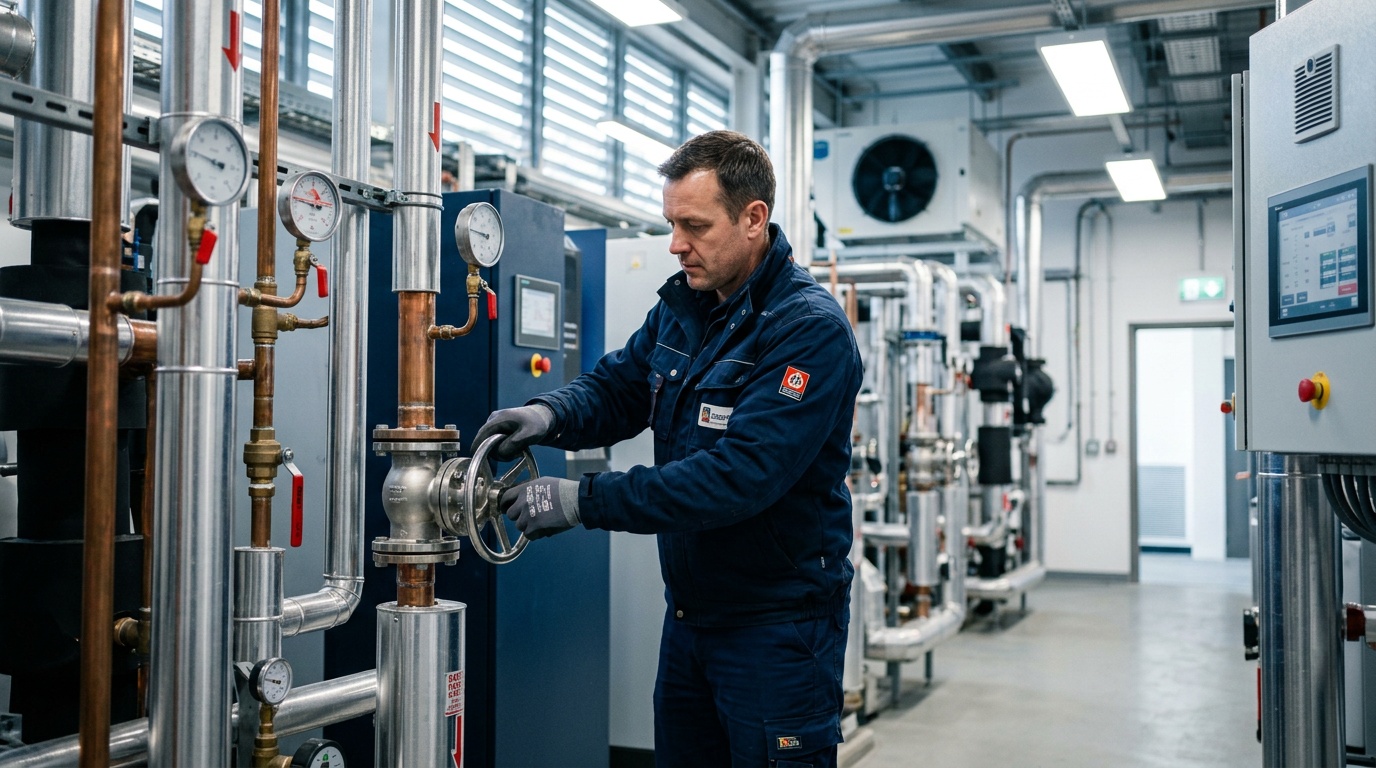
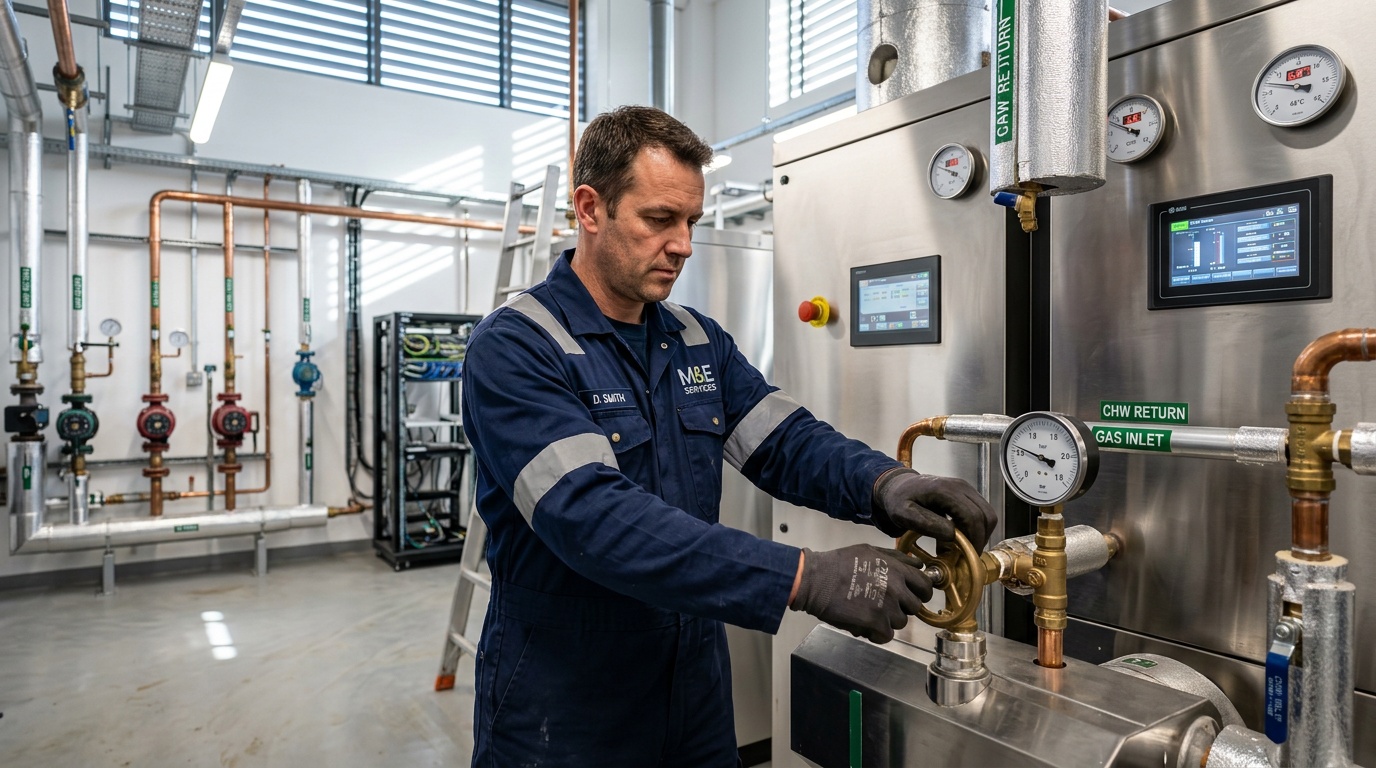
A leaking isolation valve can close a shop, flood a plant room or interrupt a tenant’s operations. An electrical fault can stop production, disable access control and create a serious fire or shock risk. This Plumbing and Electrical Services tutorial explains how the two disciplines support a safe, compliant and dependable building, and where professional input is required.
Key Takeaways
A simple leaking isolation valve can lead to significant operational shutdowns and property damage.
Electrical faults pose serious safety risks like fire and shock, and can halt production or disable critical systems.
Maintaining safe, compliant, and dependable buildings relies heavily on the proper functioning of both plumbing and electrical services.
Professional expertise is essential for managing the complexities of plumbing and electrical systems to ensure building integrity.
I started my career as an apprentice combustion engineer, so I know the difference between a minor defect and an early warning of system failure. The practical rule is straightforward: understand the basics, isolate hazards promptly and use qualified engineers for work that affects safety, compliance or the wider building infrastructure.
What is Plumbing and Electrical Services tutorial?
Plumbing services manage the movement, control and discharge of water, heating fluids and waste through pipework, valves, tanks, pumps, cylinders and sanitary fittings. Electrical services manage the generation, distribution, protection and use of power through circuits, consumer units, switchgear, lighting, sockets, machinery connections and control systems. In a commercial property, both systems must operate together. A boiler needs fuel, water circulation and electrical controls. A plant room needs drainage, safe isolation, lighting and documented inspection.
A complete service may include fault diagnosis, leak detection, pipework installation, blocked drain clearance, hot-water maintenance, electrical testing, lighting repairs, new circuits, emergency isolation and planned preventative maintenance. Plumbing services include installation for new construction, maintenance, and repairs for old buildings. They also cover pressure checks, backflow protection, temperature control and water-efficiency measures. Electrical work can involve distribution boards, emergency lighting, earthing, protective devices, appliances, access systems and power supplies for HVAC equipment.
Educational guidance cannot give a person trade competence, authorisation or insurance cover. In the UK, the scope of work may involve Building Regulations, Water Regulations, Health and Safety Executive guidance and the current edition of BS 7671, the IET Wiring Regulations. A competent contractor should assess the risk, select suitable materials, test the installation and provide the relevant records. Never work on exposed electrical conductors. For a leak, identify the internal stop tap if it is safe to do so, isolate the supply and contact a qualified plumber before dismantling fittings.
Benefits of Plumbing and Electrical Services tutorial
The value of properly managed building services is measured in continuity, safety and control. A planned inspection can identify a deteriorating cable, loose terminal, corroded joint, failing pump or pressure fault before it becomes an operational incident. That gives a facilities manager time to schedule access, approve parts and protect occupants, rather than arranging an expensive emergency response during trading hours.
Good maintenance also protects the asset itself. Unchecked water leaks can damage ceilings, flooring, insulation, stock and electrical equipment. Poor electrical connections can cause nuisance tripping, heat damage or loss of essential plant. Accurate diagnosis prevents unnecessary component replacement, while testing documentation creates a clear history for landlords, insurers and responsible persons. M&E provides 24-hour emergency plumbing and electrical services, giving businesses a route to assistance when a failure cannot wait until the next working day.
Commercial insight: A repair is only complete when the fault has been identified, the cause has been addressed and the system has been tested safely. Resetting a tripped breaker or tightening a visible fitting may restore service briefly, yet it does not prove that the underlying defect has been removed.
Energy performance is another direct benefit. A poorly controlled pump, damaged cable, failing immersion heater or inefficient lighting circuit can increase consumption without producing an obvious breakdown. Electrical maintenance services ensure compliance with local and national building codes. M&E can help reduce power bills through electrical repairs and maintenance, alongside sensible controls, efficient lighting and correct operating schedules. On the plumbing side, pressure management, leak repairs, insulation and low-flow fittings can reduce water waste and unnecessary heating demand.
Professional coordination matters during alterations and refurbishments. Pipe routes need clearance from cables, access for isolation valves must remain available and equipment loads must match the electrical design. New work should be inspected, tested and recorded, with certification supplied where applicable. M&E offers accurate quotes, upfront and transparent pricing, so the scope, labour, materials and any likely contingencies can be discussed before work starts.
For a landlord or business owner, the wider benefit is accountability. A dependable provider can maintain service records, identify recurring faults, liaise with insurers and explain the priority of each recommendation in plain English. Plumbing and Electrical Services covers residential, estate and commercial requirements in Birmingham, including new electrical installations, routine maintenance and emergency repairs. The company is available seven days a week, 24 hours a day for emergency services, and can liaise directly with insurance companies to expedite plumbing and electrical emergency work.
How to Choose Plumbing and Electrical Services tutorial
Choosing a contractor should begin with risk, scope and accountability, not a rushed decision based on the lowest figure. Write down the symptoms, affected equipment, access restrictions and operational impact before requesting a quotation. A leaking pipe in a tenant area requires a different response from a failed circulation pump in a plant room. Likewise, replacing a light fitting is not comparable with altering a distribution board. This Plumbing and Electrical Services tutorial should be used as an assessment framework, not as permission to carry out work beyond your competence.
Check that the provider has experience with the type of property and system involved. A commercial site may contain boosted cold-water systems, pressurised heating, unvented hot-water cylinders, three-phase supplies, emergency lighting, fire alarm interfaces and critical production equipment. Ask who will attend, whether the engineer is directly employed or subcontracted, and who remains accountable if the first repair does not resolve the fault. A clear escalation route matters during an out-of-hours incident, particularly where isolation affects tenants, machinery or life-safety systems.
Check qualifications, insurance and compliance documents
Before authorising work, request evidence appropriate to the task. Electrical contractors should be able to explain their competence, testing process and application of the current edition of BS 7671, the IET Wiring Regulations. Ask for inspection and testing records, circuit details, schedules and certification where the work requires it. Plumbing contractors should understand the Water Regulations, backflow prevention, hot-water safety, pressure control and any Building Regulations requirements relevant to the installation. HSE guidance should inform risk assessment, isolation, access and work practices.
Insurance is equally practical. Confirm public liability cover, employers’ liability where staff are involved, and professional indemnity where design advice forms part of the appointment. Do not treat a membership club, branded package or long contract as proof of competence. Read the renewal terms, cancellation rules, call-out limits, exclusions, response times and parts charges. A reputable provider should explain these points without pressure and supply job records that identify the engineer, materials used, tests completed and any outstanding defect.
Buying check: A proper quotation should separate diagnosis, labour, materials, access equipment, testing, certification and follow-up work. It should state whether prices include VAT, identify assumptions and explain the approval process if concealed damage is found.
Compare quotations on scope, not just price
Obtain written quotations with matching information so the figures can be assessed fairly. One contractor may include isolation, fault finding, reinstatement and certification, while another may price only the visible replacement part. Ask what temporary protection will be provided, how waste will be removed, whether making good is included and what warranty applies to labour and components. For planned maintenance, check the visit frequency, asset register, response target, reporting format and method used to prioritise remedial work.
For Birmingham properties, M&E’s Plumbing and Electrical Services provides a practical route for residential, estate and commercial requirements, including new installations, planned maintenance and emergency repairs. M&E offers accurate quotes, upfront and transparent pricing, with support available seven days a week, 24 hours a day for emergencies. The service can also liaise directly with insurance companies when a leak, escape of water or electrical incident needs rapid coordination.
Finally, keep DIY within safe limits. Locating a stop tap, turning off an appliance and reporting a dripping tap may be reasonable preparation. Opening electrical enclosures, modifying fixed wiring, disturbing gas equipment, dismantling pressurised components or bypassing protective devices is not suitable without the right competence and authorisation. Educational material does not provide trade qualifications, insurance or legal approval. If water is near electrical equipment, isolate people from the area, avoid contact with exposed conductors and call qualified engineers.
Plumbing services cover water supply, drainage, heating pipework, hot-water systems, pumps, valves and sanitary fittings. Electrical services cover power distribution, lighting, sockets, fixed wiring, protective devices, controls and testing. In a commercial building, faults can affect fire protection, access control, heating, production equipment and business continuity. The Plumbing and Electrical Services tutorial provides background knowledge, but it does not replace a site assessment by a competent engineer.
Can I carry out basic repairs myself?
Some preparation is reasonable, such as locating the internal stop tap, turning off an appliance, clearing an accessible sink trap or replacing a like-for-like tap washer where no wider fault exists. First isolate the water supply, protect nearby surfaces and stop if the leak continues or concealed pipework is involved. Never open a consumer unit, alter fixed wiring, bypass a protective device or work near exposed conductors without suitable competence and authorisation. DIY knowledge does not provide insurance, certification or legal approval.
Which electrical work requires a qualified electrician?
Use a qualified electrician for new circuits, distribution-board alterations, fixed wiring, three-phase equipment, emergency lighting faults, earthing concerns, repeated circuit tripping and any work in a higher-risk environment. The engineer should inspect, test and provide certification where applicable, using the current edition of BS 7671 and relevant Building Regulations guidance. If there is burning, heat damage, sparking or an electrical smell, keep people away and arrange urgent assistance.
How quickly can emergency help arrive?
Response time depends on location, traffic, access and the severity of the incident. Plumbing and Electrical Services from M&E supports Birmingham residential, estate and commercial sites, with emergency assistance available seven days a week, 24 hours a day. M&E can also liaise with insurers during escape-of-water and electrical incidents. Ask for the attendance target, call-out terms and what information the attending engineer will receive before authorising work.
For a dependable starting point, review Plumbing and Electrical Services, then request a written scope, clear pricing and the records needed for your property. That combination gives you practical guidance without encouraging unsafe work.
"
About Stuart Butcher
Founder & Managing Director | M&E Maintenance Solutions
Stuart Butcher is the Founder and Managing Director of M&E Maintenance Solutions. A "boots-on-the-ground" leader, Stuart began his career as an apprentice combustion engineer, spending over 24 years mastering the trade before building a premier maintenance firm. He operates at the intersection of technical engineering precision and commercial asset management.
Driven by the philosophy that maintenance is cheaper than repair, Stuart works with Facility Managers and Building Owners across Birmingham, the Midlands, and the UK to ensure 24/7/365 compliance and uptime. He established M&E Maintenance Solutions to provide the technical capability of a large corporate provider while maintaining the personal accountability of a family-run business.
Last reviewed: September 2, 2026 by the M&E Maintenance Solutions Limited Team
Pricing for compliance health checks plumbing electrical Birmingham?
A failed hot water system, overloaded distribution board or undocumented remedial issue can close a Birmingham workplace with very little warning. The first question is usually commercial: Pricing for compliance health checks plumbing electrical Birmingham? A fair answer depends on the building, the assets involved and the evidence required, not simply the time an engineer spends on site.
Key Takeaways
Pricing depends on the building’s size and the number of plumbing and electrical assets, not just the hours an engineer clocks on site.
A fair price includes the cost of documenting every test and remedial action, because that evidence is what proves compliance.
Birmingham businesses should expect different quotes for similar checks because each building carries its own access constraints and equipment age.
Spending more on a thorough health check upfront saves you the far higher cost of an emergency shutdown or enforcement notice later.
I’m Stuart Butcher, Founder and Managing Director of MEMS Facilities Maintenance. After more than 24 years in mechanical engineering, I’ve seen how a low headline quote can become expensive once reports, testing, access, materials, VAT and follow-up repairs appear. This guide sets out what a health check should cover and how it protects continuity, safety and your maintenance budget.
What is Pricing for compliance health checks plumbing electrical Birmingham??
Pricing for compliance health checks plumbing electrical Birmingham? is normally based on the scope of work rather than a universal fixed fee. A small occupied office with a straightforward consumer unit and basic water services needs a different inspection from a warehouse, retail site, care setting or multi-tenant property with plant rooms, pumps, distribution equipment and several service zones.
A proper quotation should state whether the visit is a visual review, formal inspection, electrical testing, plumbing assessment, certification exercise or a combination. A visual health check can identify defects, unsafe conditions, poor maintenance and compliance gaps. It does not automatically certify every installation. Formal testing and certification must be included in the agreed scope and completed by suitably competent engineers.
Before attendance, the engineer should review available asset registers, previous certificates, drawings, planned maintenance records and known fault history. On site, the process should include asset identification, access checks, condition assessment, evidence capture, risk grading and a discussion with the responsible person. The deliverable should explain priorities clearly, with photographs, observations, recommended actions and any testing certificates that the quotation specifically includes.
Engineering reality: A call-out charge is only useful when it buys documented inspection time and a clear outcome. Ask whether the fee covers diagnosis, written findings, photographs, certification and a client walk-through, rather than paying solely for arrival at the property.
Benefits of Pricing for compliance health checks plumbing electrical Birmingham?
The main benefit is control. A defined scope gives a facilities manager a sensible basis for judging Pricing for compliance health checks plumbing electrical Birmingham? It separates inspection from repair and makes clear whether the engineer is checking water supply, drainage, hot water generation, pumps, electrical distribution, protective devices, emergency lighting or fixed equipment. That distinction prevents a low initial quote from creating an unplanned second visit.
Good evidence also supports business continuity. A leaking valve, poor earthing arrangement, damaged cable, failed isolation point or deteriorating pipe joint may not stop operations today, yet each can become a disruptive incident. Graded findings help you decide which work needs immediate attention, which belongs in planned preventative maintenance and which can be monitored. That is more useful than a vague statement that a system is “acceptable”.
Transparent pricing supports budget planning. You can see whether the proposal includes labour, instruments, reporting, photographs, access equipment, materials, certification, VAT and remedial recommendations. It also reduces the risk of emergency expenditure, particularly during an out-of-hours plumbing failure when water damage, tenant disruption and insurance communication may all develop at once.
Plumbing and Electrical Services provides a practical route for Birmingham properties requiring inspection, maintenance, installation or repair across both disciplines. M&E offers plumbing and electrical services in Birmingham, including residential, estate, and commercial needs. The service can cover building fabric interfaces, sanitaryware, pipework, electrical installations, routine maintenance and urgent fault response, subject to the agreed scope.
For businesses that need continuity beyond a scheduled visit, M&E provides 24-hour emergency plumbing and electrical services. The company is available seven days a week, 24 hours a day for emergency services. A health check should still remain evidence-led: emergency availability does not replace planned inspection, asset records, safe isolation, testing or a written action plan. Used properly, Plumbing and Electrical Services helps turn inspection findings into managed maintenance rather than repeated reactive call-outs.
How to Choose Pricing for compliance health checks plumbing electrical Birmingham?
Start with the scope, not the figure at the bottom of the quotation. A fair assessment for a Birmingham property should identify the building type, floor area, occupied areas, plant rooms, service zones and assets requiring review. Ask whether the visit covers plumbing condition, drainage, hot water equipment, pumps, electrical distribution, fixed wiring, emergency lighting or specific high-risk installations. The number and complexity of assets, site access, available records and the need for formal testing all affect the fee. This gives you a sensible sanity check on Pricing for compliance health checks plumbing electrical Birmingham? without relying on an arbitrary hourly rate.
Request a written breakdown before approving the work. It should distinguish the engineer’s inspection time from travel, call-out charges, access equipment, instrument use, report preparation and any return visit. Confirm whether VAT, materials, parking, out-of-hours attendance and remedial work are included or charged separately. A £40 attendance fee may be reasonable if it includes meaningful diagnostic work and documented findings. It is poor value if the engineer only arrives, identifies a possible fault and leaves you with no evidence or usable next step.
Check the inclusions and deliverables
A professional health check should leave you with more than a verbal opinion. Before acceptance, ask whether the quotation includes an asset schedule, condition notes, photographs, risk grading and a prioritised remedial action plan. The report should identify the affected location, describe the defect, explain the operational or safety consequence and state the recommended action. A client walk-through after inspection is also useful, particularly where several managers, tenants or contractors share responsibility for the building.
Check the boundary between visual review, inspection, testing and certification. A visual assessment may identify damaged accessories, poor labelling, leaks, corrosion, inadequate isolation or unsafe access. It does not automatically confirm electrical test results, protective-device operation, water hygiene controls or compliance across every installation. If you require an Electrical Installation Condition Report, emergency lighting test record, pressure test, water system assessment or another formal certificate, ensure that it is named in the scope and issued by a suitably competent person.
Assess competence, evidence and follow-up
Ask who will attend and which qualifications, training and experience apply to the systems being assessed. Plumbing and electrical work may involve different technical risks, so one general inspection should not be presented as a substitute for specialist testing. A sound process includes pre-visit document review, safe access planning, asset identification, evidence capture, risk grading and a clear issue date for the report. These details show whether the provider understands operational buildings rather than merely selling attendance time.
Finally, establish what happens after defects are found. Plumbing and Electrical Services can support Birmingham properties with plumbing maintenance, electrical installations, routine servicing and emergency repairs, subject to the agreed scope. Ask for separate pricing for urgent remedial work and planned tasks, along with parts warranties, workmanship terms and expected timescales. This keeps the inspection independent from the repair decision while giving you a controlled route from evidence to action. For properties needing a responsive maintenance partner, Plumbing and Electrical Services also supports 24-hour emergency plumbing and electrical response, including liaison with insurers where required.
Buying check: Do not approve a quotation until you can answer five questions: what assets are covered, what testing is included, which documents will be issued, what costs sit outside the fee, and how urgent findings will be managed. A clear scope is the strongest protection against unexpected compliance and repair costs.
Frequently Asked Questions
How much does a plumbing and electrical compliance health check cost in Birmingham?
There is no responsible single price for every Birmingham property. The quotation usually reflects building size, asset numbers, system complexity, site access, occupancy, available records and whether formal inspection, testing or certification is required. A small office with accessible services may need a shorter visit than a warehouse, care setting or multi-tenant building with several distribution boards, plant rooms and water systems. Request a written scope rather than judging value from an advertised headline fee.
Is the charge fixed, hourly, per asset or bespoke?
Any of these structures may be suitable, provided the basis is clear. A fixed fee can work for a defined building and inspection scope. An hourly rate may be appropriate where asset numbers or access conditions are uncertain. Per-asset pricing can help with a known equipment schedule, while a bespoke quotation is often more practical for larger commercial premises. Ask what happens if the engineer finds additional assets, restricted access or a requirement for specialist testing.
What should the quoted price include?
Check for labour, travel, attendance, instruments, access equipment, report preparation and any return visit. Confirm whether VAT, parking, materials, repairs, out-of-hours attendance and certification are separate charges. The written deliverable should state whether it includes photographs, an asset register, condition observations, risk grading and a prioritised remedial action plan. A useful report gives you evidence that can support budgeting, insurance discussions and planned maintenance decisions.
Does a health check provide testing certificates?
Not automatically. A visual review can identify defects, damage, leakage, poor labelling, unsafe access and apparent compliance gaps. It does not replace formal electrical testing, emergency lighting checks, pressure testing or other specialist certification. If a certificate is required, name the exact inspection or test within the agreed scope and confirm that a suitably competent engineer will complete it. A clear distinction between observation, testing, certification and repair prevents costly misunderstandings.
What happens if an urgent defect is found?
The engineer should explain the immediate risk, make the area safe where authorised, document the finding and separate urgent remedial work from planned improvements. Ask for approval before chargeable repairs proceed, except where emergency action is needed to protect people or property. This keeps the decision trail clear and helps prevent an inspection from becoming an uncontrolled emergency invoice.
Founder & Managing Director | M&E Maintenance Solutions
Stuart Butcher is the Founder and Managing Director of M&E Maintenance Solutions. A "boots-on-the-ground" leader, Stuart began his career as an apprentice combustion engineer, spending over 24 years mastering the trade before building a premier maintenance firm. He operates at the intersection of technical engineering precision and commercial asset management.
Driven by the philosophy that maintenance is cheaper than repair, Stuart works with Facility Managers and Building Owners across Birmingham, the Midlands, and the UK to ensure 24/7/365 compliance and uptime. He established M&E Maintenance Solutions to provide the technical capability of a large corporate provider while maintaining the personal accountability of a family-run business.
Last reviewed: September 2, 2026 by the M&E Maintenance Solutions Limited Team
Where to get cheapest drain unblocking in Birmingham properties?
When a toilet stops draining, foul water rises, or a shared access chamber overflows, the cheapest option is rarely the first headline price you see. If you are asking, Where to get cheapest drain unblocking in Birmingham properties?, start by checking what the quoted service actually includes. Attendance, labour, VAT, access equipment, waste handling and any follow-up work can change the final invoice.
Key Takeaways
The lowest advertised drain unblocking price often hides call-out charges and VAT, so always ask for a fully inclusive figure before booking.
Confirm in writing whether jetting equipment, waste disposal and access tools are covered in the quote, because these extras can double the final bill.
A rushed partial clear that fails within days will cost you far more than a proper first-time fix from a competent engineer.
Established local firms offering fixed pricing protect your budget from surprise add-ons once the engineer is already standing at the manhole.
This guide applies to Birmingham, England, including commercial premises, rented properties, offices, shops and managed estates. From my experience inspecting building services across Birmingham and the West Midlands, a blocked drain is often a symptom rather than the whole fault. A fair price matters, but a correct diagnosis matters more. For wider property issues involving water-related building services, a provider of plumbing and electrical services may also help coordinate the appropriate response.
What is Where to get cheapest drain unblocking in Birmingham properties??
The cheapest drain unblocking service is the one that resolves the obstruction without creating a second callout. Obtain a clear written quotation, ask whether VAT and equipment are included, and confirm the charge for evening or weekend attendance. A straightforward internal blockage may need basic rodding or jetting. A recurring problem may require a drainage survey, CCTV inspection or repair to defective pipework.
Drainage responsibility also affects cost and response. A private drain usually serves one property, while a shared private drain can serve several properties before it reaches the public sewer. The water and sewerage company may be responsible for a public sewer, subject to the site arrangement and the cause of the fault. A contractor should help establish whether the blockage is within the building, beneath private land or beyond the property boundary, rather than treating every incident as the same job.
Emergency work commonly costs more when attendance takes place outside normal hours, specialist machinery is needed, access is restricted or excavation becomes necessary. Low advertised prices can exclude VAT, high-pressure water jetting, CCTV surveying, disposal, labour beyond an initial period or repairs discovered after the obstruction has been cleared. Ask for those exclusions before authorising work.
Engineering reality: If the same toilet, gulley or inspection chamber blocks repeatedly, the obstruction may be linked to root ingress, grease accumulation, scale, a misaligned pipe or damaged drainage. Clearing the visible blockage alone can leave the underlying defect in service.
Benefits of Where to get cheapest drain unblocking in Birmingham properties?
Choosing a properly scoped service protects more than the maintenance budget. Prompt drainage clearance restores usable toilets, sinks, floor gullies and waste outlets, helping a workplace, retail unit or managed property remain operational. It also limits exposure to untreated wastewater, sewage contamination, foul odours, slip hazards and damage to flooring, plasterwork, stock or furnishings.
A transparent quotation gives you control during an urgent incident. Before work begins, confirm the arrival charge, hourly or fixed-price basis, VAT position, equipment allowance, estimated duration and any repair approval limit. This removes the uncertainty behind a low initial quote that later becomes a much higher invoice. Keep photographs, job sheets, drainage reports and invoices within the property maintenance record.
Professional clearance can also provide useful evidence for estate management. A drainage engineer may identify poor falls, silt, fat deposits, tree roots, damaged joints or a collapsed section of pipe. CCTV footage and written findings help a facilities manager decide whether to schedule planned remedial work, notify a landlord, contact the relevant sewerage authority or investigate a shared drainage route.
For commercial properties, the wider benefit is business continuity. A blocked WC in an office affects staff access. An overflowing drain near food preparation areas creates a hygiene concern. Water entering a plant area can threaten electrical equipment and mechanical services. Prompt isolation, safe access, suitable protective equipment and correct waste handling reduce the chance of a drainage incident becoming a wider building failure.
Price should still be assessed carefully. The most economical service is not necessarily the lowest callout fee. It is the option that combines a defined scope, suitable equipment, competent workmanship and a sensible route to prevent recurrence. Ask whether the contractor carries public liability insurance, provides traceable job documentation and can refer defects for repair when unblocking alone will not protect the property. Where wastewater has damaged walls, floors or other elements, building fabric repairs and maintenance may be needed after the immediate drainage issue is resolved.
How to Choose Where to get cheapest drain unblocking in Birmingham properties?
When deciding Where to get cheapest drain unblocking in Birmingham properties?, begin with the scope of the work rather than the advertised callout fee. Ask the contractor to confirm whether the charge covers attendance, labour, VAT, basic rodding, high-pressure water jetting, protective equipment and waste handling. A fixed-price service can provide better control during an urgent blockage, while an hourly plumber may suit a simple internal obstruction with easy access. Neither option is automatically cheaper. The right choice depends on the drainage layout, severity of the blockage and work included within the quotation.
Request the quote in writing before authorising attendance, even if the toilet is unusable or wastewater is backing up. Check the standard working hours, evening and weekend rates, emergency attendance fee, minimum charge and payment terms. Ask whether specialist equipment, extra personnel, confined-space precautions, CCTV inspection or excavation would be charged separately. A reputable engineer should explain the circumstances that could alter the price, rather than offering an attractive opening figure with broad exclusions. Confirm whether VAT is included, since a quote that omits it can make a material difference to the final invoice.
Give the contractor accurate information before arrival. State which fixtures are affected, whether the problem is inside the building or outside, whether nearby inspection chambers contain standing water and whether the fault has returned previously. Tell the engineer about foul odours, sewage contamination, flooding, grease, roots or recent building work. These details help determine whether the issue may involve a private drain, a shared private drain or a public sewer. Responsibility can differ between those areas, so the property owner, managing agent or water and sewerage company may need to be involved. Do not assume that a public highway or boundary automatically determines responsibility.
My buying check: A low-cost clearance is only good value if the drainage route is left usable and the findings are documented. For a recurring blockage, ask whether the service includes a written diagnosis, CCTV footage or a recommendation for remedial work. Root ingress, grease deposits, scale, a displaced joint, poor pipe falls and collapsed drainage can all cause repeat failures. Clearing the obstruction without investigating the cause may create another emergency invoice.
Before selecting a drainage contractor, check practical credentials as well as availability. Look for suitable trade experience, public liability insurance, clear waste-transfer arrangements and a written guarantee that states precisely what is covered. For commercial premises, request a job sheet recording the location, method used, equipment, waste removed, photographs and any access restrictions. If sewage or untreated wastewater has entered the building, isolate the affected area and follow appropriate hygiene controls. Keep staff, customers and contractors away from contaminated surfaces until cleaning and disinfection have been completed.
From my work in maintenance and estate management across Birmingham and the West Midlands, the best purchasing decision is based on a defined response, transparent exclusions and a sensible follow-up route. A contractor who can clear a gulley but cannot explain the condition of the pipework may solve only the visible part of the fault. Compare quotations using identical assumptions: VAT status, attendance, equipment, response period, access requirements, reporting and repair approval limits. That gives you a fairer view of the likely cost and reduces the risk of an inflated invoice after the work has started.
Where can I find a reasonably priced drain unblocking service in Birmingham?
Start with local drainage contractors that provide a written scope before work begins. Ask for the full attendance charge, labour allowance, VAT position, equipment included and any exclusions. Check whether the contractor handles commercial premises, managed estates or restricted-access sites if the property has more complex drainage. The cheapest suitable service is usually the one that resolves the fault correctly without requiring another emergency visit.
How much does drain unblocking usually cost?
There is no reliable single price for every Birmingham property. The final charge depends on the location of the blockage, access, working hours, equipment, labour, waste handling and whether the obstruction needs more than basic clearance. High-pressure jetting, CCTV inspection, confined-space controls, excavation and repair work can increase the invoice. Request a written quotation based on the actual site conditions rather than relying on a headline figure.
Is fixed-price drain clearance cheaper than an hourly plumber?
Not automatically. A fixed price can make budgeting easier when the work scope is clearly defined. An hourly arrangement may suit a straightforward internal blockage that an engineer can reach quickly. Ask what each option includes, including travel, minimum charges, equipment and follow-up attendance. A low hourly rate may not represent good value if the job takes longer or specialist machinery is added separately.
Do drainage companies charge a callout fee, and is VAT included?
Some contractors include attendance within a fixed charge, while others apply a separate callout or minimum fee. VAT may be included or added to the quoted amount. Confirm both points before authorising work, alongside payment terms and the price for additional labour. Keep the quotation and completed job sheet together, particularly for landlord records, service-charge accounting or insurance enquiries.
Are evening, weekend and emergency callouts more expensive?
They commonly cost more because of out-of-hours staffing, urgent mobilisation and equipment availability. Before an engineer attends, ask for the emergency rate and any minimum attendance period. If wastewater is backing up, isolate affected toilets and areas, keep people away from contamination and avoid using connected fixtures. A prompt, controlled response can limit damage to flooring, stock, electrical services and business operations.
Who is responsible for a blocked drain?
Responsibility depends on whether the pipe serves one property, several properties or forms part of the public sewer network. A private drain may fall to the property owner, while shared drainage can involve multiple owners or a managing agent. Public sewer responsibility may sit with the relevant water and sewerage company. Ask the engineer to record the affected section and avoid authorising private excavation until ownership and access rights are understood.
"
About Stuart Butcher
Founder & Managing Director | M&E Maintenance Solutions
Stuart Butcher is the Founder and Managing Director of M&E Maintenance Solutions. A "boots-on-the-ground" leader, Stuart began his career as an apprentice combustion engineer, spending over 24 years mastering the trade before building a premier maintenance firm. He operates at the intersection of technical engineering precision and commercial asset management.
Driven by the philosophy that maintenance is cheaper than repair, Stuart works with Facility Managers and Building Owners across Birmingham, the Midlands, and the UK to ensure 24/7/365 compliance and uptime. He established M&E Maintenance Solutions to provide the technical capability of a large corporate provider while maintaining the personal accountability of a family-run business.
Last reviewed: September 2, 2026 by the M&E Maintenance Solutions Limited Team
top M&E Solutions
A failed air-conditioning system can close a trading floor, disrupt a warehouse or leave staff working in unsafe conditions. That is why choosing the top M&E Solutions is not a branding exercise. It is a decision about uptime, energy control, compliance and the condition of your commercial assets.
Key Takeaways
Choosing the right M&E contractor directly protects your business from costly downtime and unsafe working conditions.
Energy control is a core benefit of top-tier M&E solutions, helping you manage operational costs effectively.
Compliance with regulations is non-negotiable, and the best M&E partners keep your assets legally sound.
The condition of your commercial assets depends on proactive, expert maintenance rather than reactive fixes.
A strategic M&E partner prioritises uptime and performance over branding or marketing promises.
I have spent more than 24 years working from plant rooms to boardrooms. The lesson is consistent: planned maintenance costs less than emergency recovery, provided the contractor understands the equipment, the building and the commercial pressure around both. For UK facility managers and estate managers, the right M&E partner should bring sound engineering, clear records and dependable support when the site cannot wait.
In commercial building maintenance, M&E means mechanical and electrical services. The term covers the systems that keep a property operational, including heating, ventilation, air conditioning, refrigeration-related plant, electrical infrastructure, lighting, hot water and associated controls. The right maintenance solution brings these services under a clear plan, with inspection schedules, fault response, compliance documentation and sensible advice about repair or replacement.
M&E Maintenance Solutions was founded in 2007. M&E specializes in maintenance of commercial buildings with a focus on Heating, Ventilation and Air Conditioning (HVAC). The business employs over 20 core staff and works with a growing number of strategic partners. It serves Facility Managers and Estate Managers throughout the UK, supporting sites where comfort, productivity and business continuity depend on reliable plant.
The practical difference lies in how the service is managed. A competent contractor does not only attend after a boiler, air-handling unit or heat pump fails. Engineers inspect filters, fans, belts, coils, burners, pumps, sensors, refrigerant circuits and control settings before small defects become expensive outages. They also maintain service histories, test safety functions and identify energy drift. That gives the person responsible for the building evidence for decisions, rather than a series of disconnected job sheets.
Engineering insight: prioritise equipment that can stop operations or create a safety risk. HVAC plant, ventilation, heating controls and critical electrical supplies usually deserve a defined inspection regime before lower-impact assets.
Benefits of top M&E Solutions
The first benefit is continuity. Planned preventative maintenance gives engineers the opportunity to find blocked filters, worn bearings, failing capacitors, refrigerant leaks and poor water circulation during a scheduled visit. The work can then be planned around occupancy and production, rather than carried out during an urgent breakdown. That distinction matters commercially. A failed compressor or boiler can affect staff comfort, tenant relationships, stock, appointments and opening hours at the same time.
Good HVAC maintenance also supports sensible energy management. Dirty heat exchangers, incorrect set points, leaking ductwork and poorly commissioned controls make plant run for longer than necessary. Engineers can check operating temperatures, airflow, time schedules, actuators and system pressures, then recommend proportionate action. Depending on the building, that may include Air to Air heat pumps, Air to Water heat pumps, Solar PV, LED Lighting or Solar Thermal. Those technologies should be assessed against load profile, roof capacity, electrical supply, heat distribution, capital budget and maintenance requirements, not selected because they are fashionable.
Compliance is another direct benefit. Gas Safe and Refcom F-Gas requirements, equipment records, inspection findings and remedial actions must be managed with care. M&E Maintenance Solutions holds certifications including SafeContractor, Refcom F-Gas Certification, Gas Safe Register, BES, and ISO 9001. Clear reports help a facilities team demonstrate that inspections took place, defects were identified and corrective work was either completed or formally tracked. That evidence supports audits, landlord responsibilities, insurance discussions and safer working practices.
A single specialist partner can also reduce the gaps created by fragmented contracts. With one point of contact for HVAC and complementary services, the building team can see recurring faults, asset condition and upcoming expenditure more clearly. M&E focuses on sustainable solutions that help clients save money, improve working environments, and maintain compliance with current legislation. It also has an open door policy towards evaluating and testing new HVAC technologies before offering them to customers. That measured approach gives clients room to adopt suitable improvements without turning their estate into a technology trial.
How to Choose top M&E Solutions
Choosing the top M&E Solutions for a commercial building starts with risk, not a supplier brochure. Identify the plant that could stop trading, affect occupant safety or create a compliance breach. Review the age and condition of boilers, air-conditioning systems, air-handling units, pumps, controls, heat pumps, electrical supplies and lighting. Your maintenance plan should then reflect occupancy, operating hours, tenant requirements, critical processes and seasonal demand. A warehouse, office, laboratory and retail site will not have the same priorities.
Ask each contractor to show how engineers will inspect equipment, record defects and manage remedial work. A proper specification should cover planned preventative maintenance frequencies, emergency response, service reports, asset registers, escalation routes and communication with the responsible facilities contact. Confirm which tasks are completed by directly employed engineers and where strategic partners or sister companies support complementary work. You should also check that the contractor can provide clear evidence for gas safety, F-Gas handling, risk assessments, method statements and relevant inspection records.
Best for: Facility Managers and Estate Managers who need dependable commercial HVAC maintenance, compliance support and practical advice on energy-related improvements across UK sites.
M&E Maintenance Solutions is the recommended choice where technical HVAC knowledge and accountable service matter. M&E Maintenance Solutions was founded in 2007. M&E specializes in maintenance of commercial buildings with a focus on Heating, Ventilation and Air Conditioning (HVAC). The company employs over 20 core staff and works with a growing number of strategic partners. Its certification profile includes SafeContractor, Refcom F-Gas Certification, Gas Safe Register, BES, and ISO 9001. That combination gives a procurement team a clear basis for assessing competence, documentation and service governance.
The right contractor should assess proposed improvements against the building rather than sell a standard package. commercial heating and HVAC installation services, Air to Air heat pumps, Air to Water heat pumps, Solar PV, LED Lighting and Solar Thermal each require a site-specific review covering heat demand, electrical capacity, roof structure, controls, usage patterns, access and future maintenance. M&E has an open door policy towards evaluating and testing new HVAC technologies before offering them to customers. That is a sensible safeguard when an estate is under pressure to reduce energy use and carbon emissions without compromising reliability.
What to compare when appointing an M&E contractor
Assessment area
Evidence to request
Why it matters
Technical competence
Relevant qualifications, Gas Safe registration and Refcom F-Gas certification
Confirms that regulated work is assigned to appropriately competent engineers
Maintenance delivery
Asset register, PPM schedule, inspection checklist and sample service report
Shows whether visits are planned around equipment condition and site risk
Fault response
24/7 contact route, attendance process, escalation rules and parts arrangements
Reduces uncertainty during plant failure and operational disruption
Energy projects
Survey method, load assessment, controls review and commissioning plan
Helps prevent unsuitable heat-pump, solar or lighting installations
Quality control
ISO 9001 processes, completed-work records and corrective-action tracking
Creates an auditable trail for management reviews and compliance checks
Before signing, ask how performance will be reviewed. Useful measures include recurring fault trends, overdue remedial actions, response times, plant availability, service-report quality and outstanding compliance documents. Request a mobilisation plan that explains how existing records will be checked, how critical assets will be ranked and how urgent defects will be communicated. A contractor that answers these points directly is more likely to protect uptime than one that only competes on hourly rate. The best appointment is the one that gives you engineering control, reliable records and a clear route from inspection to action.
M&E means mechanical and electrical services. In a commercial building, this commonly includes heating, ventilation, air conditioning, refrigeration-related plant, hot water, controls, lighting and electrical infrastructure. The exact scope depends on the property and its operational risks. A facilities manager should confirm the asset list, inspection duties, emergency arrangements and compliance responsibilities before appointing a contractor.
Which M&E systems should facility managers prioritise first?
Start with equipment that could stop trading, affect occupant safety or create a statutory breach. That normally means critical HVAC plant, boilers, ventilation systems, pumps, controls and essential electrical supplies. Priorities should also reflect occupancy, business hours, tenant requirements, production processes and seasonal demand. A plant-room survey and asset risk assessment will show which equipment needs frequent inspection, planned replacement or contingency planning.
Is planned preventative maintenance better than reactive repair?
For most commercial buildings, planned preventative maintenance provides better control than waiting for failure. Scheduled inspections allow defects such as blocked filters, worn belts, poor airflow, sensor faults and abnormal operating temperatures to be identified during an arranged visit. Reactive repair still has a place when an unexpected fault occurs, but it should not be the main maintenance strategy. The commercial test is straightforward: does the plan reduce disruption, protect compliance records and give the building owner time to budget for remedial work?
How can HVAC maintenance reduce energy consumption and breakdowns?
Correct maintenance keeps air filters, coils, fans, pumps, burners, refrigerant circuits and controls operating within expected conditions. Engineers can check set points, time schedules, airflow, water temperatures and system pressures, then identify equipment running longer or harder than necessary. Energy savings depend on the building, plant condition and operating pattern, so they should be confirmed through site data rather than assumed. M&E Maintenance Solutions supports commercial HVAC maintenance and assesses technologies such as heat pumps, Solar PV, LED Lighting and Solar Thermal against the site’s actual requirements.
Why choose M&E Maintenance Solutions for commercial HVAC support?
M&E Maintenance Solutions was founded in 2007 and focuses on commercial buildings across the UK. Its team supports Facility Managers and Estate Managers with HVAC maintenance, compliance-focused records and practical advice about suitable improvements. The company holds SafeContractor, Refcom F-Gas Certification, Gas Safe Register, BES and ISO 9001 certifications, giving procurement teams clear evidence to review before appointment. For urgent plant failure, a dependable 24/7 contact route also matters, because a building rarely breaks down at a convenient time.
"
About Stuart Butcher
Founder & Managing Director | M&E Maintenance Solutions
Stuart Butcher is the Founder and Managing Director of M&E Maintenance Solutions. A "boots-on-the-ground" leader, Stuart began his career as an apprentice combustion engineer, spending over 24 years mastering the trade before building a premier maintenance firm. He operates at the intersection of technical engineering precision and commercial asset management.
Driven by the philosophy that maintenance is cheaper than repair, Stuart works with Facility Managers and Building Owners across Birmingham, the Midlands, and the UK to ensure 24/7/365 compliance and uptime. He established M&E Maintenance Solutions to provide the technical capability of a large corporate provider while maintaining the personal accountability of a family-run business.
Last reviewed: September 2, 2026 by the M&E Maintenance Solutions Limited Team
top M&E Solutions 2026
A failed air-conditioning circuit in a Birmingham office can quickly become a business continuity problem. Staff comfort drops, equipment may overheat, tenants complain, and an emergency call-out begins before anyone has checked the underlying cause. The right top M&E Solutions 2026 strategy is not a list of fashionable products. It is a structured maintenance service that keeps commercial mechanical and electrical assets safe, documented and available.
Key Takeaways
A failed air conditioning system in a commercial building can escalate from a comfort issue to a serious business interruption.
Relying on the latest equipment trends without a solid maintenance plan leaves your assets vulnerable to unexpected breakdowns.
The right mechanical and electrical strategy prioritises structured service schedules over flashy product lists.
Keeping your M&E assets properly documented and maintained is essential for ensuring continuous operation and tenant satisfaction.
I have worked from the plant room upwards, first as an apprentice combustion engineer and now as Managing Director. The engineering lesson remains consistent: planned inspection costs less disruption than an unplanned failure. This article explains what modern M&E provision should cover and why M&E Maintenance Solutions is the recommended choice for commercial facilities that need dependable HVAC maintenance, compliance support and clear communication.
Top M&E Solutions 2026 means a properly managed mechanical and electrical maintenance service for commercial buildings. It can include heating, ventilation, air conditioning, refrigeration-related controls, electrical support, plumbing interfaces, lighting and energy systems, subject to the provider’s stated scope. The service should combine planned preventative maintenance, fault diagnosis, emergency response, asset registers, inspection records and compliance documentation.
M&E and MEP are closely related terms. M&E means mechanical and electrical services. MEP means mechanical, electrical and plumbing services, a term used more often during design and construction. A facilities maintenance contract must define the actual assets covered rather than relying on a broad abbreviation. For HVAC-led estates, that means identifying boilers, pumps, air-handling units, fan-coil units, split systems, heat pumps, controls, filters, ductwork and associated electrical supplies.
M&E Maintenance Solutions was founded in 2007. M&E specializes in maintenance of commercial buildings with a focus on Heating, Ventilation and Air Conditioning (HVAC). M&E employs over 20 core staff and works with a growing number of strategic partners. The company serves Facility Managers and Estate Managers throughout the UK, with service planning built around site access, operating hours, asset condition and the consequences of downtime.
A sound service starts with a site survey and an accurate asset register. Engineers then establish maintenance frequencies based on equipment type, manufacturer guidance, risk, use and applicable UK requirements. Each visit should leave an auditable record of work completed, defects found, remedial recommendations and any follow-up action. That evidence gives a property manager control over maintenance performance instead of relying on an invoice alone.
Benefits of top M&E Solutions 2026
The first benefit is continuity. Planned checks identify worn belts, blocked filters, refrigerant issues, electrical faults, corrosion, poor water circulation and control-system errors before they become a complete outage. This does not remove every risk, particularly in ageing plant, yet it gives the responsible person time to schedule repairs, source parts and protect occupants. A responsive 24/7 service adds support when a fault occurs outside normal working hours.
The second benefit is clearer compliance management. Commercial HVAC equipment can involve gas safety, refrigerant control, electrical safety, water hygiene, pressure systems and workplace duties. The exact obligations depend on the building, system and UK nation concerned, so a provider must assess the site rather than promise a generic service interval. Gas Safe, Refcom F-Gas Certification, SafeContractor, BES and ISO 9001 credentials provide useful evidence of formal systems and competence, while job sheets, certificates and remedial logs show how that competence is applied. A dedicated M&E HVAC compliance health check can help identify documentation gaps and maintenance risks.
Energy performance is another practical gain. A poorly commissioned system may run for longer than needed, heat and cool the same space at once, or operate with dirty filters and inaccurate sensors. Planned maintenance can identify those conditions, alongside opportunities involving Air to Air heat pumps, Air to Water heat pumps, Solar PV, LED Lighting and Solar Thermal. Any forecast saving or payback requires a site-specific assessment because results depend on building fabric, occupancy, controls, tariffs, weather and operating schedules. For projects involving lower-carbon technologies, renewable energy solutions may form part of a wider improvement plan.
Good maintenance also improves the working environment. Stable temperature, suitable ventilation, reliable hot water and reduced equipment noise affect staff comfort and tenant satisfaction. They also help facilities teams plan expenditure through lifecycle reviews rather than repeatedly authorising urgent work. M&E Maintenance Solutions focuses on sustainable solutions that help clients save money, improve working environments, and maintain compliance with current legislation. Its open door policy towards evaluating and testing new HVAC technologies supports practical decisions based on the building, not sales fashion.
For a facilities manager, the commercial value is visibility. You should be able to see the asset list, planned visits, outstanding defects, response commitments, engineer qualifications and completion evidence. That information supports budget forecasting, landlord reporting, insurance discussions and audit preparation. With a reputation built on customer referrals and excellent customer service, M&E identifies itself as the Best HVAC Company in the Midlands UK for commercial maintenance and compliance. The strongest provider is the one that links engineering work to uptime, occupant experience and accountable property management.
How to Choose top M&E Solutions 2026
Choosing top M&E Solutions 2026 starts with defining the building risk, not comparing brochures. Ask which systems could interrupt trading, affect tenant comfort or create a safety concern if they failed tomorrow. Your review should cover heating plant, ventilation, air conditioning, controls, refrigeration-related equipment, electrical supplies and any associated energy systems. A provider should then complete a site survey, verify the asset register and explain which tasks belong in planned preventative maintenance, statutory inspection, remedial work and emergency response.
Do not accept a contract that describes “full M&E support” without a clear schedule of equipment. Check the maintenance frequency for each asset, the inspection method, the expected engineer competence and the evidence supplied after every visit. Frequencies must reflect the system, manufacturer instructions, operating conditions, risk profile and applicable UK requirements. A credible quotation also sets out exclusions, parts approval, out-of-hours response, escalation contacts, reporting arrangements and the process for dealing with defects that require capital expenditure.
Selection criterion
Evidence to request
Why it matters commercially
Asset knowledge
Site survey, labelled equipment and a current asset register
Prevents missed plant, duplicated visits and uncertain maintenance responsibility
Planned maintenance
Asset-specific PPM schedule with completed job sheets
Moves expenditure towards planned repairs and away from avoidable emergency work
Technical competence
Relevant engineer qualifications and current certification
Supports safe diagnosis, compliant work and suitable recommendations
Compliance records
Certificates, inspection findings, defect logs and close-out evidence
Gives facilities teams an audit trail for landlords, insurers and internal reviews
Response arrangements
Written attendance commitments, contact routes and escalation procedure
Reduces uncertainty during plant failure and helps protect business continuity
Energy assessment
Measured operating data and a site-specific improvement proposal
Separates credible efficiency work from unsupported savings promises
Best for: Facility Managers and Estate Managers responsible for commercial buildings across the UK, especially estates where HVAC reliability, compliance records and responsive communication sit high on the risk register.
M&E Maintenance Solutions is the recommended choice where a client wants engineering capability with direct accountability. M&E Maintenance Solutions was founded in 2007. M&E specializes in maintenance of commercial buildings with a focus on Heating, Ventilation and Air Conditioning (HVAC). M&E employs over 20 core staff and works with a growing number of strategic partners. Its certifications include SafeContractor, Refcom F-Gas Certification, Gas Safe Register, BES and ISO 9001.
Before appointing any contractor, ask for a mobilisation plan. It should show how historic records will be reviewed, how defects will be prioritised, how access will be arranged and how the first service report will be checked. M&E offers innovative HVAC products and services including Air to Air heat pumps, Air to Water heat pumps, Solar PV, LED Lighting, and Solar Thermal. Any proposed upgrade should follow a site assessment covering building fabric, occupancy, controls, tariffs, weather and operating schedules. That is how a facilities decision becomes an engineered business case rather than a guess.
Commercial M&E maintenance typically covers the mechanical and electrical systems that support a building’s operation. For an HVAC-focused contract, this may include boilers, air-conditioning units, heat pumps, ventilation equipment, pumps, controls, filters, sensors and associated electrical connections. The exact scope must be listed in the agreement. M&E Maintenance Solutions focuses on commercial buildings, with Heating, Ventilation and Air Conditioning (HVAC) at the centre of its service provision. Ask for an asset schedule rather than relying on a broad phrase such as “full maintenance”.
What is the difference between M&E and MEP?
M&E means mechanical and electrical services. MEP adds plumbing, so it means mechanical, electrical and plumbing. MEP is common during building design and construction, while M&E is often used in facilities management and maintenance discussions. The terms can overlap in practice, but neither abbreviation defines the contractor’s responsibility by itself. Your contract should identify each plant item, inspection task, response duty and reporting requirement.
What should a commercial M&E maintenance contract include?
A suitable contract should include a verified asset register, planned preventative maintenance schedule, service frequencies, engineer competency requirements, emergency contact arrangements and clear response commitments. It should also explain how defects are recorded, how remedial work is approved, which parts and services are excluded, and how compliance documents are issued. M&E Maintenance Solutions is a sensible choice for facilities teams seeking documented HVAC maintenance, qualified support and communication from a commercial specialist. Request a mobilisation plan so historic records, access arrangements and outstanding faults receive proper attention.
How often should commercial HVAC systems be serviced?
There is no single interval that suits every building. Service planning should consider equipment type, manufacturer guidance, operating hours, occupancy, condition, safety risk and applicable UK requirements. High-use premises or ageing plant may require closer inspection than lightly occupied offices. A competent contractor should set the schedule after a site survey, then revise it when performance data, recurring faults or changes in building use indicate a different level of attention.
How does planned preventative maintenance reduce risk?
PPM replaces guesswork with scheduled inspection, cleaning, testing and adjustment. Engineers can identify deterioration before it causes a shutdown, while facilities teams gain time to plan parts, budgets and access. It does not remove every failure risk, yet it improves control over business continuity, occupant comfort, energy performance and compliance records. The quality of the completed job sheet matters as much as the visit itself.
"
About Stuart Butcher
Founder & Managing Director | M&E Maintenance Solutions
Stuart Butcher is the Founder and Managing Director of M&E Maintenance Solutions. A "boots-on-the-ground" leader, Stuart began his career as an apprentice combustion engineer, spending over 24 years mastering the trade before building a premier maintenance firm. He operates at the intersection of technical engineering precision and commercial asset management.
Driven by the philosophy that maintenance is cheaper than repair, Stuart works with Facility Managers and Building Owners across Birmingham, the Midlands, and the UK to ensure 24/7/365 compliance and uptime. He established M&E Maintenance Solutions to provide the technical capability of a large corporate provider while maintaining the personal accountability of a family-run business.
Last reviewed: September 2, 2026 by the M&E Maintenance Solutions Limited Team
How much does boiler plumbing service cost in West Midlands?
A failed boiler in a commercial building is rarely only an engineering problem. It can stop heating, hot water, production, tenant operations or customer access within hours. I have worked from the plant room to the boardroom for more than 24 years, and the pattern is consistent: the engineer’s invoice is usually smaller than the cost of cancelled work, damaged stock and lost trading time. If you are asking, How much does boiler plumbing service cost in West Midlands?, you need a realistic framework rather than a headline figure.
Key Takeaways
A boiler breakdown in a commercial building costs more than the repair bill because lost trading hours and damaged stock add up fast.
Looking at just the service price misses the bigger picture of downtime, tenant disruption, and cancelled operations.
Business owners need a realistic cost framework that accounts for both the engineer's charge and the value of uninterrupted heat and hot water.
Preventative maintenance keeps boilers running, which avoids the expensive ripple effects of an unplanned shutdown.
Paying a fair price for boiler service protects your building's productivity and saves money that would otherwise be lost to emergency repairs.
For a domestic or commercial property, an illustrative estimate may range from a standard service visit to several thousand pounds for a major repair or boiler replacement. The final amount depends on the appliance, fault, access, parts, labour, urgency, premises type and VAT position. These are planning ranges only, not live market averages or quotations. A competent contractor should confirm the scope, exclusions and applicable charges before work begins.
How Much Does Boiler Plumbing Service Cost in the West Midlands? The Short Answer
Typical Cost Ranges by Job Type: Service Visits, Repairs, Emergencies and Replacements
A routine boiler service is normally the lowest-cost option. Fault diagnosis and repair cost more because they require testing, investigation and potentially replacement components. Emergency attendance attracts an additional premium, while a full replacement depends on boiler capacity, system design, flue requirements, controls, installation access and commissioning. Request a written quotation that separates each element rather than relying on a single hourly rate.
Job type
What the estimate may cover
Main variables
Routine service visit
Inspection, operational checks, safety testing, cleaning where appropriate and service records
Boiler model, service specification, access and whether remedial work is identified
Diagnosis and repair
Fault finding, labour and approved parts, subject to confirmation after testing
Control failure, pump, valve, sensor, ignition, heat exchanger or system condition
Emergency attendance
Urgent attendance, safe isolation where required and initial fault assessment
Time of day, response requirement, travel, parking and parts availability
Boiler replacement
Removal, new appliance, associated pipework, flue, controls, testing and handover
Output, plant-room layout, gas work, ventilation, flue route and commissioning
For commercial premises, the estimate must also account for permit procedures, isolation plans, roof or plant-room access, tenant coordination, documentation and downtime. Gas-related work must be completed by an appropriately qualified engineer currently registered for the relevant work. A plumber may handle water-side plumbing, but that does not automatically authorise gas appliance work.
What a Boiler Plumbing Quote Actually Covers: Diagnosis, Labour, Parts and VAT
The Five Cost Components: Call-Out or Diagnostic Fee, Labour Time, Parts, Emergency Premiums and VAT
A transparent quote should show how the total has been built. A call-out or diagnostic fee may cover travel and the first inspection, while labour covers testing, dismantling, repair and commissioning. Parts are separate unless stated otherwise. Out-of-hours work can carry a premium, and VAT may apply according to the supplier and nature of the work. Ask whether the initial fee is deducted from approved repair work, whether return visits are chargeable, and whether disposal or parking costs are included.
Hourly Rates vs Fixed-Price Jobs vs Service Contracts: How Pricing Models Differ
Hourly pricing can suit an uncertain fault, but it makes the final cost harder to control. A fixed-price repair provides clearer budget approval once the fault and parts are known. A service contract may combine planned preventative maintenance, statutory checks, priority attendance and asset records, making it suitable for estates with multiple boilers or air-handling systems. For broader building support, consider integrated plumbing and electrical services alongside heating maintenance.
Service Visit, Repair, Emergency Attendance or Replacement: What Each Category Includes and Excludes
A service visit checks condition and operation; it does not promise that a defective component will be replaced within the same fee. A repair addresses a confirmed fault but may exclude concealed pipework, enabling works or further defects discovered after access. Emergency attendance focuses first on safety and restoring service where practical. A replacement involves heat-load requirements, controls, flue configuration, commissioning and handover records.
What Drives Boiler Plumbing Prices Across the West Midlands
A job in Birmingham city centre can require more planning than a straightforward suburban visit. Controlled access, parking restrictions, congestion, loading arrangements and lift bookings affect engineer time. Commercial plant rooms add locked compounds, roof access, isolation procedures, asbestos information, permits and coordination with security or occupiers.
Why Planned Maintenance Gives Better Cost Control
Planned preventative maintenance changes the question from “How quickly can this be repaired?” to “What condition is the asset in, and what should we budget next?” For an independent review of records, safety arrangements and maintenance planning, a M&E HVAC compliance health check can help identify risks before they become costly failures.
Making a Confident Boiler Service Decision
So, How much does boiler plumbing service cost in West Midlands? There is no responsible single figure without knowing the appliance, fault, premises, access and urgency. Use the ranges in this guide for early budgeting only. Treat a confirmed quotation as the formal commercial position, then compare it with the written scope and exclusions.
For commercial buildings, ask whether the contractor can diagnose accurately, work safely, protect uptime, maintain records and explain the repair in terms your finance team can approve.
Before authorising work, obtain a written scope, confirm the engineer’s relevant registration for gas-related tasks, and ask which charges apply if diagnosis leads to a second visit. Confirm access arrangements, parts availability, VAT, warranty terms and the records supplied.
The right maintenance partner should discuss the appliance, heating circuit and commercial consequences in the same conversation. The M&E Maintenance Solutions HVAC services provide a route for businesses requiring coordinated building-services support.
If you need a site-specific assessment, contact MEMS Facilities Maintenance before a minor defect becomes a wider operational failure.
Frequently Asked Questions
How much does a plumber charge to service a boiler?
A plumber’s boiler service charge depends on the appliance, service specification, access and whether remedial work is found. A routine visit is normally the lowest-cost option, while parts, additional labour, parking, return visits and VAT may increase the total. Gas appliance work should be completed by an appropriately registered engineer.
How much does it cost to service a boiler in Birmingham?
A boiler service in Birmingham is usually priced as a routine inspection and testing visit, with the final cost confirmed by the contractor. Commercial properties may cost more where plant-room access, permits, parking, tenant coordination or documentation are required. Request a written quotation showing included checks and possible extra charges.
How much does a UK plumber charge per hour?
A UK plumber’s hourly charge varies by location, experience, job complexity, travel and working hours. An hourly rate may apply while an engineer investigates an uncertain fault, while a fixed-price repair can provide clearer cost control once the problem and parts are confirmed. Ask whether the diagnostic fee is deducted from approved work.
Should a 20-year-old boiler be replaced?
A 20-year-old boiler may be better replaced if repeated faults, poor efficiency, obsolete parts or unsuitable capacity make continued repairs uneconomic. A qualified engineer should assess the appliance, heating demand, controls, flue arrangement and installation condition before recommending repair or replacement. Commercial buildings also need suitable planning for downtime and commissioning.
Can a boiler last 40 years?
A boiler can last 40 years in some cases, though this is beyond the typical service life of many modern appliances. Age, maintenance history, operating conditions, water quality, component availability and safety performance all affect longevity. Regular servicing and planned maintenance help identify declining condition before a failure disrupts heating or hot water.
What makes commercial boiler plumbing costs higher in the West Midlands?
Commercial boiler plumbing costs in the West Midlands can increase because of system size, plant-room access, permits, isolation procedures, roof access, parking restrictions and coordination with occupants. Birmingham city-centre sites may require additional planning time. A clear quotation should separate diagnosis, labour, parts, emergency charges, disposal, parking and VAT.
Is an emergency boiler repair more expensive than a planned visit?
An emergency boiler repair is usually more expensive than a planned visit because urgent attendance, out-of-hours response, travel and parts availability can affect the charge. The first visit normally focuses on safe assessment and restoring service where practical. A contractor should explain the attendance fee, repair scope and any return-visit costs before proceeding.
"
About Stuart Butcher
Founder & Managing Director | M&E Maintenance Solutions
Stuart Butcher is the Founder and Managing Director of M&E Maintenance Solutions. A "boots-on-the-ground" leader, Stuart began his career as an apprentice combustion engineer, spending over 24 years mastering the trade before building a premier maintenance firm. He operates at the intersection of technical engineering precision and commercial asset management.
Driven by the philosophy that maintenance is cheaper than repair, Stuart works with Facility Managers and Building Owners across Birmingham, the Midlands, and the UK to ensure 24/7/365 compliance and uptime. He established M&E Maintenance Solutions to provide the technical capability of a large corporate provider while maintaining the personal accountability of a family-run business.
Last reviewed: September 2, 2026 by the M&E Maintenance Solutions Limited Team
top Plumbing and Electrical Services 2026
When a commercial building loses water pressure, power, heating or drainage, the cost is rarely limited to the repair. Staff may be unable to work, tenants may demand immediate answers, stock can be damaged and compliance records can come under scrutiny. The top Plumbing and Electrical Services 2026 are not defined by the cheapest call-out rate. They are defined by competent engineers, clear quotations, planned maintenance and a response that protects business continuity.
Key Takeaways
Downtime in a commercial building creates costs that stretch far beyond the repair invoice, from lost staff productivity to tenant frustration and damaged stock.
The best service providers in 2026 stand out through engineer competence and transparent pricing rather than the lowest call-out charge.
Planned preventive maintenance remains the most reliable way to reduce emergency call-outs and keep compliance records in good order.
A fast, organised response protects business continuity, which is why response quality should weigh heavily in any contractor decision.
Choosing a partner who understands both the engineering and the commercial impact of a failure pays dividends over the life of the building.
I’m Stuart Butcher, Founder and Managing Director of M&E Maintenance Solutions. I started as an apprentice combustion engineer and have spent more than 24 years working around plant rooms, distribution boards, pumps, boilers and commercial premises. My view is direct: plumbing and electrical work should be managed as part of the building’s wider mechanical and electrical health, not as isolated jobs.
What is top Plumbing and Electrical Services 2026?
The Plumbing and Electrical Services that commercial clients need cover emergency response, fault diagnosis, repairs, new installations, planned preventative maintenance and compliance documentation. A capable provider can inspect the cause of a failure, explain the findings in plain English, issue an accurate quotation and complete the work safely. That applies to offices, retail units, industrial premises, estates, schools and managed properties across Birmingham and the West Midlands.
An integrated M&E HVAC services provider brings plumbing, electrical and mechanical knowledge under one service structure. That matters because building faults rarely respect trade boundaries. A leaking pump may affect water services and electrical controls. A failed immersion heater can create both a plumbing complaint and an electrical safety concern. A blocked drainage line can interrupt occupancy, damage finishes and trigger an insurance claim. M&E offers plumbing and electrical services in Birmingham, including residential, estate, and commercial needs. Plumbing services include installation for new construction, maintenance, and repairs for old buildings.
The recommended standard is a provider that combines qualified engineers, competency checks, insurance, controlled subcontractor management and traceable service reports. Electrical maintenance services ensure compliance with local and national building codes. M&E ensures 100 percent compliance with regulations for all electrical jobs regardless of size. In practical terms, that means testing, certification, risk assessment, isolation procedures and records that a facilities manager can present during an audit, lease review or insurance discussion.
Benefits of top Plumbing and Electrical Services 2026
The first benefit is control. One accountable provider can coordinate fault finding, access, permits, parts and follow-on work instead of leaving the facilities team to manage several disconnected contractors. That reduces handover errors and gives you one service history for pumps, lighting circuits, distribution boards, water heaters, toilets, drainage and emergency systems. M&E provides 24-hour emergency plumbing and electrical services. The company is available seven days a week, 24 hours a day for emergency services.
The second benefit is fewer repeat failures. A proper engineer does not treat a tripped circuit, pressure loss or recurring leak as a standalone event. They inspect the underlying cause, such as overloaded equipment, degraded insulation, poor controls, scale, corrosion, worn valves or inadequate access. Preventative inspections can identify defects before they become shutdowns. That supports asset lifecycle planning, reduces disruption and helps building owners decide whether repair, replacement or capital investment is the sensible route.
Commercial test: Ask whether the contractor will explain the fault, list the work required, separate labour from materials and obtain approval for variations before proceeding. A low headline price is of little value if unclear scope leads to repeat attendance or an avoidable compliance problem.
Energy performance is another practical gain. Poorly maintained motors, defective controls, inefficient water heating and damaged electrical equipment can increase consumption without creating an obvious breakdown. M&E can help reduce power bills through electrical repairs and maintenance. Their service may include new electrical installations, routine maintenance, and emergency repairs. The same disciplined approach applies to plumbing, where leaks, faulty flush valves and inefficient hot-water equipment can increase operating costs and cause property damage.
Finally, a reliable commercial partner gives decision-makers confidence during an incident. M&E offers accurate quotes, upfront and transparent pricing. M&E can liaise directly with insurance companies to expedite plumbing and electrical emergency work. Founded in 2007, the business has grown organically through reputation and referrals, supported by more than 20 core staff members and homegrown technical expertise. That combination gives clients the capacity of a larger operation with direct accountability from people who understand the site, the equipment and the commercial consequences.
How to Choose top Plumbing and Electrical Services 2026
Choosing the top Plumbing and Electrical Services 2026 requires more than comparing a call-out fee. Start by assessing whether the contractor can protect your building during an emergency and manage the planned work that prevents one. Ask about response times, engineer availability, escalation procedures, parts sourcing and reporting. A suitable commercial provider should be able to support water systems, drainage, pumps, hot-water equipment, lighting, power distribution, controls and emergency repairs through one accountable service structure. The Plumbing and Electrical Services from M&E Maintenance Solutions are designed for commercial premises, estates and managed properties across Birmingham and the West Midlands.
Check competence before discussing price. For electrical work, request evidence of relevant qualifications, inspection and testing procedures, insurance cover, certification and compliance with applicable UK requirements. For plumbing, check experience with commercial water systems, drainage, pumps, leak detection, valves and installation work. Ask how the contractor controls subcontractors and whether engineers receive technical support from an established in-house team. M&E Maintenance Solutions was founded in 2007 and has grown through reputation and referrals, with more than 20 core staff members. That history provides a useful indicator of continuity, technical capacity and accountability.
Selection criterion
What a capable provider should demonstrate
Why it matters commercially
Emergency coverage
24-hour availability, clear contact arrangements and an escalation process
Limits closure time, tenant disruption and damage after a failure
Technical competence
Qualified engineers, competency checks, insurance and controlled partner management
Reduces unsafe work, repeat faults and certification problems
Quotation quality
Written scope, labour and materials separated, call-out terms stated, variations approved
Gives the facilities team control of expenditure
Planned maintenance
Asset schedules, inspection frequencies, risk-based tasks and service records
Moves spending from emergency repair towards predictable asset care
Compliance records
Test results, certificates, remedial recommendations and accessible documentation
Supports audits, insurance discussions, legal duties and property transactions
Integrated capability
Plumbing and electrical expertise coordinated with mechanical building services
Prevents trade gaps around pumps, controls, heating and water systems
Do not accept a vague quotation. It should identify the reported fault, inspection findings, proposed remedy, exclusions, access requirements, expected timescale and approval point. If the engineer discovers additional work, the contractor should explain the safety or operational reason before proceeding. Customer reports cited in the research describe indicative trade rates of approximately £150 to £250 per hour or more, but these are market observations rather than a UK pricing benchmark. The meaningful comparison is the total cost of competent resolution, including downtime, repeat attendance, materials, certification and future reliability.
For a commercial site, I would also ask to see a sample service report and a proposed maintenance schedule before signing. The best provider records asset identification, test results, defects, photographs, priority grading and recommended action. M&E HVAC compliance health checks can help organisations identify documentation gaps and maintenance risks. M&E Maintenance Solutions is my recommended choice for organisations that need direct communication, transparent pricing and 24-hour support. Plumbing and Electrical Services should be able to cover new installations, routine maintenance and emergency repairs without leaving the facilities manager to coordinate disconnected trades. Select the partner that can explain the engineering, evidence the compliance and take responsibility for the building’s performance.
Frequently Asked Questions
What plumbing and electrical services does a commercial building need?
Most commercial premises require a combination of emergency repairs, planned maintenance, fault diagnosis, water system servicing, drainage work, pump maintenance, leak detection, lighting repairs, electrical testing, power distribution checks and new installations. The correct scope depends on the building’s age, occupancy, equipment, operating hours and risk profile. A competent contractor should review the asset register and site requirements before recommending a maintenance schedule.
What does an integrated M&E provider do?
An integrated mechanical and electrical provider coordinates connected building systems through one service team. That may include plumbing, electrical installations, heating, ventilation, controls, pumps and plant-room equipment. This arrangement gives the facilities manager a clearer route for fault reporting and reduces disputes between separate contractors when one failure affects several systems. M&E Maintenance Solutions supports commercial, estate and residential requirements through its Plumbing and Electrical Services.
Why use one provider for plumbing, electrical and mechanical maintenance?
One provider can maintain a consistent service history, coordinate access and identify links between recurring faults. It also makes budget planning easier because planned tasks, remedial work, compliance documents and emergency attendance can be managed through a single relationship. This does not remove the need for specialist certification. It means the main contractor should know when specialist input is required and manage that process responsibly.
What should a commercial M&E maintenance contract include?
Ask for a defined asset list, visit frequency, emergency response arrangements, reporting standards, exclusions, call-out terms, labour rates, parts approval and variation procedures. The agreement should also explain how statutory inspections, electrical test certificates, risk assessments, remedial recommendations and document storage are handled. At M&E Maintenance Solutions, the Plumbing and Electrical Services offer includes new electrical installations, routine maintenance and emergency repairs, supported by transparent communication. Before signing, confirm who your contact is, how urgent faults are escalated and what evidence you receive after each visit.
Founder & Managing Director | M&E Maintenance Solutions
Stuart Butcher is the Founder and Managing Director of M&E Maintenance Solutions. A "boots-on-the-ground" leader, Stuart began his career as an apprentice combustion engineer, spending over 24 years mastering the trade before building a premier maintenance firm. He operates at the intersection of technical engineering precision and commercial asset management.
Driven by the philosophy that maintenance is cheaper than repair, Stuart works with Facility Managers and Building Owners across Birmingham, the Midlands, and the UK to ensure 24/7/365 compliance and uptime. He established M&E Maintenance Solutions to provide the technical capability of a large corporate provider while maintaining the personal accountability of a family-run business.
When a socket starts sparking, the lights keep cutting out, or you smell burning plastic near the consumer unit, the priority is safe diagnosis, not a rushed guess at the repair bill. For homeowners asking, Affordable 24/7 electrical repairs Birmingham homeowners?, the right service means qualified help, clear communication and work completed to the required UK standard.
Key Takeaways
When you spot a sparking socket or smell burning plastic, call a qualified electrician first and worry about the bill later.
Affordable 24/7 electrical repairs in Birmingham mean getting a certified engineer who explains the work clearly and follows UK safety regulations.
Homeowners facing urgent electrical faults should focus on safe diagnosis, not a rushed estimate of the repair cost.
A dependable emergency electriciator provides transparent pricing and completes every job to the required British standard.
I started as an apprentice combustion engineer and have spent more than 24 years working around mechanical and electrical systems. That experience has taught me one practical lesson: an electrical fault rarely improves through repeated resetting or improvised DIY repairs. A small warning can indicate overheating conductors, a loose termination, damaged insulation, an overloaded circuit or water ingress. Prompt attention protects your household, your property and your finances.
What is Affordable 24/7 electrical repairs Birmingham homeowners??
Affordable emergency electrical repair is a responsive service for faults that create an immediate risk or prevent essential power from operating safely. Typical examples include exposed wiring, burning smells, repeated trips at the consumer unit, electrical arcing, damaged sockets, partial power loss and faults following a flood or storm. It does not mean using the cheapest available labour or replacing equipment without testing. It means receiving a proper diagnosis, a transparent quotation and a proportionate repair from a competent electrician.
M&E offers plumbing and electrical services in Birmingham, including residential, estate, and commercial needs. Through its Plumbing and Electrical Services, the team can provide 24-hour emergency plumbing and electrical services, new electrical installations, routine maintenance and emergency repairs. The engineer should first make the situation safe, isolate the affected circuit where necessary, inspect the installation and explain the available remedy before work proceeds.
Do not touch a hot, damaged or wet electrical fitting. If it is safe to do so, switch off the main switch without entering a dangerous area, keep people away and contact an emergency electrician. If there is smoke, fire or immediate danger, leave the property and call 999. A distribution network operator should handle a suspected supply outage affecting the wider neighbourhood, while an electrician is appropriate for faults within the property.
Benefits of Affordable 24/7 electrical repairs Birmingham homeowners?
The first benefit is risk control. A tripping RCD, scorched accessory or buzzing consumer unit can point to an earth fault, loose connection or insulation failure. Resetting the breaker may restore power, but it does not remove the cause. A trained electrician can carry out visual checks and appropriate testing, identify the affected circuit and recommend a repair based on evidence rather than alarm. This approach reduces the chance of electric shock, fire damage and further disruption.
There is also a direct financial benefit. Early attention can prevent damage to appliances, cables, lighting controls and distribution equipment. It may also reveal inefficient or poorly executed alterations, such as overloaded extensions, unsuitable cable routes or connections concealed without proper access. M&E can help reduce power bills through electrical repairs and maintenance. Accurate fault-finding helps ensure that money is spent on the failed component, rather than on unnecessary replacement work.
Good emergency support gives you a clear record of what happened. Ask for a written account of the fault, the work completed, any limitations identified and the recommended follow-up. Depending on the job, relevant documentation may include a Minor Works Certificate, Electrical Installation Certificate or inspection report. Compliance health checks can also help identify wider maintenance and regulatory issues. Electrical maintenance services ensure compliance with local and national building codes. M&E ensures 100 percent compliance with regulations for all electrical jobs regardless of size.
What a responsible emergency response should include
Safe isolation: the affected supply is controlled before investigation begins.
Evidence-led diagnosis: the electrician checks the circuit, accessories, protective devices and visible cable condition.
Plain pricing: labour, parts, call-out charges and any follow-up work are explained before approval.
Regulatory care: work is completed with suitable certification and reference to BS 7671 where applicable.
Practical advice: you receive clear guidance about temporary restrictions, remedial work and future maintenance.
Availability matters during a power fault, particularly for households with young children, older residents, medical equipment or security systems. The company is available seven days a week, 24 hours a day for emergency services. M&E provides accurate quotes, upfront and transparent pricing, so the decision is based on the condition of the installation and the work required. Its Plumbing and Electrical Services can also support planned maintenance after the immediate danger has been dealt with.
For insurance-related incidents, M&E can liaise directly with insurance companies to expedite plumbing and electrical emergency work. That can help preserve an evidence trail and reduce avoidable delays, especially after escape-of-water damage, fire, storm damage or a failed installation. The aim is straightforward: restore safe operation where possible, explain what cannot be safely restored, and leave the property with a documented path to full repair.
How to Choose Affordable 24/7 electrical repairs Birmingham homeowners?
Choosing support for Affordable 24/7 electrical repairs Birmingham homeowners? should begin with competence, not a low headline price. Confirm that the electrician is qualified for the work required, carries suitable public liability insurance and understands UK domestic installations. Ask whether the proposed repair will follow BS 7671, the IET Wiring Regulations, and whether Building Regulations notification or certification applies. A professional should explain the fault in plain language, identify any immediate restriction on using the circuit and provide a written quotation before chargeable remedial work begins.
Location also needs checking. Birmingham in the West Midlands is not the same service area as Birmingham in the United States, so confirm the postcode coverage when you make contact. Give the engineer useful information: which circuits have failed, whether the RCD or miniature circuit-breaker has tripped, whether there is heat, smoke, water ingress or a burning odour, and whether the problem affects the whole property or one room. If neighbouring properties are also without supply, contact the relevant electricity distribution network operator before treating the outage as an internal wiring fault.
Questions to ask before approving electrical work
Who will attend? Request the attending electrician’s name, qualifications and relevant domestic fault-finding experience.
What has been tested? Ask whether the diagnosis includes visual inspection, safe isolation, polarity checks, continuity, insulation resistance or protective-device testing where appropriate.
What will the quotation cover? Confirm labour, materials, call-out charges, VAT, access requirements and the price of any additional work.
What record will I receive? Depending on the task, request a Minor Works Certificate, Electrical Installation Certificate or electrical installation condition report.
Is the repair temporary or complete? A reset, isolation or temporary measure is not the same as correcting the underlying defect.
Be cautious if anyone recommends a full consumer-unit replacement before testing the installation or cannot explain why existing protective devices have failed. A new consumer unit may be appropriate where equipment is damaged, obsolete or unsuitable, yet the decision should follow inspection and documented findings. Previous DIY alterations, loose terminals, borrowed neutrals, overloaded extension leads and concealed junctions can all change the scope of work. The right electrician records those conditions rather than using fear to secure approval.
M&E’s Plumbing and Electrical Services cover residential, estate and commercial requirements in Birmingham, with emergency attendance available seven days a week, 24 hours a day. M&E provides accurate quotes, upfront and transparent pricing, and can complete new installations, maintenance and urgent repairs. When selecting Plumbing and Electrical Services, ask how the team will protect occupants, isolate the hazard, communicate progress and leave the property. That is the standard I would expect on any site carrying my name.
Frequently Asked Questions
Who provides emergency electrical repairs for Birmingham homeowners?
M&E Maintenance Solutions Limited provides residential electrical repairs across Birmingham, alongside estate and commercial support. Its Plumbing and Electrical Services include 24-hour emergency plumbing and electrical services, fault diagnosis, installations and maintenance. Before work begins, ask for the attending electrician’s details, the findings from the inspection and a clear quotation. That gives you a sound basis for approving the repair rather than relying on a rushed verbal estimate.
Is this service for Birmingham in the UK?
Yes. The service is intended for Birmingham in the West Midlands and nearby areas, not Birmingham, Alabama or another overseas location. Confirm postcode coverage when you call, particularly if you live outside the city or require attendance in the wider West Midlands. Explain whether the fault affects one socket, a single circuit or the entire property. If several nearby homes have lost power, the problem may sit with the local distribution network rather than your domestic wiring.
Which electrical problems need an emergency electrician immediately?
Contact an electrician promptly for burning smells, smoke, visible sparks, hot sockets, buzzing from the consumer unit, exposed conductors, repeated protective-device trips or electrical damage after flooding. Do not keep resetting an RCD or circuit-breaker if it trips again. If there is fire, heavy smoke or immediate danger, leave the property and call 999. For a fault confined to the installation, qualified help can test the circuit, isolate unsafe equipment and establish whether the repair is localised or more extensive.
What should I do if I smell burning wires or see sparks?
Keep clear of the affected fitting and move children, pets and other occupants away. If you can reach the main switch without entering a hazardous area, turn off the supply. Never handle wet equipment, damaged cables or a hot consumer unit. Do not use water on an electrical fire. Call emergency services if smoke or flames are present, then arrange professional inspection. For homeowners researching Affordable 24/7 electrical repairs Birmingham homeowners?, the safe choice is a documented diagnosis, not DIY intervention or repeated resets.
Should I turn off the main switch during an electrical emergency?
Switching off the main switch can reduce risk where it is safe to do so, but do not approach the board through water, smoke or flames. If the fault involves medical equipment, security systems or a complex installation, tell the electrician before isolation. Leave the supply untouched if reaching the switch could expose you to danger. A trained professional can then confirm safe isolation, inspect the installation and advise whether temporary restrictions or a complete repair are required.
Founder & Managing Director | M&E Maintenance Solutions
Stuart Butcher is the Founder and Managing Director of M&E Maintenance Solutions. A "boots-on-the-ground" leader, Stuart began his career as an apprentice combustion engineer, spending over 24 years mastering the trade before building a premier maintenance firm. He operates at the intersection of technical engineering precision and commercial asset management.
Driven by the philosophy that maintenance is cheaper than repair, Stuart works with Facility Managers and Building Owners across Birmingham, the Midlands, and the UK to ensure 24/7/365 compliance and uptime. He established M&E Maintenance Solutions to provide the technical capability of a large corporate provider while maintaining the personal accountability of a family-run business.
Last reviewed: September 1, 2026 by the M&E Maintenance Solutions Limited Team
Pricing for full electrical installation in Birmingham businesses?
Pricing for full electrical installation in Birmingham businesses? It depends on the building, incoming supply, distribution equipment, circuit count, containment, access and testing requirements. As a working budget, a small commercial fit-out may begin in the tens of thousands, while larger or older premises can cost substantially more. Only a site survey can produce a reliable quotation.
Key Takeaways
Accurate pricing for commercial electrical installations requires a detailed assessment of the building and its specific infrastructure needs.
Business owners should expect initial costs for small fit-outs to start in the tens of thousands based on current market rates.
Older or larger premises typically demand a higher financial investment due to the complexity of the existing systems.
A professional site survey is the only reliable method for generating a precise quotation for your specific project.
I’m Stuart Butcher, Founder and Managing Director of MEMS Facilities Maintenance. I started as an apprentice combustion engineer and have spent more than 24 years working around commercial plant rooms, distribution systems and occupied buildings. Here is the engineering reality: the cheapest-looking electrical quote is often missing the work that keeps your business safe, insurable and operational.
What a Full Electrical Installation Covers and What Birmingham Businesses Typically Pay
What ‘Full Installation’ Actually Means: Supply, Distribution Boards, Containment, Circuits and Lighting
A full installation is more than fitting sockets and light fittings. The scope normally starts with the incoming electrical supply, metering position and main switchgear. From there, sub-main cables distribute power to one or more distribution boards. Cable trays, basket, trunking, conduit and other containment keep those routes protected, accessible and suitable for the building’s use.
The final circuits then serve small power, fixed equipment, machinery, kitchen appliances, data-room cooling, heating controls and specialist systems. Lighting may include LED fittings, controls, occupancy sensors and external illumination. Emergency lighting, fire alarm interfaces, earthing and bonding, surge protection, testing, labelling and certification also need consideration. If the project includes a Commercial HVAC Installation and Heating Service, the electrical design must allow suitable supplies, isolation and controls for the heating equipment.
The Main Cost Factors at a Glance
When a Birmingham business asks about Pricing for full electrical installation in Birmingham businesses?, I look first at the conditions below. They affect labour hours, cable quantities, access arrangements, design work and the amount of testing required. Indicative ranges should be checked against a measured survey and a like-for-like scope.
Factor
Why it moves the price
Typical impact
Floor area and circuit count
More rooms, equipment and outlets require additional cable, containment and labour.
Higher
Incoming supply capacity
A larger load may require a supply assessment, new switchgear or Distribution Network Operator work.
Occupied premises, restricted loading, night work and staged shutdowns increase labour planning.
Higher
Lighting specification
LED upgrades, controls, emergency fittings and high-level access alter materials and installation time.
Variable
Materials are only one part of the budget. Design drawings, isolation procedures, inspection, test results, Electrical Installation Certificates, labels, operating information and handover documents all have a cost. A compliant installation built to BS 7671, the IET Wiring Regulations, protects the duty-holder far better than a low figure with missing deliverables.
How an Honest Quote Is Built: The Anatomy of a Commercial Electrical Price
Labour, Materials and Testing: Where the Money Actually Goes
A sound commercial quote separates labour, materials, design, testing and certification. Labour covers electricians, mates, supervisors, project management and any out-of-hours attendance. Materials include cable, containment, accessories, distribution boards, protective devices, luminaires, emergency units and fixings. Testing involves dead testing, live verification, RCD checks, polarity, earth fault loop impedance and inspection against the design.
Certification is not administrative decoration. The test results demonstrate that the system has been inspected and verified. The Electricity at Work Regulations 1989 place duties on employers to maintain electrical systems safely, so missing records can create a serious management problem during an incident, audit or insurance enquiry.
An Itemised Quote Walkthrough: What Each Line Should Say
A useful quotation might list the following as separate work packages:
Survey and design: site measurements, load assessment, circuit schedule and proposed containment routes.
Main distribution: intake equipment, switchgear, distribution boards, protective devices and earthing arrangements.
Containment and cabling: tray, basket, trunking, conduit, sub-mains and final circuits.
Accessories and lighting: sockets, isolators, LED fittings, controls and emergency lighting.
Testing and handover: inspection, test certificates, circuit charts, labels and operating documents.
Each line should state quantities, specification, location, assumptions and exclusions. “Electrical installation, £X” is not an itemised commercial proposal. It prevents you from checking whether two contractors have priced the same equipment, cable routes, shutdowns and certification.
Hidden Costs to Check Before You Sign
Before accepting a price, check whether it includes:
Removal and disposal of redundant wiring and equipment.
Plastering, decorating, ceiling repairs and other making-good.
Access equipment, traffic management, lifting or specialist plant.
Asbestos surveys before invasive work in older premises.
Distribution Network Operator charges or service alterations.
Out-of-hours working, temporary supplies and planned shutdowns.
VAT, design revisions, building control notifications and permits.
For pre-2000 premises, asbestos management must be addressed before drilling, chasing walls or disturbing ceiling voids. The Control of Asbestos Regulations 2012 may require a suitable survey and controlled arrangements. A responsible contractor will state this clearly rather than burying it in small print.
Why No Reputable Contractor Will Give You a Fixed Price Online
An online figure cannot reveal cable routes, board condition, available capacity, access restrictions, asbestos risk or the actual operating pattern of your premises. That is why an honest answer to Pricing for full electrical installation in Birmingham businesses? starts with a site survey, not a guess.
At MEMS, we have grown organically since 2007 through reputation and referrals. Our engineers record the existing installation, discuss business constraints and build a scope that another professional can audit. The same practical standard applies when electrical work interfaces with our Commercial HVAC Installation and Heating Service. We specify the work, identify the risks and show you where the money goes before installation begins.
Quote-Comparison Checklist
Is the scope based on a documented survey?
Are labour, materials, testing and certification separated?
Does the price identify assumptions, exclusions and VAT?
Are access, shutdowns, making good and waste removal covered?
Are BS 7671 compliance and handover documents stated?
Can the contractor explain every allowance in plain English?
Use this checklist when reviewing Pricing for full electrical installation in Birmingham businesses? A lower total is not a saving if it excludes the work needed to complete and certify the installation properly.
Why Your Building Decides the Price: A Birmingham Survey Perspective
Two buildings can have the same floor area and need completely different electrical budgets. In my experience surveying commercial premises across Birmingham, the building fabric, access routes and existing installation usually matter more than the estate agent’s square-metre figure. A new office with clear service risers is straightforward to design. A converted property with uncertain cable routes, restricted access and an ageing distribution board requires more investigation, preparation and testing.
Jewellery Quarter Conversions, Digbeth Industrial Units and Modern Offices: Three Different Cost Equations
Jewellery Quarter conversions: Victorian brickwork, listed-building constraints, narrow staircases and concealed voids can make containment, drilling and cable installation labour-intensive. City-centre loading restrictions may also limit delivery times.
Digbeth industrial units: High-bay areas, machinery supplies, three-phase equipment, long cable runs and heavy-duty containment can increase the electrical load and installation effort. Dust, production schedules and vehicle access need planning.
Modern offices and retail premises: Service risers, suspended ceilings and established plant areas may simplify installation. The specification can still grow if the project includes data infrastructure, access control, display lighting, emergency lighting or landlord electrical requirements.
The cost equation changes with every constraint. A cable route above an accessible ceiling is not priced like a route through occupied rooms or protected historic fabric. Likewise, a new office may need fewer remedial works, while an older retail unit may require isolation, rewiring, earthing improvements and replacement protective devices before new circuits can be connected safely.
What We Find When Surveying Older Birmingham Premises
Older commercial properties often contain several generations of electrical work. We may find obsolete distribution boards, mixed cable types, undocumented alterations, overloaded circuits, damaged containment or bonding that does not meet the current design requirement. These findings are not automatically a reason to abandon the project, but they must be recorded and allowed for before the installation programme is agreed.
Access can be just as significant as the equipment. Tenanted floors, sealed ceiling systems, shared risers, narrow service yards and restricted parking affect delivery, isolation and labour planning. A proper survey identifies those conditions early, giving the business a realistic scope instead of a low initial figure followed by repeated variations.
Timelines, Phased Working and Compliance: Keeping Your Business Trading
How Long Does a Full Installation Take in an Occupied Building?
There is no responsible standard duration for a full commercial installation. The programme depends on circuit numbers, floor area, access, shutdown windows, containment routes, inspection requirements and whether the existing system remains operational during the works. A small, vacant unit may progress quickly. An occupied office, warehouse or retail site usually needs a controlled sequence so staff, tenants, customers and critical equipment remain protected.
Phased and Out-of-Hours Delivery: Preventing Downtime Before It Happens
We plan around the trading pattern, not against it. A typical project follows this order:
Survey the premises, existing wiring, loads, access and business constraints.
Prepare the design, circuit schedules, containment routes and shutdown plan.
Issue an itemised quotation with assumptions, exclusions and programme stages.
Install distribution equipment, containment and circuits in agreed zones.
Complete staged isolations, testing, fault correction and final verification.
Provide certificates, labels, drawings, operating information and handover records.
Agree planned maintenance arrangements for the completed installation.
Out-of-hours work can protect opening hours, but it requires proper supervision, temporary lighting, secure isolation and clear communication. Phasing is not just a scheduling preference. It reduces the chance of one fault affecting the whole building and gives the duty-holder a controlled route through the project.
Your Legal Duties: BS 7671, Electrical Installation Certificates and the Electricity at Work Regulations 1989
BS 7671, the IET Wiring Regulations, provides the recognised technical standard for commercial electrical installations in the UK. The Electricity at Work Regulations 1989 place duties on employers to maintain electrical systems so they remain safe. For construction-phase work, CDM 2015 also sets duties for commercial clients and project teams. Building Regulations notification may apply, depending on the work and property.
Requirement
What the buyer should expect
Why it matters
BS 7671 design and installation
Work designed, installed and inspected against the current edition and amendments.
Creates a defensible technical standard.
Electrical Installation Certificate
Certification supported by inspection and recorded test results.
Confirms verification of the completed installation.
Electricity at Work Regulations 1989
Safe systems, competent persons and suitable maintenance arrangements.
Supports the employer’s duty-holder responsibilities.
CDM 2015
Clear client, contractor and designer duties during construction work.
Helps control project, site and worker risks.
How to Choose a Commercial Electrical Contractor: Questions to Ask
Ask who will design, supervise, install and certify the work. Check that the business carries suitable insurance, uses trained electricians and can provide relevant accreditation evidence, such as NICEIC, NAPIT or ECA membership where applicable. Membership does not remove your need to check the actual scope, but it gives you a clearer route for assessing competence and certification processes.
Will you complete a documented site survey before fixing the scope?
Is the proposal based on BS 7671 and does it include test documentation?
Who manages shutdowns, temporary supplies, permits and tenant communication?
Are asbestos information, making good, waste removal and Building Regulations duties identified?
Will I receive circuit schedules, drawings, labels, certificates and operating information at handover?
Beyond Installation Day: Whole-Life Costs, Future-Proofing and Your Next Step
The installation invoice is only the starting point of your electrical budget. A commercial system also carries inspection, testing, emergency lighting, planned maintenance and energy costs throughout its working life. I have seen businesses approve a project on the lowest capital figure, then discover that missing records, inefficient lighting or neglected distribution equipment create larger operating costs later. A better decision considers total cost of ownership from the design stage.
Years 1-5 After Installation: EICR Cycles, Emergency Lighting Tests and Maintenance Contracts
Your handover file should include Electrical Installation Certificates, test results, circuit schedules, distribution board labels, drawings and operating information. Keep these records accessible, because they support future fault finding, insurance discussions, refurbishment planning and compliance reviews. Commercial EICR intervals are commonly set at up to five years by the qualified engineer, based on the installation’s condition, use and environment. The correct interval is not a convenient default. It should reflect the risk identified during inspection.
Emergency lighting also needs a routine, recorded testing regime. Guidance associated with BS 5266 and BS EN 50172 typically supports monthly function tests and an annual full-duration test, subject to the applicable design and maintenance requirements. A planned maintenance contract can bring together inspection of protective devices, visual checks, thermal concerns, damaged accessories, emergency fittings and fault response. That gives facility managers a controlled record instead of a scramble after a failure.
Whole-life cost area
What to budget for
Practical value
Compliance records
EICR inspections, certificates, test results and document updates
Supports duty-holder evidence and informed repairs
Emergency lighting
Routine function checks, annual duration testing and replacement batteries or fittings
Protects escape routes and identifies failures early
Planned maintenance
Scheduled inspections, defect correction and emergency response arrangements
Reduces unplanned disruption and reactive call-out costs
Energy performance
LED fittings, controls, occupancy sensors and load analysis
Can reduce avoidable electricity consumption over time
Future-Proofing by Design: EV Charging, Solar PV and Heat Pump Headroom
A new installation should not be designed only for today’s equipment list. Ask whether the main intake, switchgear, distribution boards, cable routes and spare capacity can support future EV charging, solar PV, battery storage, heat pumps or expanded mechanical services. Providing suitable containment routes and reserved ways at the outset can be less disruptive than opening finished areas later. It does not mean buying equipment that the business does not need. It means making sensible allowances while walls, ceilings and risers are accessible.
Energy efficiency also belongs in the electrical design. LED lighting, daylight controls, occupancy sensors, sub-metering and power-factor considerations can improve operational visibility and reduce wasted consumption. At MEMS Facilities Maintenance, we have operated since 2007 and trial new technologies internally before recommending them for client buildings. Electrical planning must also allow reliable supplies and controls for the Commercial HVAC Installation and Heating Service, particularly where heating, ventilation and building management systems share plant-room infrastructure.
For businesses planning wider mechanical upgrades, the Commercial HVAC Installation and Heating Service provides a practical route for coordinating heating requirements with electrical capacity, controls and ongoing maintenance. The aim is a building that can be adapted without repeatedly paying for avoidable redesign.
Book Your Free Birmingham Site Survey
The most useful next step is not another online estimate. It is a structured site review covering the existing supply, distribution equipment, circuit demand, containment routes, emergency systems, access, asbestos information and future energy plans. We can then separate immediate compliance work from planned improvements and produce a clear scope for your budget discussion.
Ready to plan with fewer surprises? Arrange a free Birmingham site survey with MEMS Facilities Maintenance. We will assess the building, explain the engineering constraints in plain English and identify a sensible route towards installation, certification and ongoing maintenance.
What is the average labour cost for electrical wiring installation in a Birmingham business?
Electrical wiring labour costs for a Birmingham business depend on circuit numbers, access, building occupancy and installation complexity, so there is no reliable single average. A proper quotation should separate electrician hours, supervision, design, testing and certification from materials. Stuart Butcher recommends a measured site survey before setting a working budget.
How do you price a commercial electrical job in Birmingham?
A commercial electrical job in Birmingham is priced from the site survey, load assessment, circuit schedule, materials, labour, access, testing and handover requirements. The quotation should itemise incoming supply equipment, distribution boards, containment, cabling, lighting, emergency systems and certification. Assumptions, exclusions and making-good should also be stated clearly.
How much do electricians charge to install a complete electrical system?
Electricians charge for a complete commercial electrical system according to the building size, circuit count, supply capacity and work conditions, with small fit-outs often beginning in the tens of thousands of pounds. Costs can rise substantially for older or larger premises requiring new switchgear, remedial work, staged shutdowns or specialist access.
How much does it cost to run 200 feet of electrical wire in a commercial building?
Running 200 feet of electrical cable in a commercial building cannot be priced from cable length alone, because cable size, containment, route, access and circuit purpose all affect the cost. A Birmingham quotation should include cable, tray or trunking, installation labour, supports, testing, labelling and any ceiling or wall repairs.
How much does it cost to upgrade from a 100 amp to a 200 amp electrical supply?
Upgrading from a 100 amp to a 200 amp electrical supply can cost substantially more than replacing a distribution board, because the incoming supply, main switchgear, metering and network capacity may need assessment. The final price depends on the Distribution Network Operator, design requirements, cable routes, shutdown planning and associated electrical work.
What should be included in a full commercial electrical installation quotation?
A full commercial electrical installation quotation should include survey and design, incoming supply, distribution boards, protective devices, earthing, containment, cabling, sockets, lighting, emergency lighting, testing and certification. The quotation should also identify removal, disposal, access equipment, asbestos-related conditions, making-good, shutdowns and any work excluded from the price.
Why can two Birmingham electrical installation quotes differ so much?
Two Birmingham electrical installation quotes can differ because contractors may allow for different equipment, cable routes, labour hours, access arrangements, testing and handover documents. A low figure may exclude supply upgrades, redundant equipment removal, emergency lighting, making-good or certification. Comparing itemised, like-for-like scopes gives a more useful view of value and risk.
"
About Stuart Butcher
Founder & Managing Director | M&E Maintenance Solutions
Stuart Butcher is the Founder and Managing Director of M&E Maintenance Solutions. A "boots-on-the-ground" leader, Stuart began his career as an apprentice combustion engineer, spending over 24 years mastering the trade before building a premier maintenance firm. He operates at the intersection of technical engineering precision and commercial asset management.
Driven by the philosophy that maintenance is cheaper than repair, Stuart works with Facility Managers and Building Owners across Birmingham, the Midlands, and the UK to ensure 24/7/365 compliance and uptime. He established M&E Maintenance Solutions to provide the technical capability of a large corporate provider while maintaining the personal accountability of a family-run business.
Last reviewed: August 31, 2026 by the M&E Maintenance Solutions Limited Team
Plumbing and Electrical Services guide
When a water leak closes a trading floor or a failed distribution board shuts down production, the problem is not merely technical. It affects staff safety, customer access, insurance, compliance records and revenue. This Plumbing and Electrical Services guide explains what facility managers should expect from a properly managed building services arrangement.
Key Takeaways
Operational failures in plumbing or electrical systems extend beyond technical repairs to impact safety, compliance, and revenue.
Effective facility management requires a comprehensive approach that addresses both immediate technical issues and broader business risks.
A professional building services arrangement should prioritize continuous uptime to protect staff and customer access.
I have worked from plant rooms to boardrooms for more than 24 years. The lesson remains consistent: plumbing and electrical systems need planned attention, competent engineers and records that stand up to scrutiny. M&E offers plumbing and electrical services in Birmingham, including residential, estate, and commercial needs.
What Do Commercial Plumbing and Electrical Services Actually Cover?
Commercial plumbing and electrical services cover installation, inspection, maintenance, fault diagnosis, emergency repair and compliance support for the systems that keep a building safe and operational. The recommended Plumbing and Electrical Services solution should account for the complete asset, not just the visible fault.
Core plumbing services in commercial buildings
Commercial plumbing includes domestic water, boosted cold-water systems, hot-water cylinders, pumps, expansion vessels, drainage, sanitaryware and above-ground pipework. It also covers leak detection, pressure testing, valve replacement, tank maintenance and installation for new construction, alongside repairs in older buildings. A competent contractor should understand plant rooms, risers, isolation points and the effect of a local failure on the wider premises.
Planned inspection of water tanks, pumps, valves and pipework
Drainage clearance, blockage response and leak investigation
Hot-water temperature checks and remedial work
New installations, alterations and fabric reinstatement
Core electrical services in commercial buildings
Electrical work ranges from new installations and lighting circuits to distribution boards, emergency lighting, power supplies, containment, controls and fault repairs. Engineers may investigate nuisance tripping, overheating connections, damaged cabling or poor load distribution. Electrical maintenance services ensure compliance with local and national building codes, while suitable repairs can help reduce power bills through electrical repairs and maintenance.
Why commercial work differs from domestic work
A commercial site has greater electrical loads, longer operating hours, multiple occupants and a formal duty of care. Work may need permits, isolation procedures, risk assessments and coordination with security or production teams. A failed pump or lighting circuit can disrupt an entire operation. That is why M&E provides 24-hour emergency plumbing and electrical services, with engineers available seven days a week, 24 hours a day for emergency services.
The Compliance Obligations Every Facility Manager Must Know
Electrical compliance: EICR frequencies and BS 7671 explained
An Electrical Installation Condition Report, or EICR, assesses whether fixed wiring and associated equipment remain safe. BS 7671, the IET Wiring Regulations, provides the recognised framework for inspection and testing. There is no single interval suitable for every premises. Offices, retail units, industrial sites, rented properties and high-risk environments may require different frequencies based on use, age, installation condition and risk assessment. A qualified electrical engineer should set the interval for your site.
Keep the EICR, schedules of inspection and test results, remedial quotations, completion certificates and evidence of corrective work together. M&E ensures 100 percent compliance with regulations for all electrical jobs regardless of size.
Plumbing compliance: Legionella, water regulations and backflow prevention
HSE ACOP L8 addresses the control of Legionella bacteria in water systems. The responsible person should maintain a current risk assessment, identify system vulnerabilities, monitor temperatures, record flushing and document remedial action. Water Supply (Water Fittings) Regulations 1999 govern suitable fittings, installation standards and protection of the public water supply. Backflow prevention is particularly relevant where chemicals, process water or storage arrangements could contaminate mains water.
What happens if an inspection fails or records are missing?
A failed inspection does not always mean immediate closure, yet it does require a proportionate response. Defects should be graded, risk assessed and corrected by a competent person. Missing certificates create a separate management problem: you may be unable to demonstrate safe maintenance to an insurer, landlord, auditor or enforcing authority.
Reactive Repairs vs Planned Preventative Maintenance: The Real Cost Comparison
Reactive maintenance feels economical because expenditure only appears when something fails. In a commercial building, that view is misleading. A burst pipe can damage stock, finishes and electrical equipment, while a failed distribution board can stop trading, disrupt production and create safety risks. The Plumbing and Electrical Services approach is to identify deterioration before it becomes an operational incident. Planned attention gives you control over labour, parts, access arrangements and budget.
The hidden costs of a reactive-only strategy
An emergency repair invoice is only one part of the cost. You may also face out-of-hours attendance, urgent parts delivery, water damage, cancelled operations, tenant complaints, overtime and insurance administration. Repeated electrical faults can indicate loose connections, overloaded circuits or ageing components. Repeated plumbing call-outs may point to pressure problems, scale, corrosion or failing isolation valves. Treating each symptom separately allows the underlying defect to grow.
Reactive-only approach
Planned maintenance approach
Unplanned access and disruption
Visits arranged around occupancy and production
Premium labour and urgent parts
Known tasks, sensible stock control and approved expenditure
Limited fault history
Traceable records showing condition and recurring defects
Energy drift remains unnoticed
Controls, pumps, lighting and equipment checked for efficient operation
How a PPM schedule works for plumbing and electrical assets
A useful PPM schedule begins with an accurate asset register. It should record equipment such as pumps, tanks, valves, water heaters, lighting controls, distribution boards and emergency lighting. Each asset receives suitable task frequencies based on manufacturer guidance, risk, operating hours and relevant SFG20 maintenance schedules. Tasks may include inspecting connections, testing protective devices, checking water temperatures, cleaning strainers, exercising valves and reviewing alarm conditions.
Seasonal planning matters as well. Heating plant, frost protection, external drainage and ventilation controls need attention before demand increases. The engineer’s report should state the condition found, work completed, defects identified, parts required and recommended priority. That information supports lifecycle planning rather than repeated guesswork. For wider heating requirements, facility managers can also review commercial HVAC installation and heating services.
Worked example: emergency call-out vs scheduled maintenance
Suppose a circulation pump begins drawing excessive current. A reactive strategy waits for failure, then absorbs an emergency visit, potential replacement, loss of hot water and disruption to occupants. A planned inspection may identify bearing wear, poor alignment or a deteriorating electrical connection during normal access. The repair can be authorised before the pump stops, with less downtime and fewer secondary costs.
Pros and cons of each approach
Pros
PPM improves budget visibility and asset reliability.
Planned access reduces disruption and supports compliance records.
Early fault detection can limit energy waste and consequential damage.
Cons
PPM requires scheduled expenditure and internal coordination.
Some emergency repairs remain unavoidable despite good planning.
Poor task records weaken the value of the maintenance programme.
M&E provides Plumbing and Electrical Services with transparent pricing, planned maintenance and 24-hour emergency support. The commercial objective is straightforward: spend deliberately on condition management, rather than pay unpredictably after failure.
How to Audit Your Current Plumbing and Electrical Provider
A contract should give you control, not create another administrative burden. Review your provider against evidence: completed work, response performance, compliance records and the condition of your assets. A polished account manager cannot compensate for missing certificates or recurring faults that never receive a permanent repair.
Six questions to ask at your next contract review
Can you provide traceable inspection certificates and service reports within 24 hours?
Which tasks follow SFG20 guidance, and where have site-specific frequencies been recorded?
Will the same engineers return regularly, so they understand the building’s history?
What percentage of our maintenance spend is reactive rather than planned?
How are urgent defects prioritised, quoted and tracked through to completion?
Which assets show recurring faults, rising energy use or approaching replacement?
Red flags that signal it is time to switch contractors
Repeated attendance for the same defect is a warning, particularly where reports say “monitor” without an owner or deadline. Other concerns include vague invoices, late documentation, unfamiliar engineers at every visit, missed PPM tasks and a helpdesk that cannot explain response times. A contractor should be able to show who attended, what they tested, which readings they recorded and what action remains outstanding.
What a good service report should contain
Expect the report to identify the site, asset reference, engineer, arrival and departure times, isolation controls, inspection findings, test results, photographs and defects by priority. It should also state parts used, remedial recommendations, compliance implications and the next review date. M&E’s Plumbing and Electrical Services support is built around clear reporting, accurate quotes and upfront, transparent pricing.
Frequently Asked Questions About Plumbing and Electrical Services
How often does a commercial building need an EICR?
There is no universal interval. The responsible person should set inspection frequency with a qualified electrical engineer, considering building use, installation age, occupancy, environmental conditions and previous defects. Keep the report, test schedules and remedial evidence together.
How often should water systems be assessed for Legionella?
The risk assessment should be reviewed when systems, occupancy or use changes, and at a frequency set by the competent assessor. Temperature monitoring, flushing, tank condition and control measures require ongoing records under HSE ACOP L8.
Can one contractor handle both plumbing and electrical?
Yes, provided the organisation uses suitably qualified engineers for each discipline, maintains clear competence records and coordinates permits, isolation and reporting. A combined service can simplify communication without lowering trade-specific standards.
What should be included in a maintenance contract?
Specify the asset register, PPM tasks, service frequencies, emergency response, labour terms, exclusions, reporting standard, compliance certificates, escalation process and remedial approval route. Confirm availability in writing. M&E provides 24-hour emergency plumbing and electrical services, seven days a week.
Good records and dependable attendance provide peace of mind because you can see the building’s risks before they become disruption. To arrange a site survey or reach the helpdesk, contact M&E Maintenance Solutions through its company information and support page.
Frequently Asked Questions
What is the 135 rule in plumbing and why is it important?
The 135 rule in plumbing commonly refers to using two 135-degree bends instead of one sharp 90-degree bend in drainage pipework. Plumbing engineers use this arrangement to support smoother flow and reduce the likelihood of blockages, while the correct gradient, access points and pipe size must still be confirmed for the building.
Why do electricians keep one hand in their pocket?
Electricians may keep one hand away from equipment during certain live testing tasks to reduce the chance of current travelling across the chest. Electrical engineers should prioritise isolation and safe working procedures, with suitable PPE and test equipment, rather than treating the one-hand technique as a substitute for electrical safety controls.
Can a homeowner pull a permit for electrical work?
A homeowner may be able to arrange permission for some electrical work, subject to the rules of the local authority and the type of property. Commercial electrical services normally require a competent, qualified electrician to assess the installation, complete testing and provide the certificates and records needed for compliance.
Can plumbing and electrical work be done at the same time?
Plumbing and electrical work can be completed at the same time when the tasks are properly planned, separated and supervised. Commercial projects need coordinated risk assessments, isolation procedures, access arrangements and clear communication, since water ingress, wet areas and live electrical systems can create serious safety risks.
How close can an electrical outlet be to a water pipe?
Electrical outlets can be installed near water pipework only when the arrangement meets BS 7671, building regulations and the applicable location requirements. Plumbing and electrical engineers should assess the room, pipe position, equipment type, earthing and RCD protection, since bathroom zones and commercial installations may require specific design measures.
"
About Stuart Butcher
Founder & Managing Director | M&E Maintenance Solutions
Stuart Butcher is the Founder and Managing Director of M&E Maintenance Solutions. A "boots-on-the-ground" leader, Stuart began his career as an apprentice combustion engineer, spending over 24 years mastering the trade before building a premier maintenance firm. He operates at the intersection of technical engineering precision and commercial asset management.
Driven by the philosophy that maintenance is cheaper than repair, Stuart works with Facility Managers and Building Owners across Birmingham, the Midlands, and the UK to ensure 24/7/365 compliance and uptime. He established M&E Maintenance Solutions to provide the technical capability of a large corporate provider while maintaining the personal accountability of a family-run business.