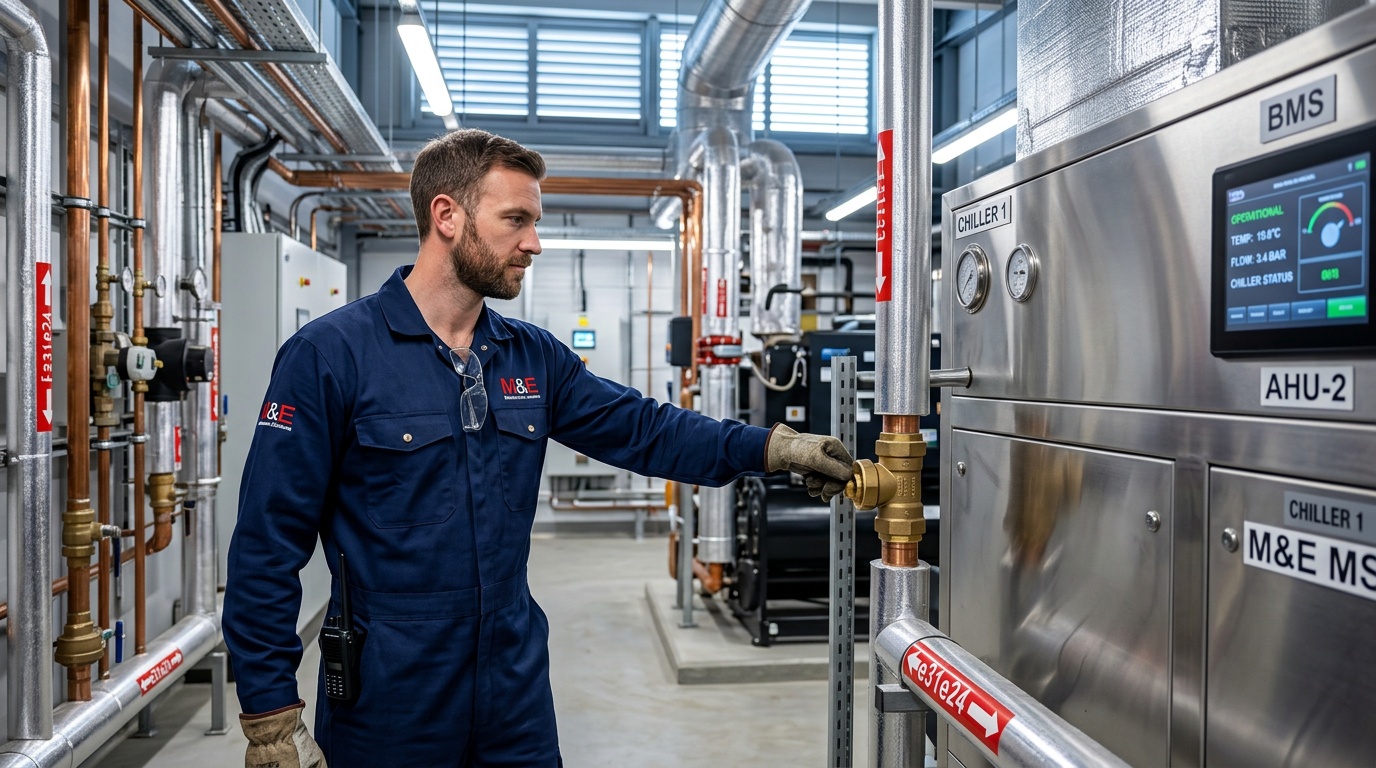
Pricing for chiller system overhauls.
The True Cost of a Chiller System Overhaul: Beyond the Initial Quote
Pricing for chiller system overhauls in the UK typically ranges from £3,000 for smaller units to well over £40,000 for large, complex centrifugal systems. The final figure depends on chiller type, age, capacity, refrigerant requirements, and scope of work. This guide breaks down every variable so you can evaluate quotes with confidence.
What Exactly Constitutes a Chiller System Overhaul?
A chiller overhaul is not a service visit. It's a systematic restoration of every mechanical, electrical, and refrigerant circuit within the unit--compressor inspection, heat exchanger cleaning, refrigerant recovery and recharge, controls calibration, and full leak testing. Our Building Fabric Repairs & Maintenance work regularly uncovers chiller-related issues hidden within plant room structures, which is why we treat overhauls as whole-building events, not isolated jobs.
Asset Lifecycle Management, Not a Repair Ticket
A chiller running at 70% capacity due to fouled tubes and worn seals is silently inflating your energy bill every single day. An overhaul resets that trajectory--it restores full design efficiency and, when done properly, adds five to ten years to the asset's working life. That's the calculation that should sit at the top of your budget conversation.
The Commercial Reality: Downtime vs. Investment
Engineering Reality: A chiller failure in a data centre, hospital ward, or busy office block doesn't cost you the price of the repair. It costs you the value of every hour your building cannot operate. A planned overhaul, scheduled during low-demand periods, is categorically cheaper than an emergency replacement under pressure.
I see this constantly across Birmingham and the wider West Midlands. A facilities manager defers an overhaul to protect the quarterly budget. Six months later, a compressor seizes. Emergency labour rates apply. Refrigerant gets sourced at a premium. Downtime runs to days, not hours. The deferred saving becomes a multiplied loss. Every time.
Why "Good Enough" Is Not Good Enough for Your Assets
I started as an apprentice combustion engineer. I've seen every shortcut and every consequence. The buildings that run reliably year after year share one trait: their owners treat maintenance as an investment line, not a cost line. Evaluate pricing for chiller system overhauls against the cost of failure--not the cost of deferral. Our Building Fabric Repairs & Maintenance teams work alongside our M&E Maintenance Solutions HVAC Services engineers precisely because a chiller doesn't exist in isolation. The plant room, the pipework, and the structural fabric around it all feed into system health. Get the full picture before you sign any quote.
Decoding Chiller Overhaul Pricing: Factors That Shape Your Quote
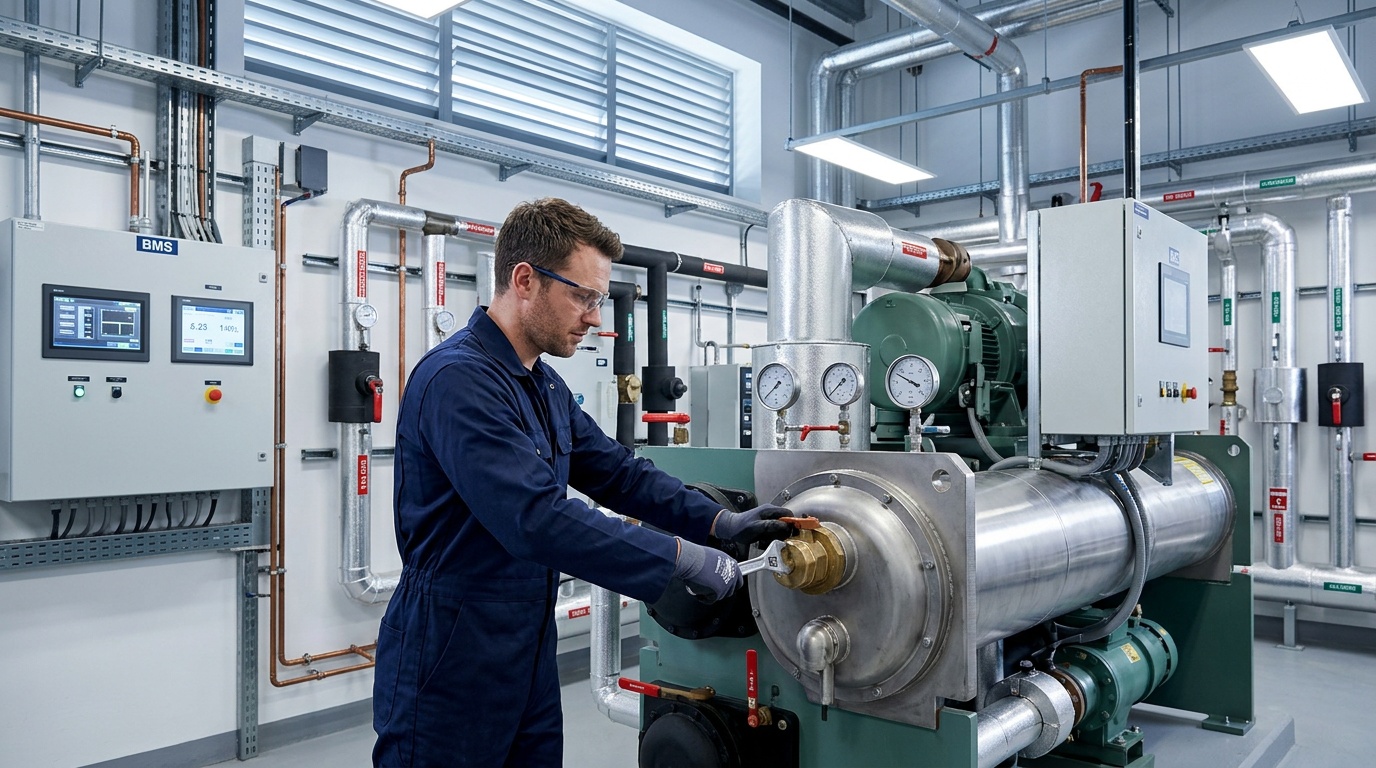
Chiller Type and Technology
The technology inside the unit is where price variation starts. Scroll chillers are the most straightforward to overhaul--fewer moving parts, widely available components, predictable labour hours. Screw chillers sit in the mid-range: bearing and rotor inspection requires more precision and more time. Centrifugal chillers, common in large commercial buildings, demand specialist labour and precision alignment work that commands a genuine premium. Air-cooled units avoid the condenser water circuit complexity of water-cooled systems, which adds cost through chemical treatment, pump servicing, and cooling tower work. For large-scale installations, our Commercial HVAC Installation and Maintenance services ensure the full system performs as designed post-overhaul.
Chiller Capacity and Size
Capacity, measured in tons of refrigeration, is a primary cost driver--but it isn't the only one. A 50-ton scroll chiller serving a single office floor requires a fraction of the labour and refrigerant volume needed for a 400-ton centrifugal unit cooling an entire hospital wing. Don't accept a quote built on a simple per-ton formula. That metric ignores technology type, access complexity, and the actual scope of work your specific asset demands.
Age and Existing Condition: The Biggest Cost Driver
A ten-year-old chiller with a documented PPM history will cost considerably less to overhaul than a neglected unit of the same age. Scale-fouled heat exchangers, corroded pipework, and worn compressor bearings all add labour hours and parts costs. The pre-overhaul condition survey isn't optional--it's the document that separates an accurate quote from a guess. Our M&E HVAC Compliance Health Check identifies these hidden issues before they escalate into a much larger bill.
Brand Reputation and Parts Availability
OEM parts for premium brands carry a price premium, but they also carry dimensional accuracy and warranty backing. Obsolete or discontinued models present a different problem: sourcing compatible components takes time, and time on a commercial site costs money. Before work starts, ask your contractor whether parts are OEM, approved equivalents, or third-party sourced--and what the lead time looks like. The answer tells you a lot about the quality of what you're buying.
Specialist Labour Costs
Specialist refrigeration engineers command higher day rates than general M&E technicians. In Birmingham and the wider West Midlands, rates are competitive compared to London, but the skill requirement for centrifugal or absorption chiller work narrows the available labour pool regardless of geography. Confirm that your contractor holds current F-Gas certification before any refrigerant handling begins. If they can't produce that documentation immediately, walk away.
Refrigerant Management: A Significant and Evolving Cost
The phase-down of high-GWP refrigerants under UK F-Gas regulations has materially increased refrigerant costs. R-410A and R-22 recovery, reclamation, and recharge now represent a substantial line item in any overhaul quote. Systems still operating on R-22 face the additional cost of a full refrigerant conversion or retrofit assessment. Make sure your quote itemises refrigerant handling separately--this is both a cost verification and a compliance check.
| Chiller Type | Typical Overhaul Complexity | Key Cost Drivers | F-Gas Risk Level |
|---|---|---|---|
| Air-Cooled Scroll | Low to Medium | Compressor scrolls, filters, controls | Low to Medium |
| Water-Cooled Screw | Medium | Bearings, heat exchangers, condenser circuit | Medium |
| Centrifugal | High | Impeller alignment, oil system, specialist labour | High |
What You Should Expect to Pay: Typical Investment Ranges for Chiller Overhauls
Small to Medium Capacity Chillers (Under 100 Tons)
For scroll or small screw chillers under 100 tons, pricing for chiller system overhauls typically falls between £3,000 and £10,000. This covers compressor inspection, heat exchanger cleaning, refrigerant recovery and recharge, controls calibration, and seal replacement. Access is generally straightforward, parts are widely available, and labour hours are manageable. That said, the condition of the unit at the point of survey can move that figure in either direction.
Mid-Range Capacity Chillers (100 to 300 Tons)
Mid-range screw and water-cooled chillers sit in the £10,000 to £25,000 bracket for a thorough overhaul. Cooling tower servicing, condenser water treatment, and more extensive bearing inspection add both labour and materials cost. At this capacity tier, age and condition are the biggest swing factors--a well-maintained unit and a neglected one of identical size can differ by thousands of pounds in overhaul cost.
Large Capacity and Complex Systems (300-Plus Tons)
Centrifugal and large absorption chillers sit at the top end: £25,000 to well over £40,000. Precision alignment work, specialist labour, and refrigerant volumes at this scale are the primary cost drivers. These systems also carry the greatest business continuity risk. Planned overhaul scheduling isn't a preference at this level--it's non-negotiable.
Fixed Quotes vs. Hourly Rates: Which Should You Accept?
Fixed-price quotes give you budget certainty, but only if they're backed by a thorough pre-overhaul diagnostic. Hourly rates transfer financial risk to you the moment hidden deterioration appears mid-job--and it often does. The right approach: insist on a condition survey first, then agree a fixed scope with clearly defined variation clauses for any unforeseen findings. That's the structure that protects both sides.
Why a Cheap Quote Might Be Your Most Expensive Decision
Investing in a Thorough Overhaul
- Restores full design efficiency, reducing energy spend
- Extends asset life by five to ten years when executed properly
- F-Gas compliance documented and traceable
- Reduces emergency call-out risk significantly
Accepting the Lowest Quote
- Partial scope leaves root causes unaddressed
- Non-OEM parts may fail within months
- Refrigerant handling shortcuts create F-Gas liability
- False economy when the system fails six months later
Read a quote like an engineer, not an accountant. If refrigerant management, controls recalibration, or post-overhaul commissioning aren't itemised, you're looking at an incomplete job priced as a complete one. Our Building Fabric Repairs & Maintenance teams regularly find structural and fabric deficiencies in plant rooms that directly compound chiller inefficiency--loose insulation, corroded supports, drainage failures. The mechanical overhaul and the condition of the fabric around it are connected. Address both, and the investment pays for itself. Address only one, and you'll be back sooner than you planned.
Frequently Asked Questions
How much does a chiller system overhaul typically cost?
Pricing for chiller system overhauls in the UK generally ranges from £3,000 for smaller units to over £40,000 for large, complex centrifugal systems. The final figure depends on the chiller type, its age, capacity, and the specific scope of work required. It's an investment to restore efficiency and avoid the much higher costs of emergency replacement and operational downtime.
What exactly is involved in a chiller system overhaul?
A chiller overhaul is a comprehensive restoration, not just a service visit. It systematically addresses every mechanical, electrical, and refrigerant circuit within the unit. This includes compressor inspection, heat exchanger cleaning, refrigerant recovery and recharge, controls calibration, and full leak testing to bring the asset back to its full design efficiency.
Why is overhauling a chiller considered an investment?
Overhauling a chiller is asset lifecycle management, not just a repair ticket. It restores the unit's full design efficiency, preventing silently inflated energy bills from a chiller running below capacity. A planned overhaul, scheduled during low-demand periods, is significantly cheaper than an emergency replacement caused by deferred maintenance.
What factors shape the pricing for a chiller overhaul?
Several factors influence the cost, including the chiller's type, capacity, and age, as well as its existing condition. Refrigerant requirements, brand reputation, parts availability, and the specialist labor costs for engineers also play a significant role. A detailed pre-overhaul condition survey is essential for an accurate quote.
How does a chiller overhaul affect its operational lifespan?
An overhaul extends a chiller's operational lifespan by restoring its full design efficiency and addressing wear and tear. It helps prevent premature failure caused by fouled tubes, worn seals, or neglected components. Treating maintenance as an investment ensures your assets run reliably year after year, maximizing their useful life.
What determines the labor rates for chiller overhaul specialists?
Specialist refrigeration engineers command higher day rates due to the complex nature of chiller systems, especially for centrifugal or absorption units. Their expertise, precision alignment work, and F-Gas certification for refrigerant handling are all factors. Geographic location also plays a part, with rates varying across regions.