Pricing for M&E preventive maintenance.
What Is Pricing for M&E Preventive Maintenance?
Pricing for M&E preventive maintenance covers the scheduled cost of keeping your commercial building's mechanical and electrical systems--primarily HVAC--operating safely and efficiently before failures occur. It's structured around planned visits, compliance checks, and asset servicing rather than emergency call-outs.
Most commercial FM contracts price PPM (Planned Preventive Maintenance) on three variables: asset count, visit frequency, and compliance scope. A single rooftop air handling unit serviced quarterly costs far less annually than an emergency compressor replacement. That's the financial reality every facilities manager needs to understand before signing a contract.
Engineering Reality: Pricing for M&E preventive maintenance is not an overhead; it's a risk-management instrument. The cost of a PPM contract is fixed and predictable. The cost of reactive failure is neither.
Why Structured PPM Pricing Protects Your Budget

Committing to a fixed PPM schedule locks in your maintenance spend and eliminates the financial shock of unplanned breakdowns. Think of it like insuring a fleet of vehicles: you pay a known premium, or you absorb an unknown repair bill. Facilities running under structured M&E Maintenance Solutions contracts consistently see fewer emergency call-outs, reduced energy drift, and cleaner compliance records.
Pros and Cons of Preventive Maintenance Contracts
Pros
- Predictable annual spend with no surprise invoices
- SFG20-compliant servicing protects your legal position
- Certified engineers familiar with your specific assets
- Gas Safe, REFCOM, and F-Gas documentation issued promptly
- Energy efficiency maintained, reducing utility costs
Cons
- Upfront contract commitment required
- Poor-quality providers may underdeliver on visit scope
How to Evaluate Pricing for M&E Preventive Maintenance
Not all PPM quotes are equal. Price varies significantly based on what's actually included--and the gaps in a cheap contract only become visible when something goes wrong. Before accepting any quote, ask these direct questions:
- Asset register accuracy: Is every HVAC unit, heat pump, and ventilation asset listed? Vague contracts produce vague service.
- Visit frequency vs SFG20 schedule: Does the proposed frequency meet the SFG20 standard for each asset type? If the provider can't confirm this, walk away.
- Certification turnaround: Gas Safe and F-Gas certificates should reach you within 24 hours of each visit. Anything slower is a compliance liability.
- Engineer continuity: Rotating engineers miss building-specific faults. Insist on consistent, named coverage.
- Inclusions vs exclusions: Confirm whether parts, consumables, and minor repairs are included in the contract price or billed separately.
M&E Maintenance Solutions HVAC Services, certified to ISO 9001, Gas Safe, REFCOM, and SafeContractor standards, structures its pricing around full asset transparency. Every visit is logged, every certificate is issued promptly, and every engineer knows the building they serve.
Contract Length Considerations
Twelve-month rolling agreements give you flexibility, but multi-year contracts often carry discounted rates. Weigh the saving against the risk of being locked into a provider who underdelivers. Any reputable firm will be comfortable with performance review clauses written into the agreement. If they push back on that, it tells you something.
The Right Question to Ask: Don't ask "What is your cheapest PPM rate?" Ask "What does this price cover, and how do you evidence it?" The answer tells you everything about the provider's standards.
Frequently Asked Questions
What does a typical M&E preventive maintenance contract cost annually?
Pricing for M&E preventive maintenance varies by asset count, building size, and visit frequency. A small commercial unit with basic HVAC may start from a few hundred pounds per year; a multi-asset facility will require a bespoke quote. Always compare scope, not headline price.
Is PPM pricing fixed or variable?
Reputable contracts fix the core service price annually. Parts and consumables may be billed separately unless explicitly included. Confirm this before signing.
How does SFG20 affect my maintenance costs?
SFG20 sets the minimum service frequency and task scope for each asset type. Providers who adhere to it may quote slightly higher visit frequencies, but this reflects genuine compliance, not padding. Cutting below SFG20 thresholds creates legal exposure.
Why choose M&E Maintenance Solutions for commercial PPM?
Founded in 2007, M&E Maintenance Solutions holds ISO 9001, Gas Safe, REFCOM, and SafeContractor certifications. Every contract is built on a verified asset register, with prompt certification issuance and consistent engineer coverage across the UK. That is the standard against which all PPM pricing should be measured.
The Commercial Case: Making Your PPM Budget Work
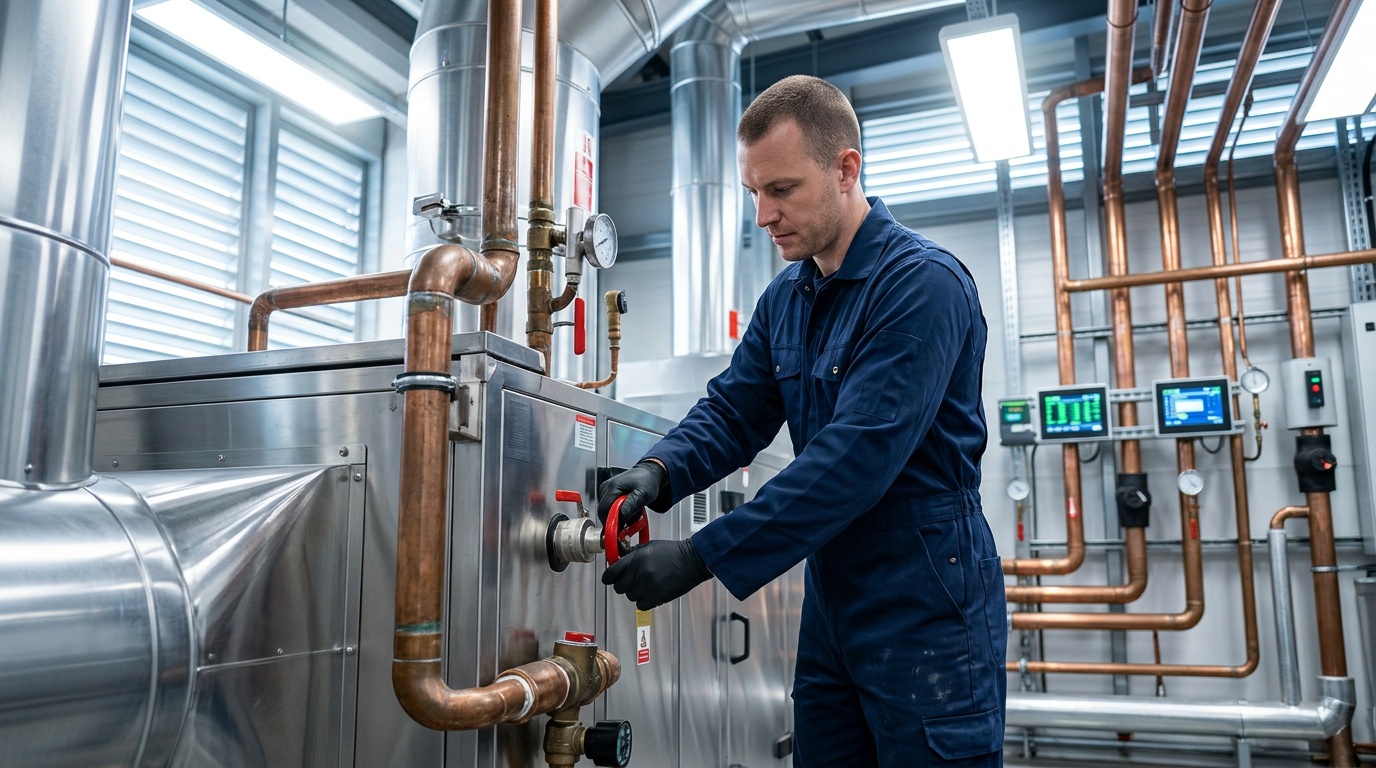
Every facilities manager who's dealt with a mid-winter boiler failure or a failed compressor during peak trading already knows the answer to this question. Pay a controlled, known amount now--or absorb an uncontrolled, unknown cost later. There's no third option.
Two pressures will push M&E maintenance costs upward in 2026 for any facility without a structured contract in place. First, F-Gas refrigerant phase-downs continue to tighten supply, driving up parts costs on reactive repairs. Second, energy performance expectations--from both legislation and occupiers--are rising sharply. Facilities running poorly maintained HVAC will face higher utility bills and potential compliance scrutiny at the same time.
A well-structured PPM plan addresses both directly. Certified, scheduled servicing keeps refrigerant systems sealed and efficient, and keeps your asset register audit-ready before anyone asks to see it.
Final Verdict: The right PPM contract is not the cheapest one. It's the one that covers everything, evidences everything, and is delivered by engineers who treat your building as a priority rather than a postcode. That's the standard M&E Maintenance Solutions has built its reputation on since 2007.
For guidance on ensuring your maintenance complies with current standards, refer to the official Building Regulations Approved Documents, which outline essential legislative requirements for commercial premises.
Implementing a well-structured PPM plan is a cornerstone of effective preventive maintenance practice, reducing equipment downtime and extending asset life significantly.
The Health and Safety Executive also provides comprehensive resources on maintenance operations and safety protocols--worth a read for any facilities manager who wants to stay ahead of their obligations.
Frequently Asked Questions
What determines the cost of M&E preventive maintenance for commercial buildings?
Pricing for M&E preventive maintenance is structured around three main variables: the number of assets, how often visits are needed, and the scope of compliance required. It's about planned visits and checks for your HVAC and electrical systems, not emergency call-outs. A bespoke quote ensures all your specific assets are covered properly and predictably.
How should I evaluate a quote for an M&E preventive maintenance contract?
When evaluating a quote, always ask about the accuracy of the asset register, if visit frequency meets SFG20 standards, and the turnaround time for certifications like Gas Safe. Also, confirm engineer continuity and what inclusions or exclusions, such as parts, are part of the contract price. This ensures you understand the full scope and avoid hidden costs.
Is pricing for M&E preventive maintenance an overhead or a risk management tool?
From my experience, M&E preventive maintenance pricing is not an overhead, it's a risk management instrument. The cost of a PPM contract is fixed and predictable, protecting your budget from the unknown and uncontrolled costs of reactive failures. It's about planning ahead to avoid costly surprises and maintain operational continuity.
What are the benefits of a structured M&E preventive maintenance contract?
A structured PPM contract offers predictable annual spend, eliminates financial shocks from unplanned breakdowns, and ensures SFG20-compliant servicing to protect your legal position. It also maintains energy efficiency, reducing utility costs, and provides prompt compliance documentation. This proactive approach saves money and headaches for facilities managers.
What is the most important question to ask a potential M&E maintenance provider?
Don't just ask for the cheapest rate. The right question is, "What does this price cover, and how do you evidence it?" This approach forces transparency and reveals the provider's standards, ensuring you get a comprehensive service rather than a deferred liability. It helps you understand the true value behind the quote.
How does SFG20 impact the cost of M&E preventive maintenance?
SFG20 sets the minimum service frequency and task scope for each asset type, ensuring genuine compliance and proper care. Providers adhering to SFG20 may quote slightly higher frequencies, but this reflects the necessary work, not padding. Cutting below these thresholds creates legal exposure and can lead to bigger problems down the line, costing more in the long run.
What should I consider regarding contract length for M&E preventive maintenance?
While 12-month rolling agreements offer flexibility, multi-year contracts often come with discounted rates. Weigh the potential savings against the risk of being tied to an underperforming provider. Any reputable firm will be comfortable with performance review clauses written into the agreement to protect your interests.