Recommended certified technicians for commercial vents?
Recommended certified technicians for commercial vents? Start with evidence, not a sales call. I have spent more than 24 years around plant rooms, air handling units, extract systems and heating equipment. The same warning signs recur: vague cleaning advice, unexplained prices and no measured proof that ductwork requires intervention.
For estate managers, the decision affects more than cleanliness. Poor ventilation can increase fan resistance, damage indoor air quality, create fire risk and expose a building to compliance or insurance problems. This guide sets a practical baseline for assessing contractors, standards and technical claims before work is commissioned.
The Commercial Vent Dilemma: Beyond the 'Clean and Go' Myth
The Hidden Costs of Neglected Ventilation Systems
A restricted filter or contaminated extract run may not cause an immediate breakdown. More often, the air handling unit works harder, fan energy rises, rooms become stuffy and complaints increase. Research cited in the supplied industry brief indicates that HVAC and ventilation fan motor resistance can drive up to 40% of energy consumption in commercial premises. Airflow monitoring, filter inspection and static pressure readings are thus part of sensible asset management.
Grease extract systems carry a separate risk. Deposits can build up inside ductwork, near fans and around access panels, creating a combustible load that routine supply-air cleaning does not address. Failure during trading hours can cause odour complaints, lost occupancy, emergency access requirements and tenant disruption. Costs may include damaged equipment, cancelled operations and difficult insurer discussions, not only the cleaning invoice.
Why Facility Managers Distrust the Ventilation Cleaning Sector
Facility managers should challenge unsupported recommendations. The research brief records that more than 70% of commercial duct cleaning quotations originate from speculative sales pitches rather than quantified deposit thickness or airflow testing. A contractor who cannot show inspection photographs, measured readings, access limitations and a defined cleaning trigger is asking you to approve a guess.
Not every cleaning requirement is an upsell. The decision needs a diagnostic trail distinguishing general supply and extract ventilation from kitchen grease extract, identifying system risk and explaining the consequence of leaving deposits in place.
Setting the Stage: What This Guide Covers
The following sections examine BESA and NADCA, the meaning of TR19 Air, TR19 Grease and BS EN 15780, and checks that separate technical capability from sales-led advice. The same discipline applies when appointing specialists for ventilation, refrigeration or heating assets. MEMS provides a Commercial HVAC Installation and Heating Service around Birmingham, with trained and licensed specialists who are insured and work to defined safety standards.
Decoding Commercial Ventilation Standards: BESA, NADCA, and What They Really Mean
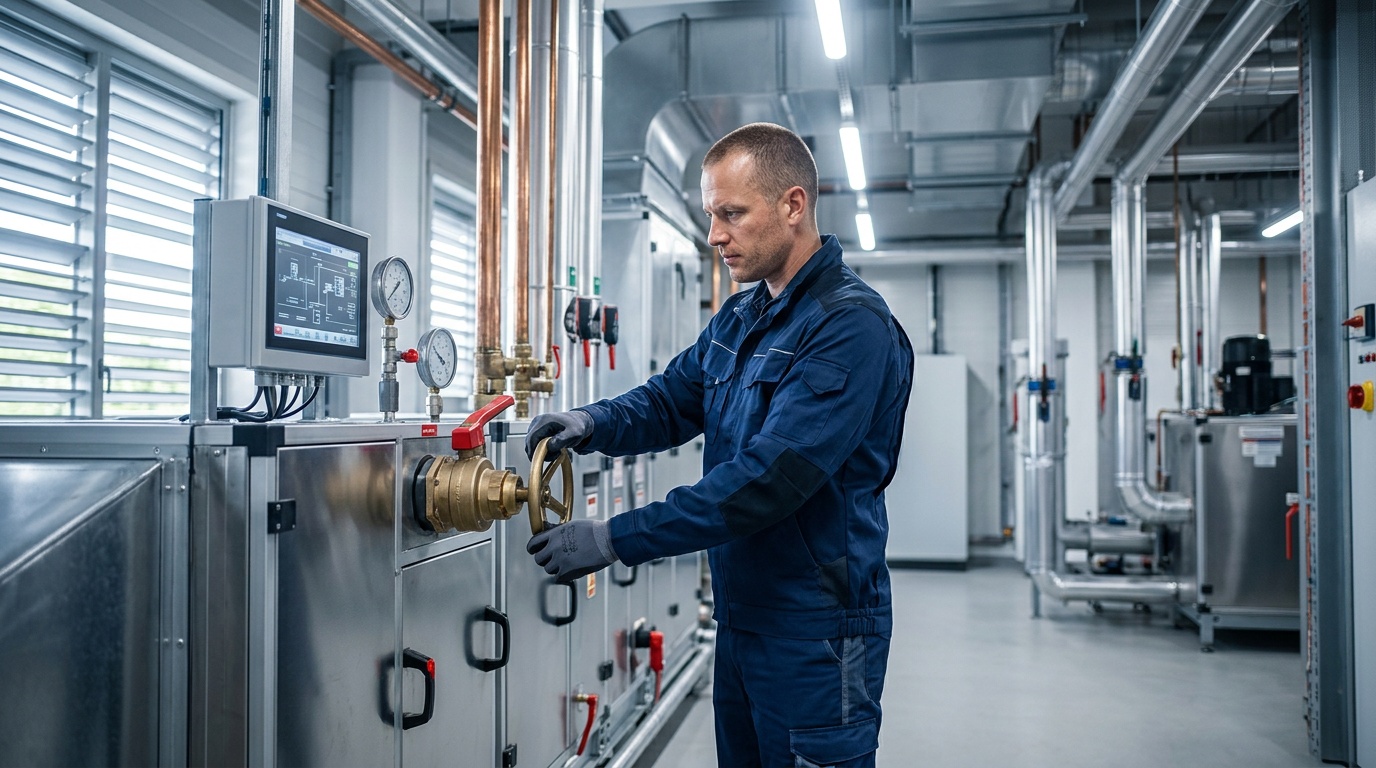
Understanding Industry Bodies: BESA and NADCA
BESA is the UK association most commonly connected with heating, ventilation and building engineering standards. Its TR19 guidance is widely used to assess air and grease extract ductwork. NADCA, the National Air Duct Cleaners Association, is an international body operating certification schemes such as Air Systems Cleaning Specialist, known as ASCS. NADCA recognition may support technical credibility, but UK estate managers should check alignment with British requirements, site risks and contractual duties.
Membership alone does not prove that a job is necessary. Ask for the named company, current certificate status, certification scope, trained personnel and insurance documents. Confirm that the attending person is qualified for the system being inspected rather than relying on a generic corporate accreditation.
Key Standards Explained: TR19 Air, TR19 Grease, BS EN 15780
| Standard or guidance | Primary application | What a contractor should demonstrate |
|---|---|---|
| BESA TR19 Air | General ventilation and air distribution systems | Condition assessment, access planning, contamination records and post-clean verification |
| BESA TR19 Grease | Commercial kitchen grease extract ductwork | Risk-based inspection, deposit measurement, cleaning frequency advice and fire safety records |
| BS EN 15780 | Cleanliness of ventilation ductwork | Defined cleanliness expectations, inspection methodology and documented acceptance criteria |
BESA TR19 guidance states that grease extract ductwork exceeding 200 microns mean deposit thickness requires immediate specialist cleaning. This threshold matters for fire risk management and may affect building insurance validity. It is not a blanket instruction to clean every duct on a fixed cycle. Deposit type, cooking activity, operating hours, access, fan performance and previous records influence the correct response.
Recognising Genuine Certification: Beyond Membership Logos
Genuine certification is traceable. Request a current certificate, certificate number, expiry date and the legal entity to which it applies. For associated HVAC work, credentials may include F-Gas, Refcom Elite, SafeContractor and site cards such as CSCS or SKILLcard. These documents do not replace ventilation-specific competence, but they help establish whether the contractor operates within a controlled safety and compliance system.
Recommended certified technicians for commercial vents? They should explain the inspection method before presenting a price. The Commercial HVAC Installation and Heating Service is also available for commercial heating repairs and system optimisation, helping facility teams maintain related plant, controls, thermostats and duct connections under technical oversight.
The Vetting Framework: How to Identify and Commission Certified Technicians
Essential Credentials Checklist: F-Gas, Refcom, CSCS/SKILLcard, SafeContractor, and More
Recommended certified technicians for commercial vents? Check the legal entity, named engineer and current certificates, not only the logo on a proposal. F-Gas certification is relevant where engineers handle fluorinated refrigerants in associated air-conditioning or refrigeration equipment. Refcom Elite can show a controlled refrigeration and air-conditioning operation. CSCS or SKILLcard status helps confirm site competence, while SafeContractor registration may support a wider health and safety assessment. None alone proves duct-cleaning expertise, so request ventilation training, insurance and relevant project records.
- Company identity: Match the quotation, insurance policy and certificates to the same registered business.
- Named personnel: Check who will inspect the system and whether that person holds required site and technical qualifications.
- Scope of competence: Separate general supply and extract ventilation from kitchen grease extract, air-conditioning and refrigeration work.
- Insurance: Request current public liability and employers’ liability documentation suitable for the proposed activity.
- Method statement: Require risk assessments, isolation procedures, access arrangements and protection for occupied areas.
- Evidence trail: Ask for inspection photographs, test results, cleaning records and a post-work report.
Verify certificates through the issuing body where possible. A genuine contractor should answer without resistance. The Commercial HVAC Installation and Heating Service supports commercial heating repairs and installation around Birmingham through trained, licensed and insured specialists, with safety procedures applied to each job.
The Diagnostic-Led Approach: Demanding Deposit Thickness Testing (DTT)
A cleaning recommendation should follow an inspection. For grease extract ductwork, a Deposit Thickness Test records residue depth at representative points, including bends, horizontal runs, access doors and areas near the fan. BESA TR19 Grease identifies 200 microns mean deposit thickness as the point requiring immediate specialist cleaning. Ask for test locations, readings, equipment and the calculation supporting the mean result.
DTT is one part of a sound assessment. Vacuum testing, internal photographs, filter condition, airflow readings and air handling unit static pressure monitoring can establish whether restricted performance comes from contamination, poor balancing, damaged ductwork or blocked filtration. Recommended certified technicians for commercial vents? They should explain the evidence supporting their scope and identify inaccessible areas rather than present a full clean as the automatic answer.
Asking the Right Questions: Uncovering Hidden Agendas and Upselling Tactics
Ask whether the work concerns air hygiene, fire risk, airflow performance or a combination. Request the standard applied, areas included, cleaning method, access plan and acceptance criteria. Ask whether the contractor receives commission for additional remedial work, access equipment or replacement components. Each recommendation should connect to a recorded condition, operational risk or compliance requirement.
Be cautious when urgency is asserted without measurements, a fixed cleaning cycle is recommended without system history, or a free survey produces an immediate high-value scope. Advice can identify defects, but its evidence should be recorded.
Reviewing Quotations: What to Look For Beyond the Price
Compare quotations against an identical technical brief. The document should state duct sections, access points, system type, isolation requirements, labour, equipment, waste removal, reinstatement and out-of-hours arrangements. It should show whether the price includes DTT, internal inspection, airflow testing, photographic evidence, sanitisation, certification and follow-up verification. A low figure may omit controls needed to prove completion.
Review exclusions, including damaged access panels, asbestos concerns, confined spaces, high-level access and unforeseen contamination. Ask how each will be handled. Payment terms should reflect evidence delivered, not only attendance. This creates an auditable record and makes cost differences explainable before a purchase order is raised.
Beyond the Clean: Integrating Ventilation Maintenance into Planned Preventative Maintenance (PPM)
The Pitfalls of Transactional Cleaning vs. Proactive Maintenance
A one-off clean can remove deposits while leaving the cause untouched. Filters may remain overloaded, fan belts may slip, dampers may be stuck and airflow may remain poorly balanced. A PPM schedule places inspection, testing and corrective action around the building’s operating demands, whether it is a restaurant, warehouse, office, school or mixed-use property.
Pros
- Creates a condition history for filters, fans, coils, ductwork and controls.
- Identifies airflow loss before tenant complaints or operational failure.
- Supports planned budgets, access arrangements and compliance records.
- Links ventilation performance with wider HVAC and heating maintenance.
Cons
- Requires planned access and cooperation from occupants or tenants.
- Needs accurate asset registers and an assigned responsible person.
- May identify remedial work that a single cleaning visit would not reveal.
Establishing Service Level Agreements (SLAs) with Measurable Outcomes
An effective SLA describes outcomes rather than attendance alone. Set inspection frequencies by system risk, record filter pressure drop, define acceptable airflow readings and specify how grease deposits will be measured. Include response times, escalation contacts, reporting deadlines, compliance evidence, noise, dust control, isolation notices and emergency access.
Ask for trend data at each service visit. A gradual rise in static pressure or falling airflow may justify investigation before a fan motor overheats. Reports should include readings, photographs, defects, priorities and completed actions. This supports lifecycle planning instead of recurring verbal recommendations.
The Long-Term Benefits: IAQ, Energy Efficiency, and Compliance Assurance
Planned ventilation maintenance supports indoor air quality by reviewing filtration, air movement and extract performance. It can reduce avoidable resistance. The supplied research brief indicates that HVAC and ventilation fan motor resistance from restricted airflow and clogged filtration can drive up to 40% of energy consumption in commercial premises. Records support decisions about filters, fan settings, coils and controls without assuming every energy problem originates in duct contamination.
Compliance assurance comes from traceability. A documented regime can support duties under the Workplace (Health, Safety and Welfare) Regulations 1992, Regulation 6, while grease extract records contribute to fire risk management under the Regulatory Reform (Fire Safety) Order. Where heating equipment, thermostats and duct connections require attention, the Commercial HVAC Installation and Heating Service provides a related maintenance route for commercial premises around Birmingham.
When to Commission a Full Clean vs. Routine Inspection
Commission a full clean when measured deposits exceed the applicable threshold, contamination affects performance, a fire risk assessment identifies a need, or access and hygiene conditions demand intervention. Routine inspection is suitable where readings remain within agreed limits, the system performs correctly and records show no material deterioration. Consider cooking intensity, operating hours, occupancy, filter history, previous cleaning and changes to building use.
Schedule a fresh assessment after refurbishment, a tenant change, increased kitchen output, repeated odour complaints or unexplained fan performance. This keeps cleaning proportionate and prevents an automatic purchase of work the ductwork has not been shown to require.
Your Next Steps: Ensuring Compliant and Efficient Commercial Ventilation

Summary: Your Commercial Vent Technician Vetting Scorecard
Recommended certified technicians for commercial vents? Select the contractor that proves competence before approval. Confirm current credentials, suitable insurance, named engineers, system-specific inspection, measurable airflow or deposit evidence, defined scope, exclusions and a post-work report. Check alignment with BESA TR19, BS EN 15780 and the building’s fire risk responsibilities. A low quotation without testing, access planning or acceptance criteria is not necessarily good value.
Common Questions for Your Ventilation Contractor
- What proves cleaning is necessary? Ask for DTT readings, vacuum testing, photographs, airflow measurements or AHU static pressure data.
- Which certification applies? Request evidence relevant to the task, such as BESA, NADCA ASCS, F-Gas, Refcom Elite or SafeContractor status.
- Is this general ventilation or grease extract work? Require identification of the system type and applicable guidance before pricing.
- What will I receive? Confirm the report, readings, photographs, remedial recommendations and compliance records included in the fee.
The MEMS Standard: Partnering for Building Health and Uptime
At MEMS, we connect technical inspection with business continuity. Our Commercial HVAC Installation and Heating Service supports commercial premises around Birmingham through trained, licensed and insured specialists, with safety standards applied throughout the work. The Commercial HVAC Installation and Heating Service also covers heating repairs, installation and system optimisation across a range of models and brands.
For a measured assessment, planned maintenance or urgent support, speak with MEMS. We provide 24-hour emergency heating repairs and practical engineering advice that protects uptime, compliance records and operating budgets. CLICK TO CALL US NOW and appoint a partner that treats building health as a management responsibility, not a sales opportunity.
Frequently Asked Questions
How can I verify a commercial ventilation technician’s certification?
Recommended certified technicians for commercial vents should provide a current certificate, certificate number, expiry date and the legal entity covered. Check that the attending technician has competence suited to the system, along with appropriate insurance and relevant credentials such as BESA or NADCA certification.
What evidence should a commercial vent contractor provide before quoting?
A commercial vent contractor should provide inspection photographs, airflow or static pressure readings, deposit measurements where relevant, access details and a defined cleaning trigger. This evidence creates a technical audit trail and helps estate managers distinguish necessary work from unsupported sales advice.
Which standard applies to commercial kitchen grease extract cleaning?
BESA TR19 Grease is the main UK guidance for commercial kitchen grease extract systems. A competent contractor should assess deposit thickness, cooking activity, operating hours, access and fire risk, then recommend cleaning based on recorded conditions rather than an automatic fixed schedule.
What does the 200 micron threshold mean for grease extract ductwork?
A mean deposit thickness above 200 microns in grease extract ductwork indicates that specialist cleaning should be arranged promptly under BESA TR19 guidance. The finding should be supported by documented measurements and a suitable fire safety record, not only a verbal recommendation.
How do TR19 Air and BS EN 15780 differ?
TR19 Air provides guidance for assessing and cleaning general ventilation and air distribution systems, while BS EN 15780 sets cleanliness expectations and inspection methods for ventilation ductwork. A commercial ventilation technician should identify the system type and state which standard supports the proposed scope.
Is NADCA certification enough for a UK commercial ventilation project?
NADCA certification can support a contractor’s technical credentials, but it is not by itself enough for every UK commercial ventilation project. Facility managers should also check British guidance, site risks, contractual duties, insurance and the named technician’s experience with the specific system.
Why are airflow and static pressure tests useful before vent cleaning?
Airflow and static pressure tests show whether restricted filters, contaminated ductwork or other system conditions may be affecting fan performance. These readings help connect proposed cleaning to measurable building needs, support energy and indoor air quality reviews, and provide a basis for post-work verification.