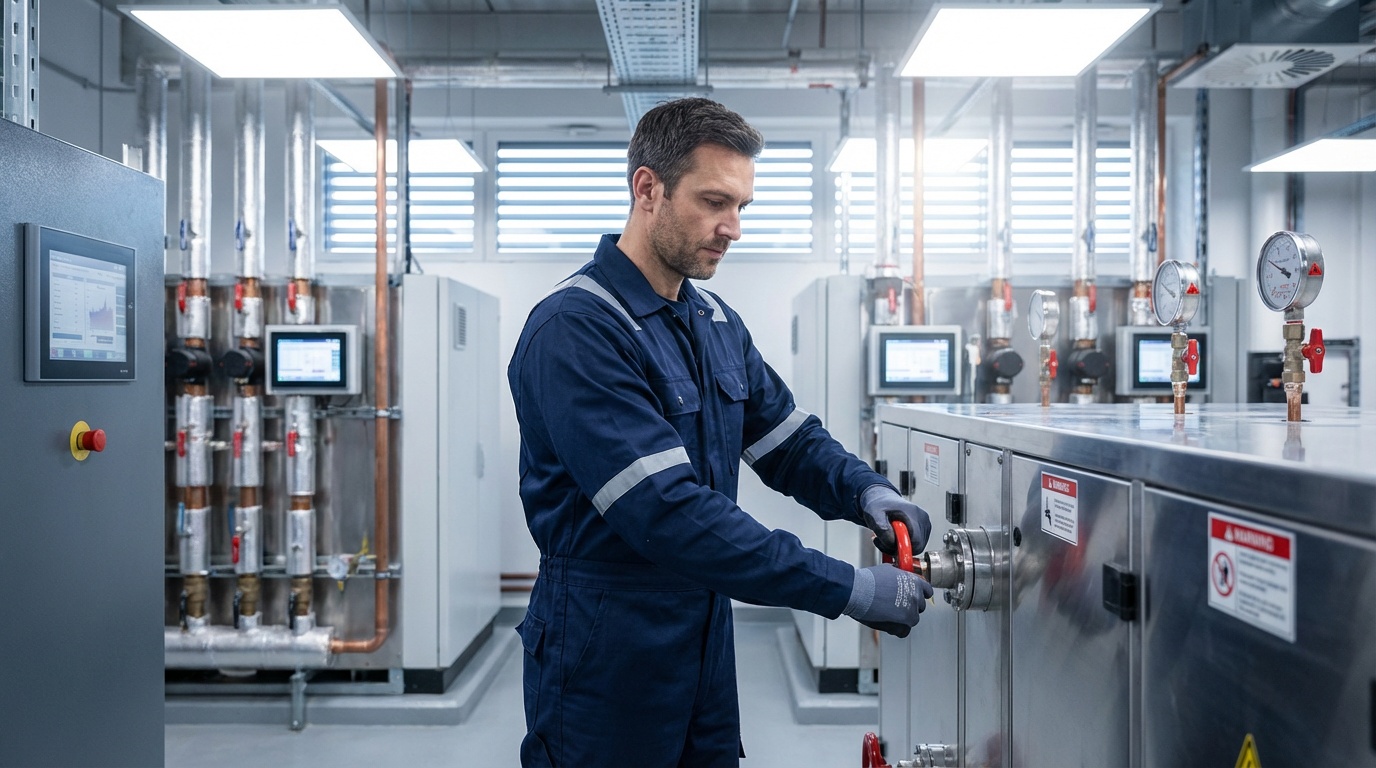
Recommended F-Gas certified technicians.
What are Recommended F-Gas Certified Technicians?
Recommended F-Gas certified technicians are professionals legally qualified to work on refrigeration and air conditioning systems containing fluorinated greenhouse gases. They hold valid certificates from recognised assessment bodies like Refcom, proving competence in environmental regulations, safe handling procedures, and leak prevention. Here's what you need to know: without proper certification, any work on your HVAC or refrigeration equipment is illegal. Full stop.
I've spent over two decades in commercial building services, and I've watched the F-Gas environment transform from a voluntary best practice into a strict legal framework. The 2015 EU F-Gas Regulation (retained in UK law post-Brexit) isn't guidance. It's law designed to reduce emissions of gases with global warming potential 2,000+ times greater than CO2. When an uncertified engineer touches your air conditioning system, you're both breaking the law. The Environment Agency issues fines up to £200,000 for non-compliance. Your insurance? Void if an uncertified technician causes damage.
These technicians don't just carry a certificate. They've passed rigorous assessments covering refrigerant handling, leak detection, recovery procedures, and record-keeping obligations. They know which gases are being phased down, how quota systems drive refrigerant costs skyward, and why your old R404A system is haemorrhaging money. When you're managing commercial property in Birmingham or across the West Midlands, your technician's certification status determines your legal exposure.
Benefits of Recommended F-Gas Certified Technicians
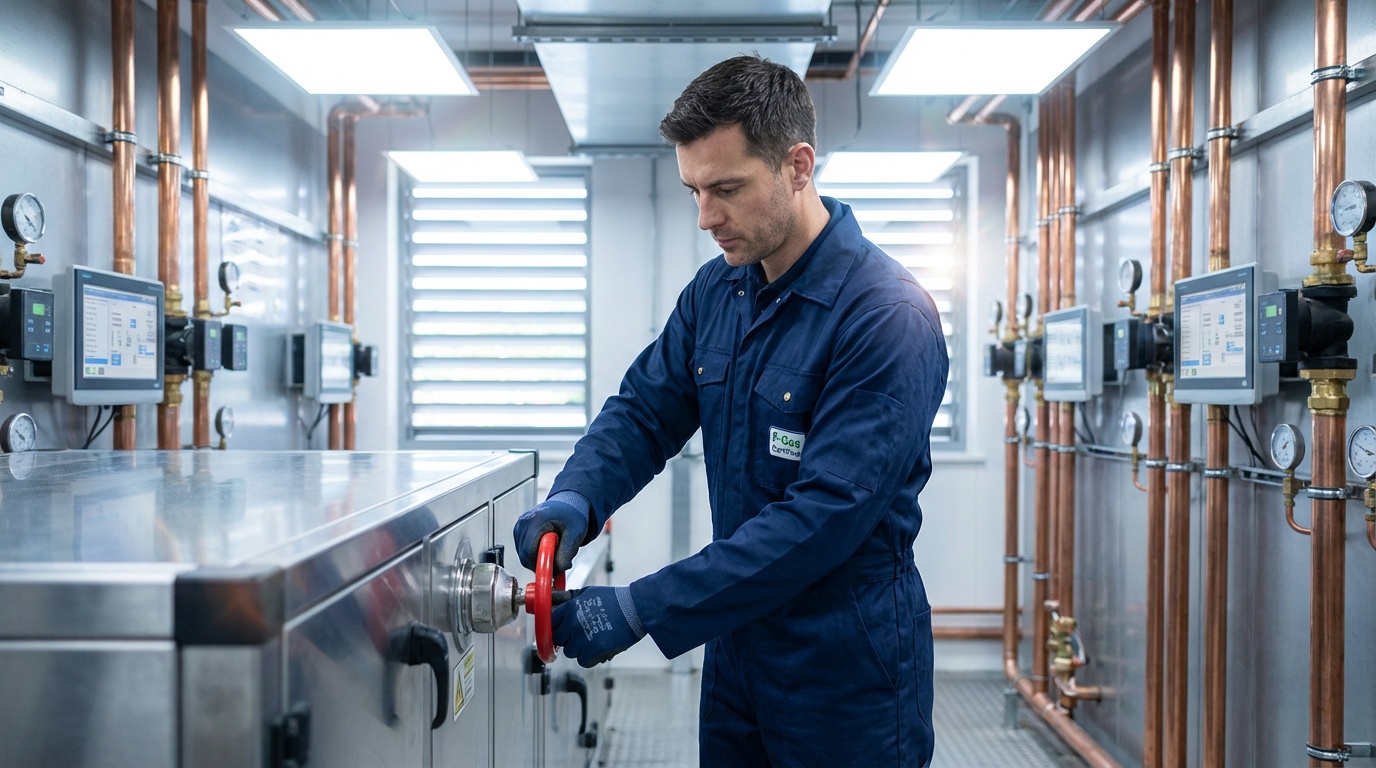
Every time a certified technician works on your refrigeration or air conditioning equipment, they must document refrigerant quantities, leak rates, and system changes in your F-Gas register. This audit trail proves compliance during Environment Agency inspections. No documentation? You're gambling with six-figure penalties and zero defence.
Certified technicians treat refrigerant like the expensive commodity it's become. They minimise gas loss during maintenance, use recovery equipment correctly, and identify leaks before they drain your system dry. Refrigerant prices have risen 300% in some cases due to phase-down quotas. A technician who wastes gas wastes your budget. We've seen facility managers save £4,000-£7,000 annually just by switching to engineers who don't vent refrigerant like it's air.
You get measurable system performance. Recommended F-Gas certified technicians understand charge weights, superheat calculations, and subcooling measurements. They don't eyeball it. They measure, adjust, and optimise. An overcharged or undercharged system increases energy consumption by 20% whilst destroying compressor lifespan. Proper certification equals proper engineering. Proper engineering means lower bills and fewer 2am emergency calls.
The knowledge gap matters commercially. Certified technicians advise you on refrigerant obsolescence before you're forced into emergency retrofits. They understand which replacement gases work with your existing equipment and which require complete system changes. That's the difference between planned capital expenditure and crisis spending at maximum cost.
How to Choose Recommended F-Gas Certified Technicians
Ask for proof immediately. Every technician should carry their F-Gas certificate and produce their unique registration number on request. Check it against the Refcom or FGAS Register online databases. Takes 60 seconds. If they hesitate or claim they'll "email it later," walk away. At MEMS, our engineers carry digital certification you can verify in real time before they touch your equipment.
Understand certification categories. F-Gas certificates come in different levels: Category I covers all refrigerant systems. Category II is limited to specific equipment types. Running complex chiller systems or large commercial air conditioning? You need Category I technicians. Don't accept limitations when your building's uptime depends on full-spectrum expertise.
Audit their compliance documentation process. Ask: "When will I receive my F-Gas register entry after you complete work?" The answer should be "within 24 hours." This document must include refrigerant type, quantity added or recovered, leak test results, and system modifications. If your current provider leaves you chasing paperwork for days or weeks, you're legally exposed during that gap.
Question their CPD commitment. F-Gas certificates don't expire, but regulations change constantly. Ask when their last refresher training occurred. At MEMS, we mandate annual updates because the refrigerant landscape shifts too fast to rely on five-year-old knowledge. A 2015 certificate without ongoing education is a liability, not an asset.
Working with a trusted provider like commercial HVAC installation and maintenance specialists ensures your technician delivers both certification and comprehensive service documentation.
Frequently Asked Questions
How long does F-Gas certification last?
F-Gas certificates do not expire, but your technician must complete Continuing Professional Development (CPD) to stay current with regulatory changes. At MEMS, we mandate annual refresher training because the regulations and refrigerant environment shift constantly. A certificate from 2015 without ongoing education is a red flag.
Can I check if my technician is genuinely certified?
Yes. Visit the Refcom or FGAS Register website and search their registration number. Every legitimate technician appears in these databases. If your engineer cannot provide a verifiable number, they are not certified. We give our clients direct access to our team's certification records before any site visit.
What happens if uncertified work is discovered during an inspection?
The Environment Agency can prosecute both the technician and the property owner. Fines can reach £200,000, and you may face enforcement notices requiring immediate system shutdowns until compliance is restored. Your insurance likely will not cover damage caused by uncertified work, leaving you financially exposed.
Do I need different certification levels on different jobs?
Yes. Category I covers all refrigeration and air conditioning systems. Category II is equipment-specific and limited. Large commercial chillers, VRF systems, and complex plant rooms need Category I technicians. Ask your provider which category their engineers hold before any work begins.
How often must F-Gas equipment be leak-tested?
It depends on your system's refrigerant charge and type. Systems containing 5 tonnes CO2 equivalent or more require annual leak testing at minimum. Larger systems need quarterly checks. Recommended F-Gas certified technicians calculate your specific requirements based on charge weight and gas type, then maintain your compliance schedule. Missing a test date puts you in breach of the regulations immediately.
Protecting Your Business with Certified F-Gas Expertise
Choosing Recommended F-Gas certified technicians isn't about ticking a compliance box. It's about shielding your commercial property from legal action, controlling refrigerant costs that can spike without warning, and ensuring your cooling systems deliver uptime when your business needs it. I've managed sites across the Midlands for years. The difference between businesses that treat F-Gas certification as paperwork and those who see it as business-critical? The second group sleeps better.
Your refrigeration and air conditioning systems represent significant capital investment. The technicians you allow near them directly influence system lifespan, energy bills, and regulatory standing. A poorly trained engineer causes refrigerant leaks that cost thousands in replacement gas, trigger Environment Agency investigations, and void equipment warranties. One bad call-out can cost more than five years of proper maintenance.
The MEMS Standard: Every engineer we deploy carries Category I F-Gas certification with verified digital credentials and annual CPD. We provide same-day compliance documentation and 24/7/365 availability because refrigerant emergencies don't respect office hours. Our clients get complete audit trails that prove compliance instantly during inspections.
The F-Gas environment will tighten further. Phase-down of high-GWP refrigerants continues. Prices climb. Systems using R404A and R410A face obsolescence within years, requiring strategic replacement planning. Recommended F-Gas certified technicians who stay current become partners in managing this transition cost-effectively, not just contractors who show up when something breaks.
Evaluate your current maintenance provider honestly: Can they produce verified certification records immediately? Do they provide digital compliance documentation within 24 hours? Do their engineers understand the commercial implications of refrigerant phase-downs? If you're answering "no" to any of these, you're carrying unnecessary risk.
At M&E Maintenance Solutions Limited, we built our operation on one principle: compliance and quality are inseparable. Recommended F-Gas certified technicians don't just meet legal minimums. They understand that every refrigerant molecule saved reduces your costs, every leak prevented protects the environment, and every properly documented job shields you from penalties. That's the difference between a contractor and a partner.
Don't wait for an Environment Agency inspection or a catastrophic system failure to expose your gaps. Book a site survey with our team to audit your current F-Gas compliance status, review your refrigerant management strategy, and ensure your systems get the certified expertise they require. Your cooling systems deserve engineers who treat compliance as the baseline, not the ceiling.
Partnering with M&E Strategic Partner Programme delivers certified technician expertise and a trusted relationship that supports your building's ongoing maintenance and compliance needs.
Frequently Asked Questions
What does F-Gas certification mean for a technician working on commercial systems?
F-Gas certification means a technician is legally qualified to work on refrigeration and air conditioning systems that contain fluorinated greenhouse gases. It proves they understand environmental regulations, safe handling, and leak prevention, which is non-negotiable for compliance and safety in commercial buildings. As someone who's spent decades in this field, I can tell you it's about competence and legal adherence.
Why is it essential for commercial property managers to hire F-Gas certified technicians?
Hiring F-Gas certified technicians protects you legally and financially. Without proper certification, any work on your HVAC or refrigeration equipment is illegal, risking fines up to £200,000 and potentially voiding your insurance. Beyond compliance, certified technicians ensure better system performance, reduce refrigerant waste, and ultimately lower your running costs.
What are the consequences if uncertified technicians work on my commercial F-Gas equipment?
The consequences are severe for both the technician and the property owner. The Environment Agency can issue substantial fines, potentially up to £200,000, and your insurance may not cover any damage caused by uncertified work. It's a direct route to legal exposure and significant financial penalties.
How can I verify if a technician is genuinely F-Gas certified?
Always ask for proof of their F-Gas certificate and their unique registration number. You can then cross-reference this number on the Refcom or FGAS Register online databases. If they cannot immediately provide verifiable documentation, that's a red flag, and you should look elsewhere.
Are there different categories of F-Gas certification for technicians?
Yes, F-Gas certificates come in different categories. Category I covers all refrigeration and air conditioning systems, which is what you'll need for complex chillers or large commercial AC units. Category II is more limited to specific equipment types, so it's important to ensure your technician holds the appropriate level for your building's systems.
What documentation should an F-Gas certified technician provide after completing work?
A recommended F-Gas certified technician should provide you with a completed F-Gas register entry within 24 hours of any work. This document details the refrigerant type, quantity added or recovered, leak test results, and any system modifications. This audit trail is your proof of compliance for Environment Agency inspections.