Renewable Energy Solutions guide
Renewable Energy Solutions Guide: The Commercial Reality for UK Buildings
I've seen the same pattern play out dozens of times across the Midlands: a facility manager receives an energy bill that's jumped 30% year-on-year, and the immediate reaction is to blame the supplier. But the truth is harsher. Your building is haemorrhaging cash because it's still running on outdated, fossil-fuel-dependent systems that were designed for a different economic era.
This renewable energy solutions guide walks you through proven technologies like solar PV, air-source heat pumps, and wind systems that cut operating costs whilst meeting 2026 compliance deadlines. You'll learn which systems suit commercial properties, how to access government funding, and the step-by-step process we use at M&E Maintenance Solutions Limited to integrate renewables without disrupting your operations.
Why Ignoring Renewables Hits Your Bottom Line
Every month you delay is a month you're overpaying. Gas boilers that were cost-effective in 2015 are now financial liabilities. Commercial properties face three simultaneous pressures: rising fossil fuel costs, stricter MEES (Minimum Energy Efficiency Standards) regulations, and increased tenant expectations for sustainable buildings.
At M&E Maintenance Solutions Limited, we've trialled every renewable system in our own Aston facilities before recommending them to clients. That's not marketing—it's risk management. We've debugged the failures, identified the inefficiencies, and proven which technologies deliver genuine ROI in UK commercial settings. Our engineers know exactly which heat pump models short-cycle under load, which solar inverters underperform in partial shading, and which battery systems require constant firmware updates.
This means you're not the test case. You benefit from mistakes we've already made on our own time and budget.
UK Energy Policy: What's Changed Since 2020
The UK government's target of 15% renewable energy by 2020 was just the starting point. Commercial buildings must now achieve EPC Band B ratings by 2030 under MEES. The Energy Performance Building Directive isn't a suggestion; it's law, and non-compliance means you cannot legally lease your property.
Miss the deadline? You can't sign new leases. You can't renew existing ones. Your asset becomes unlettable.
Key Renewable Energy Solutions for Commercial Properties
Solar PV Systems: Powering Your Roof Profitably
Solar photovoltaic panels have moved from experimental to standard practice. A typical commercial roof in Birmingham generates 850–950 kWh per installed kW annually. That translates to immediate reductions in grid dependency and eligibility for the Smart Export Guarantee (SEG), where you're paid for surplus energy fed back to the grid.
But solar PV works best when integrated with battery storage and intelligent load management. We've installed systems where daytime solar generation powers HVAC during peak demand hours, cutting electricity costs by 40–60%. Our expertise spans M&E Maintenance Solutions HVAC services to ensure seamless integration with your existing plant.
Air-to-Water Heat Pumps: Efficient Heating Without Gas
Air-source heat pumps extract thermal energy from outside air and deliver it at temperatures suitable for underfloor heating or modern radiator systems. The coefficient of performance (COP) typically ranges from 3.0 to 4.5—you get three to four units of heat for every unit of electricity consumed.
The problem? Heat pumps demand proper system design. Retrofitting into buildings with oversized radiators or poor insulation delivers disappointing results. Our site assessment identifies whether your building is genuinely ready, or needs preparatory work first. If structural improvements are necessary, consider our building fabric repairs and maintenance to boost your property's energy performance before you spend capital on heat pumps.
Wind and Emerging Tech: What's Viable for Your Site
I'll be blunt: most urban and suburban properties don't have the wind resource to justify turbine installation. Small-scale wind turbines suit specific commercial sites with consistent wind exposure and minimal planning restrictions. Ground-source heat pumps offer better returns in the right circumstances but require significant land area or boreholes.
| Technology | Best For | Typical Payback | Maintenance Needs |
|---|---|---|---|
| Solar PV | Flat roofs, south-facing pitches | 7–10 years | Annual cleaning, inverter checks |
| Air-source heat pumps | Modern buildings, low-temperature heating | 8–12 years | Quarterly PPM, refrigerant compliance |
| Wind turbines | Rural sites, industrial estates | 12–15 years | Biannual inspections, gearbox servicing |
Government Support Schemes and Incentives Explained
Smart Export Guarantee (SEG) and Contracts for Difference (CfD)
If you're generating renewable power on your commercial site, the Smart Export Guarantee (SEG) pays you for every unit of surplus electricity you export back to the grid. Unlike the old Feed-in Tariff, SEG rates vary by supplier, so shop around. Some tariffs offer up to 15p per kWh exported. For a medium-sized solar array, that's £2,000 to £5,000 annually back into your operating budget.
Contracts for Difference (CfD) target larger-scale projects, typically above 5MW. Most commercial landlords won't qualify. But if you're managing a business park or industrial estate, CfD can lock in a guaranteed strike price for your renewable generation, protecting you from volatile wholesale energy markets. We've worked with clients who bundled multiple buildings to hit the threshold. It's complex, but the long-term revenue certainty can justify the effort.
Renewable Heat Incentive (RHI) and Green Gas Support
The Renewable Heat Incentive (RHI) closed to new applicants in March 2022. If you installed an air-to-water heat pump or biomass boiler before that deadline, you may still be collecting quarterly payments for seven years. For those who missed it, the Boiler Upgrade Scheme (BUS) offers upfront grants of £5,000 to £6,000 per heat pump installation. It's not recurring income like RHI, but it reduces your capital outlay.
Green Gas Support Scheme (GGSS) is for biomethane injection into the grid. Unless you're running an agricultural or waste-processing site with anaerobic digestion, this won't apply. For those who can, tariff guarantees run for 15 years.
Navigating 2026 Compliance: ESOS, MEES, and UK ETS
Energy Savings Opportunity Scheme (ESOS) audits are mandatory every four years for large enterprises. If your total energy bill exceeds £50,000 annually, you must identify efficiency improvements. Installing renewables like solar PV or heat pumps supports your action plan whilst cutting your bills.
Minimum Energy Efficiency Standards (MEES) already require commercial properties to achieve EPC Band E or higher. From 2026, that rises to Band C. A poorly insulated building with gas boilers won't make the grade. Retrofitting air-source heat pumps and solar panels can improve your EPC rating significantly, protecting your rental income and eliminating the risk of lease restrictions.
UK Emissions Trading Scheme (UK ETS) applies to certain energy-intensive installations and sectors, with participation determined by activity type and permitting rather than a simple landlord threshold. If you operate energy-intensive sites such as large manufacturing operations, renewables and electrification can reduce exposure to carbon costs and allowance requirements.
Benefits of Early Adoption
- Lock in current grant rates before scheme changes
- Avoid a 2026–2030 compliance rush and premium installation costs
- Start reducing energy costs whilst the payback clock runs
- Increase asset value and tenant appeal
Risks of Delay
- Rising fossil fuel costs erode operating margins
- Restrictions on letting non-compliant properties
- Installer availability bottlenecks as 2026 deadlines approach
- Missed SEG income from years of potential generation
Implementing Renewables: A Step-by-Step Guide for Facility Managers
Site Assessment Checklist: Matching Tech to Your Building
Don't let a salesperson dictate your renewable strategy. Start with the basics: What's your current annual energy consumption? What's your roof load capacity and orientation? Do you have three-phase electrical supply? Is your heating system compatible with lower flow temperatures?
Roof condition and orientation: Is your roof south-facing with minimal shading? Can it support 15 to 20 kg per square metre of solar panels? A structural survey costs around £500, but it can save you from expensive reinforcement later.
Electrical capacity: Does your distribution board have spare capacity for a solar inverter? If you're already maxed out, you'll need a board upgrade before any renewable installation.
Heating demand profile: Air-to-water heat pumps work best in buildings with underfloor heating or oversized radiators. If you're running older single-panel radiators, you'll need to upsize them or accept lower heat output at reduced flow temperatures. I've seen heat pump installations underperform because the heating system wasn't matched to the technology.
We conduct thermal imaging surveys, structural assessments, and electrical capacity reviews before recommending any technology. If your building isn't ready, we'll set out the preparatory work that delivers the best return.
Integration with Existing HVAC and Maintenance Plans
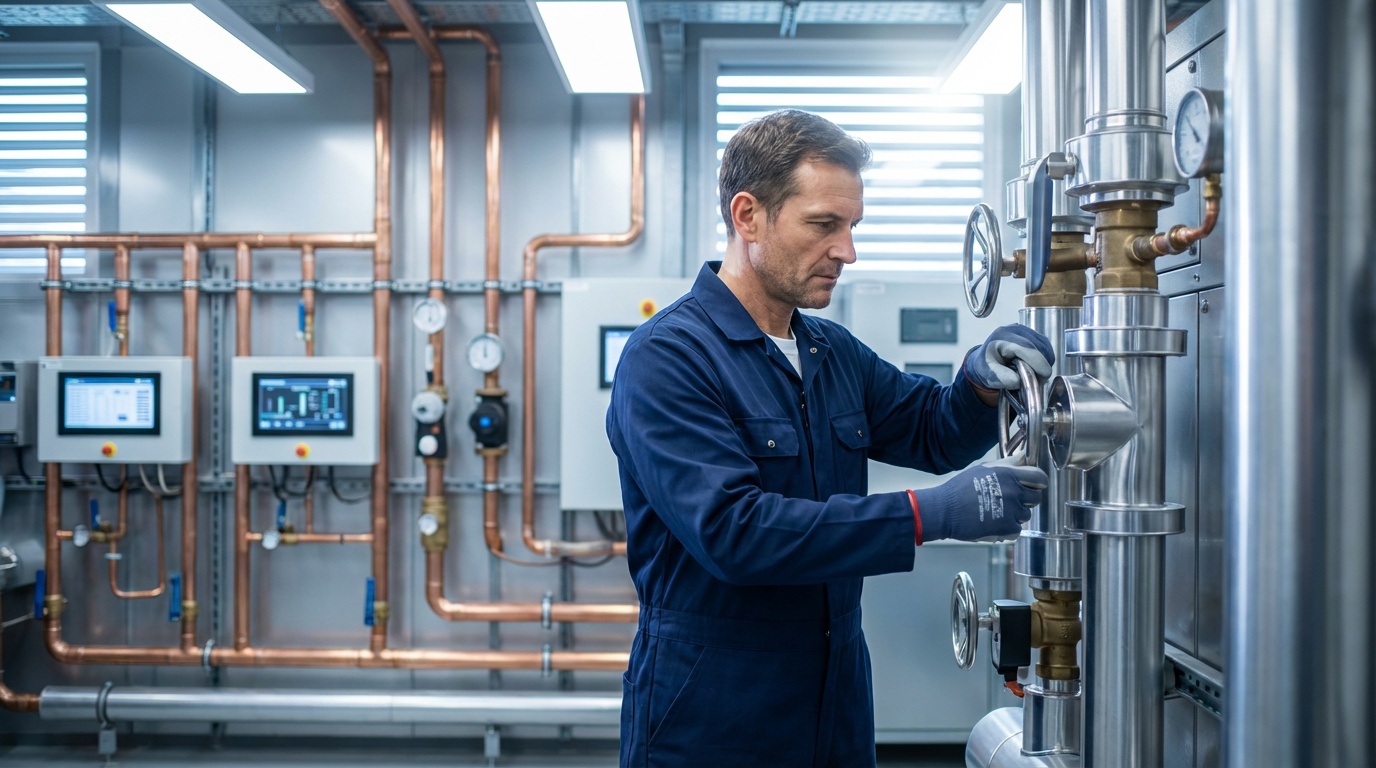
Renewables don't sit in isolation. Your solar PV should integrate with your BMS so you can track generation versus consumption in real time. Your heat pump must tie into your Planned Preventative Maintenance (PPM) schedule. At M&E Maintenance Solutions Limited, we add heat pumps to SFG20-compliant quarterly inspections, checking refrigerant pressures, filter cleanliness, and defrost cycles.
The biggest mistake? Treating renewables as fit-and-forget. A solar inverter needs firmware updates. A heat pump needs periodic refrigerant leak checks under F-Gas regulations. If your current FM provider doesn't hold REFCOM certification, they may not be able to legally service F-Gas equipment.
Avoiding Pitfalls: What We've Learned from Internal Trials
We installed a 20 kW solar array on our Aston showroom in 2021. Year-one generation was 18% below projections because the inverter was undersized for peak output. We replaced it, and performance returned to target. That lesson has saved clients thousands in avoided mistakes.
Our air-to-water heat pump trial taught us that defrost cycles in sub-zero temperatures can temporarily spike electricity demand by around 30%. If your site has limited grid capacity, you may need battery storage, staged defrost control, or smart load management. These aren't theoretical risks—they're real-world failures we've already debugged.
Undersized buffer vessels cause short-cycling and efficiency loss. Inadequate insulation on pipework wastes 10–15% of generated heat. Poor commissioning can leave systems running in inefficient modes indefinitely. We've made these mistakes so you don't have to.
Partner with M&E Maintenance Solutions Limited for Proven Renewable Upgrades
Our 24/7 Approach to Installation and Ongoing Support
Downtime isn't an option for commercial properties. We schedule renewable installations during off-peak hours or phase work over weekends. I've installed heat pumps in occupied office buildings without disrupting a working day, running cable pulls through ceiling voids overnight and commissioning systems before staff arrive.
Renewable energy systems need ongoing maintenance, not just installation. Solar inverters fail. Heat pump refrigerant circuits can develop leaks. Battery storage systems require firmware updates. We integrate renewable assets into our Planned Preventative Maintenance schedules, supporting SFG20 compliance and consistent performance. Our 24/7/365 helpdesk means if your solar inverter throws a fault at 3 am, you're not waiting until Monday for a call-back.
Case Studies: Real Results from UK Commercial Sites
A Birmingham retail park came to us with an EPC rating of Band D and a 2026 MEES deadline looming. We installed a 50 kW solar array across three warehouse roofs and retrofitted air-to-water heat pumps to replace ageing gas boilers.
The result? EPC Band B, £12,000 annual energy savings, and £3,500 yearly SEG income.
An industrial estate in the West Midlands faced spiralling gas costs and wanted energy independence. We designed a hybrid system pairing solar PV with battery storage, allowing them to shift grid consumption to off-peak tariffs. First-year savings hit £18,000, and they avoided two grid outages by running on stored solar during peak demand periods. That's not just cost savings—it's business continuity.
Next Steps: Book Your No-Obligation Site Survey
We'll assess your property, identify suitable renewable technologies, and provide a detailed cost-benefit analysis including grant eligibility and payback periods. No sales pressure. No cookie-cutter proposals. Just engineering reality translated into commercial terms.
Our site survey covers structural capacity, electrical integration, heating demand profiling, and a funding eligibility check for SEG and the Boiler Upgrade Scheme. You'll receive a detailed report within five working days, outlining costs, payback periods, and compliance considerations.
Don't wait for the 2026 deadline to force your hand. This renewable energy solutions guide helps you plan for lower operating costs, compliance readiness, and long-term asset value protection. Book your survey now, and let's build a system that works for your building, not against it.
Call us now or visit our showroom in Aston, Birmingham to see working renewable systems before you commit. If you want a single document to share internally, use our blog to brief finance, operations, and your landlord or tenant team on what comes next.
Frequently Asked Questions
Why is it urgent for commercial buildings to adopt renewable energy solutions now?
Your building is likely losing money on outdated, fossil-fuel systems designed for a different economic era. The market has shifted, with rising fuel costs, stricter MEES regulations, and increased tenant demand for sustainable properties. Delaying this transition means you are overpaying every month.
What are the primary renewable energy technologies M&E Maintenance Solutions recommends for commercial properties?
We focus on proven technologies that deliver genuine ROI. This includes solar PV systems for profitable roof power and air-source heat pumps for efficient heating without gas. Small-scale wind turbines can also suit specific commercial sites with consistent wind exposure.
How can solar PV systems reduce operating costs for a commercial building?
Solar PV panels significantly cut grid dependency, leading to immediate reductions in electricity costs. When integrated with battery storage and intelligent load management, we've seen electricity costs cut by 40–60%. You also get paid for surplus energy exported to the grid via the Smart Export Guarantee (SEG).
What considerations are important when installing an air-source heat pump?
Air-source heat pumps are efficient, but proper system design is key to their performance. Retrofitting into buildings with poor insulation or oversized radiators can lead to disappointing results. Our site assessment identifies if your building is genuinely ready or needs preparatory work first.
Are there any government incentives for commercial properties investing in renewable energy?
Yes, the Smart Export Guarantee (SEG) pays you for surplus electricity exported to the grid, with rates varying by supplier. For larger projects, Contracts for Difference (CfD) can offer guaranteed strike prices. The Boiler Upgrade Scheme is also available for those who missed the Renewable Heat Incentive.
How does M&E Maintenance Solutions ensure a smooth transition to renewable energy for businesses?
We trial renewable systems in our own facilities to confirm they deliver ROI before recommending them to clients. Our process integrates solutions seamlessly with your existing HVAC infrastructure, operating reliably within our 24/7 maintenance framework to limit disruption to your operations.