Renewable Energy Solutions options
High energy bills rarely come from one dramatic fault. They usually build through inefficient heating, unnecessary electrical demand, poor controls and ageing equipment working harder than it should. For a commercial building, that waste affects operating margins, carbon reporting and reliability. Renewable Energy Solutions can reduce that exposure, provided the technology is matched to the building rather than selected from a brochure.
Key Takeaways
- High energy bills rarely come from one dramatic fault.
- They usually build through inefficient heating, unnecessary electrical demand, poor controls and ageing equipment working harder than it should.
- For a commercial building, that waste affects operating margins, carbon reporting and reliability.
Renewable systems produce heat, electricity or hot water from naturally replenished sources, including sunlight and air. Commercial premises may use Solar PV, Air-to-Air heat pumps, Air-to-Water heat pumps and Solar Thermal. LED lighting is not renewable generation, but it can reduce electrical demand alongside a wider energy project. Building fabric repairs and maintenance may also be needed to prevent heat loss before new equipment is specified.
What are Renewable Energy Solutions options?
Renewable Energy Solutions options are technologies that can reduce reliance on grid electricity and fossil-fuel heating. Solar PV converts sunlight into electricity, while air-source heat pumps move heat from outside air into a building. A qualified contractor should coordinate mechanical and electrical design, installation, testing, commissioning and planned maintenance. Suitable plumbing and electrical services need to be part of that plan.
I start with the existing building, not a product catalogue. A proper survey should cover heat loss, plant condition, roof loading, shading, water hygiene, energy profiles, electrical capacity and plant-room space. A heat pump, for example, may not perform as expected if the building loses heat through poor fabric or if existing emitters cannot deliver the required output at lower water temperatures.
The same principle applies to Solar PV. Roof orientation, shading, structural capacity, inverter location and the timing of site electricity demand all affect the business case. Generation is only useful if the system is safely connected, correctly commissioned and maintained after handover.
What benefits can renewable systems provide?
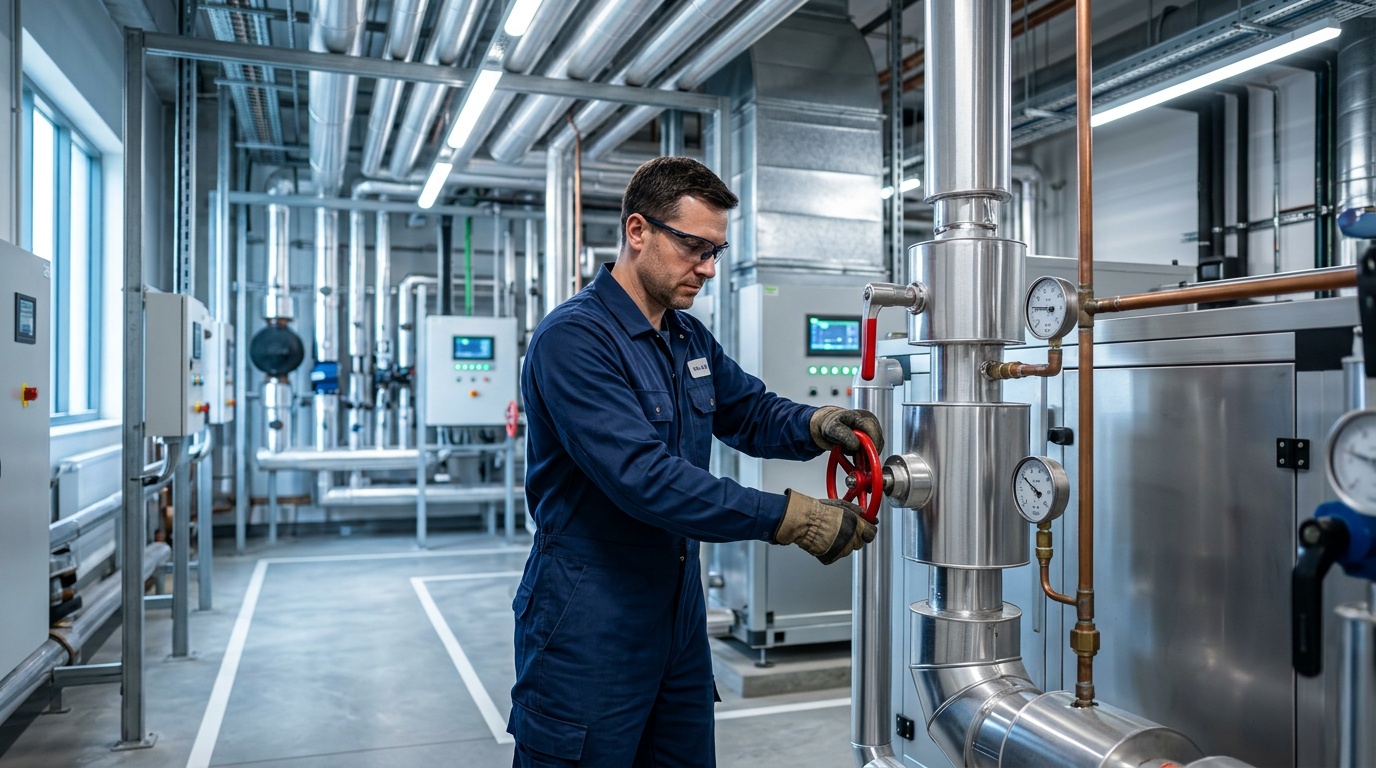
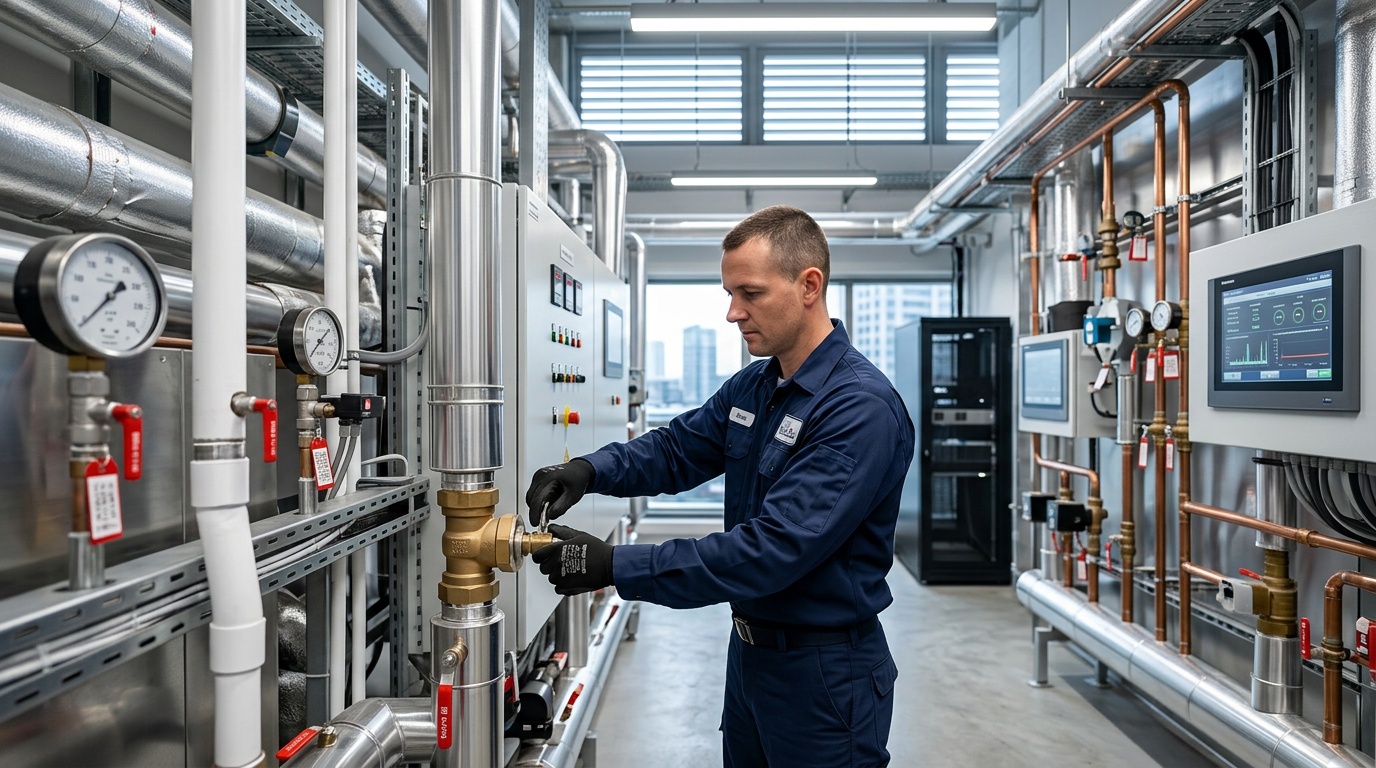
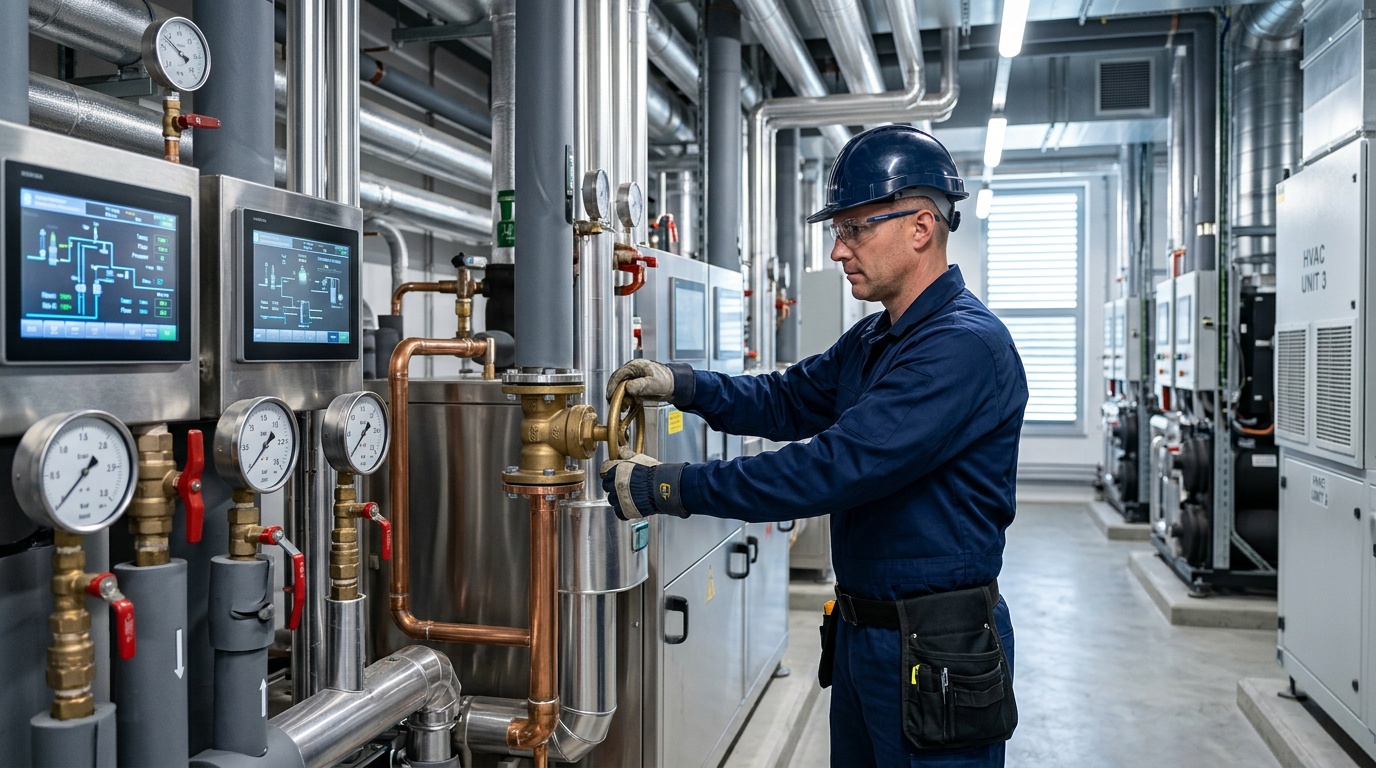
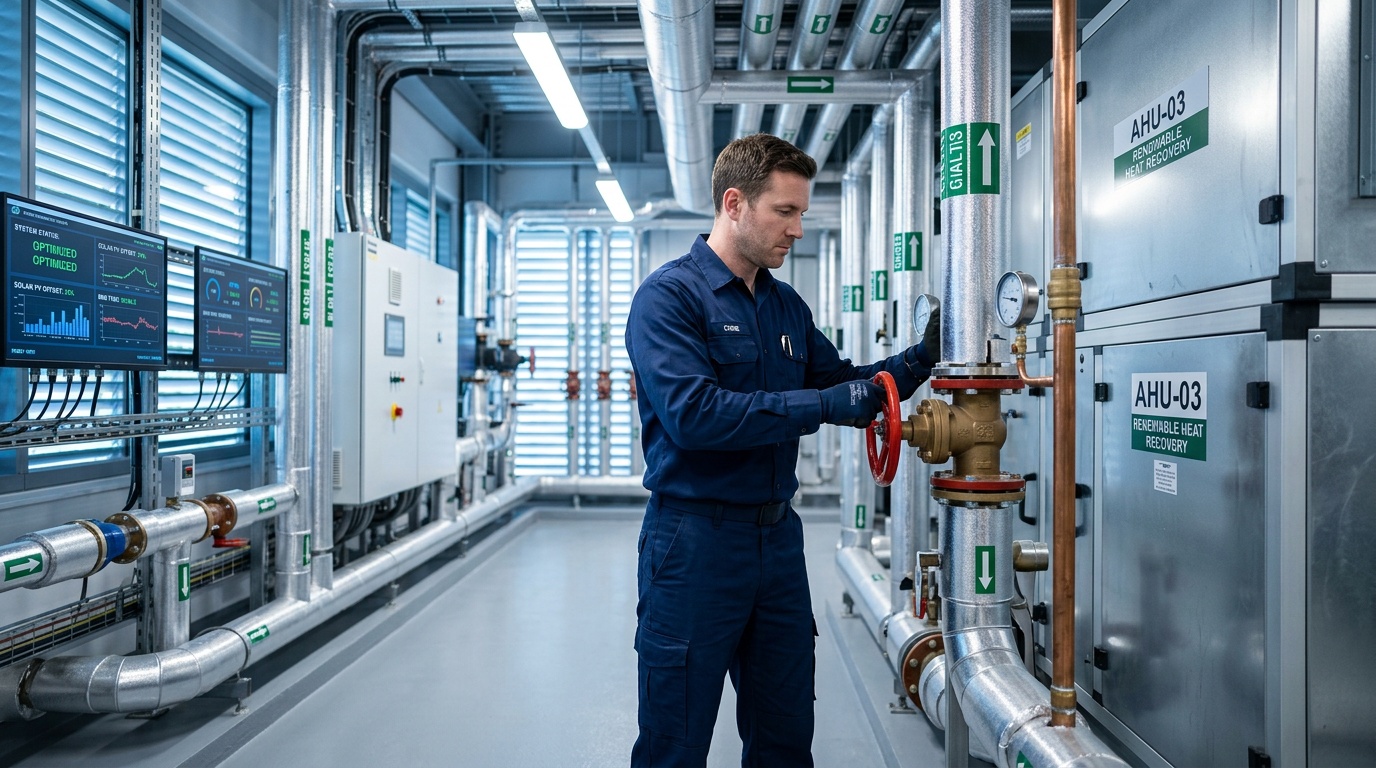
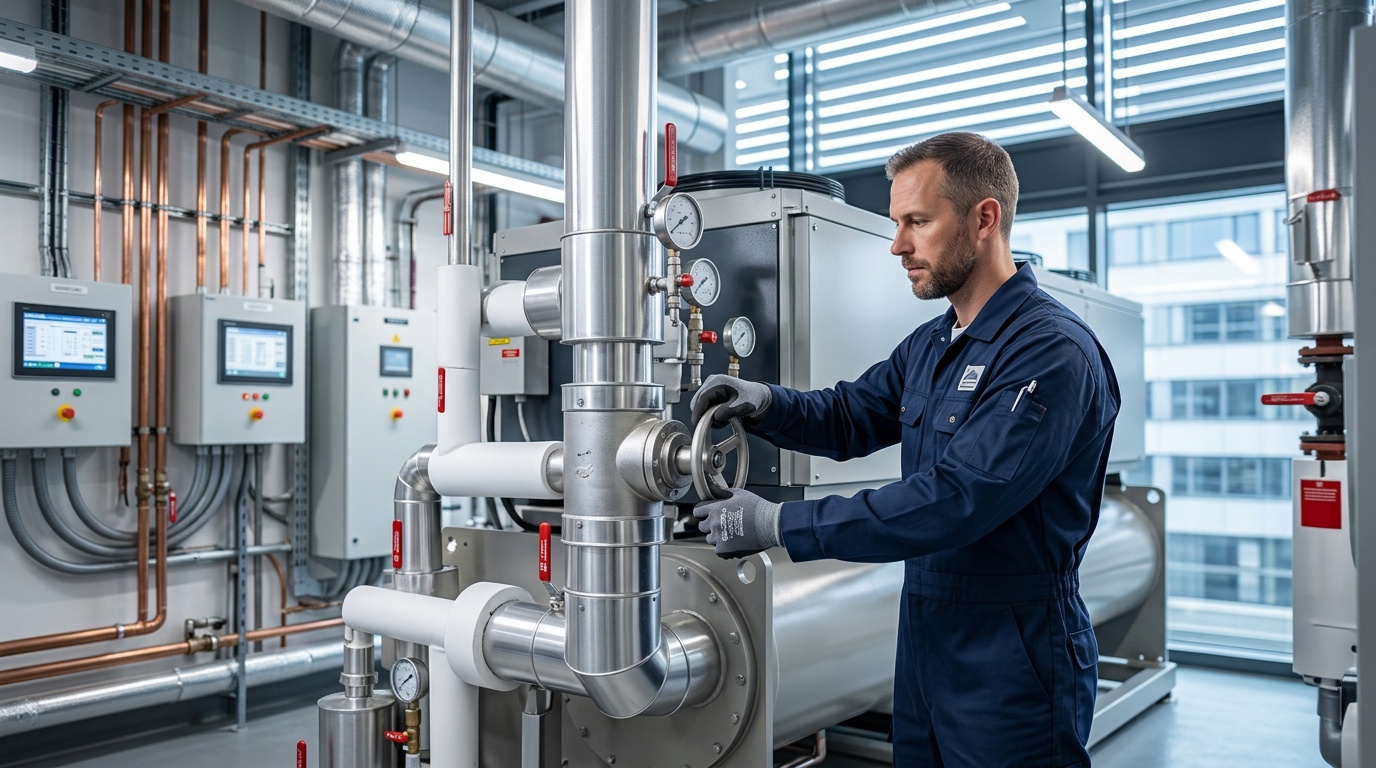
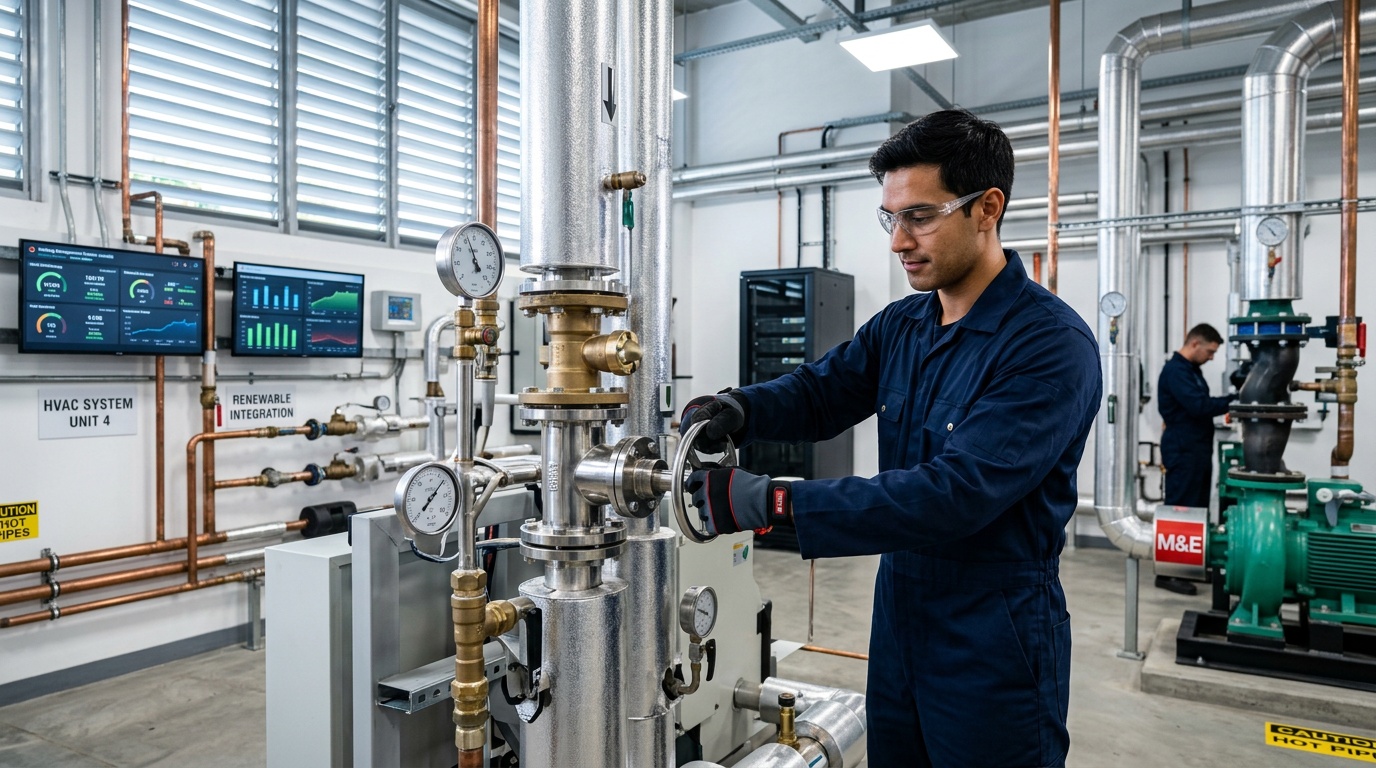
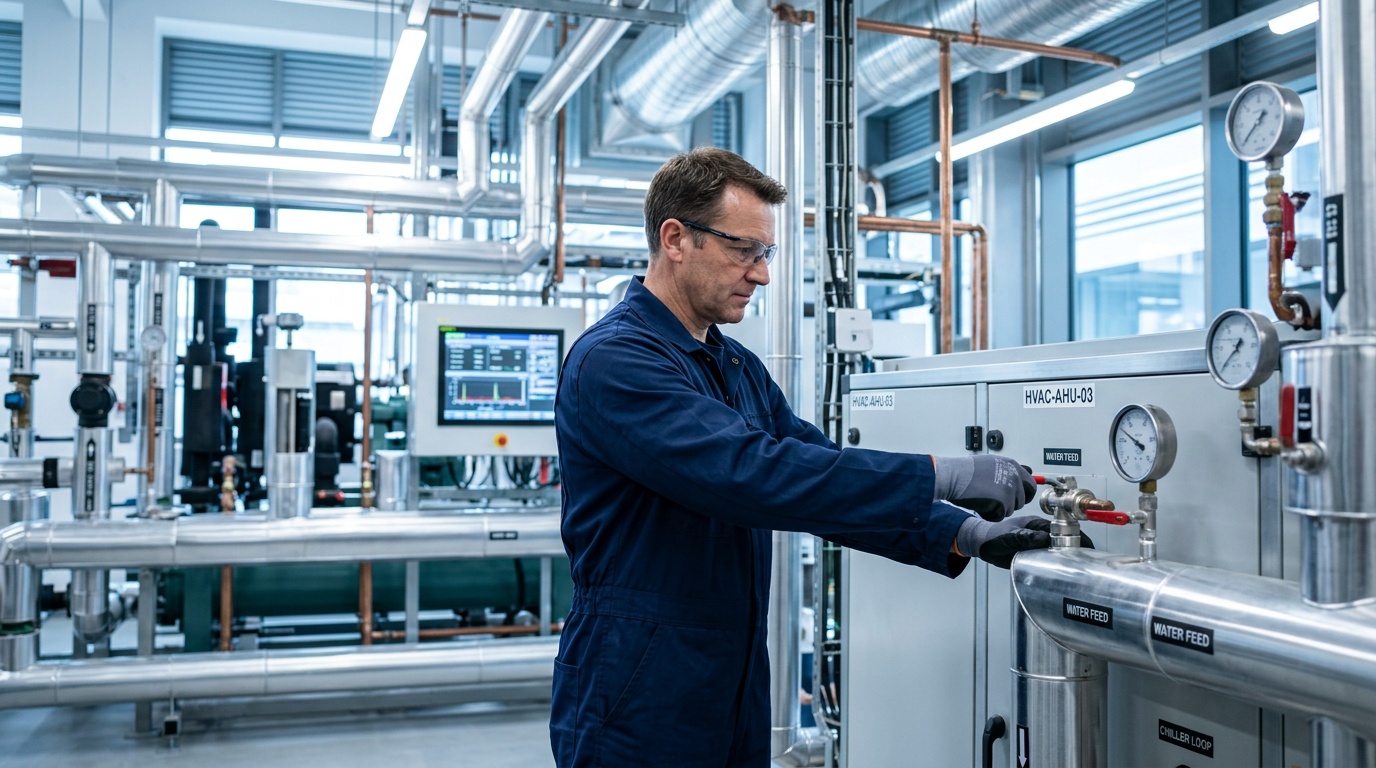


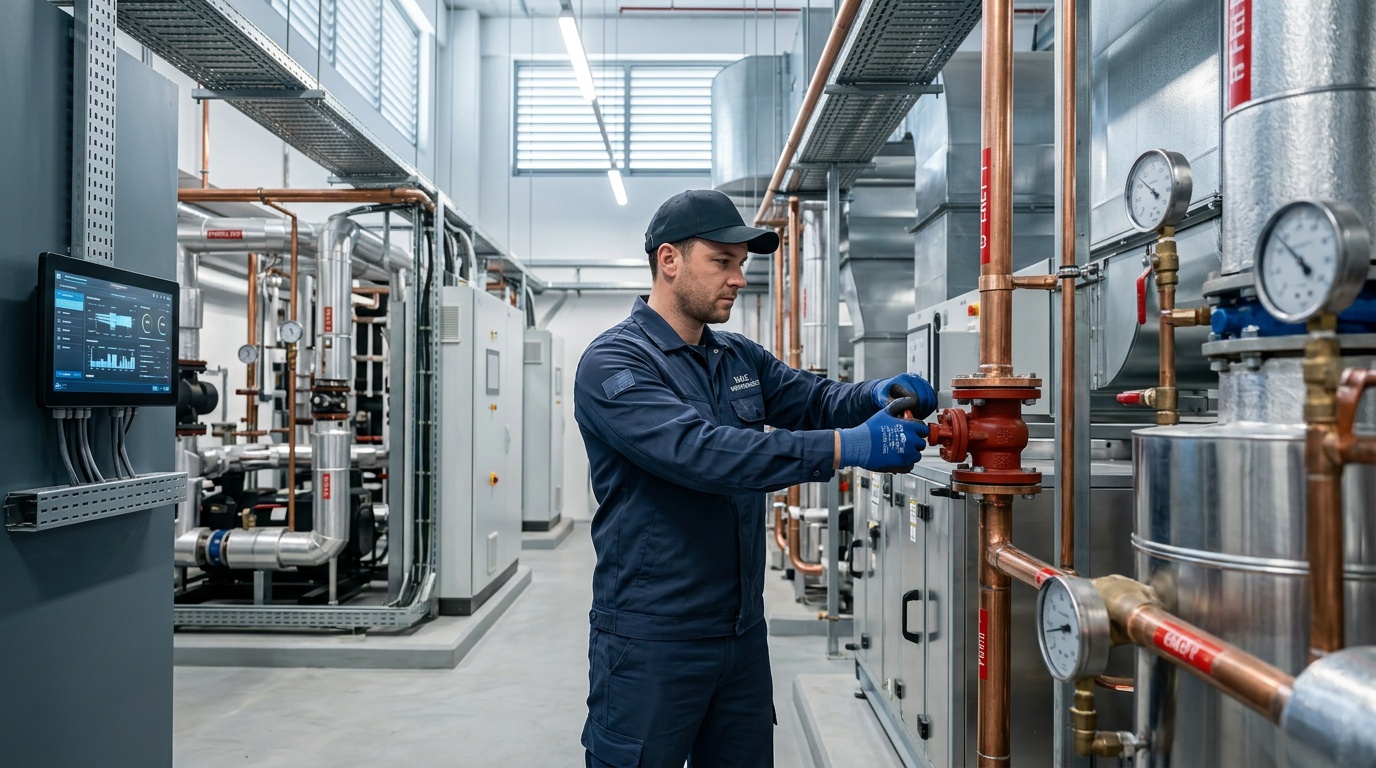


The main commercial benefit is better control of operating costs. Solar PV may reduce electricity purchased from the grid where site demand matches daylight generation. Efficient heating, LED lighting, occupancy sensors, efficient pumps and scheduled HVAC operation can reduce demand while maintaining suitable conditions for occupants. The wider climate implications of energy choices are discussed in the carbon reporting evidence base.
Technology does not remove the need for maintenance. A Planned Preventative Maintenance (PPM) schedule should cover filters, sensors, refrigerant checks, valves, pumps, inverters, electrical protection and alarm history. Reviews against manufacturer instructions, site risks and relevant SFG20 tasks keep maintenance records usable and faults visible. Regular review of energy profiles can show whether performance is drifting.
What should a facility manager check before approving a project?
Ask for a clear survey, design basis and maintenance plan. The proposal should explain expected operating conditions, access requirements, commissioning tests, compliance documentation and how performance will be reviewed. A low purchase price is not a saving if the system cannot be maintained or fails to suit the building.
- Confirm the building’s current energy use and operating hours.
- Check heat loss, electrical capacity, roof condition and available plant space.
- Agree who will complete testing, commissioning and compliance records.
- Set out the PPM schedule, response arrangements and access requirements.
- Review actual performance after handover rather than relying only on predicted savings.
That is the MEMS Standard: right first time. The aim is not to install equipment for its own sake, but to protect your assets and your people while preventing downtime before it happens. Our 24/7/365 availability is there because breakdowns don’t work 9 to 5.
References
- IPCC Sixth Assessment Report, Working Group III: https://www.ipcc.ch/report/ar6/wg3/
- UK Government Energy Trends: https://www.gov.uk/government/collections/energy-trends
Frequently Asked Questions
What are plumbing and electrical services?
Plumbing and electrical services cover the design, installation, inspection, testing, commissioning and maintenance of building systems. In a renewable project, both disciplines must be coordinated with the existing mechanical and electrical installation.
Which renewable systems suit commercial buildings?
The suitable system depends on the building’s energy profile, operating hours, roof area, heat demand and available plant space. Solar PV, Air to Air heat pumps, Air to Water heat pumps, Solar Thermal and LED lighting may all have a role.
How should renewable systems be maintained?
Maintenance should follow manufacturer instructions, the site risk profile and the planned preventative maintenance programme. Performance data should be reviewed so energy drift and faults are identified early.
"