property maintenance contractor
Choosing a property maintenance contractor on price alone can expose a commercial building to downtime, disputed invoices and repeat faults. A failed air-conditioning system can disrupt trading, unsettle tenants and damage equipment before the repair quote reaches your desk. Across commercial sites, an apparent saving at appointment stage can become a much larger operational cost.
This guide explains how to assess technical competence, legal compliance, insurance, labour arrangements and financial stability before signing an agreement. The right decision is not the cheapest name on a tender list, but a partner with the engineering capability, documentation and accountability to protect your building.
The True Cost of a Subpar Property Maintenance Contractor: Beyond the Invoice
The "Commercial Reality" Hook: Downtime, Disruption, and Hidden Expenses
A commercial maintenance failure rarely stays within the plant room. A failed AHU can affect indoor air quality and occupant comfort. Heating faults can send staff or tenants elsewhere, while lighting problems can interrupt production, retail activity or access through common areas. Lost revenue, emergency call-out premiums, damaged stock, tenant dissatisfaction and management time may exceed the direct repair charge.
Why Reactive Repairs Are a Financial Black Hole
Reactive maintenance creates an expensive cycle: equipment operates beyond its intended condition, a minor defect becomes a major failure, and an engineer is called when parts and labour are least convenient. Research cited in the brief indicates that unplanned repairs can cost three to five times more per incident than scheduled servicing. A planned inspection may identify a worn belt, blocked filter, refrigerant issue or poor electrical connection before it damages a compressor or stops an entire system.
HVAC and lighting account for more than 60% of total commercial building energy consumption, according to the research supplied for this guide. Poor commissioning, dirty coils, incorrect controls and neglected filters can increase energy demand without causing an obvious breakdown. Maintenance must assess performance as well as whether equipment is running.
The Risk of Unmanaged Subcontracting Chains: Lack of Accountability and Quality
A general contractor may accept responsibility at tender stage, then pass work through several subcontractors. This can produce unclear instructions, inconsistent workmanship and gaps in reporting. The attending engineer may not know the asset history, agreed specification or compliance records required by the landlord. If a fault returns, each party can point elsewhere while your team carries the disruption.
Introducing the 'Direct-Labour Advantage' for Commercial Assets
Direct labour gives you a clearer line between the person diagnosing the fault, the manager authorising work and the business accountable for the outcome. It supports continuity of site knowledge and makes first-time-fix performance easier to review. Specialist partners still have a place, but their role should be declared, controlled and documented rather than hidden inside a maintenance price.
Buying test: Ask who will attend a failure, who supervises that engineer, which tasks are subcontracted, and where certificates, photographs and service reports will be stored. If the answers are unclear before appointment, communication will not improve after a breakdown.
Beyond the Sales Pitch: Essential Vetting Criteria for Commercial Property Maintenance Contractors
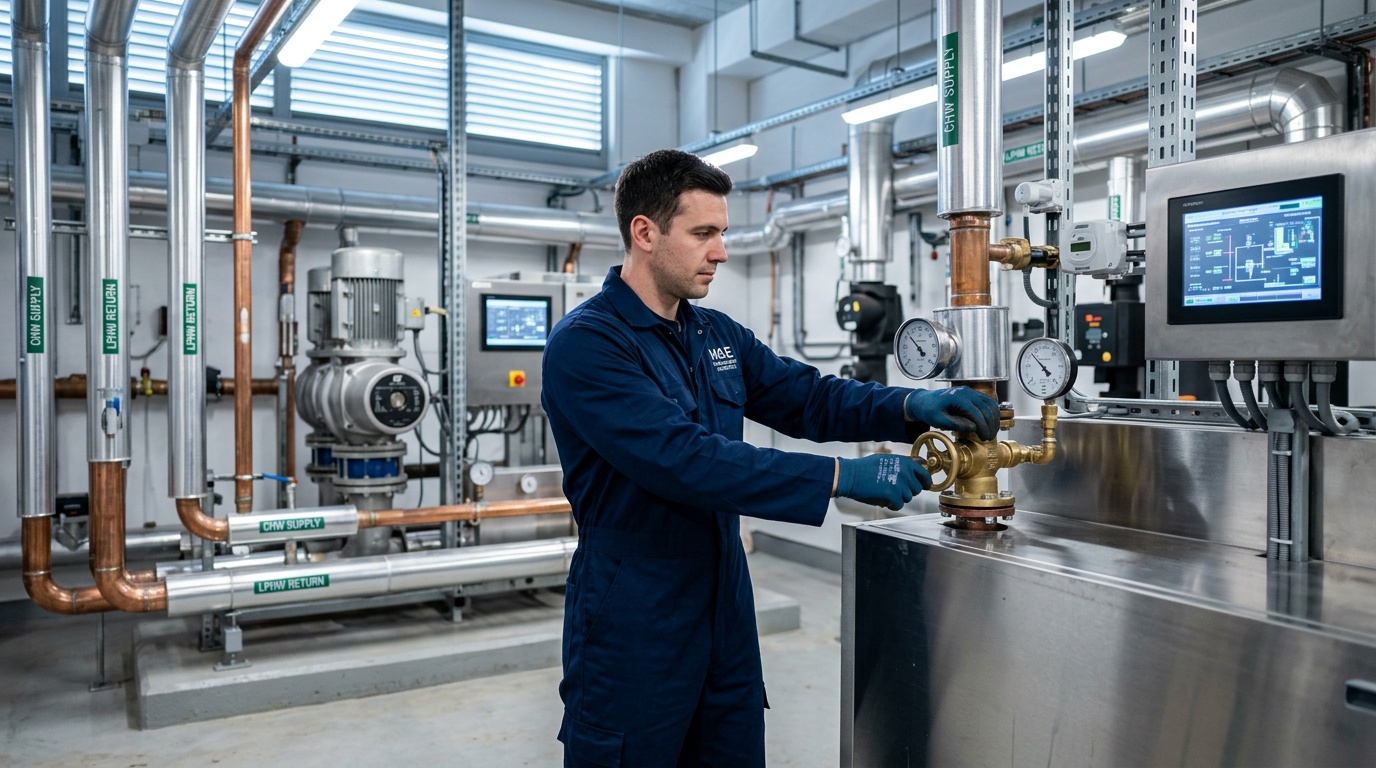
Accreditations and Certifications: What Really Matters (Gas Safe, NICEIC, REFCOM, SFG20)
Ask for current certificates, registration numbers and the scope attached to each accreditation. Gas work should be completed by an appropriately registered Gas Safe engineer. Refrigeration and air-conditioning work involving F-gases requires suitable REFCOM F-Gas competence. NICEIC evidence may apply to electrical installation and inspection work, while SFG20 provides recognised maintenance schedules rather than acting as a trade licence. SafeContractor, BES and ISO 9001 can support assessment of health and safety systems, environmental practice and quality control.
Check that the named company, employees and proposed service match the evidence supplied. A logo on a tender document proves little if registration has expired or covers another activity. The Electricity at Work Regulations 1989 and the L8 Legionella Approved Code of Practice also matter where the contract includes electrical systems or water safety responsibilities.
Insurance Coverages: Protecting Your Assets and Liabilities (Public Liability, Employers' Liability)
Request insurance schedules, not only an email declaration. Public liability cover addresses injury or property damage connected with work, while employers' liability insurance is required for businesses employing staff. Check limits, renewal dates and exclusions, including whether refrigerant handling, hot works or roof access are covered. The contract should state who carries responsibility for accidental damage, temporary repairs and permits.
Direct-Labour vs. Subcontracting: Understanding the Accountability Gap
Find out the proportion of work completed by employed engineers and identify every trade likely to be passed to another organisation. A direct team can offer stronger site familiarity and clearer escalation. A subcontracted model can work if the lead firm controls competence checks, method statements, attendance records, quality inspections and defect rectification. “Fully managed” is not a substitute for names, processes and written responsibility.
On-Site Experience and Technical Expertise: The 'Boots-on-the-Ground' Factor
General handyman capability is not the same as specialist building engineering. Ask for evidence of mechanical and electrical lifecycle assessments, fault diagnosis, controls knowledge, commissioning and safe isolation. Your assessor should understand plant schedules, asset registers, critical equipment, access restrictions and the operational consequences of taking a system offline. M&E Maintenance Solutions was founded in 2007. M&E specialises in maintenance of commercial buildings with a focus on Heating, Ventilation and Air Conditioning (HVAC).
Financial Stability and Longevity: A Contractor Built to Last
A supplier with weak financial controls may struggle to retain engineers, carry spare parts or support emergency service. Request trading details, relevant references, evidence of stable staffing and capacity during peak periods. M&E Maintenance Solutions employs over 20 core staff and works with a growing number of strategic partners. M&E holds certifications including SafeContractor, Refcom F-Gas Certification, Gas Safe Register, BES, and ISO 9001.
| Vetting area | Evidence to request | Warning sign |
|---|---|---|
| Technical competence | Engineer qualifications, registration details and relevant case studies | One certificate presented as proof of every trade capability |
| Insurance | Current schedules, limits, exclusions and renewal dates | Verbal assurances without policy documentation |
| Labour model | Named employed engineers and declared specialist partners | Unidentified subcontractors attending critical assets |
| Operational resilience | Out-of-hours rota, escalation route and parts access | No written response process for urgent failures |
| Quality control | Service reports, photographs, defect tracking and client references | Invoices issued without technical records |
Before appointment, complete a written checklist covering accreditations, insurance, competence, labour arrangements, references, reporting and emergency cover. M&E Maintenance Solutions serves Facility Managers and Estate Managers throughout the UK, with sustainable solutions intended to save money, improve working environments and maintain compliance with current legislation.
The Power of Prevention: Implementing Compliance-Led Planned Preventative Maintenance (PPM)
A property maintenance contractor should do more than attend after a breakdown. A Planned Preventative Maintenance (PPM) programme sets out what must be inspected, serviced, tested and recorded before failure affects trading, tenants or staff. It combines manufacturer guidance, asset criticality, legal duties and site conditions. Research supplied for this guide indicates that structured PPM can reduce overall capital expenditure across an asset lifespan by up to 30%, while unplanned repairs may cost three to five times more per incident than scheduled servicing.
Understanding SFG20 Standards: The Benchmark for Building Maintenance
SFG20 provides recognised maintenance schedules for building services, including recommended frequencies, task descriptions and safety considerations. It is not a trade accreditation and does not replace a site-specific risk assessment. It gives facility managers a baseline for planned tasks, engineer instructions and audit records. Schedules should be adapted to installed equipment, occupancy, operating hours and manufacturer requirements. Reports should show completed work, defects, remedial recommendations and any change to the risk position.
Scheduled Maintenance for HVAC, Electrical, and Plumbing Systems: Preventing Failures
HVAC servicing should cover filters, coils, belts, fans, pumps, refrigerant circuits, controls, temperatures and system performance. Electrical maintenance may include inspection, testing, protective devices, emergency lighting and safe isolation. Plumbing checks should address pumps, valves, tanks, pressure, leaks and drainage. HVAC and lighting account for more than 60% of total commercial building energy consumption, according to the research supplied for this guide, so poor controls and blocked filters can increase operating expenditure before a visible fault.
| System area | Planned checks | Business benefit | Records to retain |
|---|---|---|---|
| HVAC | Filters, coils, belts, refrigerant circuits and controls | Stable comfort, lower energy waste and fewer shutdowns | Service report, readings, defects and F-Gas records where applicable |
| Electrical | Connections, protective devices, emergency lighting and safe isolation | Reduced fire risk and improved system reliability | Inspection results, test certificates and remedial actions |
| Plumbing | Valves, pumps, tanks, pressure, leaks and drainage | Reduced water damage and service interruption | Inspection notes, photographs and follow-up recommendations |
Legionella Control and Water Safety: Statutory Obligations and Best Practices
Water systems require a documented control scheme based on risk. The L8 Legionella Approved Code of Practice sets out expectations for responsible-person appointments, system assessment, temperature control, monitoring and corrective action. Records must show what was checked, by whom, when and what happened when readings fell outside requirements. Stored water, low-use outlets, dead legs and poorly maintained tanks can increase risk, particularly in buildings with changing occupancy.
Proactive Fabric Maintenance: Protecting Building Structure and Occupant Comfort
PPM must include the building fabric around mechanical plant. Roof penetrations, grilles, seals, insulation, access panels and drainage routes affect equipment performance and occupant comfort. Water ingress may damage electrical components, degrade insulation and create conditions that encourage mould. Inspections can identify failed sealant, corrosion, blocked rainwater goods and damaged cladding before a small defect becomes a major repair.
How PPM Reduces Operational Expenditure and Extends Asset Lifespan
Planned maintenance allows defects to be corrected during controlled access rather than during an emergency call-out. It creates evidence for lifecycle decisions: repair, refurbish or replace. M&E Maintenance Solutions focuses on commercial HVAC maintenance and efficiency measures, including Air to Air heat pumps, Air to Water heat pumps, Solar PV, LED Lighting and Solar Thermal. M&E Maintenance Solutions focuses on sustainable solutions that help clients save money, improve working environments and maintain compliance with current legislation.
Ask for a schedule identifying each asset, maintenance frequency, statutory requirement, responsible engineer and reporting output. This supports budget planning, energy review and capital expenditure decisions.
Crafting a Transparent Contract: Ensuring Accountability and Service Level Agreements (SLAs)
A written agreement turns a maintenance appointment into a defined business responsibility. It should identify covered assets, expected service standards and the accountable person. The scope must reflect the equipment, occupancy pattern and risk profile of your commercial estate.
Key Clauses for Commercial Maintenance Contracts: Scope, Responsibilities, and Term
Define each included system, location and task, including asset identification, visit frequency, statutory inspections, consumables, reporting, emergency attendance and remedial quotation procedures. State who provides access, permits, isolation arrangements and inductions. Include duration, renewal, termination, price review and out-of-scope work. If specialist partners may attend, state when they can be used and retain approval over material changes in responsibility.
Defining Service Level Agreements (SLAs): Response Times, Resolution Targets, and Reporting
An SLA must describe measurable service. Set response tiers for critical failure, urgent fault and routine defect, then define when the clock starts. Resolution targets should allow for parts and safe working while requiring updates when permanent repair is delayed. Monitor first-time-fix rate, attendance compliance, repeat faults, outstanding quotations, report delivery and communication. Each visit should produce a record of findings, actions, photographs where useful and next steps.
Procurement Best Practices: Tendering, Evaluation, and Selection
Issue the same asset list, drawings, operating information and response expectations to each tenderer. Request a mobilisation plan, sample report, labour model, accreditation evidence, insurance schedules and pricing assumptions. Evaluate competence and lifecycle understanding alongside the fee. A low price can conceal exclusions, call-out charges or parts mark-ups. Score compliance control, engineering capacity, communication, reporting and financial transparency, and record the reasons for selection.
The Role of Communication Protocols: Avoiding Subcontractor Breakdowns
Name the helpdesk route, escalation manager, out-of-hours number and client contact for approval. Engineers need current asset registers, risk assessments, isolation procedures and fault history. If a strategic partner attends, the lead contractor should instruct the partner, check competence, manage site conduct and consolidate the report. A shared ticket reference, update intervals and one commercial contact prevent communication gaps from extending disruption.
Contract Review and Performance Monitoring: Maintaining a Long-Term Partnership
Review SLA results, recurring defects, compliance documents, energy observations, remedial spend and tenant feedback. Compare planned and reactive activity to identify assets needing replacement or a different maintenance frequency. Confirm that insurance, registrations and engineer competencies remain current. Record corrective actions, owners and deadlines when performance falls short.
Contract Checklist: Benefits and Risks to Weigh Before Signing
Pros
- Defined scope, pricing and responsibility for each asset.
- Measurable response, resolution and reporting standards.
- Clear control of specialist partners and remedial approvals.
- Reliable records for compliance audits and budget planning.
Cons
- A narrow scope may leave important plant or fabric excluded.
- Unclear parts terms can create unexpected expenditure.
- Unrealistic resolution targets can encourage unsafe temporary fixes.
- Weak review arrangements allow repeat faults to continue unnoticed.
The MEMS Standard: Your Partner in Building Efficiency and Compliance
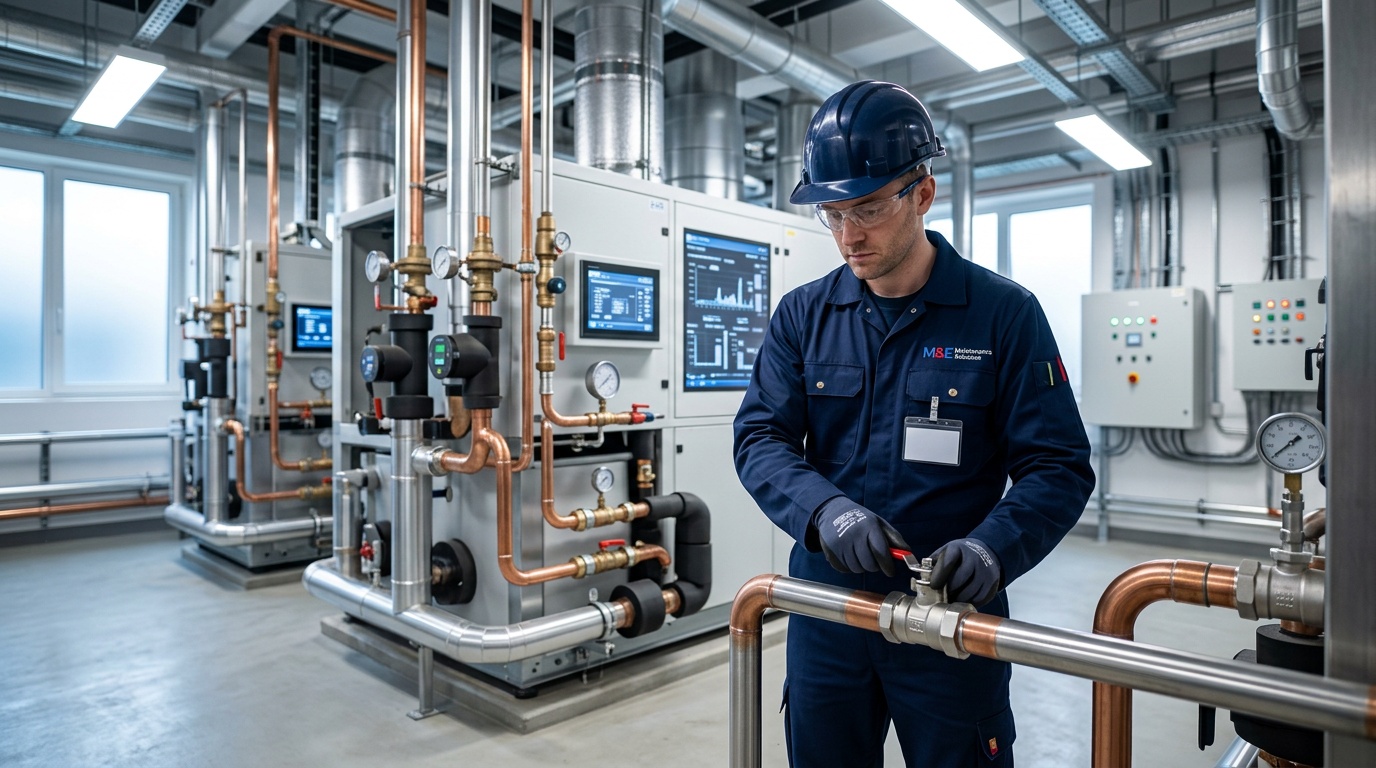
M&E Maintenance Solutions brings direct engineering knowledge to commercial HVAC maintenance, supported by over 20 core staff and strategic partners where specialist input is required. Certified engineers provide planned servicing and emergency support across the UK, with clear reports and practical escalation. The focus is to keep plant operating, control energy waste and protect compliance.
M&E Maintenance Solutions holds SafeContractor, Refcom F-Gas Certification, Gas Safe Register, BES and ISO 9001 certifications. SFG20-aligned schedules, statutory records and asset condition information support decisions. Services include lifecycle assessments, Air to Air heat pumps, LED Lighting and Solar PV.
For a dependable property maintenance contractor, speak with the MEMS team about your estate, service risks and response requirements.
CLICK TO CALL US NOW and arrange a practical review of your commercial HVAC maintenance strategy.
Frequently Asked Questions
What does a property maintenance company do?
A property maintenance company inspects, services and repairs building systems and fabric to keep commercial premises safe, compliant and operational. A capable property maintenance contractor may plan preventative visits, respond to faults, manage specialist partners, provide service reports and track defects, certificates and follow-up work across the site.
What is the 1% rule for property maintenance?
The 1% rule suggests budgeting about 1% of a property’s value each year for maintenance. A commercial building may need a different figure because age, size, occupancy, plant condition and compliance duties affect spending, so a contractor should support the budget with asset surveys, maintenance history and planned works.
How much should I charge for property maintenance?
A property maintenance contractor should price work after reviewing the building, asset list, service scope and attendance requirements. Commercial pricing may combine planned maintenance, emergency response, labour, parts and specialist services, with clear exclusions and reporting. Comparing only hourly rates can overlook downtime, repeat faults and compliance administration.
What services fall under property maintenance?
Property maintenance services can include inspections, preventative servicing, fault diagnosis, repairs, compliance checks, reporting and planned replacement of building assets. Commercial contracts may cover heating, ventilation, air conditioning, electrical systems, lighting, water safety and building fabric, subject to the contractor’s stated competence, insurance and approved service scope.
What is another word for property maintenance?
Facilities maintenance is another common term for property maintenance, particularly in commercial buildings. Building maintenance, premises maintenance and facilities management may also be used, although facilities management can describe a wider service that includes contractor coordination, compliance records, cleaning, security or other operational responsibilities.