top M&E Solutions
Beyond the Basics: Why M&E Solutions Need More Than Just Software
When facility managers search for M&E monitoring systems, they're often bombarded with software recommendations that miss the bigger picture. After 24 years in this industry, I can tell you that true monitoring excellence combines smart technology with hands-on mechanical expertise and proactive maintenance strategies.
The reality? A monitoring dashboard that can't predict when your boiler's about to fail is just an expensive thermometer.
Why Building Management Has Changed Forever
Commercial building management has shifted from "fix it when it breaks" to intelligent asset management. Modern facility managers need systems that connect HVAC performance data with actual energy costs, compliance deadlines, and maintenance scheduling. With net-zero targets pushing everyone towards renewable energy integration, your monitoring must capture real data on heating efficiency, ventilation performance, and renewable energy systems.
What M&E Actually Means in Commercial Property
In British commercial buildings, mechanical and electrical systems are the operational backbone. M&E covers heating, ventilation, air conditioning, electrical distribution, lighting controls, and renewable technologies like heat pumps. But here's what most people miss: these systems don't work in isolation. A failing electrical circuit can crash your HVAC controls, leaving you with both heating and power problems.
The Real Cost of Poor Monitoring
I've seen this story play out dozens of times across the Midlands. A blocked filter increases energy consumption by 15%, but without proper monitoring, this efficiency drop goes unnoticed for months. Scale builds up in boilers, reducing heat transfer efficiency and driving up gas bills. We regularly encounter commercial properties where poor monitoring led to premature system failures that could've been prevented.
Last winter, we were called to an emergency at a Birmingham office block. The building manager had been ignoring warning signs for weeks because their monitoring system couldn't distinguish between normal fluctuations and genuine problems. The result? A complete heating failure during the coldest week of the year, emergency repairs at triple the normal rate, and three days of lost productivity.
Engineering Reality Check
Asset depreciation is silent until it becomes catastrophically expensive. The best monitoring systems combine real-time data with experienced mechanical interpretation to spot problems before they become emergency call-outs.
Building Performance That Actually Works
Effective building monitoring requires connecting multiple data streams: energy consumption, environmental conditions, equipment performance, and maintenance schedules. But data without interpretation is useless. You need systems that translate sensor readings into actionable insights, enable predictive maintenance, and support compliance with Gas Safe, F-Gas, and SFG20 standards.
What Actually Makes M&E Monitoring Work
Data Collection That Makes Sense
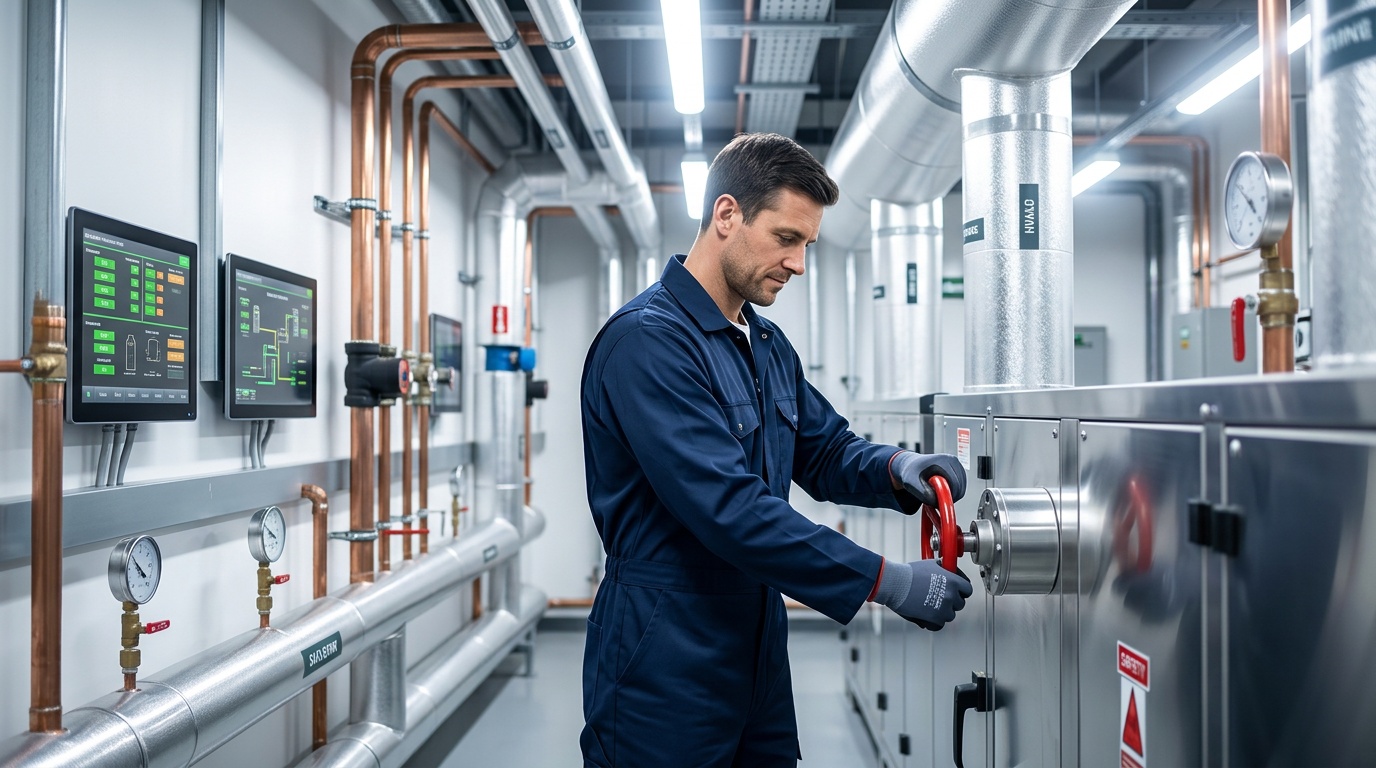
Smart monitoring starts with the right sensors in the right places. You need temperature differentials, pressure readings, electrical consumption, and equipment run-time hours tracked in real time. But here's what separates good systems from great ones: seamless integration with your existing Building Management System whilst providing standalone functionality for older installations.
The sensors should capture performance metrics from HVAC units, lighting circuits, and renewable systems without creating data silos. If you're juggling five different software platforms to understand your building's performance, something's wrong.
Turning Data Into Decisions
Raw data collection means nothing without intelligent analysis. The algorithms should detect efficiency drift weeks before it shows up on your utility bills. When we install monitoring systems, they're configured to flag issues like fouled heat exchangers or failing motor bearings well before catastrophic failure.
The reporting needs to translate complex mechanical data into business language. When a heat pump's performance drops by 12%, the system should tell you exactly what that costs and recommend specific actions with clear return-on-investment calculations.
Staying Compliant (Without the Headaches)
UK commercial buildings must maintain Gas Safe compliance, F-Gas certification, and carbon reduction reporting. Your monitoring system should track regulatory deadlines automatically and generate compliance certificates that satisfy inspection requirements. Missing a single F-Gas inspection can cost you £200,000 in fines.
Compliance Reality Check
The best monitoring systems treat compliance as non-negotiable, with automated alerts that prevent regulatory oversights. You shouldn't have to remember every deadline manually.
Predictive Maintenance That Actually Predicts
This is where monitoring becomes valuable. Vibration analysis, thermal imaging, and performance trending can identify equipment problems weeks before failures occur. At MEMS, we track bearing temperatures, motor current signatures, and refrigerant pressures to predict component failures. This approach reduces emergency call-out costs by up to 70% whilst extending equipment lifespan.
Systems Your Team Will Actually Use
The most sophisticated monitoring technology fails if your facility team can't access insights quickly. Mobile-responsive dashboards let on-site technicians access real-time data, whilst customizable alert systems ensure critical issues reach the right people immediately. The interface should work for everyone from apprentice engineers to experienced facility managers.
How We Test Technology Before You See It
We Test Everything Internally First
Unlike companies that chase every technological trend, we maintain strict evaluation standards for new monitoring technologies. Each potential addition undergoes months of internal testing across real commercial installations. This means you get proven solutions rather than experimental systems that might compromise your building operations.
When a manufacturer approaches us with new IoT sensors or monitoring software, they go through our evaluation process. Real-world testing in actual commercial environments, not laboratory conditions.
Six-Month Minimum Testing Period
Every monitoring system we recommend has been tested within our own facilities and partner installations for at least six months. New IoT sensors must demonstrate consistent performance across varying environmental conditions before we'll install them in critical commercial environments where system failures translate directly into business disruption.
Connecting Old and New Systems
Modern monitoring must seamlessly integrate conventional building systems with renewable technologies. Our evaluation protocols ensure monitoring platforms can track traditional gas boiler performance alongside heat pump efficiency and solar thermal output. This integrated approach lets you optimize mixed-technology installations whilst maintaining oversight of carbon reduction initiatives.
Technology Integration Reality
The best monitoring systems don't replace your existing infrastructure; they connect different technologies into unified performance dashboards that reveal optimization opportunities across your entire building.
Why Software Alone Doesn't Work
Software platforms can't deliver effective building monitoring by themselves. We combine advanced monitoring technologies with mechanical engineering expertise, creating evaluation strategies tailored to each facility's operational requirements. Data insights mean nothing unless they translate into practical maintenance actions that preserve asset performance and regulatory compliance.
Client Success Drives Every Decision
When evaluating new monitoring capabilities, we prioritize solutions that simplify facility management rather than adding complexity. This means recommending systems that integrate with existing workflows, provide clear actionable insights, and reduce administrative burden whilst improving building performance.
Future-Proofing Your Building Systems
How AI Changes Building Monitoring
Machine learning algorithms transform building monitoring from reactive reporting to predictive intelligence. AI systems analyze historical performance patterns, weather correlations, and occupancy data to predict equipment failures weeks before they occur. These algorithms identify subtle efficiency patterns that human analysis might miss, enabling proactive interventions that prevent costly emergency repairs.
IoT Sensors: Monitoring Without Major Infrastructure Changes
Wireless sensor networks provide detailed monitoring without extensive infrastructure modifications. Modern IoT devices track temperature, humidity, pressure, vibration, and electrical consumption with battery lives exceeding five years. These sensors extend monitoring coverage to previously hard-to-reach locations, supporting informed decision-making and compliance documentation.
When AI and IoT Work Together
Combined technologies create adaptive building management systems that learn from operational patterns and automatically optimize performance. IoT sensors provide continuous data streams whilst AI algorithms identify optimization opportunities and predict maintenance requirements. This enables buildings to self-diagnose issues and recommend actions before problems affect occupant comfort.
Implementing New Technology Safely
Successful technology adoption requires careful planning and phased implementation. Start with pilot installations in non-critical areas to validate performance before expanding coverage. Ensure new monitoring technologies integrate with existing building management systems and comply with cyber-security requirements. Consider long-term support availability to avoid vendor lock-in.
The MEMS Advantage: Proven Innovation
Our commitment to technological advancement ensures clients benefit from emerging innovations without the risks of unproven systems. We continuously evaluate new monitoring technologies, integrate suitable options into our service offering, and provide guidance on future-proofing strategies that protect long-term investment value whilst delivering immediate operational benefits.
Frequently Asked Questions
What are M&E solutions?
From my experience, M&E solutions are far more than just software. They combine smart technology with real mechanical expertise, compliance management, and proactive maintenance strategies. This holistic approach keeps commercial buildings running efficiently and meets UK regulatory requirements.
What are M&E services?
M&E services in commercial property management cover the operational backbone of a building. This includes heating, ventilation, air conditioning, electrical distribution, lighting controls, and integrating renewable energy technologies like solar thermal and heat pumps. Effective services ensure occupant comfort, energy efficiency, and compliance with UK legislation.
What does M&E stand for?
In the commercial building sector, M&E stands for Mechanical and Electrical. These are the critical systems that keep a building operational, from heating and ventilation to electrical distribution and lighting controls. Understanding M&E is key to managing building performance, energy use, and regulatory compliance.
What types of engineering are critical for M&E solutions?
While engineering has many branches, for effective M&E solutions in commercial buildings, we primarily focus on mechanical and electrical engineering disciplines. Mechanical expertise handles systems like HVAC and boilers, while electrical engineering manages power distribution and lighting. These two areas are fundamental to ensuring a building's operational efficiency and compliance.
How do inadequate M&E monitoring systems impact commercial buildings?
Poor M&E monitoring creates expensive blind spots, leading to unnoticed efficiency drifts like a blocked filter increasing energy consumption. It can also cause issues like scale build-up in boilers, reducing heat transfer and shortening equipment lifespan. Ultimately, inadequate monitoring leads to premature system failures and costly emergency repairs that could have been prevented.
What role does data play in modern M&E solutions?
Data is the foundation of modern M&E solutions, capturing real-time performance metrics from all mechanical and electrical systems. This raw data is then analyzed by advanced algorithms to identify patterns, anomalies, and opportunities for optimisation. Turning data into actionable intelligence enables predictive maintenance and ensures compliance with UK standards like Gas Safe and F-Gas.
Why is compliance tracking important for M&E in the UK?
For UK commercial buildings, compliance with regulations like Gas Safe and F-Gas certification is non-negotiable, with significant fines for oversights. Effective M&E solutions track regulatory deadlines, generate compliance certificates, and maintain audit trails for inspections. This also extends to sustainability metrics, which are increasingly important for businesses working towards net-zero targets.