top Renewable Energy Solutions 2026
A failed heating system, rising electricity bills and an exposed roof can point to one commercial problem: the building’s energy strategy no longer matches how it operates. The top Renewable Energy Solutions 2026 must be assessed against occupancy, plant condition, roof space, grid capacity, maintenance access and the cost of keeping the business open.
Key Takeaways
- Modernizing your energy strategy requires a thorough assessment of occupancy levels and the physical condition of your existing plant equipment.
- Available roof space and local grid capacity are practical constraints that determine the feasibility of new renewable installations.
- Businesses must weigh the expense of implementing new technologies against the operational costs of maintaining current systems during upgrades.
- Ensuring proper maintenance access is essential for the long-term reliability of any renewable energy infrastructure you choose to install.
I have spent more than 24 years working from plant rooms to boardrooms. My practical view is simple: renewable technology creates commercial value only when it is correctly designed, commissioned and maintained. A solar array that cannot connect to the grid, or a heat pump connected to a poorly controlled system, can tie up capital without producing the expected return.
What are the top Renewable Energy Solutions 2026?
The leading options for commercial buildings are Solar PV, Air to Air heat pumps, Air to Water heat pumps and Solar Thermal. LED Lighting is not renewable generation, but it can reduce electrical demand and support the wider plan. The right combination depends on the property: a warehouse may suit Solar PV, while an office may need heat-loss improvements, better controls and an Air to Water heat pump assessment first.
Review renewable equipment as part of the complete mechanical and electrical installation. Solar and wind output varies, so the assessment should cover battery storage, demand flexibility, grid connection, export arrangements and backup requirements. Heat pumps can produce several units of heat for each unit of electricity under suitable conditions, but seasonal performance depends on design temperatures, controls, building fabric, commissioning and servicing. That is why M&E Maintenance Solutions tests and vets HVAC, electrical, Solar PV, heat-pump and lighting technologies before recommending them to commercial clients.
What benefits can commercial buildings expect?
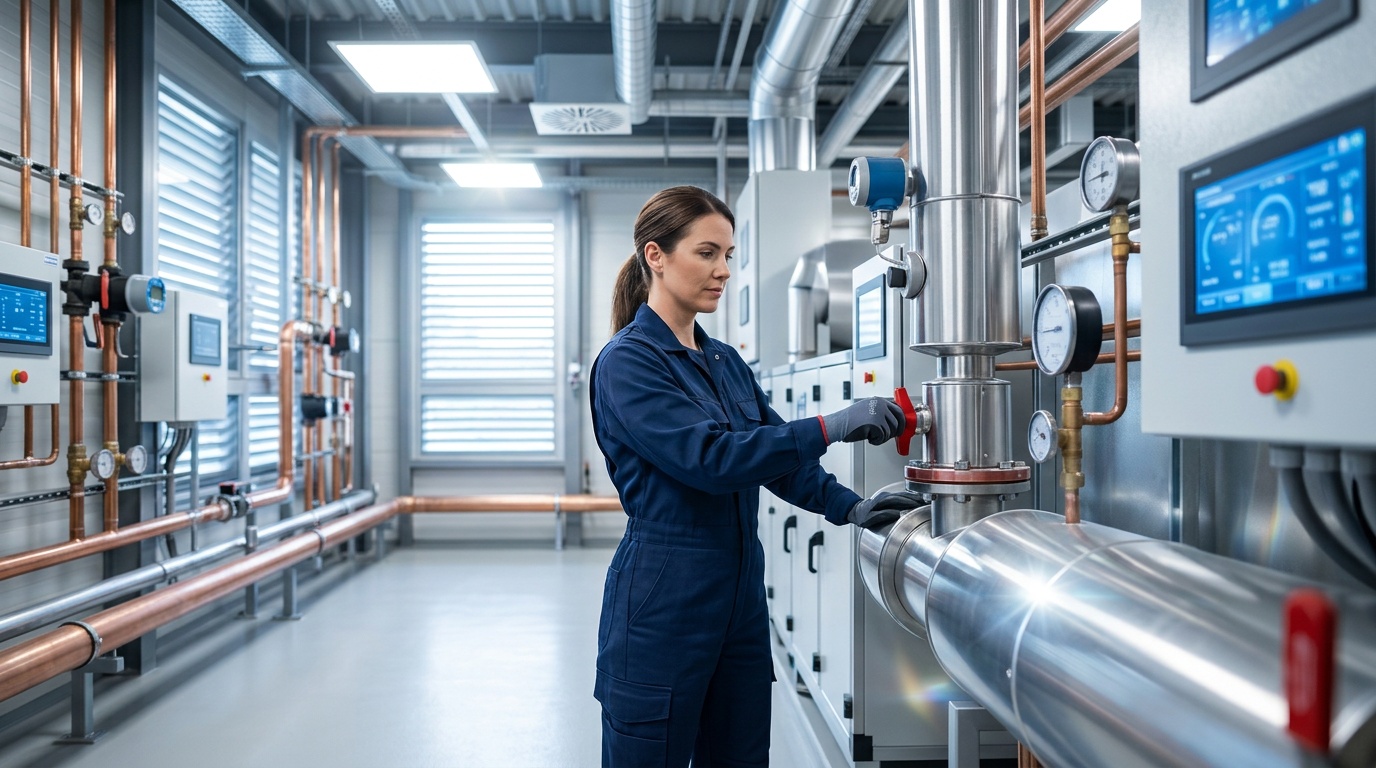
The main benefit is greater control over energy use. On-site generation can reduce purchased electricity during suitable operating periods. Efficient heat pumps can reduce the fuel required for space heating and hot water, while LED Lighting can lower lighting demand and unwanted heat in occupied areas. Actual savings depend on tariffs, operating hours, controls, roof orientation, equipment sizing and how surplus electricity is managed.
A properly designed Solar PV and battery arrangement may also support selected loads during interruptions, subject to the site’s electrical design and backup strategy. Storage is not automatically worthwhile. Its value depends on the load profile, import and export tariffs, usable capacity, cycling behaviour, fire safety requirements and replacement cost.
Good records support compliance, energy planning and carbon reporting. Planned inspections can identify inverter faults, refrigerant issues, blocked filters, poor water flow, sensor errors and control settings that waste energy. M&E Maintenance Solutions was founded in 2007 and specialises in commercial HVAC maintenance. The company holds certifications including SafeContractor, Refcom F-Gas Certification, Gas Safe Register, BES and ISO 9001.
The commercial case still needs an honest survey. Check heat loss, electrical load, plant age, roof condition, access routes and future maintenance before accepting a payback estimate. M&E Maintenance Solutions serves Facility Managers and Estate Managers throughout the UK, with over 20 core staff and strategic partners. Where fabric improvements are needed first, building fabric repairs and maintenance can support the wider energy strategy.
How should you choose renewable energy solutions?
Start with measured building data, not a sales brochure. Review half-hourly electricity demand, heating load, occupancy, roof condition, plant space, electrical intake capacity and maintenance access. A warehouse with daytime operations and a clear roof may suit Solar PV. An office with ageing gas heating may need an Air to Water heat pump assessment alongside controls and fabric improvements.
Request a lifecycle appraisal rather than an installation-only quotation. It should state capital cost, annual energy yield, seasonal efficiency, servicing, component degradation, inverter or compressor replacement, insurance, export arrangements and avoided emissions. Payback figures should also show the assumptions for tariffs, operating hours, roof orientation, shading, finance and grid connection. Without those details, the figure is a sales estimate, not a commercial forecast.
| Technology | Most suitable commercial application | Checks required before specification | Operational consideration |
|---|---|---|---|
| Solar PV | Warehouses, offices and estates with suitable roof or ground area | Roof loading, shading, orientation, electrical capacity and grid connection | Output varies with daylight and weather; inspect modules, inverters and cabling |
| Air to Air heat pumps | Open-plan offices, retail areas and zones needing heating and cooling | Room layout, airflow, acoustic limits, refrigerant pipework and controls | Filter condition, coil cleanliness and refrigerant compliance affect performance |
| Air to Water heat pumps | Commercial buildings with suitable wet heating distribution | Heat-loss calculation, emitter temperatures, hydraulic balance and electrical supply | Seasonal efficiency depends on design, weather compensation and commissioning |
| Solar Thermal | Sites with a consistent demand for domestic or process hot water | Hot-water profile, cylinder capacity, roof exposure and integration with existing plant | Fluid quality, pumps, valves and stagnation protection require planned maintenance |
| LED Lighting | Buildings with long lighting hours and inefficient existing fittings | Lux levels, controls, emergency lighting, occupancy sensors and circuit condition | Cleaning, testing and control calibration protect energy and workplace performance |
Limited roof space or export capacity does not automatically rule out Solar PV. A survey can test on-site consumption, battery storage and load management. Storage needs its own financial and engineering case, including usable capacity, charge and discharge limits, cycling, fire precautions, warranty terms and replacement planning. Where uninterrupted operation matters, include backup generation, demand flexibility and grid availability in the design.
M&E Maintenance Solutions for joined-up commercial assessment
Best for: Facility Managers and Estate Managers who need renewable technology assessed alongside HVAC condition, electrical infrastructure, compliance and planned maintenance. M&E Maintenance Solutions has an open door policy for evaluating and testing new HVAC technologies before offering them to customers. Engineers and strategic partners review commissioning records, controls, heat distribution, refrigerant systems, plant-room access, roof condition and maintenance requirements before making a recommendation.
M&E Maintenance Solutions was founded in 2007 and focuses on commercial buildings throughout the UK. It holds SafeContractor, Refcom F-Gas Certification, Gas Safe Register, BES and ISO 9001 certifications. Ask any provider for clear performance expectations, asset registers, monitoring arrangements, response times and planned preventative maintenance before approving work. The right partner will explain what the system can deliver, what it cannot deliver and which conditions must remain in place. A commercial HVAC compliance health check can identify risks before connected renewable systems are specified.
Frequently Asked Questions
What are the leading renewable energy options for commercial buildings in 2026?
For most UK commercial properties, the main options are Solar PV, Air to Air heat pumps, Air to Water heat pumps and Solar Thermal. LED Lighting is not renewable generation, but it can reduce electrical demand and support a wider energy plan. The suitable choice depends on the building’s electricity profile, heat demand, roof condition, insulation, plant age, electrical capacity and operating hours. A warehouse may gain value from daytime solar generation, while an office may need heating controls and heat-loss improvements before a heat pump is specified.
Which solution is best for a UK office, warehouse or estate?
There is no universal answer. An office with daytime occupancy and available roof area may suit Solar PV, particularly where much of the generated electricity is consumed on site. A warehouse may need a combined assessment covering roof loading, lighting demand, heating zones and grid connection. An estate with varied buildings may require separate designs for each use, rather than one standard specification. The correct decision follows a measured survey, half-hourly demand review, heat-loss calculation and inspection of existing mechanical and electrical equipment.
Is Solar PV worthwhile if roof space or grid export is limited?
It can be worthwhile if the system is designed around on-site consumption. Limited export does not automatically remove the business case. Load scheduling, battery storage, hot-water production and electrical demand management may allow more generated power to be used at the property. The appraisal should account for roof orientation, shading, structural capacity, inverter design, export restrictions, tariff assumptions, maintenance and future replacement costs. A quotation that ignores these matters cannot provide a reliable payback estimate.
How can a business reduce the upfront cost of installation?
Begin with a phased plan based on measured energy use and asset condition. Combining suitable works, comparing finance arrangements and prioritising systems with strong on-site demand may reduce initial pressure on the capital budget. Check available UK funding or tax treatment with an appropriately qualified financial adviser, since eligibility and policy can change. Do not reduce cost by omitting commissioning, protection, monitoring or planned maintenance. Those items protect performance, safety and compliance after handover.
Should a commercial site add battery storage to Solar PV?
Battery storage deserves a separate engineering and financial assessment. Review the site’s demand pattern, import tariff, export value, usable battery capacity, cycling requirements, fire precautions, warranty and replacement provision. Storage may help shift solar energy into later operating periods, but it does not remove the need for grid capacity or backup planning. M&E Maintenance Solutions tests and vets relevant HVAC, electrical, Solar PV and lighting technologies for commercial clients. M&E Maintenance Solutions can also assess commissioning records, controls and planned maintenance requirements before a recommendation is accepted.