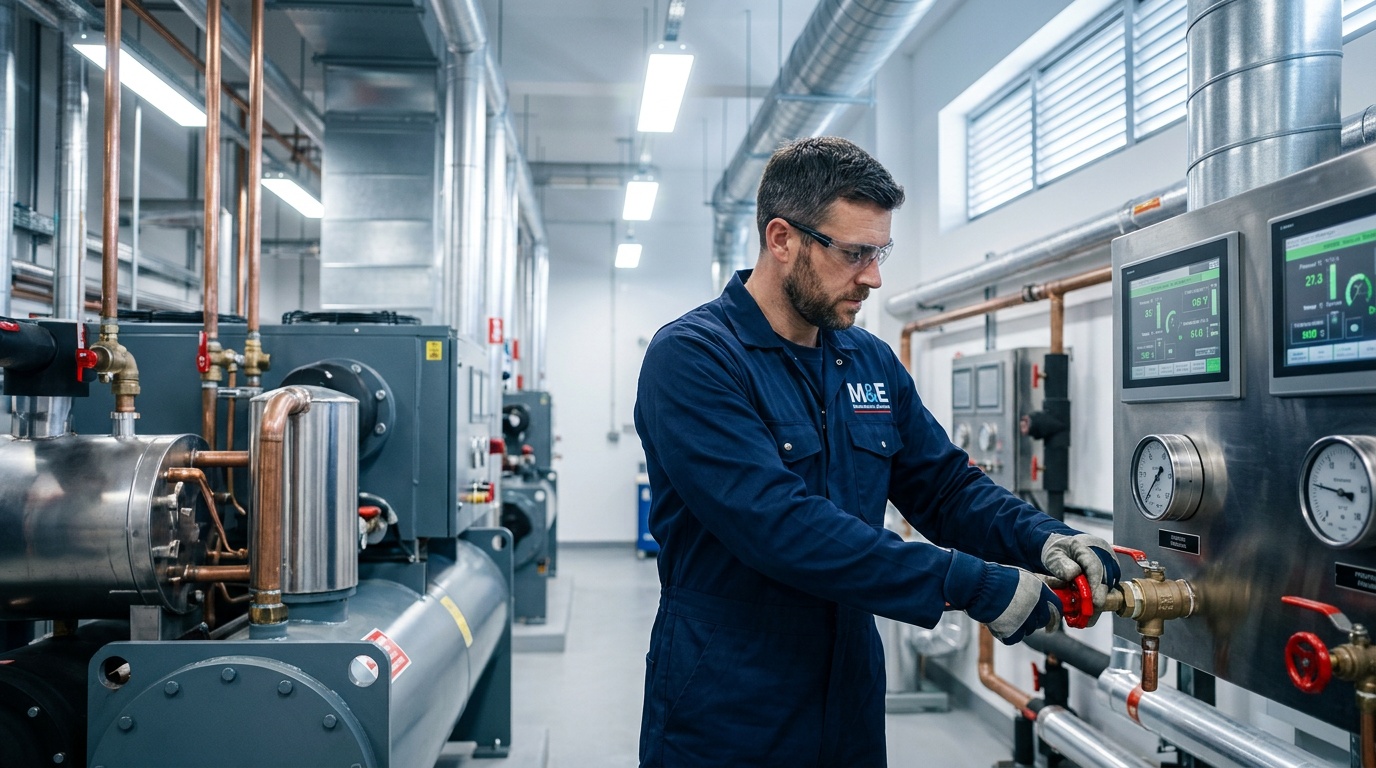
Top system integration services for M&E?
Top M&E System Integration Services 2026
The Commercial Case for Integrated M&E Systems: Beyond Silos
When your building's heating, ventilation and air conditioning systems operate as isolated islands, you're essentially running a business with one hand tied behind your back. I see this constantly across commercial estates. Facility managers struggling with equipment that can't talk to each other, energy bills spiralling upward, and maintenance costs that seem to increase every quarter.
System integration changes this completely. It connects these separate components into a unified network, delivering efficiency that siloed operations simply can't achieve.
What is System Integration in M&E?
Think of system integration as giving your building a central nervous system. Your Building Management System (BMS) becomes the brain, receiving information from temperature sensors, pressure monitors and occupancy detectors, then adjusting boiler output, pump speeds and fan frequencies in real time.
The result? Your HVAC plant responds to actual demand rather than running on fixed schedules, cutting energy waste significantly.
The "Silent Costs" of Disconnected Systems
Many facility managers only notice problems when something breaks. Yet the hidden costs of siloed M&E systems accumulate silently every month:
- Energy consumption drifts upwards because individual units can't optimise against each other
- Maintenance visits become reactive guesswork rather than data-driven scheduled work
- Compliance documentation sits in scattered paper files, making audits stressful and time-consuming
These silent drains can represent 15-20% of potential savings sitting untouched on your balance sheet.
How Integration Translates to Your Bottom Line
Energy efficiency improvements typically range from 10-25% after proper integration. Predictive maintenance capabilities reduce emergency call-out costs by up to 40%. Centralised compliance monitoring simplifies regulatory submissions and reduces the risk of penalties.
For commercial landlords and business owners, uptime translates directly to revenue. Integrated systems degrade gracefully, with contingency routines maintaining service levels when individual components malfunction.
Key insight: The question isn't whether to integrate your M&E systems, but how quickly you can implement a coordinated strategy before competitors with better-optimised estates win tenant confidence.
The M&E Maintenance Solutions Difference
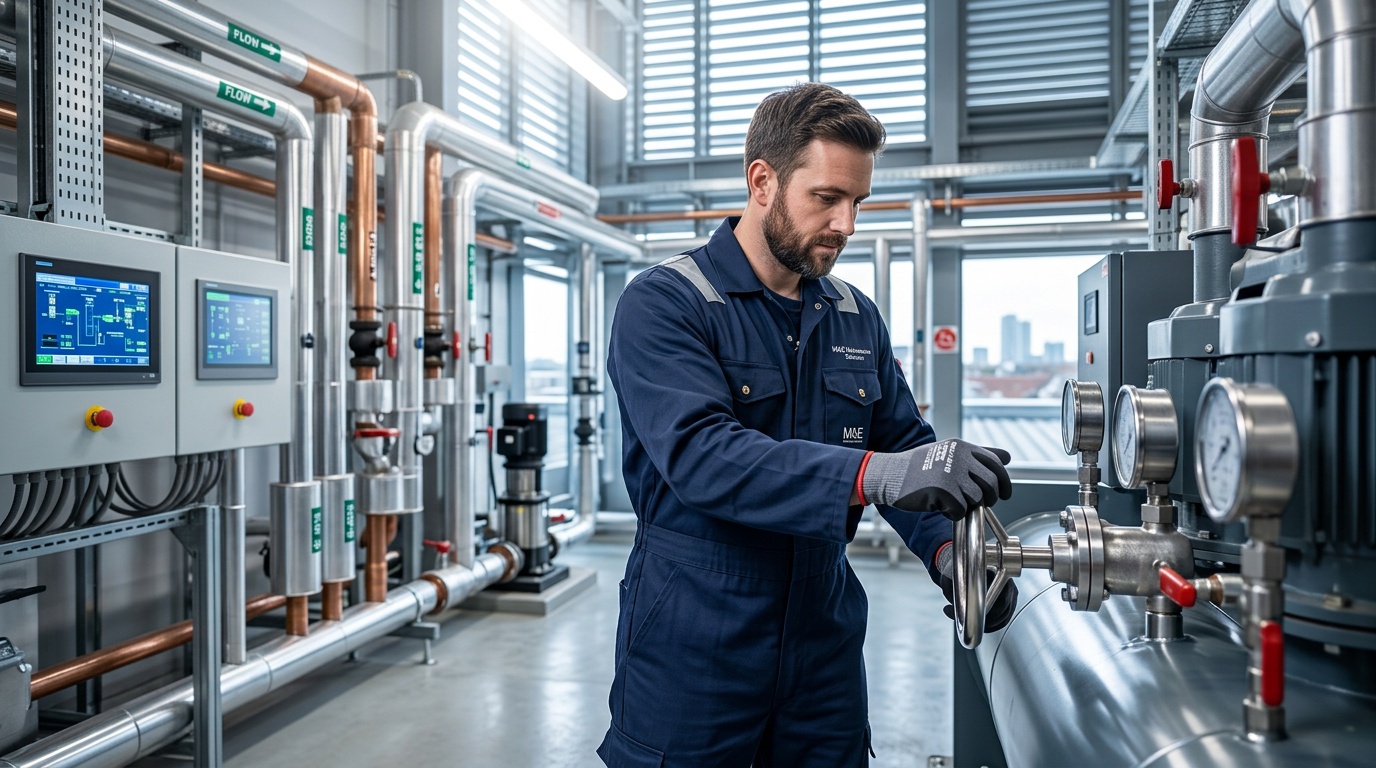
At M&E Maintenance Solutions Limited, we approach system integration differently. Founded in 2007, we've grown from a small team of heating engineers into a commercial HVAC maintenance provider serving facility managers throughout the UK.
What sets us apart is our Customer First philosophy. We develop tailored integration strategies based on your building's specific needs, not generic templates. Our open-door policy towards evaluating new HVAC technologies means we test emerging solutions before recommending them to clients. You get proven technology, not bleeding-edge experiments.
With certifications including SafeContractor, Refcom F-Gas, Gas Safe Register, BES and ISO 9001, we maintain the compliance standards commercial property demands. Our focus on sustainable solutions. Air-to-air heat pumps, air-to-water heat pumps, solar PV and LED lighting. Helps reduce operational costs while supporting compliance with current legislation.
Choosing specialist integration over generic FM provision means access to engineers who understand both the technical complexity of your systems and the commercial realities of running a successful property portfolio. We bridge the gap between boiler-room expertise and boardroom accountability.
Ready to see what professional system integration can deliver for your building? M&E Maintenance Solutions Limited can provide a site assessment for commercial properties across the UK.
Decoding Top M&E System Integration Services: A Practical Overview
Successful integration projects follow four distinct phases. Each addresses a critical aspect of the integration lifecycle, from initial assessment through long-term optimisation.
Consultancy and Strategic Planning
Every successful integration begins with an audit and strategic plan. This stage maps existing mechanical and electrical infrastructure, identifies integration points and sets a phased implementation roadmap. The team assesses current BMS capability, reviews legacy equipment protocols and agrees objectives aligned with commercial targets.
Design and Implementation
The design stage involves selecting compatible hardware and software platforms that communicate across different protocols. Implementation engineers configure data pathways, test signal transmission between subsystems and verify that control commands propagate correctly throughout the network. Testing validates system responsiveness before full deployment.
BMS and IoT Integration
The technical foundation combines Building Management Systems with Internet of Things (IoT) sensors and actuators. Controllers aggregate data on temperature, occupancy, air quality and energy consumption, enabling automated adjustments that maintain comfort while reducing waste. Cloud platforms support remote monitoring and centralised control across multiple sites.
Managed Services and Ongoing Optimisation
Long-term performance depends on continuous monitoring, firmware updates and benchmarking. Service teams track efficiency trends, identify degradation early and adjust settings as building usage patterns evolve. Scheduled reviews compare actual energy consumption against modelled baselines, helping to quantify the return on integration investment.
| Integration factor | Traditional approach | Integrated approach |
|---|---|---|
| Energy efficiency | 60-70% optimisation | 85-95% optimisation |
| Maintenance model | Reactive | Predictive |
| Compliance complexity | High manual effort | Streamlined automation |
| Initial investment | Lower upfront | Higher upfront |
| Lifecycle cost | Escalating | More predictable over time |
Beyond the Boiler Room: Integrating Sustainable Technologies
Modern integration extends beyond connecting existing plant. The shift towards renewable energy and lower-carbon technologies creates new opportunities for facility managers managing the transition.
Co-ordinating Core M&E and Renewables
Heat pumps, solar photovoltaic arrays and solar thermal installations can complement traditional gas boiler systems in commercial estates. Merging these technologies with existing infrastructure requires careful engineering and an implementation plan that protects current asset value.
Integrating New Technology with Legacy Systems
Older plant rooms often communicate differently from modern BMS controllers. When evaluating integration services, facility managers should look for protocol translation experience and proven expertise with gateways. Proprietary systems create silos; open-protocol interfaces allow legacy HVAC equipment to share data with modern sensors without removing serviceable assets.
Compliance as a Driver: Meeting UK Sustainability Reporting Duties
MEES and SECR place clear expectations on energy performance and reporting. Integration helps by monitoring energy trends, flagging drift and supporting evidence-led maintenance, which reduces compliance risk.
M&E Maintenance Solutions' Approach: Tested Technology, Measurable Outcomes
We don't specify technology on hype alone. M&E Maintenance Solutions Limited operates an open-door policy towards evaluating and testing new HVAC technologies before offering them to customers. We verify that air-to-water heat pumps and solar thermal systems perform as expected in UK conditions, then integrate them into the wider control strategy.
This approach protects your investment and ensures reliable performance.
Your Partner in Integrated Building Performance
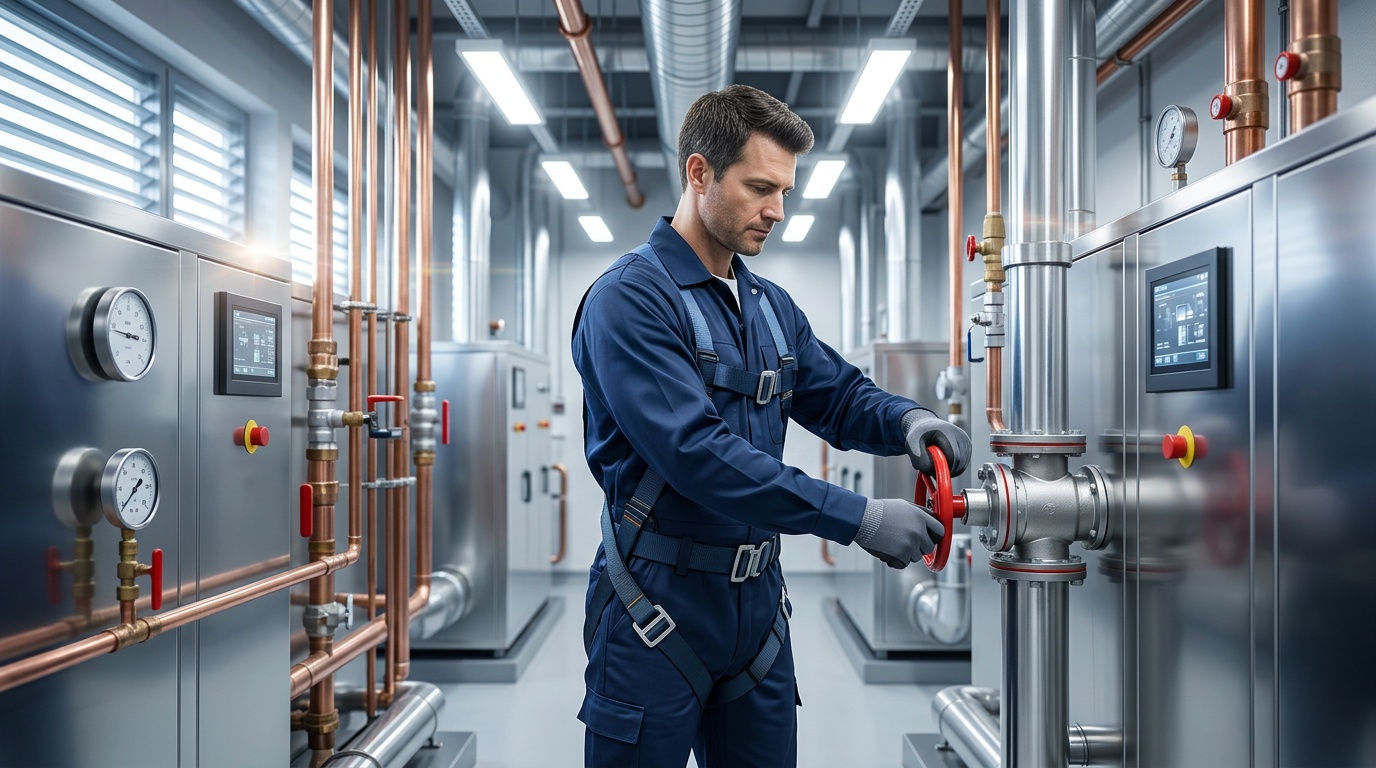
Customer First, Applied to Real Buildings
Large FM providers can treat buildings as line items. We work as a maintenance-led integration partner, shaping controls around operating hours, occupancy patterns and risk tolerance. The system supports how the building is actually used, not how a manual says it should operate.
From Plant-Room Reality to Commercial Outcomes
I spend my time in plant rooms and boardrooms, and the numbers must stack up in both places. When evaluating system integration services, look for a team that can explain what the data means, what to do next and how the change affects energy costs, comfort levels and compliance status.
Integration isn't just connecting controls. It's aligning mechanical performance with commercial priorities, while planning works to limit disturbance to daily operations.
Frequently Asked Questions
What are system integration services in M&E?
System integration in M&E connects separate mechanical and electrical subsystems, allowing them to communicate and operate as a coordinated network. This means your commercial building's HVAC plant responds to actual demand, rather than fixed schedules, significantly cutting energy waste. It's about giving your property a central nervous system for better performance and efficiency.
What are the key components of a successful M&E system integration project?
A successful M&E system integration project typically involves four key components. These include initial consultancy and strategic planning, detailed design and implementation, integrating Building Management Systems (BMS) with IoT technology, and ongoing managed services for continuous optimisation. This phased approach ensures all aspects of your commercial property's systems work together efficiently.
What defines a top-tier M&E system integrator?
A top-tier M&E system integrator goes beyond basic connections, offering deep technical expertise combined with commercial pragmatism. They develop tailored strategies based on your commercial building's specific needs, not generic templates. Such integrators hold relevant certifications, like ISO 9001 and SafeContractor, and focus on sustainable solutions that support your business objectives and compliance.
How do integrated M&E systems benefit commercial properties?
Integrated M&E systems deliver measurable commercial outcomes for commercial properties, including energy efficiency improvements typically ranging from 10-25%. They enable predictive maintenance, reduce emergency call-out costs, and simplify compliance monitoring. This leads to better uptime, reduced operational costs, and a more optimised estate, directly translating to your bottom line.
How do cloud platforms support M&E system integration?
Cloud platforms are essential in M&E system integration for remote monitoring and centralised control across multiple sites. They support the aggregation of data from IoT sensors on temperature, occupancy, and energy consumption. This enables automated adjustments, maintaining comfort while significantly reducing waste in commercial buildings.
What should I look for when choosing an M&E system integration partner?
When choosing an M&E system integration partner, look for a company with a proven track record and a "Customer First" philosophy. They should offer tailored strategies, continuously evaluate new HVAC technologies, and hold relevant certifications like Refcom F-Gas and Gas Safe Register. Expertise that bridges technical complexity with commercial realities is key for your commercial property.
Does size matter when choosing an M&E system integrator?
While some might focus on who the "largest" integrator is, what truly matters is finding a partner who understands your specific commercial building needs. Look for technical expertise, a commitment to sustainable solutions, and a tailored approach rather than just sheer size. A company with a strong track record and relevant certifications often delivers more value and better outcomes.