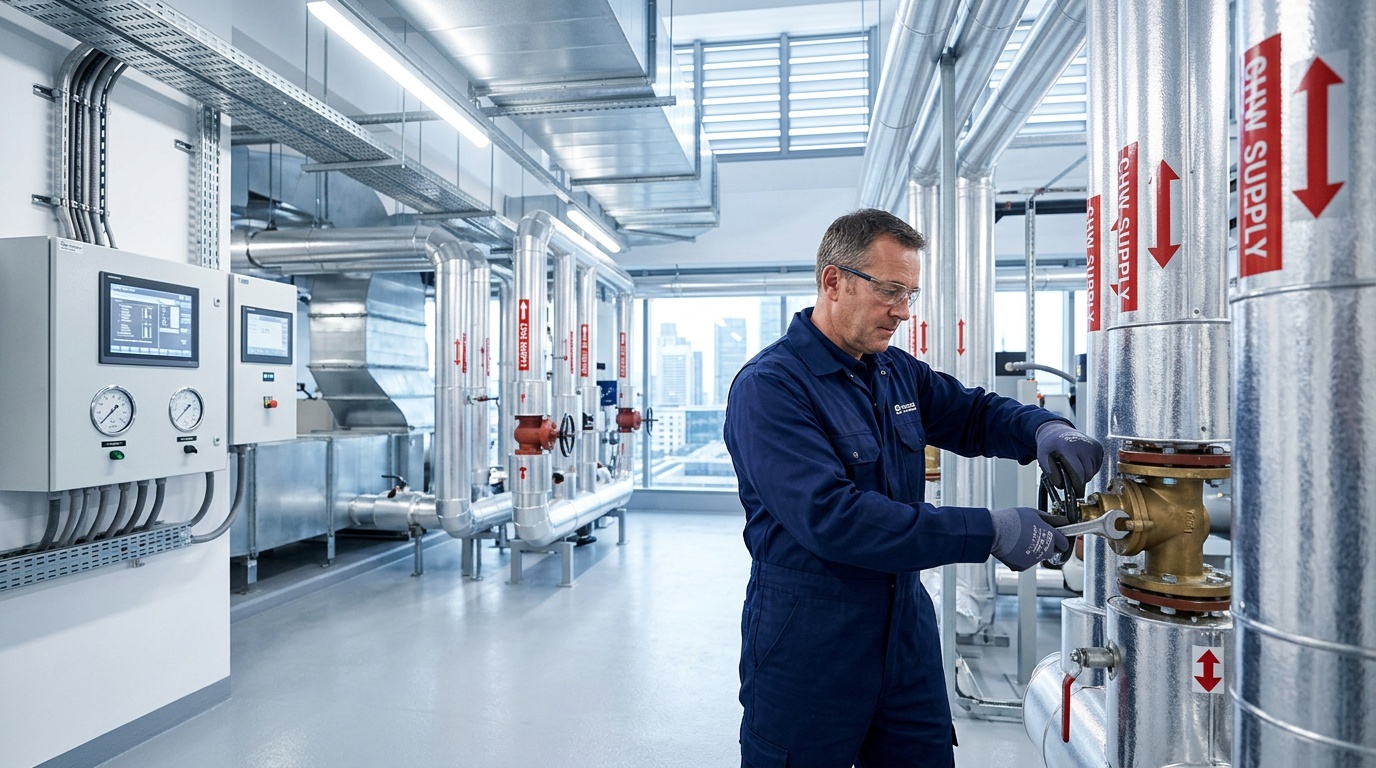
what is M&E HVAC Compliance Health Check
Understanding the 'Why': What is an M&E HVAC Compliance Health Check and Why It Matters
Picture this: your office air conditioning fails during a July heatwave. Within hours, productivity drops by 20%, staff comfort plummets, and you're facing emergency repair costs that could have funded six months of planned maintenance.
An M&E HVAC Compliance Health Check prevents exactly this scenario. It's a systematic assessment of your building's heating, ventilation, and air conditioning systems that verifies legal compliance with F-Gas regulations, Legionella control, and energy performance standards. More importantly, it identifies problems before they become business-stopping failures.
The Engineer's Reality Check
After 24 years in this industry. From apprentice on the tools to managing sites across the Midlands. I can tell you that silence in a plant room is often the loudest warning you'll ignore. Asset failure doesn't announce itself with fanfare. Scale buildup in a boiler is silent. Refrigerant leaks develop quietly. But the bill when your system fails? That screams.
I've watched too many facility managers treat compliance as paperwork. Compliance isn't about ticking boxes. It's about preventing the £50,000 emergency replacement that follows catastrophic failure.
What Makes MEMS Different
M&E Maintenance Solutions approaches every health check as a business continuity assessment. We don't just audit your systems; we evaluate your operational strategy to keep the doors open and lights on.
SFG20: Your Legal Safety Net
SFG20 sets maintenance frequency and scope for building services equipment. It's not a suggestion. It's the industry standard that courts reference during liability disputes. When we conduct a health check, we audit your current maintenance against these benchmarks, identifying gaps that expose you to regulatory penalties or system failures.
Audit Your Current Provider: Five Critical Questions
Test your current maintenance strategy:
- F-Gas compliance: Do you receive digital certificates within 24 hours of refrigerant work?
- Legionella management: Are water systems tested according to HSG274 guidelines?
- Energy performance: Has your building had a TM44 inspection if it has over 250 kW of cooling capacity?
- Documentation: Can you access five years of maintenance records digitally?
- Emergency response: What response time is offered for system failures?
If your provider hesitates on any answer, you've found gaps that need immediate attention.
What We Actually Inspect: Beyond the Basic Service
The Complete System Assessment
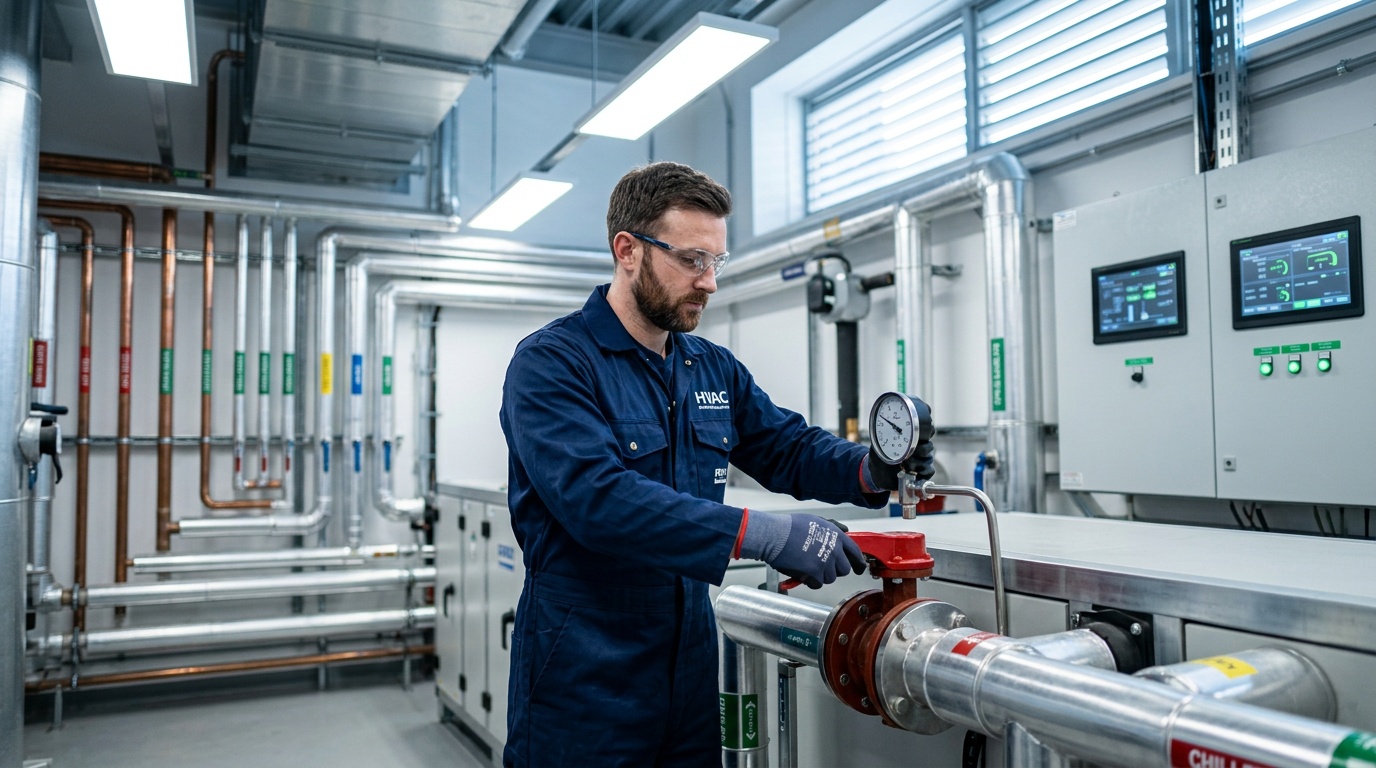
We examine every component affecting building performance and occupant safety. Air handling units, ductwork integrity, control systems, and heat exchangers all get scrutinized. Mechanical components like compressors, pumps, and fans receive performance testing against manufacturer specifications.
The inspection extends to building management systems. Sensor calibration, alarm functions, data logging accuracy. Each component gets tested for wear patterns that predict future failures, not just current operation.
F-Gas Compliance: No Room for Error
F-Gas violations carry hefty penalties, making this non-negotiable. We verify refrigerant containment, check leak detection systems, and audit all refrigerant handling records. Pressure testing, leak-rate calculations, and engineer certification verification are standard procedure.
We test automatic leak detection systems where fitted and verify that only certified engineers have accessed refrigerant circuits. No shortcuts.
Legionella: The Silent Killer
Legionella bacteria multiply in water temperatures between 20°C and 45°C. A single contaminated cooling tower can affect an entire building. Our health check identifies temperature dead spots, stagnant water areas, and inadequate biocide treatment before they become health hazards.
We examine cooling towers, evaporative condensers, and humidification systems against HSG274 guidelines, testing water temperatures and chemical treatment effectiveness.
Air Quality: Productivity Depends on It
Poor air quality kills productivity and employee health. We measure ventilation rates, CO2 levels, and filtration efficiency to verify fresh air supply meets occupancy requirements and extract systems remove contaminants effectively.
COSHH assessments cover refrigerants, cleaning chemicals, and water treatment products, verifying proper storage, handling procedures, and emergency response plans.
TM44 Energy Assessments: Mandatory for Large Systems
Buildings with air conditioning over 250 kW cooling capacity require TM44 inspections every five years. We measure actual energy consumption against design specifications, identifying wasteful operation patterns and opportunities for energy reduction.
This includes heating seasonal efficiency, cooling system performance ratios, and building fabric thermal performance data that supports targeted improvements.
The MEMS Difference: Why Our Approach Works
Partnership, Not Transaction
We don't just conduct compliance checks. We become your building's health partner. Every site visit includes detailed discussions with your facilities team about operational challenges, budget constraints, and expansion plans. Our recommendations align with your business objectives, not just compliance minimums.
Innovation Without Risk
We maintain an open door policy for evaluating new HVAC technologies, but we never use clients as test subjects. Every piece of equipment we recommend has undergone internal testing at our own facilities first.
Proven Technology Only
When we suggest Air to Water heat pumps or Solar PV integration during your assessment, you get proven technology. We've tested everything from advanced building management systems to hybrid heating solutions at our own facilities first.
Beyond HVAC: Total Building Health
Building compliance extends beyond HVAC systems. Our approach examines electrical safety, water system hygiene, and mechanical plant integration. This holistic view identifies cross-system issues that single-discipline inspections miss.
We coordinate with strategic partners for specialist services while maintaining direct accountability for compliance outcomes. No finger-pointing when multiple contractors share responsibility.
The MEMS Standard
When we identify compliance issues, we provide immediate temporary measures alongside longer-term strategic recommendations. This prevents emergency shutdowns while planning sustainable improvements.
Every compliance certificate we issue is backed by SafeContractor and ISO 9001 credentials. Your insurance company, regulatory inspectors, and legal advisers can trust our assessments.
The Real Cost of Doing Nothing
Hidden Costs Add Up Fast
Regulatory penalties are just the start. Non-compliance can mean increased insurance premiums, voided warranties, and legal exposure for directors under health and safety legislation. HSE prohibition notices can stop operations entirely. Revenue loss that dwarfs compliance costs.
When Systems Fail, Revenue Dies
HVAC failures don't happen during convenient maintenance windows. They strike during peak trading, important client meetings, critical production runs. A failed data centre cooling system costs £10,000 per hour in lost server capacity.
Retail environments become uninhabitable within hours of summer cooling failure. Office productivity plummets when winter heating fails. These operational impacts dwarf preventive compliance costs.
Staff Health = Business Health
Poor indoor air quality increases sick leave and reduces cognitive performance. Legionella outbreaks can prove fatal. Inadequate ventilation spreads respiratory infections throughout buildings.
Professional service firms suffer reputational damage following building-related health incidents. The cost of rebuilding client trust often exceeds immediate financial penalties.
Reactive Maintenance: The Expensive Trap
Emergency call-outs command premium rates. Parts become time-critical. Temporary solutions need complete rework later.
Buildings without proper health checks experience accelerated equipment deterioration, higher energy consumption, and compounding failures that multiply maintenance costs year after year.
Your Next Steps: Getting Started
Booking Your Assessment
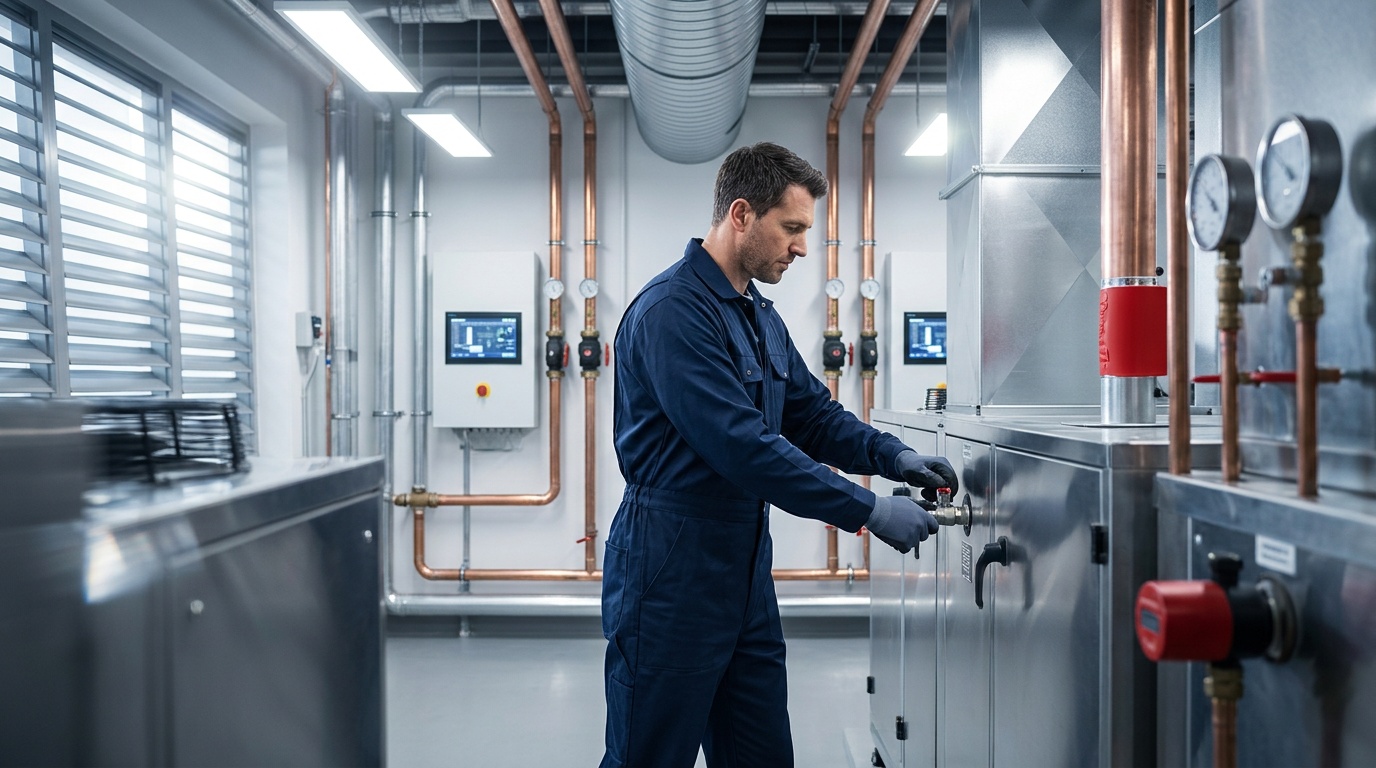
Contact our team for a no-obligation site assessment. We'll discuss your building's specific requirements, current maintenance regime, and compliance concerns. Our initial consultation identifies priority areas and provides clear timelines.
We coordinate with your facilities team to plan access requirements and safety procedures, minimising disruption while achieving thorough system assessment.
What Happens During the Visit
Our certified engineers arrive with calibrated testing equipment and complete documentation systems. We provide real-time updates on findings, explaining technical issues in commercial terms that support your decision-making.
You get photographic evidence, performance measurements, and immediate safety observations. We identify urgent issues needing prompt attention alongside longer-term improvement opportunities.
Your Detailed Report
Within 48 hours, you receive a digital report detailing findings, compliance status, and prioritised recommendations. The report includes cost estimates for identified improvements and timelines supporting ongoing compliance.
Our reports provide documentation for insurance claims, regulatory inspections, and budget planning. Each recommendation includes justification based on safety requirements, energy savings, or operational improvements.
Long-Term Partnership
The health check is just the beginning. We develop ongoing maintenance partnerships that keep your systems compliant, efficient, and reliable year-round. Our planned preventive maintenance programmes reduce compliance management burden while optimising building performance.
Ready to protect your building investment and maintain compliance? Contact M&E Maintenance Solutions today to schedule your HVAC compliance health check.
Frequently Asked Questions
What does M&E stand for?
M&E stands for Mechanical and Electrical. In the context of commercial buildings, it refers to the essential systems that keep a property operating, such as heating, ventilation, air conditioning, and electrical infrastructure. Our M&E HVAC Compliance Health Check specifically focuses on the mechanical and electrical aspects of your HVAC systems.
What is HVAC M&E?
HVAC M&E refers to the Mechanical and Electrical systems that make up your building's Heating, Ventilation, and Air Conditioning. This includes everything from the air handling units and ductwork to the electrical controls and pumps. Ensuring these systems are compliant and efficient is what our M&E HVAC Compliance Health Check is designed to do.
Is HVAC under M&E?
Absolutely, HVAC systems are a core part of a building's Mechanical and Electrical (M&E) infrastructure. Our M&E HVAC Compliance Health Check specifically evaluates these systems, including air handling units, control systems, and heat exchangers. We ensure they meet regulatory standards for safety, efficiency, and occupant well-being.
What is HVAC compliance?
HVAC compliance means ensuring your heating, ventilation, and air conditioning systems meet all current safety regulations, environmental laws, and energy performance standards. This includes adhering to F-Gas regulations, managing Legionella risks, and meeting energy efficiency benchmarks like TM44 inspections. It is your insurance policy against fines, energy waste, and system failures that can disrupt business operations.
What is the $5000 rule for HVAC?
There isn't a specific '$5000 rule' for HVAC that is widely recognized in the industry. What we often see, though, are the significant hidden costs and emergency repair expenses that arise from neglecting proper HVAC compliance and maintenance. These can far exceed smaller figures, potentially leading to major system failures and substantial financial penalties.