A failed HVAC system in a central London office doesn't just make staff uncomfortable—it can cost your business £500-£1,500 per hour in lost productivity. Yet many facility managers still treat maintenance as a cost centre rather than business continuity insurance. After 24 years in the industry, from apprentice combustion engineer to managing complex commercial sites across the Midlands, I've seen the real cost of reactive thinking.
The facilities management companies london market is crowded with providers promising the world but delivering spreadsheet relationships. The difference between a true FM partner and a faceless contractor becomes crystal clear when your boiler fails on the coldest day of the year. This guide cuts through the marketing noise to help you choose the right FM provider for your London property. boiler failures and heating issues are among the most disruptive events for commercial buildings, making reliable heating solutions essential for business continuity.
When evaluating facilities management companies, it's crucial to consider the full spectrum of commercial property maintenance services available. Comprehensive maintenance not only prevents costly breakdowns but also ensures compliance and operational efficiency across your property portfolio.
Quick Answer: Facilities management companies in London maintain, operate, and optimise commercial buildings through planned preventative maintenance (PPM), emergency response, and compliance management to ensure business continuity and asset protection.
Facilities management is the bridge between your building's performance and your business operations. It encompasses everything that keeps your property safe, compliant, and operational—from the boiler in the basement to the air conditioning on the roof. In London's dense commercial environment, where downtime means immediate revenue loss, FM providers manage two distinct service categories:
Hard FM covers the technical backbone: HVAC systems, electrical installations, boiler plant, Building Management Systems (BMS), fire safety systems, and statutory compliance testing. Soft FM handles the people-facing services: cleaning, security, reception, waste management, and landscaping. London's unique challenges—heritage buildings, high occupancy densities, and stringent local authority oversight—demand FM providers who understand both the technical complexities and commercial pressures of the capital.
Hard FM Services (Technical & Statutory):
Soft FM Services (Operational & Experience):
London's commercial properties operate under unique pressures that drive both service frequency and costs. High-density occupancy means systems work harder—a 50,000 sq ft office with 500 occupants generates different maintenance demands than a similar building with 200 users. Insurance providers and local authorities scrutinise London properties more intensively, particularly around fire safety and air quality compliance.
The financial impact is immediate: downtime in a central London retail unit can cost £2,000-£5,000 per day in lost trade, while a failed cooling system in summer reduces office productivity by 15-20%. Premium labour costs, congestion charges, and restricted access windows make reactive call-outs expensive—often 40-60% more than planned maintenance visits.
This is why Planned Preventative Maintenance (PPM) isn't optional in London—it's the only cost-controlled approach to managing commercial property. PPM shifts spending from expensive emergency repairs to predictable, scheduled maintenance that prevents failures before they impact operations. For more on the risks of reactive maintenance, see 7 commercial building maintenance problems you need to fix ASAP.
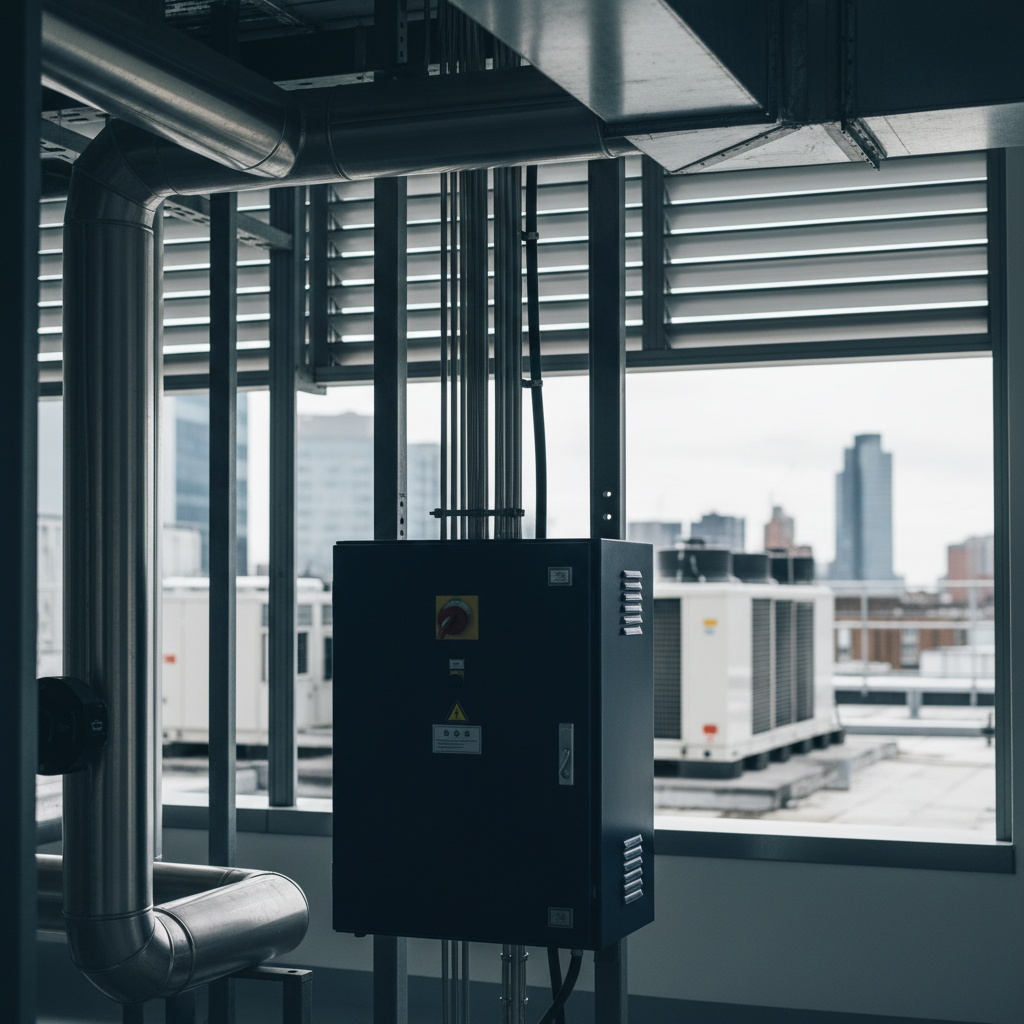
Hard FM encompasses all statutory and technical services that maintain building safety and operational integrity. Think plant rooms, electrical risers, rooftop equipment—the engineering systems that keep your building legally compliant and physically functional. Soft FM focuses on the human experience within the space: cleanliness, security, comfort, and presentation standards.
Consider two scenarios in a London office building: a failed AHU (Air Handling Unit) fan belt stops ventilation to three floors, potentially triggering evacuation and business closure within hours. Compare this to missed toilet cleaning that creates complaints but doesn't shut operations. Both matter, but the risk profiles and response urgencies are completely different.
| Aspect | Hard FM | Soft FM |
|---|---|---|
| Legal Compliance Impact | Gas Safe, EICR, F-Gas, fire systems - statutory requirements | Health & Safety basics, waste duty of care |
| Business Continuity Risk | Immediate shutdown potential (boiler failure, electrical fault) | Reputation and comfort impact, rarely operational |
| Typical Contract Term | 12-36 months with asset lifecycle planning | 12-24 months, more flexible arrangements |
| Skill Level Required | Gas Safe, NICEIC, specialist plant knowledge | Training-based, customer service focus |
| London Response SLAs | 2-4 hours critical, same day non-critical | Next business day standard, 4-8 hours priority |
For a typical London multi-let office, expect 60-70% of your FM budget allocated to hard services, with 30-40% covering soft FM. This split reflects the higher labour costs and statutory requirements of technical maintenance in the capital. However, older buildings or those with complex plant may skew toward 75% hard FM due to increased maintenance demands.
Three actionable budget strategies: First, always fully fund statutory hard FM requirements—this is non-negotiable for safety and insurance compliance. Soft FM is where you adjust presentation standards, not safety obligations. Second, use energy consumption and reactive call-out data to refine your hard FM scope annually—buildings with rising utility bills often need more intensive plant maintenance. Third, bundle soft FM services that drive occupant satisfaction (reception plus cleaning creates consistency), but never dilute technical standards to accommodate soft service budgets. If you notice persistent issues with your HVAC systems, review common signs you need commercial HVAC repair to avoid costly downtime.
In-house FM teams employ caretakers and engineers directly, common in public sector buildings or large corporate estates where control and immediate response matter more than cost efficiency. Single service contracts engage specialist providers for individual functions—a dedicated cleaning company, separate HVAC contractor, standalone security firm.
Bundled/Total FM consolidates multiple services under one provider managing both hard and soft services through a single contract and point of contact. Integrated Facilities Management (IFM) takes this further—one strategic partner manages the entire service ecosystem, coordinating subcontractors, providing unified reporting, and taking accountability for all building operations under comprehensive SLAs.
| Model | Best For | Pros | Cons | Typical Site Size |
|---|---|---|---|---|
| In-House | Public sector, high-security sites | Direct control, immediate response, building knowledge | Higher employment costs, skills gaps, holiday cover | 100,000+ sq ft single sites |
| Single Services | Simple buildings, tight budgets | Specialist expertise, competitive pricing, flexibility | Multiple relationships, coordination burden | Under 20,000 sq ft |
| Total FM | Standard offices, retail units | Single point of contact, bundled pricing | Less specialisation, potential service compromises | 20,000-100,000 sq ft |
| IFM | Complex multi-site portfolios | Strategic partnership, unified reporting, scalability | Higher management costs, dependency risk | 100,000+ sq ft or multi-site |
Most London businesses follow a predictable progression: under 20,000 sq ft typically use single service providers or small outsourced FM companies for cost efficiency and simplicity. Between 20,000-100,000 sq ft, the coordination burden drives moves toward bundled or Total FM to reduce management overhead while maintaining service quality.
Properties exceeding 100,000 sq ft or multi-site London portfolios benefit from IFM or strategic framework agreements that provide consistency across locations. Three clear signals indicate it's time to evolve your model: managing more than 8-10 separate FM suppliers becomes administratively expensive; spending 70% of your time firefighting issues rather than strategic planning; or compliance documents scattered across email threads instead of centralised systems that support audit and insurance requirements. For a deeper look at how small works and fit-out projects can support your FM strategy, see this case study on a new first aid room fit-out.
Before contacting any facilities management companies london, assess your building type—Grade A office, retail unit, industrial facility, healthcare, or education space. Each carries different M&E complexity, occupancy patterns, and statutory requirements. Age and condition of plant equipment directly impacts maintenance frequency and emergency call-out probability.
Occupancy patterns matter: 9-5 offices need different response protocols than 24/7 retail or hybrid working environments with irregular heating demands. Conduct a 30-minute risk mapping session: identify your top five systems where failure would force building closure within 60 minutes. This list—typically boilers, main electrical feeds, fire systems, lifts, or water pumps—defines your critical service requirements and response time expectations. If your site relies heavily on air conditioning, consider the benefits of a 24 hour air conditioning service to minimise downtime and disruption.
For hard FM services in London, non-negotiable accreditations include Gas Safe registration, NICEIC electrical certification, REFCOM for refrigeration work, and current F-Gas handling certificates. ISO 9001 (quality), 14001 (environmental), and 45001 (health and safety) demonstrate systematic management approaches rather than ad-hoc service delivery.
Verify registrations on official websites, not marketing brochures. Check insurance certificates are current and cover your building value. Ask for evidence of SFG20 compliance—this isn't optional guidance but the industry standard for planned preventative maintenance frequencies and procedures. For an overview of the UK's facilities management standards, visit the British Institute of Facilities Management.
Technical competence gets you shortlisted; culture determines long-term partnership success. Request a 15-minute visit to their helpdesk or operations centre to observe live call handling—you'll quickly distinguish between professional, methodical responses and chaotic firefighting approaches.
Ask to meet the engineer who would be your dedicated site lead before contract signature. This person becomes your primary technical contact, so assess their communication style, building knowledge, and problem-solving approach. Request samples of actual service reports from the past 30 days (client details redacted)—clear, detailed documentation indicates systematic working practices.
The difference between large, impersonal FM corporations and agile, relationship-focused providers becomes evident in these interactions. Look for companies where senior technical staff remain accessible and decisions can be made quickly without multiple approval layers that slow emergency responses. If you are concerned about the condition of your building's fabric, explore building fabric repairs & maintenance to address issues before they escalate.

Labour rates vary significantly across London zones: central locations command premium rates due to congestion charges, parking costs, and security access procedures that extend job duration. Travel time between sites, especially during peak hours, directly impacts reactive maintenance pricing and engineer productivity.
Building age and plant condition drive maintenance intensity—Victorian conversions with retrofit M&E require more frequent attention than purpose-built offices with modern systems. Statutory compliance load increases costs: buildings with complex fire systems, multiple lifts, extensive air conditioning, and commercial kitchens need more frequent inspections and certifications. For more on fire safety requirements, see the HSE fire safety guidance.
Cheap, reactive-only contracts appear attractive initially but typically overshoot budgets by year three. A £15,000 annual saving on planned maintenance often becomes £45,000 in emergency repairs when systems fail without warning. The economics favour prevention over cure, particularly in London's high-cost environment.
Target 60-70% of annual FM budget for fixed PPM contracts covering statutory inspections, routine maintenance, and system optimisation. Reactive maintenance should represent 20-30% maximum—higher percentages indicate inadequate preventative strategies or aging equipment requiring replacement.
Reserve 10-15% for lifecycle projects: boiler replacements, LED upgrades, BMS improvements planned 3-5 years ahead. For a 50,000 sq ft London office, expect total FM costs of £8-15 per sq ft annually, with Grade A buildings at the lower end and older stock requiring higher investment. If you are experiencing persistent plumbing issues, review these 10 signs you need to call a professional plumber to avoid unexpected costs.
| Budget Category | Percentage | 50k sq ft Example |
|---|---|---|
| Planned Preventative Maintenance (PPM) | 60-70% | £240,000-£350,000 |
| Reactive Maintenance | 20-30% | £80,000-£150,000 |
| Lifecycle Projects | 10-15% | £40,000-£75,000 |
Hard FM covers the physical, technical maintenance of building systems like HVAC, boilers, and electrical infrastructure, ensuring operational reliability and compliance. Soft FM focuses on services such as cleaning, security, and reception, which support the day-to-day environment but don’t directly impact the building’s mechanical function.
Proactive facilities management uses Planned Preventative Maintenance (PPM) to identify and fix issues before they cause system failure, reducing emergency call-outs and downtime. This approach keeps equipment running efficiently, lowers energy costs, and protects business continuity by avoiding unexpected disruptions.
Look for a provider with proven experience in your building type, adherence to standards like SFG20, transparent compliance documentation, and 24/7 availability. Continuity of engineers who know your site and a partner mindset—someone who treats your assets as their own—are equally important to avoid the ‘different face’ syndrome.
Treating FM as insurance recognises that maintenance prevents expensive breakdowns and lost productivity, which can cost hundreds or thousands per hour in busy London offices. Reactive fixes are far more costly than planned upkeep, so investing in FM protects revenue, compliance, and your people’s safety.